8 Things Slowly Turning Your Green Lawn Brown Every Summer
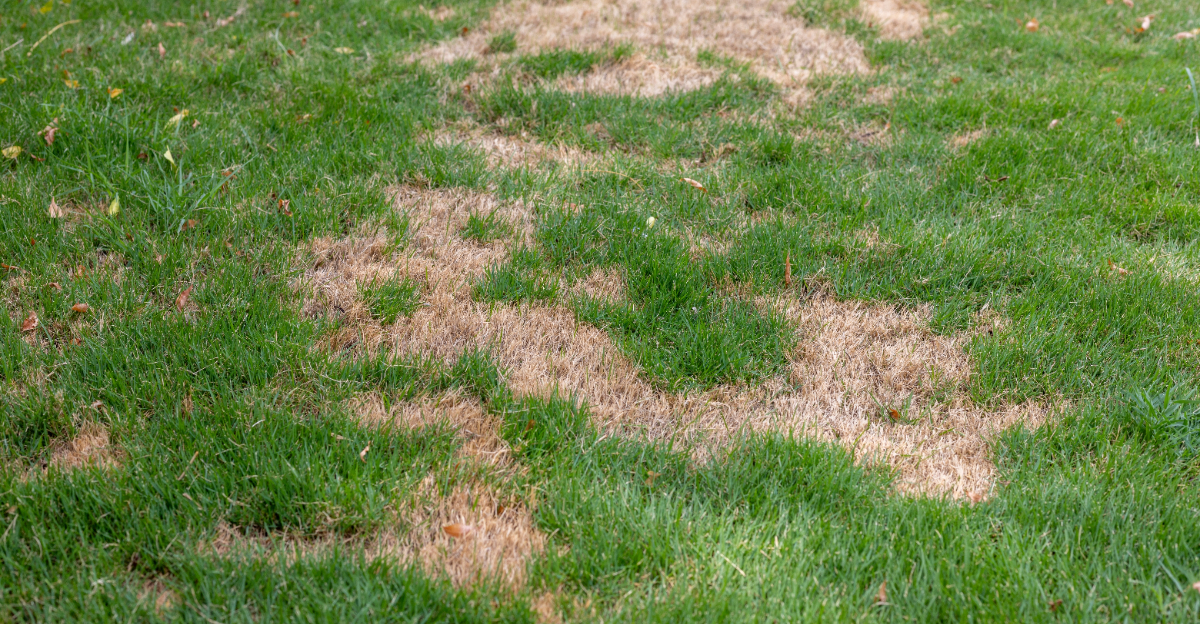
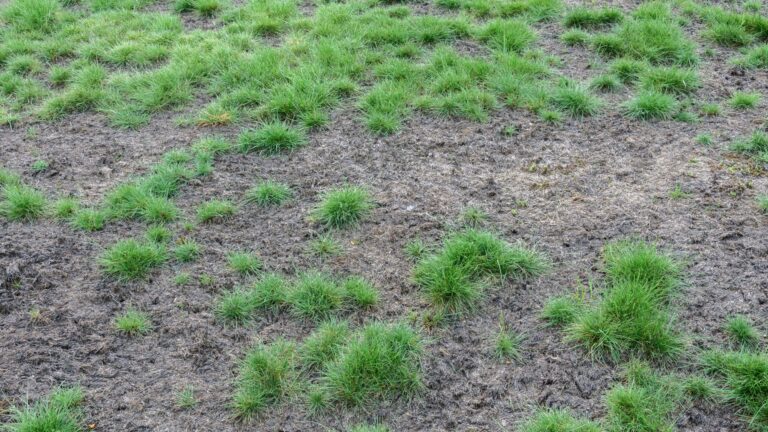
Green patches disappear overnight, leaving you confused about what happened. Scorching heat can turn your lush lawn brown within days. Underneath your lawn, hidden changes could be happening right now.
Grubs might be feeding on your roots without warning. Drought stress can trick you into blaming the wrong cause.
Watering incorrectly often makes your browning problem even worse. Summer heat tests your grass already dealing with drainage.
Pets, mowers, and chemicals can leave marks on your lawn. Diagnosing your lawn’s real cause takes more effort than guessing.
Patterns tell you more than color ever will about damage. Edges, circles, and streaks reveal a story about your lawn.
Your soil could be compacted, starved, or out of balance. Nothing about your lawn’s condition happens without a clear reason.
Fungus, insects, and poor mowing habits often affect your grass. Once you see every cause clearly, ignoring your lawn stops being possible.
1. Grub Infestations Feeding On Grass Roots
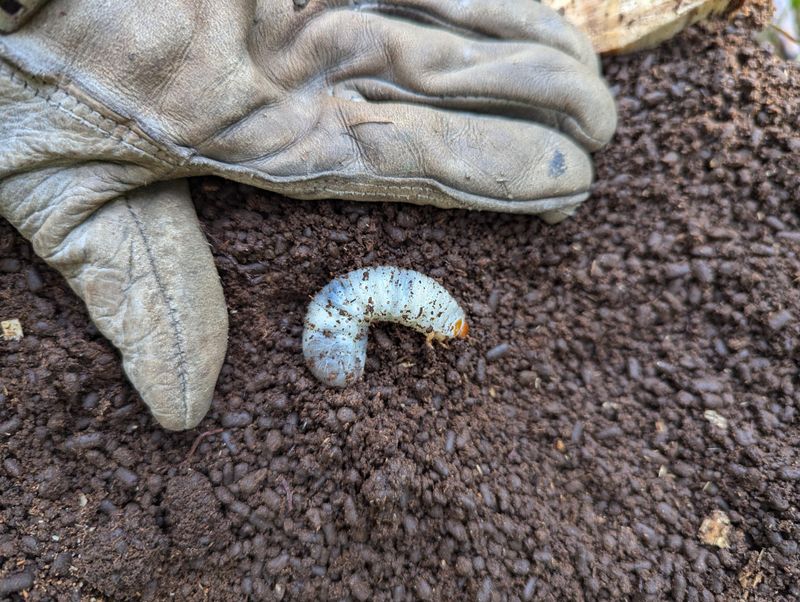
Something is feeding on your lawn from the inside out. Grubs are the larval stage of beetles, and they live just beneath the soil surface, feeding on grass roots steadily.
Without roots, your grass cannot pull in water or nutrients. Patches of turf start turning brown, and you might notice the affected sections peel back like loose carpet.
A telltale sign of a grub problem is spongy, detached turf that lifts easily with your hands. Birds, moles, and raccoons digging up your yard are also clues, since they are hunting those grubs below.
To confirm the issue, dig up a small square of soil about three inches deep. If you count more than five to ten grubs per square foot, your lawn likely has an infestation, though the exact threshold can vary by grass type and region.
Treating grubs at the right time makes all the difference. Apply a grub control product in late summer or early fall, when the larvae are young and close to the surface.
Neem oil and beneficial nematodes offer natural options for those who prefer to skip chemicals. These solutions work best when the soil is moist and temperatures are warm.
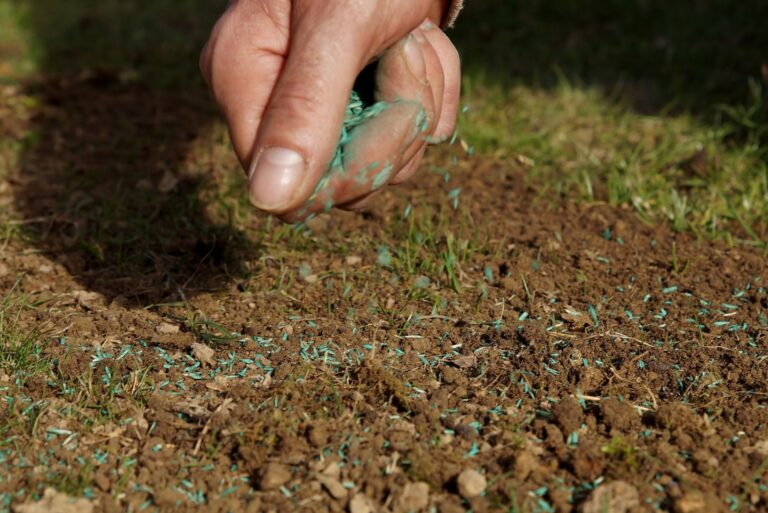
Once the grubs are gone, your grass may bounce back on its own. Overseeding and light fertilization can help damaged areas recover faster after treatment.
2. Fungal Diseases Like Brown Patch And Dollar Spot
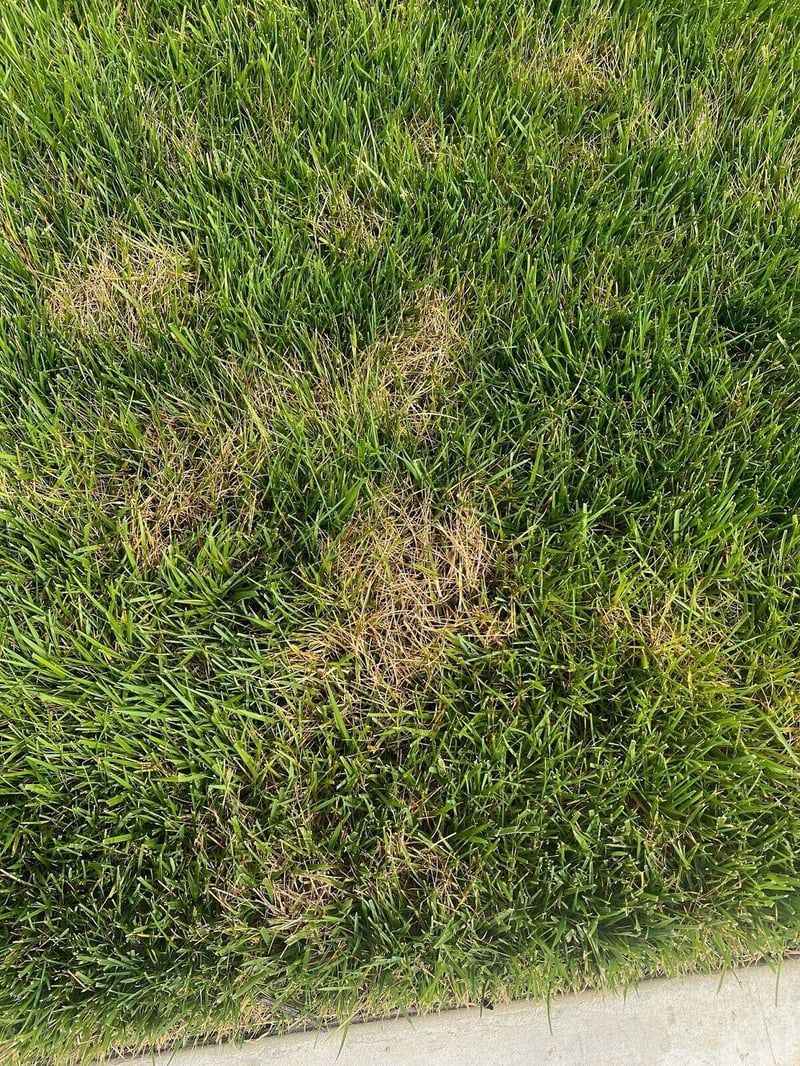
Fungal problems can appear suddenly. One humid morning you step outside and notice tan circles spreading across your once-perfect lawn, within a short period.
Brown patch and dollar spot are two of the most common fungal diseases in American lawns. Both thrive in warm, wet conditions, especially when nights stay humid and grass stays damp for long stretches.
Brown patch creates large circular areas of discolored grass, sometimes with a darker ring around the edges. Dollar spot leaves smaller, silver-dollar-sized spots scattered across the turf in an irregular pattern.
Overwatering in the evening is a major trigger for both diseases. Wet grass blades at night create the perfect environment for fungal spores to spread and take hold.
Switching your watering schedule to early morning gives the blades time to dry before nightfall. This one change alone can dramatically slow the spread of lawn fungus.
Fungicides can help when the problem is already established, but they work best as a preventive measure. Apply them at the first sign of trouble, before the patches grow too large. Good lawn care habits also reduce your risk significantly.
Mowing at the correct height, avoiding over-fertilizing with nitrogen, and improving air circulation all make your turf less inviting to fungal invaders. A healthy lawn is your best long-term defense against these stubborn diseases.
3. Drought Stress And Uneven Watering
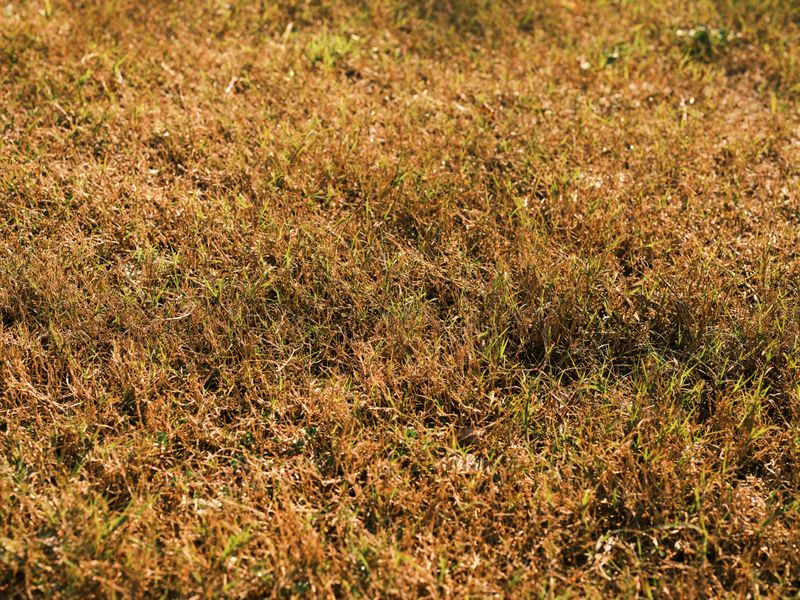
Grass requires consistent water to survive. When it does not get enough water, it enters a dormant, stress state, and that shift shows up as brown, brittle turf across your yard.
Drought stress is one of the leading causes of lawn browning, especially during hot summer months. Your grass may not be getting enough water even if you run sprinklers regularly, because uneven coverage leaves some spots parched.
Walk your yard and check for dry zones that your sprinkler heads might be missing. Overlapping spray patterns and adjusting sprinkler heads can fix coverage gaps faster than you might expect.
Most cool-season grasses need about one to one-and-a-half inches of water per week. Warm-season varieties are tougher, but they still struggle during extended dry spells without supplemental irrigation.
Watering deeply and less frequently encourages roots to grow deeper into the soil. Shallow, frequent watering keeps roots near the surface, making grass more vulnerable to heat and dry spells.
Place a small tuna can or rain gauge in your yard to measure how much water your sprinkler actually delivers. This simple trick takes the guesswork out of your watering routine.
If your lawn goes fully dormant from drought, do not panic. Most grass types will green back up once consistent moisture returns, as long as the roots are still intact below the surface.
4. Dog Urine Damaging The Grass
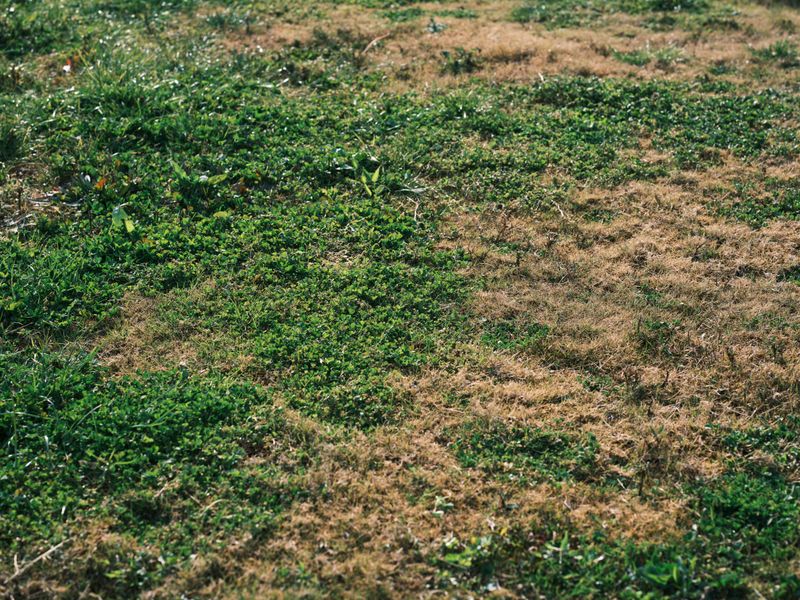
Dog urine can affect lawn health even from a beloved pet. Dog urine contains high concentrations of nitrogen and salts that can damage the grass wherever your pup goes.
The brown spots caused by urine are usually small, round, and have a greener ring around the outside edge. That greener ring is actually caused by lower concentrations of nitrogen acting like a mild fertilizer.
Dogs that squat in one spot tend to concentrate urine damage in a smaller area, while dogs that mark in multiple spots spread the impact more evenly. This behavior varies by individual dog rather than strictly by sex.
Flushing the affected area with water immediately after your dog urinates can dilute the nitrogen before it damages the roots. Keeping a watering can near the back door makes this habit easy to stick with.
Some pet owners adjust their dog’s diet to reduce the nitrogen content in urine. Certain supplements and wet food options can help, but always check with your vet before making changes.
Designating a specific potty area with mulch or gravel can protect your main lawn from repeated damage. Training your dog to use that spot consistently saves a lot of lawn repair work down the road.
Reseeding damaged patches in the fall gives new grass the best chance to establish before winter. With a little patience and a plan, your lawn and your dog can peacefully coexist.
5. Soil Compaction From Heavy Foot Traffic
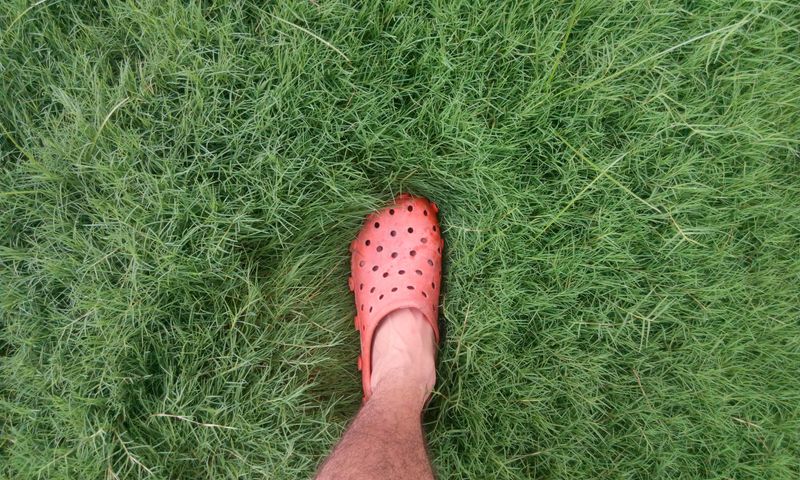
Lawns can withstand traffic to a point, but overuse causes stress. Years of foot traffic, kids playing, and heavy equipment rolling across the yard can pack the soil so tightly that grass roots are deprived of oxygen.
Compacted soil squeezes out the air pockets that roots depend on for oxygen. Water also struggles to penetrate compacted ground, pooling on the surface instead of soaking into the root zone where it is needed most.
You will often notice browning along pathways, near play areas, or anywhere people and pets cut through the yard repeatedly. These high-traffic zones are the first to show signs of compaction stress.
A simple screwdriver test can confirm your suspicion. Push a screwdriver into the soil with moderate pressure, and if it barely moves, your soil is likely too compacted for healthy grass growth.
Core aeration is the most effective fix for compacted lawns. A core aerator pulls small plugs of soil out of the ground, opening up channels for water, air, and nutrients to reach the roots.
Fall is the best time to aerate cool-season grasses, while warm-season types benefit most from late spring aeration. Following up with overseeding and topdressing helps fill in thin spots quickly after the process.
Laying stepping stones in high-traffic areas protects the surrounding grass long-term. Redirecting foot traffic is sometimes the simplest and most lasting solution for a lawn that keeps dealing with compaction.
6. Nutrient Deficiency, Especially Nitrogen Or Iron
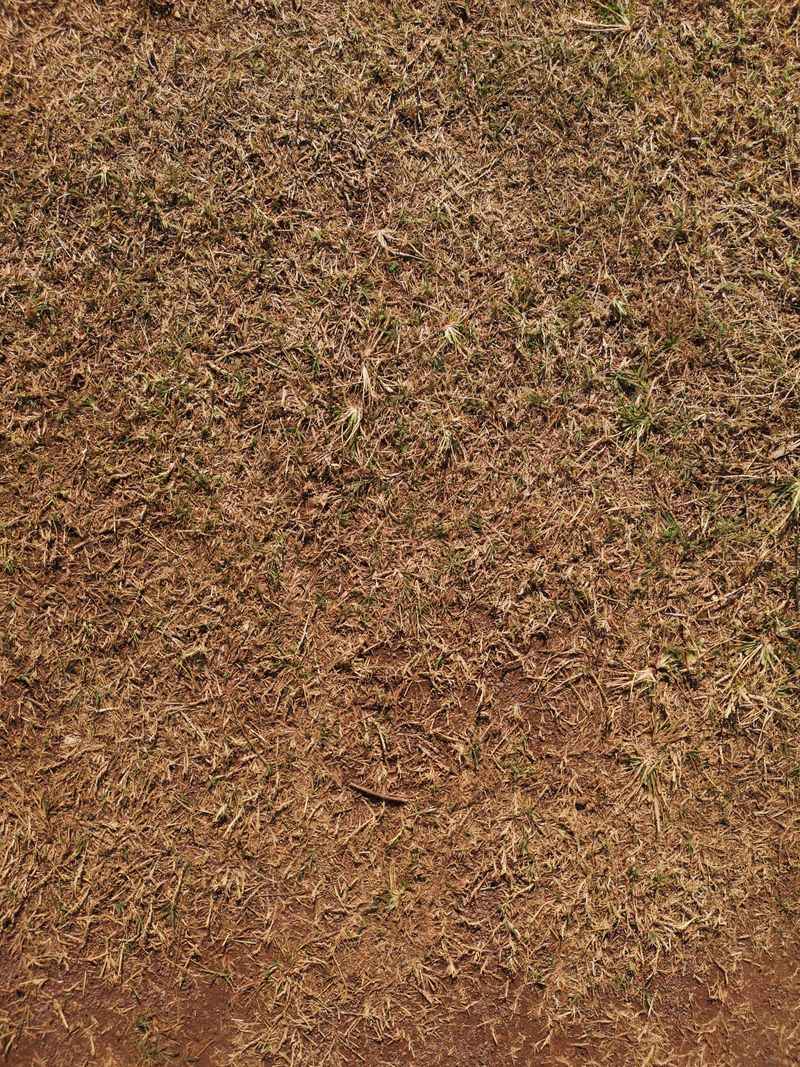
Grass requires nutrients to grow properly. When the soil runs low on key nutrients like nitrogen or iron, your lawn starts showing its deficiency in the most visible way possible, turning yellow, pale, or brown.
Nitrogen is the nutrient most responsible for that deep, rich green color everyone wants. Without enough of it, older grass blades turn yellow-green first, and the lawn appears faded and thin.
Iron deficiency looks slightly different, causing a yellowing between the grass blade veins while the veins themselves stay green. This pattern, called interveinal chlorosis, is most common in lawns with high soil pH.
A soil test from your local extension office or garden center is the smartest starting point. Knowing exactly what your soil lacks helps you choose the right fertilizer instead of guessing at the store.
Nitrogen fertilizers come in quick-release and slow-release forms. Quick-release options green up the lawn fast, while slow-release versions feed the grass steadily over several weeks without the risk of burning.
For iron deficiency, a liquid iron supplement sprayed directly on the blades works quickly. You can often see results within days, as the grass shifts back toward a healthier shade of green.
Soil pH also affects how well grass absorbs nutrients. If your pH is too high, adding sulfur can bring it down and unlock the nutrients already present in your soil for better grass health.
7. Thatch Buildup Blocking Water And Air
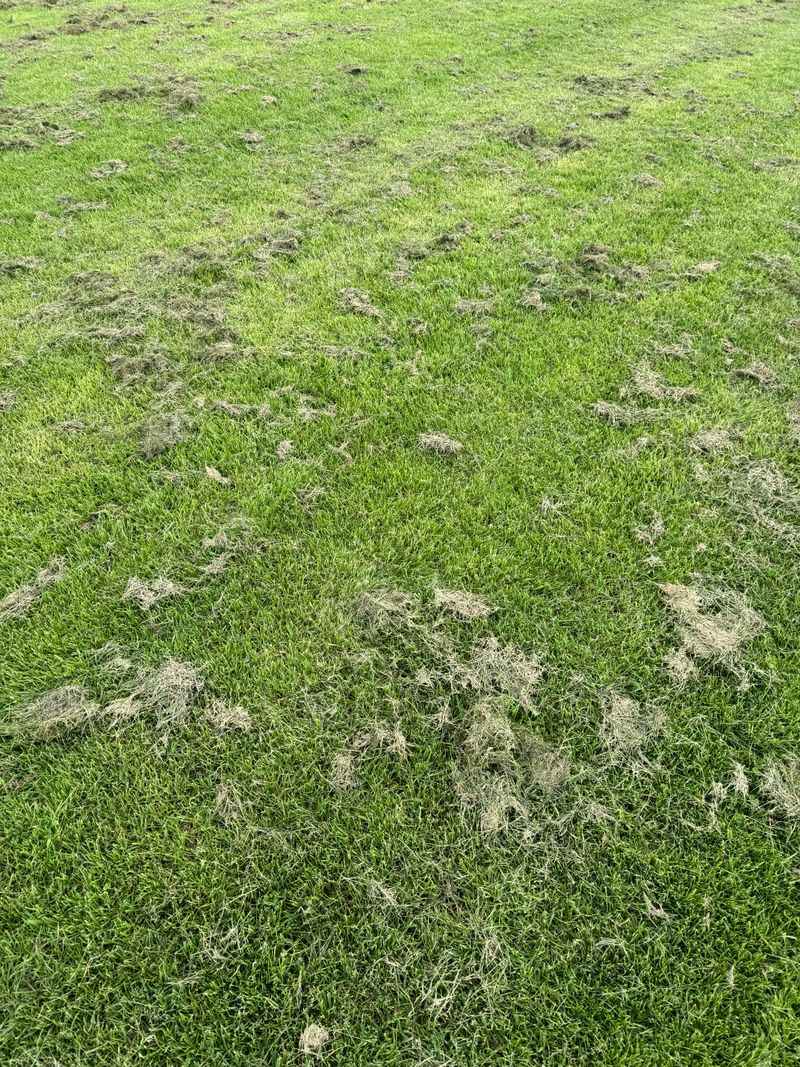
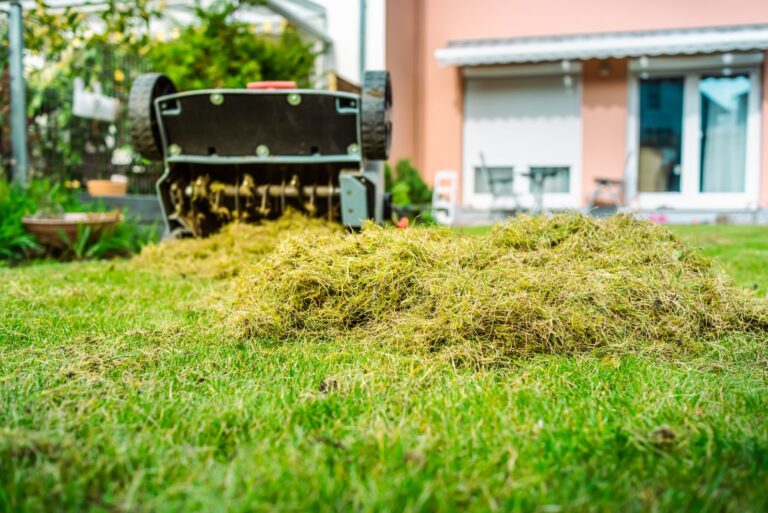
A layer beneath the grass surface can cause hidden problems. Thatch is a dense mat of decomposing grass stems, roots, and debris that builds up between the soil surface and the green blades above.
A thin layer of thatch, about half an inch, is actually beneficial. It insulates the soil and protects roots from temperature swings, acting like a natural mulch layer beneath your grass.
Problems start when thatch grows thicker than three-quarters of an inch. At that point, it acts like a sponge that holds moisture near the surface while blocking water, air, and nutrients from reaching the roots below.
Grass growing in a thick thatch layer often looks stressed, thin, and brownish even when the weather seems fine. The roots become deprived of air and water in the mat above the soil.
Dethatching with a power rake or vertical mower removes the excess buildup efficiently. This process is aggressive but necessary when the thatch layer has grown out of control over several seasons.
The best time to dethatch cool-season grasses is early fall. For warm-season types, late spring offers the right growing conditions for quick recovery after dethatching is complete.
Preventing heavy thatch buildup is easier than fixing it. Avoid over-fertilizing with nitrogen, water deeply but infrequently, and aerate annually to keep your lawn breathing freely all season long.
8. Fertilizer Overuse Harming The Lawn
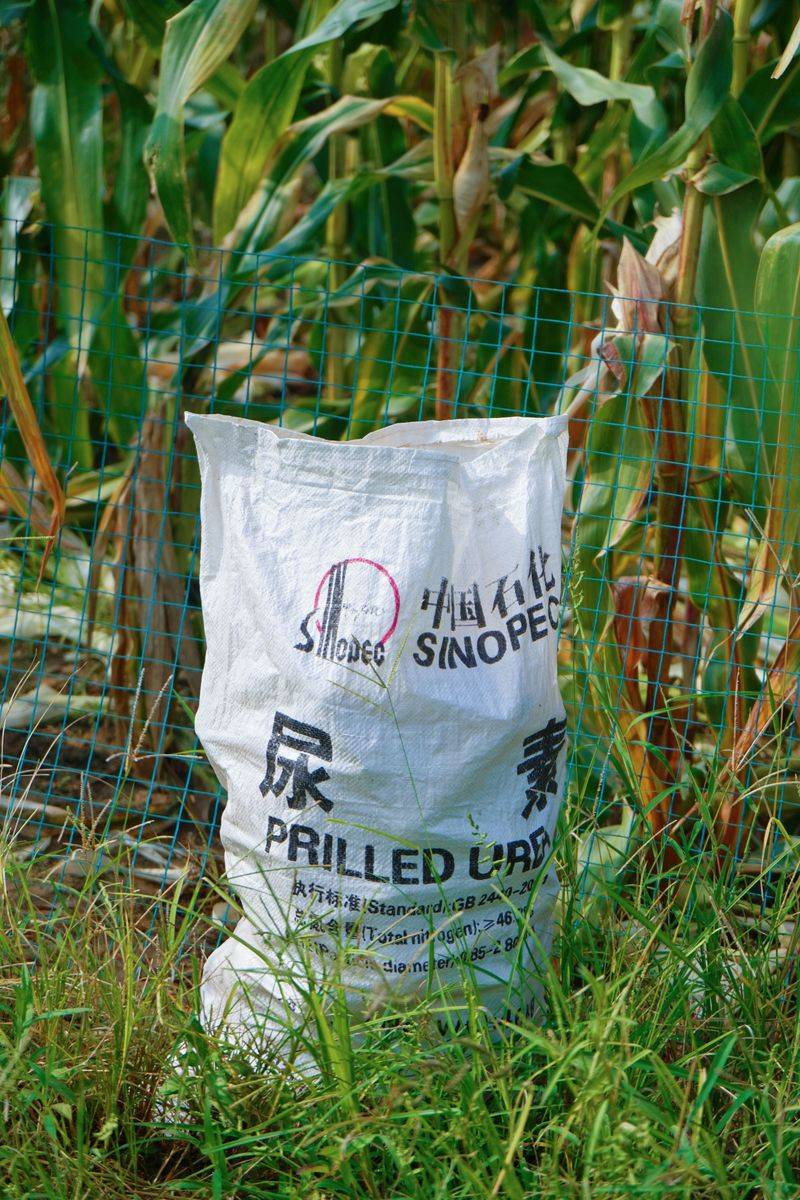
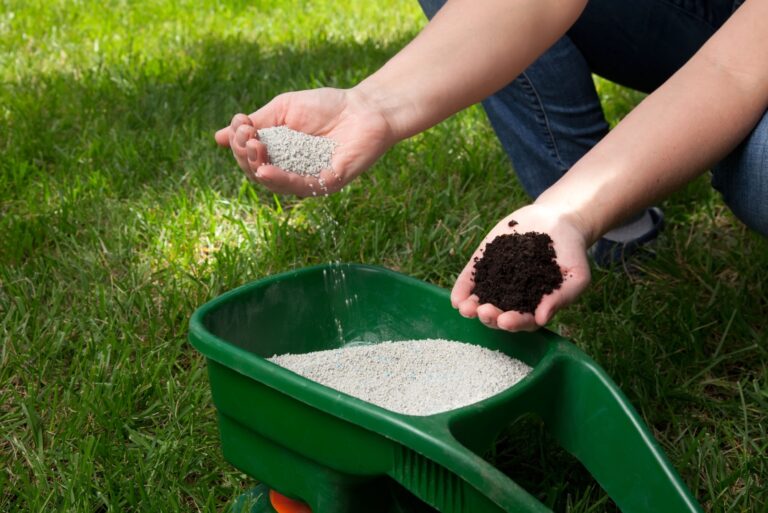
More is not always better, especially when it comes to lawn fertilizer. Applying too much at once can damage your grass, leaving behind brown streaks and patches that resemble burn damage.
Fertilizer burn happens when excess salts from the product pull moisture out of the grass blades. The grass essentially gets dehydrated from the outside, even if the soil below still has plenty of water.
You will often see burn in straight lines or patterns that match your spreader path. This striping effect makes fertilizer overuse easy to identify once you know what to look for.
The most common mistake is applying granular fertilizer to wet grass or using too high a rate per square foot. Always follow the label instructions carefully, since more product does not mean faster or greener results.
Watering deeply right after applying granular fertilizer helps dissolve the product and push it down into the soil. This step reduces the risk of burn and gets nutrients to the root zone more quickly.
If burn has already occurred, flush the area thoroughly with water for several days in a row. Diluting the excess salts in the soil gives the grass a chance to recover on its own.
Choosing a slow-release fertilizer reduces burn risk significantly. These formulas break down gradually, feeding the lawn steadily without overwhelming the grass with a sudden surge of concentrated nutrients and salts.