This Is Where Lily Leaf Beetles Damage Michigan Lilies First Before The Whole Plant Looks Ragged
Your lilies looked untouched this morning. By tonight, half the leaves are gone, and you’re left wondering what could move that fast without a single warning sign.
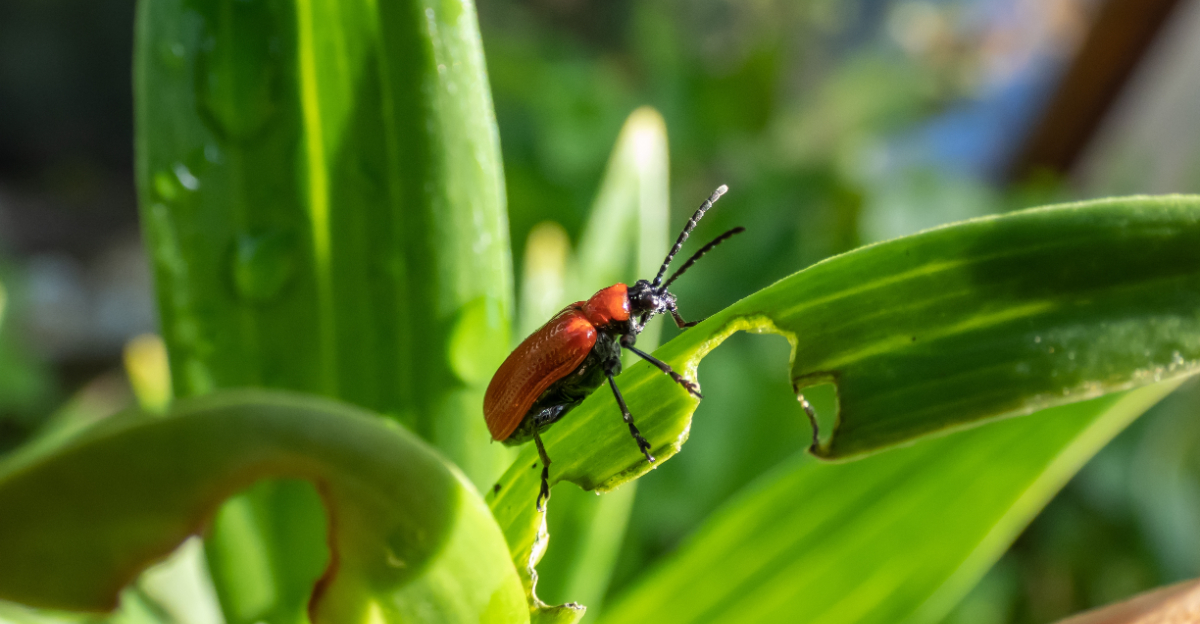
The culprit is small, unmistakably red, and moving faster than most gardeners expect this early in the season. While temperatures are still climbing, it’s already in full swing.
Most people notice only once leaves are riddled with holes and stems look hollowed out. By then, the one window that actually mattered has already closed.
There’s one exact spot on the plant where this all begins, and that’s where the season gets decided. Know where to look, and you’re already ahead of it.
Undersides Of Young Leaves Show The First Bites
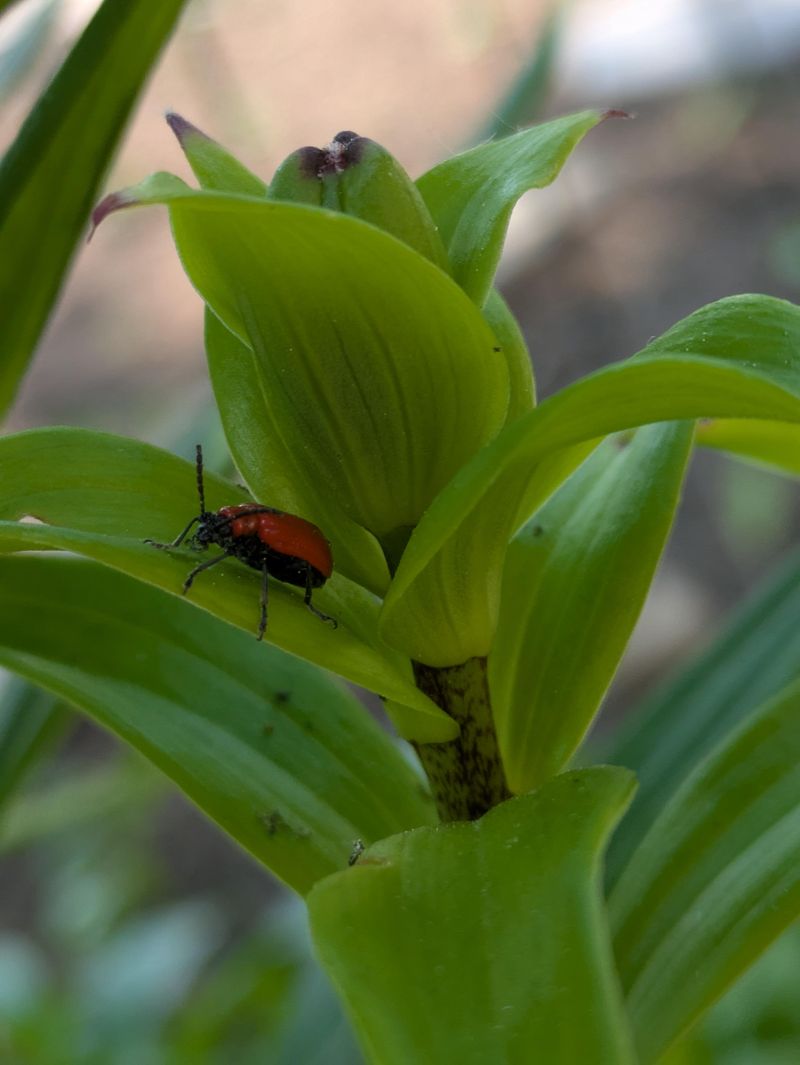
Flip a leaf over and you might get a nasty surprise. The underside of young lily leaves is the very first place lily leaf beetles damage Michigan lilies, and most gardeners never think to look there.
Larvae hatch on the leaf underside because it offers shelter from sunlight. They feed in clusters, chewing through tender leaf tissue before moving anywhere else.
What makes this sneaky is that the top of the leaf can look perfectly fine at first. You are essentially watching destruction happen from below while the surface stays green and deceiving.
The larvae also cover themselves in their own dark waste, which looks like mud or dirt. This disguise keeps birds from spotting them, giving the pests more time to feed undisturbed.
Young leaves are the target because the tissue is softer and easier to chew through. Older, tougher leaves get attacked later once the population grows larger.
Checking the undersides of new growth every few days in spring is your best early warning system. A single larva can strip a leaf in under two days if left alone.
You will notice small, irregular holes or translucent patches where feeding has thinned the leaf. These patches turn brown quickly and make the plant look ragged within a week.
Catching larvae on the undersides early means you stop the problem before it explodes. Turn those leaves over and take a close look. What you find might genuinely surprise you.
Adults Emerge Early And Start The Damage Cycle
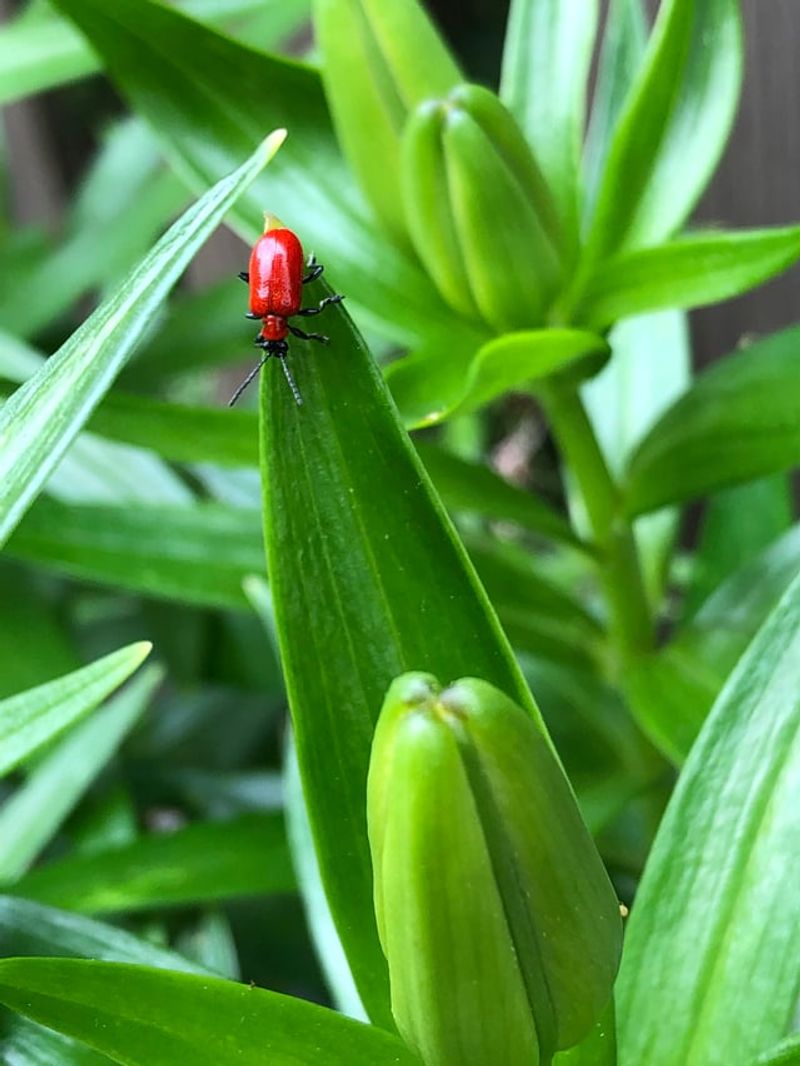
Bright red and almost pretty, the adult lily leaf beetle fools a lot of gardeners into thinking it is harmless. The color is misleading, though, since these insects are aggressive eaters right from the moment they emerge.
Adults overwinter in soil and leaf litter, then wake up as soon as the soil starts warming in early spring. In Michigan, that often means late March or early April, well before most gardeners are thinking about pest control.
The first thing adults do after emerging is eat. They chew on lily stems and leaves immediately, fueling up before mating season begins in earnest.
Adult feeding creates clean, rounded holes in leaves and stems. The damage looks different from larval feeding, which tends to be more ragged and widespread across the leaf surface.
Your Michigan Garden Changes Every Week. Your Plan Should Too.
Gardening in Michigan changes quickly throughout the season. Every Friday you’ll receive a simple weekly plan showing exactly what to plant, prune, fertilize, harvest, and protect so you never miss the right timing.
After feeding, adults mate quickly and females begin laying rows of orange-red eggs on leaf undersides. One female can deposit anywhere from 250 to 450 eggs in a season, so early adults matter a lot.
The window between adult emergence and egg hatching is actually your best opportunity to break the cycle. Removing adults by hand before they lay eggs cuts off much of the next generation.
Look for the shiny red beetles on stems and the tops of emerging foliage on warm spring mornings. They are most active when sunlight hits the plants directly.
Missing this early window means the population doubles fast. Spotting those first red adults is the key to keeping lily leaf beetles from taking over your Michigan garden.
Larvae Cause Far More Destruction Than Adults
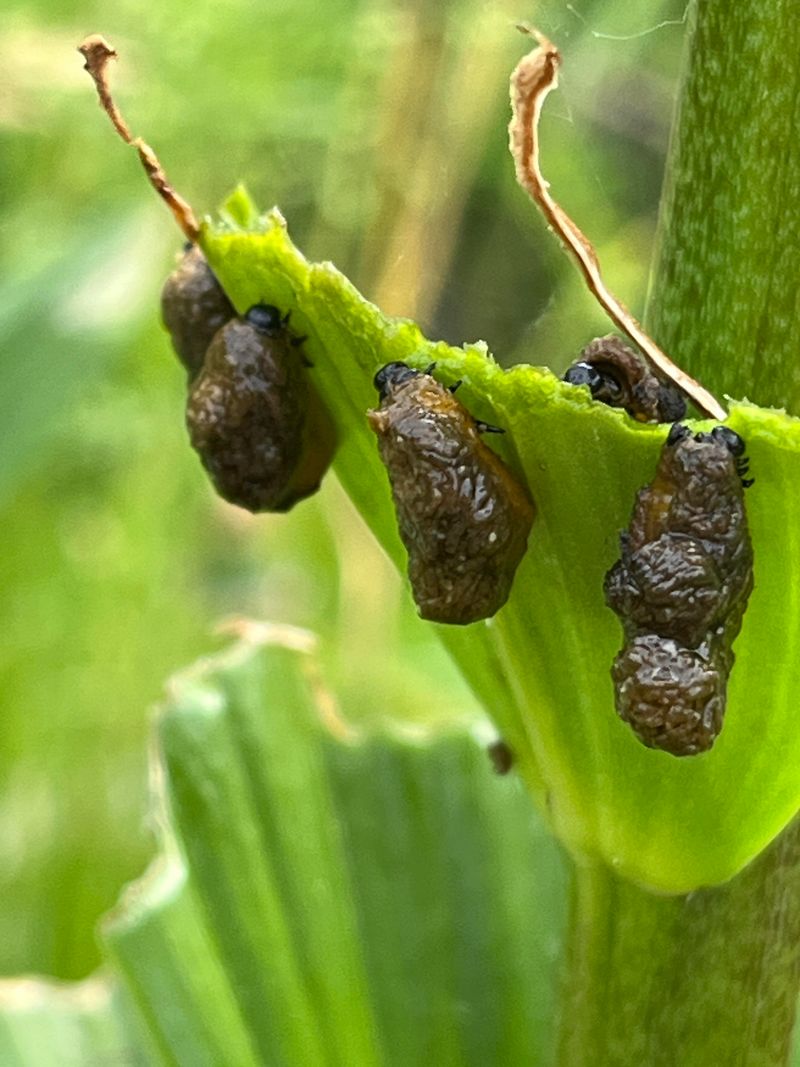
Most people blame the red adult beetle for ruining their lilies, but the larvae are actually the bigger problem. Larval feeding is relentless, continuous, and far more damaging to the overall plant structure.
A single larva eats almost constantly for two to three weeks before dropping into the soil to pupate. During that stretch, it strips leaf after leaf without stopping for much of anything.
Groups of larvae can defoliate an entire lily stem in less than a week under warm conditions. When you see a plant stripped down to bare stems, larvae are almost always the cause.
They feed from the leaf edges inward, leaving behind a skeleton of veins in severe cases. The plant loses its ability to photosynthesize properly, which weakens the bulb underground for next season.
Unlike adults, larvae do not fly away when disturbed. They tend to drop off the leaf and curl into a ball, which is actually a useful behavior you can exploit during hand removal.
Placing a sheet of light-colored paper or cloth under the plant before disturbing it helps you catch falling larvae. Collect and drop them into soapy water to stop them from climbing back up.
The mucky coating larvae wear makes them harder to see at a glance on dirty or damp foliage. Knowing what to look for, a dark, glistening blob on a leaf, helps you spot them faster.
Controlling larvae early protects not just this season but next year too. A weakened bulb means a weaker plant, and that cycle compounds over time.
Distinguishing Their Feeding Pattern From Other Pests
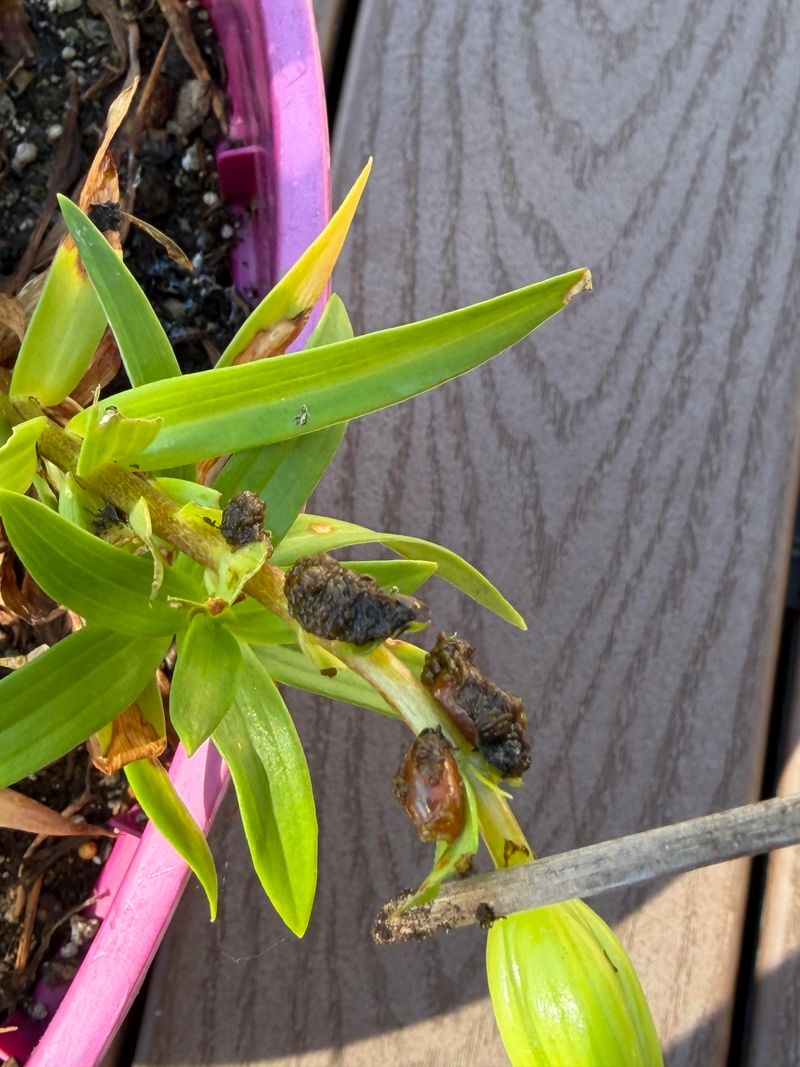
Not every chewed leaf means lily leaf beetles are to blame. Knowing how to read the damage pattern saves you from treating the wrong pest entirely.
Beetle adults leave clean, round to oval holes in leaves, often near the edges or center. The cuts are crisp, not ragged, and the surrounding leaf tissue stays green and intact at first.
Slugs, by comparison, leave slimy trails and tend to chew in irregular, wandering patterns across the leaf surface. Slug damage also tends to appear overnight, while beetle feeding happens during daylight hours.
Aphids do not chew holes at all. They pierce and suck, causing leaves to curl, yellow, or pucker. If your lily leaves look twisted instead of holey, aphids are the more likely suspect.
Deer damage is usually obvious because entire stems get snapped or stripped at one height. Beetle damage is scattered across multiple leaves at different levels on the same plant.
Japanese beetles chew in a skeletonizing pattern, leaving the leaf veins behind while consuming everything else. Lily leaf beetles are less methodical, leaving more random patches of missing tissue.
The presence of orange-red eggs on the leaf underside is the clearest confirmation of lily leaf beetle activity. Few common garden pests in Michigan lay eggs that look quite like those tiny, lined-up orange dots.
Matching the damage type to the right pest means your response is targeted and effective. Misreading the signs wastes time and lets the real culprit keep feeding.
Michigan’s Spread Means Earlier Monitoring Matters
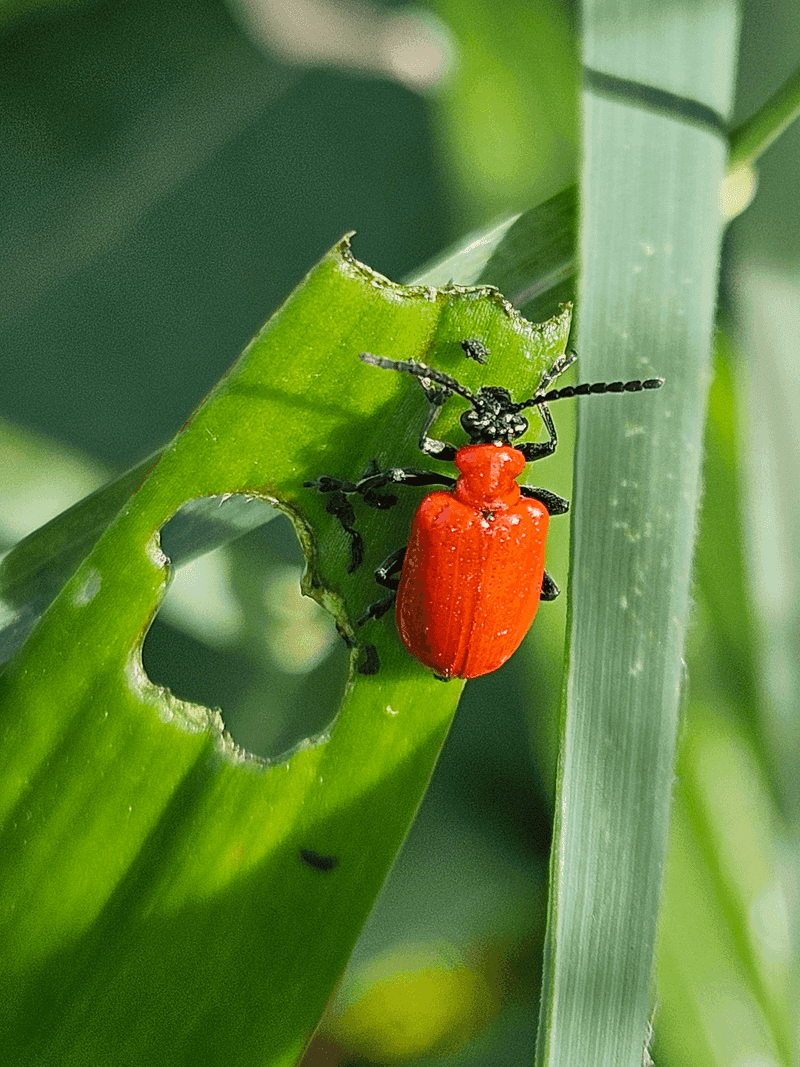
Lily leaf beetles were once an East Coast problem, spotted mostly in New England after arriving from Europe decades ago. Now they have pushed steadily westward, and Michigan gardens are squarely in their expanding territory.
The spread across the state has not been uniform. Some counties reported infestations years before neighboring areas did. That uneven pattern means gardeners in one town might be dealing with heavy populations while the next town over has barely seen one.
Warming spring temperatures in the Great Lakes region have helped beetles emerge earlier than historical records suggested they would. What was once a mid-April emergence is now sometimes happening in late March in southern parts of the state.
Earlier emergence means a longer feeding and breeding season, which translates directly into larger populations by midsummer. More beetles equal more eggs, more larvae, and far more damage per plant.
Gardeners in the northern Lower Peninsula and Upper Peninsula should not assume they are safe. Reports from those regions continue to grow as the beetle pushes beyond southeast Michigan.
Joining local gardening groups or checking with your county extension office gives you real-time information about beetle activity nearby. Knowing your neighbors spotted beetles two weeks ago is a useful heads-up for your own garden.
Start monitoring your lilies at least two weeks earlier than you think necessary. The beetles are moving faster than most casual gardeners realize, and early action is what separates a healthy garden from a devastated one.
Michigan’s landscape is changing, and the pests are changing with it. Getting ahead of lily leaf beetles means starting before they have a chance to establish.
Catching Damage Before It Reaches The Flowers
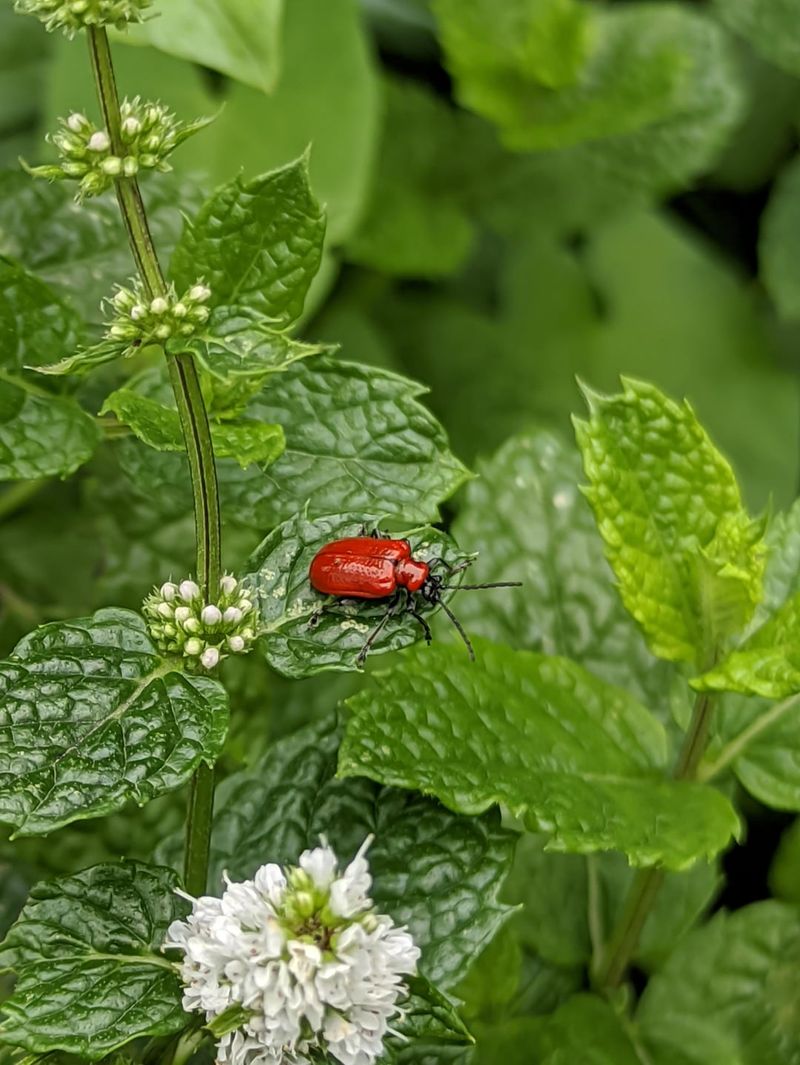
Most gardeners only notice something is wrong when the flowers look chewed or the buds fail to open. By that point, the beetles have already been feeding for weeks and the plant has taken real damage.
The goal is to catch lily leaf beetle activity while it is still limited to the lower and middle leaves. That window gives you time to act without losing the blooms you waited all season to enjoy.
Start your checks in early spring as soon as lily shoots break through the soil surface. The beetles will be there before the plant is even ankle-high, so do not wait for the plant to fill out.
Focus your attention on the newest, most tender growth at the top of each stem. Adults gravitate toward the softest tissue, which is almost always the emerging tip growth.
Check every three to four days during peak season, which runs from late April through June in most of the state. Consistency matters more than intensity. Brief, frequent checks beat a single thorough inspection once a month.
Hand-picking adults and larvae into soapy water is one of the most effective methods available to home gardeners. It requires patience but causes no chemical harm to pollinators or surrounding plants.
Neem oil sprays applied to the undersides of leaves can deter egg-laying and slow larval development. Reapply after rain since the coating washes off and loses effectiveness quickly.
Protecting your lilies from lily leaf beetles is very achievable with consistent early effort. Catch the problem low on the plant, and your flowers will thank you all summer long.