The Native Michigan Plant That Softens Gravel Edges Without Letting Weeds Win
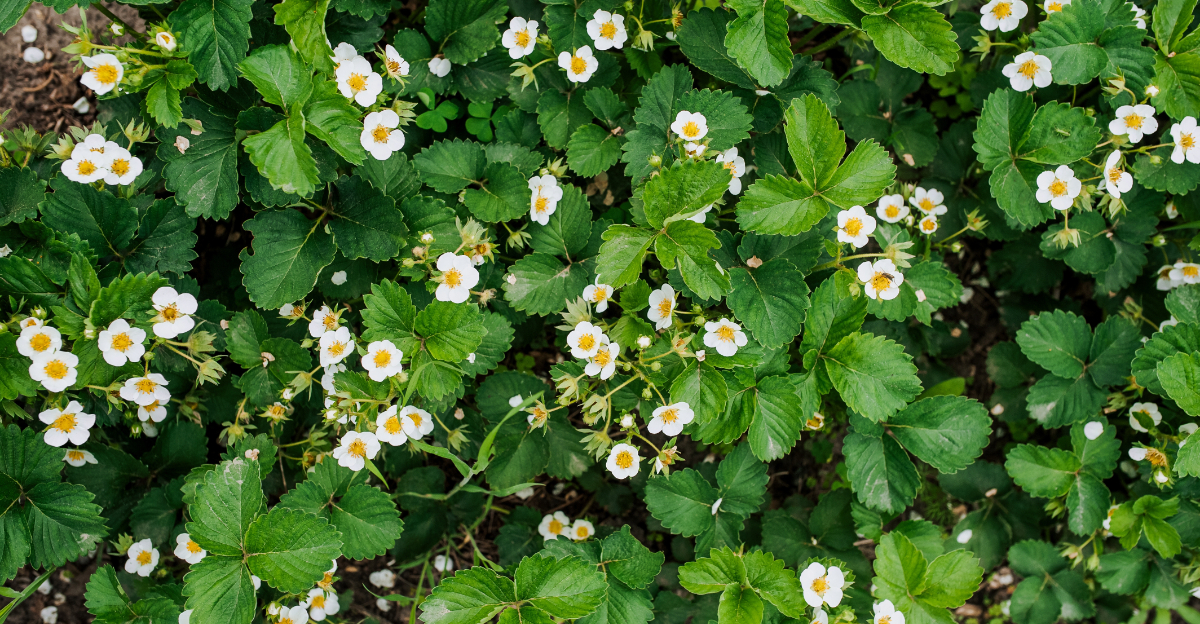
Wild strawberry, or Fragaria virginiana, gives Michigan gardeners a native option that softens gravel edges while keeping weeds from gaining much ground.
This low growing plant spreads through runners, quickly filling gaps along gravel paths without becoming difficult to manage. Its small white blooms in spring give way to tiny, sweet berries that add unexpected charm to a simple border.
Wild strawberry tolerates the poor, well draining soil common along gravel edges, thriving in conditions many ornamental plants find too harsh.
Once established, its dense, spreading growth naturally crowds out weeds by limiting the space they need to take hold.
This native plant also requires little watering, adapting well to the dry stretches typical near gravel areas. Its berries offer a small food source for birds and other wildlife throughout summer.
Choosing wild strawberry turns a plain gravel border into something both functional and quietly rewarding.
1. Wild Strawberry Creates A Living Edge Around Gravel
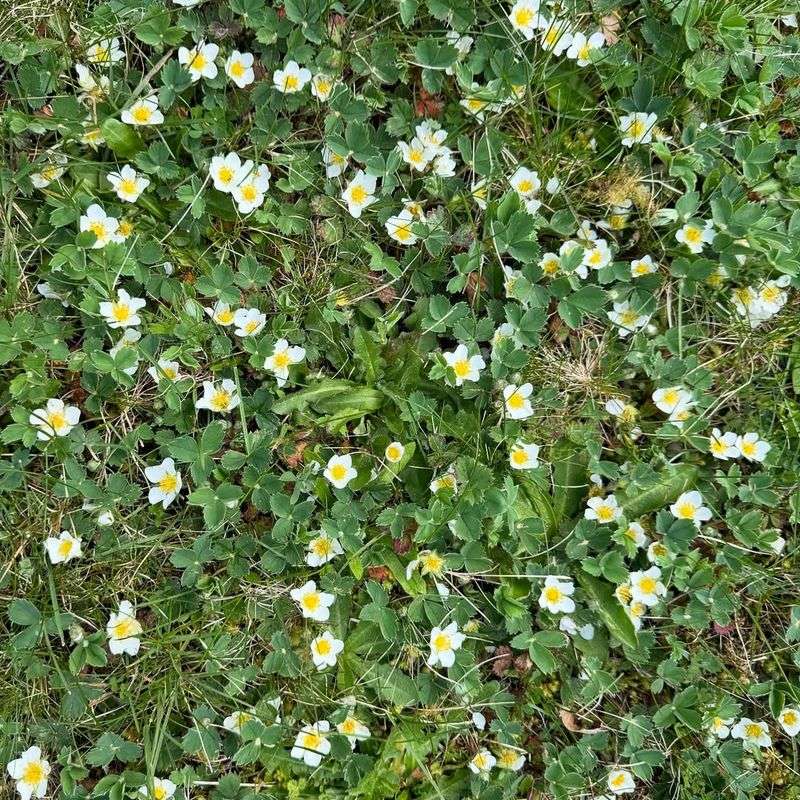
Picture a gravel path with sharp, bare edges where soil meets stone. Now imagine that same edge softened by a carpet of rich green leaves, dotted with tiny white flowers each spring.
That transformation is exactly what Fragaria virginiana, the Wild Strawberry, brings to a Michigan garden.
This native perennial stays low to the ground, rarely growing taller than six to eight inches. Its trifoliate leaves form a tidy, appealing mat that creates a smooth visual transition between the hard surface of gravel and the softer, planted areas nearby.
Rather than looking abrupt or unfinished, a gravel edge planted with Wild Strawberry looks intentional and naturally polished.
One important thing to keep in mind is placement. Wild Strawberry works best growing beside gravel, not in sections that receive regular vehicle or heavy foot traffic.
Repeated crushing will stress the plants and slow their spread. Along a driveway margin, a walking path border, or a garden entrance, the plant thrives beautifully without being disturbed.
What makes this plant especially appealing for Michigan gardeners is that it is native to the region. It has adapted over centuries to local soils, seasonal rainfall, and temperature swings.
That means less babying, fewer special inputs, and a plant that genuinely belongs in the landscape rather than fighting against it.
Spring brings small white flowers that add a delicate, cheerful quality to the edge. By summer, the dense foliage takes over, keeping the border looking full and cared for all season long.
2. Runners Help Wild Strawberry Fill Open Soil
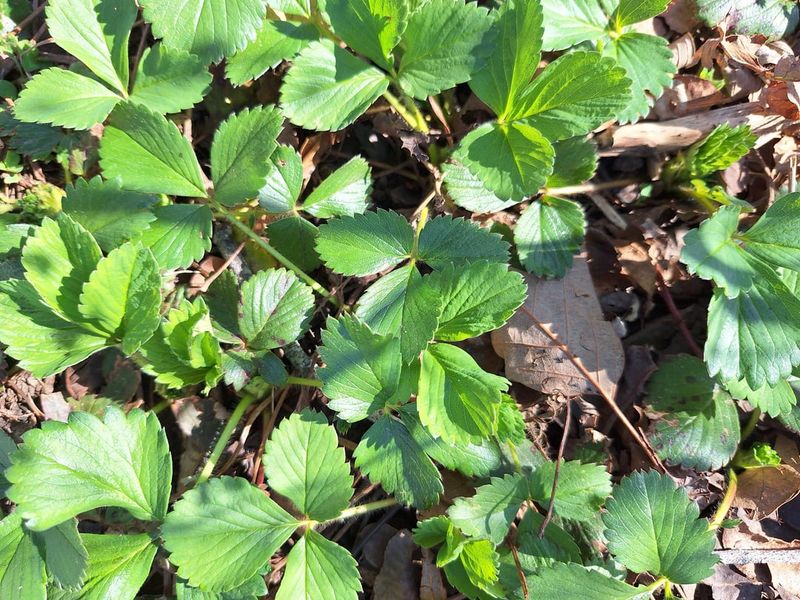
One of the most useful things about Wild Strawberry is the way it moves. Unlike plants that stay put in one clump forever, Fragaria virginiana sends out horizontal stems called runners.
These runners creep along the soil surface, and wherever they touch down, a new rooted plant begins to form.
Over time, this creates a connected web of plants that fills open ground naturally. You plant a few plugs, water them in, and the strawberries do the rest.
Michigan State University trials found that Wild Strawberry filled in well during its first growing season when planted from nursery-grown plugs, which is encouraging news for gardeners eager to see results.
Your Michigan Garden Changes Every Week. Your Plan Should Too.
Gardening in Michigan changes quickly throughout the season. Every Friday you’ll receive a simple weekly plan showing exactly what to plant, prune, fertilize, harvest, and protect so you never miss the right timing.
That said, how fast your planting fills in will depend on several real-world factors. Soil quality, moisture levels, plant spacing, and the amount of sunlight all influence how quickly runners establish and root.
Sandy, well-drained soil with reasonable moisture tends to support faster spreading than compacted or very dry ground.
Spacing plugs closer together at the start gives runners less distance to travel before they meet, which speeds up coverage.
A good rule of thumb is to plant plugs roughly six to twelve inches apart, depending on how quickly you want the area to fill in.
Watching the runners spread is honestly one of the more satisfying parts of growing Wild Strawberry. Each new plantlet that roots down represents one more square inch of ground covered and one fewer opportunity for a weed to move in and take hold.
3. Low Foliage Softens Hard Gravel Lines
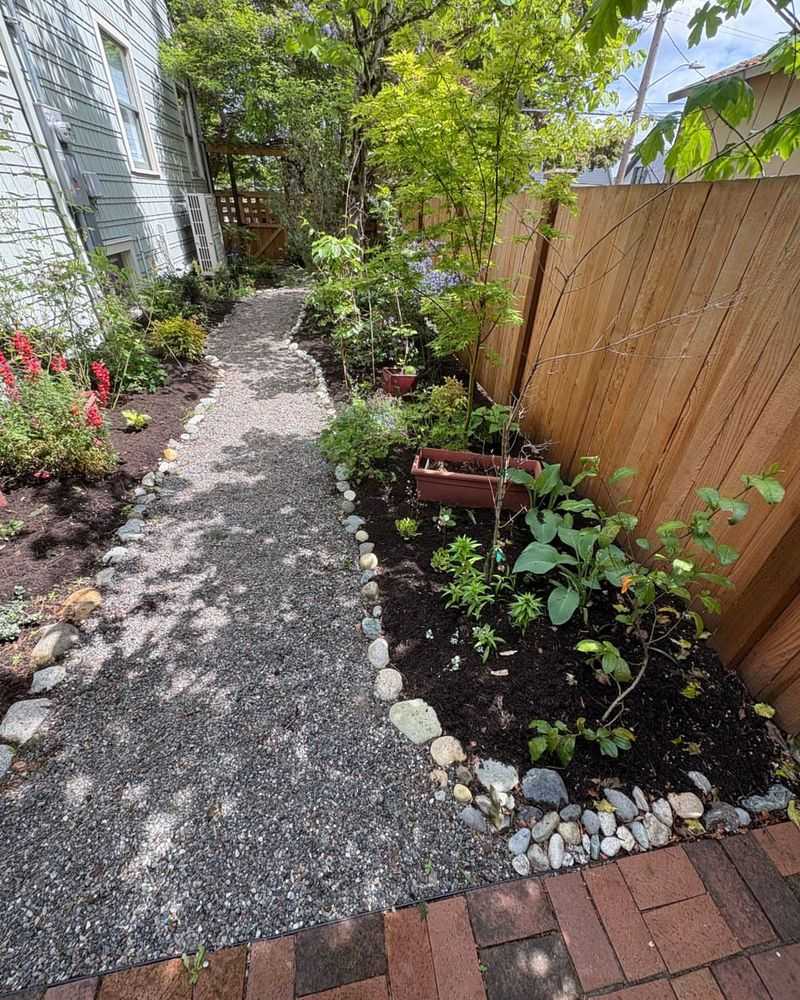
Gravel paths and driveways are practical and attractive, but their edges can look stiff and unnatural without some plant life to soften them. Wild Strawberry solves that problem without taking over.
The plant generally stays under one foot tall, forming a leafy, ground-hugging layer that blurs the sharp line between stone and soil.
Because it stays so low, Wild Strawberry does not block views of taller flowers, shrubs, or path features behind it. Taller plants in the background remain fully visible, while the strawberry creates a lush foreground layer that ties everything together.
It works almost like a picture frame for the rest of your garden. Along curved path edges, the plant follows the contour naturally, which makes it far more visually appealing than a hard-edged border material.
Driveway margins benefit especially well because the foliage softens what can otherwise be a stark, utilitarian look.
Stone borders around sunny garden entrances also pair beautifully with Wild Strawberry because the plant highlights the stonework rather than competing with it.
For gardeners who want a polished, finished look without spending hours on edging and trimming, Wild Strawberry delivers. The leaves are attractive enough to carry the space even when the plant is not in flower.
Their deep green color holds well through summer, and in fall, Michigan gardeners often see the foliage shift to warm red and bronze tones that add a seasonal bonus.
Few plants at this height offer as much visual impact with as little maintenance. That combination is genuinely hard to beat.
4. Dense Coverage Gives New Weeds Less Space
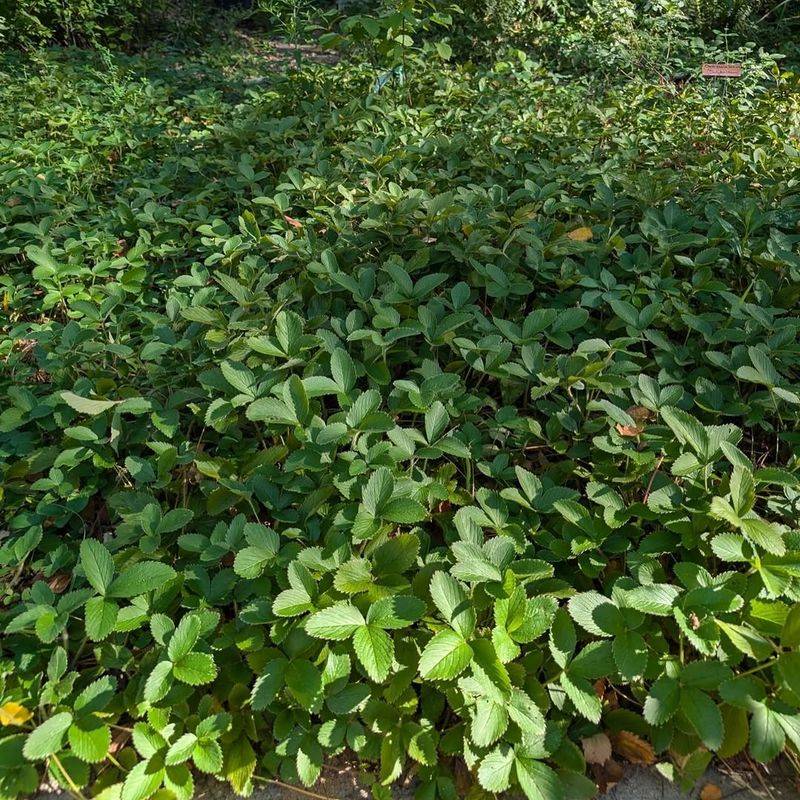
Weeds need open soil to get started. Every bare patch between gravel and a garden bed is an open invitation for weed seeds to land, germinate, and take root.
Wild Strawberry works against that by filling the soil with a dense, leafy layer that leaves very little room for unwanted plants to establish themselves.
When plugs are spaced closely and runners are encouraged to fill the gaps, the resulting mat of foliage shades the soil underneath.
That shade reduces the amount of light reaching the surface, which is exactly what many weed seeds need to sprout. Less light means fewer successful germinations, and fewer germinations means less weeding for you.
However, it is worth being realistic about what any ground cover can and cannot do. Wild Strawberry will not stop every weed, especially stubborn perennial ones with deep roots.
Before you plant, remove any existing perennial weeds completely. Leaving roots in the soil gives them a head start that young strawberry runners cannot easily overcome.
During the establishment period, keep an eye on any gaps between plants. Young weeds that sprout in those spaces should be pulled while they are still small and easy to remove.
Once the strawberry runners close those gaps, maintenance becomes much easier. Think of it as a two-phase process. The first season requires some active monitoring and weeding.
By the second season, a well-established Wild Strawberry planting rewards that early effort with a ground layer that genuinely holds its own against most weed pressure. Patience in year one pays off beautifully.
5. Wild Strawberry Handles Sun And Partial Shade
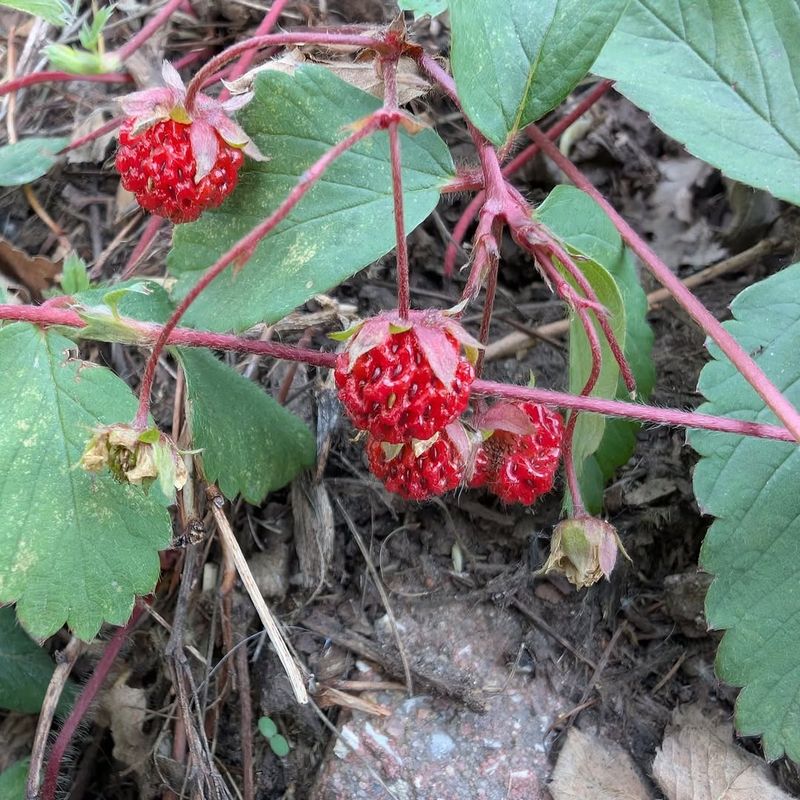
Not every garden edge gets the same amount of sunlight. A gravel path might start in a bright, open section of the yard and then curve under the canopy of a tree or alongside a fence.
Most plants struggle when conditions shift like that, but Wild Strawberry handles the change with ease.
Fragaria virginiana grows well in full sun and in partial shade, which makes it genuinely flexible for Michigan landscapes where light conditions vary across a single border.
That adaptability means you can plant it continuously along an edge without switching to a different species partway through, keeping the look consistent and cohesive.
In sunnier spots, the plant tends to flower more freely and spread with a bit more energy. The trade-off is that sunny locations beside gravel can dry out faster, especially during Michigan summers.
During the establishment period, plants in full sun will benefit from consistent watering to help their root systems develop before heat and drought stress become a concern.
Shadier sections tend to produce slightly thinner growth and fewer flowers than sunnier spots. Very dense shade, like the deep shadow under a thick evergreen canopy, may push the plant toward sparse, weak growth.
For best results, aim for locations that receive at least a few hours of direct sun each day, even if the rest of the time is spent in dappled shade.
For most Michigan garden edges, partial shade is no barrier at all. Wild Strawberry simply adjusts and keeps growing, which is exactly the kind of reliability a gardener wants from a border plant.
6. Well Drained Soil Supports The Strongest Coverage
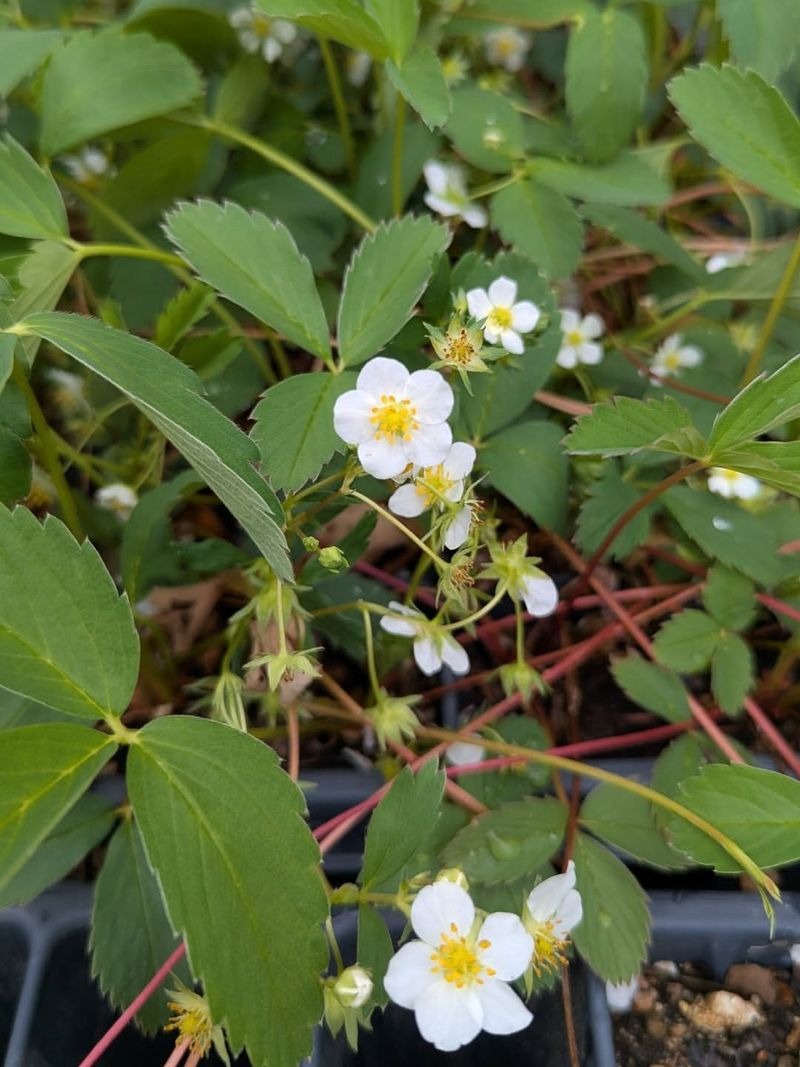
Soil conditions matter more than most gardeners realize when it comes to ground covers. Wild Strawberry performs best in sandy or loamy soil with moderate to relatively dry moisture levels.
Fortunately, that description matches a lot of the soil found right beside gravel edges in Michigan gardens, where drainage tends to be fast and moisture does not linger.
Gravel pulls heat and sheds water quickly, which means the soil strip alongside it often stays on the drier side. For many plants, that would be a problem.
For Wild Strawberry, it is close to ideal, as long as some natural topsoil and organic matter remain in the planting area to support root development and nutrient uptake.
Where the planting strip has been disturbed by construction, filled with compacted subsoil, or buried under leftover gravel and building material, the situation is different.
Planting directly into compacted or poorly structured soil will result in slow growth and weak coverage.
Before planting, loosen the soil in the planting strip and mix in a modest amount of compost to improve structure and moisture retention without creating soggy conditions.
Waterlogged soil is the other extreme to avoid. Wild Strawberry roots do not tolerate sitting in standing water, and soil that stays saturated for extended periods will stress the plants and prevent runners from establishing properly.
Once plugs are in the ground, water them consistently for the first few weeks.
After roots establish, Wild Strawberry becomes notably more self-sufficient, requiring far less supplemental watering than many other perennial ground covers would demand in similar conditions.
7. Spring Flowers Support Helpful Michigan Insects
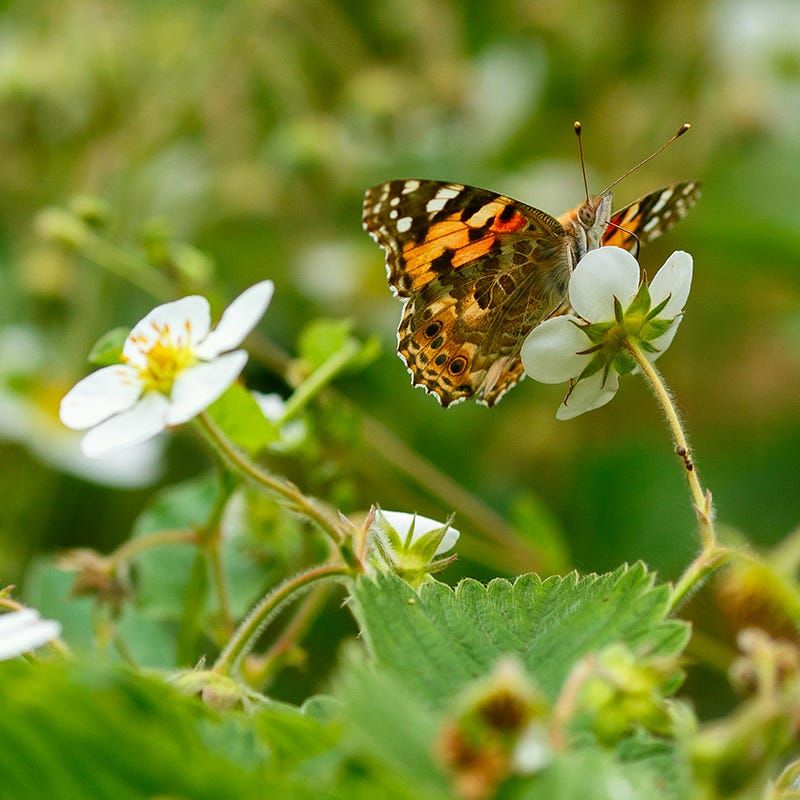
Every spring, Wild Strawberry puts on a quiet but meaningful show. The small white flowers that appear across the plant may not be as showy as a rose or a coneflower, but they carry real value for the Michigan garden ecosystem.
Their simple, open structure makes nectar and pollen easy for insects to access. Sweat bees, carpenter bees, butterflies, and moths are among the visitors that Wild Strawberry flowers can attract during bloom season.
These insects play important roles in the garden, moving pollen between plants and keeping the broader ecosystem healthy and productive. Welcoming them in is one of the easiest things a gardener can do.
Michigan State University research found that Wild Strawberry is attractive to natural enemies of common garden pests during its bloom period.
Parasitic wasps, predatory beetles, and other beneficial insects that help manage aphids and other pest populations are drawn to the flowers for nectar and habitat. That connection between the plant and pest management is subtle but genuinely useful.
It would be overstating things to suggest that Wild Strawberry alone will handle every pest challenge in the garden. Pest management is always complex, and no single plant is a complete solution.
What Wild Strawberry does offer is a supportive environment that encourages the kinds of insects that naturally help keep pest populations in check.
Adding a plant that blooms for beneficial insects while also softening a gravel edge and suppressing weeds is the kind of layered value that makes Wild Strawberry stand out as a genuinely smart choice for Michigan gardeners.
8. Simple Establishment Helps Wild Strawberry Outcompete Weeds
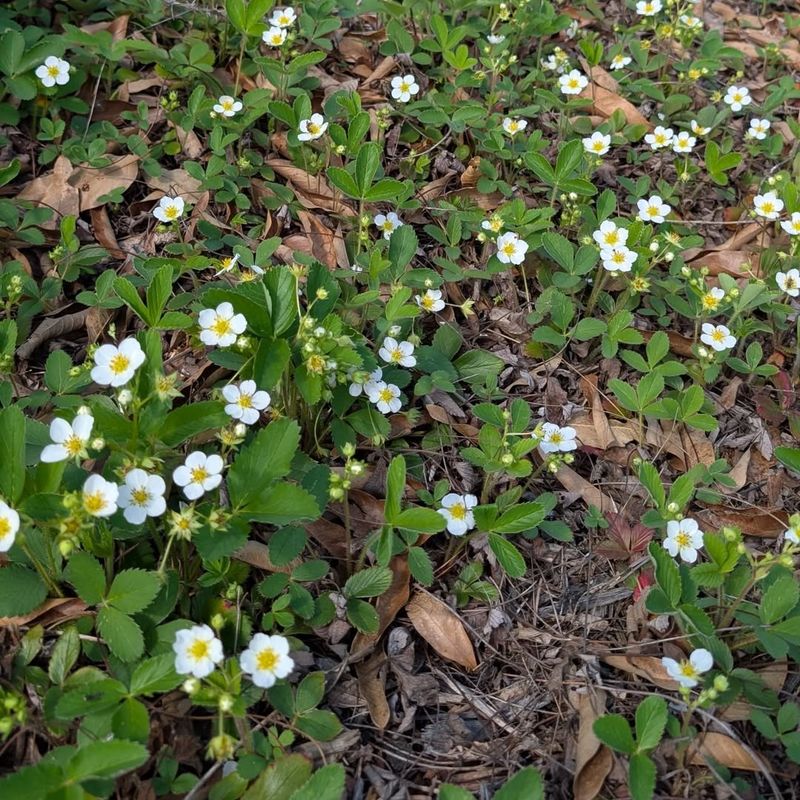
Getting Wild Strawberry off to a strong start does not require complicated techniques or expensive equipment.
A straightforward planting plan, followed consistently during the first season, sets the foundation for a ground cover that will reward you for years.
The most important step happens before a single plug goes into the ground: clear out any existing weeds completely.
Perennial weeds with established root systems are the biggest threat to a new planting. Removing them before you plant gives the strawberry runners a fair chance to spread without competition from plants that have a significant head start.
Take the time to pull or dig out roots rather than just cutting the tops off.
Once the area is clear, place nursery-grown plugs closely enough that their runners will meet and fill the gaps within the first growing season. Spacing them roughly six to twelve inches apart works well for most situations.
Closer spacing costs a bit more upfront but produces a dense, weed-resistant mat much faster.
After planting, apply a light layer of organic mulch between the young plants. The mulch helps hold moisture, moderates soil temperature, and slows down any weed seeds that do land in the open spaces.
As the strawberry runners spread and the canopy closes in, gradually reduce the mulch layer so the new plantlets can root down easily.
Water during dry spells, especially in the first six to eight weeks. Once runners begin rooting, the planting becomes increasingly self-sufficient.
Trim any runners that creep into the gravel surface or wander into beds with delicate plants to keep the planting tidy and contained.