What It Really Means When Steller’s Jays Crowd Your Oregon Yard In August
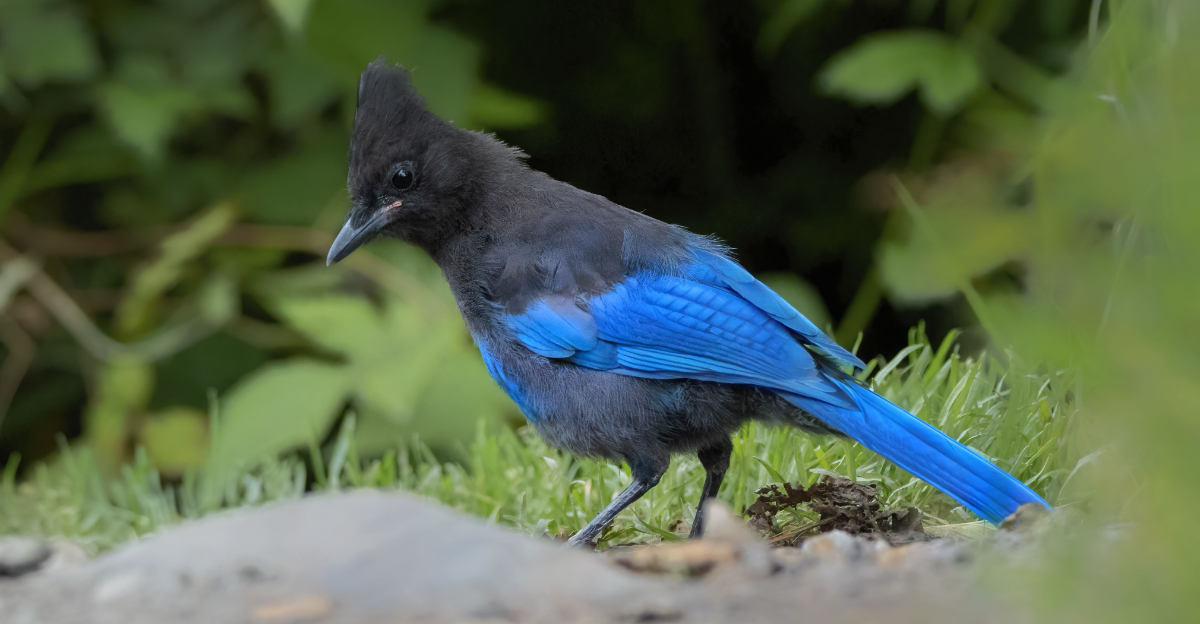
A yard that suddenly fills with loud, blue-feathered visitors can feel very different than it did a few weeks earlier.
In August, Steller’s jays may become far more noticeable around Oregon homes, especially when they start returning to the same trees, fences, or feeding spots.
Their behavior can seem chaotic, but repeated visits usually follow a pattern tied to the season. What they are looking for may be right in front of you, even if the yard itself has not changed much.
The timing can also make these gatherings seem more dramatic as summer begins edging toward fall.
Instead of assuming the birds have simply multiplied overnight, it helps to pay attention to where they gather and what they do once they arrive.
Those details can explain why your property has suddenly become such a busy stop.
1. Your Yard May Be Offering An Easy Late-Summer Buffet
Late summer is basically a feast season for many birds, and Steller’s Jays know exactly how to take advantage of it. By August, yards are full of ripening fruit, fallen seeds, and insects that are easy to find.
These birds are opportunistic eaters, which means they will eat almost anything that is available and easy to grab.
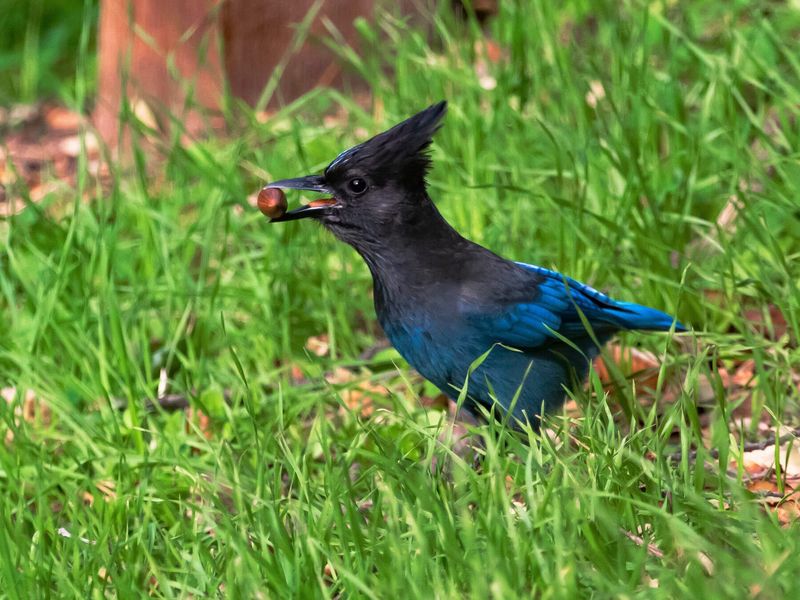
Steller’s Jays are not picky. They eat acorns, seeds, berries, insects, and even scraps left out by people.
If your yard has any of these things, it is basically an open invitation. They will show up regularly once they figure out that your space is a reliable source of food.
The key thing to understand is that these birds remember locations. They have excellent spatial memory and will return to the same spots over and over if the food supply stays consistent.
So if they found something tasty in your yard last week, they will be back again this week. Cleaning up fallen fruit, covering compost bins, and keeping pet food indoors can help reduce some of the attraction if you want fewer visitors.
But if you enjoy watching them, leaving a few natural food sources available is a great way to keep them coming back. A yard that feels like a buffet to a Steller’s Jay is doing something right when it comes to supporting local wildlife.
2. Berrying Shrubs Can Bring Jays In Fast
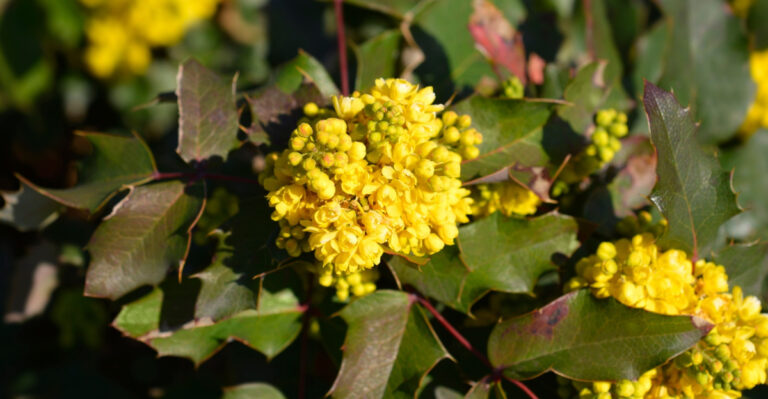
Few things attract Steller’s Jays faster than a shrub loaded with ripe berries. Plants like elderberry, serviceberry, and Oregon grape are big favorites.
When these shrubs produce fruit in late summer, jays will flock to them almost immediately. They can strip a shrub of berries in just a few days if enough birds show up.
Berries are a high-energy food, which makes them especially valuable to birds preparing for the coming fall season. Jays need to build up fat reserves and energy stores, and ripe berries give them exactly that.
A single elderberry cluster can provide a quick and nutritious snack that keeps a jay fueled for hours.
If your yard has berry-producing plants, that is almost certainly one of the main reasons jays are gathering there. You can use this to your advantage by planting native shrubs that produce fruit in late summer.
Your Oregon Garden Changes Every Week. Your Plan Should Too.
Gardening in Oregon changes quickly throughout the season. Every Friday you’ll receive a simple weekly plan showing exactly what to plant, prune, fertilize, harvest, and protect so you never miss the right timing.
Not only will you attract more jays, but you will also bring in other bird species that love berries. Native plants are also lower maintenance and better for local pollinators.
If you are not sure which plants to choose, a local nursery can point you toward species that thrive in your area and produce fruit at the right time of year.
Adding even one or two berry shrubs can make a noticeable difference in the number of birds visiting your yard each season.
3. Bird Feeders May Be Turning Into A Daily Stop
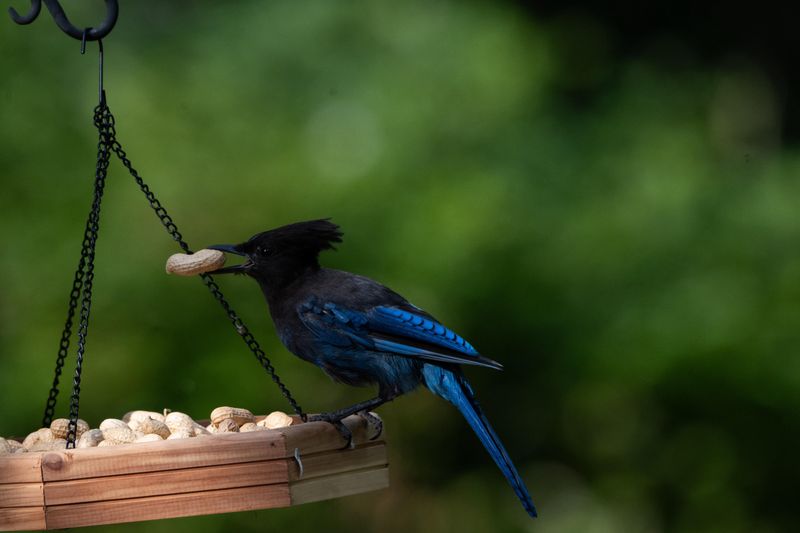
Bird feeders are one of the most reliable ways to bring Steller’s Jays to your yard on a regular schedule. Once a jay discovers a feeder, it will return every single day.
These birds are bold and confident, and they have no problem pushing smaller birds out of the way to get to the food.
Peanuts and sunflower seeds are their absolute favorites. If your feeder is stocked with either of these, expect jays to become regulars very quickly.
They will also cache food, meaning they grab extra seeds and hide them nearby to eat later. You might notice them flying off with a beak full of seeds and coming back a minute later for more.
Having a feeder can be a wonderful way to observe these birds up close. Their bright blue feathers and bold crests make them easy to spot and fun to watch.
However, they can be aggressive at feeders, which sometimes discourages smaller songbirds. One solution is to set up a second feeder in a different part of the yard stocked with smaller seeds like millet that jays tend to ignore.
That way, smaller birds still have a place to eat without being chased off. Keeping feeders clean is also important for the health of all visiting birds.
A quick rinse every week or two goes a long way in keeping your feeder a safe and welcoming spot.
4. Young Jays Could Be Exploring With Their Families
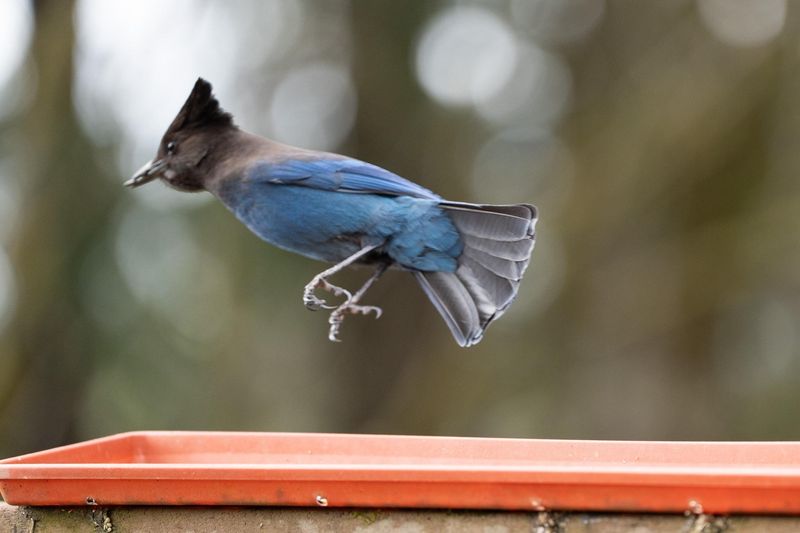
August is the time of year when young Steller’s Jays are out and about with their parents. The breeding season wraps up in early summer, and by August, the young birds are fully feathered and learning how to find food on their own.
Family groups often travel together during this time, which explains why you might suddenly see four or five jays instead of just one or two.
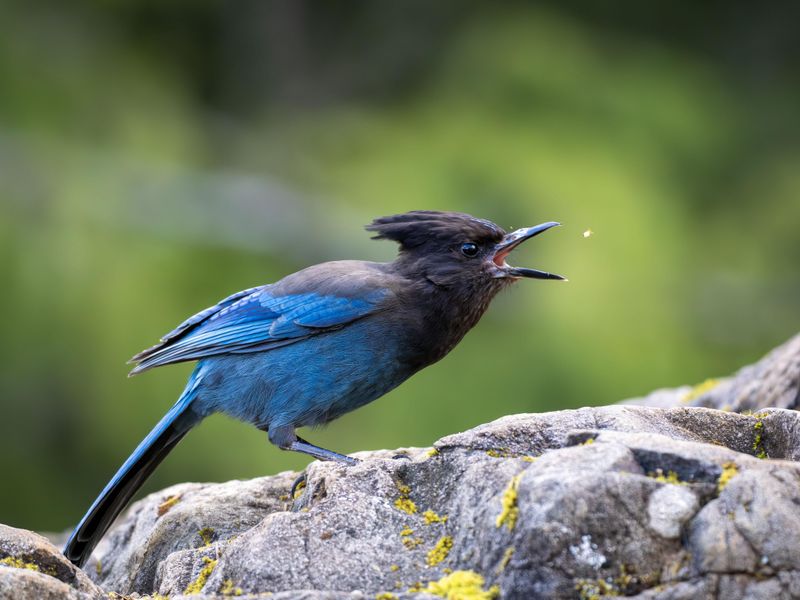
Young jays look similar to adults but may have slightly duller coloring. They also tend to be a little noisier and more clumsy as they figure out how to navigate the world.
You might see them watching older birds closely and copying what they do. This learning behavior is fascinating to observe if you get the chance.
Family groups tend to be more active and more visible than lone birds. They call to each other constantly, which is part of why August can feel so loud if jays are around.
The young birds are still developing their social skills, so there can be a lot of chasing, squabbling, and general chaos in the group. This is totally normal behavior.
It usually settles down as the season progresses and the young birds become more independent.
If you see a group of jays acting a little wild and disorganized, there is a good chance you are watching a family of recent fledglings getting their first real taste of the outside world.
5. August Food Shifts Can Push Them Into Backyards
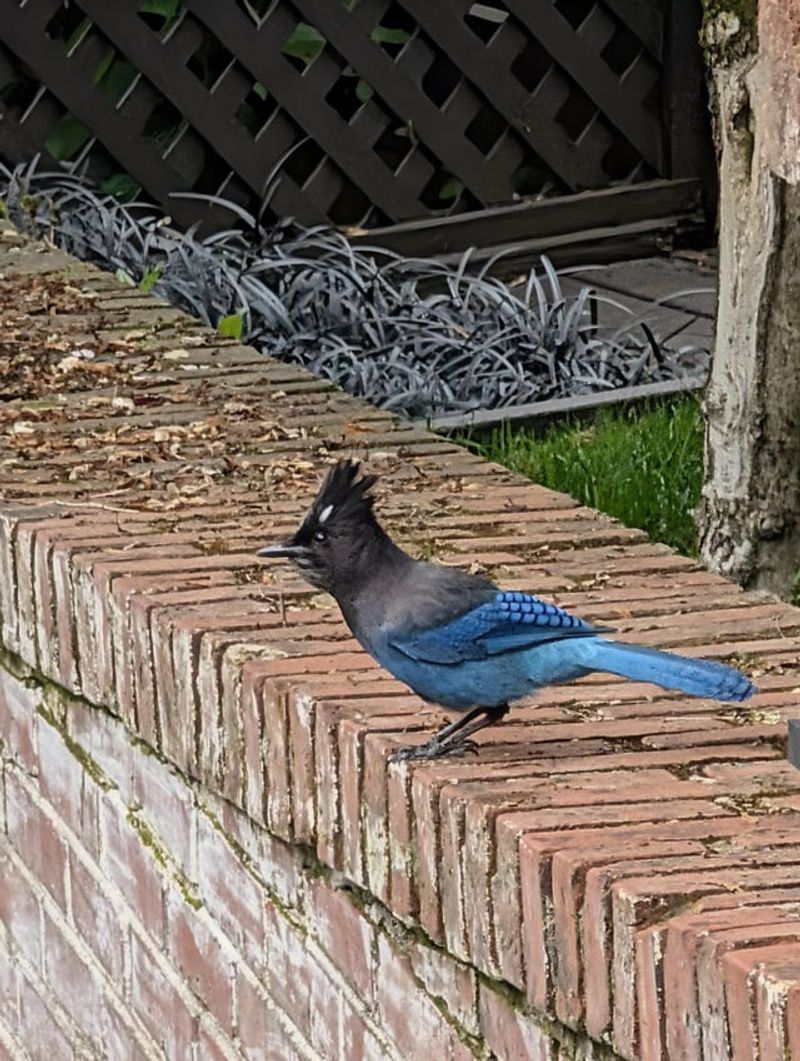
Something interesting happens to bird behavior in August. The natural food supply in forests and wild areas starts to shift.
Some food sources dry up or get eaten, while others are not quite ready yet. This transition period can push birds like Steller’s Jays out of their usual forest habitats and into neighborhoods and backyards where food is more predictable.
Think of it like a grocery store running low on certain items. Birds have to go somewhere else to find what they need.
Suburban and rural yards often have a mix of feeders, fruit trees, berry bushes, and other food sources that forests may not offer at this exact time of year. That makes backyards a very attractive option during August.
This seasonal shift is one of the biggest reasons you might notice more jays in late summer than at other times of year. It is not that the jay population suddenly grew.
It is more that the birds are spreading out more widely to find enough food. Understanding this pattern can help you predict when jays will be most active in your area.
If you want to support them during this time, keeping a feeder stocked and maintaining any berry-producing plants in your yard can make a real difference.
You are essentially providing a reliable food stop during a time when natural resources are a little harder for the birds to find on their own.
6. Tall Trees Give Them Safe Places To Watch Everything
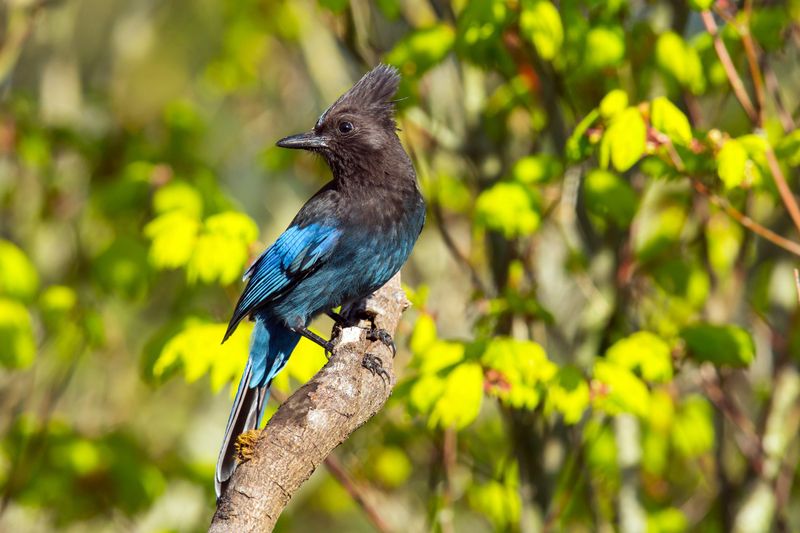
Steller’s Jays are not just ground-level foragers. They spend a lot of time up high, scanning the area from the tops of tall trees.
If your yard has big conifers like Douglas fir, pine, or spruce, those trees are probably one of the reasons jays feel comfortable hanging around. Height gives them a major safety advantage.
From a high perch, a jay can spot potential threats long before they become a real danger. Hawks, cats, and other predators are much easier to see from above.
Jays are also known for their alarm calls, and they use their high vantage points to watch for trouble and warn other birds in the area. This makes them almost like a neighborhood watch for the local bird community.
Tall trees also give jays a place to rest, preen, and socialize between feeding sessions. You might notice them sitting quietly at the top of a tree for long stretches, just watching what is happening below.
This is completely normal behavior. It is not a sign that something is wrong.
They are just doing what jays do, which is staying alert and aware of their surroundings at all times. If you have mature trees in your yard, consider yourself lucky.
They provide habitat not just for jays but for dozens of other bird species that need safe, elevated resting spots throughout the year.
7. Water Sources Matter More During Dry Weather
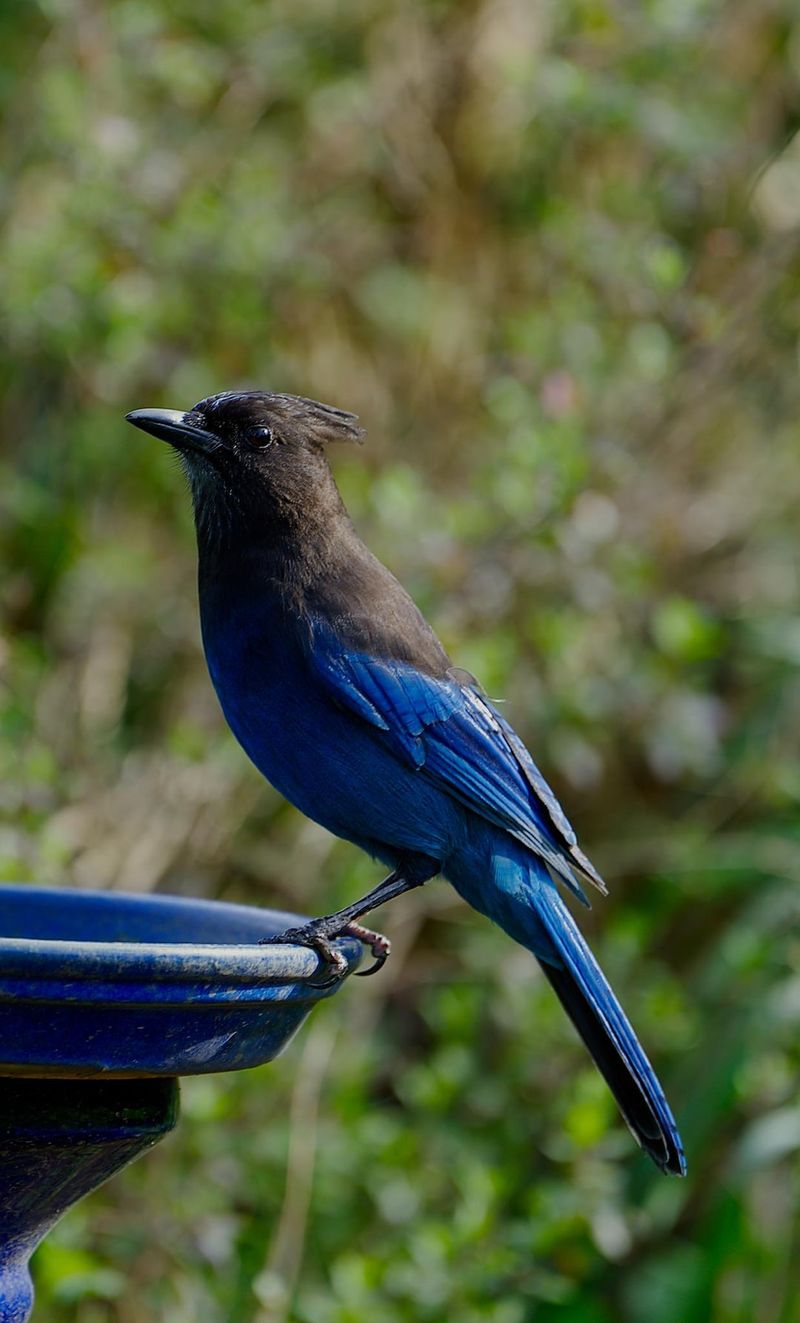
Oregon summers can get surprisingly dry, especially in August. Streams slow down, puddles disappear, and natural water sources become harder for birds to find.
That is when a birdbath or backyard water feature becomes incredibly valuable. Jays need fresh water every day, both for drinking and for bathing, so a reliable water source can be just as attractive to them as food.
Steller’s Jays are enthusiastic bathers. They will splash around in a birdbath with a lot of energy, dunking their heads and flapping their wings.
It is one of the more entertaining behaviors to watch up close. After bathing, they often perch nearby to preen and dry off before heading back out to forage.
If you want to attract more jays and other birds during the dry summer months, adding a birdbath is one of the easiest things you can do.
Keep the water fresh by changing it every couple of days, because standing water can grow algae and attract mosquitoes.
A shallow dish works better than a deep bowl since birds prefer water that is only an inch or two deep.
Adding a small solar-powered fountain or dripper can make the birdbath even more appealing, because moving water catches birds’ attention from a distance.
Even in a dry August, a well-maintained birdbath can turn your yard into a popular gathering spot for jays and many other bird species.
8. More Jays Can Mean More Competition At Feeders
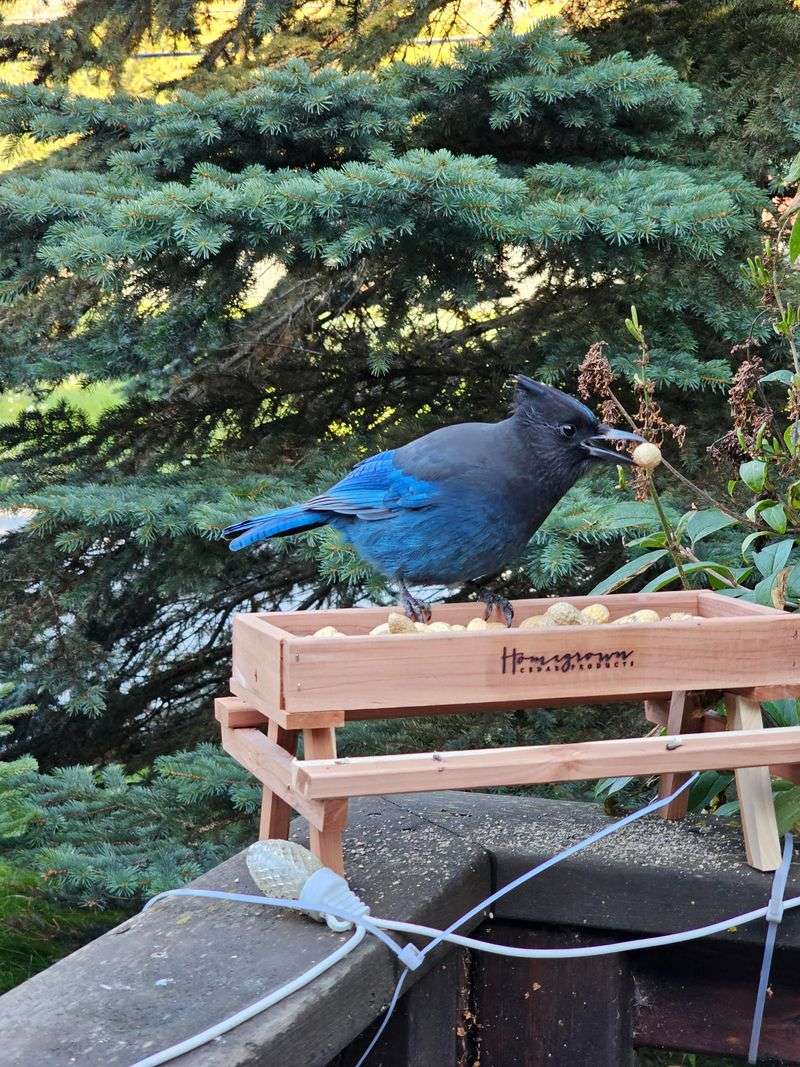
When several Steller’s Jays discover the same feeder in an Oregon yard, things can get a little chaotic. These birds are naturally assertive and do not hesitate to claim the best spot at a feeding station.
They will chase off smaller birds and sometimes even square off against each other in a noisy battle for the top position. It can look intense, but it is usually just normal jay social behavior.
The pecking order among jays is real. Older, more experienced birds tend to dominate younger ones.
You might notice one particular jay that always seems to get first pick at the feeder while others wait at a distance.
Watching these interactions is actually a great way to learn more about how jays communicate and establish rank within their group.
If the competition at your feeder is getting out of hand and smaller birds are being completely shut out, there are a few things you can try.
Adding a second or third feeder in different locations spreads the birds out and reduces crowding.
Using a cage-style feeder with openings too small for jays can also give smaller birds a safe place to eat.
Offering food that jays prefer, like peanuts, in one spot and food they tend to ignore, like nyjer seed, in another can help balance things out.
Managing feeder competition takes a little planning, but it is worth the effort to make sure all your backyard visitors get a fair chance to eat.