That Fuzzy Caterpillar In Your Kentucky Garden Isn’t As Harmless As It Seems
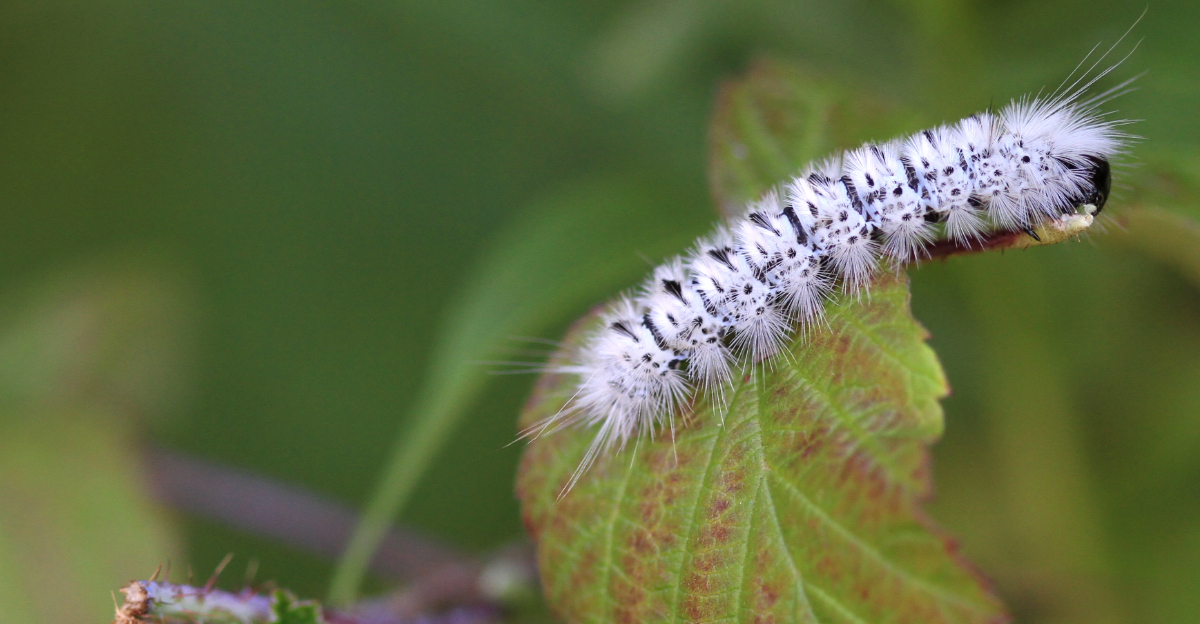
A pale, fuzzy shape drifts slowly across the weathered fence rail near you. White tufts catch the afternoon sunlight, almost glowing against rough wood.
Curiosity pulls you closer anyway, the way instinct always does.
Kentucky gardens hide this exact creature more often than most people realize. Soft white bristles disguise something far less friendly underneath.
Touching that innocent looking fluff can trigger a sharp, unexpected reaction within minutes.
Children especially reach fast, then may experience discomfort soon after. Skin can react quickly, eyes can water, breathing can feel oddly strange.
Nobody warns you about any of this beforehand.
Every summer, Kentucky yards quietly host this mysterious little visitor. Identifying this particular caterpillar correctly matters more than idle curiosity.
Knowledge here isn’t optional anymore, it’s genuine protection. Ignoring these clear signs could cost you real comfort for many days.
What you discover next could completely change how you see your garden.
Why This Fuzzy Caterpillar Shows Up In Kentucky Gardens
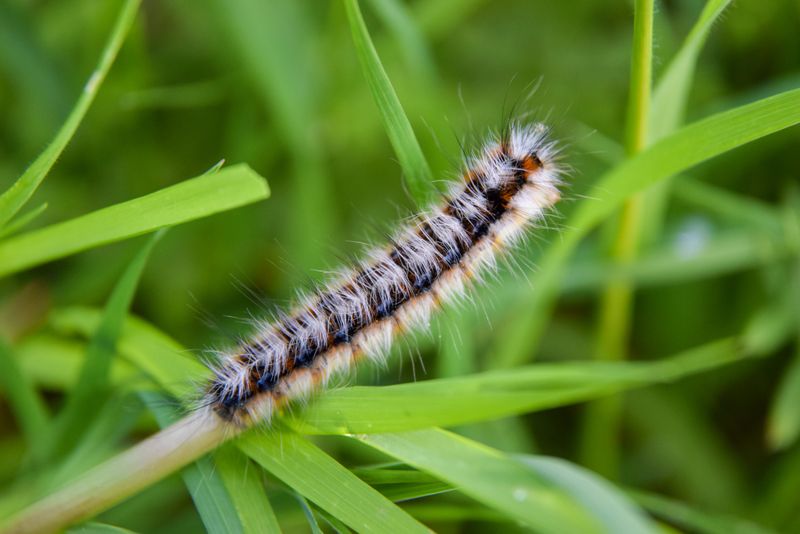
Blame the trees in your backyard. The Hickory Tussock Moth caterpillar loves hardwood trees, especially hickory, walnut, and oak.
Kentucky is packed with these native trees, which makes it a perfect habitat for this fuzzy crawler. Forests and suburban yards alike offer ideal feeding grounds.
These caterpillars hatch in late spring and spend the summer munching leaves high up in the canopy. By late summer, they begin wandering downward to find a spot to form their cocoon.
That wandering phase is when most people encounter them. They show up on fences, garden beds, sidewalks, and even outdoor furniture.
The fuzzy caterpillar in your Kentucky garden isn’t randomly lost. It is following a very natural instinct to find shelter before winter arrives.
Female Hickory Tussock Moths lay clusters of eggs on the undersides of leaves in early summer. One female can produce dozens of eggs, which means large groups of caterpillars often appear together.
If you see one, there are likely more nearby. Checking surrounding plants and tree trunks is always a smart move.
Some entomologists believe their population may spike during warm, dry summers when natural predators are less active, though this pattern isn’t firmly established.
Certain wasps and flies that normally keep populations in check may be less abundant during those seasons.
Understanding why they appear helps you stay prepared. A yard full of mature hardwoods is basically an open invitation for these caterpillars to set up camp every single year.
Meet The Hickory Tussock Moth Caterpillar
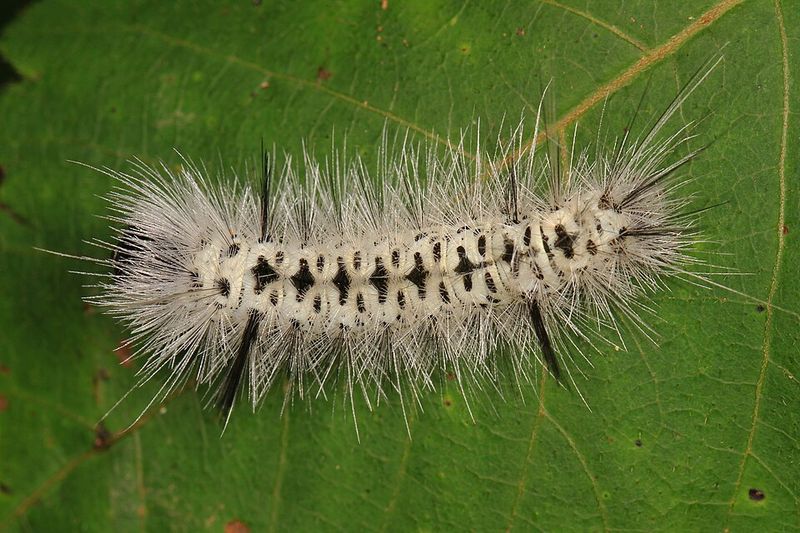
Picture a tiny creature dressed in a white fur coat with black spiky accessories. That is basically the Hickory Tussock Moth caterpillar in a nutshell.
Its scientific name is Lophocampa caryae, but most people just call it the fuzzy white caterpillar. It grows to about one to one and a half inches long when fully mature.
The body is covered in dense white tufts of hair called setae. Scattered among those white tufts are longer black bristles that stick out like antennae.
Your Kentucky Garden Changes Every Week. Your Plan Should Too.
Gardening in Kentucky changes quickly throughout the season. Every Friday you’ll receive a simple weekly plan showing exactly what to plant, prune, fertilize, harvest, and protect so you never miss the right timing.
Those black bristles are the ones you really need to watch out for. They contain an irritant compound that can trigger skin irritation and allergic responses in sensitive individuals.
The caterpillar goes through several stages, called instars, before forming a cocoon. Early-stage caterpillars tend to cluster together on leaves, while older ones roam more independently.
Once it pupates, the adult moth that emerges is far less dramatic-looking. The Hickory Tussock Moth is a plain brown moth with white spots, easy to overlook entirely.
Most people never even notice the adult moth. It is the caterpillar stage that grabs all the attention and causes all the trouble.
Spotting this species accurately matters before you take any action. Not every fuzzy caterpillar is the same, and misidentifying one could lead you to handle something far more dangerous without realizing it.
Reasons You Should Never Touch It
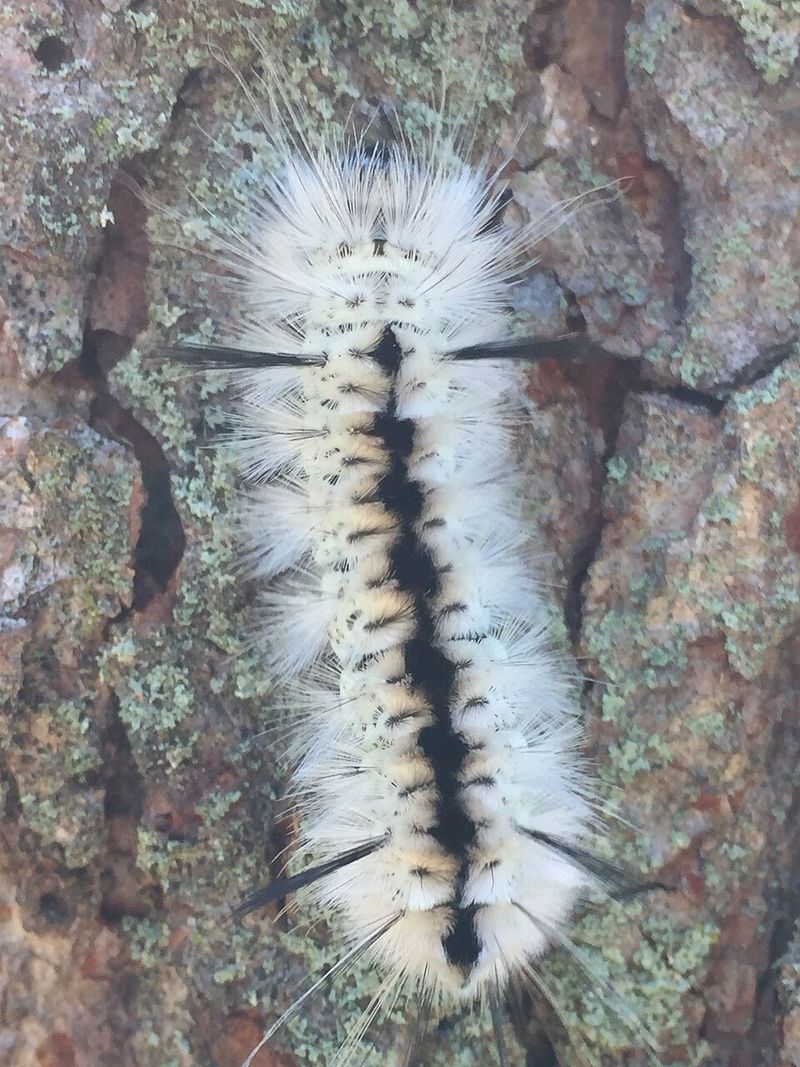
That soft white fuzz is not a safe thing to touch. The bristles on the Hickory Tussock Moth caterpillar are a built-in defense system that works surprisingly well.
When the hairs make contact with skin, they can break off and embed themselves into the surface. Once embedded, they release compounds that cause itching, redness, and a burning sensation.
For most people, the reaction feels like a mild rash or a brush against stinging nettles. For others with sensitive skin or allergies, the response can be much more intense.
Children are especially at risk because they are naturally curious and quick to grab interesting-looking things. A fuzzy caterpillar is often appealing to young children who haven’t been warned.
Touching your face after handling one is another serious concern. If bristles reach your eyes, they can cause conjunctivitis or deeper irritation that may require medical attention.
Even picking one up with gloves is not completely foolproof. Fine hairs can work through thin fabric or transfer to other surfaces you later touch without thinking.
The caterpillar does not sting in the traditional sense. It simply relies on passive contact to deliver its irritating defense, which makes it easy to underestimate.
Treating it with the same caution you would give other irritant insects or plants is the right approach.
What Happens If You Make Contact
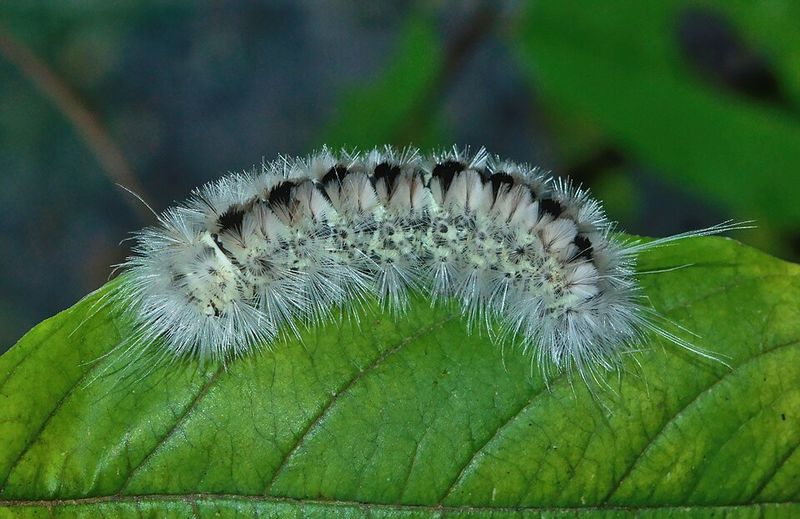
So you touched one. Now what?
The first sign is usually a tingling or burning sensation right where contact happened.
Within minutes, a red rash may appear on the affected area. Small welts or raised bumps often follow, similar to what you might see after touching poison ivy.
Most reactions stay mild and clear up within a few hours to a couple of days. Washing the area immediately with soap and cold water is always the first smart step.
Avoid rubbing the skin, which can push the bristles deeper into the surface. Instead, use tape to gently lift any visible hairs off the skin before washing.
Over-the-counter hydrocortisone cream can help reduce swelling and itching for most people. An oral antihistamine like Benadryl can also ease the reaction if it feels more widespread.
Eye contact requires a different and faster response. Flush the eye with clean water for at least fifteen minutes and seek medical care right away.
Breathing in loose hairs is another concern if you disturb a large group of caterpillars. Respiratory irritation is uncommon but possible, especially for people with asthma.
Severe allergic reactions are rare but not impossible. If you notice swelling in the throat, difficulty breathing, or dizziness, treat it as a medical emergency and seek help immediately.
Knowing what to expect takes away some of the panic. Most encounters end with minor discomfort, but being prepared makes the whole situation much easier to manage.
Steps To Safely Remove It From Your Garden

Finding one does not mean you need to panic or abandon your garden. Removing a Hickory Tussock Moth caterpillar safely is totally doable with the right approach.
Start by suiting up properly. Thick rubber gloves, long sleeves, and closed-toe shoes are your best friends during this process.
Use a stick, a plastic spoon, or a piece of cardboard to nudge the caterpillar into a container. Never use your bare hands, even if the creature looks totally harmless from a distance.
Once it is inside a sealed container, you have a few options. You can relocate it to a wooded area far from your garden or leave it in the container for local wildlife officials to collect.
Avoid squashing it underfoot. Crushing the body can release hairs into the air or onto your shoe, creating a new problem entirely.
If you find a cluster of caterpillars on a branch, pruning that branch carefully is an effective solution. Place the entire branch into a bag before cutting to contain them.
Wearing safety glasses during removal is a smart precaution. Stray hairs can become airborne if the caterpillar feels threatened and curls up defensively.
After the job is done, wash your gloves and any tools thoroughly. Change your clothes and wash your hands with soap and warm water before touching your face.
Taking these steps keeps both you and your garden safe. A little preparation goes a long way when dealing with this commonly misidentified garden insect.
Other Caterpillars To Watch Out For In Kentucky
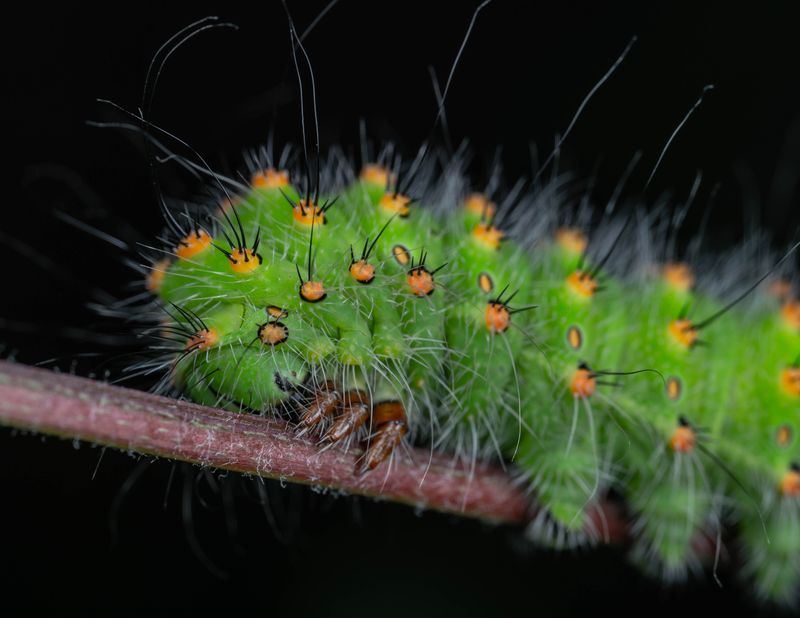
The Hickory Tussock Moth caterpillar isn’t the only one worth watching in your yard. Kentucky is home to several other species that can cause similar or even worse reactions.
The Saddleback Caterpillar is one of the most notorious offenders in the region. It sports a bright green saddle-shaped marking on its back, surrounded by sharp spines that deliver a genuine sting.
Buck Moth caterpillars are another local troublemaker. They are dark and spiny, and their venom can cause intense pain and swelling that lasts for hours.
The Io Moth caterpillar is lime green with red and white stripes running along its sides. Its hollow spines break on contact and inject a chemical that causes immediate burning.
Puss caterpillars, also called asps, are covered in soft-looking fur that conceals sharp venomous spines underneath. According to entomologists, they are considered one of the most painful caterpillars in North America.
Spotting these species early helps you protect your family and pets. Teaching children to follow a simple rule, look but never touch, can prevent a lot of unnecessary discomfort.
Most harmful caterpillars share a few common traits: bright colors, unusual textures, or dense bristles. Anything that looks designed to stand out is probably designed to warn you away.
That fuzzy caterpillar in your Kentucky garden isn’t meant to be handled, and contact with it can cause noticeable irritation. Staying aware of all these species makes you a smarter, safer gardener every single season.