What Georgia Gardeners Should Know When Luna Moths Show Up In August
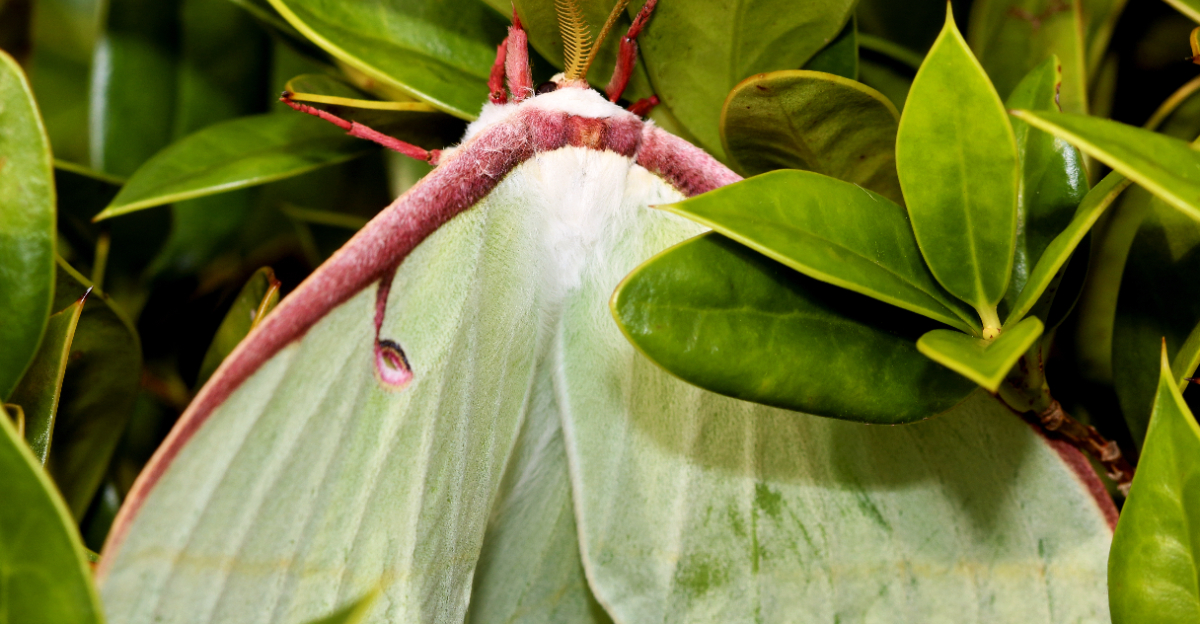
Spotting a luna moth in your yard can make you stop and stare for a moment. Its pale green wings and long tails are difficult to overlook.
These striking moths can appear around Georgia during the warmer months, including August. If one visits your garden, there is usually no reason to rush outside and interfere.
Adult luna moths have a surprisingly brief stage of life above ground. That makes each sighting feel especially memorable when you find one resting nearby.
You might notice one near outdoor lights, on a wall, or among garden plants. Where it appears can offer clues about what brought it into view.
Give the moth space and resist the urge to handle it.
There is much more happening during this short visit than its unusual appearance suggests.
1. That Large Green Visitor Is Hard To Miss
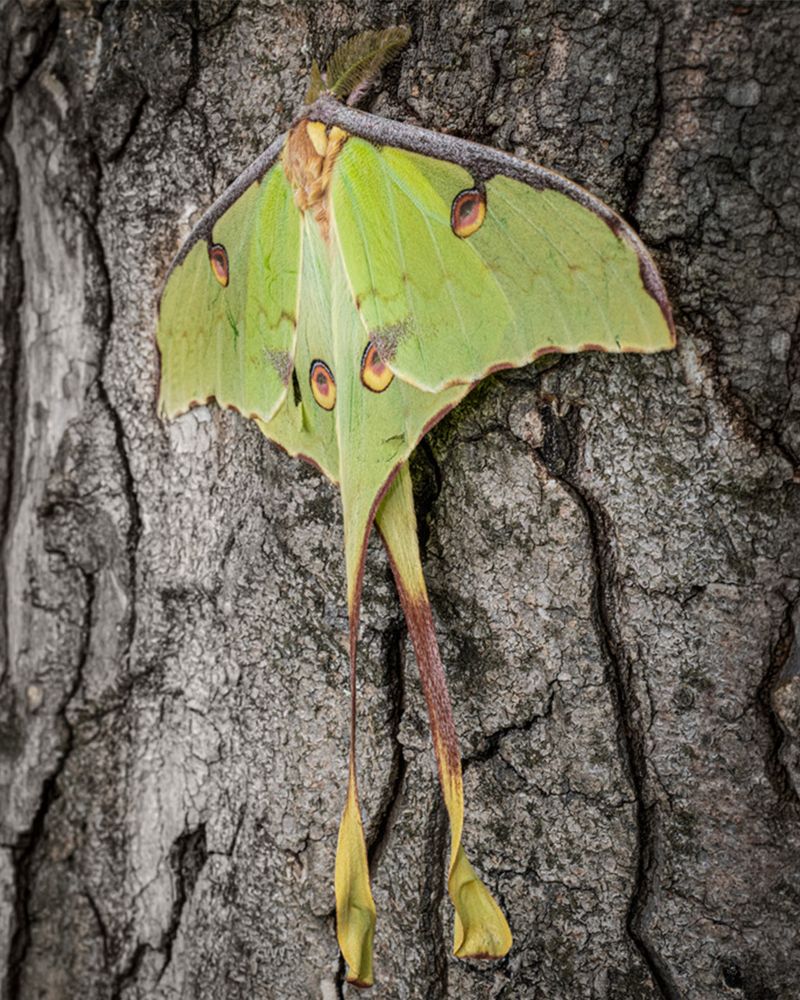
Few insects stop people in their tracks the way a luna moth does. Pale green wings, bold eye spots, and those long, curling tail streamers make it genuinely unforgettable.
Wingspans can reach up to four and a half inches, making it one of the biggest moths found in the eastern United States.
Gardeners sometimes spot them resting on tree trunks, wooden fences, or exterior walls near porch lights. Up close, the wing edges often show a faint purple or pink border that shifts slightly in different lighting.
Many people mistake them for leaves at first glance.
Luna moths belong to the Saturniidae family, a group known for large, showy species. Adults lack functional mouths entirely, so they cannot feed at all during their brief adult stage.
Every bit of energy they use as adults was stored during the caterpillar stage weeks earlier.
Seeing one up close is genuinely worth pausing for. Photographing them is easy since resting adults tend to stay still for long stretches.
Sharing photos with neighbors or local nature groups can spark real interest in backyard wildlife conservation across the region.
2. August Sightings Can Be Part Of A Second Generation
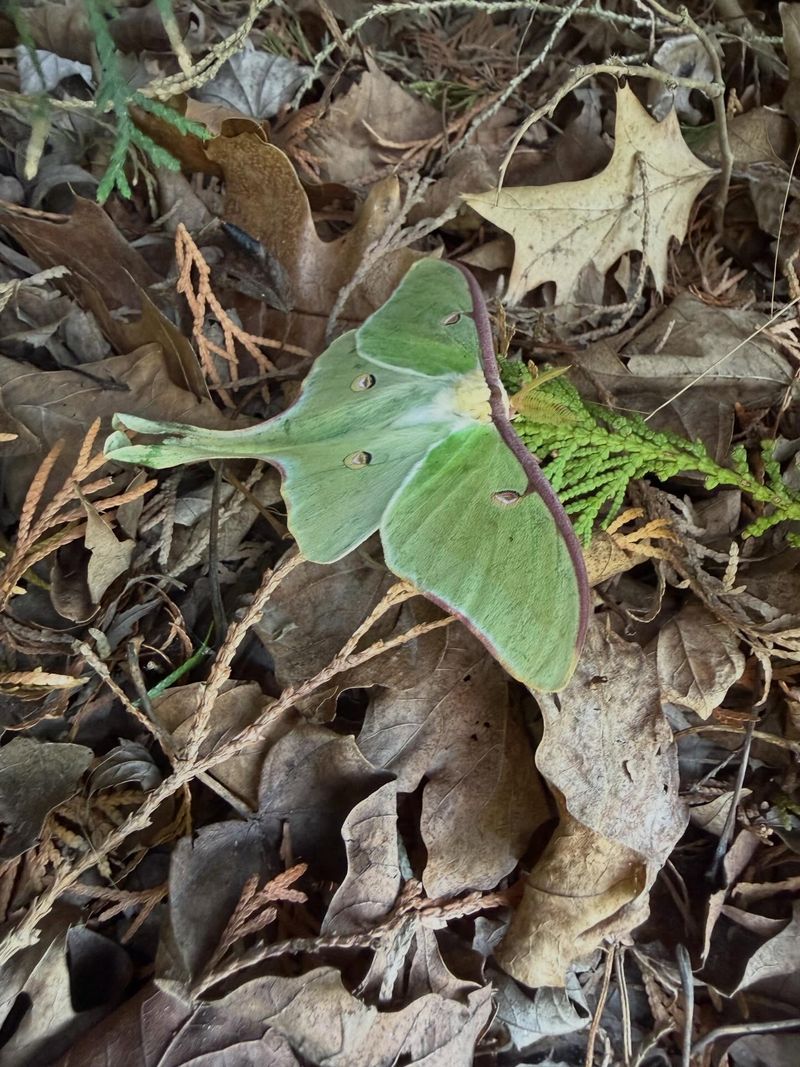
August luna moth sightings are not random. Across much of the Southeast, including Georgia, luna moths can produce two generations in a single year under favorable conditions.
Spring brings the first wave, and summer warmth fuels a second round of adults.
Warmer regions tend to support more generations per year compared to northern states where only one cycle typically occurs.
Longer warm seasons give caterpillars enough time to mature, spin cocoons, and produce a fresh batch of adults before cooler weather arrives.
Timing varies depending on local temperatures and host tree availability. A mild spring followed by a hot summer can push the second generation into late July or August.
Some years the timing shifts slightly, so sightings can range from mid-summer into early fall.
Gardeners who notice adults in August are likely seeing individuals from that second generation. It is a sign that luna moths successfully completed an earlier cycle nearby, which means suitable host trees and favorable conditions exist in the area.
Your Georgia Garden Changes Every Week. Your Plan Should Too.
Gardening in Georgia changes quickly throughout the season. Every Friday you’ll receive a simple weekly plan showing exactly what to plant, prune, fertilize, harvest, and protect so you never miss the right timing.
Paying attention to these patterns year after year can reveal a lot about local wildlife health and seasonal shifts in your yard.
3. Adult Luna Moths Are Near The End Of Their Life Cycle
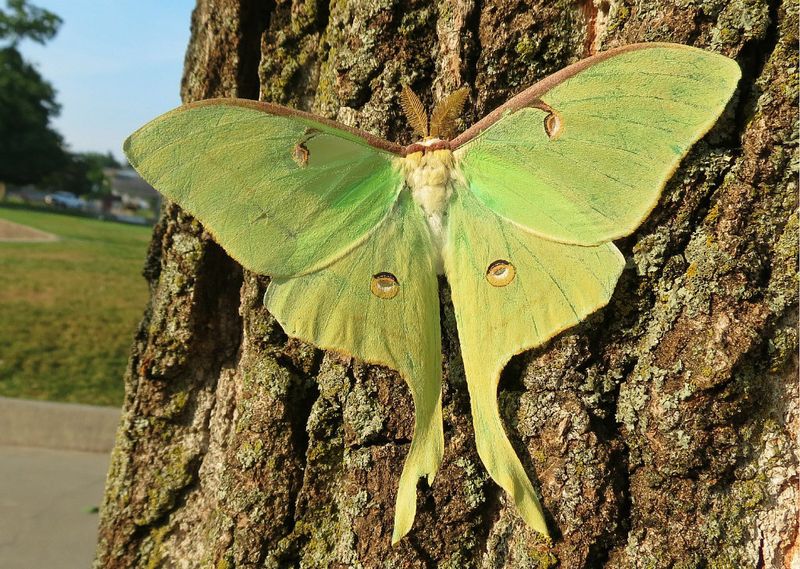
Adult luna moths live only about one week, sometimes a little longer under cooler conditions. By the time you spot one resting in your garden, it has likely already been flying for several nights.
Adults focus entirely on finding a mate and reproducing before their short adult stage ends.
Without functioning mouths, adults cannot eat or drink. Fat reserves built up during the caterpillar stage power everything they do as adults.
Flight, mating, and egg-laying all run on stored energy alone.
Females lay small clusters of eggs on the undersides of host tree leaves after mating. A single female may deposit over two hundred eggs across multiple nights.
Eggs hatch within roughly ten days depending on temperature and humidity levels.
Seeing a luna moth with slightly worn or ragged wings usually means it has been active for several days already. Frayed edges are normal wear from flying through vegetation at night.
A fresh adult typically shows crisp, clean wing edges with vivid coloring that fades gradually over time.
Leaving them undisturbed is the best approach. Moving or handling adults can cause unnecessary wing damage.
Watching from a short distance lets you observe natural behavior without interfering with their limited remaining time.
4. Nearby Trees Give Their Caterpillars Places To Develop
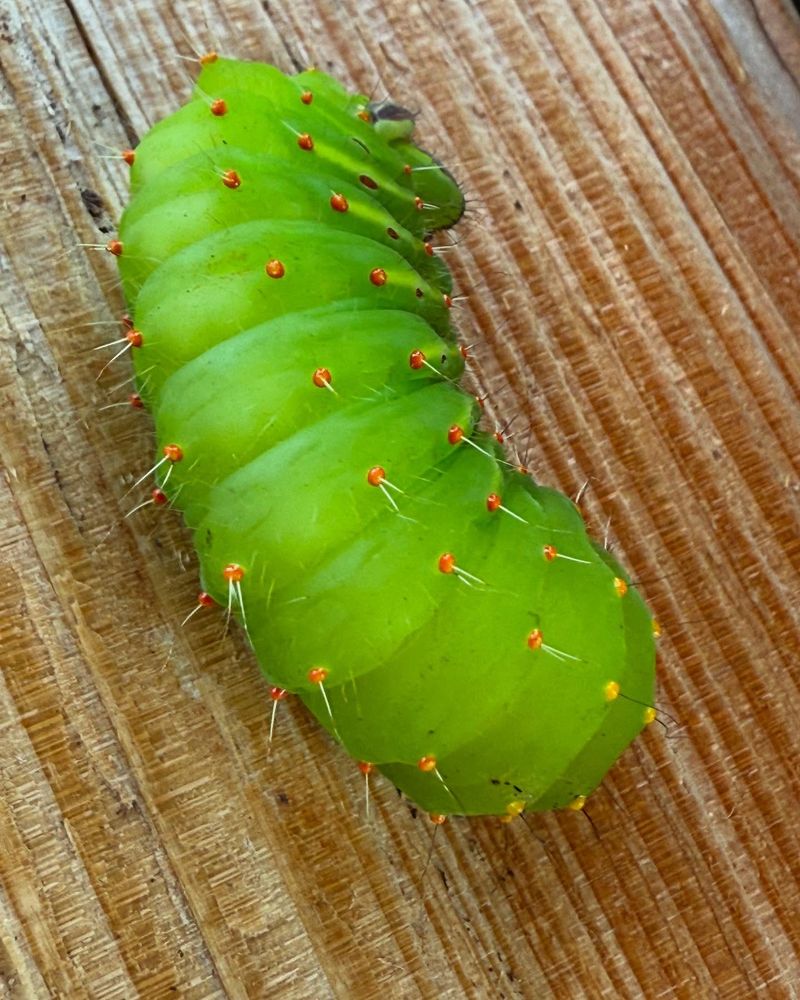
Luna moth caterpillars are picky eaters in the best possible way. Sweetgum, black walnut, persimmon, hickory, and white birch are among their preferred host trees.
If you have any of these growing nearby, you may already have caterpillars developing without realizing it.
Caterpillars hatch from eggs and begin feeding immediately. Early instars are tiny and easy to overlook.
As they grow through several molts, they become plump, vivid green, and much easier to spot on branches and foliage.
Fully grown caterpillars can reach close to three inches in length. Before spinning a cocoon, they drop from the tree and search for a sheltered spot among leaf litter on the ground.
Cocoons are wrapped in dried leaves, making them blend in remarkably well with fallen debris.
Gardeners who rake leaves aggressively in late summer might accidentally disturb cocoons. Leaving some natural leaf litter under trees through fall can protect overwintering cocoons from being lost.
This small habit shift costs nothing but can meaningfully support local luna moth populations over time.
Sweetgum trees are extremely common across the Southeast, which partly explains why luna moths remain relatively widespread in the region compared to some other large silk moths.
5. Outdoor Lights Can Draw Adults Toward Homes
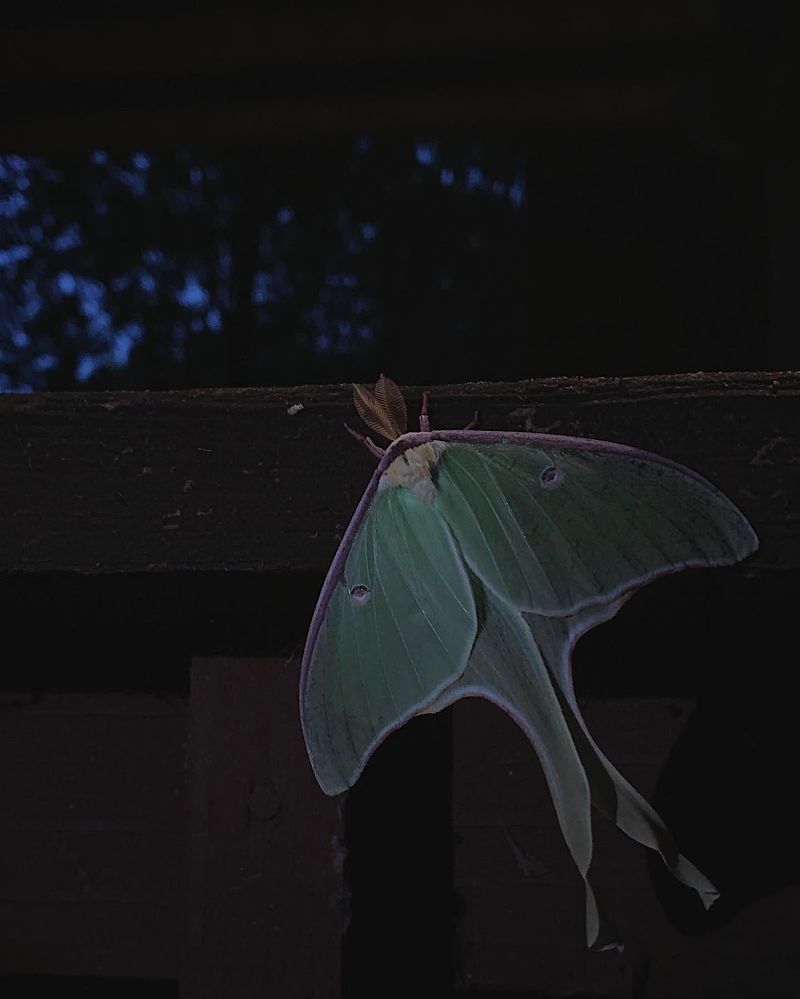
Bright outdoor lights attract luna moths reliably, especially on warm, humid summer nights. Porch lights, security lights, and decorative string lights near trees can all pull flying adults toward your home.
Finding one pressed flat against a wall or screen door is a common August surprise for many homeowners.
Moths navigate naturally by moonlight and stars. Artificial lights interfere with that navigation system, causing them to circle or land near light sources instead of continuing to fly.
This behavior is called positive phototaxis, and luna moths show it strongly.
Switching to amber or warm-toned LED bulbs can reduce how strongly you attract moths and other insects. Motion-activated lights that stay off when no one is outside also help lower the impact on local insect populations.
Small changes in outdoor lighting habits can make a real difference over time.
Finding a luna moth near your porch is not a reason for concern. Adults resting near lights are not damaging anything.
They typically fly off on their own once darkness returns or temperatures shift before dawn.
Yellow bug lights, long marketed as insect repellents, reduce some insect attraction but are not foolproof. Dimmer, lower-wattage bulbs tend to attract fewer insects overall compared to bright floodlights placed near wooded areas.
6. Their Caterpillars Rarely Cause Serious Landscape Damage
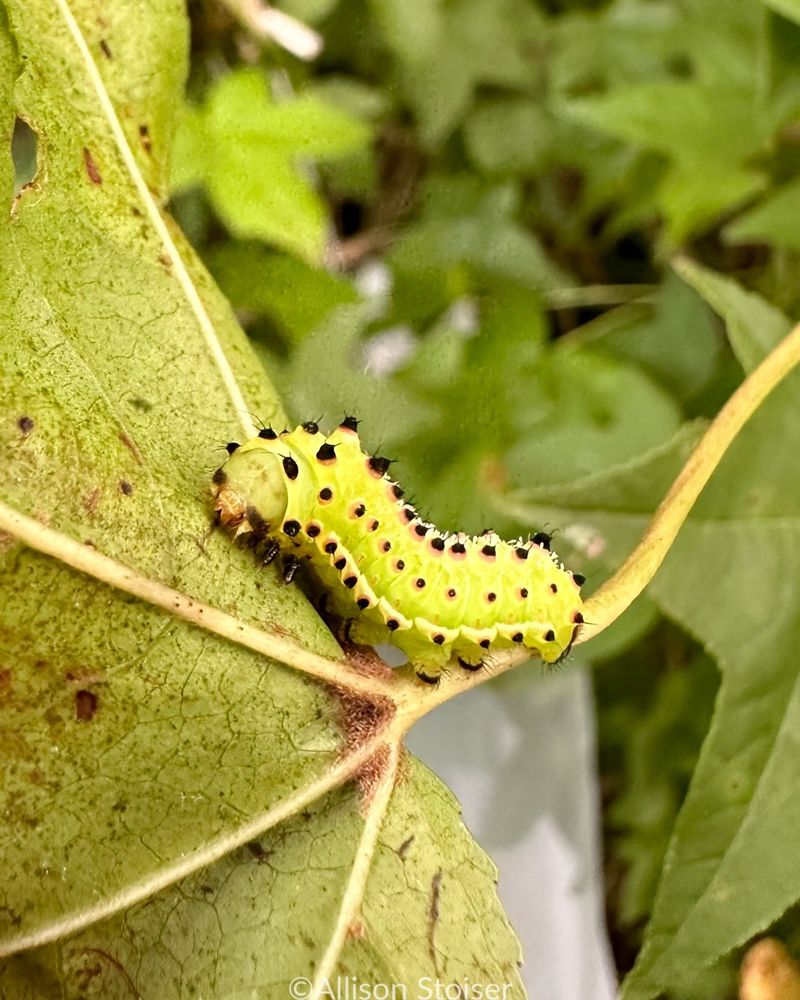
Caterpillar feeding can look alarming at first glance. Chewed leaf edges and missing leaf sections draw attention quickly.
However, luna moth caterpillars feed in relatively small numbers and rarely reach population levels that cause serious harm to established trees.
Healthy mature trees can handle moderate leaf loss without lasting effects. A tree losing some leaves to caterpillar feeding in late summer has usually already completed most of its seasonal growth.
Defoliation at that stage is far less stressful than if it happened in early spring.
Young trees are slightly more vulnerable since they have less leaf mass to spare. Watching a newly planted sweetgum or walnut closely during late summer makes sense if caterpillars appear.
Significant feeding on a young tree warrants closer attention than the same feeding on a large, established specimen.
Chemical sprays are generally unnecessary for luna moth caterpillars in typical garden situations. Populations stay naturally low due to predators, parasites, and other limiting factors.
Reaching for pesticides can cause more harm than good by affecting other beneficial insects in the same area.
Manual removal is an option if caterpillars appear on a small or stressed tree. Picking them off by hand and relocating them to a larger host tree nearby is a practical, low-impact solution that avoids broader chemical effects on your garden.
7. Luna Moths Usually Do Not Require Garden Control
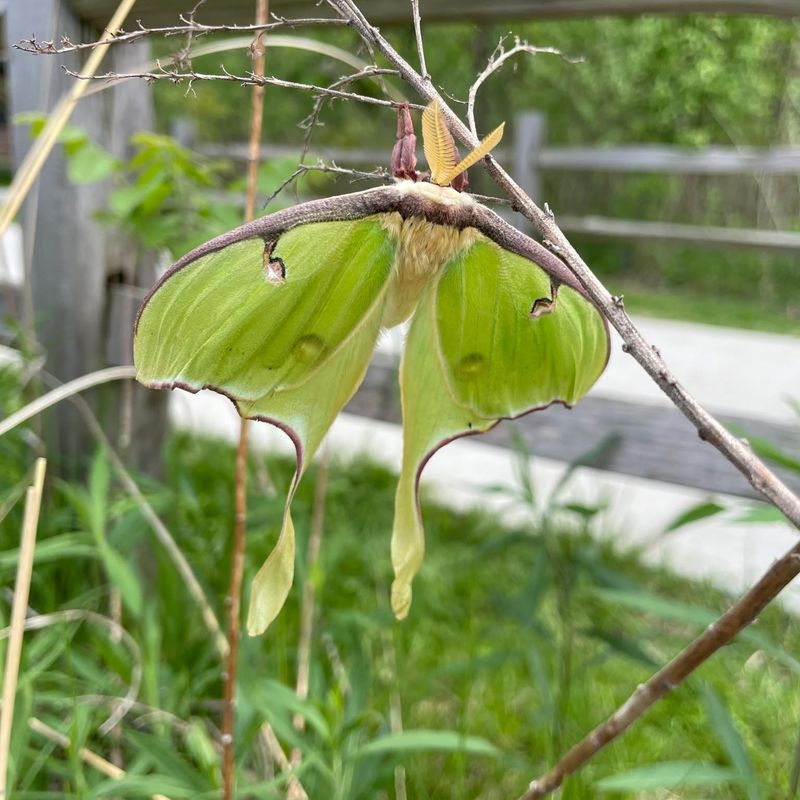
Reaching for a spray bottle when you see a large unfamiliar moth is a common instinct. With luna moths, that instinct is worth ignoring.
Adults cause zero plant damage and pose no threat to gardens, vegetables, flowers, or landscaping of any kind.
Caterpillars feed on tree foliage rather than garden vegetables or ornamental flowers. Unless you are growing one of their specific host tree species, caterpillars are unlikely to appear in vegetable beds or flower borders at all.
Even on host trees, populations tend to stay modest.
Luna moths are native insects with a long ecological role in eastern North American forests. Caterpillars serve as food for birds, small mammals, and predatory insects.
Adults contribute to the food web for bats and nighttime predators that hunt by sight or echolocation.
Protecting them costs almost nothing. Avoiding broad pesticide applications near host trees, keeping outdoor lights dimmer when possible, and leaving natural leaf litter under trees through fall are small habits that collectively support local populations.
Gardeners across the Southeast who take time to learn which insects truly need management and which ones are simply passing through tend to build healthier, more balanced yards over time.
Luna moths fall firmly into the category of welcome visitors that deserve a little extra respect and space in any garden setting.