The Invasive Michigan Grass That Looks Like A Privacy Screen Until It Spreads Into Ditches
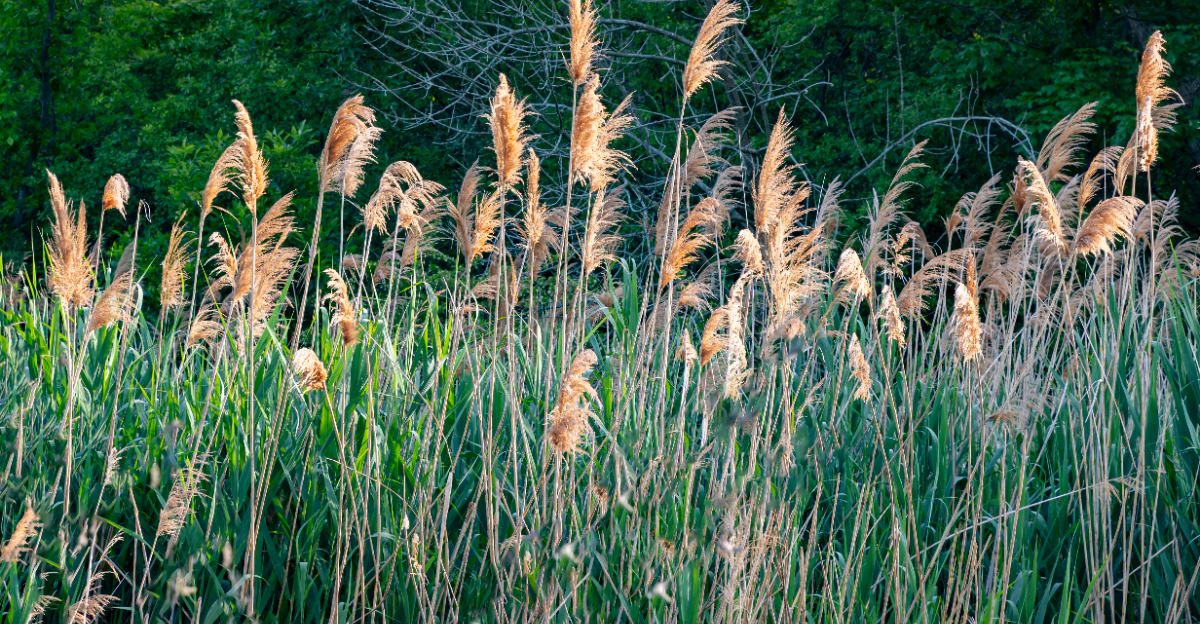
Phragmites might look like an easy, fast growing privacy screen, but this invasive grass causes serious problems once it escapes into Michigan’s ditches and wetlands.
Its towering stalks can reach over ten feet tall, spreading aggressively through both underground rhizomes and windblown seeds that travel surprising distances.
Once established in a ditch or wetland, phragmites quickly forms dense stands that crowd out native plants and reduce habitat quality for local wildlife.
Its thick growth also clogs drainage ditches, contributing to water flow problems during heavy rain events.
Removing established phragmites is notoriously difficult, since cutting alone often triggers even more vigorous regrowth from its extensive root system.
Michigan land managers typically rely on a combination of targeted herbicide treatment and mechanical removal to control larger stands effectively.
Homeowners considering tall ornamental grasses for privacy should look into native alternatives like switchgrass or indian grass instead.
Understanding phragmites’ spread pattern now helps prevent a small planting decision from becoming a much larger wetland problem.
1. The Grass Is Invasive Phragmites
Few plants in Michigan have caused as much concern among ecologists and land managers as invasive Phragmites australis. This is not just any tall grass waving in the breeze.
Phragmites australis is a nonnative form of common reed that originally came from Europe and Asia, and it behaves very differently from the native version that has existed in North America for thousands of years.
The nonnative type grows aggressively and spreads into areas where it does not belong, quickly taking over wetlands, shorelines, and drainage ditches.
Michigan was one of the first states to recognize this plant as a serious ecological threat, and it is now listed as a restricted invasive species under Michigan’s Invasive Species Act.
That means you cannot buy it, sell it, plant it, or transport it without breaking state law.
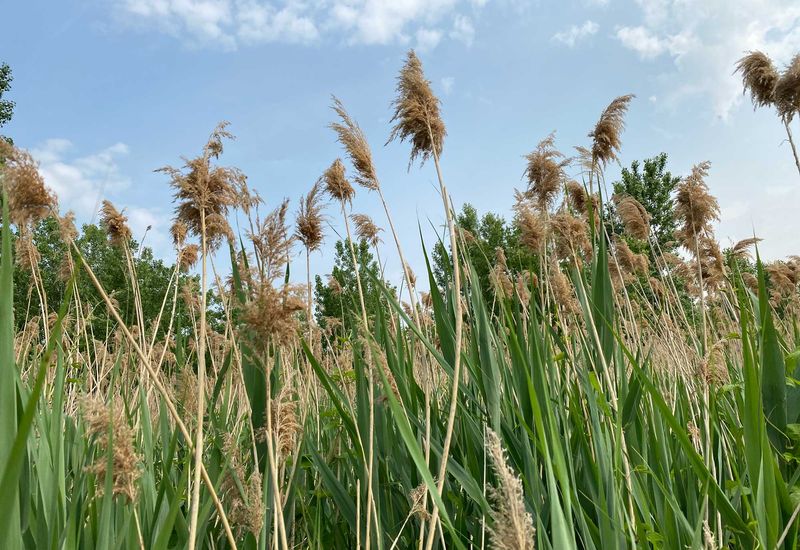
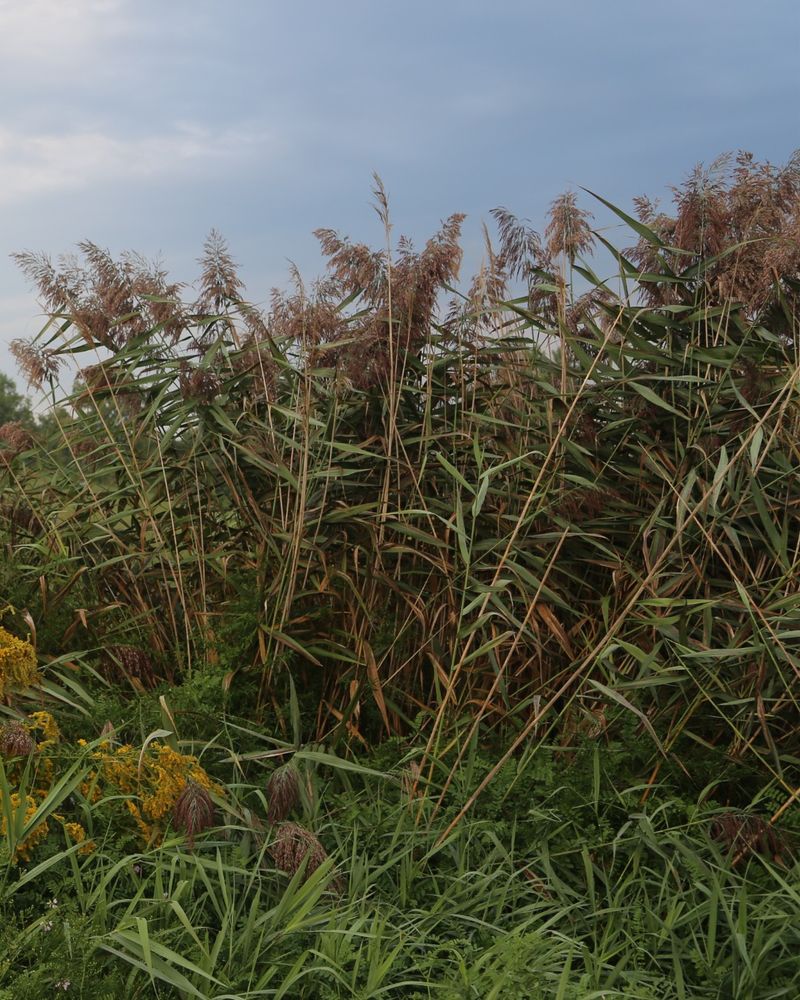
Identifying it correctly matters a great deal. Invasive Phragmites typically grows very tall, often reaching 15 feet or more.
Its stems are thick and stiff, its leaves are wide and flat, and its seed heads are large, feathery, and grayish-purple. The stems remain standing through winter, turning a pale tan color that makes large patches easy to spot from a distance.
Knowing what this plant looks like is genuinely useful, because early identification is one of the most powerful tools people have against its spread across our natural areas.
2. It Can Look Like A Natural Privacy Wall
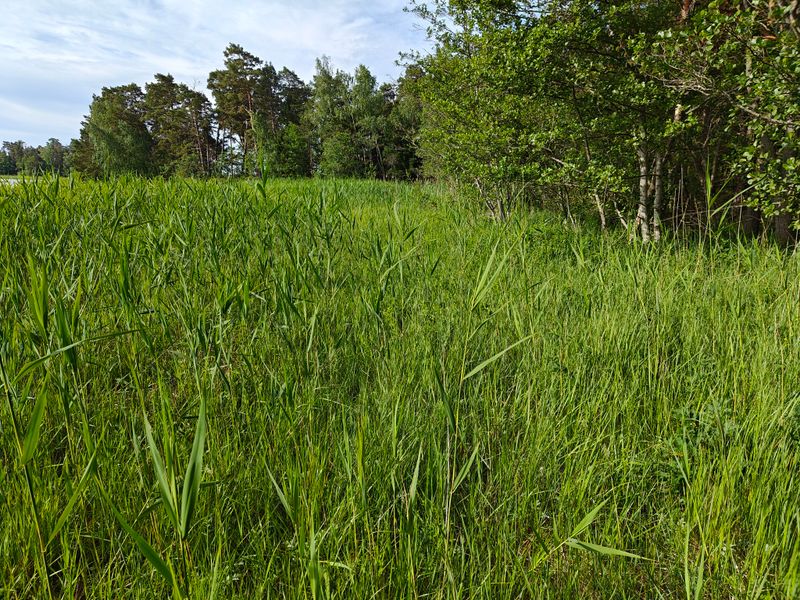
Standing next to a mature Phragmites stand feels a little like standing next to a building. The plants grow so tall and so densely packed together that the wall of stems and leaves blocks out light, wind, and any view of what lies behind it.
For someone driving past on a highway, it can actually look quite impressive, almost like a natural green screen designed to create privacy along a busy road.
That visual appeal is part of what makes this plant tricky. Homeowners near ponds or wet areas have sometimes welcomed Phragmites because it seemed like a free, fast-growing privacy screen.
Your Michigan Garden Changes Every Week. Your Plan Should Too.
Gardening in Michigan changes quickly throughout the season. Every Friday you’ll receive a simple weekly plan showing exactly what to plant, prune, fertilize, harvest, and protect so you never miss the right timing.
A single patch can grow from a few stems to a solid wall several feet wide within just one or two growing seasons. The plants push up new shoots every spring, each one taller and thicker than the last, until the stand becomes nearly impenetrable.
The problem is that what looks like a convenient natural barrier is actually a sign of serious ecological trouble brewing underneath the surface. That wall of stems is not just blocking your view of the water.
It is blocking sunlight from reaching native plants, preventing wildlife from accessing shorelines, and quietly expanding in all directions through an underground root system that never stops growing.
What seems like a privacy screen one summer can become a sprawling colony the next, spreading well beyond any boundary a homeowner might have had in mind when they first noticed it.
3. Ditches Give It Ideal Growing Conditions
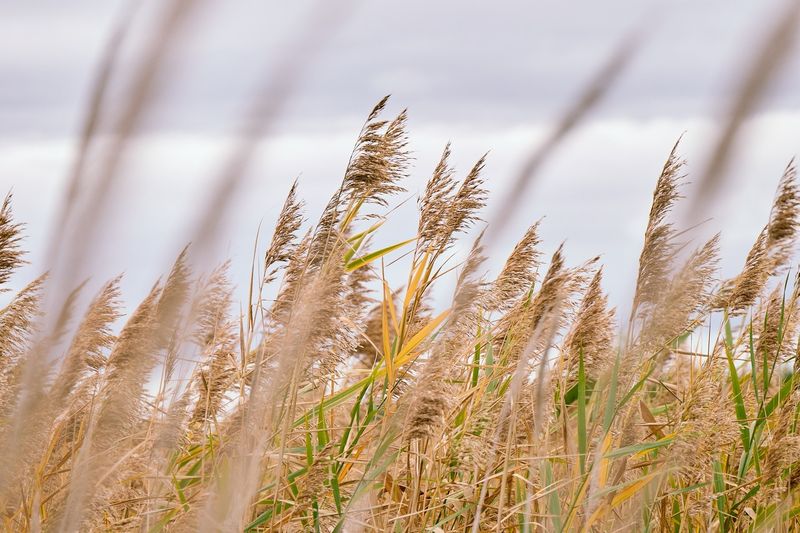
Roadside ditches in Michigan are practically a dream environment for invasive Phragmites. These low-lying channels collect rainwater, snowmelt, and runoff, staying consistently moist or even flooded for much of the year.
Phragmites thrives in exactly these conditions, preferring wet, disturbed soil where competition from other plants is low and sunlight is plentiful.
Road construction and maintenance activities often disturb the soil along ditches, which creates open ground that Phragmites can colonize quickly.
Seeds and root fragments can travel through water flow, on equipment, or even on vehicle tires, making roadsides one of the most common pathways for new infestations to start.
Once a patch establishes itself in a ditch, it spreads both upstream and downstream along the water flow, connecting one infestation to the next over long stretches of roadway.
Beyond ditches, invasive Phragmites also loves swales, pond edges, lakeshores, marshes, and any low-lying area where soil stays wet.
It tolerates a surprisingly wide range of conditions, including brackish water and areas with high nutrient levels from road runoff or agricultural fields nearby.
The combination of wet soil, disturbed ground, and open sunlight found along Michigan’s thousands of miles of roads gives this plant a nearly perfect corridor for spreading across the state.
Wetland managers and road crews across the state now watch ditches carefully as early warning zones, knowing that a small patch spotted in spring can turn into a major problem by the end of summer if nothing is done.
4. Underground Rhizomes Help It Spread
One of the most remarkable and frustrating things about invasive Phragmites is what happens underground.
While the tall stems above ground get all the attention, the real engine of this plant’s expansion is its rhizome system, a dense network of thick horizontal roots that spreads outward in every direction beneath the soil surface.
Rhizomes are underground stems, not true roots, and they store energy that the plant uses to push up new shoots.
A single Phragmites plant can send rhizomes outward several feet in a single growing season, producing new shoots along the way and turning what started as one small plant into a wide colony in just a few years.
Rhizomes can grow both horizontally through the soil and vertically downward, sometimes reaching depths of several feet, which makes them very hard to fully remove.
What makes rhizome spread especially challenging is that even small fragments left behind in the soil can regenerate into new plants.
If a rhizome is broken up by digging or equipment, each surviving piece has the potential to sprout again. This is one reason why physical removal alone rarely solves a Phragmites problem.
The rhizome network connects all the stems in a stand into one large organism, so what looks like hundreds of separate plants is often actually one single plant spreading outward from a common underground source.
Understanding how rhizomes work helps explain why managing this species requires a carefully planned, long-term strategy rather than a quick fix.
5. Dense Stands Push Out Native Plants
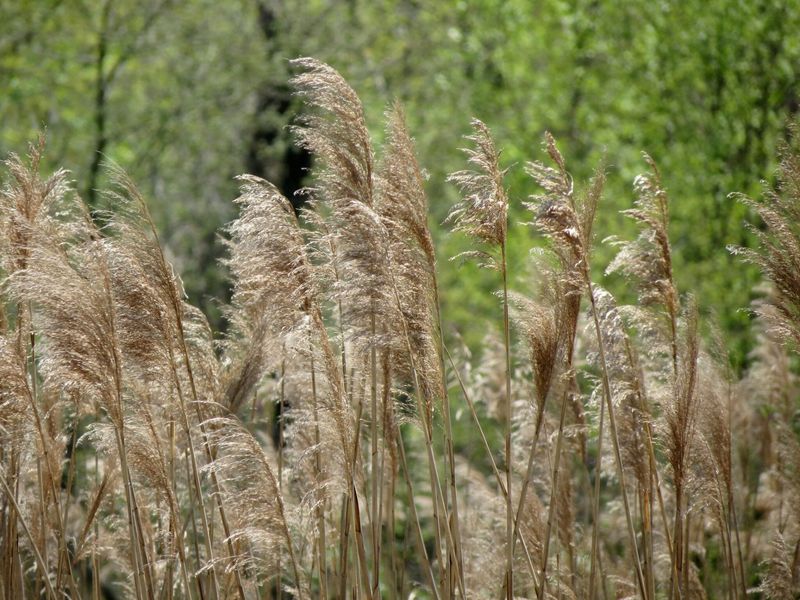
A healthy Michigan wetland is supposed to be full of variety. Cattails, bulrushes, sedges, native wildflowers, and shrubs all grow together, creating a layered habitat that supports dozens of species of birds, amphibians, fish, and insects.
When invasive Phragmites moves in, that diversity starts to disappear, replaced by a single species that crowds out nearly everything else.
The way Phragmites outcompetes native plants is not subtle. Its tall stems shade out shorter native vegetation, blocking the sunlight those plants need to grow.
Its dense root and rhizome system takes up water and nutrients aggressively, leaving little for neighboring plants. Over time, a Phragmites stand becomes so thick that almost nothing else can survive inside it.
The litter from old stems builds up on the ground, raising the soil level and further changing the conditions that native plants depend on.
Wildlife feels the impact too. Many birds, turtles, frogs, and fish rely on native wetland plants for food, nesting, and shelter.
A Phragmites monoculture offers very little of that. The dense, uniform structure of a Phragmites stand does not provide the open water, varied plant heights, or food sources that wetland animals need.
Studies from Michigan and other Great Lakes states have documented significant drops in bird species diversity and amphibian populations in areas dominated by invasive Phragmites.
Restoring native plant communities after Phragmites has taken over is possible, but it requires sustained effort over multiple years and a clear management plan from the start.
6. Cutting It Down Alone Can Make Things Worse
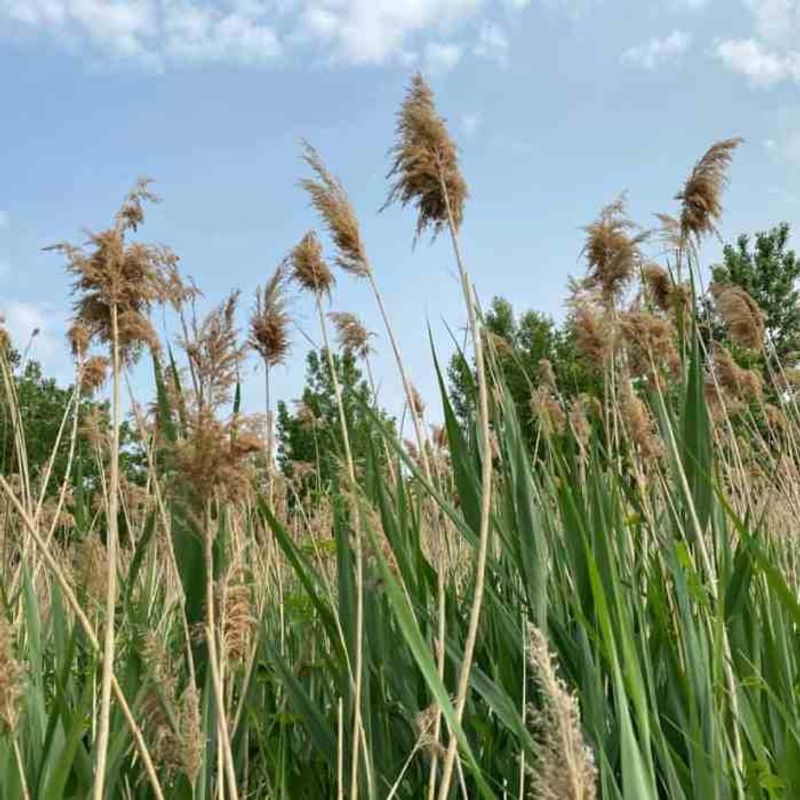
Grabbing a mower and cutting down a Phragmites stand seems like a logical first response. The plants are tall, they are spreading, and removing the stems feels productive.
But mowing invasive Phragmites without following a complete management plan can actually make the problem worse rather than better, and that surprises a lot of people who try it.
When Phragmites stems are cut, the plant does not give up. The rhizome network underground still holds enormous amounts of stored energy, and the plant uses that energy to push up new shoots from the cut stems and from the roots.
Mowing can actually stimulate more vigorous regrowth, sometimes producing thicker, denser stands than before.
Cutting the stems also removes the aboveground growth without addressing the underground system that drives expansion, so the colony continues spreading sideways even while the tops are being trimmed back.
There is another concern too. Disturbing Phragmites with equipment can break up rhizome fragments and spread them to new locations, either through the soil moved by equipment or through water carrying fragments downstream.
Michigan’s management guidance makes clear that mowing alone is not a recommended control method for established Phragmites stands.
Effective management typically involves a combination of approaches, including properly timed treatments that are coordinated with state and local permits.
Before removing Phragmites on your land, check with EGLE or your local conservation district to ensure your plan is legal, safe, and effective.
7. Not Every Phragmites Plant Is Invasive
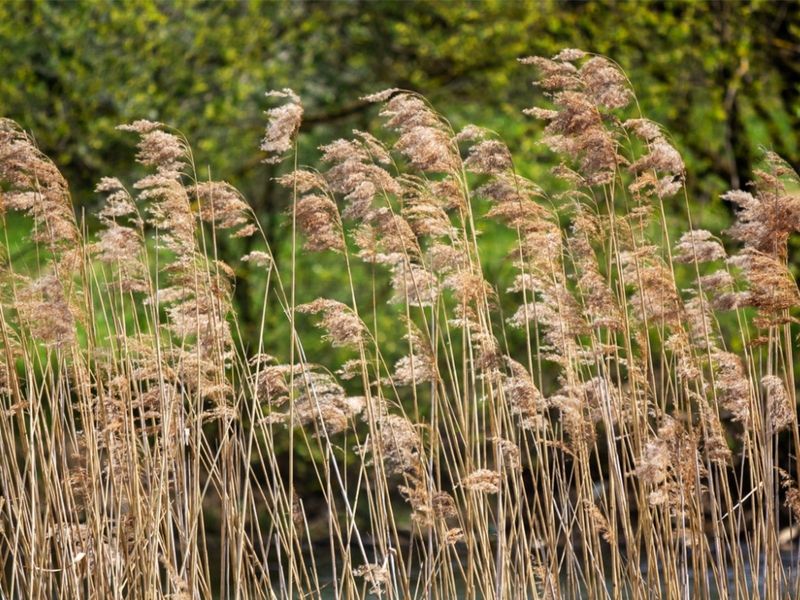
Here is something that catches a lot of people off guard: Michigan actually has its own native form of Phragmites.
The native version, also called Phragmites australis, has been growing in North American wetlands for thousands of years, and it plays a legitimate role in healthy wetland ecosystems.
Removing native Phragmites by mistake would be harmful, not helpful, which is why correct identification matters so much before anyone takes action.
Telling the two apart takes some careful observation. Native Phragmites tends to grow in smaller, less dense patches and does not form the massive monocultures that the invasive type creates.
The stems of native Phragmites are often reddish-brown or spotted, while invasive Phragmites stems are typically smooth, tan, and stiff. The leaf sheaths on native plants tend to stay attached to the stem, while on invasive plants they often fall away.
Native stands also tend to mix with other plant species rather than crowding everything else out.
Because the differences can be subtle, especially for someone who has not seen both types side by side, getting a confirmed identification before any management work begins is strongly recommended.
Michigan State University Extension and the Michigan Department of Natural Resources both offer identification resources and guidance.
Local conservation districts can also connect landowners with trained professionals who can confirm what type of Phragmites is present on a property.
Taking the time to identify correctly protects native plants, saves effort, and ensures that any management work actually targets the right plant. Accuracy at this stage makes everything that follows much more effective.
8. Early Control Is Much Easier
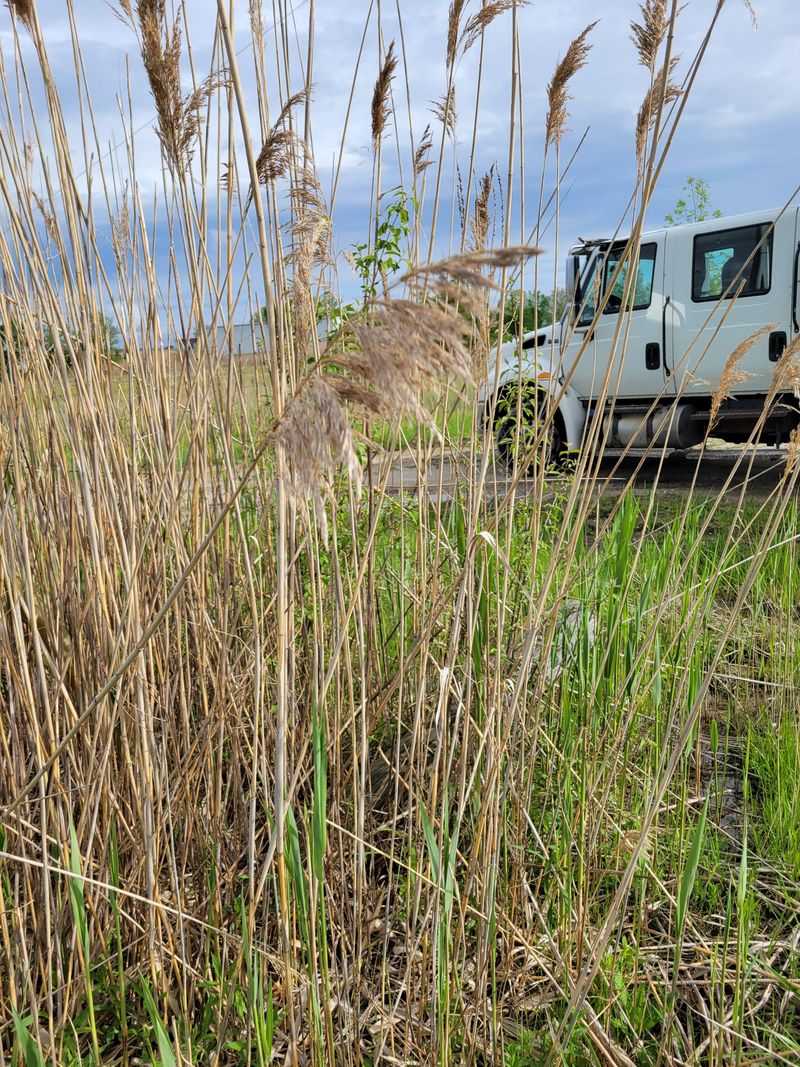
Catching invasive Phragmites early is one of the most valuable things a landowner, paddler, or outdoor enthusiast can do for Michigan’s wetlands. A small patch of a few dozen stems is manageable.
A colony covering an acre or more is a completely different challenge, requiring years of coordinated effort and significant resources to bring under control.
The gap between those two situations often comes down to whether someone noticed the problem in its early stages.
Small new patches are easier to contain because the rhizome network has not yet spread far, the seed bank in the soil is smaller, and the plants have not had time to build up the dense litter layer that makes access difficult.
Addressing a new infestation early, using the right methods and with the proper permits in place, dramatically improves the chances of successful long-term management.
Michigan requires permits for many Phragmites control activities, especially those involving wetlands, so starting the process early also gives landowners time to work through the necessary approvals before the growing season begins.
Reporting new sightings is equally important. Michigan has an online invasive species reporting system called Midwest Invasive Species Information Network, or MISIN, where anyone can log a Phragmites sighting with a photo and location.
Those reports help state agencies and conservation groups track where new infestations are appearing and prioritize response efforts.
Staying observant, reporting what you see, and acting quickly on small patches gives wetlands, shorelines, and ditches a much better chance of staying healthy and diverse for years to come.