Why California Crape Myrtles Get A Sticky Black Coating By Late Summer
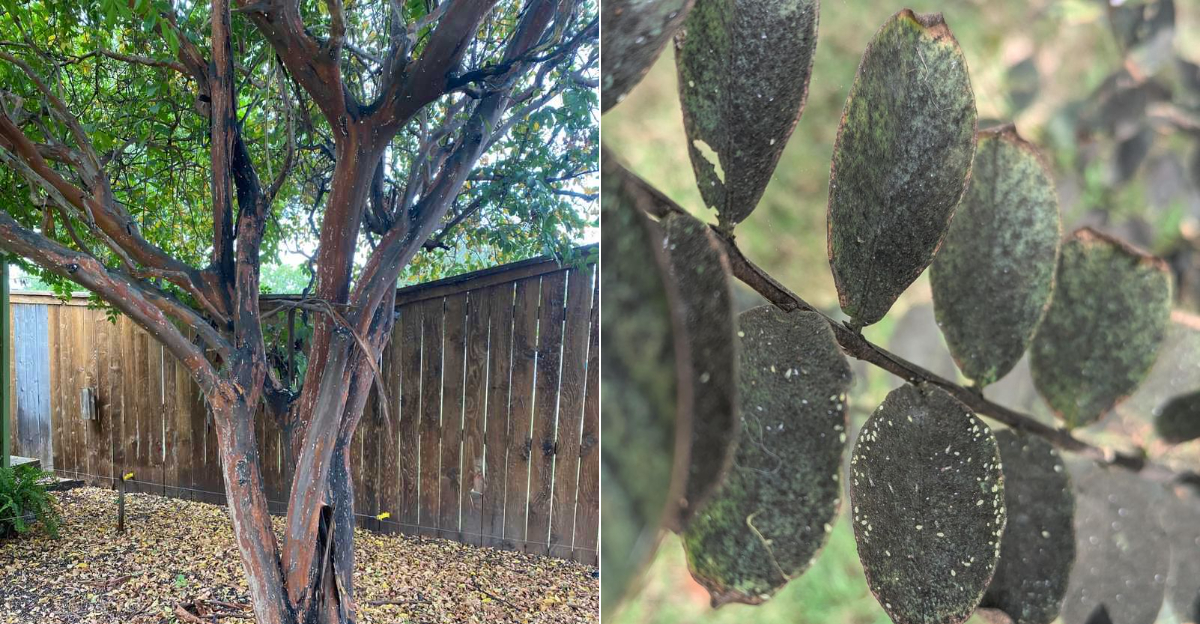
California crape myrtles spend much of summer looking like neighborhood show-offs, covered in bright blooms and soaking up the sunshine. Then late summer rolls around, and suddenly things can get a little weird.
Leaves may feel strangely sticky, dark patches can start appearing, and the whole tree can look like it picked up an unwanted coating overnight. So much for that picture-perfect backyard moment.
The timing makes it especially puzzling. A tree that seemed perfectly happy earlier in the season can look noticeably different once the hottest weeks have piled up.
Gardeners might spot shiny residue on leaves, darkened surfaces, or even sticky spots on whatever happens to be sitting underneath. Cars, patio chairs, walkways… nothing nearby gets to mind its own business.
So what exactly is happening to California crape myrtles as summer winds down? The answer involves a few seasonal factors that can quietly build over time.
Once you know what to look for, that mysterious late-summer makeover starts making a whole lot more sense.
1. Aphids Are Usually Behind The Sticky Mess
Most people look at the black coating on their crape myrtle and think the tree is sick. But the real troublemakers are much smaller than you might expect.
Tiny insects called aphids are almost always the ones that start this whole chain of events.
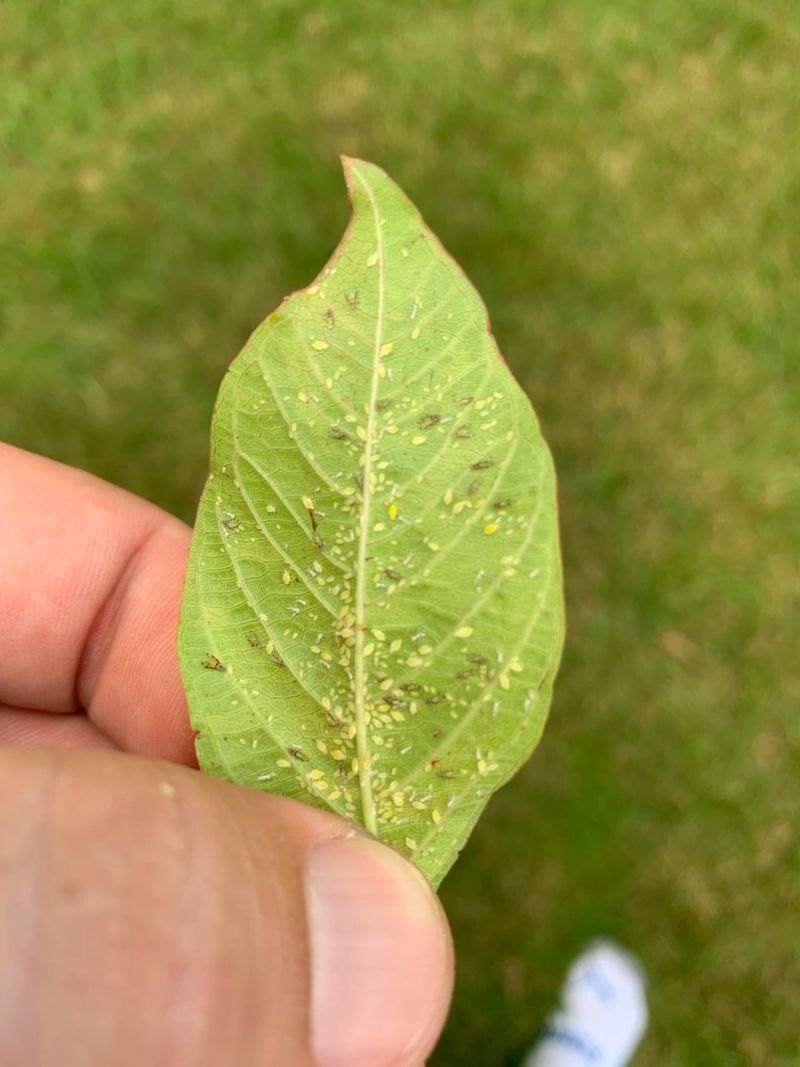
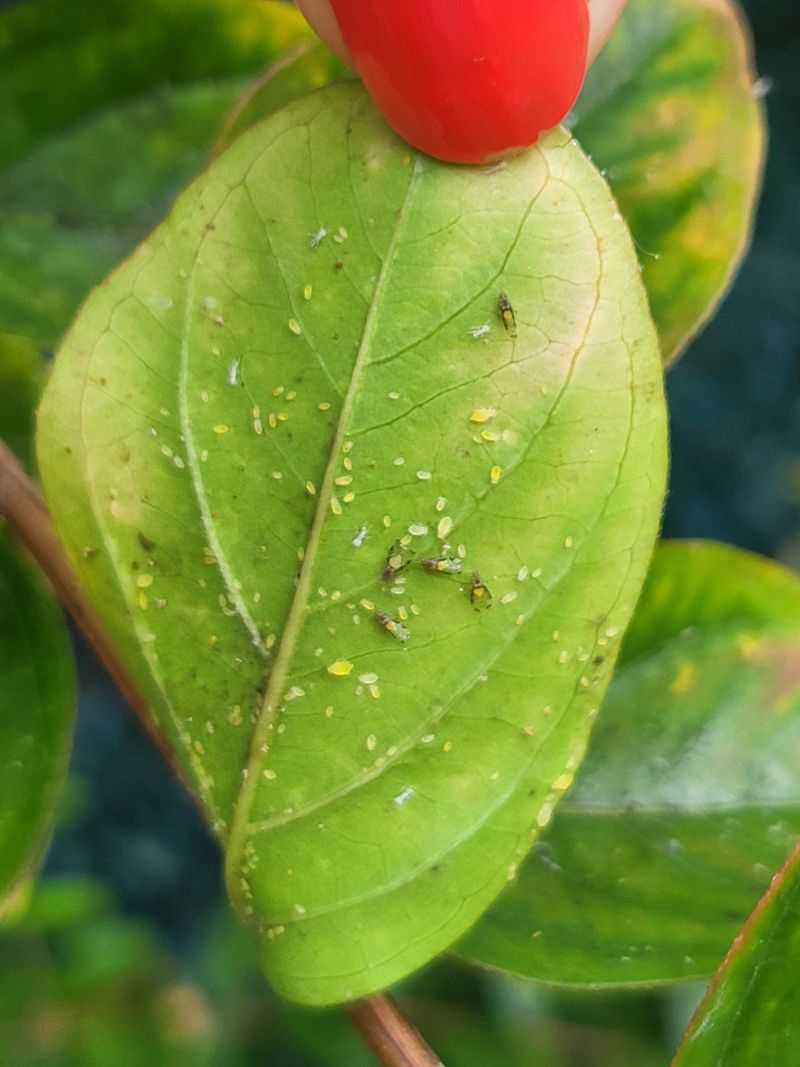
Aphids are soft-bodied bugs that are barely visible to the naked eye. They tend to cluster on new growth, tender stems, and the undersides of leaves.
You might not even notice them at first because they blend in so well with the plant tissue they are feeding on.
These insects use a needle-like mouthpart to pierce into the tree and suck out the sugary sap inside. A few aphids are not usually a big problem.
But crape myrtles can attract hundreds or even thousands of them by midsummer. Once a colony gets going, it grows fast.
Aphid populations explode quickly in warm weather, which is exactly what California summers deliver. The insects reproduce rapidly and can cover entire branch tips in just a few weeks.
That is when the real trouble starts to show up on the leaves below.
Checking the undersides of leaves and the tips of new branches is the best way to catch an aphid problem early. Early detection gives you more options and makes treatment much easier before the mess spreads.
2. That Shine On The Leaves Is Honeydew
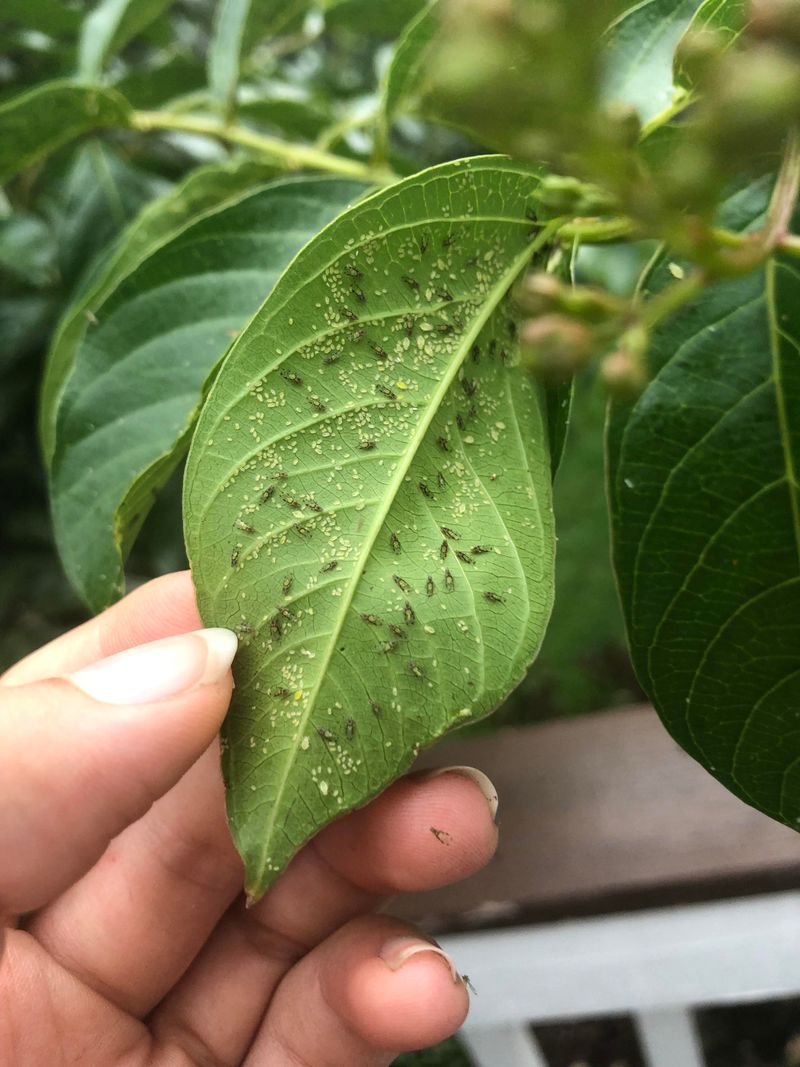
When aphids feed on a tree, they take in far more sugar than their bodies can actually use. The excess gets pushed out of the other end in the form of a sticky liquid called honeydew.
Yes, it sounds sweet, and it actually is.
Honeydew lands on whatever is directly below the feeding aphids. On a crape myrtle, that means leaves, branches, and sometimes even the ground or objects under the tree.
At first, the coating just makes leaves look shiny and a little wet, even when it has not rained.
If you touch a leaf and your fingers feel sticky right away, honeydew is most likely the reason. It has a syrupy texture that does not wash off with a light rinse.
Your California Garden Changes Every Week. Your Plan Should Too.
Gardening in California changes quickly throughout the season. Every Friday you’ll receive a simple weekly plan showing exactly what to plant, prune, fertilize, harvest, and protect so you never miss the right timing.
The stickiness clings to surfaces and builds up over time as more aphids keep feeding.
Honeydew itself does not directly hurt the tree, but it sets the stage for the next problem. Because it is full of sugar, it creates the perfect food source for a certain type of fungus.
That fungus is what eventually turns everything black.
Catching the honeydew stage early is actually a good sign. It means the mold has not moved in yet, and you still have time to address the aphid problem before the situation gets much harder to reverse.
3. Black Sooty Mold Grows On Top Of It
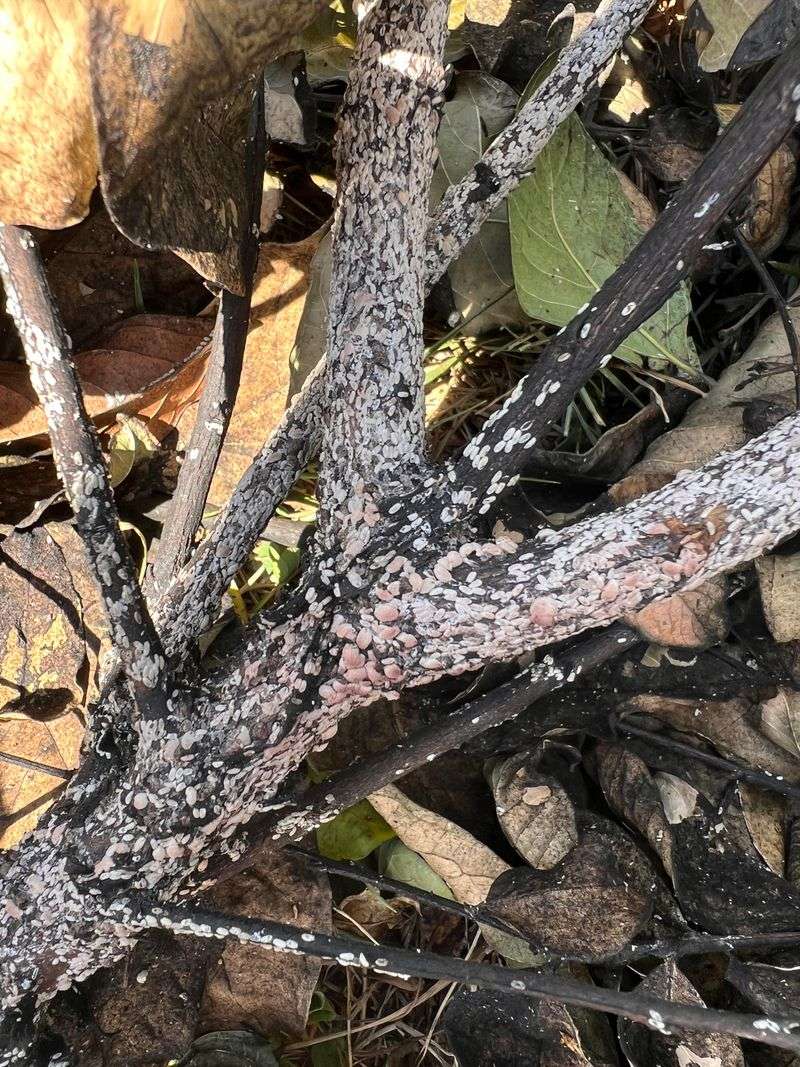
Once honeydew coats the leaves, a fungus called sooty mold moves in quickly. Sooty mold spores are always floating around in the air.
When they land on a sticky, sugar-rich surface, they find exactly what they need to grow.
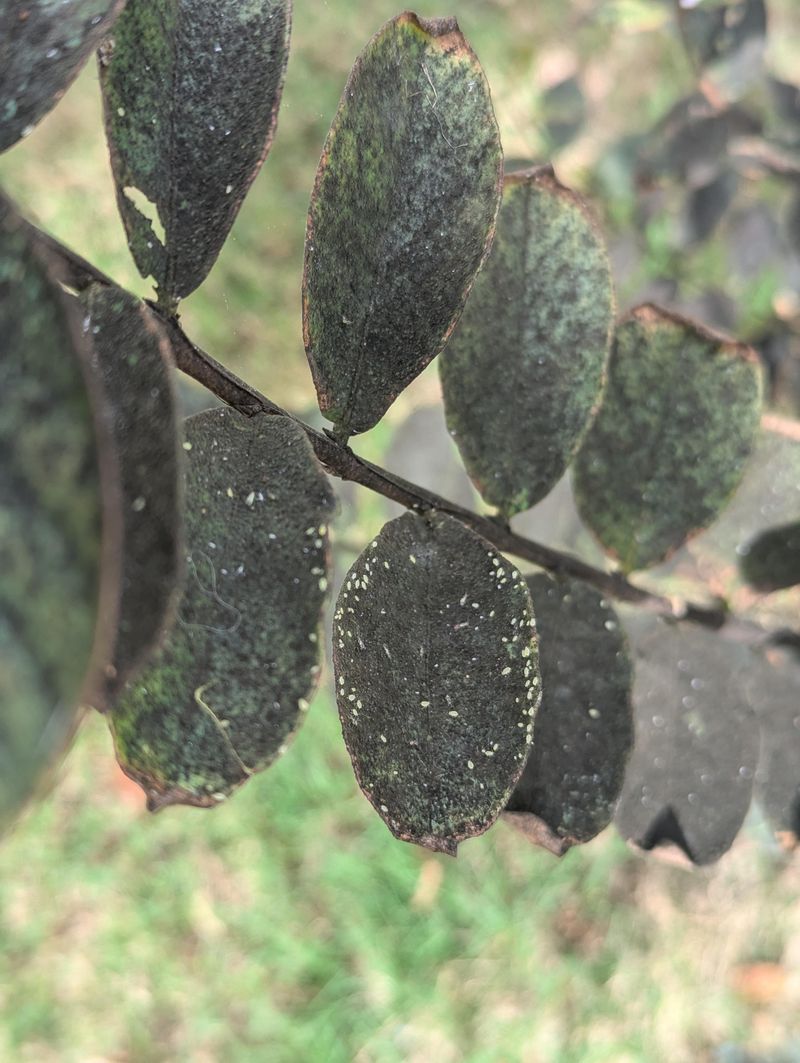
The mold forms a dark, powdery layer that looks a lot like soot from a fireplace. It covers the surface of leaves, branches, and anything else coated in honeydew.
By late summer, heavily affected trees can look almost entirely black from a distance.
Sooty mold does not actually infect the tree the way other fungal diseases do. It grows on top of the leaf surface rather than inside the plant tissue. But that does not mean it is harmless.
The black coating blocks sunlight from reaching the leaf surface. Leaves need sunlight to make food through photosynthesis.
When enough light gets blocked, the tree cannot produce energy as efficiently, and its overall health starts to decline over time.
The mold tends to look worse as summer goes on because aphid populations keep growing and producing more honeydew. More honeydew means more food for the mold, which means a thicker and darker coating with every passing week.
Sooty mold will not go away on its own as long as the honeydew keeps coming. Treating the source, which is the aphids, is the only lasting way to stop the mold from spreading further.
4. Ants Often Show Up Around The Same Time
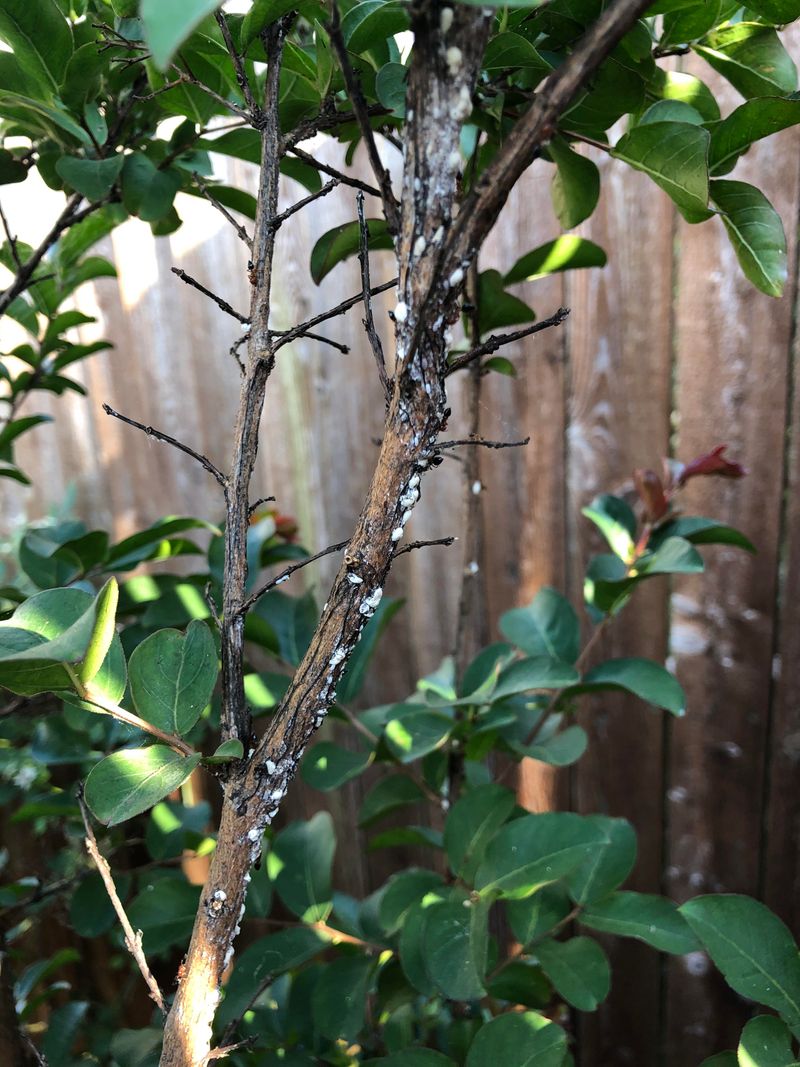
Have you ever noticed trails of ants marching up and down your crape myrtle right around the time the sticky mess appears? That is not a coincidence.
Ants and aphids have one of the most well-known partnerships in the insect world.
Ants are attracted to honeydew because it is a rich food source for their colonies. They will travel up and down a tree trunk repeatedly just to collect it.
Some ant species even go a step further and actively protect the aphids that produce it.
Protecting aphids means the ants will chase away or fight off other insects that would normally feed on aphids. Ladybugs and parasitic wasps are two natural predators that help keep aphid numbers in check.
When ants drive them away, the aphid population grows unchecked.
Watching for ant activity on your tree trunk is actually one of the easiest ways to know you have an aphid problem before you even see the bugs themselves. Lots of ant traffic heading up into the canopy is a reliable warning sign.
One practical solution is to use a sticky barrier product designed for tree trunks. These products create a band around the base of the trunk that ants cannot cross.
Cutting off ant access helps natural predators do their job and slows the growth of aphid colonies faster than most people expect.
5. Sticky Leaves Can Spread The Mess Below
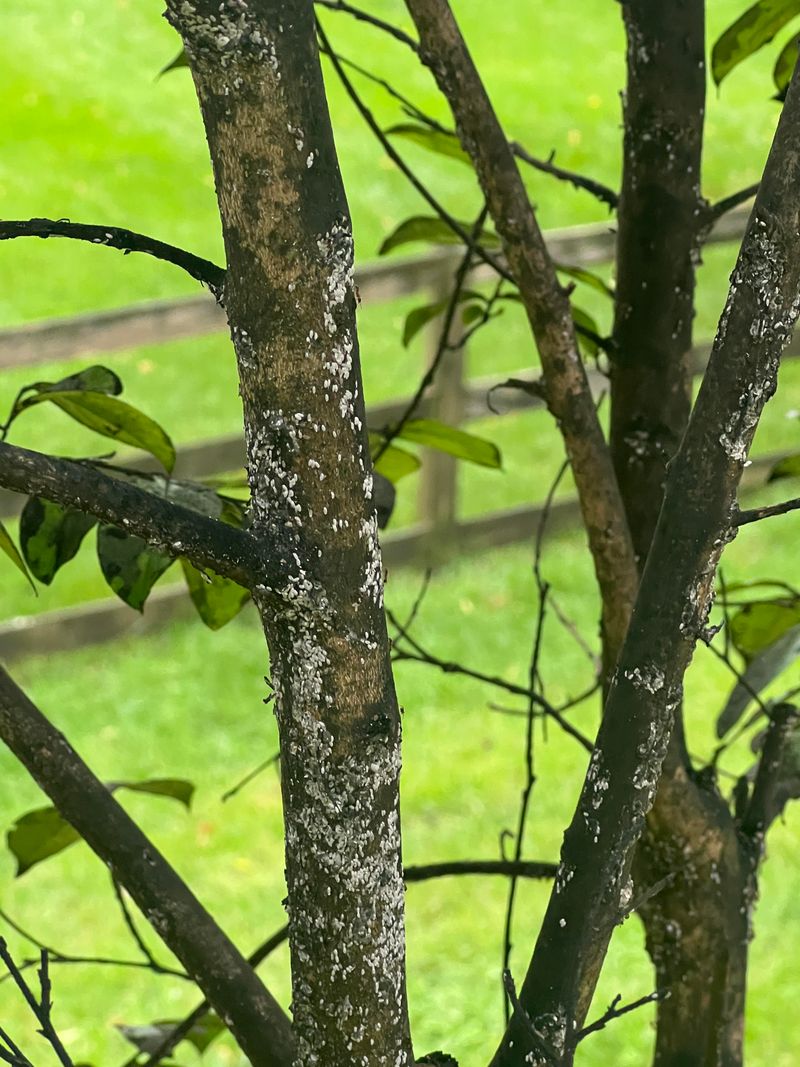
Crape myrtles are often planted near other plants, garden beds, or lawn areas. When honeydew drips from above, it does not just stay on the tree.
It lands on everything underneath, and that creates a spreading problem.
Shrubs, perennials, and ground covers planted below a sticky crape myrtle can end up coated in honeydew too. Once those surfaces get sticky, sooty mold can start growing on them as well.
A problem that started in the tree canopy can quickly affect a whole planting area.
Grass under the tree can also get coated, especially if the tree has a wide canopy. The sticky film makes the grass blades look dark and can interfere with the plant’s ability to absorb sunlight properly.
In heavy cases, the grass can start to look patchy and unhealthy.
The mess tends to drip more during hot afternoons when honeydew becomes more liquid. Wind can also carry sticky droplets a short distance, spreading the coating to nearby surfaces that are not even directly under the tree.
If you have garden beds under your crape myrtle, keeping an eye on those plants during summer is a smart habit.
Spotting sooty mold on nearby shrubs is often one of the first visible signs that your tree has a serious aphid problem that needs to be addressed right away.
6. Cars And Patios Under The Tree Can Get Coated Too
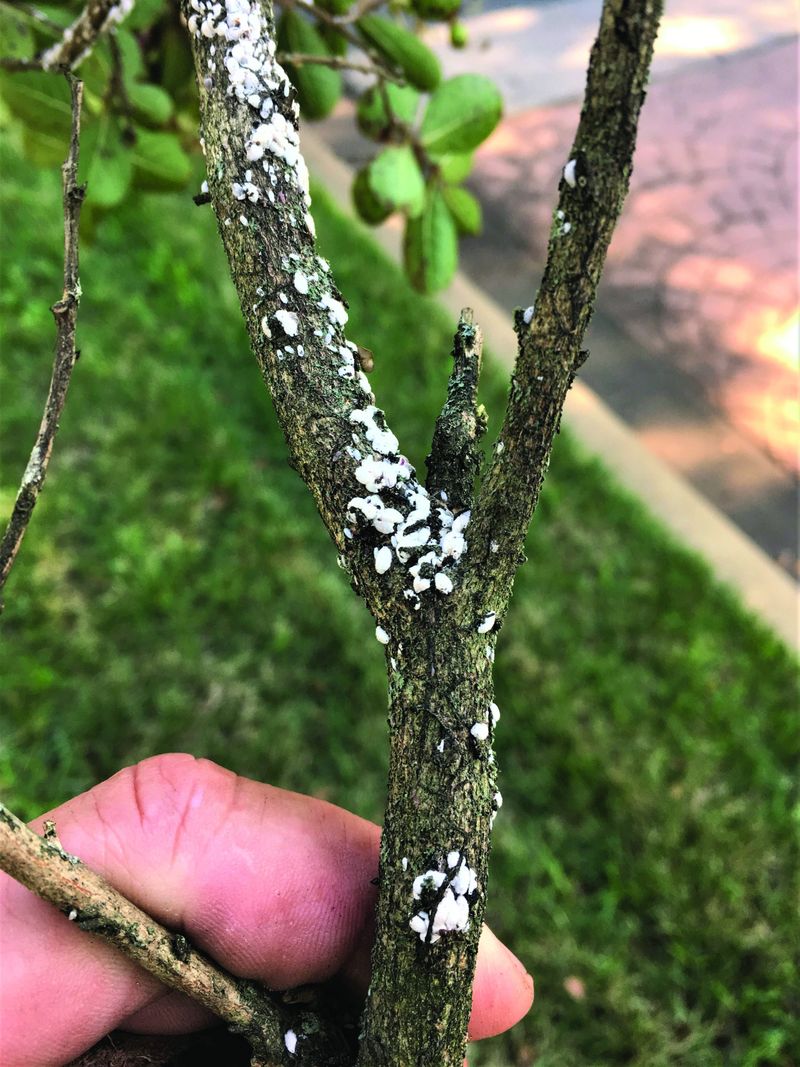
Crape myrtles are popular street trees and driveway trees because of their beautiful summer blooms. But parking a car under one during aphid season can leave you with a very unpleasant surprise on your paint job.
Honeydew drips from the leaves and lands on car hoods, roofs, and windshields. At first it looks like a clear, slightly sticky film.
Left in the sun, it bakes onto the surface and becomes much harder to remove. If sooty mold gets into the mix, the spots turn dark and look almost like tar.
Car owners who regularly park under crape myrtles in summer often notice their vehicles need more frequent washing than usual. The sticky residue can dull the paint finish over time if it is not cleaned off promptly.
A quick rinse is usually not enough once the honeydew has been sitting in the heat.
Patios, outdoor furniture, and concrete surfaces below the tree face the same issue. Patio chairs and tables can become sticky and stained, and the mold can leave dark marks on light-colored surfaces that are tough to scrub away.
Moving your car during peak California summer months or covering outdoor furniture can help reduce the mess.
But the most effective long-term solution is still dealing with the aphid colony in the tree itself, which stops the honeydew from dripping in the first place.
7. Washing The Leaves Only Fixes Part Of The Problem
When people first notice the black coating on their crape myrtle, the most natural reaction is to grab a hose and start spraying. Washing the leaves does help, but only up to a point.
Understanding what the wash actually fixes, and what it does not, saves a lot of frustration.
A strong stream of water can knock aphids off the branches and rinse away some of the honeydew. Fewer aphids means less honeydew being produced, which slows down the mold growth.
So there is real value in hosing down the tree regularly during the growing season.
Sooty mold that has been sitting on leaves for a long time can be stubborn. A light rinse may not remove it completely.
Some gardeners use a mild soap solution to help break down the mold and make it easier to wash away.
The problem is that if the aphids are still on the tree, the honeydew starts building up again almost immediately after washing. Within days, the leaves can look just as sticky as before.
Washing becomes a temporary fix rather than a real solution.
Repeated washing does have some benefit because it keeps aphid numbers lower and reduces the amount of mold that can develop.
But combining it with actual aphid control is the only way to get lasting results and keep the tree looking clean through the rest of the season.
8. The Real Fix Starts With The Aphids
Getting rid of the black coating for good means going after the aphids directly. Everything else, the honeydew, the mold, the ants, the mess on the patio, all of it traces back to those tiny insects feeding on the tree.
Insecticidal soap spray is one of the most popular and effective options for homeowners. It works by coating the aphids and disrupting their body functions.
It is also relatively safe around pets and beneficial insects when used as directed on the label.
Neem oil is another widely used option. It acts as both a repellent and a treatment, and it can also help slow down the mold growth at the same time.
Many gardeners mix neem oil with a little dish soap and water for an easy homemade spray.
For very heavy infestations, a systemic insecticide applied to the soil can be more effective.
The tree absorbs the product through its roots and moves it into the leaves, where aphids pick it up while feeding. This type of treatment tends to last longer than sprays.
Encouraging natural predators is a great long-term strategy too. Ladybugs, lacewings, and parasitic wasps all feed on aphids and can keep populations in check naturally.
Avoiding broad-spectrum pesticides that harm these helpers is one of the best things you can do for your tree’s long-term health.
9. Heavy Infestations Can Make Trees Look Tired
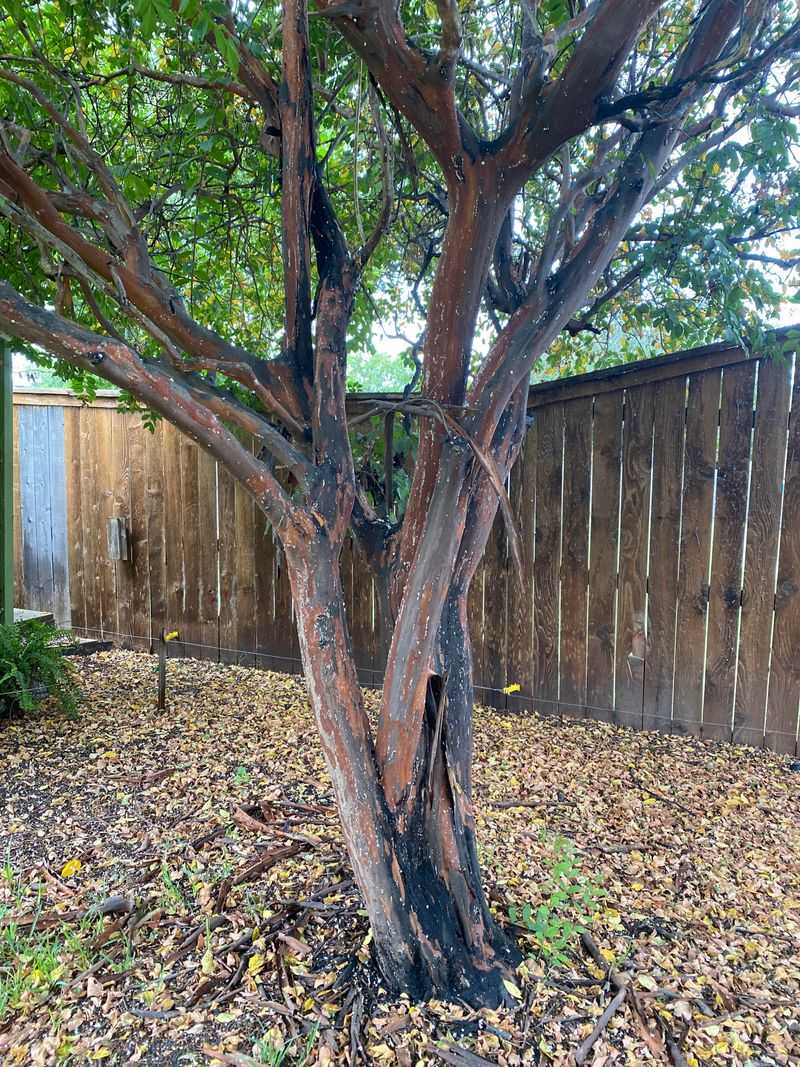
A crape myrtle covered in sooty mold does not just look bad. When the problem goes on long enough without treatment, the tree actually starts to show signs of stress that go beyond the cosmetic mess on its leaves.
Leaves that are heavily coated in black mold cannot absorb sunlight properly. Over time, this reduces the tree’s ability to produce the energy it needs to grow, bloom, and stay strong.
Affected trees often produce fewer flowers than usual, and the blooms that do appear may be smaller or less vibrant.
New growth can look pale, twisted, or stunted when aphid populations are very high. The insects drain nutrients directly from the tender young tissue, which is the part of the tree that drives new development.
When that tissue is damaged repeatedly, growth slows noticeably.
Leaves may also drop earlier than expected in severe cases. Early leaf drop weakens the tree going into fall and can affect how well it bounces back the following spring.
A stressed tree is also more vulnerable to other problems, including other insects and environmental stressors.
The good news is that crape myrtles are tough and resilient trees. With the right treatment and a little patience, most trees recover well once the aphid problem is under control.
Starting treatment as soon as you notice the sticky leaves gives the tree the best chance of a strong recovery before the season ends.