The Native Ohio Plant Hummingbirds Want That Almost Nobody Plants
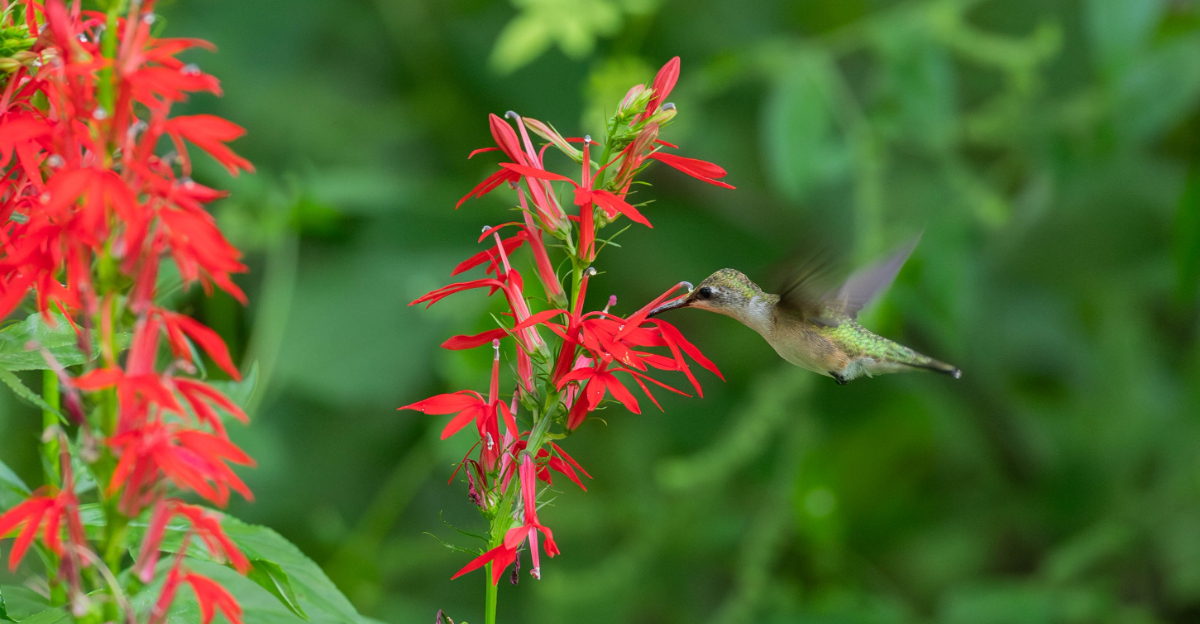
Hummingbirds passing through Ohio in late summer are running out of time and running low on fuel. Every stop they make is a calculation.
Every yard either covers the cost of the visit or does not, and the birds adjust their route accordingly without sentiment or second chances. One native plant is at the top of what hummingbirds are looking for during that stretch.
Not a feeder, not a generic red flower, not something approximating what they actually need. The specific plant that hummingbird biology was shaped around long before anyone was hanging sugar water from a shepherd’s hook.
It is native to Ohio. It is available at good native plant nurseries.
It is almost never planted by the gardeners who spend the most money trying to attract hummingbirds by other means. The plant hummingbirds want most is the one Ohio yards keep overlooking.
That gap is worth closing before migration season peaks.
1. Cardinal Flower Is The Native Hummingbirds Keep Coming Back To
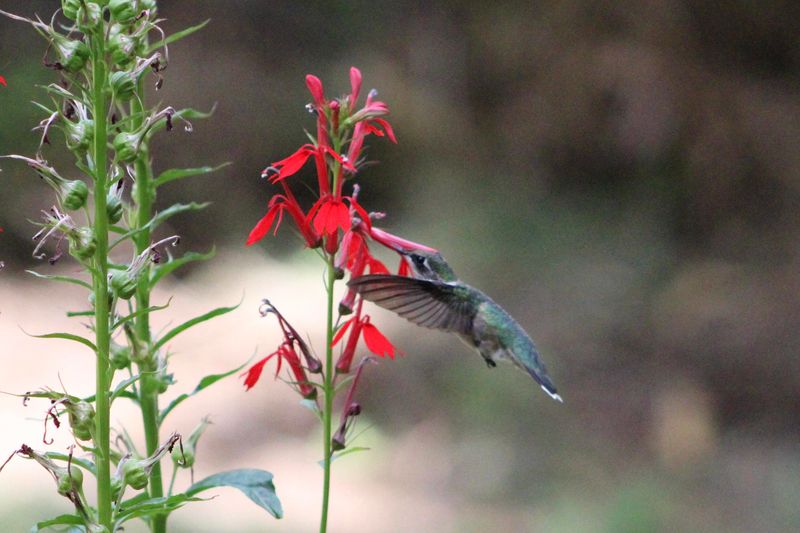
Cardinal flower, Lobelia cardinalis, is a native perennial found growing naturally across Ohio and much of eastern North America. It produces tall upright stems lined with vivid scarlet blooms that open from the bottom of the spike upward.
Mature plants commonly reach three to four feet in height, sometimes taller in rich moist sites.
The plant is well established in the state’s native flora, occurring naturally along streambanks, wet meadow edges, and moist woodland openings.
It is less commonly planted in residential landscapes than many other hummingbird garden favorites, though it is available from native plant nurseries.
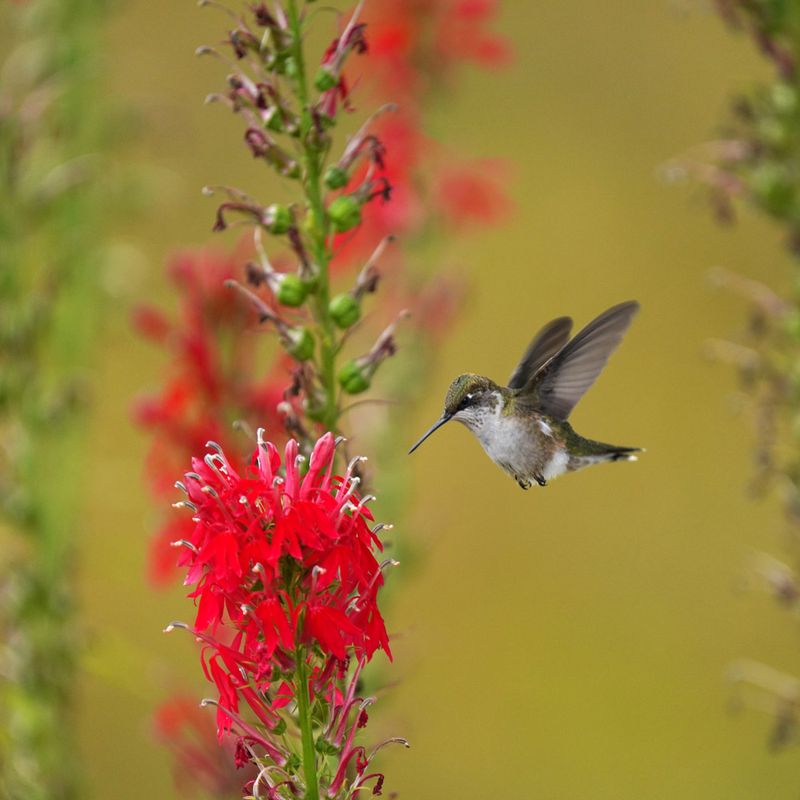
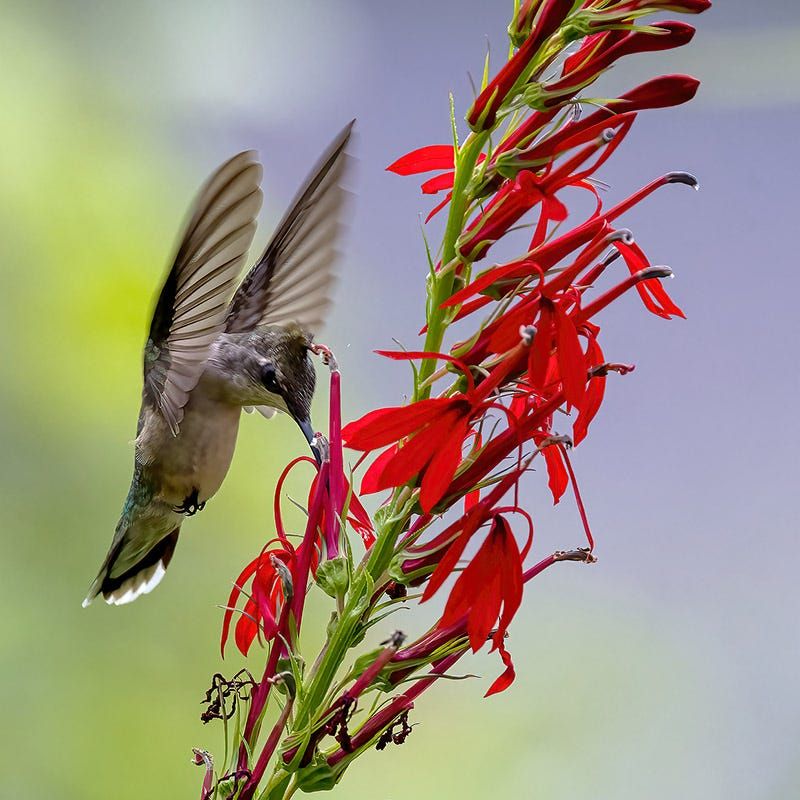
Its scarlet flowers are tubular in shape, which fits the long bill and hovering flight style of ruby-throated hummingbirds, Archilochus colubris. The birds can reach nectar at the base of each tube while the flower’s structure positions pollen near their forehead.
That arrangement supports pollination, though hummingbirds are not the only visitors the plant receives.
Long-tongued bees and some butterflies also visit the blooms, so it is not exclusively a hummingbird plant. Still, the flower form and color make it particularly well suited to hummingbird feeding behavior.
For gardeners seeking a tall, vivid native perennial that can attract ruby-throats in the late season, it is a strong candidate worth evaluating for the right site.
2. Scarlet Blooms Put Nectar Right Within Reach
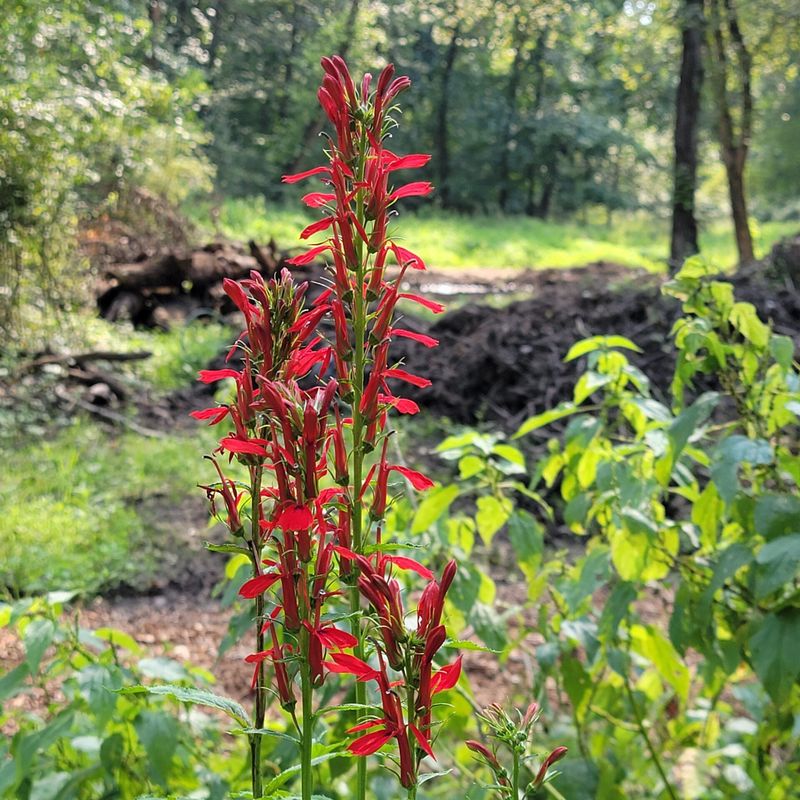
Each bloom along a cardinal flower spike is built like a narrow tube, roughly an inch or more in length, flaring into two distinct lips at the opening. The upper lip is divided into two narrow lobes that arch back.
The lower lip spreads into three broader lobes below.
That structure positions the stamens and style so they extend forward, making contact with a hovering bird’s head during a visit.
A ruby-throated hummingbird hovers in front of the flower, inserts its bill to reach the nectar pooled at the base, and picks up or deposits pollen in the process.
Not every visit results in successful pollination, but the arrangement clearly favors birds with long bills and the ability to hover in place.
Your Ohio Garden Changes Every Week. Your Plan Should Too.
Gardening in Ohio changes quickly throughout the season. Every Friday you’ll receive a simple weekly plan showing exactly what to plant, prune, fertilize, harvest, and protect so you never miss the right timing.
The scarlet coloration is a notable feature. Red tubular flowers are strongly associated with hummingbird pollination systems in North American plants, though ruby-throats also visit flowers of other colors.
The red here is not incidental. It is a vivid, saturated scarlet that stands out sharply against green foliage in late summer light.
Flowers open progressively up the spike over several weeks, extending the period when nectar is available at each stem.
That gradual opening means a single plant can provide a useful nectar source across a meaningful stretch of the late-summer season rather than all at once.
3. Damp Ground Is Where This Plant Really Shines
Few Ohio garden perennials are as honest about what they need as cardinal flower. Its natural habitat tells the story plainly.
In the wild, it grows along streambanks, at the edges of wet meadows, beside ponds, and in moist woodland openings where the ground rarely dries out completely.
Consistently moist soil is what the plant prefers. That means ground that stays damp between rain events, not soil that swings between soaking wet and bone dry.
There is an important difference between consistently moist ground, periodically wet ground that drains between events, and permanently saturated or waterlogged soil.
Cardinal flower generally does best in the middle range. It can handle wet feet for short periods, especially after heavy rain.
However, it is not a true aquatic plant and does not thrive in standing water for extended periods. Poorly drained spots where water sits stagnant for days at a time are not ideal.
The good fit is a site where water moves through rather than pools indefinitely. Several moist sites can work well for cardinal flower.
These include a low bed that drains within a day or two, a naturally moist slope, or a garden edge near a seasonal wet area.
Understanding that distinction helps gardeners avoid placing it in conditions that look wet but actually alternate between flooding and drying out.
4. Rain Garden Edges Can Be Its Sweet Spot
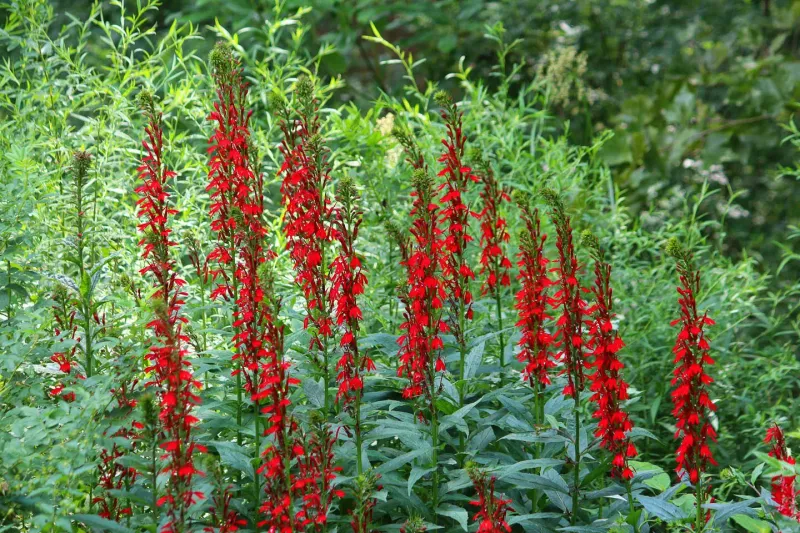
Rainwater flowing through a designed basin creates a range of moisture conditions within a single garden feature. The deepest zone at the center tends to hold water longest after a storm.
The upper edges and slopes drain more quickly and stay moderately moist rather than saturated for long periods.
That gradient makes placement matter. Cardinal flower is generally better suited to the upper edges or mid-slope of a rain garden than to the deepest basin floor.
At the edge, it gets the consistent soil moisture it prefers without sitting in water that stagnates after every rain event.
A moisture-loving native placed thoughtfully in that zone can thrive where ordinary dry-border plants struggle. Many common Ohio perennials planted at rain garden edges suffer because the soil stays too wet after storms.
Cardinal flower can handle that periodic wetness as long as drainage follows within a reasonable time.
Sun exposure at the site matters too. A rain garden in full sun with good drainage through well-amended soil can work well for this plant.
A heavily shaded basin with compacted soil and slow drainage is a different situation entirely. Evaluate each potential site on its own terms.
Rain gardens designed to manage residential stormwater runoff are increasingly common across the region.
For homeowners with an established basin that stays reliably moist at its edges, cardinal flower offers both ecological function and vivid late-summer color where few ornamentals perform as reliably.
5. A Little Shade Helps The Soil Hold Moisture
Light and soil moisture are closely connected for this plant, and understanding how they interact helps with site selection. Cardinal flower can grow in full sun when the soil stays consistently moist throughout the growing season.
It also performs well in partial shade, which is typically defined as four to six hours of direct sun per day.
In hotter parts of the summer, afternoon shade can slow soil moisture loss at the surface, which benefits a plant that prefers reliably damp ground.
A spot with morning sun and afternoon shade from a nearby tree or structure often provides a useful combination of light and reduced evaporation.
That said, shade is not a substitute for adequate soil moisture. A dry, shaded site is still a dry site.
Placing cardinal flower under a large tree with dense surface roots and dry compacted soil will not produce good results simply because the sun is blocked. The soil condition matters more than the light level alone.
Very deep shade tends to reduce flowering. A plant that receives only an hour or two of weak filtered light may grow but will likely produce fewer blooms than one in brighter conditions.
Partial shade with access to consistent soil moisture is probably the most forgiving combination for gardeners who are establishing plants in a new bed.
Aim for a site that offers light without punishing afternoon heat and soil that stays damp without waterlogging.
6. Late Summer Blooms Keep The Nectar Window Open
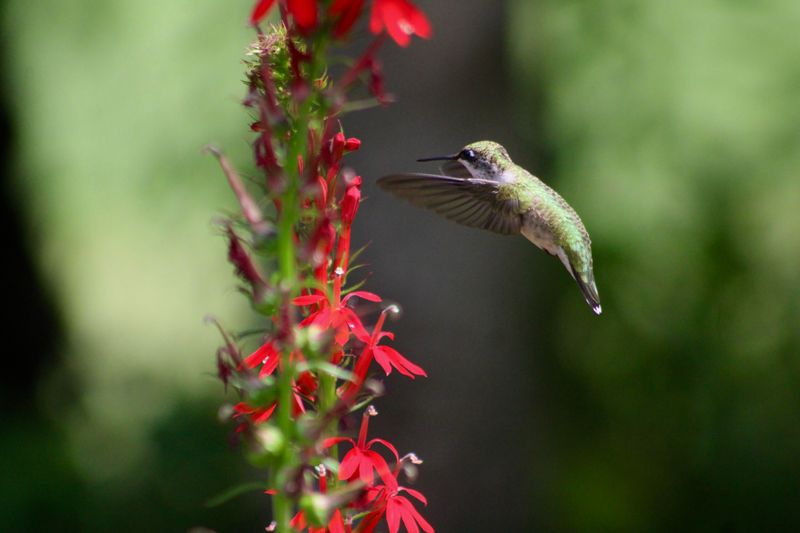
A flower spike opening in mid to late summer fills a gap that many Ohio garden designs leave empty. Cardinal flower typically blooms from roughly July through September across much of its range.
Exact timing shifts with location, weather, plant maturity, and site conditions. Not every plant across the region flowers on the same schedule.
That seasonal window overlaps with a period of active ruby-throated hummingbird movement. By late summer, local birds that bred nearby may be visiting gardens regularly.
Some individuals begin moving south earlier than others, and the timing varies between adult males, females, and young birds. A bird visiting a garden in August may be a local resident, a post-breeding adult, or an early traveler.
Having a natural nectar source available during that window can be useful. Earlier-blooming perennials like bee balm may have finished by the time cardinal flower reaches peak bloom.
That seasonal offset means the two plants can complement each other in a well-planned garden rather than compete.
Maintained feeders can also supplement natural sources during this period. Flowers and feeders serve different functions, and neither makes the other unnecessary.
Cardinal flower provides natural nectar within a plant structure that fits hummingbird feeding behavior, along with habitat value that a feeder alone cannot replicate.
The bloom season is one of the plant’s clearest advantages for late-summer garden planning.
7. This Native Wants More Moisture Than Most Garden Favorites
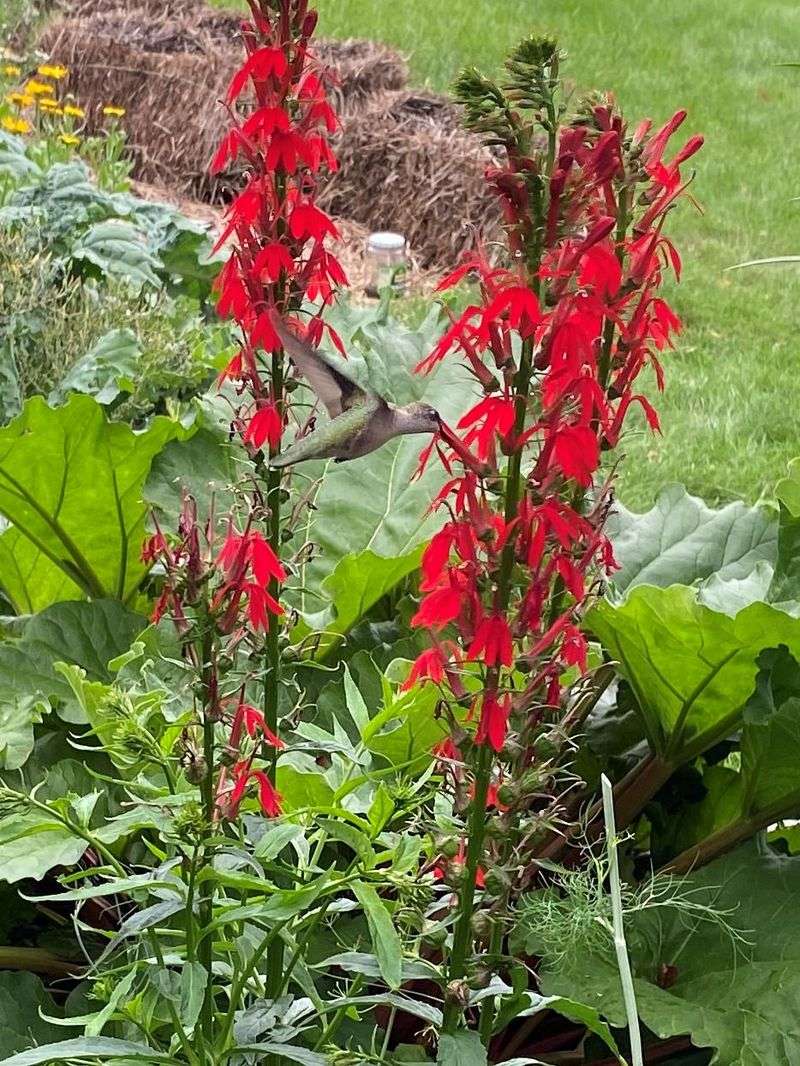
Placing cardinal flower in a standard sunny perennial border often leads to poor results. Most mixed borders are designed to drain well and dry out between rain events, which suits a wide range of ornamental perennials.
Cardinal flower is built for a different set of conditions, and that mismatch is where many gardeners run into trouble.
Popular hummingbird garden plants like wild bergamot and butterfly weed are adapted to drier, well-drained soil. They can handle stretches without rain once established.
Cardinal flower is not in that category. Expecting it to perform like a drought-tolerant prairie native in a standard border will likely result in a struggling plant.
Newly planted specimens need particular attention during establishment. Roots need time to spread into the surrounding soil, and a young plant cannot buffer itself against dry spells the way a mature one sometimes can.
Checking soil conditions and watering when the ground is dry rather than following a fixed schedule is a practical approach during the first growing season.
Once established in a suitable moist site, the plant generally requires less intervention. A naturally low area, a bed that receives drainage from a slope, or a site near a water feature can all reduce the need for supplemental watering over time.
Mulching around the base can help retain soil moisture, but avoid piling material directly against the crown of the plant.
8. Dry Soil Is Where Cardinal Flower Starts Struggling
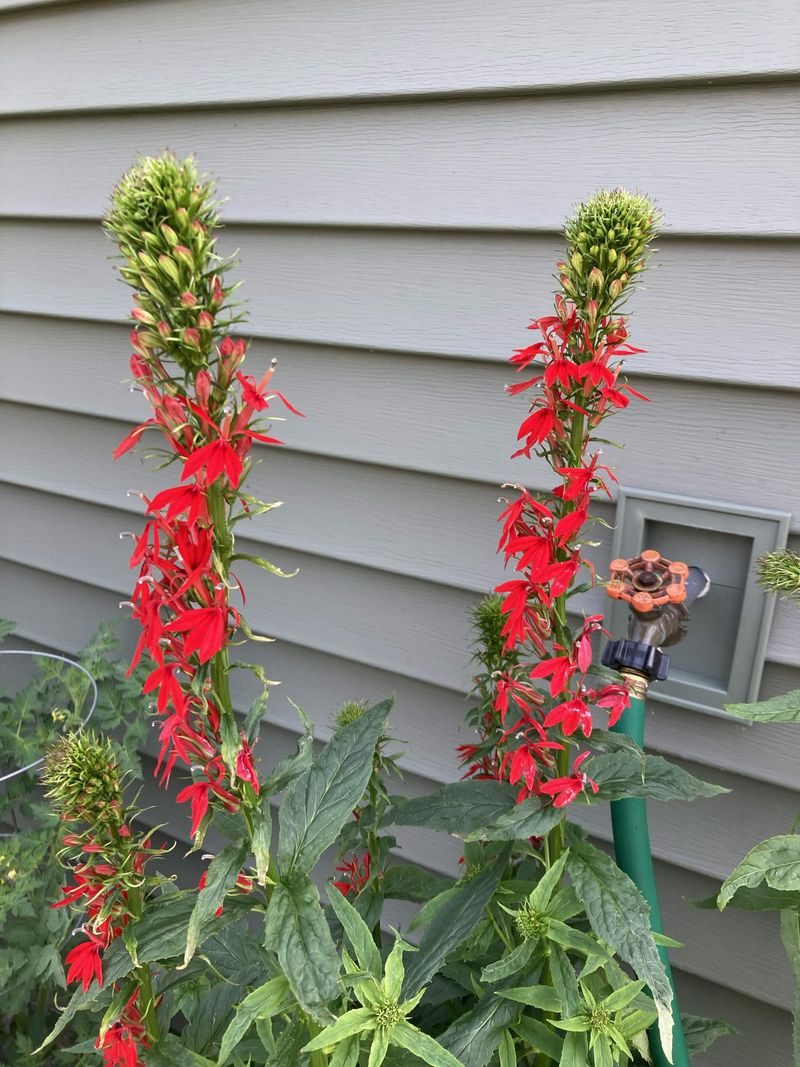
A persistently dry site is simply the wrong home for this plant. Cardinal flower is unlikely to perform well in persistently dry conditions.
That includes rapidly draining sandy soil, a south-facing slope baked by afternoon sun, or a raised bed that dries out between waterings. No amount of mulch fully compensates for a site that is fundamentally too dry.
Mulch can slow evaporation from the soil surface, and that is genuinely useful in a marginal site. But mulch does not create moisture that is not there.
A dry site with mulch is still a dry site. Gardeners in that situation are better served by selecting plants matched to those conditions.
For a dry, sunny slope where ruby-throated hummingbirds are the goal, native alternatives may be worth considering. Wild bergamot, Monarda fistulosa, handles drier, well-drained soil and can attract the birds.
Butterfly weed, Asclepias tuberosa, is another dry-site native with documented pollinator value. Neither replaces what cardinal flower does in a moist setting, but each fits a different site honestly.
The lesson the plant teaches is straightforward. Match the plant to the site rather than adjusting expectations to cover a mismatch.
Cardinal flower earns its place in an Ohio late-summer moist garden because it fills that specific niche with vivid color and real ecological value. Put it in the right spot, and it rewards that decision clearly.