Native Ohio Perennials That Bloom Vigorously Before Fall Arrives
Late summer can make an Ohio garden look like it has quietly run out of ideas.
Spring stars are long finished. Early summer color starts thinning. A few beds suddenly show more stems than flowers, and the whole yard can feel one hot week away from looking tired.
Then certain natives step forward.
Fresh purple, gold, pink, and yellow blooms begin showing up just as bees and butterflies need another reliable food source before cooler weather arrives. That timing can make a huge difference in a border that usually fades by August.
So which perennials are worth giving space now?
The best choices are not all built for the same conditions. Some love full sun and lean soil. Others prefer moisture. A few need plenty of room because they refuse to behave like tiny border plants.
Bloom windows can shift with weather, cultivar, and location across Ohio.
But choose the right match, and your garden can stay lively right up to fall instead of quietly checking out early each year.
1. Let New England Aster Own Late Summer
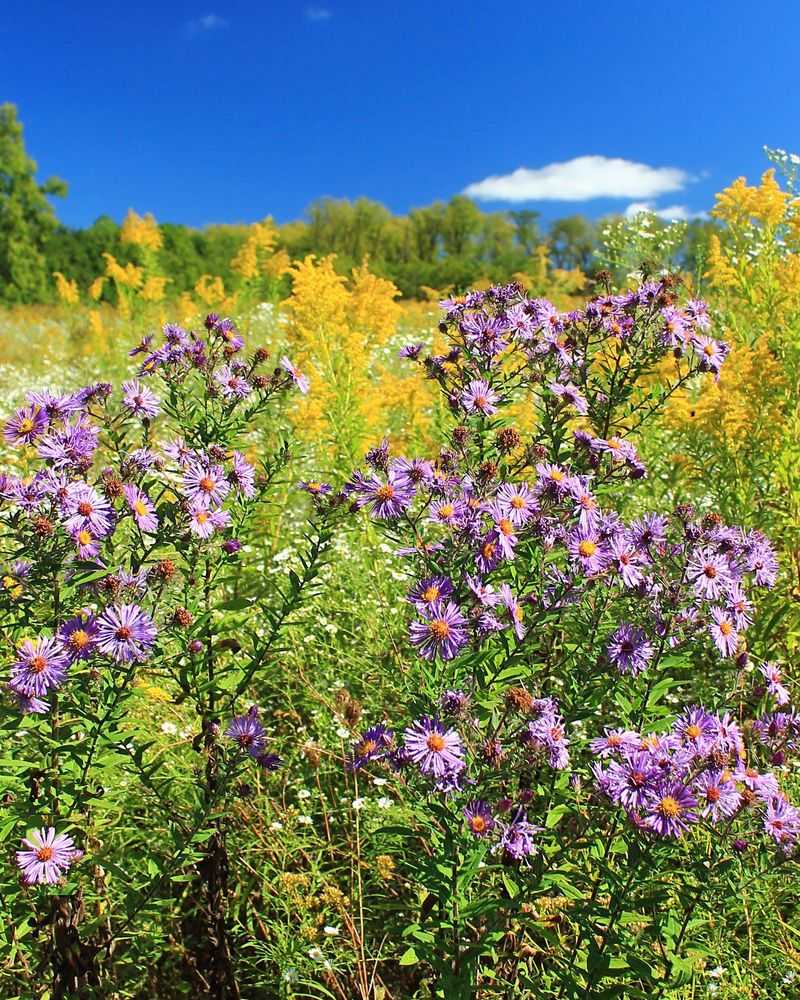
By August, a border that looked tired in July can suddenly turn purple.
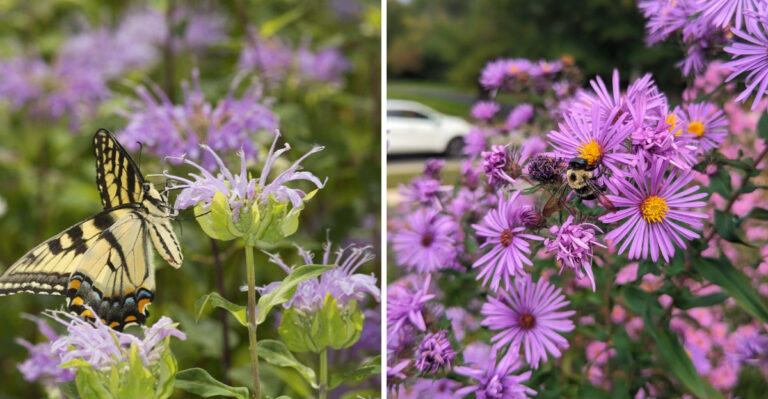
New England aster, Symphyotrichum novae-angliae, saves much of its show for late summer and early fall. The blooms arrive when plenty of earlier perennials are winding down, and monarchs, native bees, and bumble bees tend to notice quickly.
Give it full sun for the strongest flowering. Six hours of direct light is a useful target. Average to moist soil works well, and this native handles many Ohio clay soils better than fussier perennials.
Dry, reflected-heat spots are less comfortable. A bed beside a hot south-facing wall can push the plant too hard unless moisture stays reasonably steady.
Height deserves some planning. Mature stems can reach four to six feet and may lean once flowers load up the top. Pinching stems back by roughly half in late May or early June encourages branching and keeps the clump shorter.
Leave two to three feet between plants for airflow. Crowded growth can make powdery mildew more noticeable later in the season.
Divide older clumps every few years when the center begins losing vigor.
The timing can shift a little from yard to yard, but the effect stays the same.
Just when the border starts looking finished, this aster decides the season still has another chapter.
2. Keep Goldenrod Glowing Into Fall
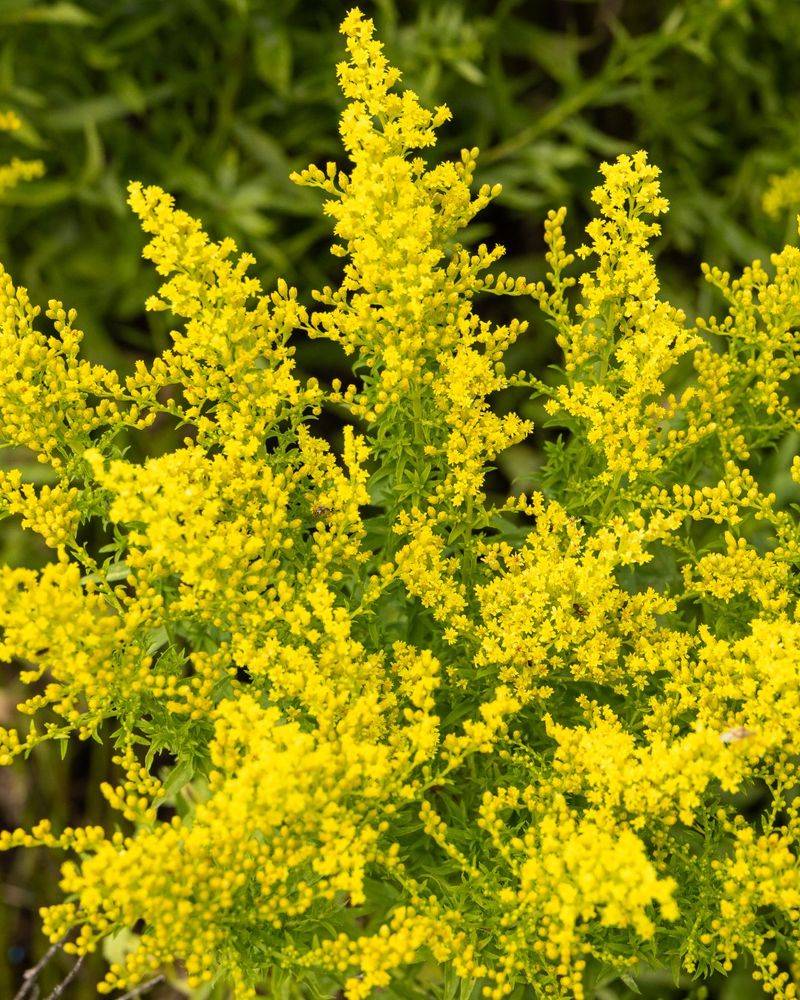
That glowing yellow patch in August is doing far more than rescuing the color scheme.
Ohio has several native goldenrods, and choosing the right species makes a big difference in a home garden.
Showy goldenrod, Solidago speciosa, offers upright plumes with a relatively garden-friendly habit. Ohio goldenrod, Solidago ohioensis, fits moister sites, while stiff goldenrod, Solidago rigida, handles leaner, drier ground.
Most appreciate full sun and average soil. Rich, heavily amended beds can encourage more spreading and taller growth than you wanted, so restraint with fertilizer often works in your favor.
Bloom usually begins in late summer and can continue well into fall.
Your Ohio Garden Changes Every Week. Your Plan Should Too.
Gardening in Ohio changes quickly throughout the season. Every Friday you’ll receive a simple weekly plan showing exactly what to plant, prune, fertilize, harvest, and protect so you never miss the right timing.
That timing makes goldenrod especially valuable to bees and butterflies searching for nectar before cold weather settles in. Planting several together creates a larger patch of color and a much easier landing zone for pollinators.
Give most garden-sized species around eighteen to twenty-four inches of space, then watch how the clump behaves over time.
One myth deserves to stay out of the garden. Goldenrod gets blamed for seasonal allergies, but ragweed is usually the airborne pollen culprit. Goldenrod pollen is heavier and relies much more on insects for transport.
So the plant is not sneezing its way across Ohio.
It is mostly busy glowing, feeding pollinators, and making August borders look far less exhausted.
3. Grow Joe Pye Weed For Tall Color
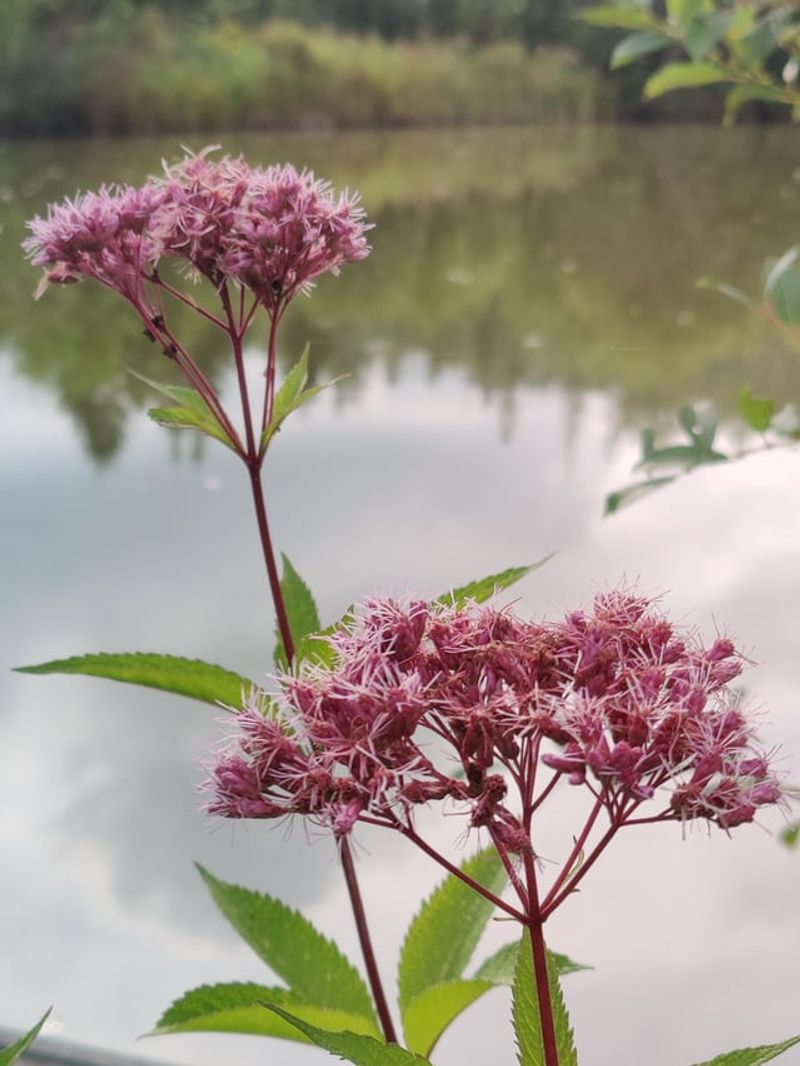
A tall empty corner can look very different once dusty pink flower clusters rise above it.
Joe Pye weed brings serious height to an Ohio border, with native Eutrochium species often reaching six feet or more.
That size makes the plant especially useful along fences, at the back of large beds, or in naturalistic areas where a towering perennial feels intentional.
Moist to average soil suits it well.
This is a plant with roots in stream edges, damp meadows, and similar habitats, so it handles wetter ground better than many drought-focused prairie perennials.
Full sun encourages sturdy growth and heavier flowering, while part shade can still work with slightly looser stems.
From midsummer into early fall, the broad flower clusters become busy landing pads.
Swallowtails, skippers, native bees, and other pollinators can work across the blooms without much effort. That makes the plant useful during the exact stretch when some earlier nectar sources have already faded.
Space plants generously, roughly three to four feet apart, so air can move between mature clumps.
Sunny plants usually stand fairly well on their own. Shadier growth may lean toward light and can benefit from support placed early in the season.
Bloom timing varies by species, rainfall, and location.
Still, the overall effect is wonderfully dependable.
When the back of the border needs height, color, and a little late-summer drama, Joe Pye weed arrives wearing very tall shoes.
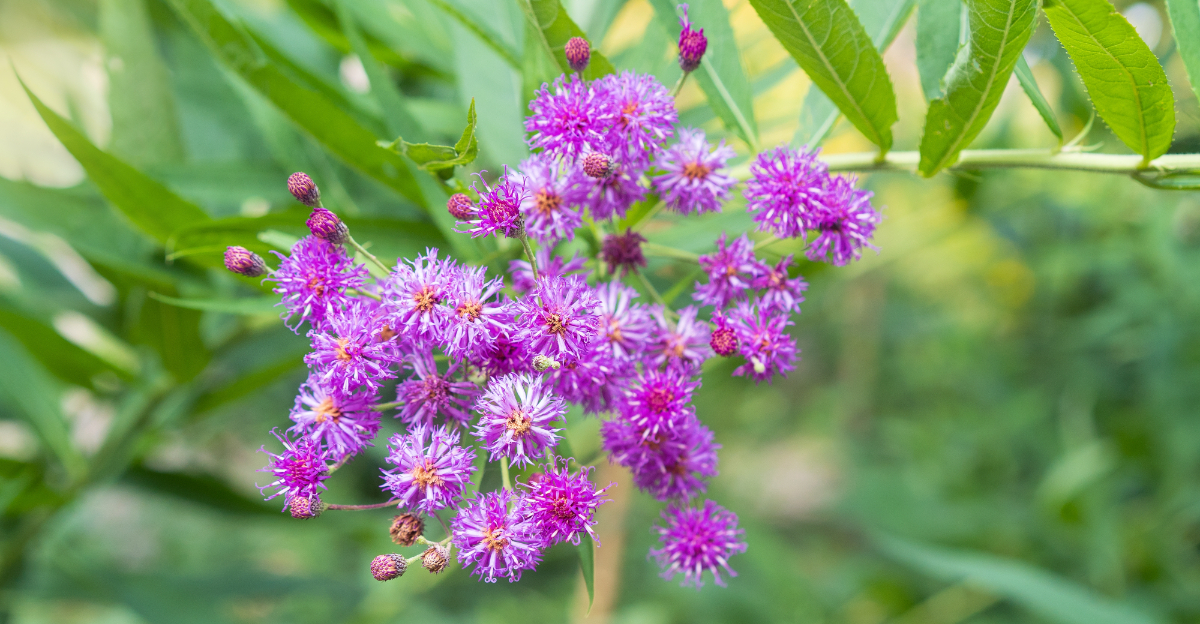
4. Add Ironweed For A Purple Punch
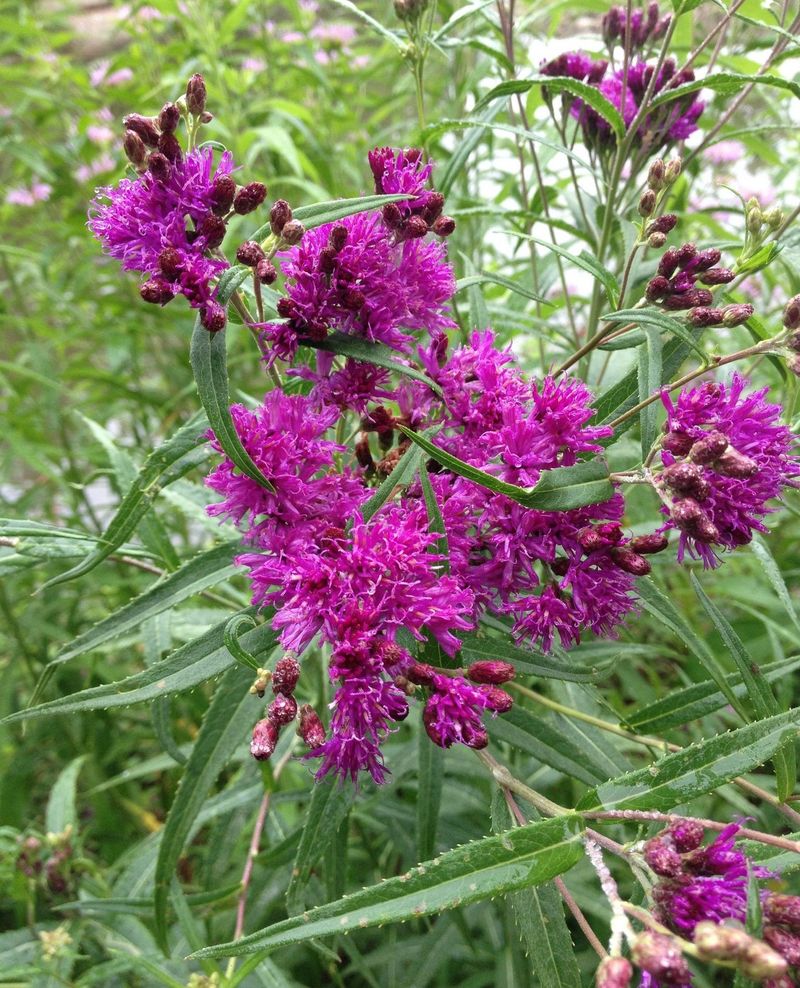
Few late-summer colors hit as hard as deep ironweed purple.
Tall ironweed, Vernonia gigantea, can make an Ohio meadow border look almost electric from late July into September. The flowers sit high above sturdy stems, creating a strong contrast beside yellow companions such as goldenrod.
Full sun gives the best display.
Moist to wet soil also suits this native well, which makes it useful for low areas that stay damp after summer rain. Average garden soil can work too, provided the site does not become extremely dry for long stretches.
The main thing to respect is height.
Mature plants can reach five to eight feet, so placing one at the front of a small foundation bed is a fast route to regret. Give it the back row, a meadow edge, or a roomy naturalistic planting where that scale becomes an advantage.
Pollinators appreciate the flowers just as much as gardeners do. Monarchs, swallowtails, native bees, and other visitors can keep the purple clusters busy through the late-summer stretch.
A plant headed for excessive height can be pinched back by about one-third in early June. That encourages branching and creates a shorter, fuller habit.
Trimming later can limit unwanted seedlings in tighter gardens.
Ironweed may have an industrial name, but the flowers are anything but dull.
It brings the kind of purple that makes the rest of the border look like it suddenly upgraded its wardrobe.
5. Let Black-Eyed Susan Carry The Border
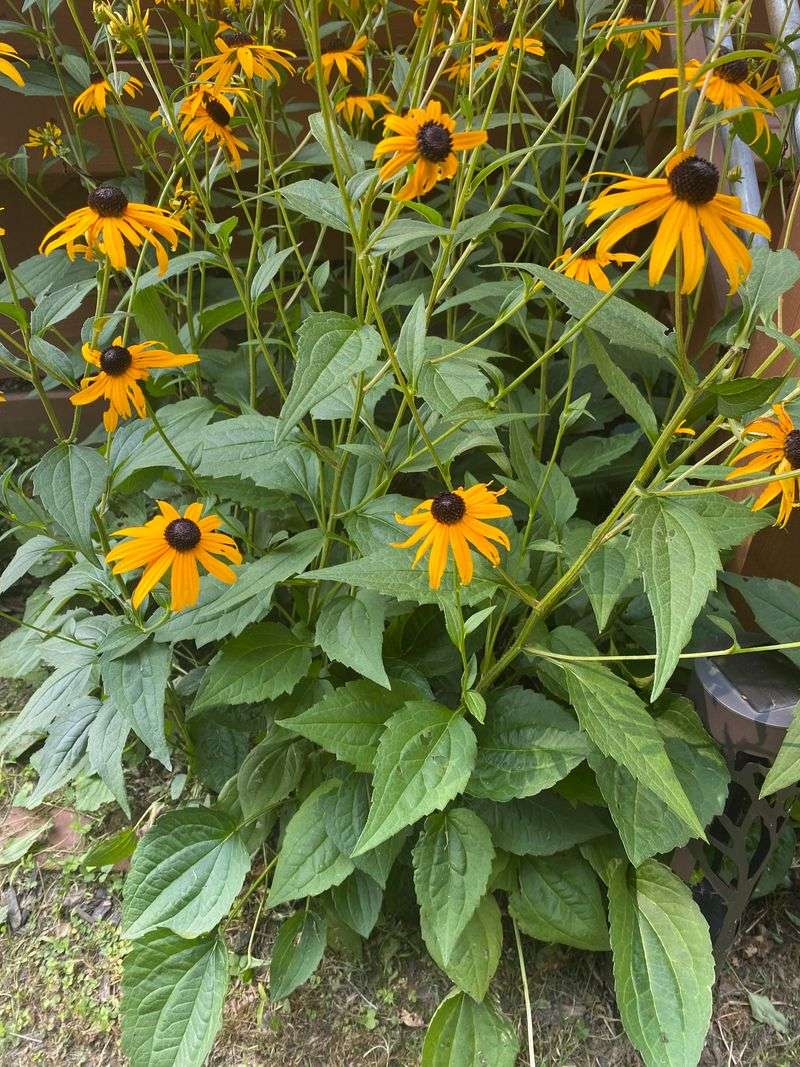
A tired July border often needs something simple, bright, and willing to keep going.
Black-eyed Susan fills that role beautifully. Rudbeckia hirta brings familiar golden petals around dark centers, while Rudbeckia fulgida offers a longer-lived perennial option for gardeners who want a more permanent clump.
Both handle Ohio summer conditions with impressive flexibility.
Full sun produces the strongest flowering, and average soil is usually enough. Established plants can tolerate dry spells, especially in ground that drains well.
Overly rich soil may encourage more leaves and floppier growth instead of the flower-heavy display you actually wanted.
Give plants roughly eighteen to twenty-four inches of room.
That spacing improves airflow and lets the clump fill out without turning into one tangled mass.
Trimming can stretch the bloom season. Removing faded flowers encourages more buds through summer, while leaving some later seedheads gives goldfinches and other birds something to investigate as fall approaches.
The exact bloom window depends on species and cultivar. Many start in June and stay colorful through August or into September.
That long run is a big part of the appeal.
Black-eyed Susan does not need unusual soil, elaborate pruning, or a carefully staged entrance.
It simply keeps producing cheerful flowers while other plants start looking ready for vacation.
Sometimes the border does not need sophistication.
It needs a reliable yellow workhorse that refuses to leave early.
6. Keep Coneflower Blooming Into August
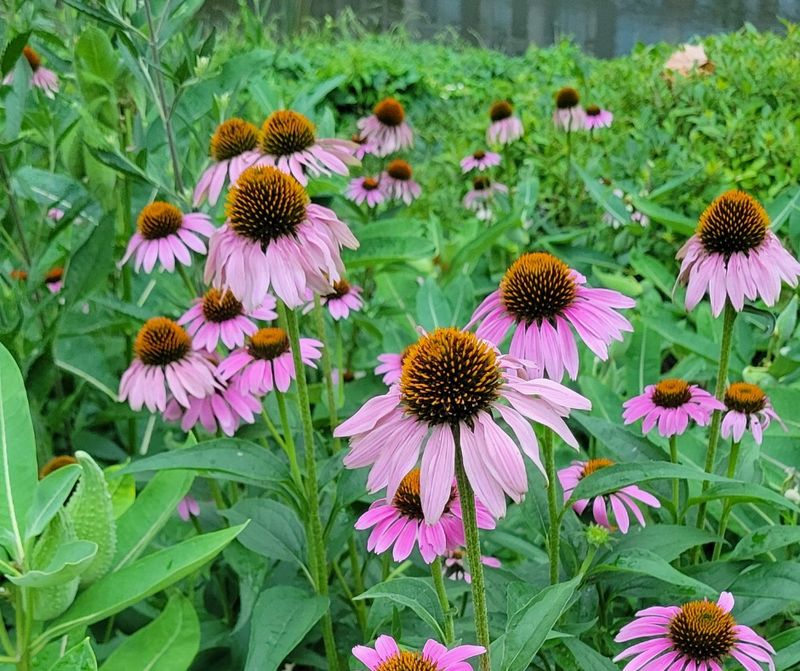
Those swept-back purple petals can keep an Ohio bed lively well after early summer flowers lose momentum.
Purple coneflower, Echinacea purpurea, usually begins blooming around late June and can continue through August, with some plants pushing farther toward September under favorable conditions.
Full sun is the best starting point.
Good drainage matters more than rich soil. Coneflower handles average to lean ground well once established, but soggy areas can create root trouble over time.
That makes a sunny border with ordinary garden soil a much better fit than a low spot that stays wet after every storm.
Space plants around eighteen to twenty-four inches apart.
Mature clumps often reach two to four feet tall and wide, so that breathing room helps prevent crowding as the planting fills in.
Trimming creates a useful choice. Remove early spent blooms and the plant may keep producing fresh flowers. Later in August, leave some cones intact and they can provide seed for goldfinches and other songbirds.
Divide crowded clumps every few years when flowering begins to decline.
Straight species plants usually offer stronger ecological value than highly altered decorative forms, though cultivars can still add useful color and variation.
Coneflower earns its popularity because it does several jobs without looking overworked.
It brings summer color, feeds pollinators, tolerates dry spells, and then turns the faded flower centers into bird snacks.
That is a pretty efficient seasonal schedule.
7. Use Mountain Mint For Pollinator Buzz
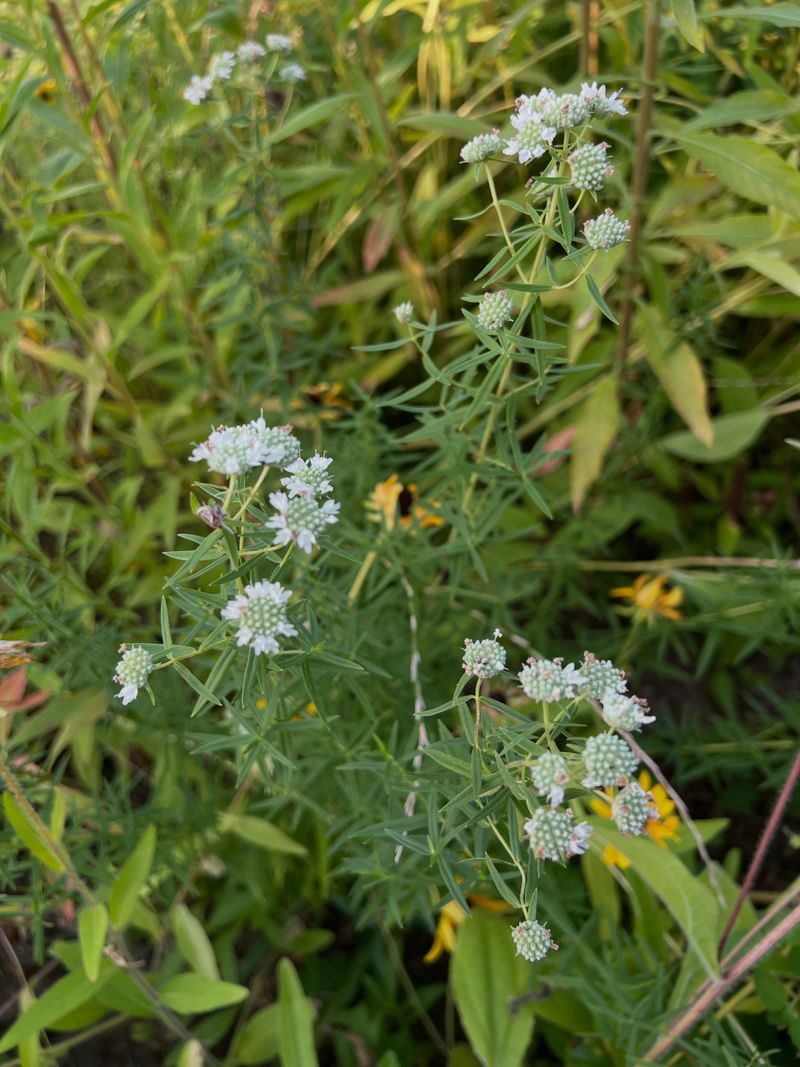
Sometimes the busiest plant in the garden is not the one with the biggest flowers.
Virginia mountain mint, Pycnanthemum virginianum, proves that point every summer. Its pale white to lavender flower clusters are relatively subtle, but the amount of insect activity around them can be remarkable.
Stand nearby on a warm afternoon and the entire patch may hum.
Native bees, small beneficial wasps, butterflies, and other pollinators visit heavily from roughly July through September.
That makes mountain mint especially valuable during the late-summer stretch when a steady supply of flowers matters.
Full sun produces the strongest bloom and the most compact habit.
Average to moist soil works well, and established plants can handle many Ohio clay soils without much complaint. The foliage adds interest too, with a silvery-green cast and a strong minty scent when brushed.
Give it room to spread.
Mountain mint expands by rhizomes and gradually forms colonies, so a rain garden edge, meadow border, or roomy path-side planting suits it better than a tiny formal bed.
Start plants around eighteen to twenty-four inches apart and divide expanding clumps when they move beyond the space you planned.
A late-May trim can encourage more branching and keep stems a little shorter.
The flowers may never shout across the yard.
The pollinators make enough noise for them.
For gardeners who measure late-summer success by activity as much as color, mountain mint earns a very busy corner.
8. Add Native Sunflowers Where Space Allows
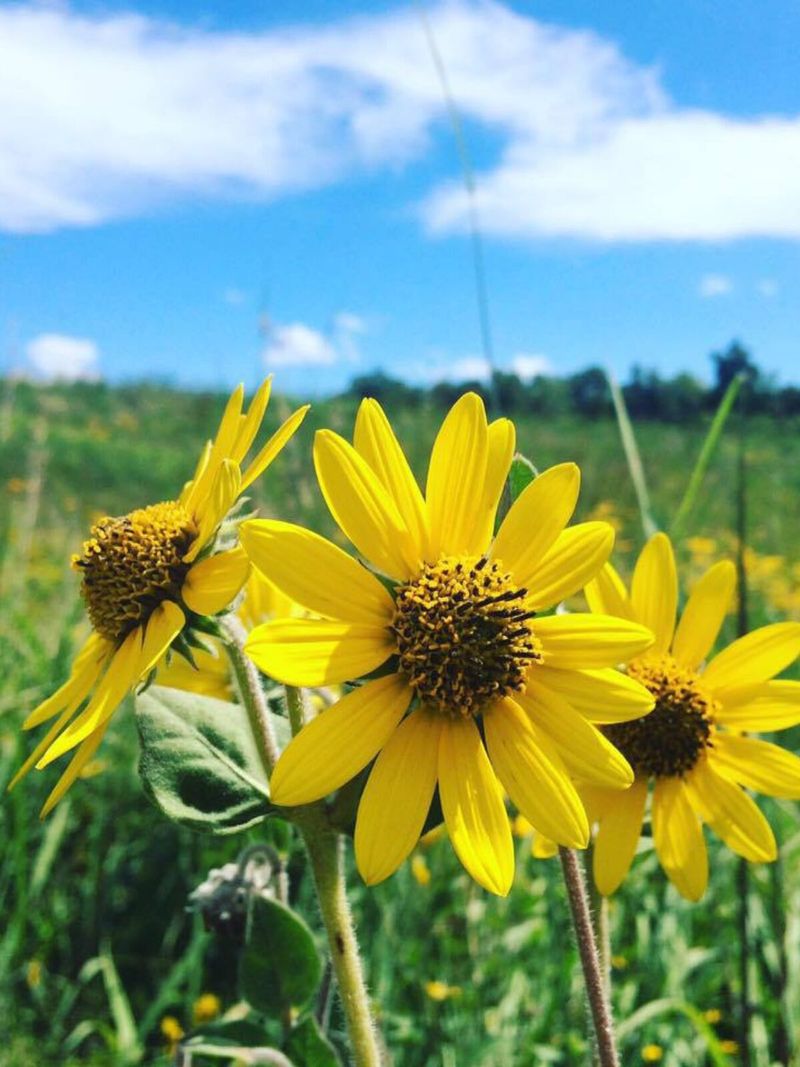
A sunny back fence can go from ordinary to impossible to ignore once tall yellow flowers start lining it.
Native perennial sunflowers give Ohio gardeners that late-summer wall of color without requiring annual replanting.
Species such as downy sunflower, Helianthus mollis, and fewleaf sunflower, Helianthus occidentalis, can bloom from August toward October depending on site and weather.
Space is the main requirement.
Many perennial sunflowers spread by rhizomes and gradually form colonies. That habit looks fantastic in a meadow, along a sunny slope, or across the back of a large border. In a small formal bed, the same enthusiasm can become a yearly negotiation.
Full sun produces the best flowering.
Downy sunflower handles average to dry soil particularly well once established. Rich soil is not necessary and can encourage extra height and spreading instead of a tighter floral display.
For naturalistic planting, start with roughly three feet between plants and let the colony develop. Divide sections every few years when you want to control the footprint.
Native bees and bumble bees work the flowers heavily, while later seedheads can attract goldfinches.
That keeps the patch useful after the petals fade.
These sunflowers are not subtle, and that is exactly the point.
When August tries to make the garden look tired, a six-foot wall of yellow has a very effective response.
The season is not over until the sunflowers say so.