These Are The 10 Best Veggies To Grow In Buckets In Ohio This Summer
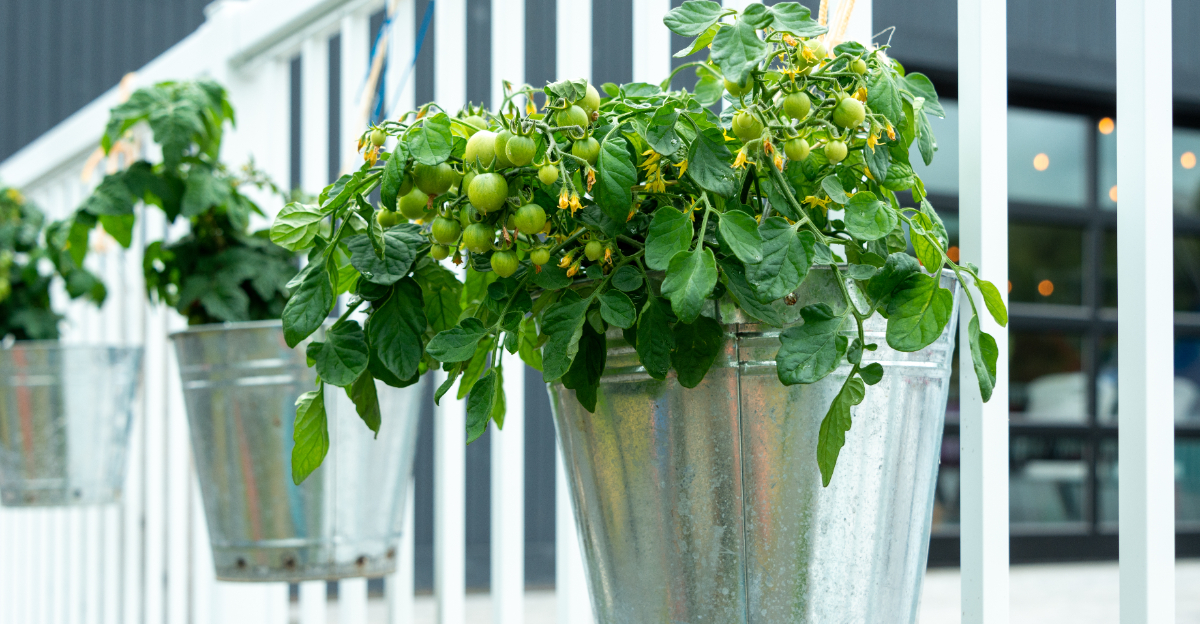
Container gardening used to be an afterthought. A tomato plant on the porch, maybe some herbs by the back door, nothing too serious.
But Ohio gardeners are rethinking that completely, and buckets have become the unlikely star of the summer garden. No raised bed to build, no ground to till, no permanent commitment to a layout you might want to change next year.
Just a bucket, the right soil mix, and the right plant, and you’re in business. The beauty of this type of gardening is that it meets you wherever you are, a small patio, a sunny driveway, a balcony, a rental with zero yard to speak of.
Some vegetables actually perform better in containers than they do in the ground. Ohio’s summer growing season gives you plenty of time to pull a real harvest out of something that started as a five gallon bucket.
1. Tomatoes Thrive In Large Buckets With Strong Support
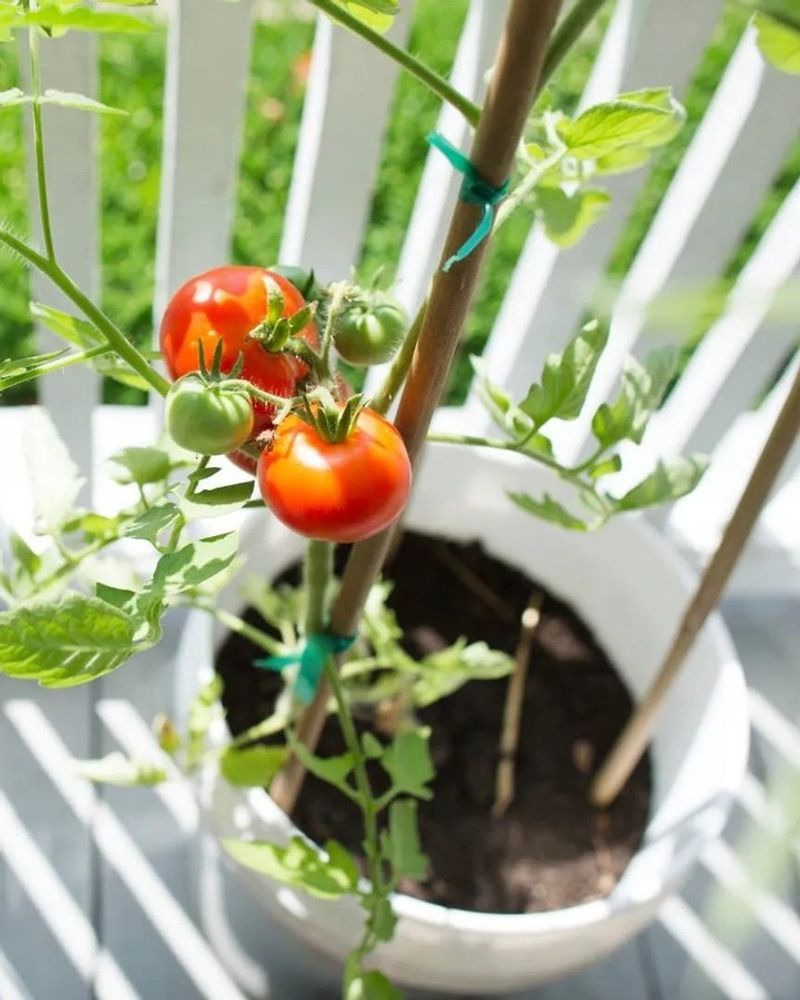
Few vegetables feel more satisfying to grow at home than a tomato, and bucket growing is absolutely possible if you make the right choices from the start. Compact, determinate, patio, or dwarf tomato varieties are your best bet.
Plants like Patio, Bush Early Girl, or Tumbling Tom are bred to stay manageable and still produce well in containers.
Most tomatoes need a large bucket, at least five gallons and ideally ten gallons or more, with drainage holes at the bottom. Use a quality potting mix, never heavy garden soil, which compacts and suffocates roots in containers.
Plant in full sun, meaning at least six to eight hours of direct sunlight each day.
Sturdy support matters a lot. Even compact varieties need a stake or small cage as fruit develops and the plant gains weight.
Indeterminate tomatoes can work in very large containers, but they demand more root space, stronger support, and even more consistent watering.
Hot, windy summer days can dry a bucket out fast, sometimes within a single afternoon. Check moisture daily during heat spells.
Feed container tomatoes with a balanced fertilizer every one to two weeks once flowering begins to keep production strong through the season.
2. Peppers Fit Perfectly In Sunny Patio Buckets
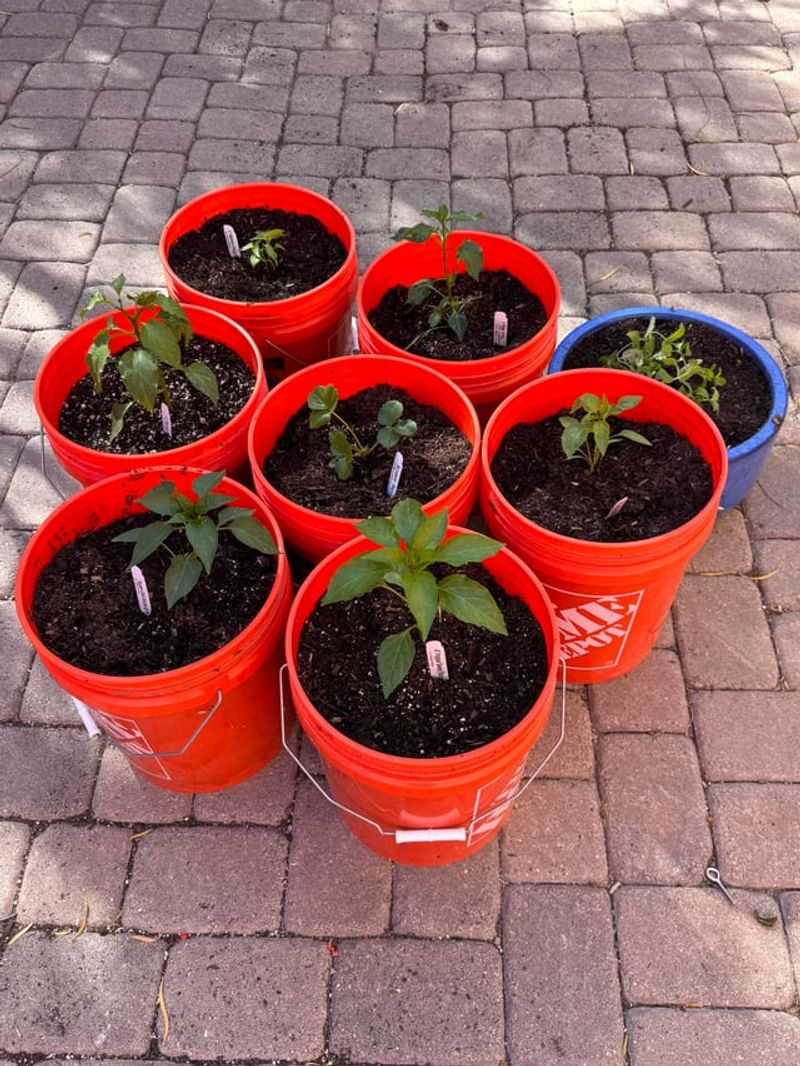
Warm weather is where peppers truly shine, and a sunny patio bucket setup suits them well. Both sweet peppers and hot peppers adapt nicely to container growing when given the right conditions.
Varieties like California Wonder, Sweet Banana, Jalapeno, and Cayenne are all solid choices that do not outgrow a properly sized bucket.
A five-gallon bucket is often enough for one pepper plant, though a slightly larger container gives roots more room and helps retain moisture longer. Use well-drained potting mix and make sure drainage holes are in place.
Peppers sitting in soggy soil will struggle no matter how much sun they get.
Full sun is non-negotiable. Peppers need consistent warmth and at least six hours of direct sunlight to set fruit well.
They also prefer steady moisture rather than cycles of dry and wet soil, so check your buckets regularly during hot stretches.
Your Ohio Garden Changes Every Week. Your Plan Should Too.
Gardening in Ohio changes quickly throughout the season. Every Friday you’ll receive a simple weekly plan showing exactly what to plant, prune, fertilize, harvest, and protect so you never miss the right timing.
Timing matters, especially in frost-prone areas and northern parts of the state. Do not move pepper plants outside until nights are reliably warm, generally above 55 degrees Fahrenheit.
A cold snap after transplanting sets plants back and slows fruit development. Wait for settled, warm conditions before committing your plants to outdoor life.
3. Bush Beans Grow Fast Without Taking Over
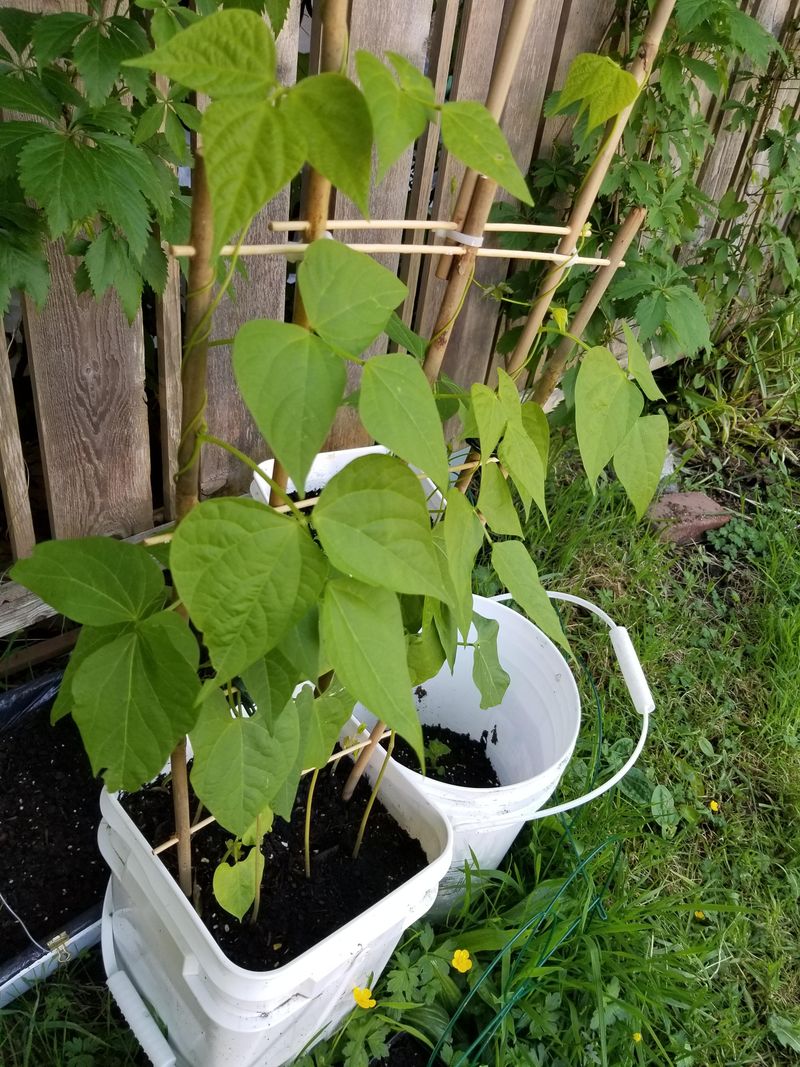
If you want a vegetable that moves fast and does not demand a trellis, bush beans are worth planting this summer. Unlike pole beans, which climb and sprawl and need serious vertical support, bush beans stay compact and tidy.
They are a practical fit for a bucket garden where space and structure are limited.
Sow seeds directly into your bucket once the soil has warmed.
That usually means after the last frost date, when temperatures are consistently above 60 degrees Fahrenheit. Bush beans do not transplant well, so direct seeding into your container is the way to go.
Use a five-gallon bucket or larger with good drainage and quality potting mix.
Full sun is important. Bush beans need several hours of direct sunlight each day to flower and produce pods well.
Water consistently, especially once plants begin flowering and pods start forming, because dry soil at that stage can cut your harvest short.
Pick pods regularly as they reach a usable size. Leaving mature pods on the plant signals it to stop producing new ones.
Frequent harvesting keeps the plant working and extends your picking window. Buckets may need watering once or even twice daily during the hottest part of summer, so stay on top of moisture checks.
4. Cucumbers Work Well With A Trellis And Deep Watering
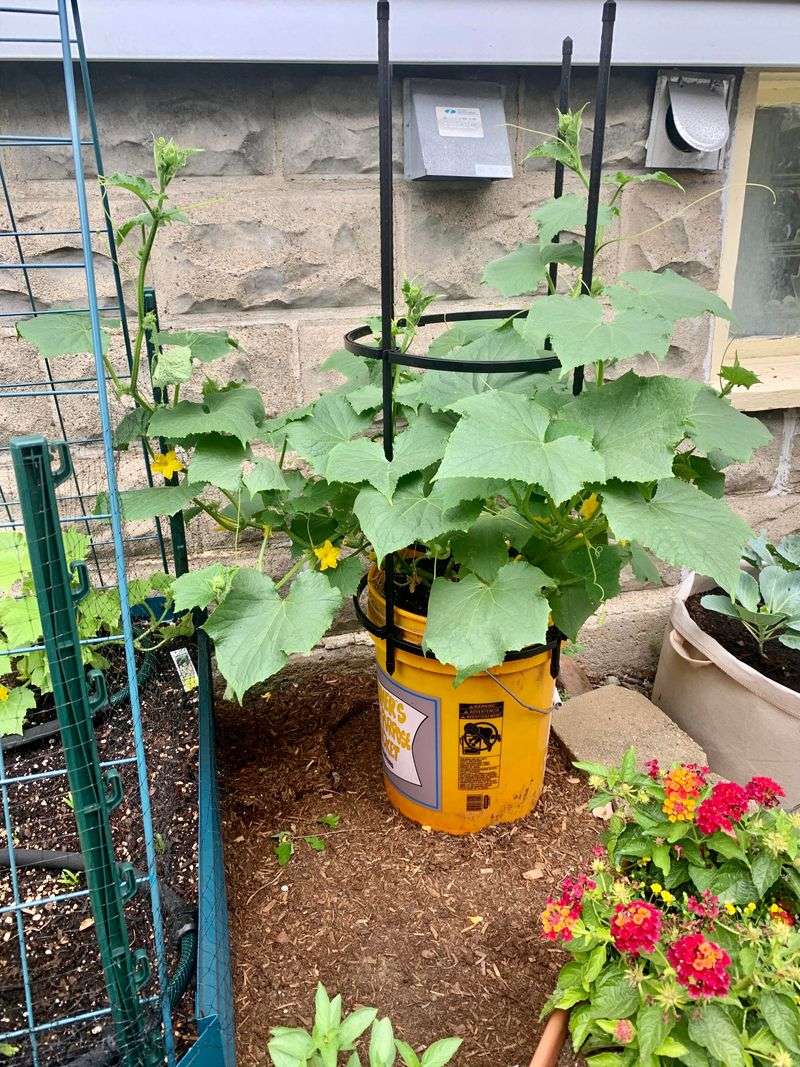
Cucumbers have a reputation for taking over a garden bed, but compact and bush varieties can work surprisingly well in a bucket when given a little structure.
Look for varieties labeled bush, patio, or container-friendly, such as Bush Pickle, Spacemaster, or Patio Snacker.
These stay more manageable than standard vining types.
Even compact cucumbers appreciate a small trellis, cage, or bamboo stake to keep growth tidy and improve air circulation around the leaves.
A five-gallon bucket is the minimum, though a larger container holds moisture better and gives roots more room to spread.
Drainage holes are essential because waterlogged soil leads to root problems fast.
Full sun is a must. Cucumbers are warm-season vegetables that need heat and consistent sunlight to produce well.
They also need steady, deep watering because they have a high moisture demand, especially during fruit development. A bucket that dries out completely on a hot afternoon can cause bitter fruit or wilting that sets the plant back.
Large, sprawling cucumber varieties are not a good match for small containers. Stick with compact selections and plan to water thoroughly every day during hot spells.
Mulching the top of your potting mix with a thin layer of straw can help slow moisture loss between waterings.
5. Lettuce Handles Buckets Best In Cooler Spots
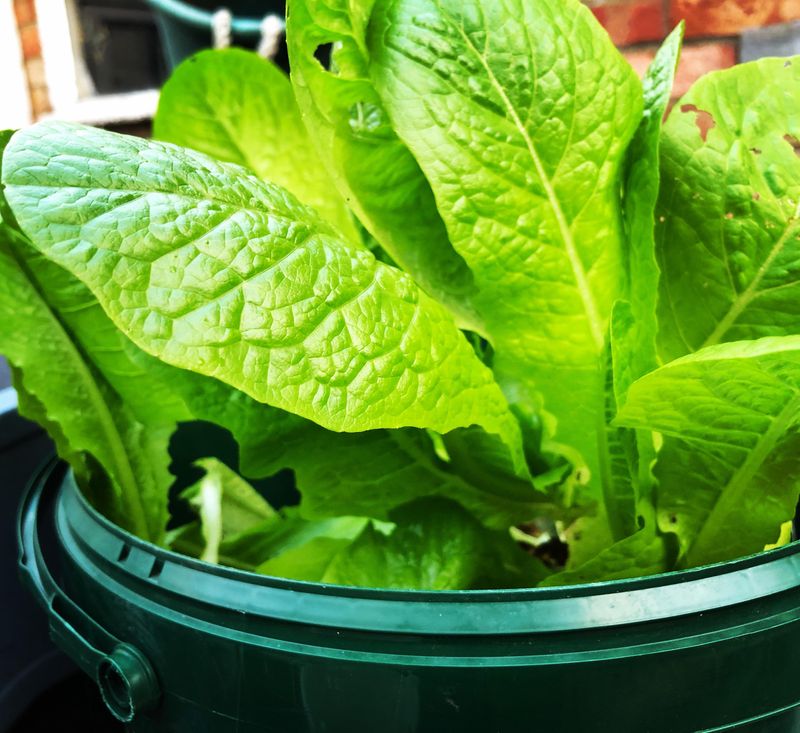
Lettuce is not a mid-July heat warrior, but it earns its place in a bucket garden during the cooler bookends of summer.
Early June and late August are prime windows for leaf lettuce in containers, when temperatures are mild and the soil stays moist without baking in the afternoon sun.
Leaf lettuce varieties like Black Seeded Simpson, Red Sails, or Buttercrunch are better suited to buckets than head lettuce types, which need more space and time. A shallower container works fine since lettuce roots do not go deep.
Make sure drainage holes are present, and keep the potting mix moist without letting it stay soggy.
Placement makes a big difference during warm spells. A bucket that gets morning sun and afternoon shade will keep lettuce producing longer before it bolts or turns bitter.
Patios with eastern exposure, shaded deck corners, or spots near a north-facing wall can extend the harvest window considerably.
Rather than planting a large batch all at once, try sowing small amounts every two weeks. This succession approach gives you fresh lettuce over a longer stretch instead of one overwhelming flush.
Once temperatures climb and stay high, pull spent plants and replant in late summer when cooler weather returns to the region.
6. Swiss Chard Keeps Producing In Summer Containers
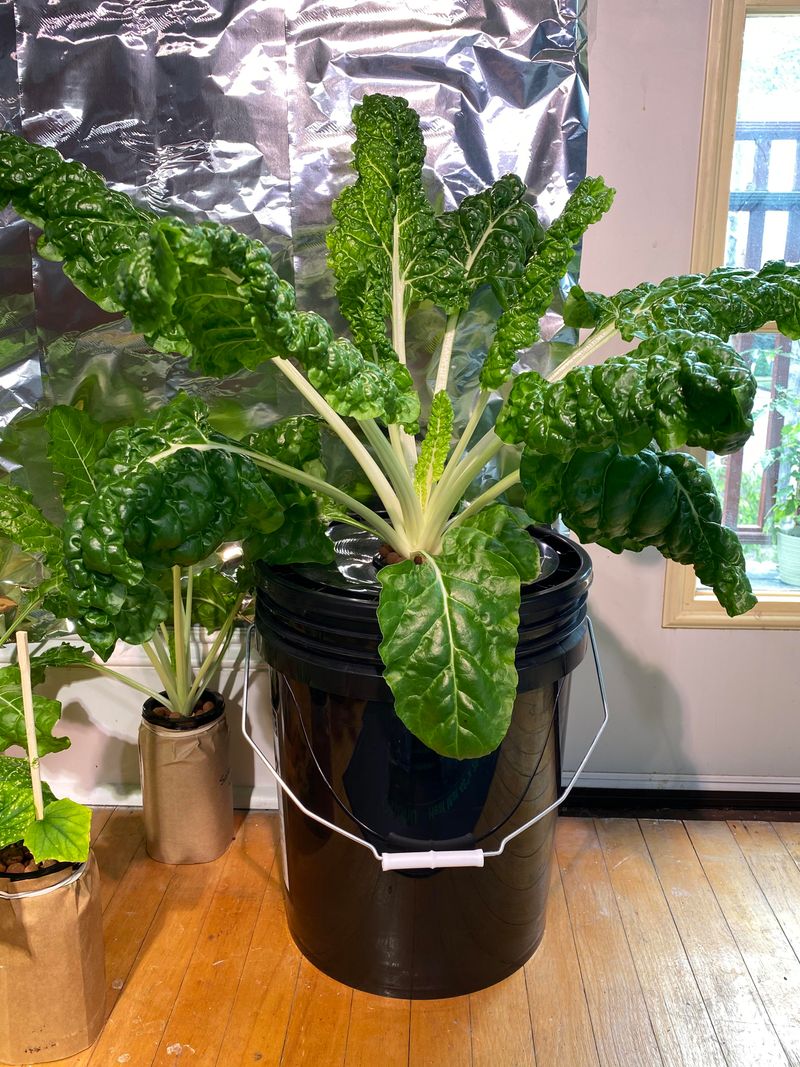
Swiss chard does something most leafy greens struggle to do in summer containers: it keeps going when the heat builds.
Unlike lettuce, which bolts and turns bitter when temperatures climb, chard holds up through warm spells and continues producing leaves if you harvest it the right way.
Plant chard in a bucket that holds at least five gallons of potting mix with good drainage. It tolerates full sun but also does well with part sun, which makes it flexible for patios that do not get uninterrupted afternoon light.
Steady moisture is important because containers dry out faster than garden beds, and chard stressed by inconsistent watering will slow its production noticeably.
The harvest method matters. Pull outer leaves when they reach a usable size and leave the center of the plant intact.
New leaves will keep emerging from the center as long as the plant is healthy, fed, and watered. This cut-and-come-again approach can keep a single plant productive for many weeks.
Varieties like Bright Lights, Rainbow Chard, or Fordhook Giant are all strong performers in containers. The colorful stems add visual interest to a patio setup without making the Ohio garden feel more ornamental than edible.
Feed your chard every couple of weeks with a balanced water-soluble fertilizer to keep growth steady through the season.
7. Radishes Grow Quickly In Shallow Bucket Soil
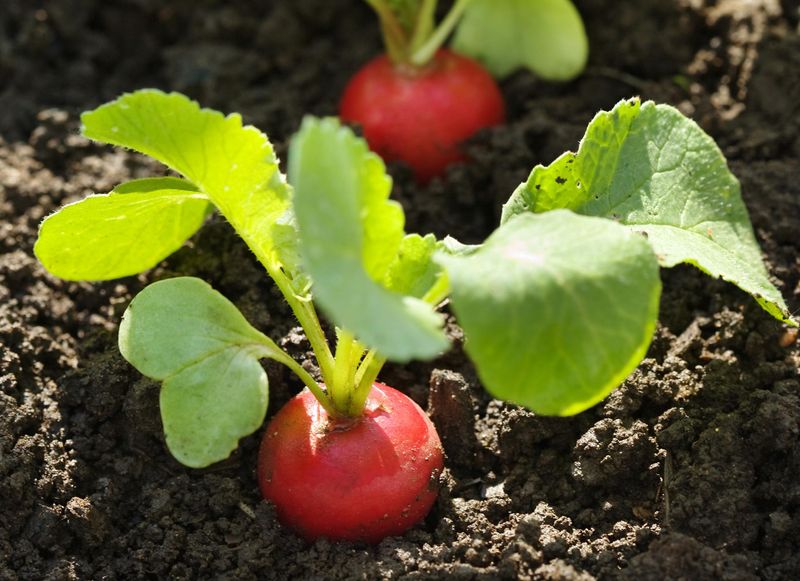
Speed is the main appeal of radishes in a bucket garden. Most varieties go from seed to harvest in three to four weeks, which makes them one of the fastest vegetables you can grow in a container.
That quick turnaround means you can fit multiple rounds into the season if you time them right.
Radishes do not need as deep a container as tomatoes or carrots, but they still need loose, well-draining potting mix to form smooth, round roots. A container that is at least six to eight inches deep works for most standard varieties.
Pack too many seeds into a small space and the roots will crowd each other and stay small or misshapen.
Timing is everything with radishes in summer. They prefer cooler soil and air temperatures and tend to get pithy, hot-tasting, or bolt quickly when the heat of July and August settles in.
Plant them in late spring or try again in late summer as temperatures begin to ease. Avoid planting radishes during the hottest stretch of the season if you want mild, crisp roots.
Keep soil consistently moist during growth. Dry spells followed by heavy watering can cause roots to crack.
Radishes make a great use of bucket space between plantings of other crops and can share containers with slower-growing vegetables early in the season.
8. Green Onions Give Small Buckets A Useful Harvest
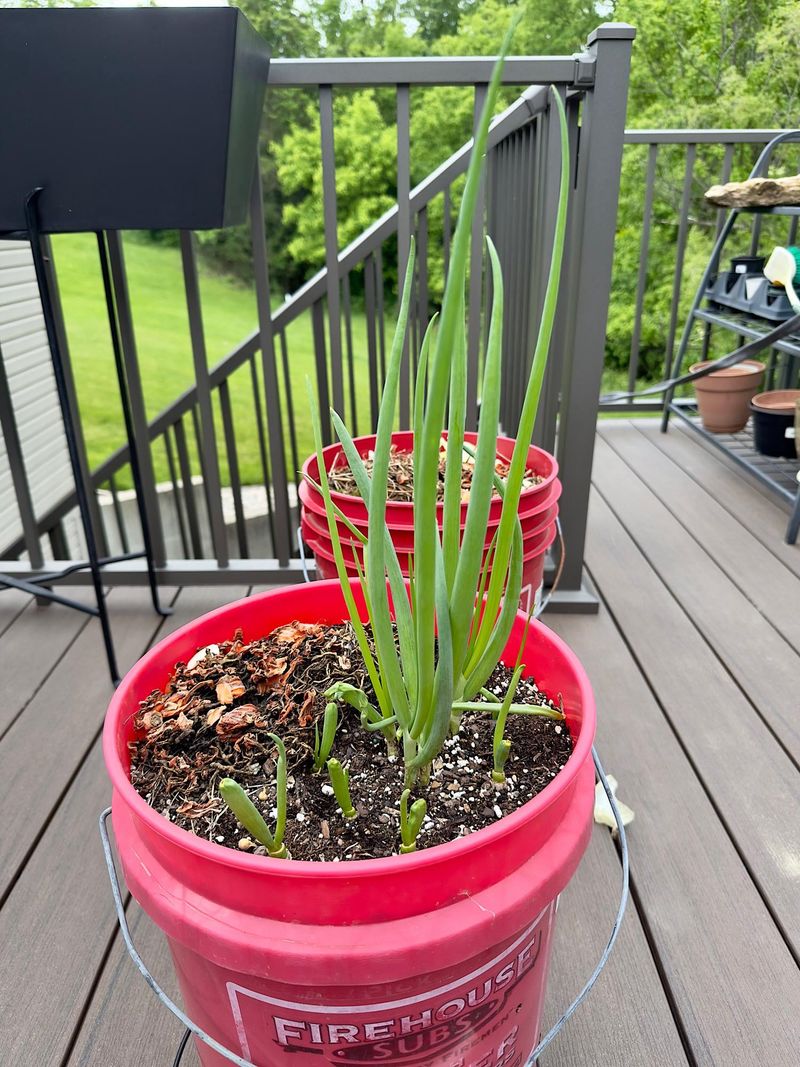
Not every bucket on your patio needs to hold a large, sprawling plant. Green onions, also called scallions, are one of the most space-efficient vegetables you can grow in a container.
They deliver a steady, useful harvest without taking up much room at all.
You can fit a good number of green onion plants in a single bucket because they grow upright and do not spread outward. A container that is at least six inches deep with drainage holes and a quality potting mix is all they need to get established.
They work well on small balconies, narrow deck railings, or any spot that does not have room for larger containers.
Full sun to part sun suits them fine. Green onions are not as demanding about light as tomatoes or cucumbers, which makes them a flexible option for spots that get a mix of sun and shade throughout the day.
Water consistently to keep the potting mix moist but never waterlogged.
Harvest by snipping the green tops as needed or pulling whole plants when they reach a good size. They regrow after cutting, which stretches your harvest over several weeks.
Succession planting keeps a fresh supply coming through the growing season.
Just add a few seeds every couple of weeks without needing extra buckets or much additional effort.
9. Carrots Work In Deep Buckets With Loose Soil
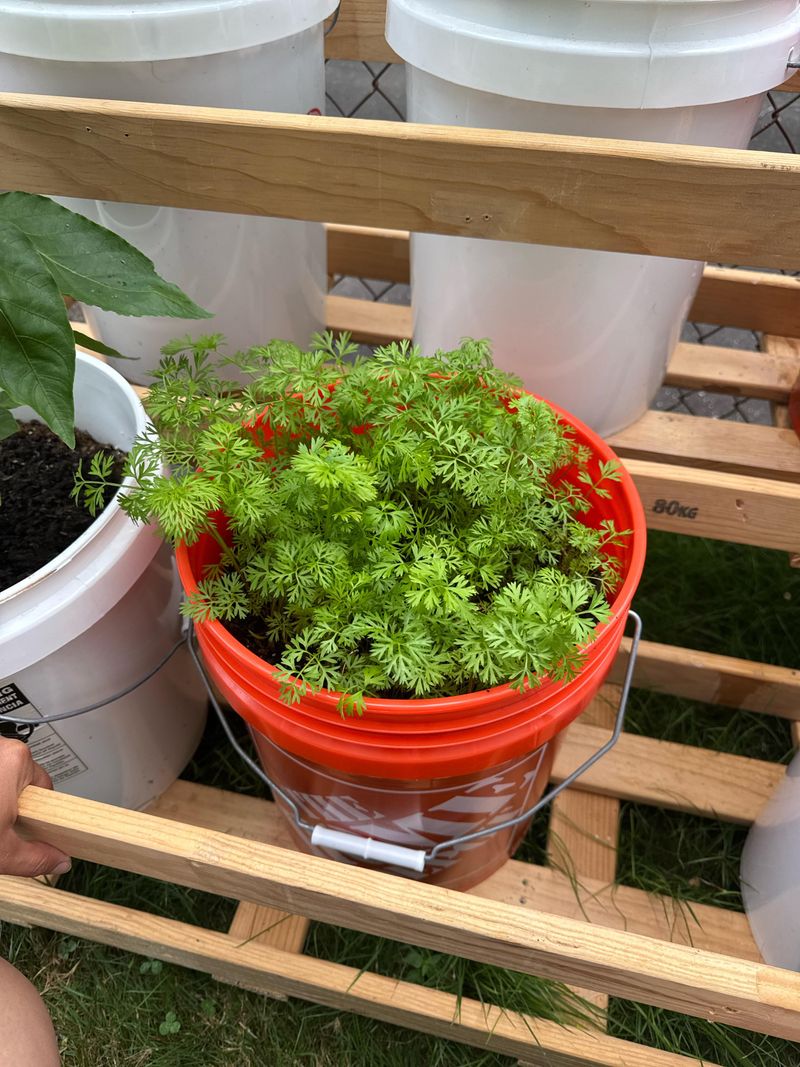
Carrots have a reputation for being tricky in containers, but that reputation is mostly about soil depth and texture, not about the vegetable itself. Choose the right variety and the right bucket, and carrots are a genuinely rewarding bucket crop.
Short or round varieties are the most reliable choices for containers. Varieties like Danvers 126, Chantenay, Little Finger, or the round Parisian type do not need as much depth as long standard carrots.
Even so, your bucket should hold at least twelve inches of loose, stone-free potting mix. Compact or rocky soil forces roots to fork, twist, or stay stunted.
Germination requires steady moisture. Carrot seeds are small and slow to sprout, and letting the top of the potting mix dry out during that period will interrupt germination.
Covering the container with a thin cloth or keeping it in a spot that does not bake in full afternoon sun during the first week or two can help maintain surface moisture.
Thin seedlings once they sprout so roots have room to develop without crowding each other. Overcrowded carrots stay small and misshapen.
Avoid standard long carrot varieties in shallow buckets, and never use heavy garden soil as your growing medium. Loose, well-draining potting mix is the single most important factor for bucket carrot success.
10. Dwarf Eggplant Handles Warm Buckets With Good Drainage
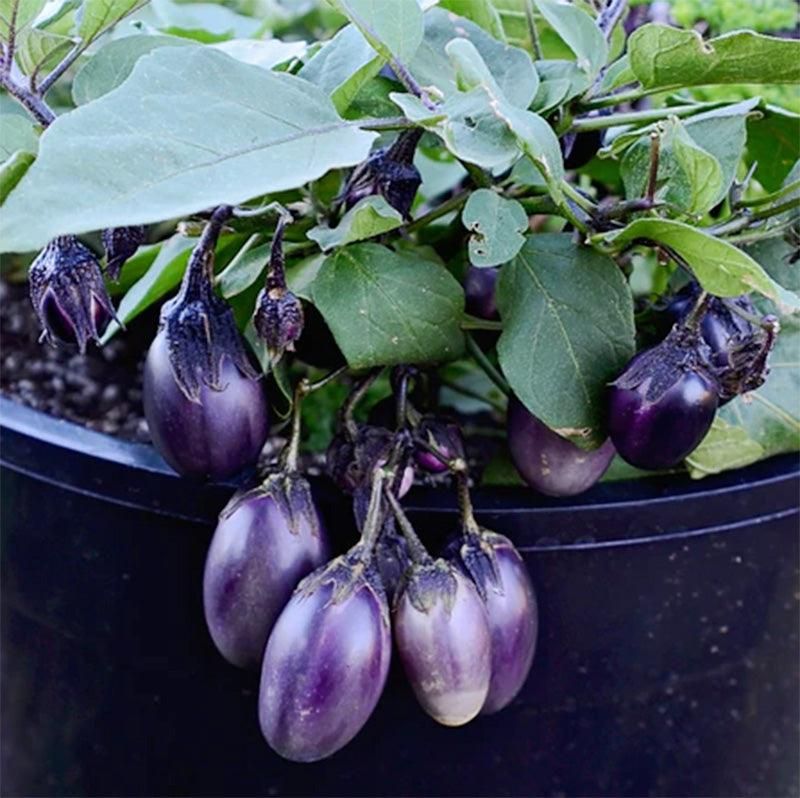
Eggplant is one of those warm-season vegetables that actually welcomes Ohio summer heat rather than struggling against it. A dwarf or patio variety in a well-prepared bucket can produce a solid harvest once the season is in full swing.
Varieties like Patio Baby, Hansel, Gretel, or Ichiban compact types are good fits for container growing.
Use a large bucket, at least five gallons, with drainage holes and a fertile, well-draining potting mix. Eggplant is a heavy feeder, so mix a slow-release fertilizer into the potting mix at planting time.
Follow up with a water-soluble feed every couple of weeks to keep the plant productive as fruit develops.
Full sun is essential. Eggplant needs consistent, direct sunlight throughout the day to flower and set fruit well.
Shaded or partially shaded spots will produce weak plants with little to no harvest. Water deeply and consistently, because container eggplant in hot weather can dry out quickly and stress reduces fruit quality and quantity.
As fruit develops and grows heavier, stems can bend or break without support. A small stake tied loosely to the main stem prevents damage.
Do not plant eggplant outside until nights are reliably warm and summer conditions have settled in your area. Cold nights early in the season slow growth and can set a young plant back significantly.