The Real Meaning Behind Those Big Wasps Hovering Over California Lawns All Summer
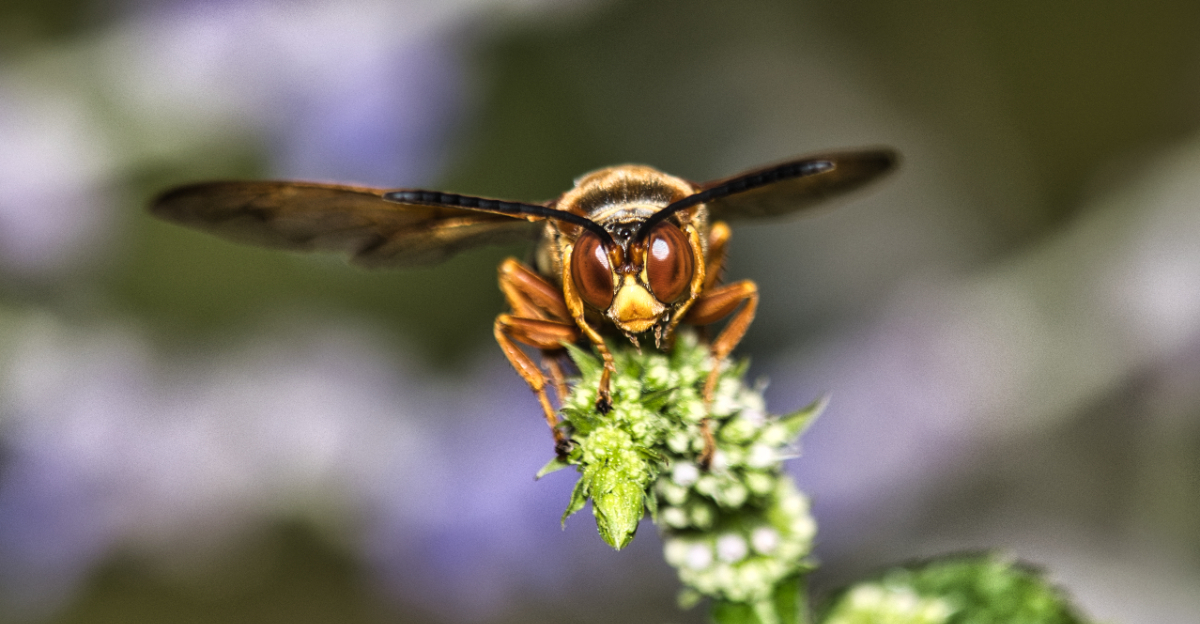
Nothing ruins a peaceful walk across the lawn quite like spotting a giant wasp cruising a few inches above the grass.
It hovers, circles, darts away, then comes right back like it has serious business to conduct in that exact patch of California yard.
Naturally, your first thought may be something along the lines of, “Absolutely not.”
These oversized visitors can look intimidating, especially when several appear in the same area and seem unusually interested in the ground.
Their size alone is enough to make people abandon sandals, cancel lawn games, and suddenly remember an urgent reason to go back inside.
But appearances can make backyard wildlife seem far more mysterious than it really is. That low, repetitive flight pattern is not random, and the location of all that activity can offer some useful clues about what is happening.
Instead of judging the situation by wingspan alone, watch what those wasps are actually doing.
Their strange lawn patrol has a purpose, and understanding the behavior can completely change how you see those buzzing summer visitors.
1. Those Giant Wasps Are Usually Cicada Hawks
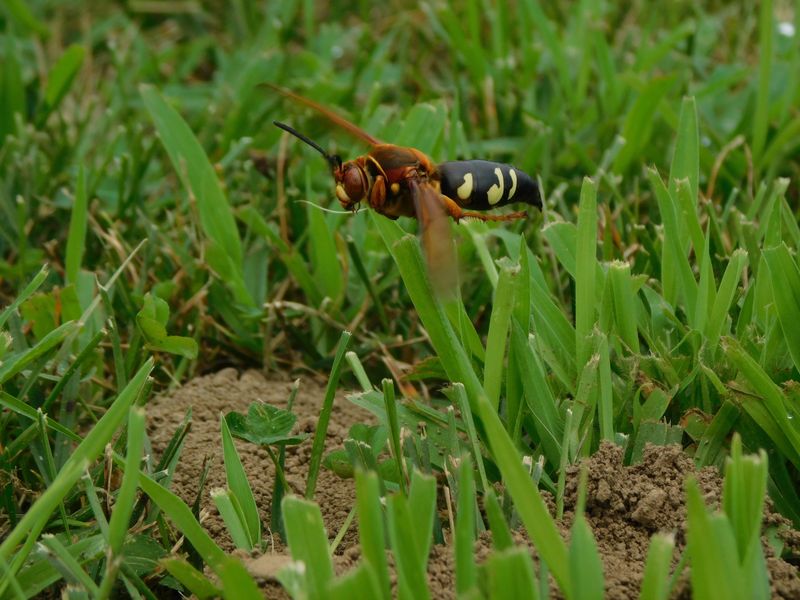
Spotting a wasp the size of your thumb hovering over the lawn can feel alarming. But before you panic, know that what you are most likely seeing is a cicada hawk wasp.
These insects are one of the largest wasps found in North America, and they show up every California summer like clockwork.
Cicada hawks belong to a group called solitary wasps. Unlike bees or yellowjackets, they do not live in large colonies or build paper nests.
Each female lives and works on her own, which actually makes them far less defensive than social insects.
Their scientific name is Sphecius speciosus, and they have been around for millions of years. They are built to hunt cicadas, those loud buzzing insects you hear singing in trees during summer.
The wasp uses cicadas as food for its young, not as something it eats itself.
Adult cicada hawks mostly feed on flower nectar and plant sap. They spend their adult lives focused on reproducing and providing for the next generation.
Their large size can be startling, but their behavior is actually very predictable and calm around humans.
Once you know what you are looking at, these wasps become much easier to observe without fear. They are a fascinating part of summer insect life.
2. Cicada Hawks Are Not The Same As Yellowjackets
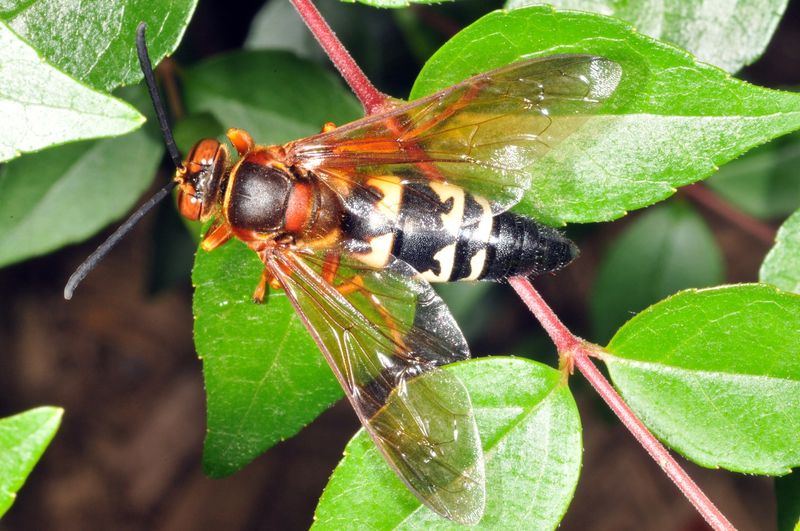
A lot of people see a big striped wasp and immediately think yellowjacket. That is a very understandable mix-up, but cicada hawks and yellowjackets are very different insects with very different behaviors.
Yellowjackets are social wasps. They live in large colonies that can hold thousands of workers.
When they feel their nest is threatened, the entire colony can respond aggressively. That is why disturbing a yellowjacket nest is genuinely risky.
Cicada hawks, on the other hand, are solitary. There is no colony to protect and no queen to defend.
A female cicada hawk will only sting if she is physically grabbed or squeezed. Even then, her sting is reported to be fairly mild compared to other wasps.
Your California Garden Changes Every Week. Your Plan Should Too.
Gardening in California changes quickly throughout the season. Every Friday you’ll receive a simple weekly plan showing exactly what to plant, prune, fertilize, harvest, and protect so you never miss the right timing.
The two insects also look different up close. Yellowjackets tend to be smaller and have bright, clean yellow and black bands.
Cicada hawks are much larger and often have a more reddish-brown coloring mixed with their yellow markings. Their body shape is also longer and more slender.
Knowing the difference matters because it changes how you should respond. Running from a cicada hawk is unnecessary.
Giving a yellowjacket nest a wide berth is smart. Learning to tell them apart can save you a lot of unnecessary stress during the summer months.
3. Females Search Lawns For Places To Dig Burrows
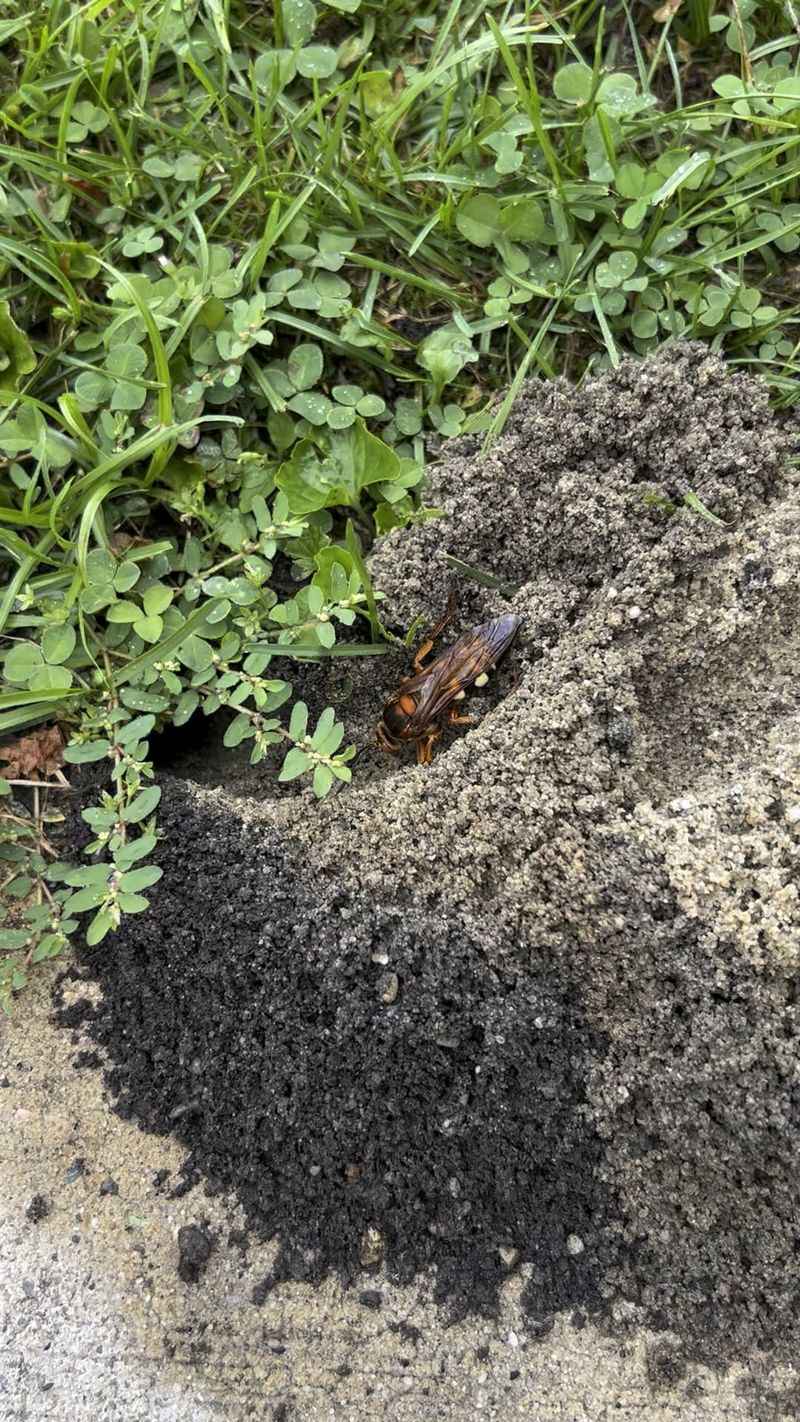
When a female cicada hawk hovers low and slowly over a lawn, she is not being aggressive. She is house hunting.
Female cicada hawks spend a good portion of their adult lives searching for just the right spot to build a burrow in the ground.
They prefer sunny areas with loose, well-drained soil. Lawns with dry, thin grass or bare patches of dirt are especially attractive to them.
Once a female finds a good location, she starts digging with her strong legs and jaws.
The burrow she creates can be quite impressive. It may go six inches or more straight down before branching off into smaller side tunnels.
Each of those tunnels ends in a small chamber where she will eventually place a cicada and lay a single egg.
The whole digging process can take a few days. During that time, you might see her repeatedly flying back to the same spot.
She is checking her work and continuing to excavate. It can look purposeful and almost methodical if you watch closely.
She is not interested in you at all during this process. Her focus is entirely on building a safe underground home for her offspring.
Watching her work is actually a pretty cool glimpse into insect behavior that most people never get to see up close.
4. Males Hover Nearby But Cannot Sting
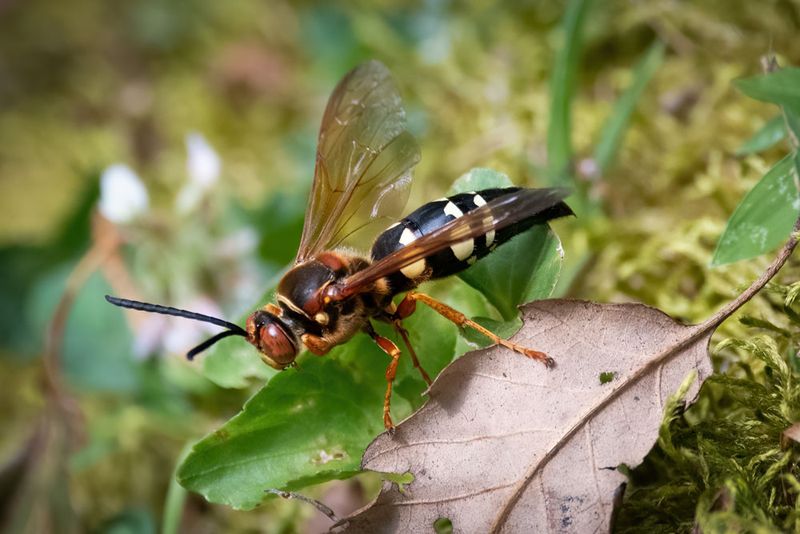
Here is something that might surprise you. Many of the large wasps you see hovering aggressively over a lawn are actually males.
And male cicada hawks cannot sting at all. They simply do not have the body parts needed to do so.
Male cicada hawks are very territorial during mating season. They will hover, dart, and even fly directly at other insects or people who get too close to their area.
It looks threatening, but it is completely bluster. They have no way to back it up.
Their job is to find and mate with females. Males will claim a patch of lawn and defend it from other males.
They buzz and chase each other through the air in surprisingly dramatic aerial battles. It can look almost like a tiny air show happening right above your grass.
If a male cicada hawk flies at your face, it can definitely feel alarming. But he is just doing what comes naturally.
He wants to check if you are a rival or a potential mate. Once he figures out you are neither, he will move on quickly.
The best thing you can do is stay calm and walk away slowly. Do not swat at him, because rapid movements can keep him engaged longer.
Give him a moment, and he will almost certainly lose interest and go back to his patrol.
5. The Wasps Carry Cicadas Back Underground
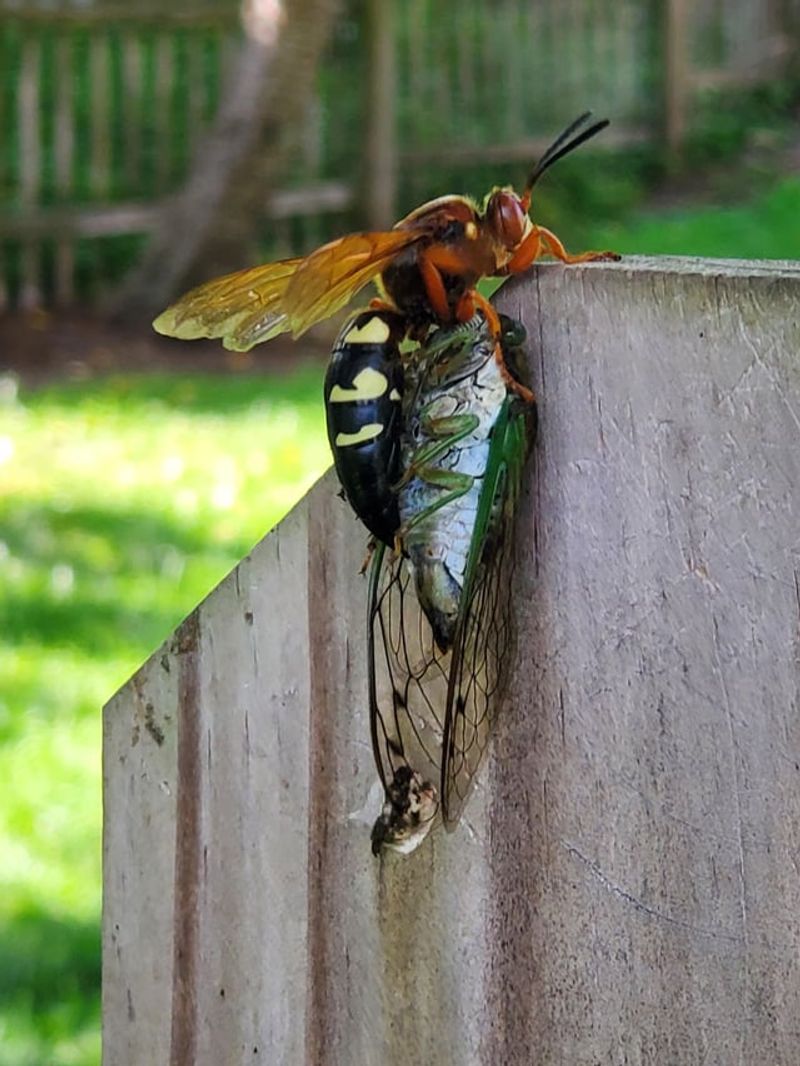
One of the most jaw-dropping things you can witness in your backyard is a female cicada hawk dragging a cicada across the lawn. It looks almost unbelievable given the size of the prey compared to the wasp carrying it.
The female hunts cicadas by stinging them with a venom that paralyzes them. The cicada is not gone, just completely unable to move.
She then carries or flies with the heavy cicada back to her burrow. It is an incredible feat of strength for an insect.
Once she gets the cicada into the burrow and into a chamber, she lays a single egg on it. Then she seals the chamber and moves on to prepare the next one.
The egg will hatch into a larva that feeds on the paralyzed cicada as it grows.
This is why cicada hawks are so important to the local ecosystem. They help control cicada populations naturally.
Without predators like cicada hawks, cicada numbers could grow unchecked and create significant noise and tree damage every season.
Watching a female haul a cicada that is nearly her own size across a yard is something people rarely forget. It is a powerful reminder that the natural world is full of tiny dramas playing out all around us, even in an ordinary suburban California backyard.
6. Bare Dry Soil Makes Lawns More Attractive To Them
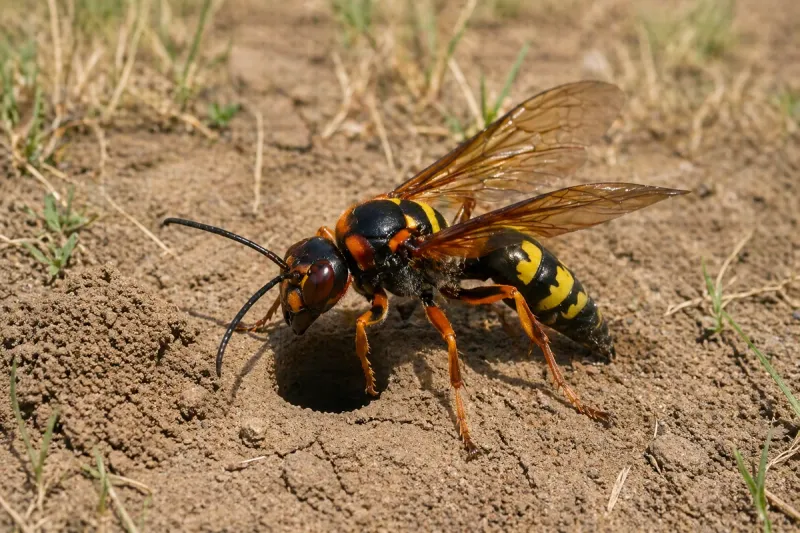
Not every lawn gets visited by cicada hawks equally. These wasps are very picky about where they choose to nest.
The condition of your soil plays a big role in whether they decide to set up shop in your yard.
Cicada hawks strongly prefer loose, sandy, or well-drained soil. They need to be able to dig easily.
Compacted clay soil is much harder for them to excavate, so they tend to avoid it. Lawns with soft or sandy soil are far more likely to attract nesting females.
Sun exposure matters a lot too. These wasps love warm, sunny spots.
South-facing slopes, areas near sidewalks or driveways, and patches of lawn that get full sun all day are prime real estate for a nesting cicada hawk.
Bare patches of dirt are especially appealing. If your lawn has thin spots where grass is not growing well, those areas become easy targets.
The wasp does not have to fight through thick root systems to dig her tunnel.
If you want to make your California lawn less attractive to them, improving grass density is one of the most effective strategies. Overseeding thin areas, watering consistently, and aerating compacted spots can all help your lawn grow thicker.
A dense, healthy lawn is much harder for a cicada hawk to burrow into and much less appealing as a nesting site.
7. Their Burrows Can Leave Small Mounds Of Loose Dirt
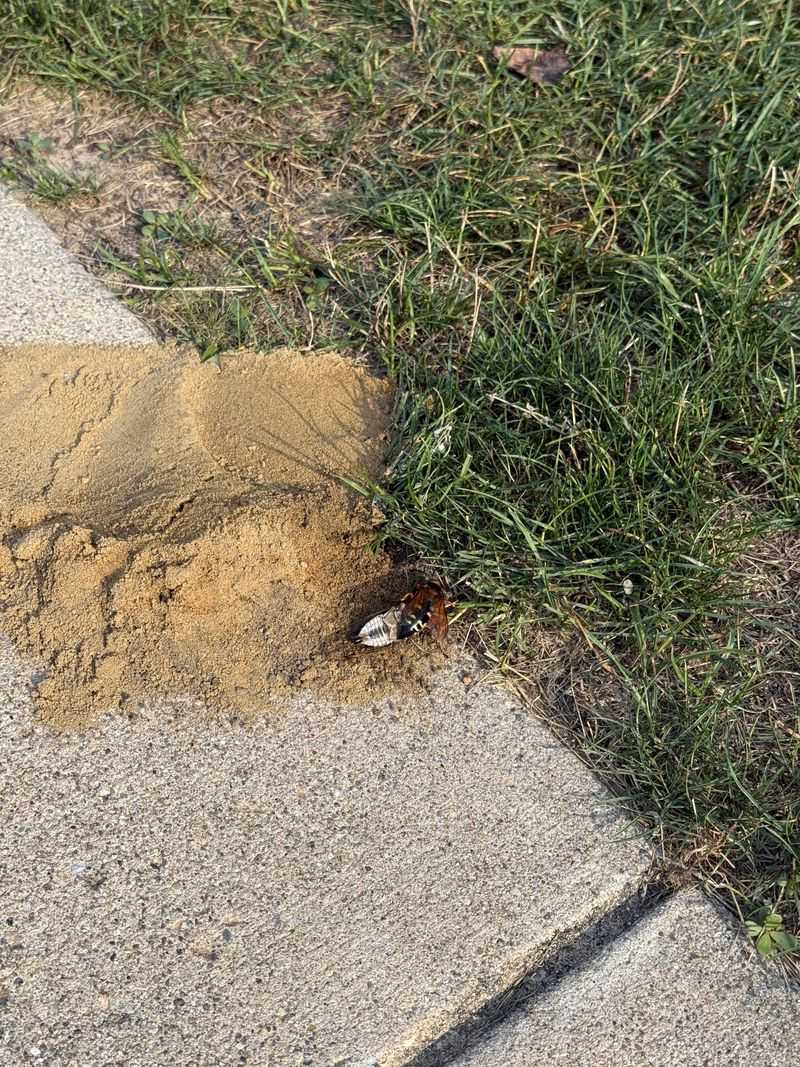
One of the most visible signs that cicada hawks have moved into your lawn is the appearance of small dirt mounds scattered across the grass. These little piles of soil are the waste material from the burrow excavation process.
As the female digs her tunnel, she pushes the loose dirt up and out of the hole. It piles up around the entrance like a tiny volcano.
The mound can be anywhere from a few inches to nearly a foot wide, depending on how deep the burrow goes.
Homeowners sometimes mistake these mounds for mole activity or ant hills. But cicada hawk burrows have a distinctive D-shaped or horseshoe-shaped entrance hole that is usually pretty easy to spot once you know what to look for.
The good news is that these mounds are mostly a cosmetic issue. They are not a sign of structural damage to your lawn or soil.
A good rain or a light raking will usually scatter the loose dirt and flatten things out fairly quickly.
If you have a lot of burrows in one area, the lawn may look a bit rough for a few weeks. But once the nesting season ends in late summer, the females move on and the lawn recovers on its own.
Patience is really the simplest solution for most homeowners dealing with a few burrows here and there.
8. They Look Aggressive But Usually Avoid People
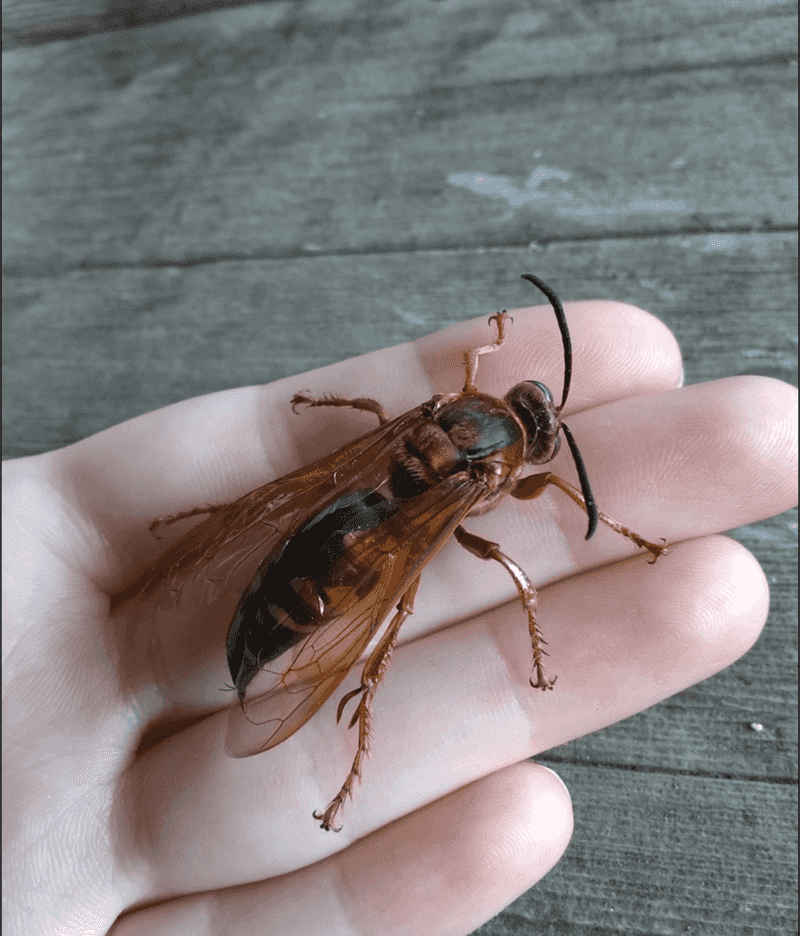
Few insects look as intimidating as a cicada hawk flying straight at you. Their size alone is enough to make most people take a quick step back.
But looks can be very deceiving when it comes to these particular wasps.
Cicada hawks are remarkably tolerant of human presence. Researchers and insect enthusiasts often crouch right next to active burrows to observe them without any trouble at all.
The wasps simply go about their business without paying much attention to nearby observers.
The key is to avoid making sudden, aggressive movements. Swatting, stomping near burrows, or trying to block their flight path can provoke a reaction.
But standing still or moving slowly near them almost never causes a problem.
Children and pets are sometimes more at risk simply because they move quickly and unpredictably. Teaching kids to observe these wasps from a respectful distance is a smart habit.
Most encounters with cicada hawks end without incident when people stay calm.
Pest control is rarely necessary for cicada hawks. Many entomologists and lawn experts actually recommend leaving them alone when possible.
They help manage cicada populations, they pollinate flowers as they feed on nectar, and they pose very little real threat to people. Sharing your lawn with them for a few weeks each summer is honestly a pretty fair trade for everything they do for the local environment.