Why Bagworms Are Easy To Miss On Michigan Evergreens Until The Damage Turns Brown
Bagworms are patient, well-disguised, and quietly eating Michigan arborvitae and juniper right now without anyone noticing. That is not an exaggeration.
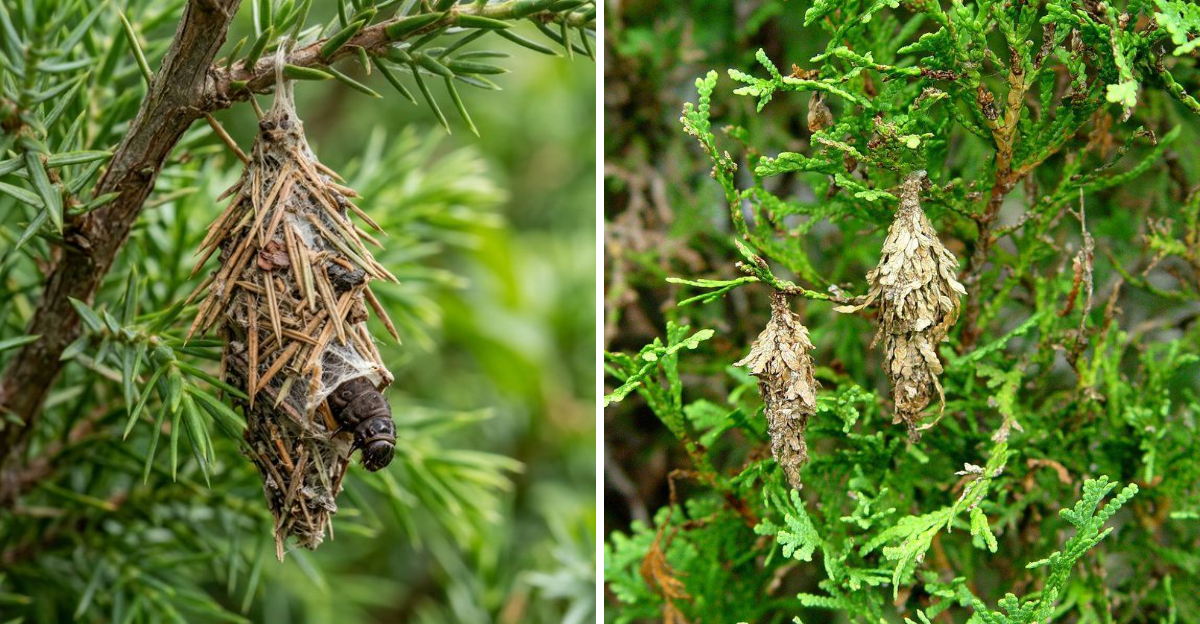
The evergreen bagworm builds a protective case out of silk and actual pieces of the host plant, which means it looks exactly like a small pine cone or a bit of natural debris hanging from a branch.
By the time brown patches start appearing on the foliage, the caterpillars inside those cases have often been feeding for weeks, and the damage is already done for the season.
Finding bagworms early, before the browning starts, is the move that actually makes a difference, and it requires knowing what to look for on plants that make blending in an art form. Spoiler: the bags are there.
They just need a closer look.
1. Bagworm Cases Blend Into Michigan Evergreen Foliage
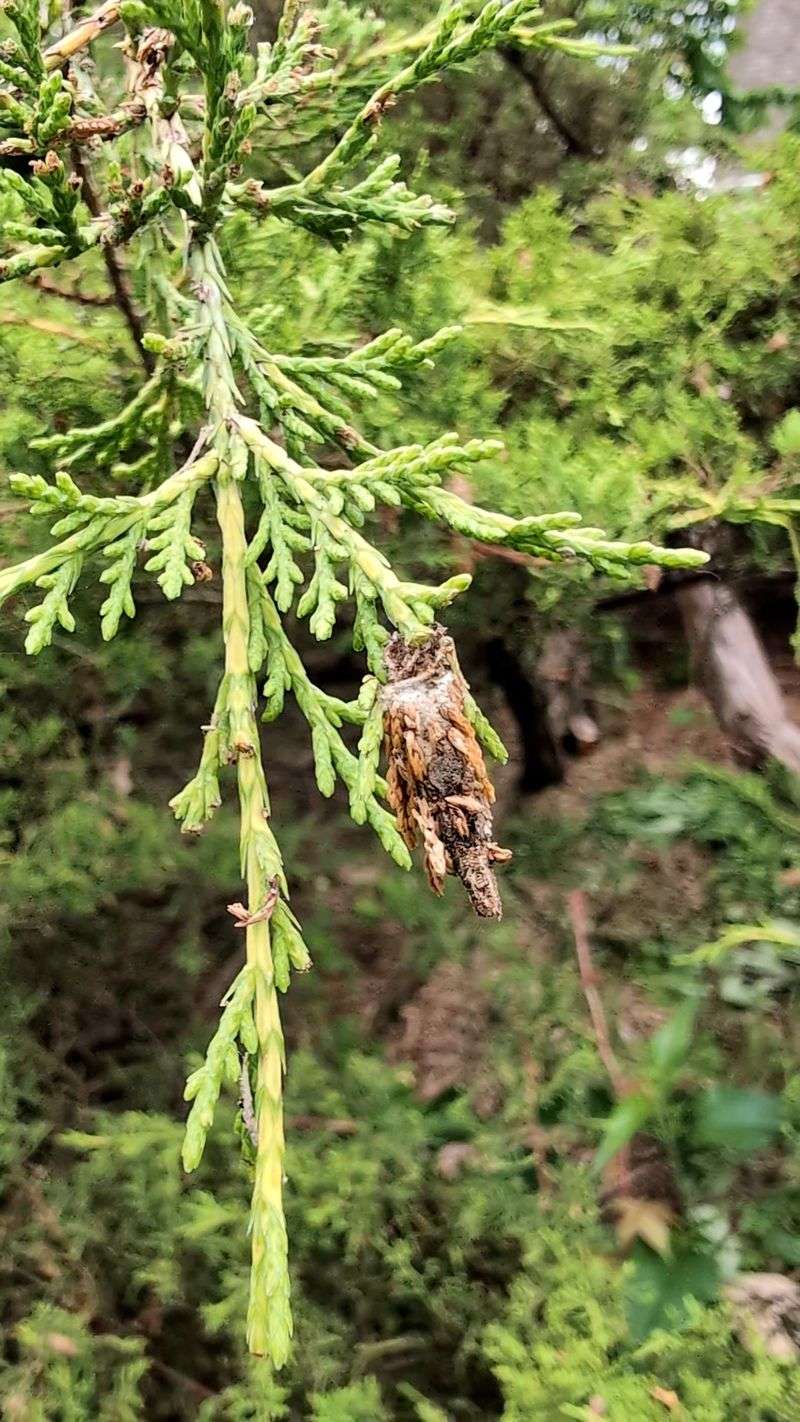
Walking along a row of arborvitae in a Michigan backyard, most people would never guess that dozens of small insects could be hiding in plain sight.
The evergreen bagworm, Thyridopteryx ephemeraeformis, constructs a portable case using silk and bits of foliage pulled directly from the host plant.
On arborvitae, the case looks remarkably like a small, dried cone or a cluster of spent plant material hanging naturally from the branch. On juniper, the bag takes on a similar texture and color to the surrounding needles.
Because the caterpillar continuously adds fresh plant material to the outside of its case as it grows, the bag updates itself to match the current host.
This self-camouflaging behavior is not intentional on the insect’s part, but the result is a case that genuinely resembles natural debris hanging from a branch.
Homeowners often mistake these bags for seed cones, dried buds, or spent twigs caught in the foliage.
The bags typically range from about one to two inches long when fully developed, though younger bags are much smaller and even harder to see.
Spotting them requires slowing down and looking carefully at individual branches rather than scanning the plant from a distance.
Michigan landscapes with dense plantings of arborvitae or juniper hedges can support multiple infestations before anyone notices something is off.
The camouflage is genuinely effective, which is a big part of why bagworm problems tend to go undetected for so long.
2. Small Bags Hide The Caterpillars Feeding Inside
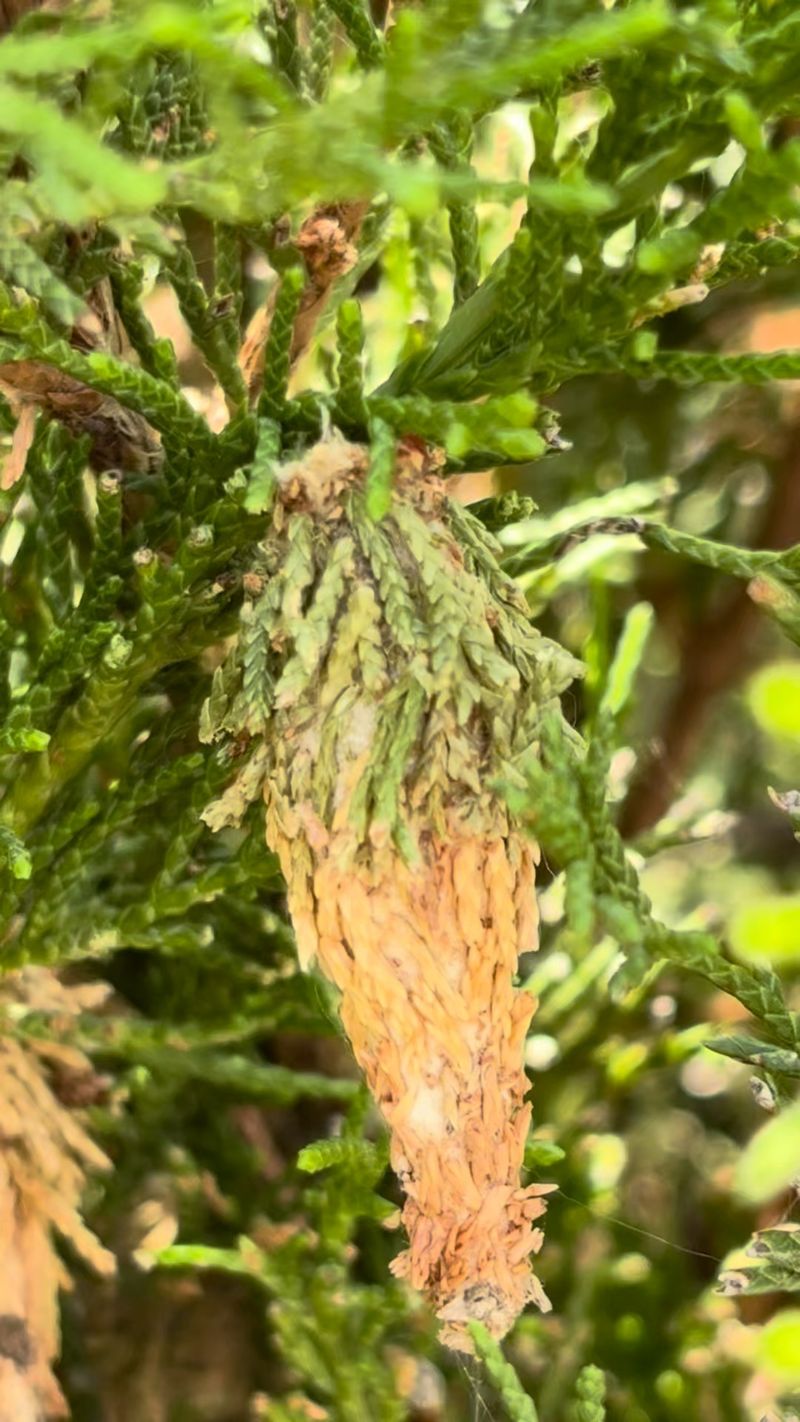
There is something almost clever about the way a bagworm caterpillar operates. From the moment it hatches, the young larva begins spinning a tiny silk case around itself, adding fragments of plant material to the outside as it feeds and moves.
The caterpillar never fully leaves this case. It extends its head and legs to feed on nearby foliage, then pulls back inside when disturbed.
The bag grows along with the insect, becoming larger and more noticeable as summer progresses.
From a few feet away, even a branch with several bags attached can look completely normal. The bags hang or sit among the foliage in a way that mimics natural plant growth.
Only when you look closely at individual branches does the pattern of attached cases become visible. This is why a quick glance at a juniper hedge from the sidewalk rarely reveals an active infestation, even when one is present.
Your Michigan Garden Changes Every Week. Your Plan Should Too.
Gardening in Michigan changes quickly throughout the season. Every Friday you’ll receive a simple weekly plan showing exactly what to plant, prune, fertilize, harvest, and protect so you never miss the right timing.
The caterpillar inside is doing real feeding work the entire time. Needles and scale-like leaves are consumed as the larva moves through the plant, and the bag gets dragged along wherever the caterpillar travels.
Because the insect stays protected inside its case throughout its larval life, natural predators have a harder time reaching it.
Checking foliage by gently parting branches and looking at stems close to the trunk can help Michigan homeowners find bags that are not immediately obvious from the outside of the plant.
3. Evergreens Show Damage Slowly Until Browning Appears
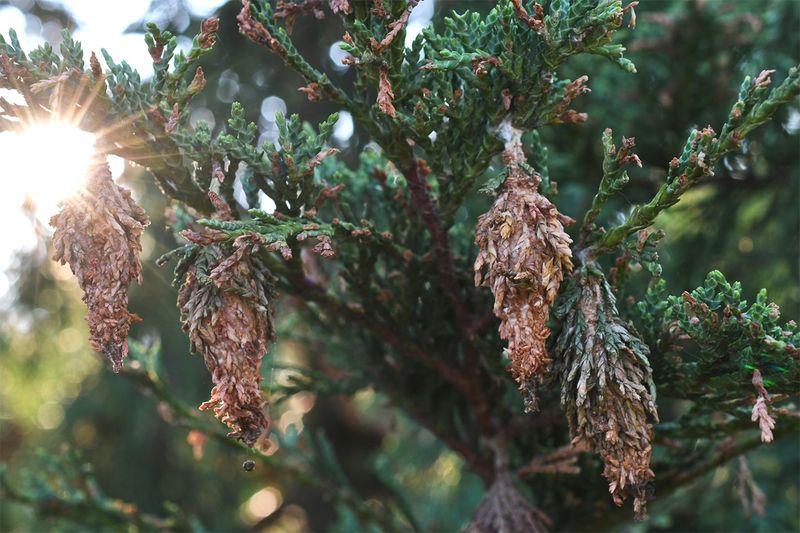
One frustrating reality of bagworm feeding is that evergreen plants do not always show visible stress right away.
Feeding removes individual needles or scale-like leaves gradually, and the plant may look mostly green for several weeks while damage accumulates beneath the surface of the foliage.
By the time brown patches become noticeable, the caterpillars have often been feeding for quite a while.
Evergreen plants face a particular challenge when it comes to recovering from this kind of damage.
Unlike many deciduous trees and shrubs that can push out new leaves after losing foliage mid-season, most evergreens do not regenerate needles on branches that have been stripped.
Once a section of arborvitae or juniper turns brown from feeding injury, that portion of the plant is unlikely to green up again. This makes bagworm damage more permanent-looking on evergreens than on many other landscape plants.
The slow progression of symptoms can give homeowners a false sense of security. A plant that looked perfectly green in late spring may begin showing scattered brown patches by midsummer, and those patches can expand as feeding continues.
Michigan summers can also bring heat stress, drought pressure, and other environmental factors that contribute to browning, which sometimes makes it harder to pinpoint bagworms as the cause without looking for the characteristic bags.
Checking plants regularly through the growing season gives homeowners a better chance of catching problems before browning becomes widespread.
4. Arborvitae And Junipers Often Show The First Warning Signs
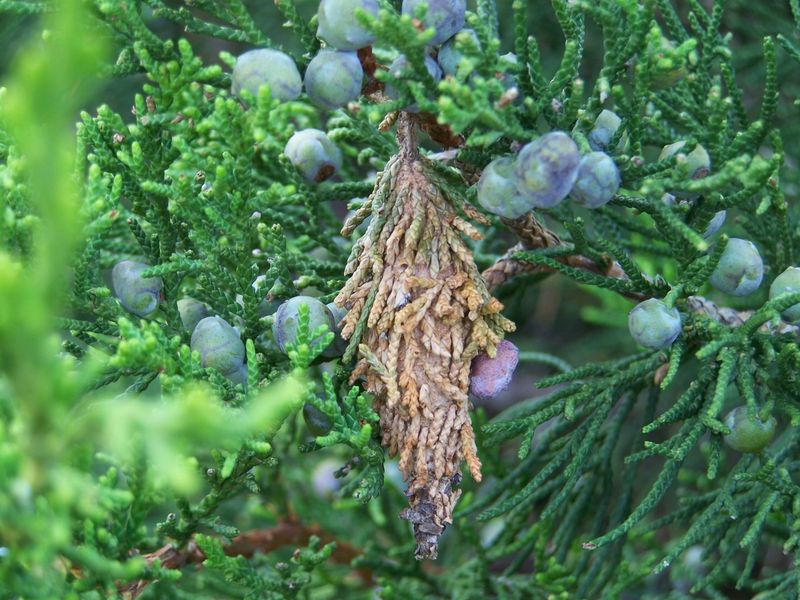
Arborvitae hedges and juniper plantings are among the most common evergreen choices in Michigan residential landscapes, and they also happen to be hosts that bagworms frequently infest.
Gardeners who grow these plants should be aware that thinning foliage, scattered brown patches, or unusual-looking debris hanging from branches can all be worth a closer look during the summer months.
On arborvitae, the first signs of bagworm activity often appear as small sections of foliage that look slightly off-color or sparse compared to the surrounding growth. The bags themselves can be easy to dismiss as dried seed clusters or plant debris.
On juniper, the blue-green or silvery needle texture can make bags even harder to separate visually from the rest of the plant, especially when bags are still small in early summer.
It is worth noting that browning on arborvitae and juniper is not automatically a sign of bagworms. Winter injury, root stress, drought, fungal diseases, and spider mites can all produce similar symptoms.
The key step is checking for the presence of silk-and-foliage bags attached to the branches before drawing any conclusions about the cause. If bags are present, bagworm activity is a reasonable explanation for the damage.
If no bags are found, it may be worth considering other potential causes and consulting a local Michigan State University Extension office or certified arborist for guidance on what might be happening.
5. Summer Feeding Can Strip Needles Before Gardeners Notice
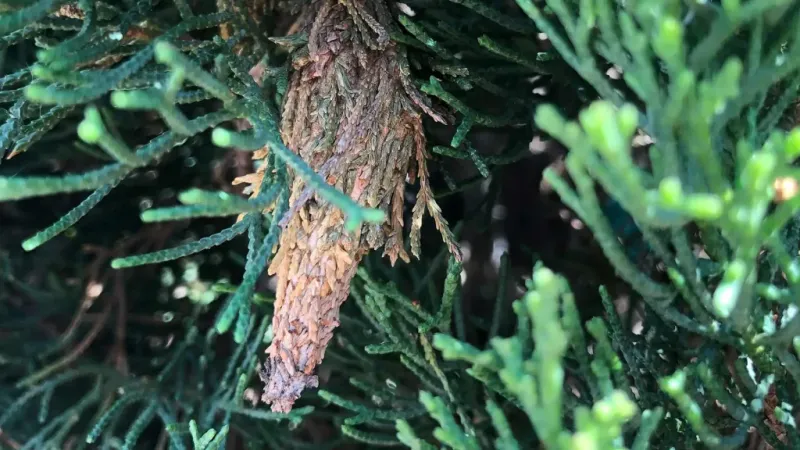
Warm Michigan summers create ideal conditions for bagworm larvae to feed actively and grow quickly. Eggs typically hatch in late spring to early summer, depending on seasonal temperatures, and the newly emerged larvae begin feeding almost immediately.
Young caterpillars are tiny at first and consume only small amounts of foliage, which makes their presence easy to overlook in the early weeks after hatching.
As summer progresses and the larvae grow larger, their feeding rate increases. A plant that showed no obvious symptoms in June may begin looking stressed by July or August if a significant number of caterpillars have been working through the foliage.
The severity of visible damage depends on several factors, including how many bagworms are present, the size and overall health of the plant, and how long feeding has been going on without any management response.
Smaller or younger evergreen plants tend to show stress more quickly than large, established specimens because they have less total foliage to spare.
A well-established juniper with dense growth may tolerate moderate feeding better than a recently planted arborvitae that is still putting energy into establishing its root system.
Michigan homeowners who check their evergreens during mid-summer inspections, rather than waiting until fall cleanup, give themselves the best opportunity to notice feeding activity while the season still allows for a response.
Looking at the undersides of branches and parting foliage to examine inner stems can reveal bags that are not visible from outside the plant.
6. The Cone-Like Bags Reveal The Pest Behind The Damage
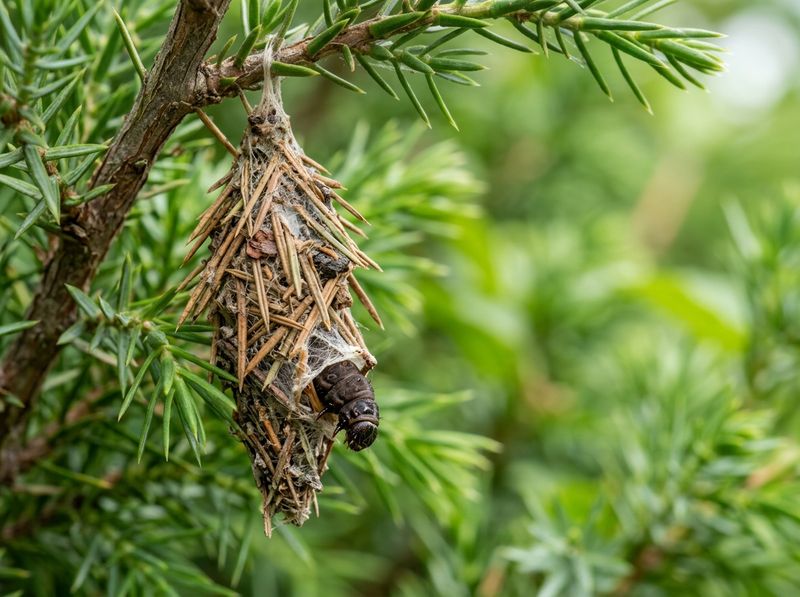
Finding the bags themselves is one of the clearest ways to confirm that bagworms are responsible for damage on an evergreen plant. The cases produced by Thyridopteryx ephemeraeformis are distinctive once you know what to look for.
A fully developed bag is spindle-shaped, typically one to two inches long, and constructed from silk layered with pieces of foliage, twigs, or needles pulled from the host plant.
On arborvitae, the bags are often covered in flat scale-like leaf fragments that give them a layered, slightly shaggy appearance.
The bags hang from branches by a silk thread or are attached directly to stems, and they do not fall off easily when the branch is disturbed. This is different from a spent leaf or a loose piece of debris that might simply drop away.
Gently tugging on a suspected bag can help confirm whether it is firmly attached by silk. Finding multiple bags on the same plant, especially clustered in certain areas, is a strong indicator that bagworm feeding has been occurring.
Homeowners who are unsure whether what they are seeing is a bagworm case or something else can compare what they find to photographs available through Michigan State University Extension resources.
Distinguishing bagworm bags from other evergreen issues such as scale insects, spider mite webbing, or disease symptoms is important before deciding on any next steps.
The cone-like bag is the most reliable physical clue that bagworms, rather than another problem, are behind the browning foliage.
7. Late Summer Is When Bagworm Problems Become Easier To Spot
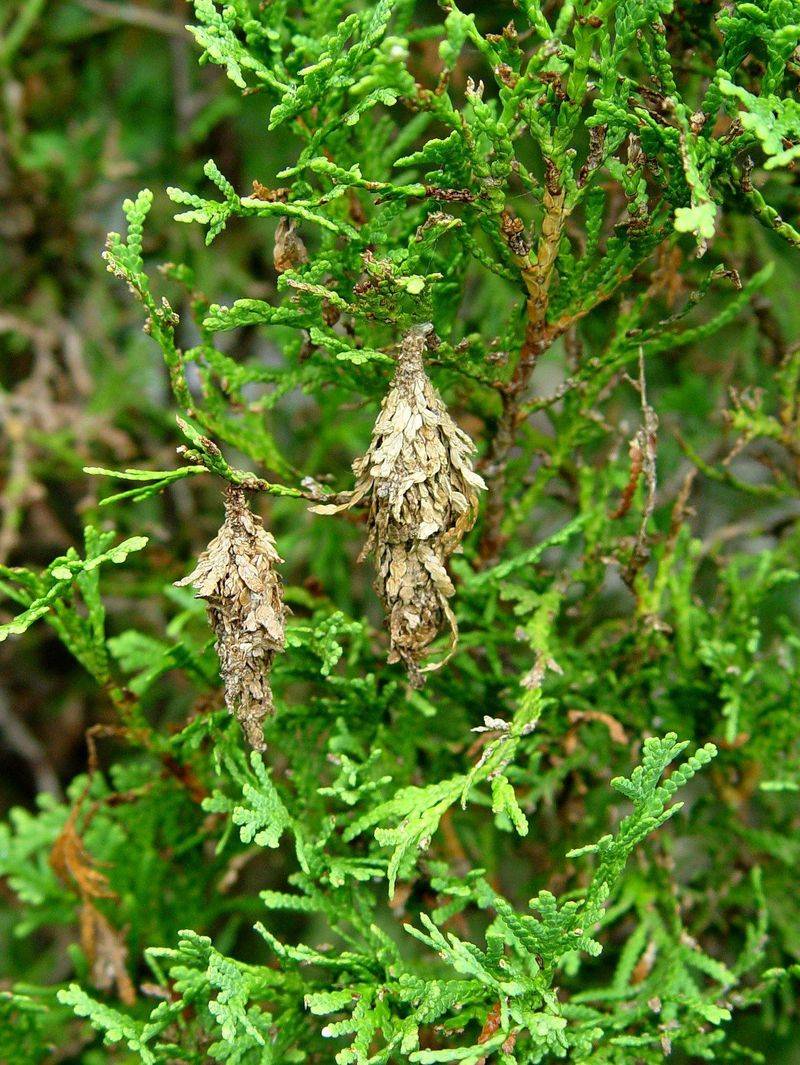
By late summer, bagworm cases have had months to grow, and the larger bags become noticeably easier to see.
A plant that seemed fine in June may show a scattering of one-inch or larger cases hanging from branches by August, sometimes with surrounding foliage that has turned brown or thin.
For many Michigan homeowners, late summer is the first time they realize something has been going on with their evergreens all season.
The increased visibility of mature bags does make late summer a useful time for identifying the presence of bagworms.
However, it is helpful to understand that by this point in the season, most of the active larval feeding has already occurred or is winding down.
Female bagworms that have completed development remain in their bags to lay eggs for the following year, while male moths emerge to mate.
Management options at this stage are different from those available earlier in the season when larvae were smaller and more vulnerable.
Late summer observations are still valuable because they help Michigan gardeners understand the scale of the infestation and plan accordingly for the following year.
Bags that are found in late summer or fall can be manually removed and disposed of carefully to reduce the number of eggs that will hatch the next season.
Dropping bags into a container of soapy water or sealing them in a bag before disposal is generally recommended to prevent live eggs from surviving.
Regular fall inspections of arborvitae and juniper plantings can make the following growing season easier to manage.
8. Early Checks Help Protect Michigan Evergreen Plantings
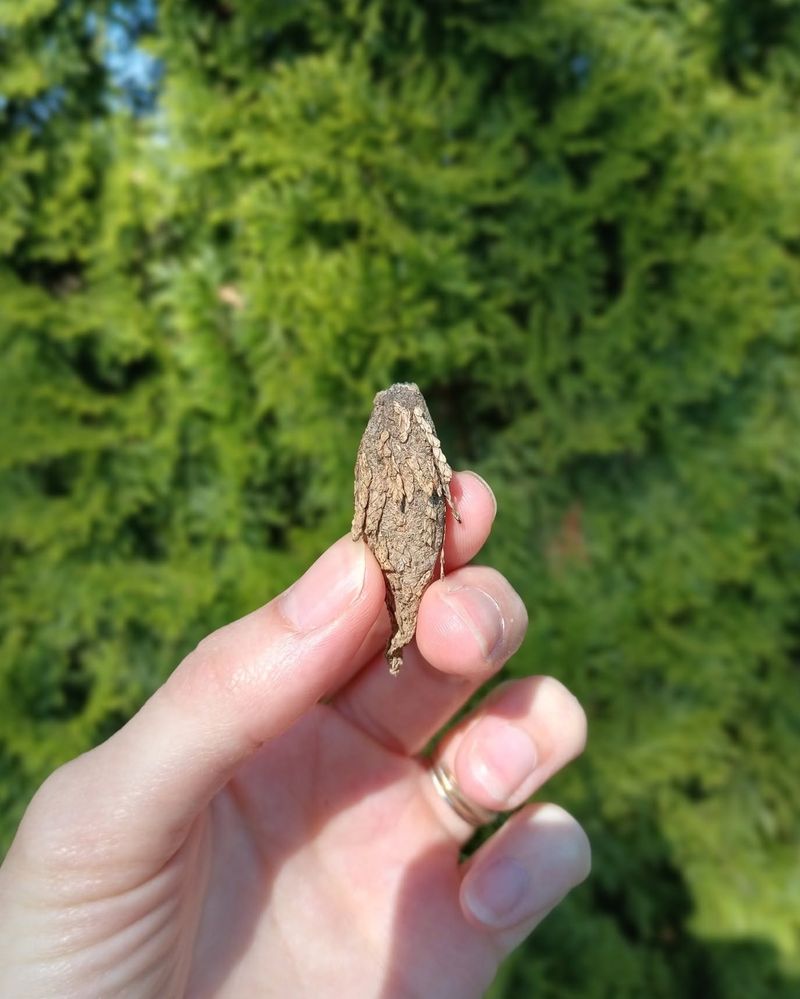
Getting into the habit of checking evergreen plants early in the growing season is one of the most practical things homeowners can do to stay ahead of bagworm problems.
Small larvae and tiny cases in late spring or early summer are harder to spot than mature bags, but catching an infestation early gives more options for management and limits the amount of feeding damage that accumulates over the season.
A good inspection involves more than a quick look from the sidewalk.
Parting branches and examining inner stems, checking the undersides of foliage, and looking for small cases attached near branch tips can reveal young bagworms that are not visible from outside the plant.
Arborvitae hedges, juniper shrubs, and other susceptible evergreens in Michigan landscapes benefit from this kind of hands-on attention at least a few times during the growing season, particularly in early summer when larvae are newly active.
When bagworm populations are small and the infestation is limited to a manageable area, manually removing and disposing of bags is a practical first step.
For larger infestations or plants where hand-removal is not practical, consulting Michigan State University Extension resources or a certified arborist can help homeowners understand what options are appropriate for their situation.
Treatments tend to be more effective when applied to young larvae, so acting early after confirmed identification generally produces better results than waiting until browning foliage signals that a problem has been building for weeks.
Consistent monitoring is the foundation of good evergreen care in Michigan landscapes.