Low-Mess California Trees That Won’t Overwhelm Small Yards
A tree can completely transform a small California yard, adding shade, movement, and a sense of permanence that few other plants can match.
The challenge comes when that beautiful young tree grows up and starts creating more work than the space can handle.
Suddenly, the dream of a cozy garden turns into a constant battle with branches, leaves, and cleanup.
Small yards need trees that know how to share. A massive canopy, aggressive growth habit, or endless seasonal debris can quickly make a limited outdoor space feel crowded.
Nobody wants their patio disappearing under a tree’s personal expansion plan. The best choices bring plenty of character without taking over every corner.
They can provide structure and beauty while fitting naturally beside walkways, seating areas, and other garden features.
1. Western Redbud
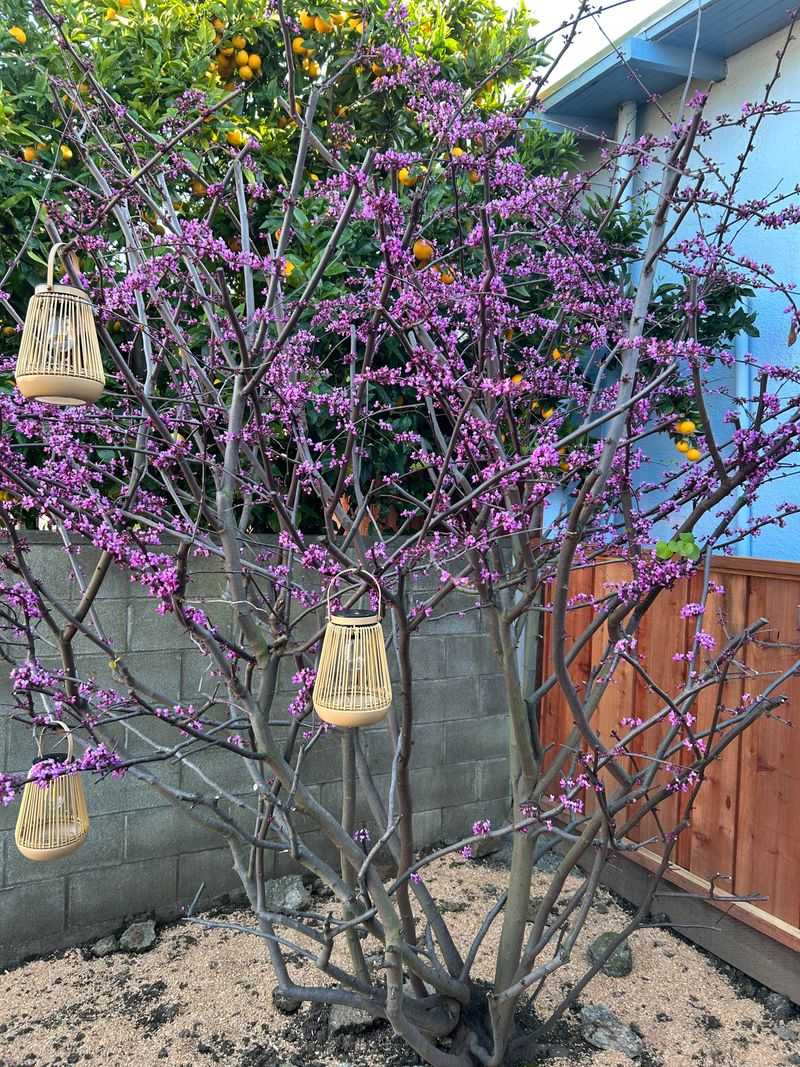
Few trees put on a spring show quite like the Western Redbud. Before a single leaf appears, the bare branches burst into a cloud of bright magenta-pink flowers that stop people in their tracks.
It is one of the most jaw-dropping native trees you can grow in a small yard. This compact tree usually tops out between 10 and 20 feet tall, which makes it a natural fit for tight spaces.
It grows in a graceful, multi-trunk form that looks beautiful even in winter when the branches are bare.
The heart-shaped leaves that follow the blooms add a charming touch all season long. Clean-up is minimal with this tree.
The small seed pods it produces are flat and dry, not sticky or smelly, and they drop in modest amounts.
Many California gardeners actually enjoy leaving them on the tree because they look decorative. Western Redbud is also drought-tolerant once established, so it needs very little water or attention to thrive.
Birds and pollinators love it too, which means your yard becomes a little wildlife haven without any extra effort on your part.
Plant it in full sun and well-drained soil for the best results. It is a low-fuss, high-reward tree that earns its place in any small garden.
2. Desert Willow
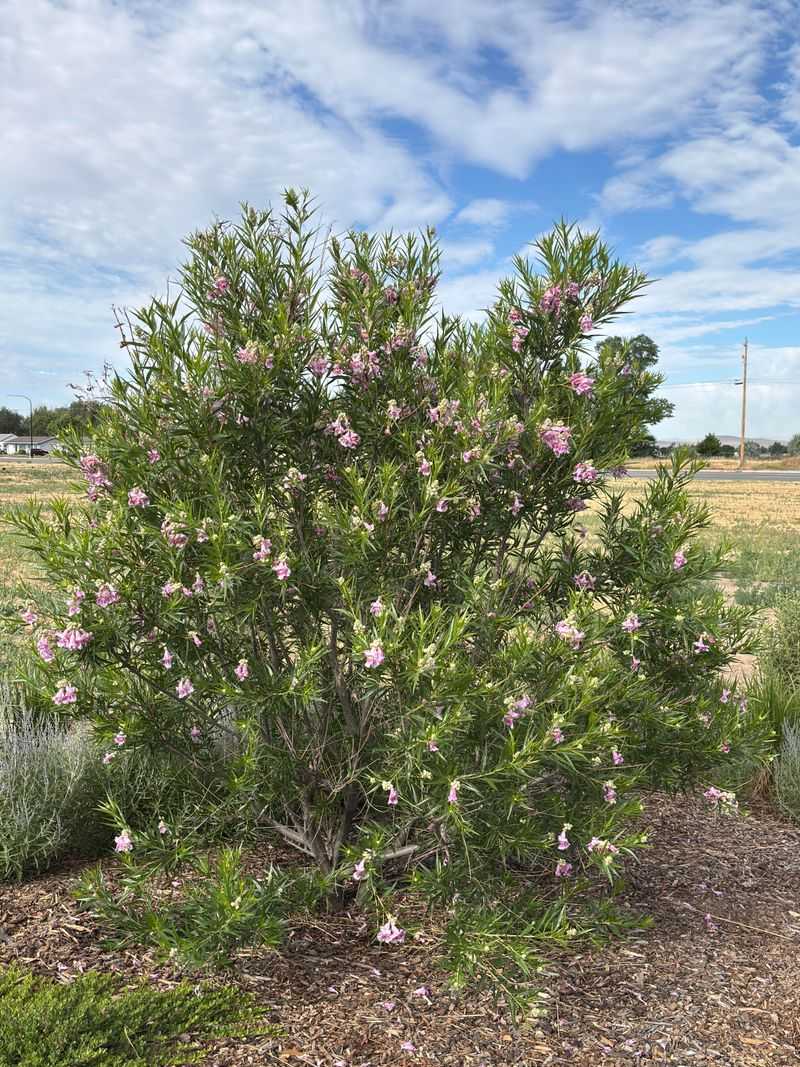
There is something almost magical about the Desert Willow. It blooms repeatedly from late spring through fall, producing showy trumpet-shaped flowers in shades of pink, purple, and white.
Not many small trees can match that kind of long-lasting color payoff. Despite its name, this tree is not a true willow, so it does not have the messy, aggressive roots that willows are known for.
It stays relatively compact, usually reaching 15 to 25 feet, and can be pruned to stay even smaller.
The narrow, willow-like leaves give it a light, airy look that never feels heavy or crowding. One of the best things about this tree is how little mess it creates.
The seed pods are slender and not particularly abundant, and they do not create a sticky or smelly problem underfoot.
It is extremely drought-tolerant once settled in, which means lower water bills and less time dragging out the hose.
Hummingbirds absolutely adore the tubular flowers, so expect regular visits from these speedy little birds throughout the warm months.
Your California Garden Changes Every Week. Your Plan Should Too.
Gardening in California changes quickly throughout the season. Every Friday you’ll receive a simple weekly plan showing exactly what to plant, prune, fertilize, harvest, and protect so you never miss the right timing.
Desert Willow thrives in full sun and sandy or rocky soil, which makes it ideal for yards with less-than-perfect growing conditions. It is a tough, cheerful, and surprisingly elegant tree for any small outdoor space.
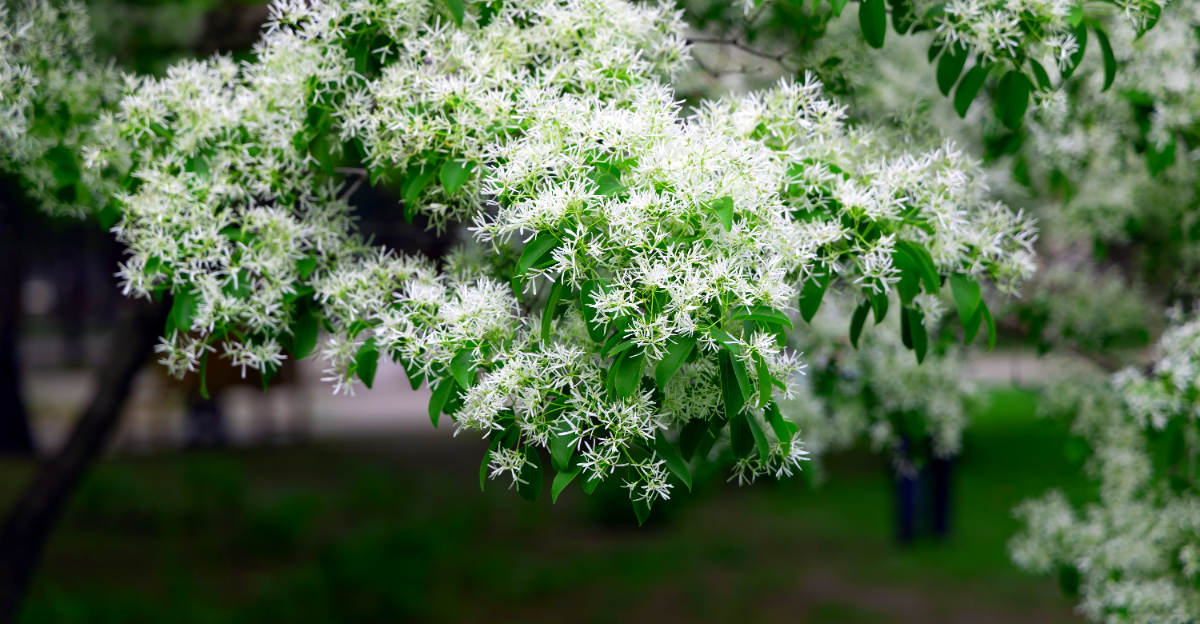
3. Chinese Fringe Tree
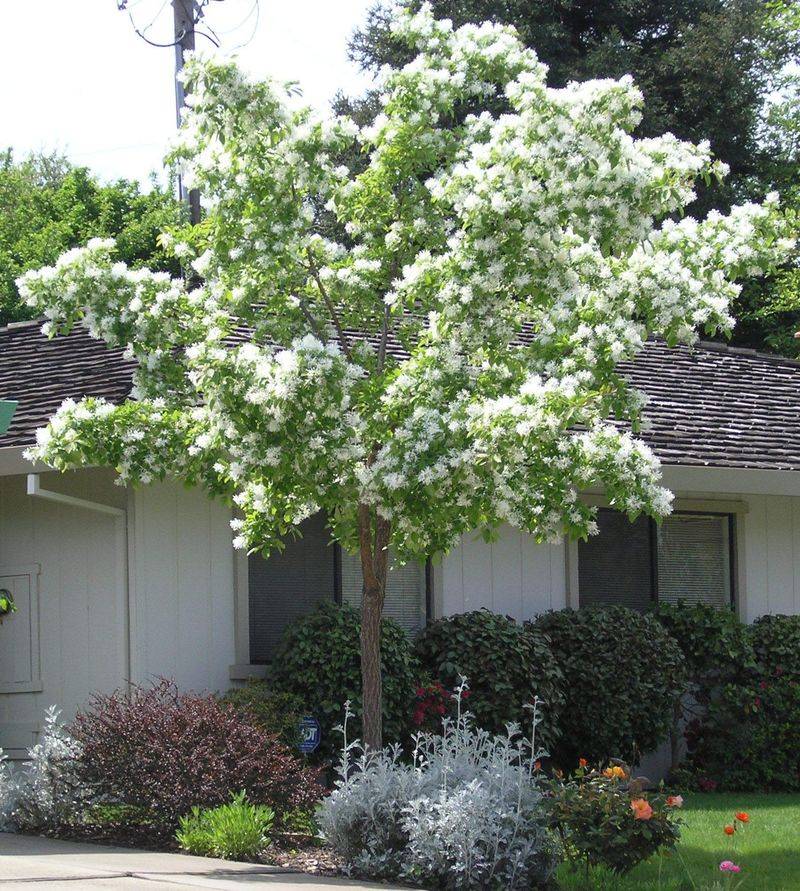
When the Chinese Fringe Tree blooms in spring, it looks like someone draped the whole canopy in white lace.
The flowers hang in long, feathery clusters that shimmer in the breeze and fill the air with a soft, sweet fragrance. It is one of those trees that makes neighbors stop and ask what it is.
This small deciduous tree typically grows between 15 and 25 feet tall, making it a comfortable fit for compact yards. It grows slowly, which means you are not constantly worrying about it outpacing its space.
The clean, glossy green leaves turn a soft yellow in fall, adding another layer of seasonal interest.
From a maintenance standpoint, this tree is a dream. The small blue-black berries it produces are quickly eaten by birds, so they rarely pile up on the ground.
There is no sticky sap, no invasive roots, and no overwhelming seed drop to deal with. It prefers a spot with partial to full sun and moist, well-drained soil.
Chinese Fringe Tree is also surprisingly cold-hardy compared to many ornamental trees, which gives it a wider range of use.
If you want a tree that delivers serious visual impact across multiple seasons while keeping yard work to a minimum, this one is a top-tier pick for smaller garden spaces.
4. Palo Verde
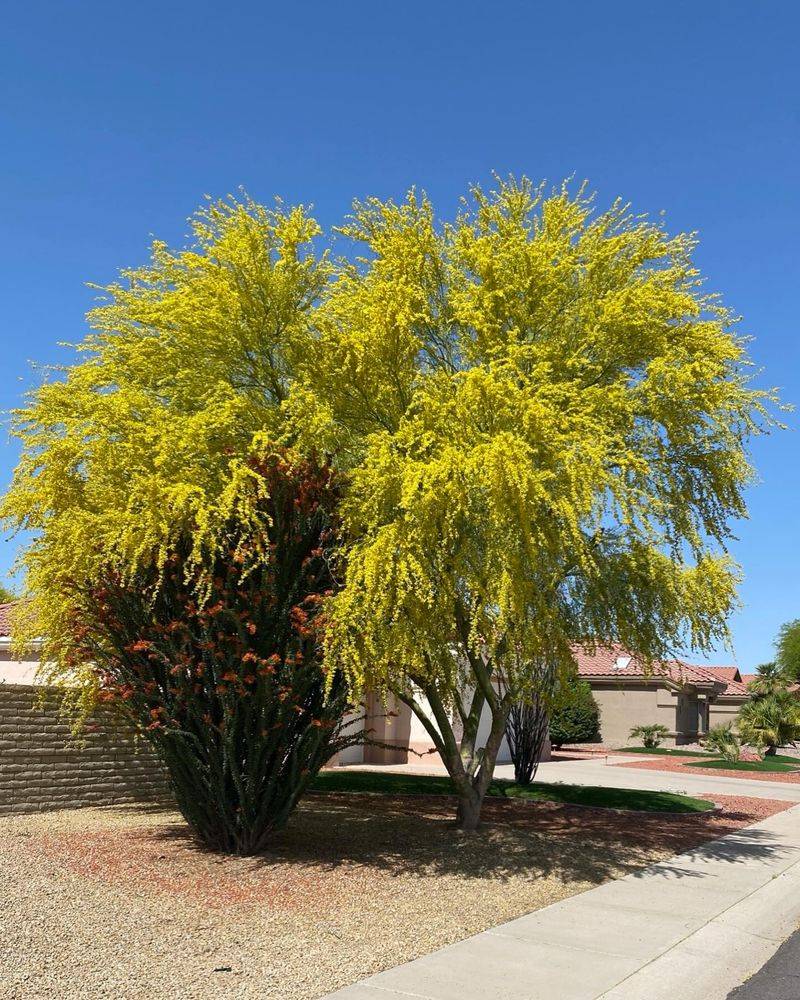
The Palo Verde is one of the most unique-looking trees you can grow in a warm, dry yard. Its trunk and branches are green, not brown, because the bark contains chlorophyll and actually photosynthesizes sunlight.
That alone makes it a conversation starter every time someone visits your yard. In spring, this tree transforms into a golden cloud of bright yellow flowers that blanket every branch. The display is short but absolutely spectacular.
After blooming, the tiny leaves and open canopy cast a light, dappled shade that feels airy rather than heavy.
The tree usually stays between 15 and 30 feet tall, which is very manageable for most small yards.
Mess is not really a concern with Palo Verde. The small seed pods it drops are thin and dry up quickly.
The minimal leaf drop is easy to handle, and the tree does not produce fruit, sap, or any other sticky debris.
Once established, it needs very little water, which is great news for anyone trying to keep their water usage low.
Full sun and good drainage are all it asks for in return. Palo Verde is native to desert regions and has adapted beautifully to warm, low-rainfall environments.
It is a bold, sculptural tree with real personality that fits surprisingly well into tidy small spaces.
5. Sweet Bay Laurel
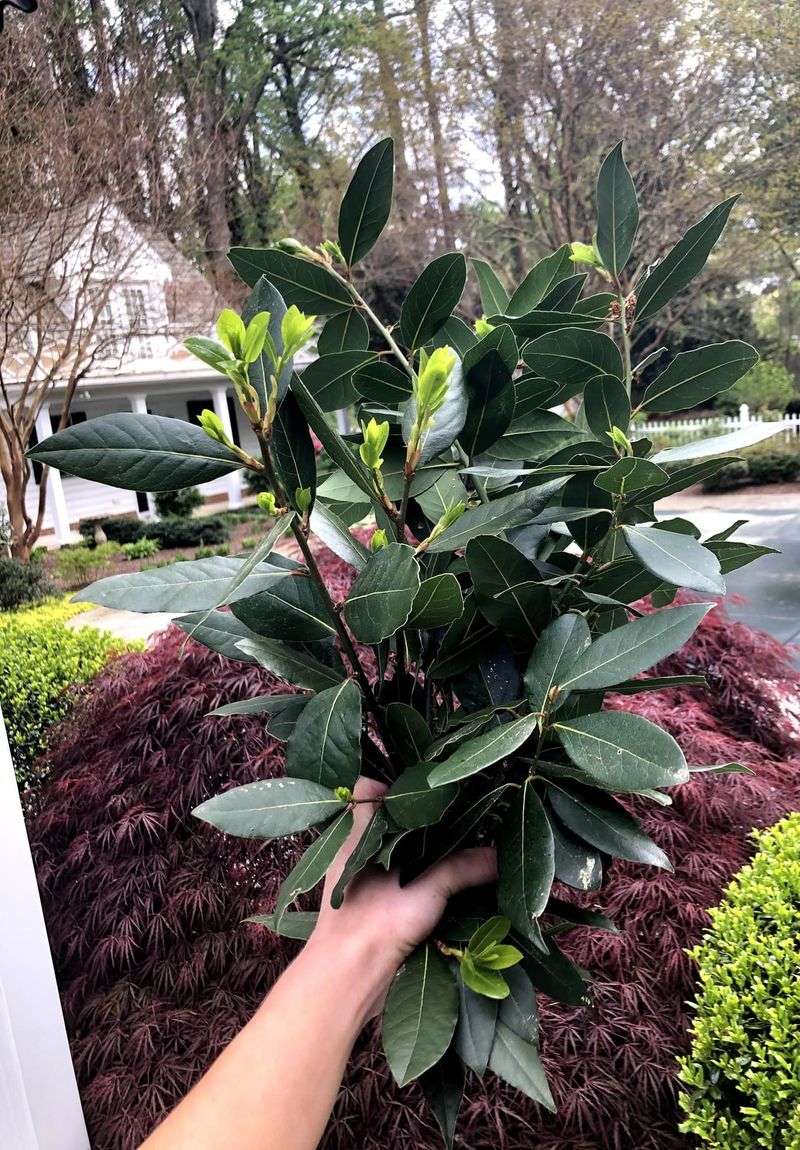
Here is a tree that pulls double duty in the best possible way. Sweet Bay Laurel is not just an attractive evergreen, it is also the source of the bay leaves used in cooking.
Growing your own culinary herb in tree form is a pretty satisfying thing to brag about at dinner parties.
This slow-growing tree can be kept as a compact shrub or allowed to grow into a small multi-trunk tree reaching about 10 to 20 feet.
Its dense, glossy dark green leaves stay on year-round, providing consistent privacy and structure in the garden. The neat growth habit means it rarely looks untidy or out of control.
From a cleanliness standpoint, Sweet Bay Laurel is one of the tidiest trees around. It does not drop messy fruit, produce sticky sap, or scatter large amounts of debris.
The small yellow flowers in spring are subtle and unobtrusive, and the dark berries that follow are small and discreet.
It grows well in full sun to partial shade and handles both drought and coastal conditions with ease.
Regular light pruning keeps it looking sharp and encourages fresh leaf growth. Whether you use it as a focal point, a privacy screen, or a living herb garden, Sweet Bay Laurel is a smart and stylish choice for small yard spaces.
6. Chaste Tree
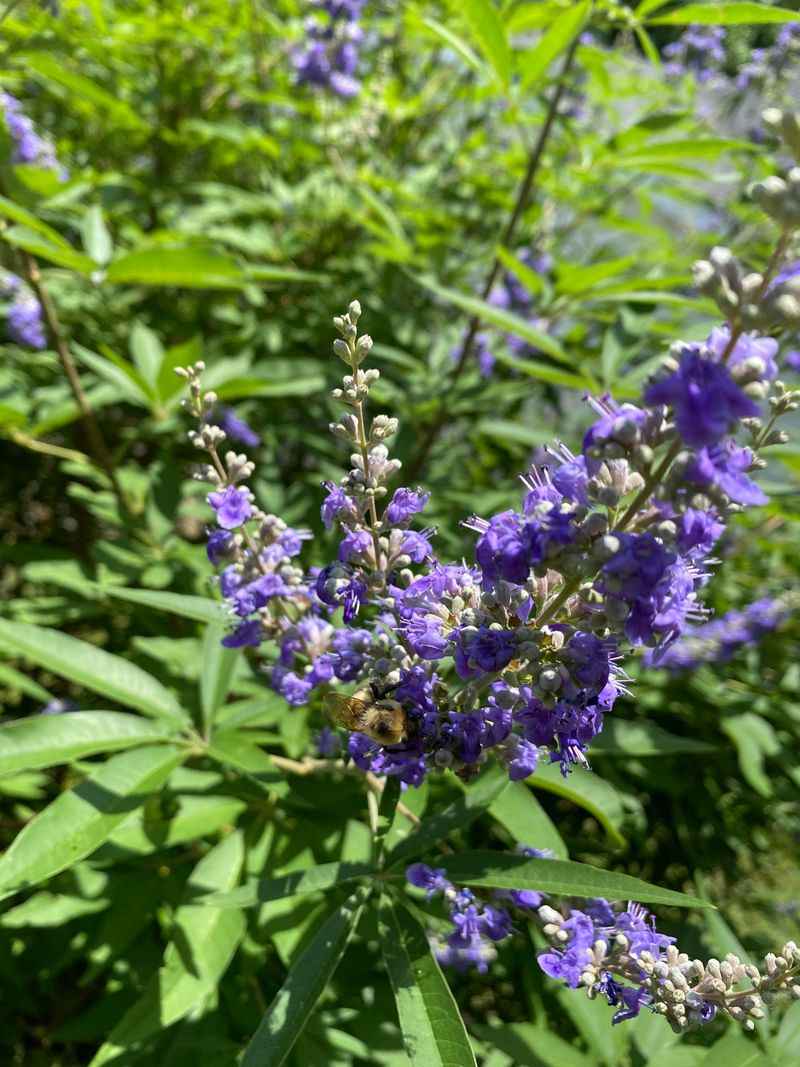
Summer can feel like a long, flowerless stretch in many California yards, but the Chaste Tree fixes that problem beautifully.
It blooms heavily in midsummer when most other flowering trees have already finished their show, sending up long, fragrant spikes of lavender-blue or purple flowers that butterflies and bees simply cannot resist.
Chaste Tree grows quickly into a multi-stemmed small tree or large shrub, typically reaching 10 to 20 feet tall.
The gray-green leaves have a soft, herby scent when brushed, and they give the tree a light, Mediterranean look that pairs well with stone pathways and gravel gardens.
Pruning it hard in late winter keeps it compact and encourages even more blooms the following summer.
Cleanup is genuinely minimal with this tree. The flower spikes dry out and fall in small pieces rather than in big clumps, and the tiny seeds are not a significant litter issue.
There is no fruit, no sticky sap, and no invasive root system to worry about. It thrives in full sun and handles heat and drought once established, which is a real advantage during hot summers.
Chaste Tree is also deer-resistant, which is a bonus if you live near open land. For a small yard that needs late-season color without the mess, this tree is a reliable and rewarding option.
7. Catalina Cherry
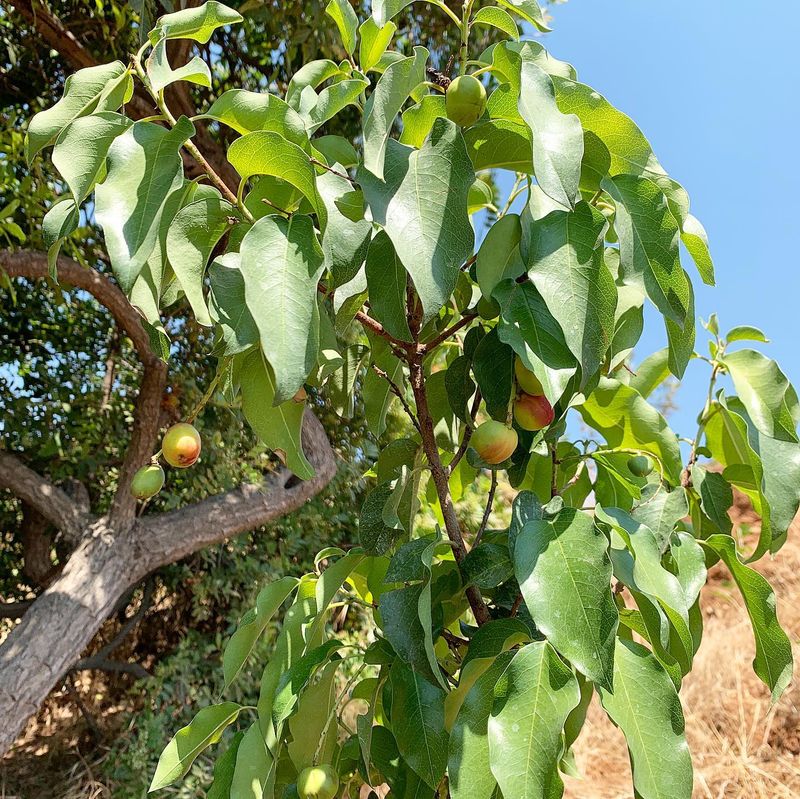
Native to the Channel Islands just off the Southern California coast, the Catalina Cherry is a rugged and handsome evergreen that knows how to handle tough conditions.
It was built for heat, drought, and coastal winds, which makes it a remarkably low-maintenance choice for small yards in warm climates.
The tree grows at a moderate pace and can reach 15 to 25 feet tall, though regular pruning keeps it much more compact. Its large, glossy dark green leaves give it a lush, tropical feel without the associated fussiness.
In spring, it produces clusters of small white flowers that are fragrant and attractive to pollinators.
The dark purple cherries it produces are technically edible but very bitter, and birds usually clean them up before they become a mess on the ground. This makes it far less of a cleanup concern than fruiting trees like plums or apples.
There is no sticky sap and no invasive root behavior to worry about. Catalina Cherry is also fire-resistant once established, which is a meaningful benefit in dry, fire-prone areas.
It grows well in full sun to partial shade and thrives in well-drained soil with little supplemental water once settled in.
For anyone wanting a tough, beautiful, and relatively tidy native evergreen, this tree delivers on every count without demanding much in return.
8. Fern Pine
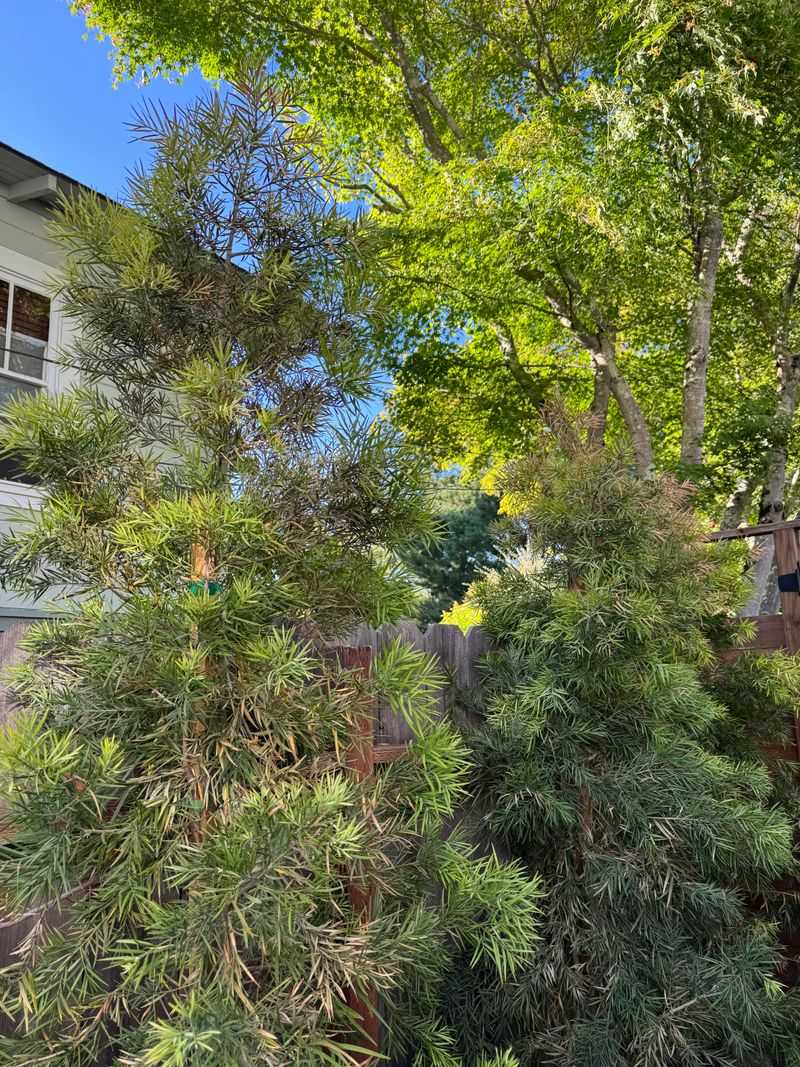
Soft, graceful, and refreshingly undemanding, the Fern Pine is a tree that fits into small yards without making a fuss.
Its long, narrow leaves look almost like fern fronds, giving it a feathery, elegant texture that feels relaxed and natural.
It is the kind of tree that makes a yard feel calm and well-designed. Fern Pine is actually a podocarpus species, which means it is not a true pine. This is great news because true pines can be messy with needles and cones.
Fern Pine drops very little, stays evergreen year-round, and grows at a manageable pace to around 20 to 30 feet tall. With regular pruning, it can be kept even smaller or shaped into a tall privacy screen.
Maintenance with this tree is wonderfully low. It does not produce messy fruit, heavy seed drop, or sticky resin.
The small fleshy berries it occasionally produces are quickly taken by birds and do not accumulate on the ground. It adapts well to a range of soil types and handles both sun and partial shade with ease.
Fern Pine is also quite tolerant of coastal conditions, including salt air and wind. It responds well to shaping, which gives you real control over its size and form.
For small yards that need a clean, evergreen anchor, Fern Pine is one of the most versatile and tidy options available.
9. Desert Museum Palo Verde
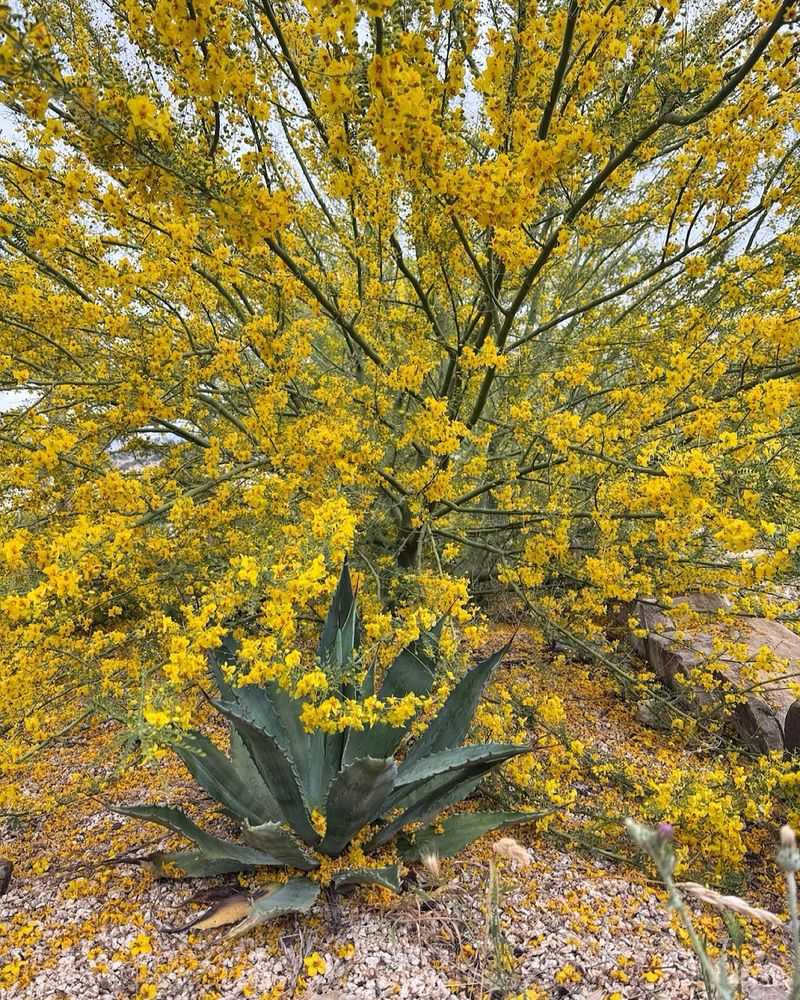
Think of Desert Museum Palo Verde as the upgraded version of a classic. It is a hybrid tree that was specifically bred to be cleaner, more vigorous, and less thorny than its wild relatives.
Landscape professionals love it, and once you see it in bloom, it is easy to understand why. In spring, this tree explodes into a brilliant display of golden-yellow flowers that cover nearly every branch.
The show lasts longer than most flowering trees, and the green bark continues to photosynthesize even when leaves are not present.
It grows to about 20 to 30 feet tall with a wide, spreading canopy that provides pleasant dappled shade without blocking light entirely.
The hybrid nature of this tree means it produces very few seed pods compared to wild species, which dramatically cuts down on yard cleanup. The minimal leaf drop is easy to manage, and there are no thorns to worry about when pruning or working nearby.
Once established, it needs almost no supplemental water, which makes it a top choice for drought-conscious gardeners. Full sun and good drainage are all it needs to perform at its best year after year.
Desert Museum Palo Verde is widely considered one of the best low-water trees available for warm, dry climates.
Its combination of beauty, toughness, and tidiness makes it a standout choice for small yards that want big visual impact.