These Are The Dwarf Fruit Trees California Gardeners Are Growing On Patios
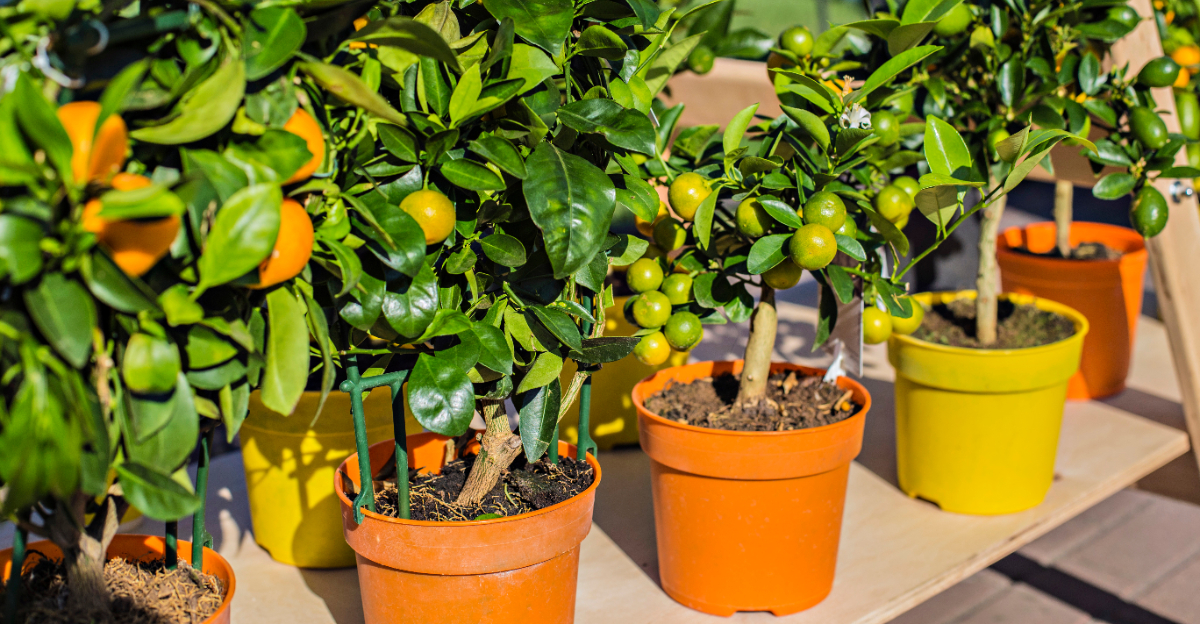
Full size fruit trees are not an option for every California gardener, and that used to mean missing out entirely. Not anymore.
Dwarf fruit trees have changed the game for anyone working with a patio or a small backyard, and California’s climate makes them almost unfairly easy to grow in containers. These are not novelty plants that look cute but never produce.
The right dwarf varieties put out serious fruit on a surprisingly consistent basis, and they do it in a pot that fits comfortably on a porch. California gardeners have caught on fast.
Patios that used to hold nothing but outdoor furniture are now producing lemons, figs, peaches, and apples within arm’s reach of the back door.
The variety available has expanded a lot in recent years, and some of the best performers are also the most compact. Small space does not have to mean no fruit.
1. Dwarf Meyer Lemon
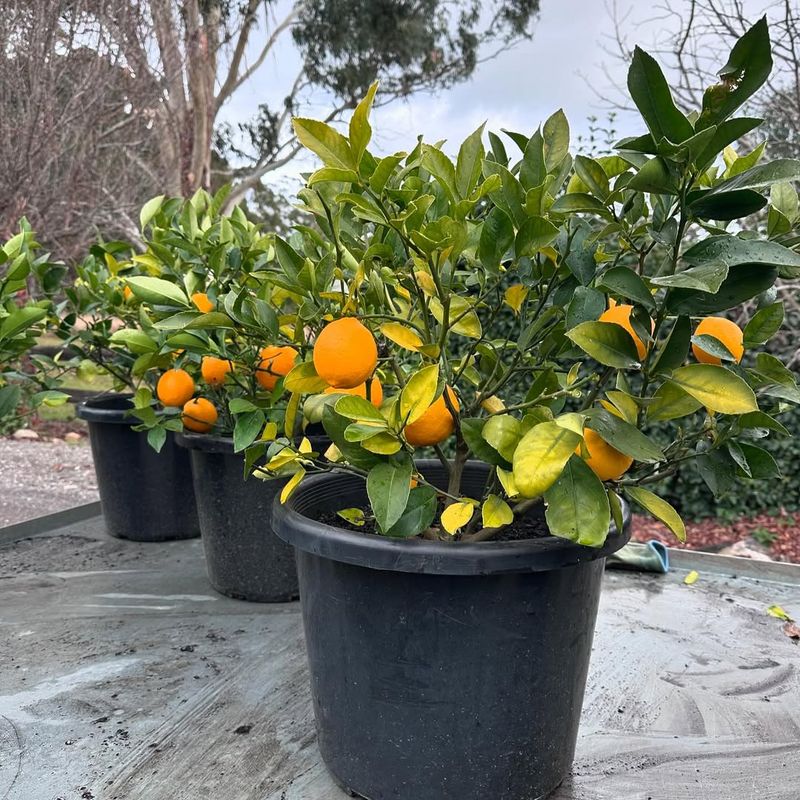
Few things brighten up a patio quite like a tree loaded with golden lemons. The Dwarf Meyer Lemon is one of the most popular container fruit trees in our state, and it is easy to understand why.
It stays compact, usually around four to six feet tall, and it produces fruit nearly year-round in mild climates.
Meyer lemons are a cross between a regular lemon and a mandarin orange. That combination gives the fruit a sweeter, less tart flavor compared to store-bought lemons.
The skin is thin and fragrant, and the juice is wonderfully rich. Many home cooks prefer them for lemonade, marinades, and baked goods.
Planting in a large pot with good drainage is the key to keeping this tree happy. Use a citrus-specific potting mix and fertilize regularly during the growing season.
Place it in a sunny spot that gets at least six to eight hours of direct sunlight daily. Water deeply but allow the soil to dry slightly between waterings to avoid root problems.
Pruning lightly each year keeps the shape tidy and encourages strong new growth. With a little consistent care, your Meyer Lemon tree can reward you with dozens of bright, flavorful lemons every season.
2. Dwarf Bearss Lime
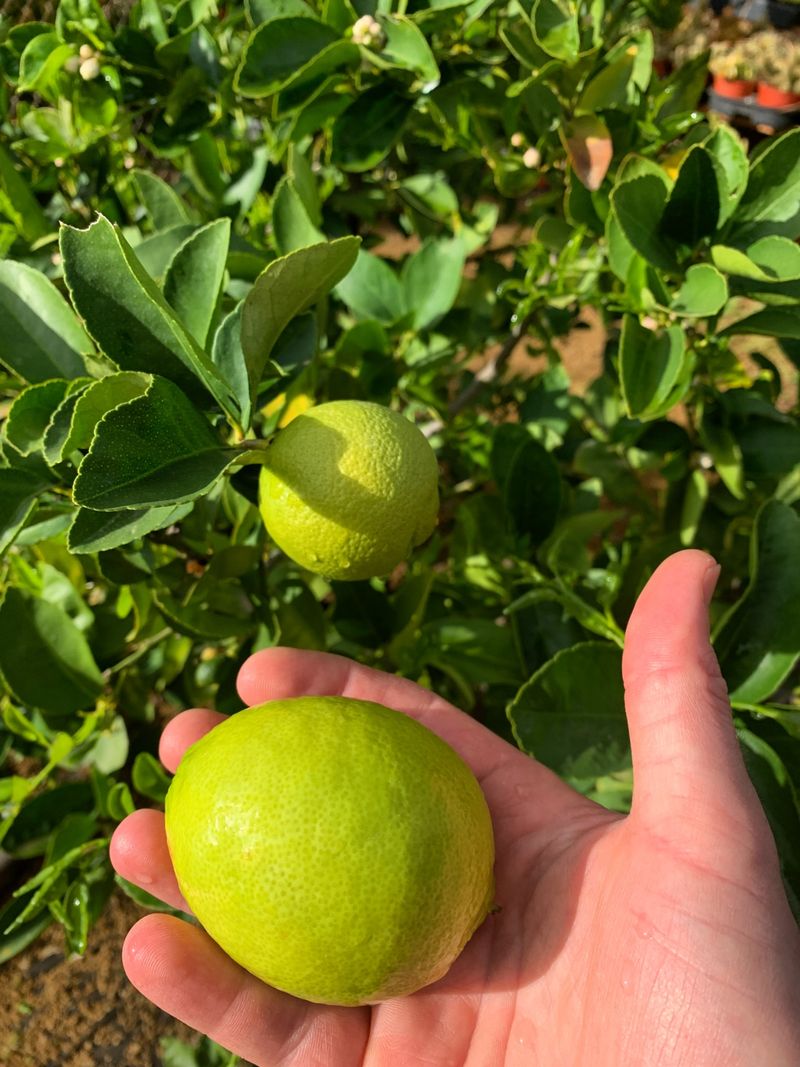
There is something satisfying about picking a fresh lime right off your own tree for your evening drink or weeknight dinner. The Dwarf Bearss Lime, also known as the Persian lime, is the same variety sold in most grocery stores.
Having it growing right on your patio makes fresh citrus feel effortless and rewarding.
This tree is a strong performer in containers. It typically stays between four and six feet tall when grown in a pot, making it easy to manage on a patio or balcony.
The fruit is seedless, juicy, and mildly tart, which makes it incredibly versatile in the kitchen. From guacamole to grilled fish, a fresh Bearss lime adds bright flavor to just about everything.
Full sun is a must for this tree. Aim for at least six hours of direct sunlight each day for the best fruit production.
Your California Garden Changes Every Week. Your Plan Should Too.
Gardening in California changes quickly throughout the season. Every Friday you’ll receive a simple weekly plan showing exactly what to plant, prune, fertilize, harvest, and protect so you never miss the right timing.
Use a well-draining citrus mix and feed the tree with a balanced citrus fertilizer every few weeks during spring and summer. Bearss limes do not tolerate frost well, so gardeners in cooler northern regions should move the container indoors when temperatures drop.
With the right conditions, this tree can produce fruit for many months out of the year.
3. Dwarf Washington Navel Orange
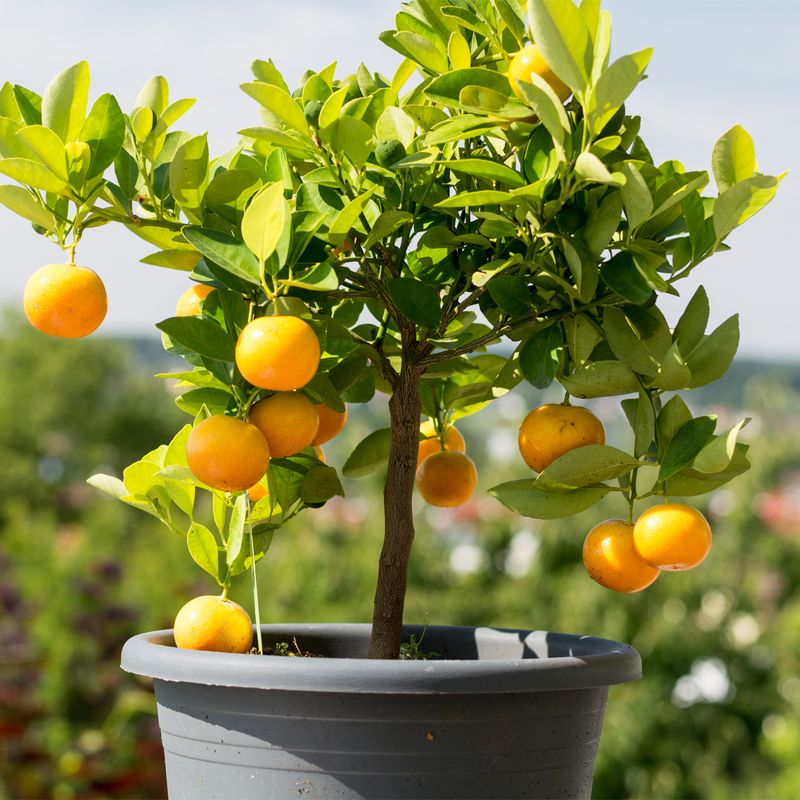
Bold, sweet, and completely seedless, the Washington Navel Orange is a classic for a reason. The dwarf version of this beloved tree brings that same grocery-store-quality fruit to your patio in a much more manageable size.
It typically reaches four to five feet in a container, which makes harvesting simple and stress-free.
What makes this variety special is the consistency of its fruit. Each orange is large, easy to peel, and packed with sweet juice.
The trees also have a beautiful appearance, with deep green leaves and fragrant white blossoms that fill the air with a lovely citrus scent in spring. That combination of beauty and productivity is exactly why so many patio gardeners choose this tree first.
Washington Navels love warmth and sunshine. Position the container where the tree gets at least six to eight hours of sunlight each day.
Citrus fertilizer applied every four to six weeks during the growing season keeps the tree producing well. Watering should be deep and infrequent rather than light and frequent.
Allow the top inch of soil to dry out before watering again. In cooler inland or northern regions of our state, bringing the pot inside during cold snaps helps protect the tree and ensures a healthy harvest the following season.
4. Dwarf Satsuma Mandarin
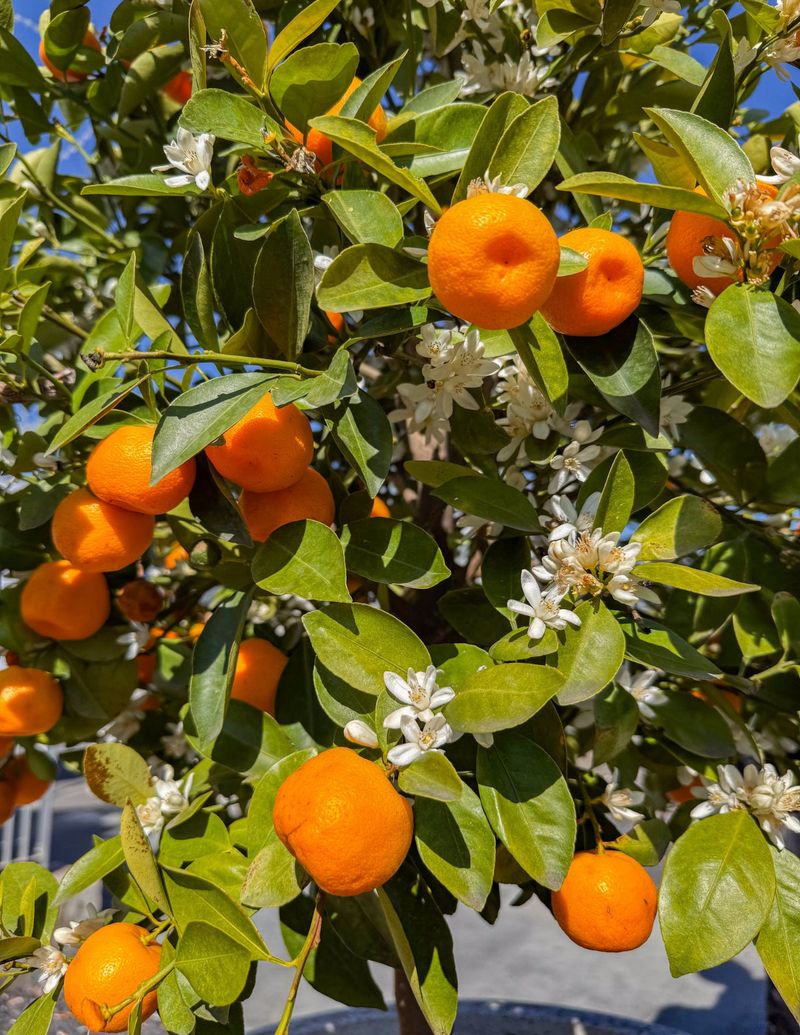
Kids absolutely love these trees, and honestly, adults do too. The Dwarf Satsuma Mandarin is one of the best mandarin choices for California patios because it is sweet, easy to peel, and more cold-tolerant than many other citrus varieties.
The fruit is small to medium-sized, juicy, usually seedless, and perfect for snacking straight off the branch. Satsumas are especially popular because the peel comes away so easily, making them one of the most convenient citrus fruits to grow at home.
Having one on your patio means fresh mandarins are always just a few steps away, no grocery run needed.
Satsuma trees adapt beautifully to containers and stay manageable with light pruning. Most dwarf trees remain compact enough for patios, balconies, and small backyards, especially when grown in a large pot.
The bright orange fruit against the dark green leaves also makes the tree look beautiful through fall and winter, right when the garden can use a little extra color.
Plant your Dwarf Satsuma Mandarin in a well-draining citrus mix inside a large container with drainage holes at the bottom. Place it somewhere sunny, ideally with at least six hours of direct sunlight each day.
Feed it with a citrus fertilizer in early spring and again during the growing season.
Regular watering is important, but overwatering is one of the easiest mistakes to make. Let the top layer of soil dry slightly before watering again.
In cooler areas, move the pot to a protected spot during cold snaps. With steady care, this tree can reward you with sweet, easy-peeling mandarins each fall and winter.
5. Dwarf Kumquat
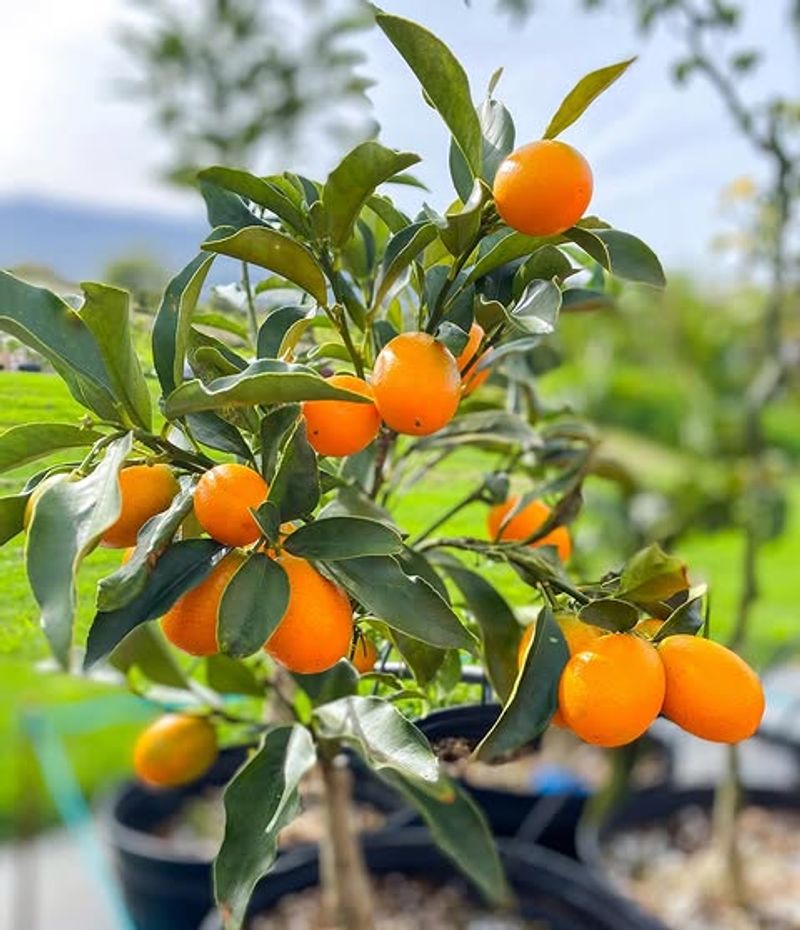
Most people have seen kumquats at the store but never tried one fresh off the tree. Unlike other citrus, you eat the whole thing, skin and all.
The sweet outer peel and tart inner flesh create a burst of flavor that is unlike anything else in the citrus world. Growing a Dwarf Kumquat on your patio gives you access to this quirky little fruit whenever you want it.
Kumquat trees are remarkably tough compared to other citrus varieties. They handle cooler temperatures better than lemons or limes, which makes them a great option for gardeners in higher elevation or northern parts of our state.
In containers, they typically stay between three and five feet tall. The trees are also quite ornamental, with clusters of tiny bright orange fruits hanging from the branches for weeks at a time.
A sunny patio spot with at least six hours of direct sunlight works best. Use well-draining soil and a pot large enough to support the root system comfortably.
Fertilize with a citrus blend every four to six weeks during the active growing season. Kumquats are relatively drought-tolerant once established, but consistent watering produces better fruit quality.
Light pruning after harvest keeps the shape tidy and encourages fresh growth for the next season.
6. Bonanza Miniature Peach
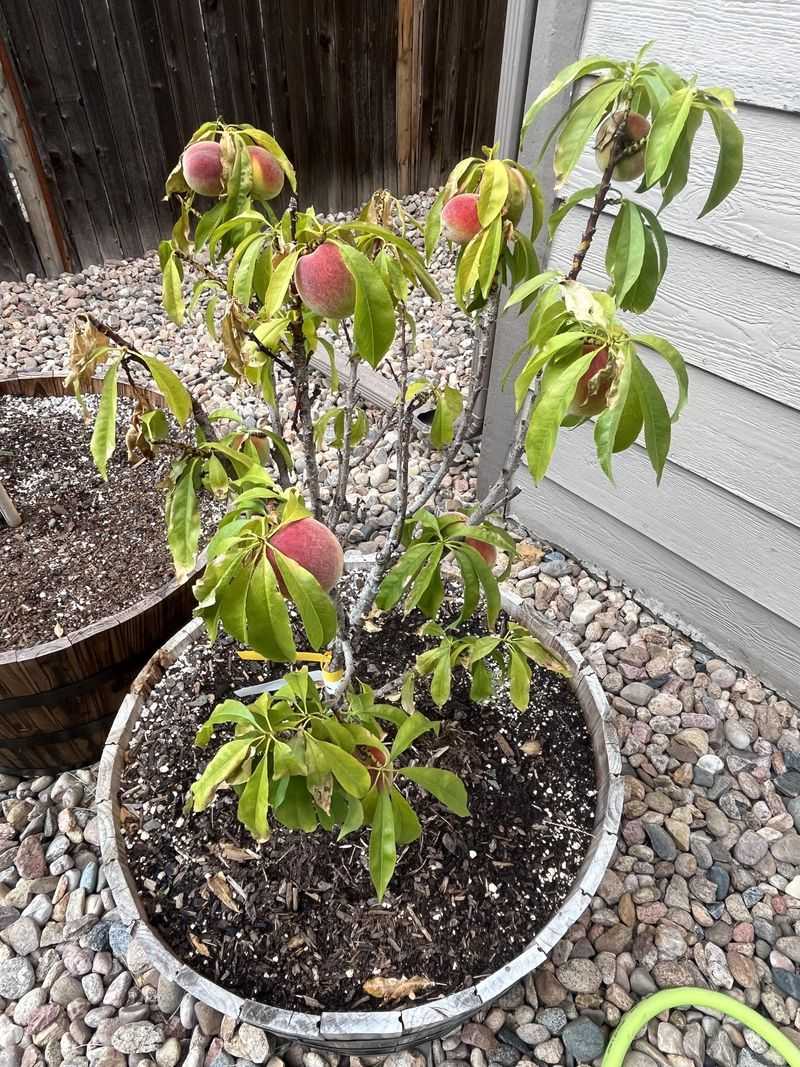
Peaches on a patio sound like a dream, but the Bonanza Miniature Peach makes it a reality. Bred specifically for container growing, this tree stays naturally small at just four to five feet tall without heavy pruning.
It produces full-sized, freestone peaches with a rich, sweet flavor that rivals anything you would find at a farmers market.
One of the most exciting things about this variety is how early it blooms. Bright pink blossoms appear in late winter or early spring, turning your patio into a showstopper before the rest of the garden wakes up.
The fruit follows in early summer, and the harvest window is generous enough to enjoy peaches fresh, in cobblers, or sliced over yogurt for weeks.
Bonanza peaches need full sun, at least six to eight hours daily, to produce their best fruit. Use a large container with excellent drainage and a quality potting mix.
These trees have a low chill-hour requirement, which suits the mild winters found across much of our state perfectly. Water regularly during the growing season and cut back slightly in winter.
Apply a balanced fruit tree fertilizer in early spring just as new growth begins. Thinning young fruit to about six inches apart on each branch helps produce larger, more flavorful peaches at harvest time.
7. Pix Zee Miniature Peach
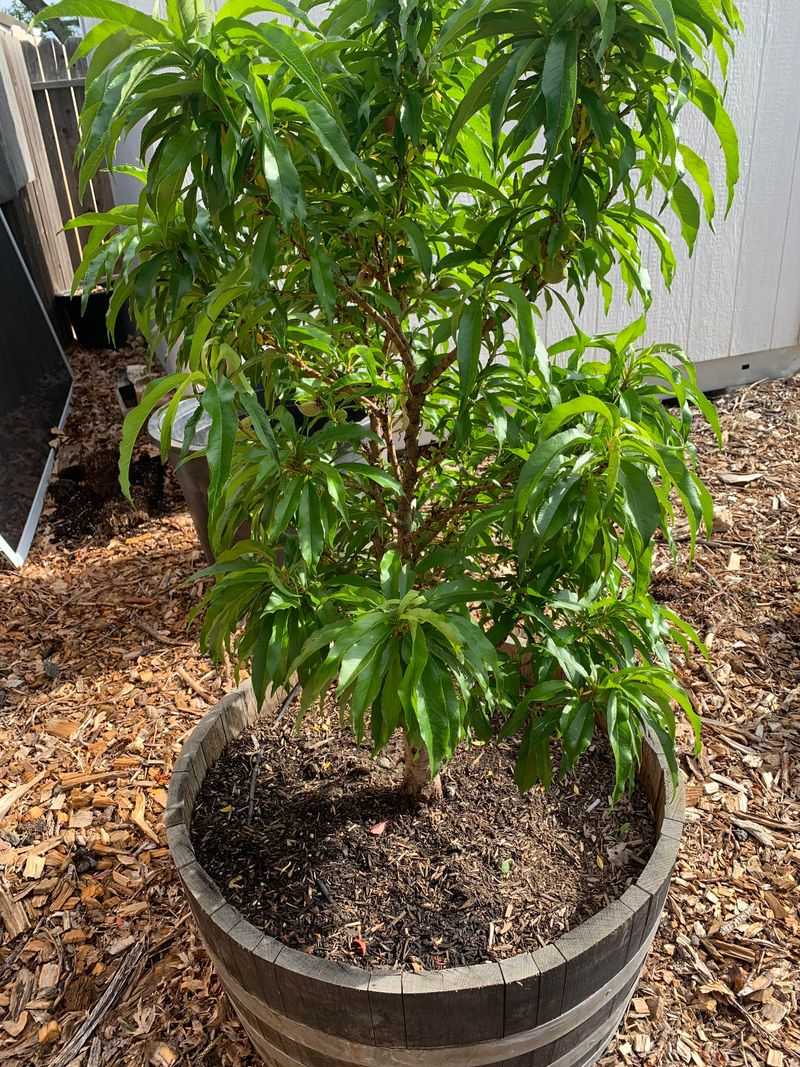
If you want a peach tree that practically takes care of itself, the Pix Zee Miniature Peach deserves a spot on your patio. This compact variety was developed with small spaces in mind.
It stays between three and four feet tall, making it one of the smallest fruiting peach trees available. Despite its tiny footprint, it produces an impressive crop of sweet, medium-sized peaches each summer.
Pix Zee is especially popular with beginner gardeners because of how easy it is to manage. The tree does not require a lot of pruning to stay in shape, and it adapts well to container life without much fuss.
The peaches have yellow flesh with a red-blushed skin, and the flavor is genuinely sweet and juicy. They ripen in midsummer, which makes for a fun harvest season on the patio.
Choose a pot that is at least fifteen to eighteen inches wide to give the roots enough room to spread. Full sun is essential, so pick the sunniest corner of your patio for this tree.
Water consistently and avoid letting the soil dry out completely during the growing season. A fruit tree fertilizer applied in early spring supports strong growth.
Pix Zee has a low chill-hour requirement, which means it performs well in the warmer coastal and inland areas of our state without issue.
8. Garden Gold Miniature Peach
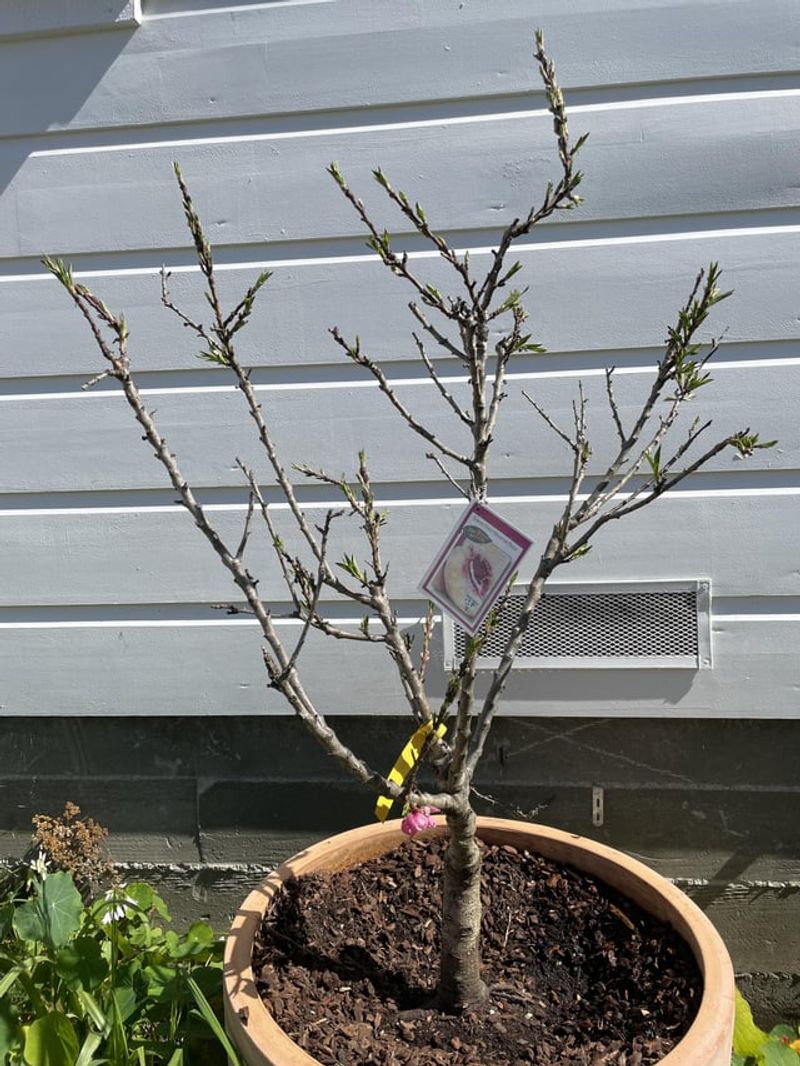
Yellow peaches have a warmth and sweetness that feels like summer in every bite. The Garden Gold Miniature Peach is a standout variety for patio gardeners who want that classic golden peach experience without needing a full-sized orchard tree.
It stays compact, usually around four to five feet, and produces beautiful yellow-fleshed freestone peaches that are absolutely worth the wait.
What sets Garden Gold apart from other miniature peaches is the quality of its fruit. The peaches are large for a dwarf tree, with smooth golden skin and sweet, firm flesh that holds up well for both fresh eating and cooking.
They ripen in mid to late summer, giving you a window to enjoy them fresh before turning any extras into jam, pie, or a simple peach crisp.
This variety thrives in our state’s warm, sunny climate. Plant it in a large container with good drainage and position it in a spot that receives at least seven to eight hours of direct sunlight.
Regular watering during the growing season is important, especially as the fruit begins to develop and swell. Fertilize with a balanced fruit tree formula in early spring.
Thin the fruit early in the season to improve size and flavor. Garden Gold also responds well to light pruning after harvest to keep the canopy open and encourage strong new growth the following year.
9. Nectar Babe Miniature Nectarine
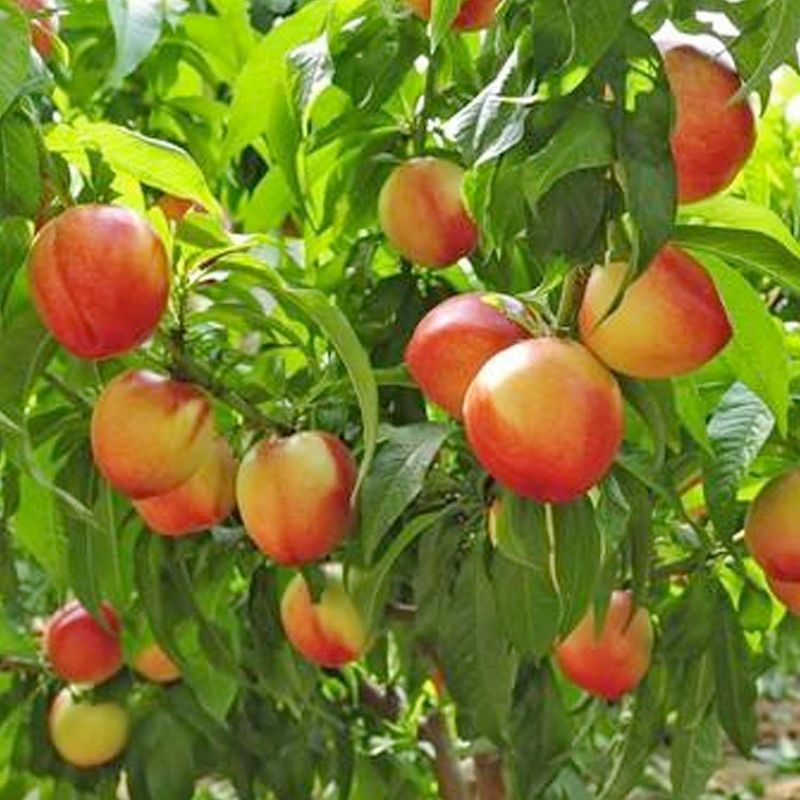
Nectarines are like peaches with a twist, smooth skin, slightly firmer flesh, and a flavor that leans a little more tangy and complex. The Nectar Babe Miniature Nectarine brings all of that character to a patio-friendly tree that rarely exceeds five feet in height.
It is a fantastic choice for anyone who loves stone fruit but has limited outdoor space to work with.
Nectar Babe produces medium-sized freestone nectarines with red and yellow skin and sweet, aromatic flesh. The fruit ripens in midsummer, usually around the same time as many peach varieties, so you can enjoy a mix of stone fruit from your patio all at once.
The tree is also quite attractive when in bloom, with soft pink blossoms that appear in late winter and signal the start of the growing season. One thing to keep in mind is that Nectar Babe does best with a pollination partner nearby.
Planting it near another compatible peach or nectarine, such as Honey Babe or a similar variety, will help improve fruit set and give you a more reliable harvest. If you only have room for one tree, this is worth planning for before you bring it home.
For best results, plant Nectar Babe in a container that is at least sixteen to eighteen inches wide. Full sun is essential for fruit development, so choose a spot with maximum light exposure.
Water deeply and consistently, especially during hot summer months when the fruit is sizing up. Apply a citrus and fruit tree fertilizer in early spring and again in early summer.
Nectar Babe has a moderate chill-hour requirement that fits well with the winter conditions found throughout most low-elevation areas of our state.
10. Necta Zee Miniature Nectarine
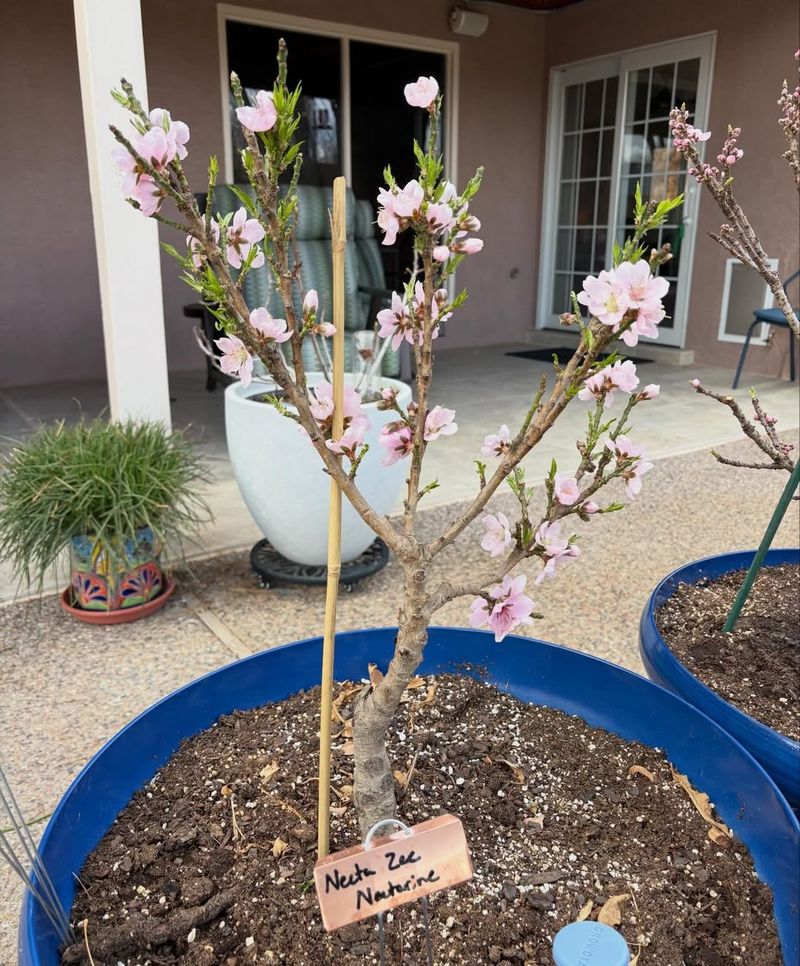
Sometimes the smallest trees produce the biggest surprises. The Necta Zee Miniature Nectarine is one of the tiniest fruit trees you can grow, topping out at just three to four feet tall.
Yet it reliably produces a generous crop of sweet, smooth-skinned nectarines every summer. For apartment balconies and compact patios, this tree is practically unbeatable.
The fruit itself is medium-sized with a deep red skin and yellow flesh that is sweet with just a hint of tartness. Necta Zee nectarines ripen in early to midsummer, a little earlier than many other stone fruit varieties.
That early harvest window is a real bonus for gardeners who are eager to enjoy homegrown fruit as soon as the warm weather arrives. The tree also looks gorgeous in bloom, with clusters of pink flowers that appear before the leaves in late winter.
Plant Necta Zee in a container at least fifteen inches wide with quality potting soil and good drainage. Position it in the sunniest part of your patio for the best fruit set.
Consistent watering is key during the growing season, but avoid waterlogged soil. Feed with a balanced fruit tree fertilizer in early spring.
Necta Zee has a low chill-hour requirement, making it well-suited to the mild winters common across coastal and valley areas of our state. Light pruning after harvest keeps the tree healthy and productive year after year.