The Hidden Pest Michigan Gardeners Should Check For When Tomato Leaves Disappear Overnight
Overnight, your tomato plants can lose entire branches without warning. Something sinister creeps through Michigan gardens after dark, leaving stripped stems and vanished leaves behind.
Nothing about this creature moves fast, yet it stays remarkably invisible. Michigan’s humid summers give it perfect cover, so you could stare directly at the vine and miss it.
Every leaf it touches vanishes within hours, not days, leaving your whole harvest exposed. Few threats move through Midwest gardens this fast or this quiet.
This intruder feeds constantly, growing larger with every bite, and damage like this rarely happens without a specific trigger. Ignoring these signs only makes the outcome worse.
Waiting a single day can decide if your harvest survives. Missing this signal for another day could cost your entire harvest.
What Overnight Leaf Loss Usually Points To
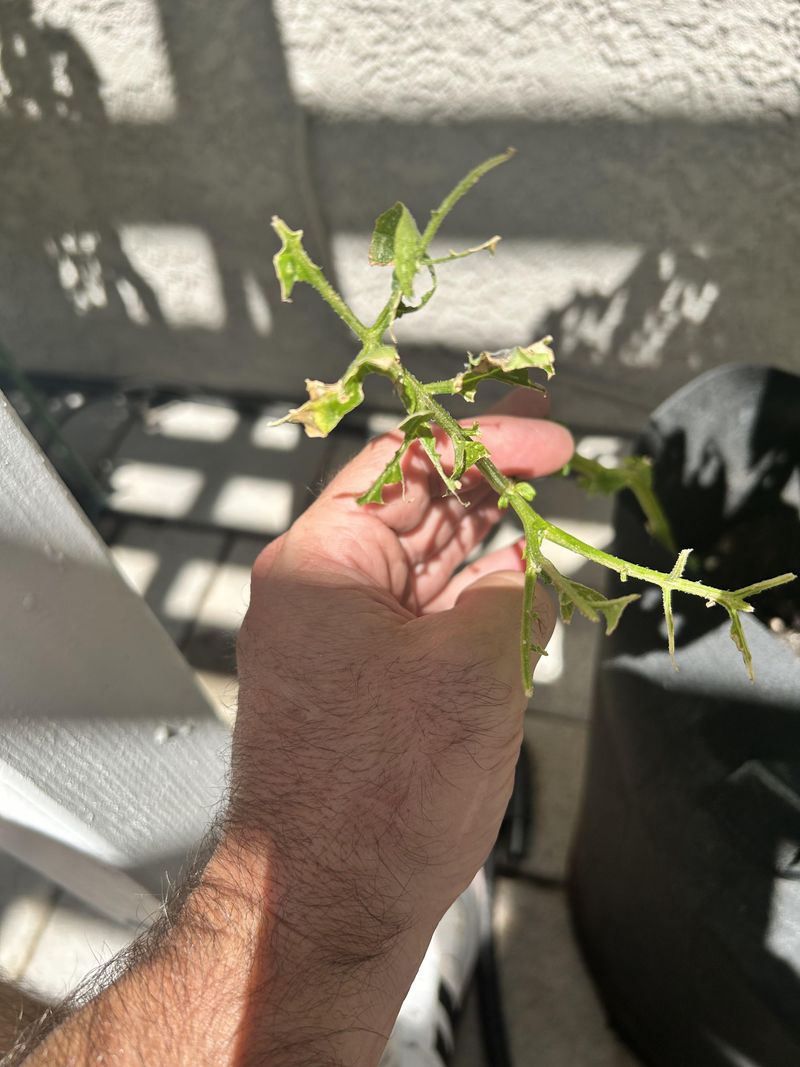
Bare stems where lush leaves used to be is a jarring sight. When tomato leaves disappear overnight, most Michigan gardeners immediately blame deer or rabbits.
Those animals do cause damage, but they rarely strip a plant this cleanly. Deer tend to tear leaves unevenly and leave ragged edges behind.
Rabbits usually chew lower growth and move on quickly. Neither one targets the mid-section of a tomato plant with surgical precision.
This caterpillar can grow up to four inches long and eats constantly, day and night. A single one can defoliate a large branch in just one evening, and when several hatch together, the damage looks almost unbelievable by morning.
Overnight leaf loss on tomatoes also sometimes points to cutworms or slugs, but those pests leave behind slime trails or cut stems at the base. Clean cuts, missing leaflets, and a bare central stem tell a very different story.
If your plant looked perfectly fine at sunset and looks devastated at sunrise, start your search at the base of the plant and work upward slowly.
Signs That Rule Out Other Common Causes
Not every pest leaves the same calling card. Knowing what hornworm damage does not look like helps you narrow things down fast.
Aphids cause yellowing and curling leaves, but they rarely strip an entire branch bare. Their damage builds slowly over several days, not overnight.
Flea beetles leave tiny round holes scattered across leaves. The plant looks peppered with punctures, which looks very different from missing whole leaflets.
Spider mites create a dusty, bronze discoloration on the foliage surface. You will also notice fine webbing on the undersides of affected leaves.
Whiteflies cluster visibly on leaf undersides and flutter up in a cloud when you disturb the plant. Their presence is hard to miss once you look closely.
Blights and fungal diseases cause brown or black spots and wilting. They spread gradually and do not remove leaf tissue entirely from the stem.
Wind damage tends to snap stems or shred leaves along their edges. It rarely causes the kind of complete, clean disappearance hornworms produce.
When the damage is fast, clean, and concentrated on one area of the plant, that pattern points clearly to a large feeding caterpillar. Few other common garden problems mimic that combination.
Your Michigan Garden Changes Every Week. Your Plan Should Too.
Gardening in Michigan changes quickly throughout the season. Every Friday you’ll receive a simple weekly plan showing exactly what to plant, prune, fertilize, harvest, and protect so you never miss the right timing.
Ruling out these alternatives takes only a few minutes of careful observation. Once you eliminate the obvious suspects, the hidden pest becomes much easier to find and confirm.
Where Tomato Hornworms Hide During The Day
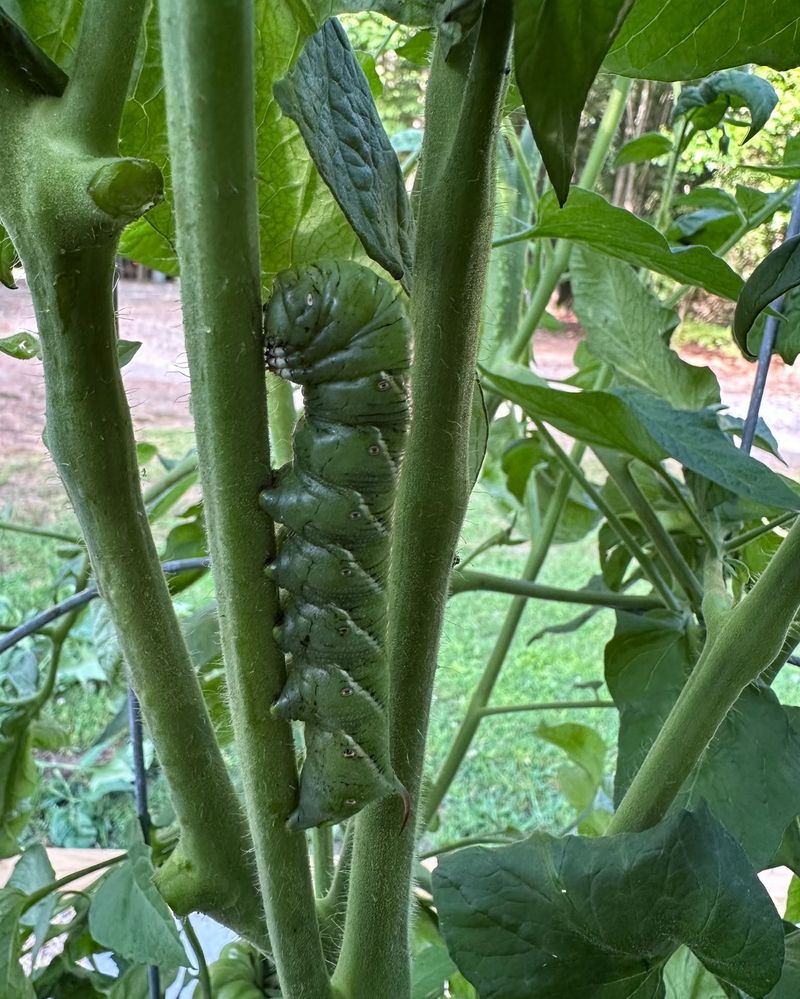
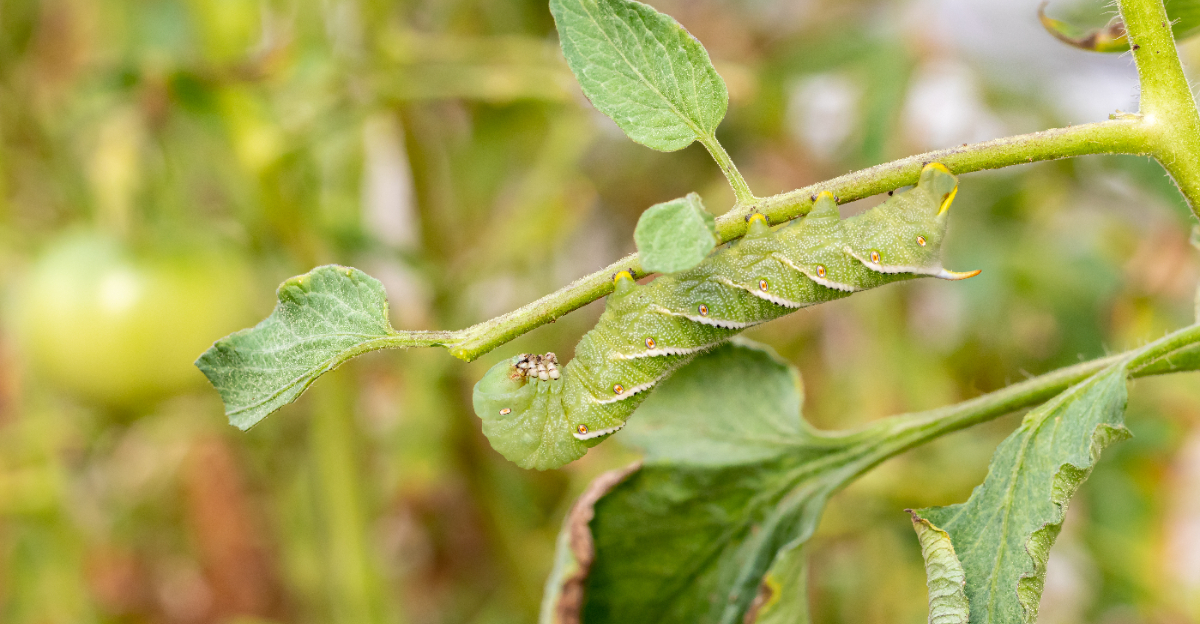
Finding a hornworm feels like searching for something invisible. These caterpillars are bright green with white diagonal stripes, matching tomato foliage almost perfectly.
During daylight hours, they press their bodies flat against stems and stay perfectly still. Movement is what gives most pests away, and hornworms know to avoid it.
Look along the thicker central stems first, not just on the leaves. Hornworms often wrap themselves around a main stem, making them look like a natural bump or swelling.
Check the underside of large leaves near the top of the plant. Younger hornworms tend to start feeding higher up where new, tender growth is most available.
As they grow larger, they move lower on the plant where stems are sturdier. A four-inch hornworm is heavy and needs solid support while it rests.
Scan slowly and look for anything that breaks the natural pattern of the plant. A hornworm at rest will have a slightly different texture than a real stem.
Their signature feature is a curved horn at the tail end. That small red or black spike is often the first thing you spot when you finally locate one.
Try inspecting your plants early in the morning or just after dusk. At those times, hornworms are more active and slightly easier to spot against the foliage.
Patience pays off here. Once your eyes learn what to look for, you will start spotting them much faster on future checks.
Damage Patterns That Confirm Its Presence
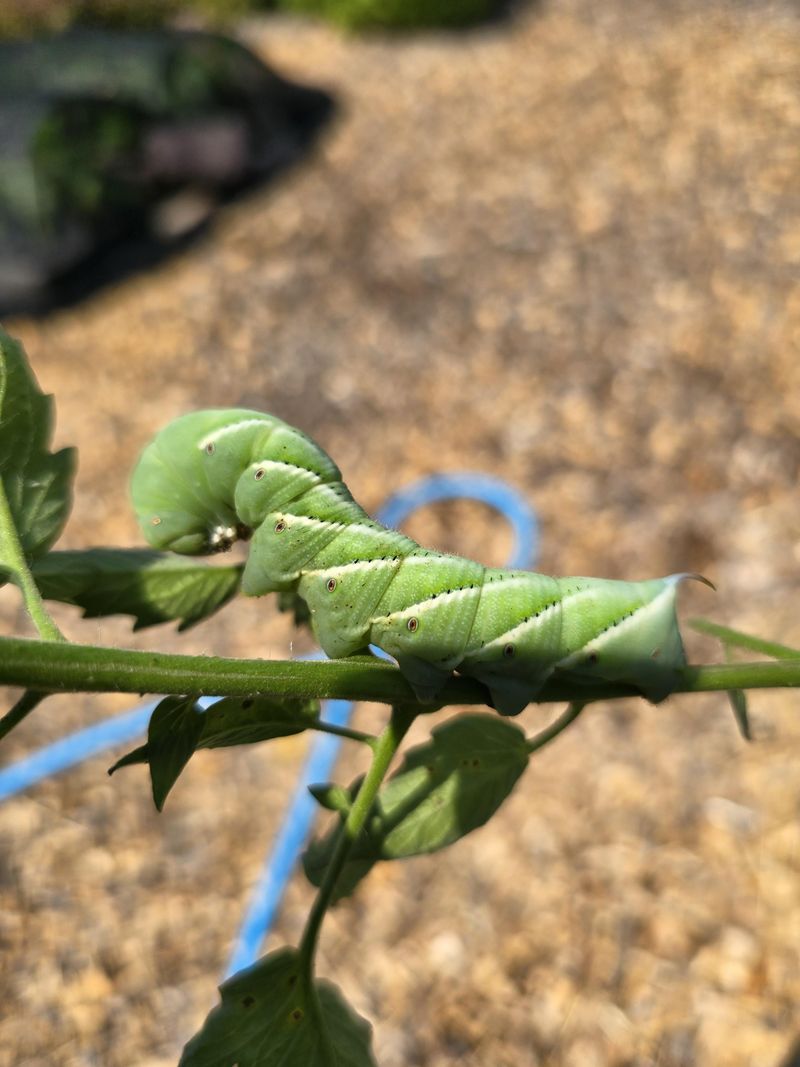
Even when you cannot see the hornworm itself, it leaves behind clear evidence. Knowing these clues speeds up your search considerably.
The most reliable sign is frass, which is the dark green or black droppings hornworms leave behind. These pellets are surprisingly large, about the size of a small pea.
Look for frass on the leaves below the feeding area or scattered on the soil at the base of the plant. A fresh pile of frass means the hornworm is still nearby and active.
Stripped stems are another clear giveaway. When only the central rib of a leaf remains and all the leaflets are gone, a hornworm fed there recently.
Sometimes you will find partially eaten fruit as well. Hornworms occasionally chew into green tomatoes, leaving shallow, irregular gouges on the surface.
The damage tends to cluster in one section of the plant before spreading. This concentrated pattern differs from diseases, which spread more evenly across the whole plant.
Look for wilting on a single branch while the rest of the plant stays healthy. A hornworm feeding heavily on one area can stress that branch into drooping.
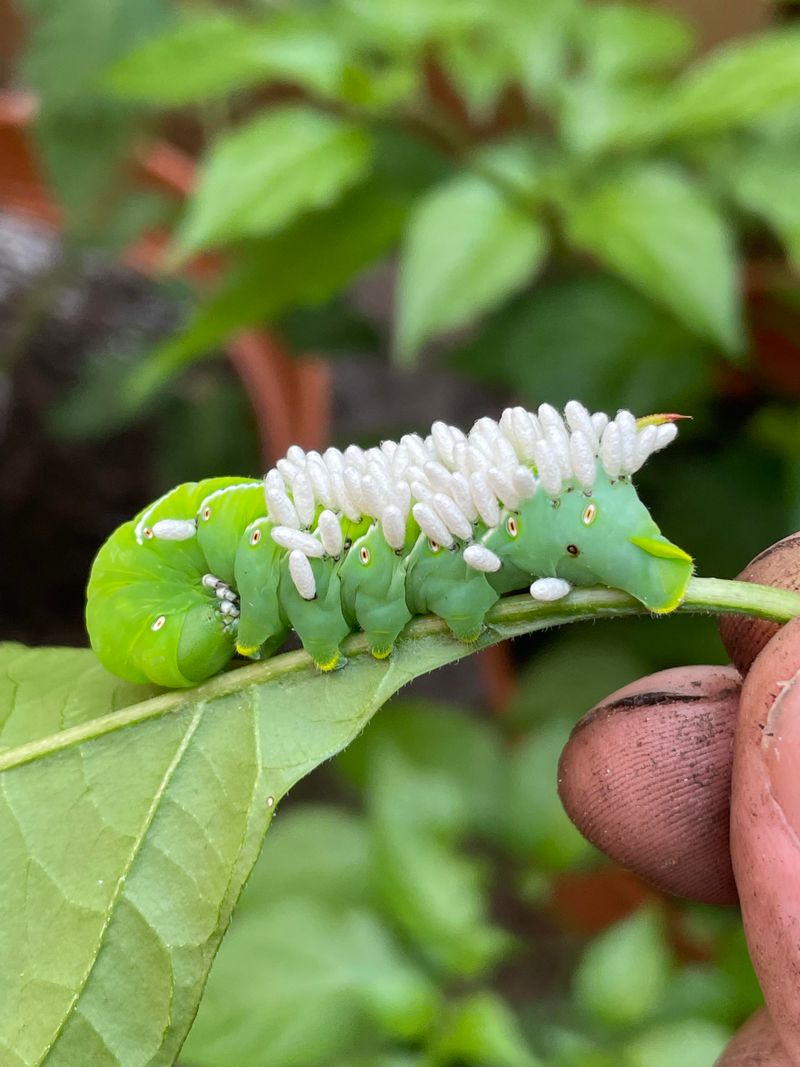
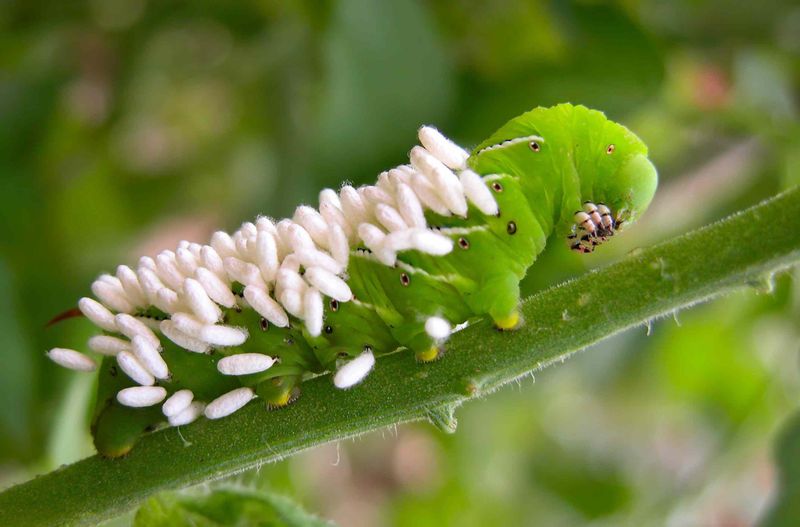
White oval cocoons attached to a hornworm’s back are also a positive ID. Those are parasitic wasp eggs, and they actually signal that nature is already fighting back for you.
Spotting any one of these signs confirms the hidden pest is present. Act quickly, because the damage compounds fast with each passing night.
Effective Ways To Remove Them From Plants
Catching hornworms feels oddly satisfying once you spot one. Hand-picking is the most direct method and works extremely well for small infestations.
Wear gloves if you prefer, though hornworms are harmless to touch. Drop each one into a bucket of soapy water to prevent it from crawling back.
A UV blacklight flashlight makes evening searches far easier. Hornworms glow bright blue-green under ultraviolet light, making them easy to spot even in dense foliage.
Bacillus thuringiensis, commonly called Bt, is a natural soil bacteria that targets caterpillars specifically. Spray it directly on your tomato plants and hornworms ingest it while feeding.
Bt breaks down their digestive system without harming birds, bees, or most other beneficial insects. It is widely available at garden centers and is approved for organic gardening.
Spinosad is another organic option that works well against hornworms. It acts quickly and is safe for most pollinators when applied in the evening after bees have returned to their hives.
Avoid broad-spectrum chemical sprays whenever possible. Those products also harm the beneficial wasps that naturally parasitize hornworm populations over time.
If you find a hornworm covered in white cocoons, leave it alone. Those cocoons belong to braconid wasps, and removing the caterpillar would destroy the next generation of natural predators.
Consistency matters most during peak season. Michigan gardeners should check their plants every two to three days throughout July and August for the best control results.
Preventing Repeat Damage Next Season
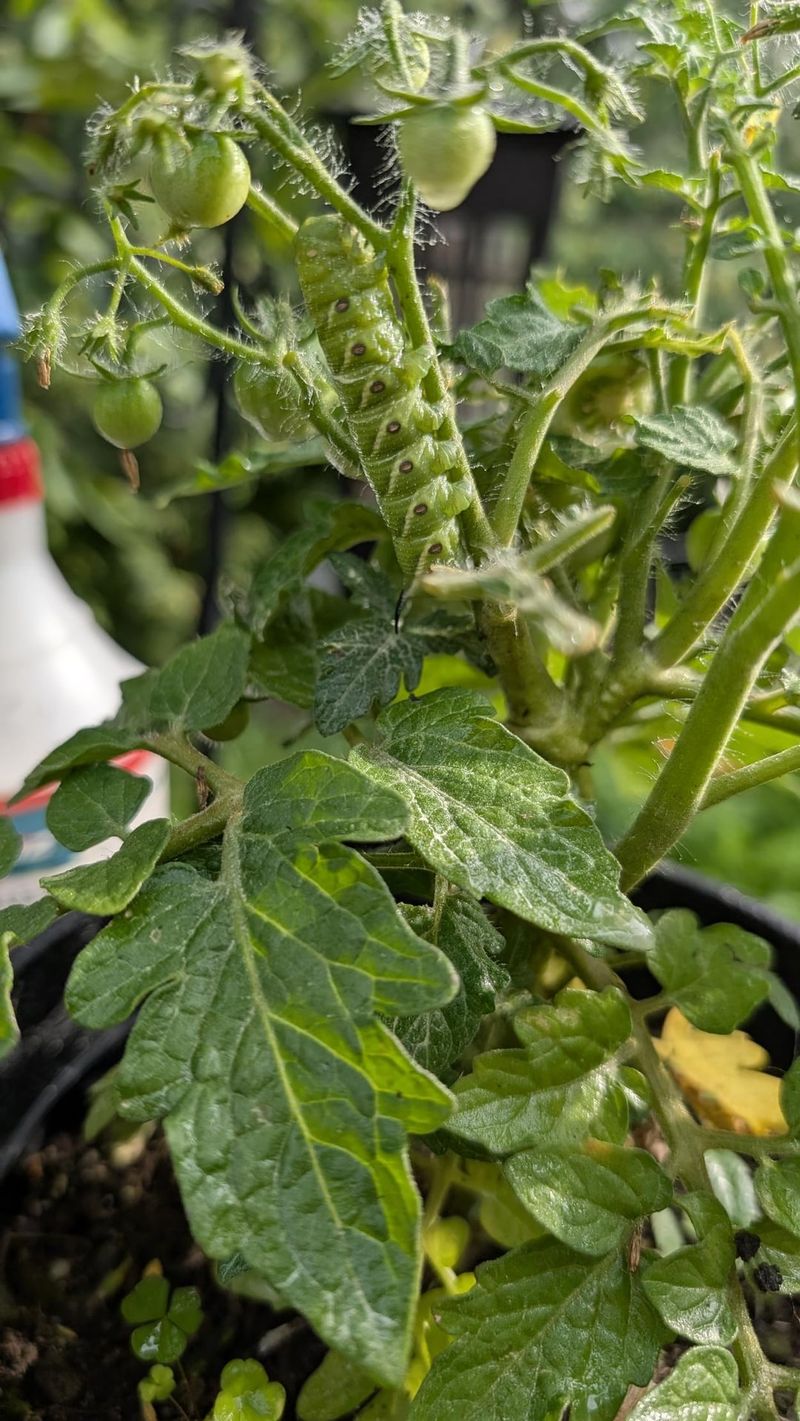
Getting rid of hornworms this year is only half the job. Taking steps now sets you up for a much easier growing season next time around.
Tomato hornworms overwinter as brown pupae buried several inches below the soil surface. Tilling your Michigan garden beds in fall and again in early spring exposes these pupae to birds and freezing temperatures.
Birds like robins and starlings actively hunt for exposed pupae. Tilling essentially turns your garden into a free buffet for your local bird population.
Rotate your tomato crops each year to a different section of the garden. Hornworm pupae from last season are concentrated where tomatoes grew before, so moving the crop disrupts their cycle.
Planting companion plants nearby can also reduce hornworm pressure over time. Basil, dill, and marigolds attract beneficial insects that prey on hornworm eggs and young caterpillars.
Dill and fennel are especially effective because they draw in braconid wasps, the same natural predators that parasitize hornworms. Having these plants nearby creates a built-in defense system.
Inspect transplants carefully before putting them in the ground. Hornworm eggs are tiny and pale, often laid singly on leaf undersides, and removing them early prevents the whole cycle.
Covering young plants with lightweight row cover fabric keeps adult moths from laying eggs in the first place. Remove the cover once plants begin flowering so pollinators can access the blooms.
Prevention combined with early detection is the most powerful approach. Michigan gardeners who stay consistent rarely face the shock of finding tomato leaves disappear overnight two summers in a row.