What’s Actually Happening Underground When Mushrooms Appear
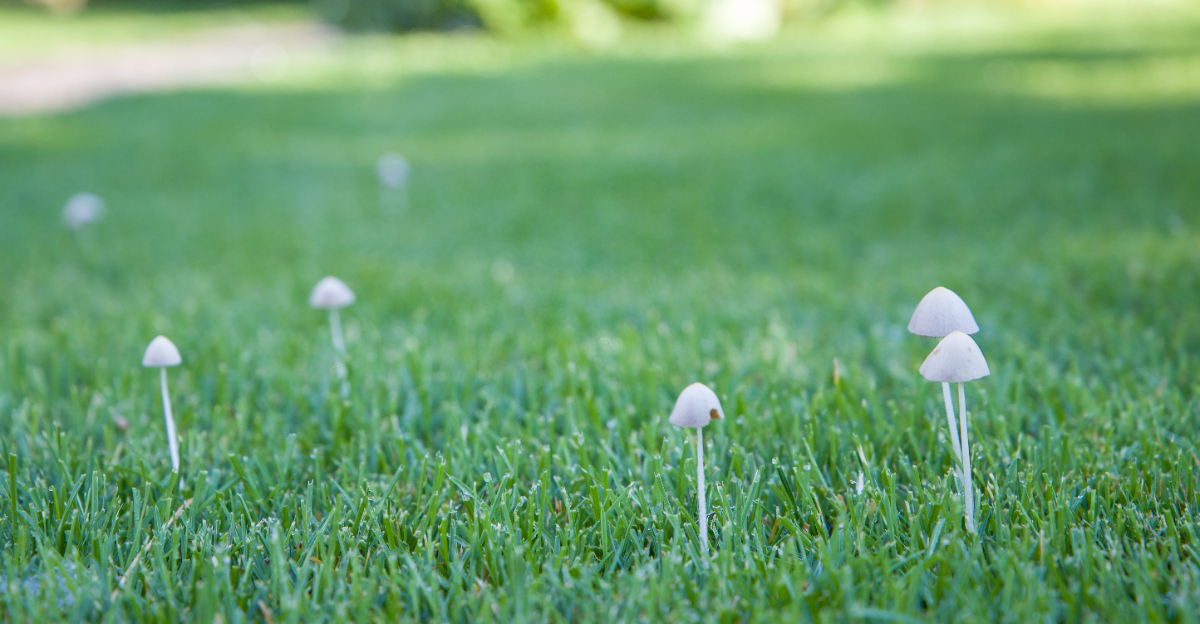
Overnight, a patch of white mushrooms appeared across your lawn. Nothing about their sudden arrival means your yard is failing. Indiana soil often produces this exact reaction after heavy rain.
Rain feeds fungal networks hidden beneath the grass you walk on daily. Moisture and buried organic matter give those networks exactly what they need. Underground, decomposition rarely stops, even when everything looks calm above.
Homeowners across Indiana panic instead of asking simple questions. Most white mushrooms signal a soil ecosystem quietly doing its job. Roots benefit more than most people expect from this hidden activity.
Still, mushrooms raise real questions about watering habits, drainage, and long-term lawn health. Answers exist, and they’re more specific than generic advice you’ve probably already heard.
Your Soil Is Breaking Down Hidden Organic Matter
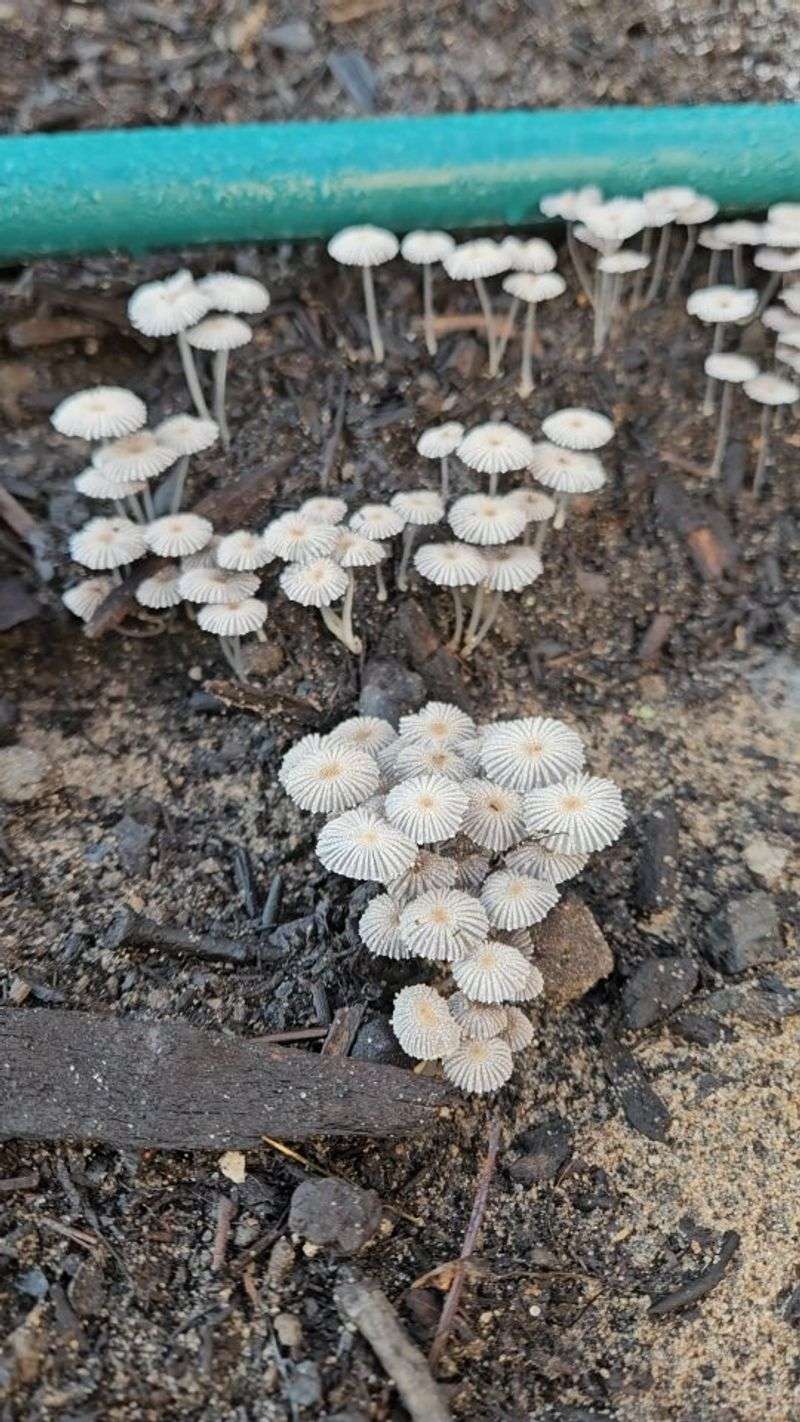
Mushrooms are nature’s cleanup crew, working quietly beneath your feet. When you spot white mushrooms in your lawn, it almost always means your soil is actively breaking down buried organic matter.
Old tree roots, decomposed wood chips, and buried debris are common culprits. Fungi send out thread-like structures called mycelium to digest this hidden material.
Think of mycelium as a massive underground web. It spreads through soil and breaks down tough materials that bacteria alone cannot handle.
This process actually benefits your grass in a big way. As organic matter breaks down, it releases nutrients directly into the soil around your turf roots.
Nitrogen, phosphorus, and other minerals become available to your lawn. Your grass quietly absorbs these nutrients while the fungi do all the heavy lifting underground.
White mushrooms in your lawn are a visible clue that this process is happening. They are the fruiting bodies of fungi, similar to how an apple is the fruit of a tree.
The real organism lives underground and can span several feet in diameter. What you see above ground is just a small fraction of the action happening below.
Homeowners often wonder if they need to remove buried debris to stop mushrooms from returning. Removing the organic source is the most effective long-term solution.
If an old stump or root system is feeding the fungi, grinding it out will eventually stop new mushrooms from forming. Patience is key because this breakdown process can take years to complete.
Signs This Growth Is Harmless To Grass
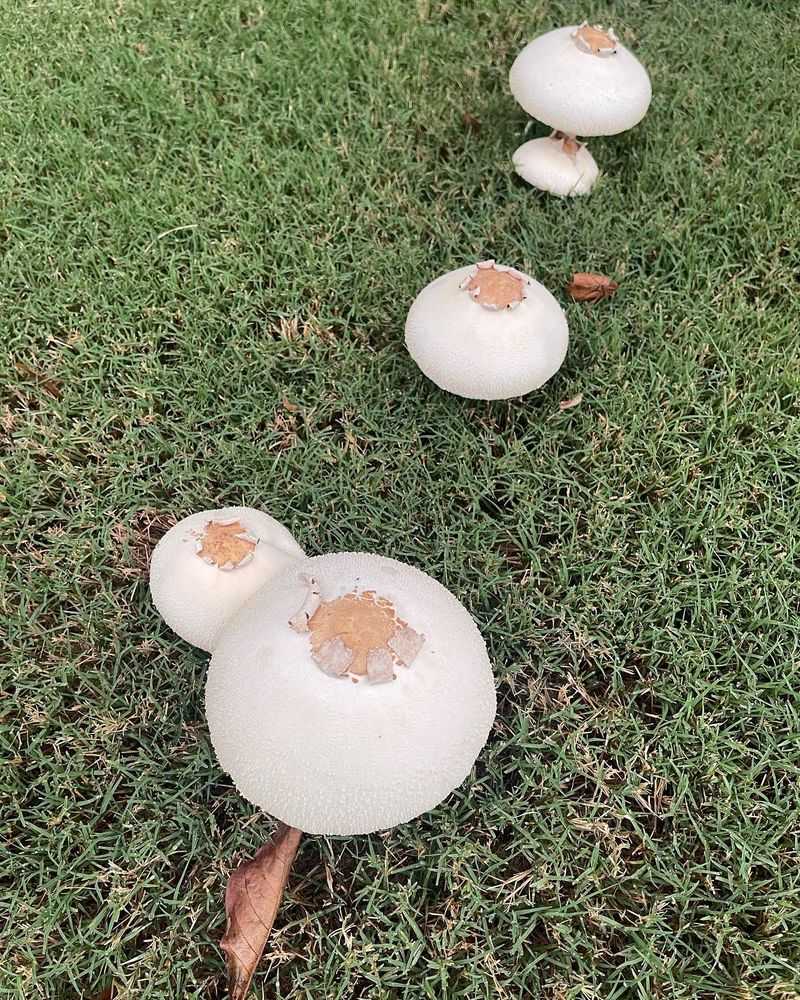
Not every mushroom in your yard is a red flag worth worrying over. Many white mushrooms are largely harmless to your grass and surrounding plants.
One of the clearest signs of harmless growth is when your grass stays green and full around the mushrooms. Healthy turf right next to a mushroom cluster is a strong indicator of no damage.
Harmful fungi typically cause brown patches, lifeless rings, or wilted grass blades nearby. If your lawn looks vibrant and lush, the mushrooms are likely just passing through.
Fairy rings are a well-known example of mostly harmless fungal activity. They appear as circles or arcs of mushrooms in the grass, sometimes with darker green turf inside the ring.
The darker green color happens because the fungi release nitrogen as they break down organic matter. Your lawn is essentially getting a free, localized fertilizer treatment.
Some fairy rings do cause dry patches or barren zones in severe cases. However, mild fairy rings with no grass damage are generally considered a cosmetic issue, not a lawn health crisis.
Another harmless sign is when mushrooms appear only after heavy rain. Moisture triggers fruiting, and once conditions dry out, the mushrooms disappear on their own within days.
Seasonal mushrooms that come and go without causing lasting damage are usually benign. Keeping an eye on your grass health over a few weeks will tell you everything you need to know.
White mushrooms on your lawn are rarely a reason to stress about your turf’s future.
Conditions That Encourage Mushroom Formation
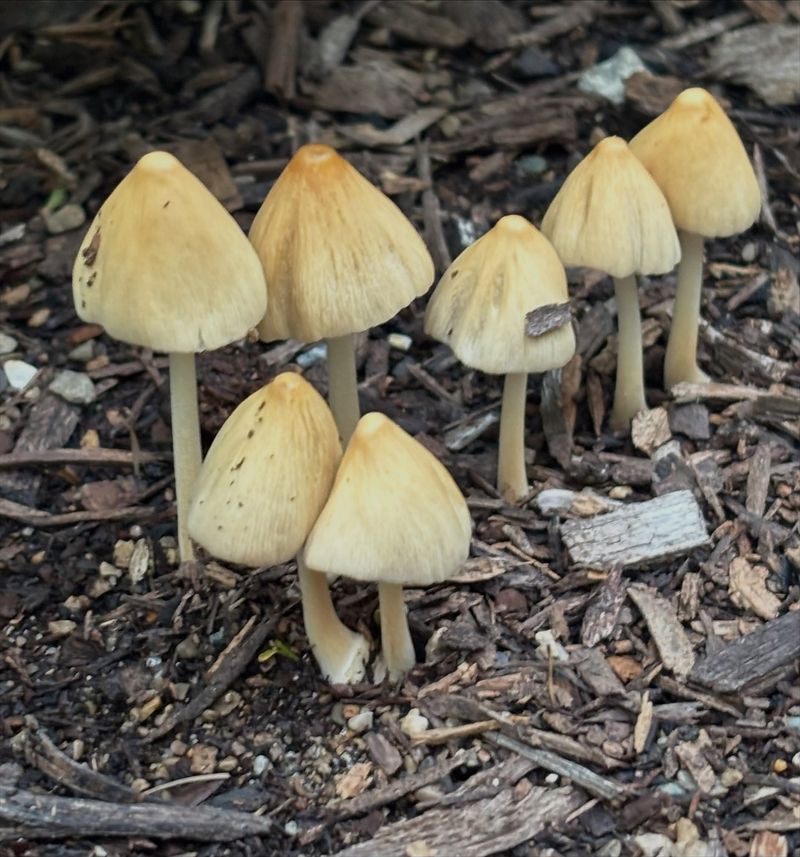
Fungi love specific conditions, and your lawn may be offering exactly what they need. Moisture, shade, and organic debris create the perfect environment for mushroom growth.
Warm temperatures combined with high humidity are a powerful trigger. After a stretch of rainy days, mushrooms can appear almost overnight across your yard.
Shaded areas hold moisture longer than sunny spots. Grass growing under trees or along fence lines is especially prone to mushroom clusters because the soil stays damp longer.
Compacted soil also plays a surprising role in fungal growth. When soil is packed tight, water pools on the surface instead of draining properly, creating wet pockets fungi love.
Thatch buildup is another major factor that homeowners often overlook. A thick layer of thatch traps moisture close to the soil surface, giving fungi a cozy, wet environment to thrive in.
Clay-heavy soils drain slowly by nature, making them more vulnerable to persistent mushroom growth. Sandy soils, on the other hand, drain quickly and tend to see fewer mushroom outbreaks.
Seasonal patterns matter too. Spring and fall are peak mushroom seasons in most parts of the country because temperatures are mild and rainfall is more frequent.
Summer heat usually slows fungal activity unless irrigation keeps the soil consistently wet. Overwatering during dry months can accidentally recreate the same damp conditions that spring rain provides naturally.
Recognizing these triggers is the first step toward managing white mushrooms on your lawn with confidence and less frustration.
Lawn Care Habits That Increase Their Appearance
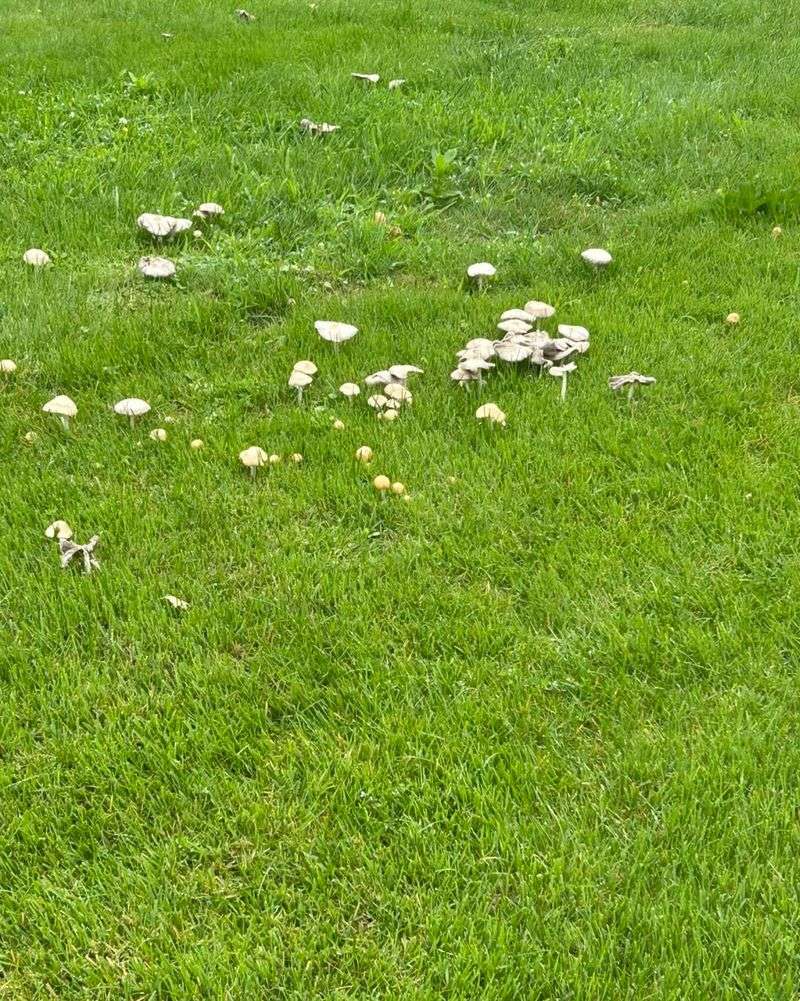
Your daily lawn care routine might be quietly encouraging more mushroom growth than you realize. A few common habits create exactly the conditions fungi need to thrive.
Overwatering is the most frequent mistake homeowners make. Watering too often keeps soil perpetually damp, which is basically a welcome mat for fungal activity.
Most lawns only need about one inch of water per week. Giving your grass more than that without allowing proper drying time creates a moisture surplus fungi will eagerly exploit.
Watering late in the evening is another habit that compounds the problem. Grass stays wet overnight with no sun to evaporate the moisture, keeping the soil damp for hours longer than necessary.
Skipping aeration is a subtle but significant contributor to mushroom growth. Without regular aeration, soil compacts over time and holds water instead of letting it drain through.
Heavy mulching around garden beds near your lawn can also spread fungal spores. Mulch retains moisture and contains organic material, which is exactly what fungi feed on underground.
Leaving grass clippings in thick mats after mowing creates another food source for fungi. Thin layers of clippings are fine, but heavy clumps sitting on the soil surface add organic debris that breaks down slowly.
Infrequent dethatching allows a thick layer to build up over time. A half-inch or more of thatch creates a spongy, wet barrier that traps spores and moisture close to the soil.
Small routine changes can meaningfully reduce how often white mushrooms pop up across your lawn.
Removing Mushrooms Without Damaging Grass
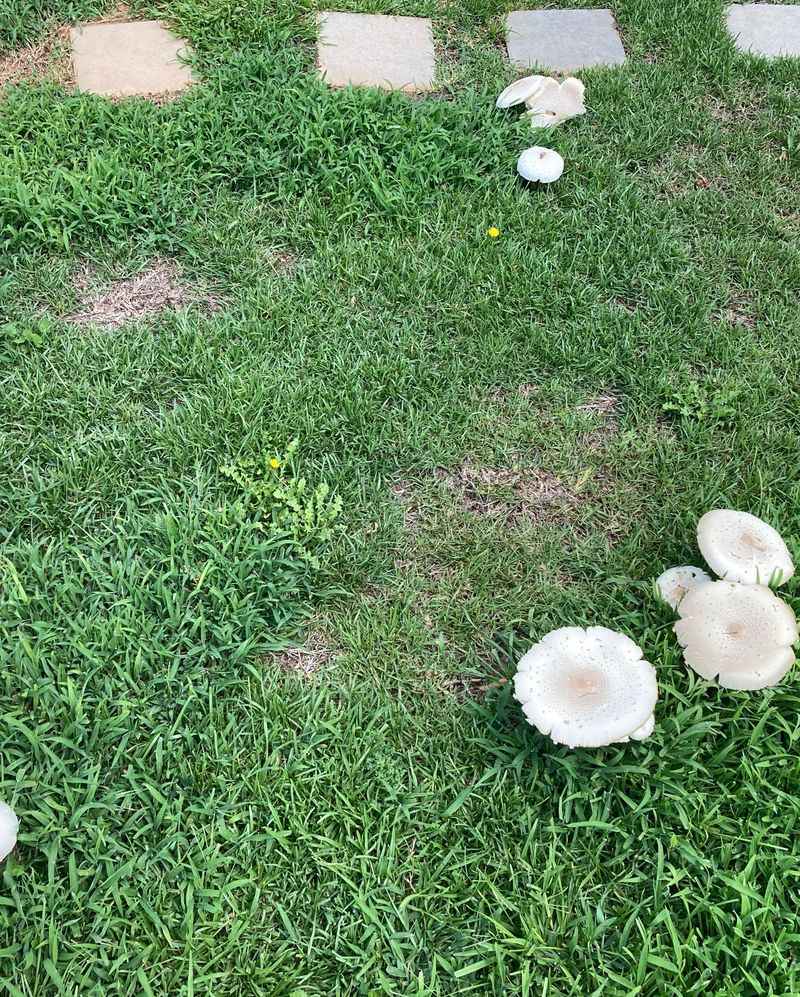
Spotted a fresh cluster of white mushrooms and want them gone fast? Removal is simple when you know the right approach.
The easiest method is to hand-pick them while wearing gloves. Grab each mushroom at the base and twist gently to pull it free from the soil.
Avoid pulling so hard that you tear up chunks of turf around the base. A clean, careful twist keeps your grass intact and removes the mushroom in one piece.
Place removed mushrooms directly into a sealed plastic bag. Tossing them loosely into a compost bin can spread spores and lead to even more mushrooms popping up later.
Some homeowners use a lawn rake to knock over mushrooms quickly across a large area. This works for surface cleanup but does not remove the mycelium network growing below.
Fungicides are rarely the right answer for typical lawn mushrooms. Most over-the-counter fungicides do not effectively penetrate deep enough to disrupt the underground mycelium network.
Dish soap mixed with water is a popular home remedy that some gardeners swear by. Poking holes in the soil and pouring the soapy solution in can disrupt fungal activity in that spot.
Mowing over mushrooms is tempting but can backfire quickly. Mower blades scatter spores across a wide area, potentially spreading growth to new spots in your yard.
Consistent removal combined with addressing the underlying moisture or organic matter issue gives you the best long-term results against white mushrooms on your lawn.
Long Term Prevention Through Better Drainage
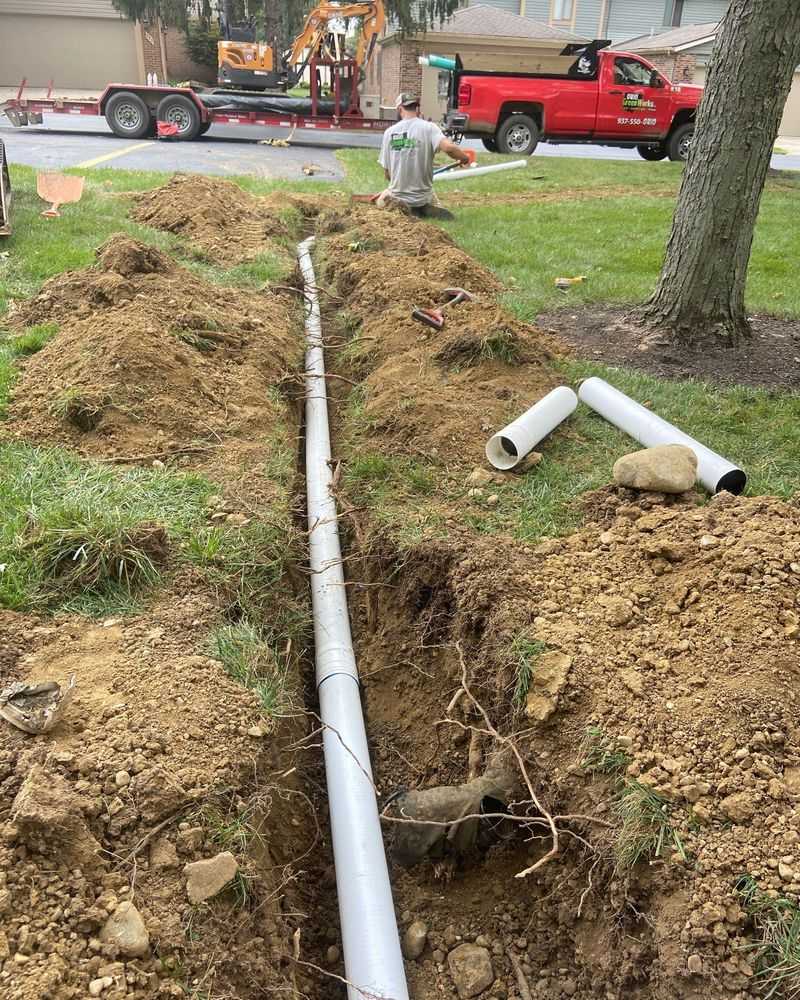
Fixing drainage is the most powerful long-term strategy against recurring mushroom growth. When water moves through your soil efficiently, fungi have far less opportunity to establish themselves.
Core aeration is one of the best tools available to most homeowners. It pulls small plugs of soil out of the ground, opening up channels for water to drain and air to circulate.
Aerating once or twice a year makes a noticeable difference in how quickly your lawn dries after rain. Drier soil between waterings gives fungi far less time to develop and fruit.
Topdressing with sand after aeration improves drainage in clay-heavy soils over time. A thin layer of coarse sand worked into aeration holes gradually changes the soil composition for the better.
Grading your lawn to eliminate low spots is another smart move. Flat or sunken areas collect standing water after rain, and that pooled moisture is a direct invitation for fungal growth.
French drains are worth considering if you have persistent wet zones that aeration alone cannot fix. These underground drainage channels redirect water away from problem areas efficiently.
Trimming overhanging tree branches increases sunlight reaching the soil surface. More sun means faster drying, which disrupts the damp conditions that encourage mushroom growth under shaded sections.
Adjusting your irrigation schedule to water in the early morning gives your lawn the full day to dry before nightfall. Small scheduling changes like this add up to significantly drier soil over weeks.
Consistent drainage improvements are your best defense against white mushrooms returning to your lawn season after season.