Why You May Start Seeing More American Kestrels In Georgia This Fall
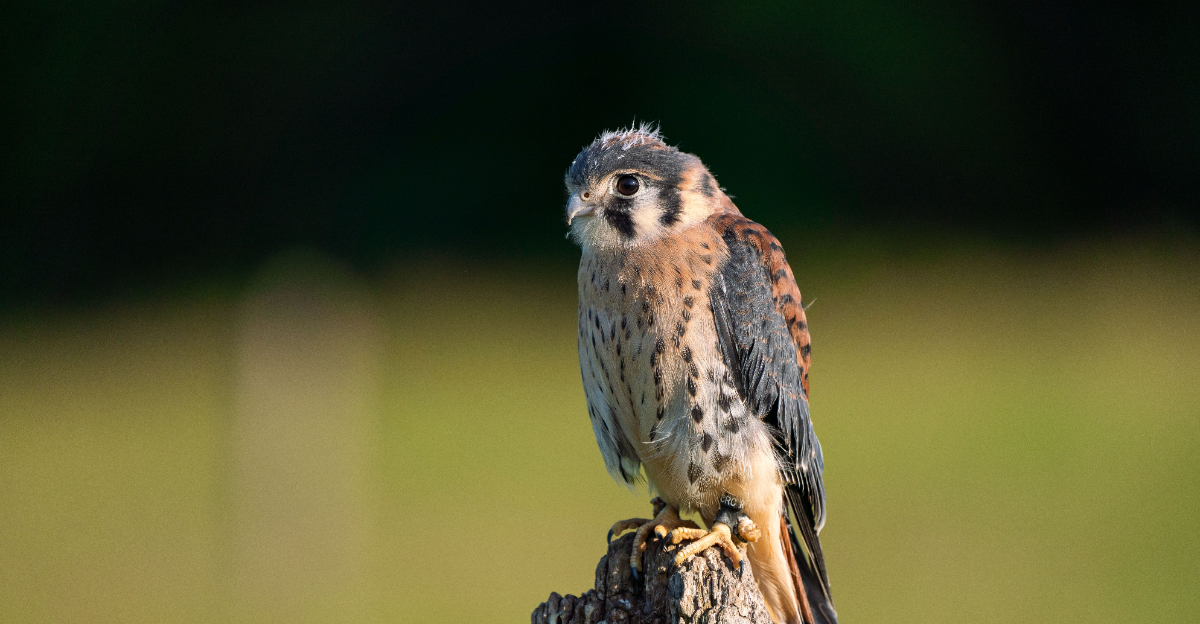
Watch the power lines and fence posts a little more closely once fall begins. That small falcon perched above an open field might be an American kestrel watching the ground for its next meal.
These colorful birds are present in Georgia, but fall can bring noticeable changes in where and how often you spot them. Migrating kestrels from farther north may join birds already living across the state.
That seasonal movement can make familiar hunting spots suddenly seem much busier. Open fields, roadsides, and other clear areas give kestrels useful places to search from above.
You do not need a special birding trip to catch the action.
Knowing where these tiny falcons like to perch makes them much easier to notice.
Fall may bring your best chance to spot one close to home.
1. Fall Makes American Kestrels Easier To Spot
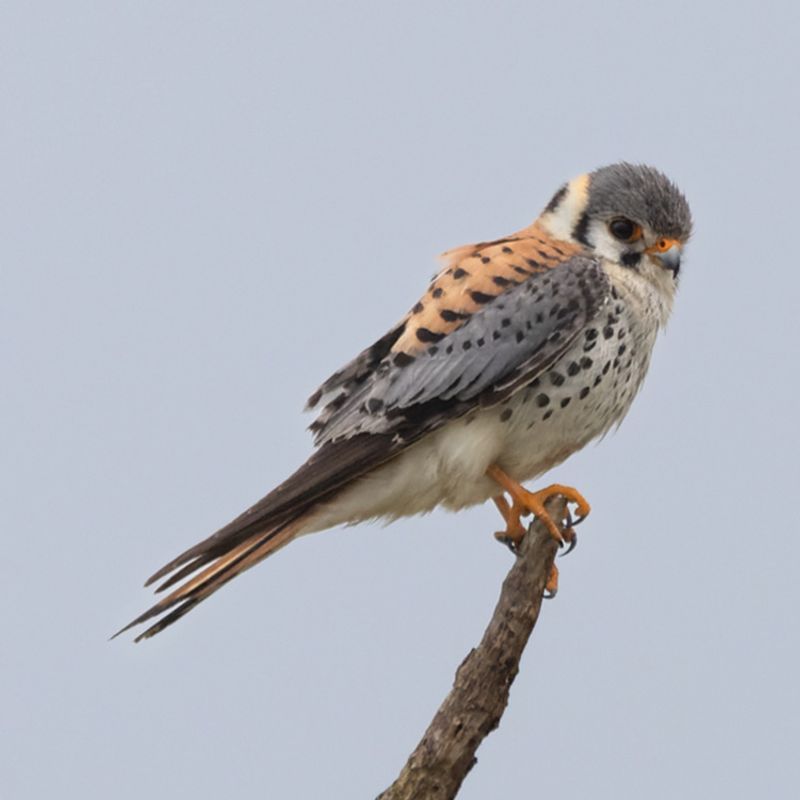
Leaves falling off trees is actually great news for birdwatchers. Once the canopy thins out in autumn, small birds of prey like American Kestrels become far easier to see from the road or a trail.
Kestrels tend to perch up high on open branches, utility lines, and fence posts. Without dense summer foliage blocking the view, spotting them becomes much simpler.
You can often catch one hovering in place above a field, scanning the ground below for movement.
Cooler temperatures also change how active these birds are throughout the day. During summer heat, raptors often rest during midday.
Fall weather keeps them hunting at more predictable hours, which means more chances for you to observe them.
Open rural roads, farm edges, and highway medians in Georgia are great places to look. Slow down near open grassy areas and scan fence lines carefully.
Kestrels are small, so patience pays off.
Once you learn what to look for, a kestrel sighting goes from a lucky accident to a regular fall treat. Fall basically hands you a clearer window into their world.
2. Migrating Birds Arrive From Areas Farther North
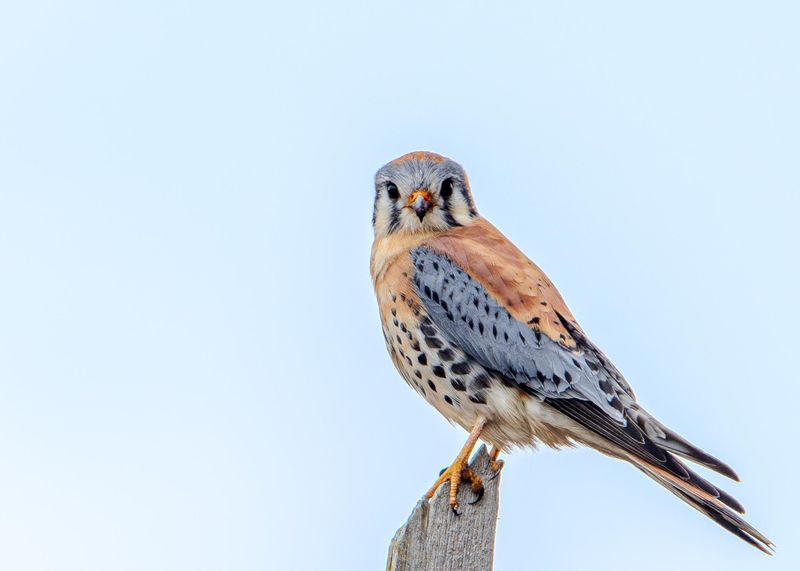
Not every kestrel you see in fall was born nearby. Many of them have traveled from breeding grounds farther north, including states like Michigan, Ohio, and parts of Canada.
American Kestrels follow a loosely defined migration pattern each fall. They move south as temperatures drop and food becomes harder to find up north.
Georgia sits in a comfortable position along that southward path, making it a natural stopping point or wintering ground for many birds.
Migration timing can vary by individual bird and weather patterns. Most kestrels tend to pass through or settle in during October and November.
Some arrive earlier if cold snaps push them south ahead of schedule.
Watching hawk migration hotspots can help you catch this movement firsthand. Elevated ridges and open coastlines sometimes funnel migrating raptors into visible streams.
A good pair of binoculars and a clear morning can turn into a memorable experience.
Migratory arrivals essentially add to the local kestrel population that may already be present. So fall ends up giving you more birds across more locations.
Your Georgia Garden Changes Every Week. Your Plan Should Too.
Gardening in Georgia changes quickly throughout the season. Every Friday you’ll receive a simple weekly plan showing exactly what to plant, prune, fertilize, harvest, and protect so you never miss the right timing.
That overlap of residents and travelers makes autumn a genuinely productive season for spotting these compact falcons across the region.
3. Wide Open Spaces Give Them Room To Hunt
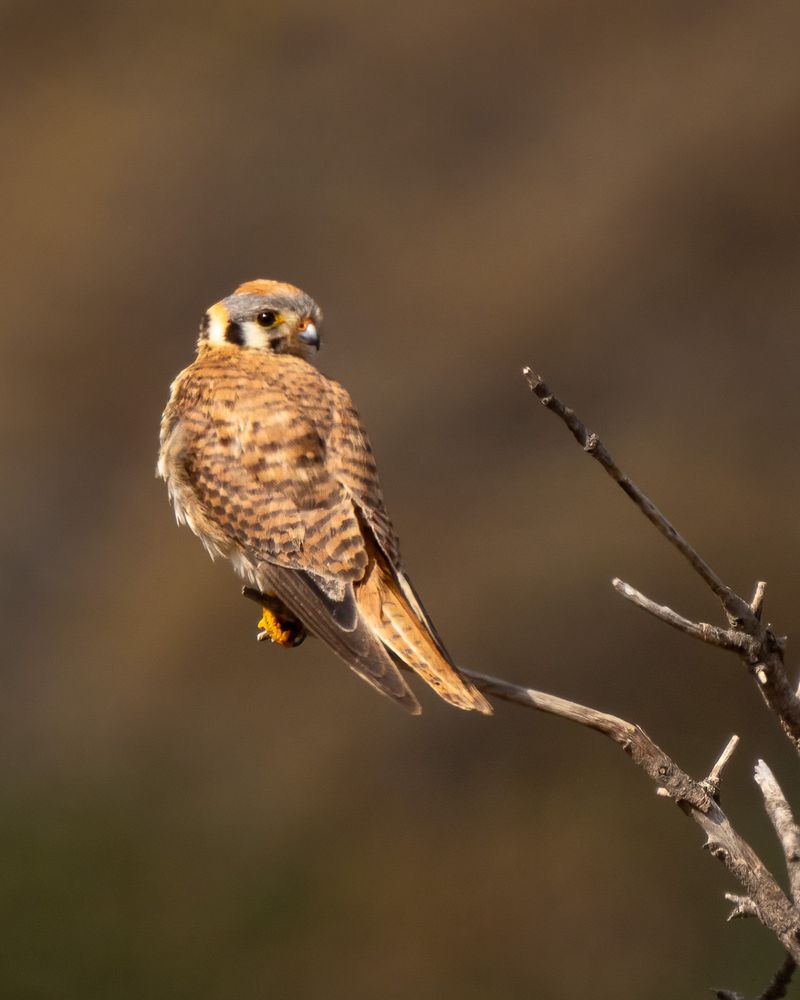
Kestrels are built for open country. Rolling farmland, mowed roadsides, pastures, and hayfields are exactly the kind of habitat these birds prefer when hunting.
Fall harvests leave many fields bare and flat. Crops get cut down, grasses get mowed, and the ground opens up in ways that simply do not happen during the growing season.
Kestrels take full advantage of this shift.
Hunting in open terrain lets them hover efficiently and spot small prey like grasshoppers, mice, and lizards from a distance. Once they lock onto a target, they drop fast and accurately.
Open ground removes the obstacles that would otherwise make hunting harder.
Rural parts of Georgia have no shortage of this kind of landscape. Agricultural counties with active farms, open pastures, and roadside ditches offer some of the best kestrel habitat in the state.
You will often spot them hovering directly above mowed medians on rural highways.
If you want to find kestrels reliably, drive slowly through farming areas and watch fence lines and power lines running alongside open fields. A hovering bird above a grassy strip is almost certainly a kestrel.
Fall essentially sets the table for them, and they show up ready to eat.
4. Fence Posts And Wires Become Favorite Perching Spots
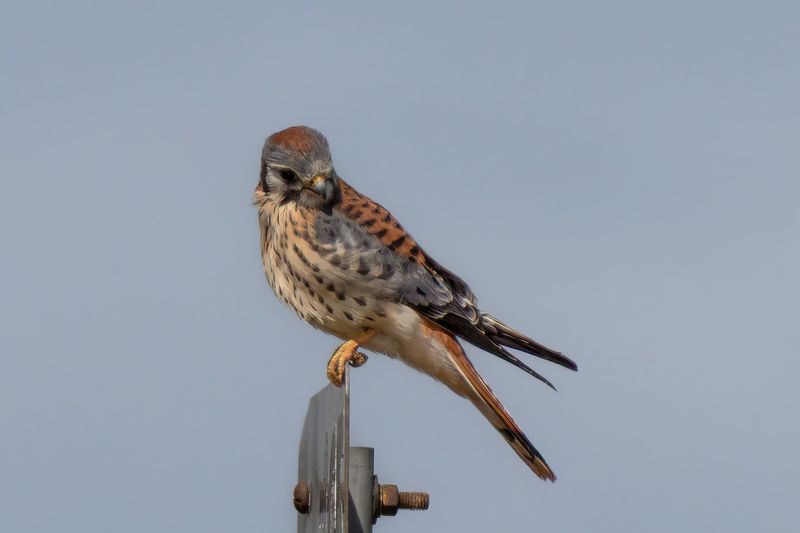
Kestrels are perch hunters. Sitting up high gives them a clear view of the ground below, and they use that vantage point to watch for movement before striking.
Fence posts and utility wires running alongside open fields are basically perfect for this strategy. You will find kestrels sitting very still, head tilted slightly, eyes locked on something below that you probably cannot even see yet.
Fall is when these perches become especially visible. Vegetation along roadsides thins out, and the birds sitting on wires or posts stand out sharply against a pale sky.
Their rust-colored backs and spotted chests make them surprisingly striking once you get a good look.
Male kestrels have blue-gray wings and a rusty tail. Females are more uniformly brown with streaked undersides.
Both sexes use the same perching behavior, so you might spot either one on your next drive through open country.
Slow down when you see a small bird sitting alone on a wire in a rural area. Larger hawks tend to sit in trees rather than on wires.
A small, upright bird on a fence line is often a kestrel, especially in fall when their numbers across Georgia increase noticeably. Take a second look before driving past.
5. Insects And Small Prey Keep Them Well Fed
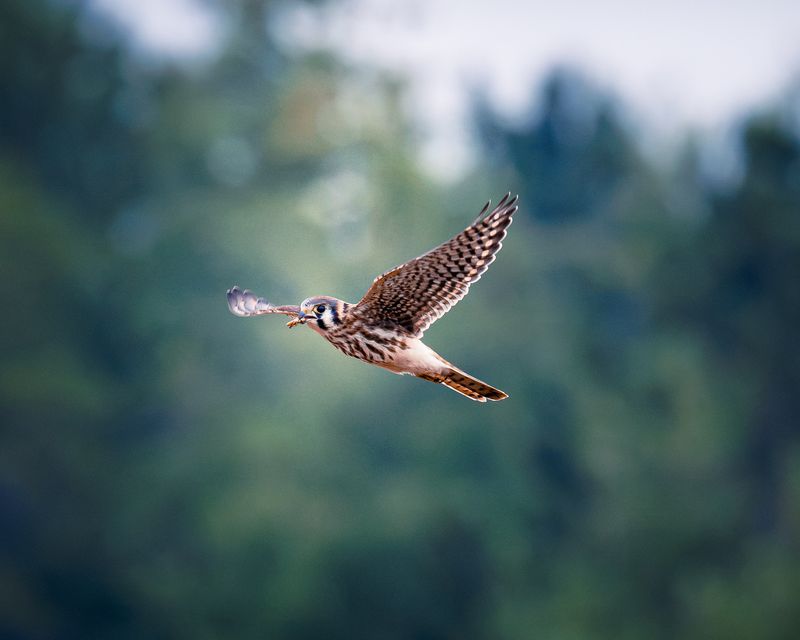
Grasshoppers are a major food source for American Kestrels, and fall fields are still loaded with them. Even as temperatures cool, insect activity continues well into October across much of the Southeast.
Kestrels are opportunistic feeders. They eat large insects, small lizards, mice, voles, and occasionally small birds.
Fall gives them access to a solid variety of prey types as different animals become more active or more visible on bare ground.
Harvested fields are especially productive hunting grounds. When crops are cut and the ground is exposed, small mammals that were hiding in vegetation suddenly have nowhere to go.
Kestrels pick up on this quickly and concentrate in those areas.
Prey availability directly influences where kestrels spend their time. If food is plentiful in one spot, birds tend to stay close rather than keep moving.
Locations with steady prey populations often hold kestrels for weeks at a time during fall and into winter.
Watching a kestrel hunt is genuinely entertaining. They hover with rapid wingbeats, hold position in the wind, then drop sharply onto a target below.
Few birds hunt with that combination of precision and speed at such a small size. Fall keeps the food chain active long enough for these birds to feed well across the region.
6. Some Birds Remain Through The Colder Months
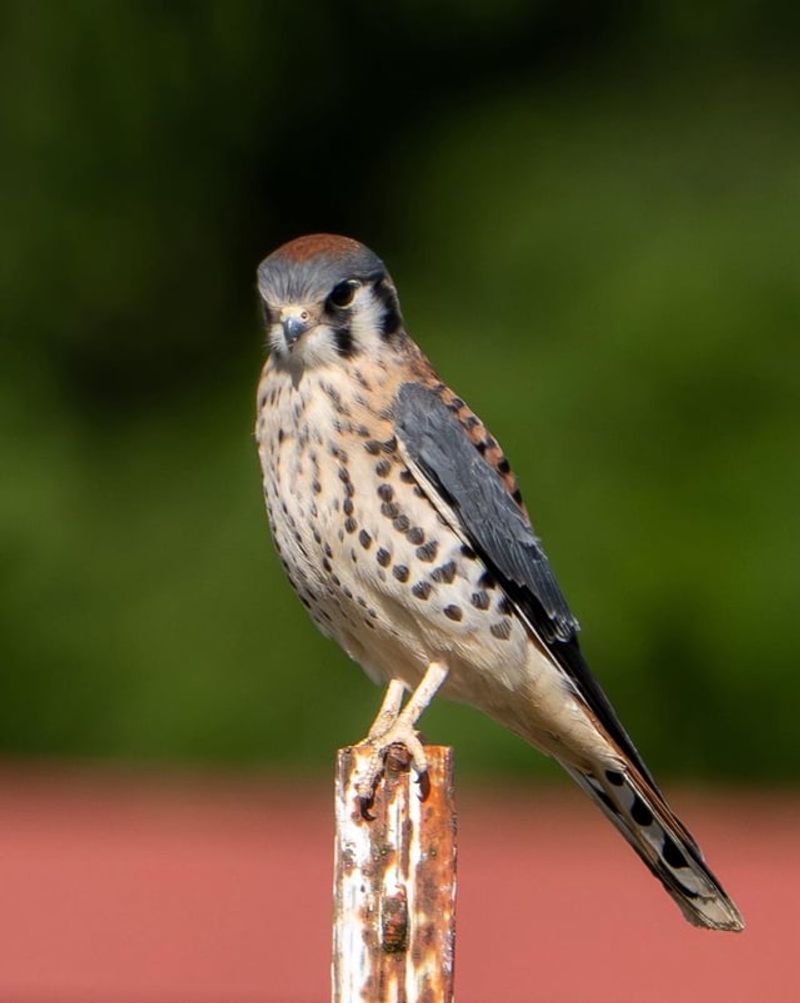
Not every kestrel passing through in fall keeps moving south. A good number of them settle in and stay through winter, especially in areas with reliable food and open habitat.
Georgia’s relatively mild winters compared to northern states make it an attractive place for kestrels to ride out the cold season.
Temperatures rarely drop low enough to eliminate prey entirely, which means birds can keep feeding without needing to migrate further.
Wintering kestrels often establish loose territories in specific areas. Once a bird finds a good spot with consistent food, it tends to return to the same perches day after day.
Regular observers sometimes track the same individual bird for months in one location.
Fields near farms, open meadows, and grassy roadsides are the most likely spots to find wintering birds. If you notice a kestrel in one spot repeatedly during November, there is a reasonable chance it will still be there in January or February.
Winter sightings are slightly less common than fall sightings simply because migrating birds have passed through and only residents remain.
Still, patient observers in rural areas across the state often enjoy consistent kestrel sightings well past the holiday season.
Cold mornings with clear skies tend to push these birds into more active hunting behavior, making them easier to watch.
7. Their Size Makes Them Easy To Tell From Larger Hawks
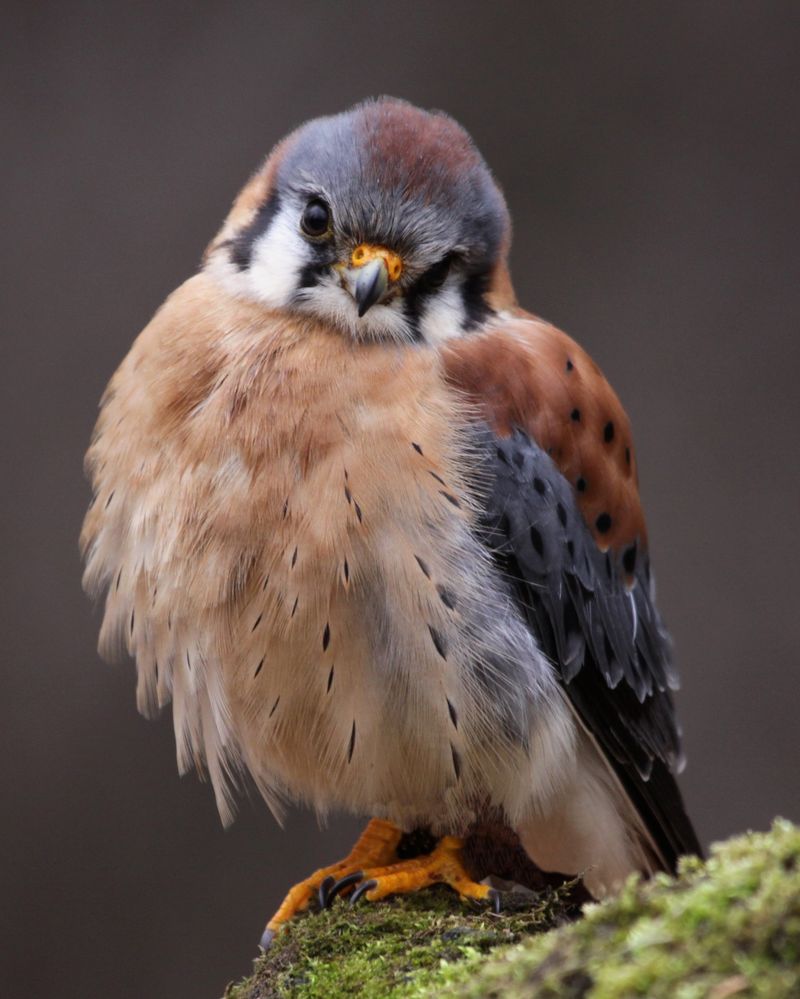
Spotting a small raptor and not knowing what it is can be frustrating. American Kestrels solve that problem quickly once you know their size and markings.
Kestrels are roughly the size of a robin or a large sparrow. Compared to Red-tailed Hawks or Cooper’s Hawks, they look almost toy-sized.
That small frame is one of the fastest ways to narrow down an identification in the field.
Color is the next clue. Kestrels have warm rusty-orange on their backs and tails.
Both males and females show two distinct black marks on the sides of their pale faces, sometimes called mustache marks. No other common hawk in the region has that combination.
Behavior also helps. Kestrels hover in place with fast, fluttering wingbeats.
Larger hawks rarely hover the same way. Seeing a small bird hanging in the air above a field almost always points to a kestrel.
Flight style is buoyant and quick compared to the heavy, soaring movement of larger raptors. Kestrels flap often and glide briefly, covering ground in short bursts.
Once you have watched one fly, you begin to recognize that pattern immediately.
Fall in Georgia brings enough kestrels into open areas that practicing identification becomes straightforward. A few good sightings and the field marks stick with you for good.