Why Tarantulas Are Suddenly Showing Up Across Arizona Right Now
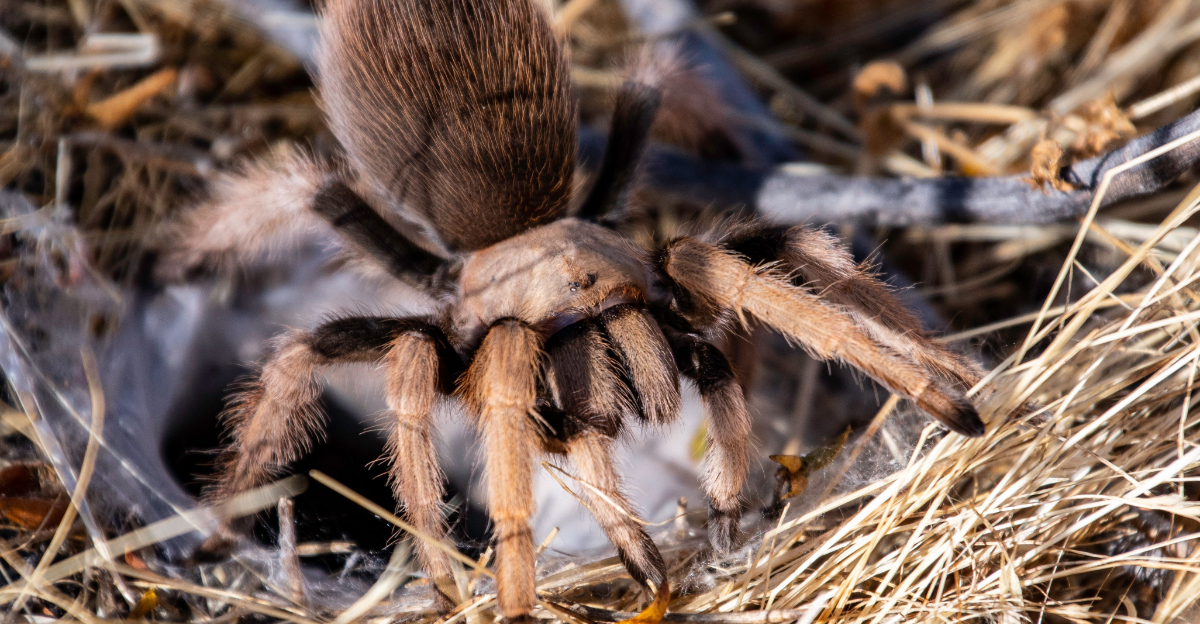
Spotting a tarantula crossing the ground can be startling, especially when several sightings happen around the same time. There is a seasonal reason these large spiders become easier to notice.
Arizona residents may see more tarantulas moving across roads, yards, and open areas during this part of the year. Much of that activity has little to do with your home.
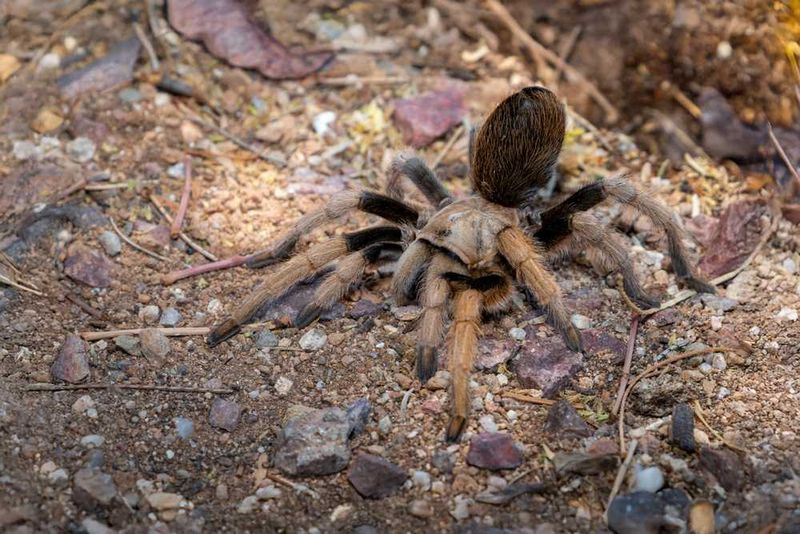
Male tarantulas become especially active when they leave their burrows and begin searching for females. That movement puts them out in the open where you can easily spot them.
Seeing one nearby does not mean your property suddenly has a tarantula problem. Their appearance is often temporary and tied to natural behavior.
Give any wandering tarantula plenty of space rather than disturbing it. These spiders are usually simply passing through.
Understanding their seasonal activity makes these encounters far less mysterious.
1. Mating Season Is Driving The Sudden Rise In Sightings

Few things in nature trigger as dramatic a change in behavior as mating season. For Arizona tarantulas, late summer marks the time when reproduction becomes the single biggest priority, and that shift sends spiders out of hiding in noticeable numbers.
Sightings that were rare just weeks earlier suddenly become almost routine.
Male tarantulas spend most of their lives underground or tucked into burrows. When mating season arrives, that sheltered lifestyle changes fast.
Instinct pushes them to search for a female, and that search requires covering real ground in the open desert.
Female tarantulas largely stay put. They wait near or inside their burrows while males travel toward them.
That contrast in behavior is exactly why so many of the tarantulas spotted out in the open tend to be male.
People hiking desert trails or driving rural roads are far more likely to cross paths with a roaming male during this window. The timing lines up with late July through September in most parts of the region.
Spotting one does not mean something is wrong. It simply means mating season is in full swing, and these spiders are doing exactly what biology drives them to do at this time of year.
2. Mature Males Are The Tarantulas Most Often On The Move
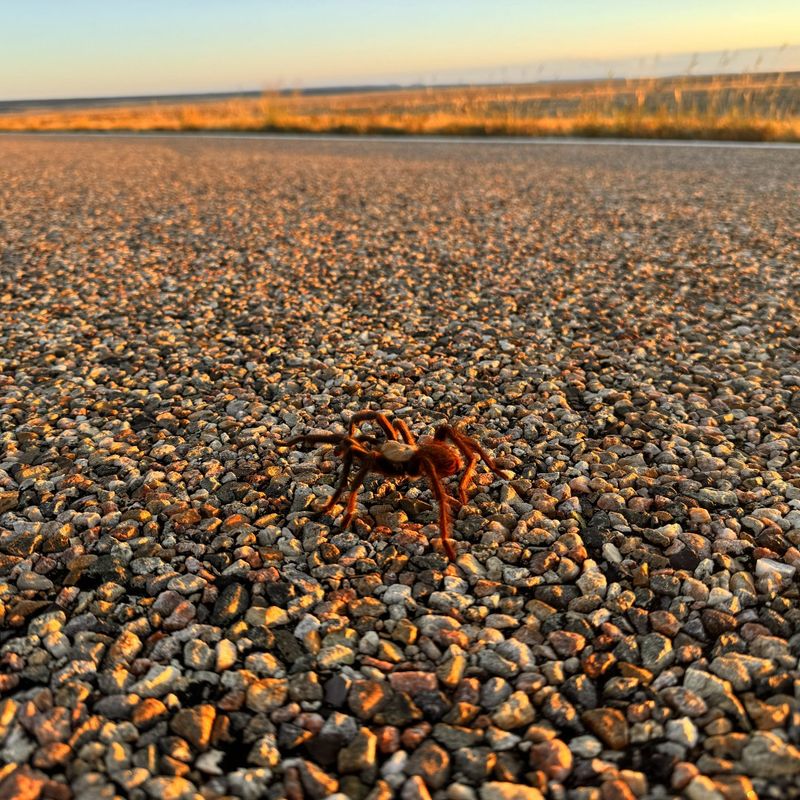
Not every tarantula hits the road during mating season. Mostly, it is mature males making the journey, and there is a specific reason for that.
Once a male tarantula reaches full maturity, its entire biological focus shifts toward finding a mate before the season ends.
Mature males look slightly different from females.
They tend to have longer legs relative to their body size, and their front appendages develop small hooks used during mating.
These physical changes happen once a male reaches adulthood, which can take several years depending on the individual spider.
Females, by contrast, can live for decades in some cases. Males have a much shorter adult lifespan, which makes this mating window critically important for them.
Every mile a male covers during this season is part of a biological race against time.
Younger males and females of all ages mostly stay in their burrows. Spotting a large tarantula crossing a path almost certainly means you are looking at a mature male on a mission.
Your Arizona Garden Changes Every Week. Your Plan Should Too.
Gardening in Arizona changes quickly throughout the season. Every Friday you’ll receive a simple weekly plan showing exactly what to plant, prune, fertilize, harvest, and protect so you never miss the right timing.
Residents and visitors in desert communities across the region notice this pattern every year around the same time.
Knowing that it is specifically mature males doing the wandering helps explain why sightings spike so sharply and then fade just as quickly once the season wraps up.
3. Leaving Their Burrows Puts Them Out In The Open
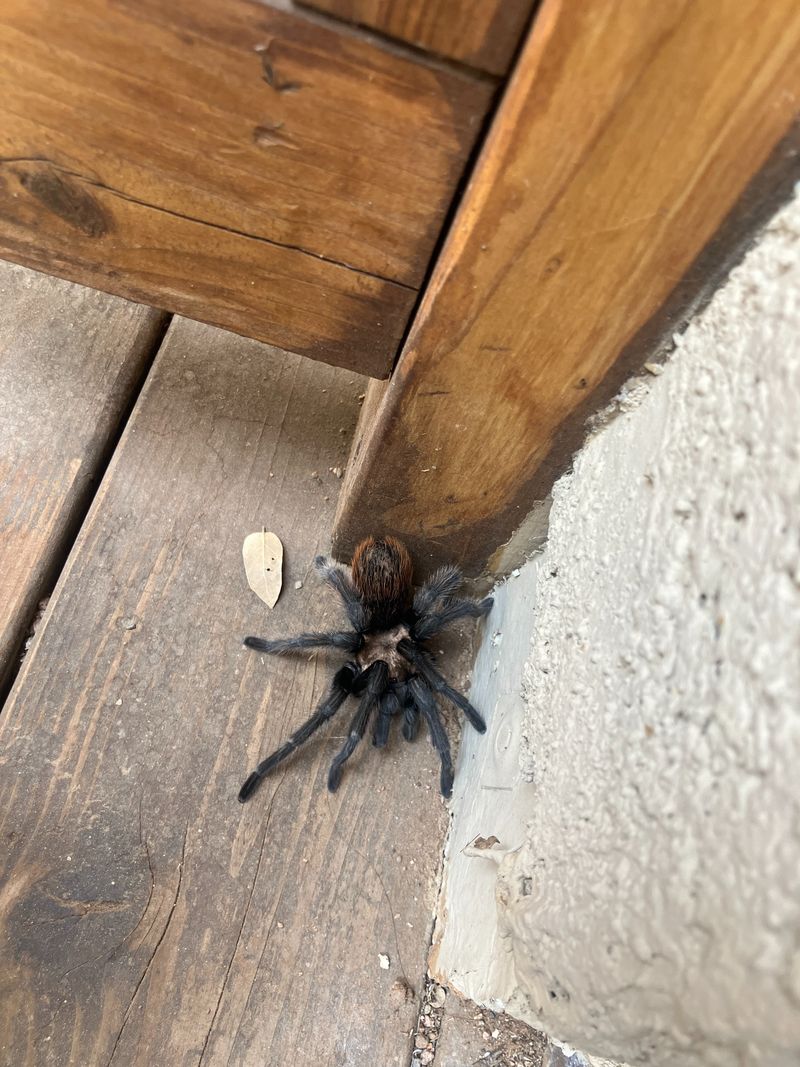
Tarantulas are not naturally bold creatures. Most of the year, they prefer staying close to or inside their burrows, where they are sheltered, hidden, and safe from predators.
Mating season flips that script entirely.
When a male leaves his burrow to search for a female, he steps into an environment full of risks. Open ground, roads, driveways, and trails all become part of his route.
That is when people start noticing them in places that feel surprising, like sidewalks, patios, or the middle of a hiking path.
Burrows serve as home base for tarantulas throughout most of the year. They hunt near the entrance, retreat inside when threatened, and spend cold nights underground.
Abandoning that security during mating season is a significant behavioral shift driven entirely by instinct.
Once a male leaves his burrow, he may not return to the same one. His wandering can cover distances that seem remarkable for a spider.
Some males travel quite far relative to their small size, crossing varied terrain to find a receptive female. That extended time in the open is what puts them in front of hikers, drivers, and homeowners who would otherwise rarely encounter one up close.
Seeing a tarantula in an unexpected spot is almost always a sign that a male is mid-journey during the annual mating push.
4. Longer Trips Make Unexpected Encounters More Common
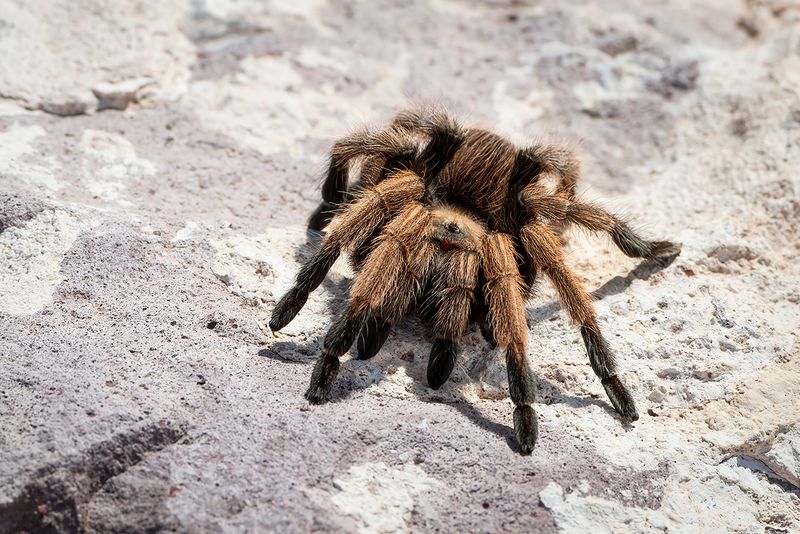
A spider covering serious ground is going to run into people more often. That is really the core reason encounters spike so sharply during mating season.
Males are not just stepping outside their burrows briefly. They are making extended journeys across open terrain.
Some males travel surprisingly long distances in search of a female.
Crossing roads, yards, trails, and open fields all become part of the route.
That kind of movement puts them directly in spaces that humans regularly use, which is why encounters feel so sudden and so frequent during this period.
People who live near desert land in places like Tucson or rural stretches of southern Arizona often report seeing multiple tarantulas within a short window of time. That clustering of sightings is not random.
It reflects how many males are out searching at once during peak mating weeks.
Drivers sometimes spot them crossing roads at dusk or just after dark, when temperatures cool slightly and movement becomes easier for the spiders. Hikers encounter them on unpaved trails through desert scrub.
The longer the journey each male takes, the higher the odds of crossing paths with a curious human.
Understanding that these encounters are a byproduct of natural behavior, not a sign of infestation or unusual population growth, makes the whole situation much easier to appreciate without alarm.
5. Warm Weather Keeps Their Seasonal Movement Going
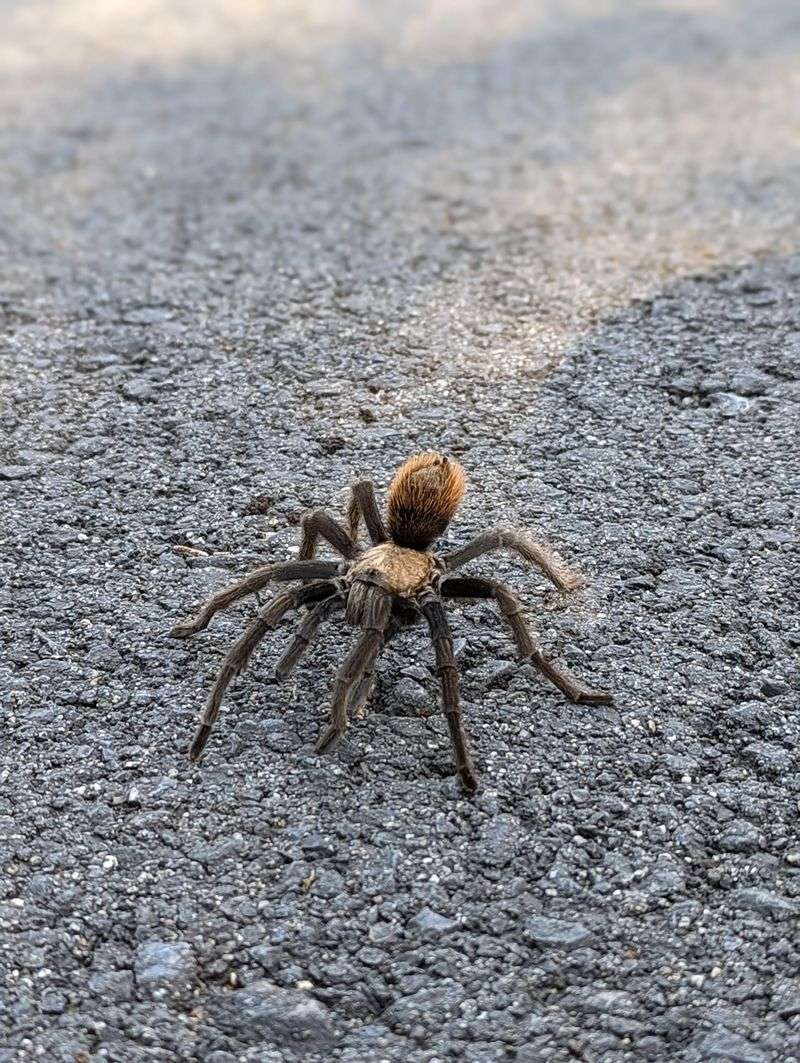
Temperature plays a bigger role in tarantula activity than most people realize.
Warm conditions during late summer create an environment that supports extended movement, and that warmth is a key reason the mating season lines up with this particular stretch of the calendar.
Tarantulas are cold-blooded, meaning their body temperature follows the environment around them. When temperatures stay warm through the night, they can stay active for longer stretches.
Cool nights slow them down significantly, which is why their activity fades as fall progresses deeper into the season.
Late summer in the desert tends to bring warm evenings even after hot days. That combination gives roaming males a longer daily window to cover ground.
Monsoon moisture also adds some humidity to the air during this period, which may support movement compared to the driest stretches of early summer.
Residents across desert communities often notice tarantulas most frequently in the hours around dusk and into early evening. That timing lines up with slightly cooler air that is still warm enough to keep the spiders moving comfortably.
As daytime highs remain elevated through late summer, the overall seasonal conditions stay favorable for continued activity.
Once temperatures begin dropping more consistently into fall, the pace of movement slows, and sightings start to taper off naturally without any sharp cutoff point.
6. This Busy Period Continues Into Early Fall
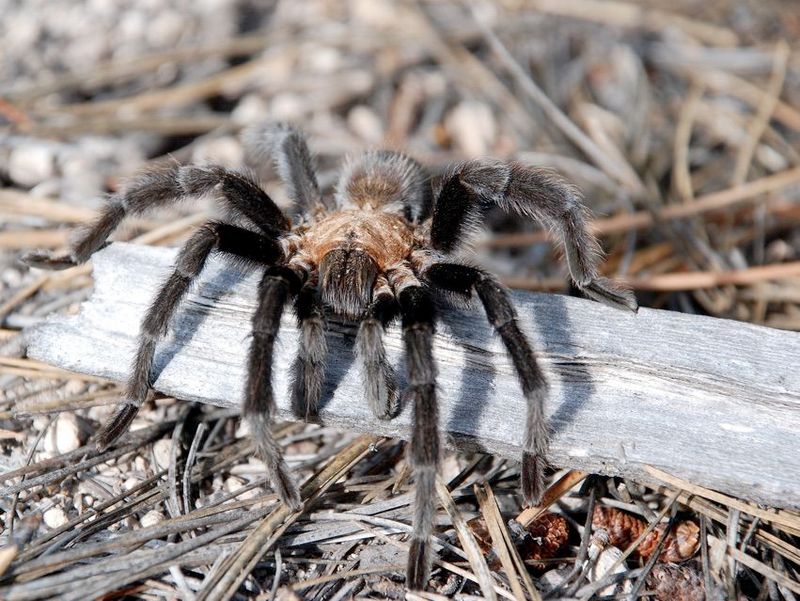
Mating season does not wrap up overnight. The active period for roaming tarantulas stretches from late summer well into early fall, giving the season a longer run than many people expect.
Sightings that begin in late July or August can continue through September and sometimes into October in warmer areas.
The exact length of the season varies depending on local conditions. Elevation, temperature patterns, and rainfall can all shift the timing slightly from one location to another.
Higher elevations in Arizona tend to see cooler conditions arrive earlier, which can shorten the active window compared to lower desert areas.
During the peak weeks of this stretch, male tarantulas are at their most determined. The biological urgency driving them intensifies as the season progresses.
Males that have not found a mate keep searching, which keeps encounter rates elevated well past the initial spike in sightings.
Communities near desert habitat in the region often treat this period as a reliable annual event.
Local nature centers and wildlife groups sometimes organize educational walks during peak weeks so residents can observe tarantulas safely and learn about their behavior.
Early fall sunsets combined with warm ground temperatures create ideal conditions for spotting these spiders on the move.
Paying attention during this window offers a genuinely rare look at natural desert behavior that most people never get the chance to witness up close.
7. Sightings Ease Once The Roaming Season Winds Down
Every busy season has an ending, and tarantula sightings follow that same pattern. As temperatures drop and the mating window closes, roaming males stop appearing as frequently, and the desert returns to its quieter baseline.
The transition happens gradually rather than all at once.
Males that successfully locate a mate complete the mating process and then typically do not survive long into the following season. Females, having mated, return to their burrows to prepare for laying eggs.
Both outcomes reduce the number of tarantulas actively moving through open terrain.
Cooler nights are usually the clearest signal that the season is winding down. Once evening temperatures drop consistently, tarantula movement slows and sightings become increasingly rare.
Hikers and drivers who were spotting them regularly start going days or weeks between encounters.
For residents who found the whole experience unsettling, that gradual quiet is reassuring. For those who found it fascinating, it is a good reminder to get outside and observe while the window is still open.
Tarantulas are a natural and established part of desert ecosystems in the Southwest, and their seasonal movement is one of the more dramatic wildlife behaviors that plays out in plain sight every year.
Once the roaming season ends, these spiders go back to living quietly underground, largely out of view until the cycle begins again the following late summer.