A Copperhead Look-Alike Is Turning Up In Arizona Yards This Fall – Here’s The Harmless Snake It Really Is
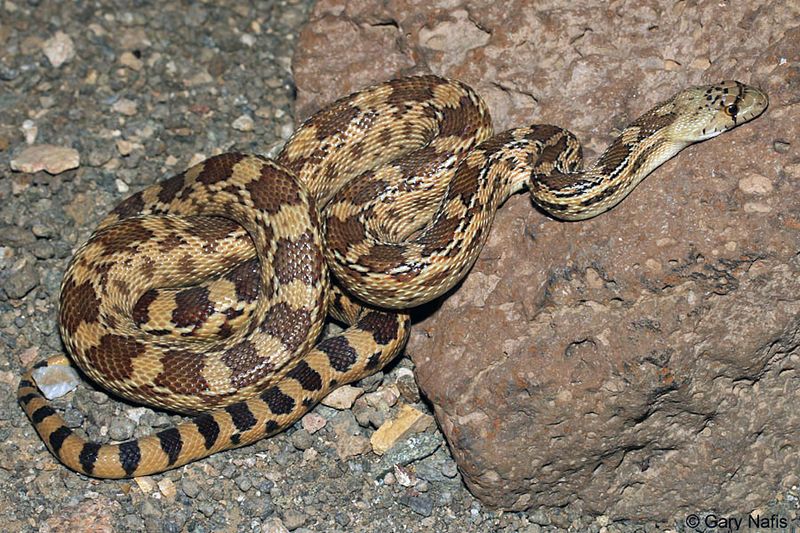
Spotting a large, blotched snake in your Arizona yard can stop your heart for a second, especially if someone mentions the word copperhead. The thing is, eastern copperheads are not an established part of Arizona’s snake fauna, so that label may be doing more harm than good.
A snake with a tan or reddish-brown blotched pattern in a low-desert yard is far more likely to be a gophersnake, though no unseen snake can be confirmed from a description alone. Knowing what you are actually dealing with, and what to do about it, makes all the difference.
Arizona Does Not Have Established Eastern Copperheads
The word “copperhead” gets applied loosely to any brown, copper-toned, or blotchy snake, but it actually names a specific venomous species: Agkistrodon contortrix, the eastern copperhead. That distinction matters because USGS range data for the eastern copperhead places this species in the eastern and south-central United States, not in Arizona.
There is no credible evidence of an established copperhead population in the state.
When someone in Phoenix or Tucson calls a snake a copperhead, they are almost certainly using the name as a shorthand for “scary-looking brown snake,” not making an accurate identification. Arizona’s actual venomous-snake concern centers on rattlesnakes, which are native, widespread, and well-documented here.
Calling a yard snake a copperhead skips over that reality entirely.
A more defensible candidate for a blotched, tan, or reddish-brown snake spotted in a low-desert Arizona yard is the gophersnake, particularly the Sonoran gophersnake. That said, no snake can be reliably identified from a headline, a color description, or a glance from across the patio.
Pattern, location, head and tail details, and behavior all factor into a proper identification. There is also no evidence of a fall invasion or a measurable surge of any particular snake species appearing in Arizona yards right now.
A Gophersnake Fits Many Low-Desert Sightings
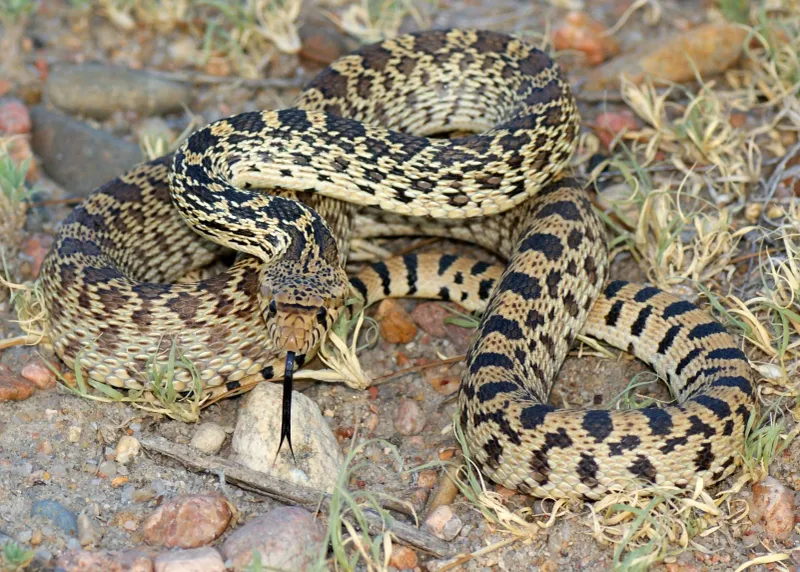
Arizona’s gophersnake is one of the most commonly encountered large snakes in the state, and for good reason: it lives nearly everywhere. According to the Reptiles and Amphibians of Arizona species account, gophersnakes occupy deserts, foothills, bajadas, flatlands, and areas adjacent to suburban development across almost the entire state.
If you live in the Phoenix or Tucson metro area and a large snake shows up near your block wall or garden, this species is a reasonable first thought.
Coloration varies considerably from one individual to the next. A gophersnake may appear tan, cream, yellow, orange-brown, or gray, with blotches that range from dark brown and reddish-brown to olive or black.
Adults can reach roughly 92 inches, making them one of Arizona’s longest snakes. That combination of size and patterning can make an encounter feel alarming even when the animal poses no venom risk.
Still, “gophersnake” is a plausible explanation, not a guaranteed one. Arizona is also home to other nonvenomous snakes with variable brown or reddish patterns, including glossy snakes and several kingsnake species.
A photograph reviewed by an expert, combined with location details and a description of the snake’s behavior and markings, would be needed to confirm what species you actually saw.
Your Arizona Garden Changes Every Week. Your Plan Should Too.
Gardening in Arizona changes quickly throughout the season. Every Friday you’ll receive a simple weekly plan showing exactly what to plant, prune, fertilize, harvest, and protect so you never miss the right timing.
Its Defensive Display Can Resemble a Rattlesnake
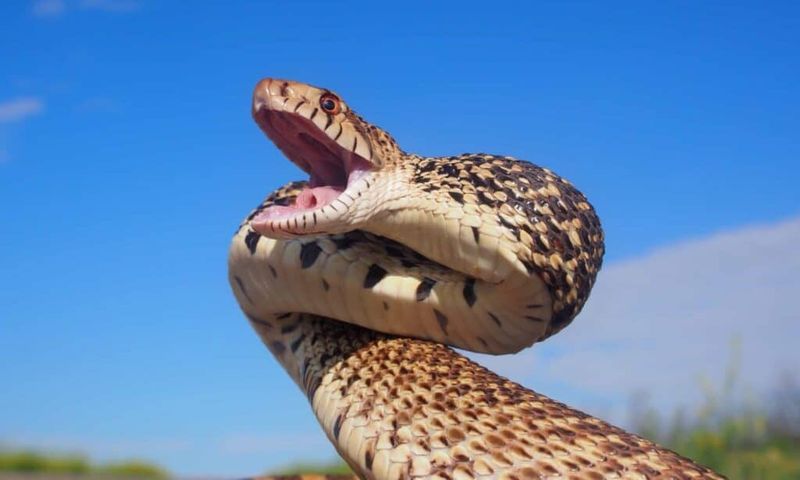
Part of what makes a gophersnake so startling is what it does when it feels cornered. Rather than retreating quietly, it may raise its head, flatten and widen its neck, produce a loud hiss, and vibrate its tail rapidly against dry leaves or gravel.
That rattling sound, combined with a spread neck and a coiled posture, is enough to make almost anyone take a step back.
Arizona wildlife sources specifically describe gophersnakes as snakes that can be mistaken for rattlesnakes because of this defensive mimicry, not as copperhead look-alikes. The National Park Service notes this resemblance at Grand Canyon, where gophersnakes share territory with rattlesnakes and use similar threat displays.
A gophersnake generally has a narrower head and lacks a rattle, but those are broad contextual clues, not a checklist to run through while standing close to the animal.
Trying to confirm a species by inspecting the head shape, pupils, or facial pits at close range is not a safe approach. A defensive gophersnake can bite, and any snake that feels threatened enough to display that aggressively is telling you to increase your distance, not narrow it.
No single visual feature, whether a broad-looking head, a blotched pattern, or tail vibration, is enough to establish whether a snake is venomous or not.
Fall Sightings Are Possible, Not Proof of a Surge
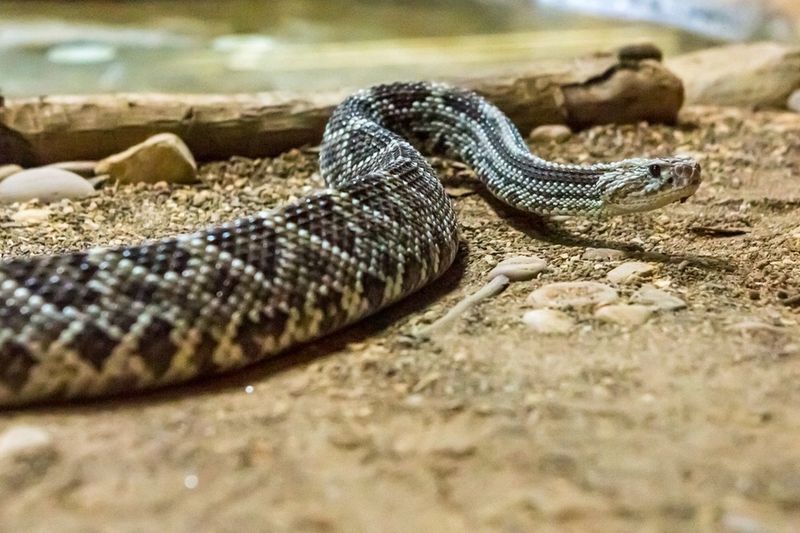
Seeing a snake in your yard during September or October is not a sign that something unusual is happening. Arizona reptiles are most active during warmer months, roughly April through October, so late-summer and early-fall encounters fall squarely within normal activity windows.
Gophersnake hatchlings also begin emerging in August, which means smaller, younger individuals may show up in yards through the fall as they establish themselves and search for food.
The overlap between Arizona neighborhoods and natural desert habitat plays a bigger role in these encounters than any seasonal population boom. Low-desert communities in the Phoenix and Tucson areas are built into and around active wildlife corridors.
Snakes move through those areas year-round, and a warm afternoon in October creates the same conditions for activity as one in June. According to the Arizona Poison and Drug Information Center, rattlesnake activity follows a similar warm-season pattern, and gophersnakes share much of the same habitat and timing.
There is no authoritative source documenting a special fall surge of gophersnakes invading Arizona yards, and the available evidence does not support framing a seasonal sighting as a statewide trend. What the timing does tell you is that keeping an eye out, especially around dusk and dawn, remains worthwhile through the end of the warm season.
Encounter frequency has more to do with where you live and how much nearby habitat exists than with any dramatic shift in snake behavior.
Distance Matters More Than a Quick Identification
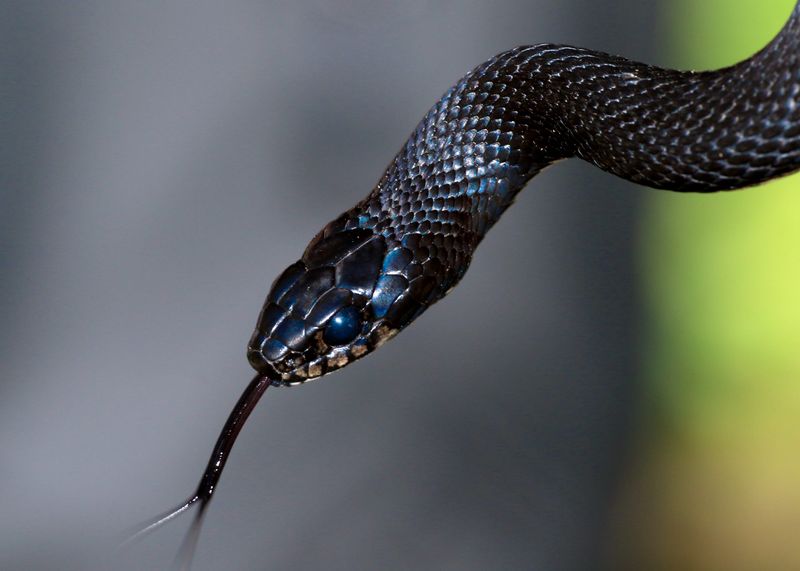
The most useful thing you can do after spotting a large snake in your yard is simple: move back and keep children and pets away. Do not try to shoo it, corner it, kill it, pick it up, or get close enough for a better look at its head.
A gophersnake in a defensive posture can bite, and any snake that feels trapped is more likely to strike than one that has room to move away on its own.
Color, head shape, and tail behavior are not reliable identification tools, especially from a safe distance. A gophersnake can look surprisingly broad-headed when it flattens defensively.
A rattlesnake does not always rattle before striking, and its rattle may not be visible at a glance. Relying on any single feature to decide whether a snake is safe to approach adds unnecessary risk to an already stressful situation.
If the snake is in a location where people cannot safely keep their distance, such as near a doorway, in a garage, or close to a children’s play area, professional removal is the right call. The Arizona Poison and Drug Information Center recommends seeking professional assistance for concerning reptile encounters rather than attempting removal on your own.
A photograph taken from a safe distance, without approaching the animal, can help a wildlife professional or extension specialist make a more informed identification after the fact, but getting that photo should never come at the cost of getting closer than is comfortable.
A Gophersnake May Help, but It Will Not Guarantee Pest Control

Gophersnakes eat a varied diet that includes rodents, rabbits, lizards, birds, eggs, other snakes, and insects. That range of prey means a gophersnake moving through your yard may consume a pack rat or two along the way, and that is a genuine ecological contribution.
Framing it as a free exterminator that will clear your property of mice, scorpions, or other pests, though, overstates what the evidence supports.
Natural predation depends on opportunity, snake size, prey availability, and territory. One gophersnake passing through a half-acre lot does not translate to guaranteed rodent control any more than a single roadrunner eliminates every scorpion on the block.
The diet information supports describing the gophersnake as a predator that may help keep prey populations in check, not as a managed pest-control service.
Reducing the conditions that attract both prey and snakes is a more reliable strategy. Use outdoor lighting at night and wear shoes or boots after dark, especially around woodpiles, brush, rocks, and deep grass where snakes and their prey both shelter.
Near your home’s foundation, seal gaps around doors and windows, install door sweeps, and repair damaged screens. Managing rodent attractants, such as unsecured trash, fallen fruit, and accessible pet food, reduces the prey base that draws snakes closer to living areas.
These steps can lower the likelihood of an unwanted encounter, but no combination of measures makes a low-desert Arizona yard completely snake-proof, particularly when natural habitat surrounds the neighborhood.
Treat a Suspected Venomous Bite as an Emergency
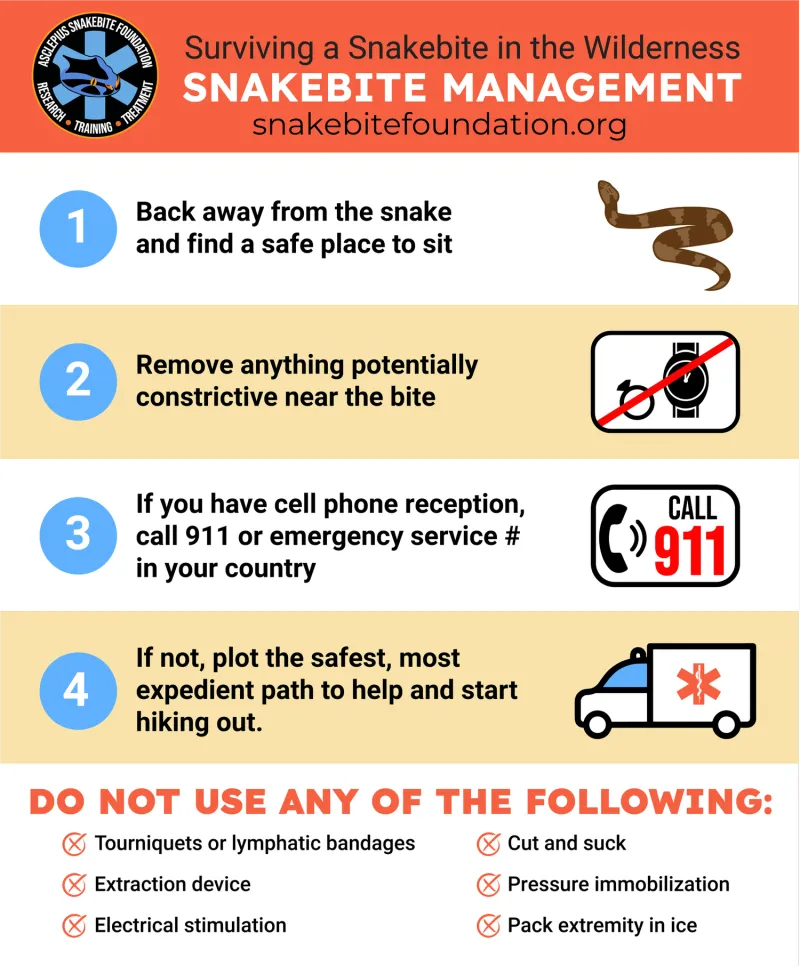
Even when a gophersnake is the most likely explanation for a yard sighting, Arizona is home to multiple venomous rattlesnake species, and a bite from any of them requires immediate emergency medical care. If someone is bitten by a snake and there is any possibility it was venomous, go to an emergency room right away.
Do not wait to see whether symptoms develop.
Several responses that feel instinctive are actually harmful. Do not apply ice or a tourniquet, cut the wound, attempt suction, use electric shock, give alcohol, or try any folk remedy.
None of these approaches help, and some can make the injury worse. Do not attempt to capture, kill, or bring the snake to the hospital.
Medical staff can treat a bite without seeing the snake, and chasing it creates a second bite risk.
The clearest takeaway from this entire situation is that maintaining distance protects you whether the snake is a nonvenomous gophersnake or a venomous rattlesnake. You do not need to identify a snake to make a safe decision.
Step back, secure the area, and call a professional if removal is needed. A yard snake observed calmly from a distance, and left to move on its own, is rarely the crisis it first appears to be.