The Reason Monarch Butterflies Start Stopping In Georgia Yards This September
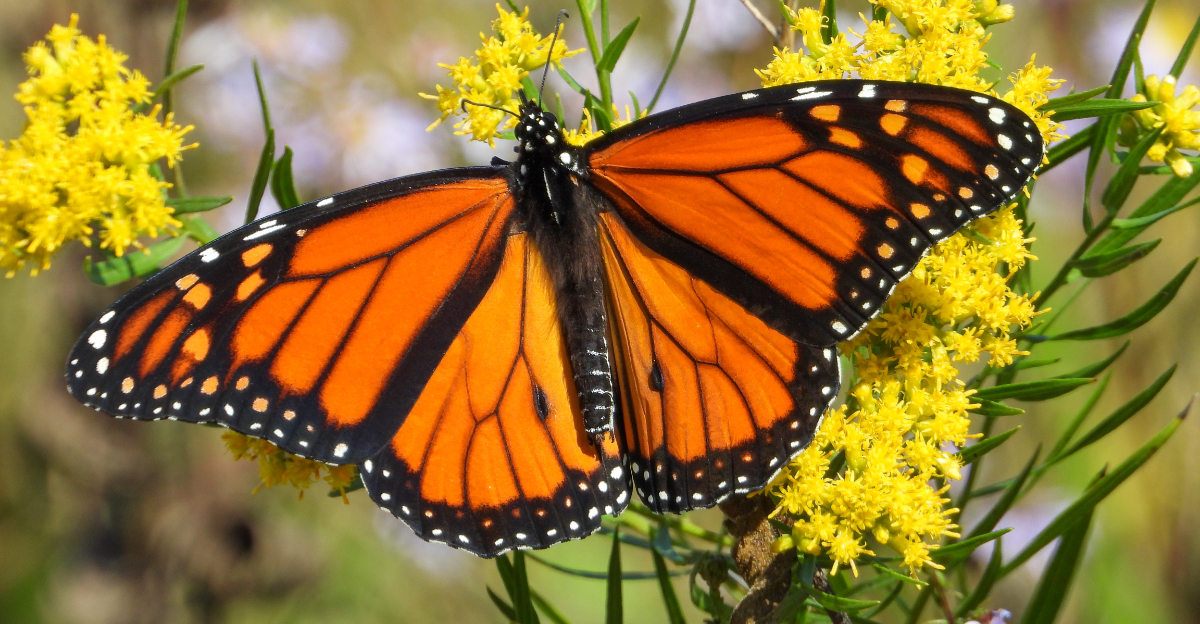
September can bring a surprising change to your yard when orange wings begin appearing around flowers more often. Those monarch visits are worth noticing because many butterflies are beginning a seasonal journey.
Georgia sits along routes used by monarchs moving south toward their wintering grounds in Mexico. Your garden can become a useful stopping place during this demanding trip.
Watch where these travelers pause instead of focusing only on how many arrive.
Blooming plants can offer valuable fuel while monarchs continue moving across the state. Even brief visits may be part of something happening far beyond your backyard.
This seasonal movement does not happen all at once.
Knowing what brings monarchs through during September can make each sighting more meaningful and help you understand what they need along the way.
1. September Marks The Start Of Their Journey South
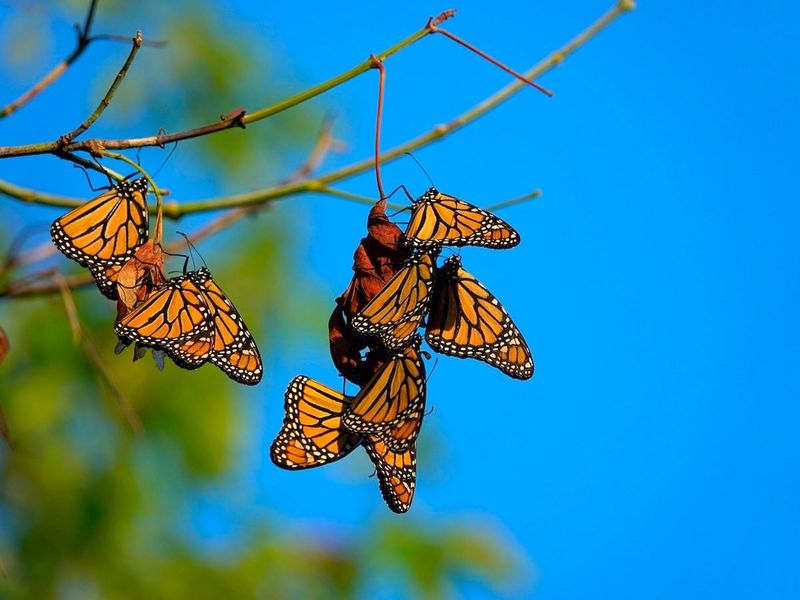
Monarch butterflies do not wander randomly. Eastern monarchs follow a well-established route south each fall, and Georgia sits directly along that path toward central Mexico.
Migration begins in late summer across the northern parts of their range. As temperatures drop and daylight hours shorten, monarchs shift from breeding mode into travel mode.
Their bodies change. Fat storage increases.
Reproductive activity pauses. Everything prepares them for a long flight.
September is when that movement reaches the Southeast in noticeable numbers. Some arrive as early as mid-month, though timing shifts slightly depending on weather patterns that year.
Cooler fronts from the north tend to push monarchs along faster.
Georgia is not a final stop. It is a corridor.
Butterflies moving through are heading toward the oyamel fir forests of Michoacan, Mexico, where millions gather each winter. That destination is roughly 2,000 miles from where some of these butterflies started.
Watching a monarch float through your yard in September means you are seeing a traveler mid-journey. It stopped briefly because something in your yard offered what it needed.
That is a meaningful connection to a migration that spans an entire continent.
2. Long Flights Make Nectar Stops Especially Important
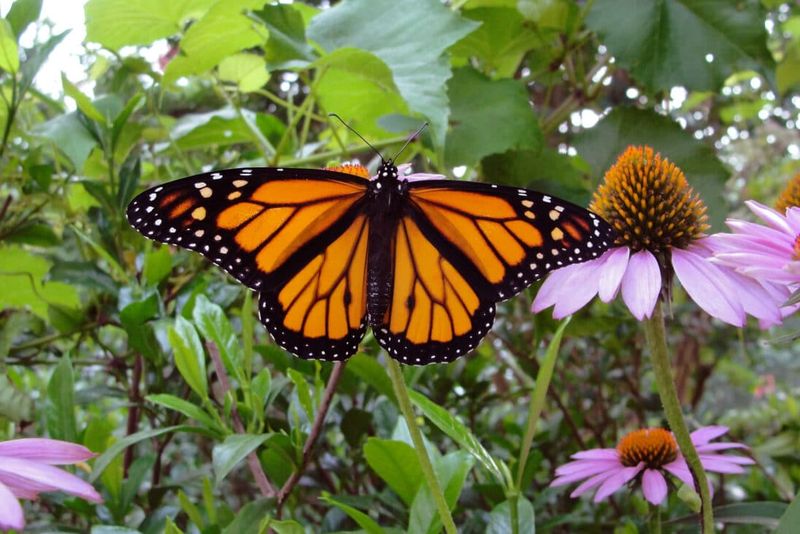
Covering thousands of miles on wings smaller than your hand takes serious energy. Monarchs fuel that effort almost entirely through nectar.
Unlike birds that can store significant fat reserves quickly, monarchs need frequent refueling. Nectar provides the sugars they convert into fat, and fat is what powers the rest of the journey.
A monarch that cannot find enough nectar may struggle to complete migration.
Feeding stops are not casual. When a monarch lands on a flower, it is actively building reserves.
Some of that energy fuels the same-day flight. Some gets stored as fat for days or weeks ahead.
Weather plays a role too. Cold snaps and rain can ground butterflies for a day or more.
During those pauses, nectar access becomes even more critical. A yard with blooming flowers can mean the difference between a well-fueled monarch and one that arrives at its next stop running low.
Not every yard offers what a migrating monarch needs. Lawns without flowering plants provide almost nothing useful.
Your Georgia Garden Changes Every Week. Your Plan Should Too.
Gardening in Georgia changes quickly throughout the season. Every Friday you’ll receive a simple weekly plan showing exactly what to plant, prune, fertilize, harvest, and protect so you never miss the right timing.
But yards with fall blooms become genuine rest stops along a very long road. Understanding that need makes it easier to see why certain gardens attract butterflies while others stay empty.
3. Fall Blooms Can Turn Yards Into Refueling Stops
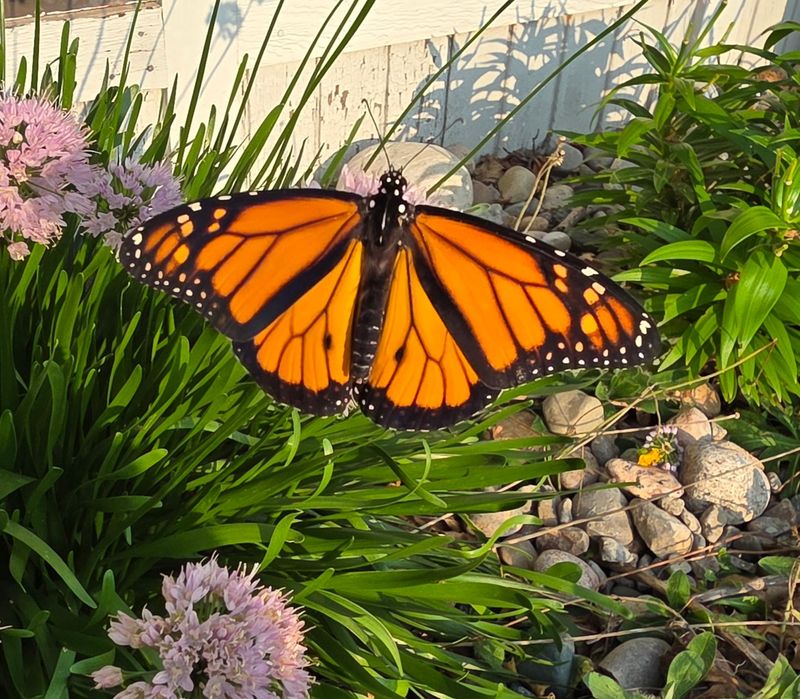
A yard full of fall flowers can act like a roadside diner for migrating monarchs. The key word is availability.
If flowers are blooming when butterflies pass through, monarchs will use them.
Most spring and summer gardens wind down before migration peaks. Annuals fade.
Perennials go to seed. By September, many yards have very little left in bloom.
That gap leaves passing monarchs with fewer options.
Yards that hold onto fall-blooming plants become noticeably more attractive. It is not about having a perfect garden or a large property.
Even a few well-timed blooms in a small space can draw attention from passing butterflies.
Native plants tend to outperform non-natives for nectar quality and volume, though monarchs will visit many flower types.
What matters most is that something is actually blooming during the migration window, roughly mid-September through October in this region.
Planting with migration timing in mind is a practical shift that does not require starting over. Adding a few fall-blooming species to an existing garden can extend its usefulness well into autumn.
That simple change can make a real difference for butterflies moving through your neighborhood during one of the most critical stretches of their year.
4. Goldenrod And Asters Arrive At Just The Right Time
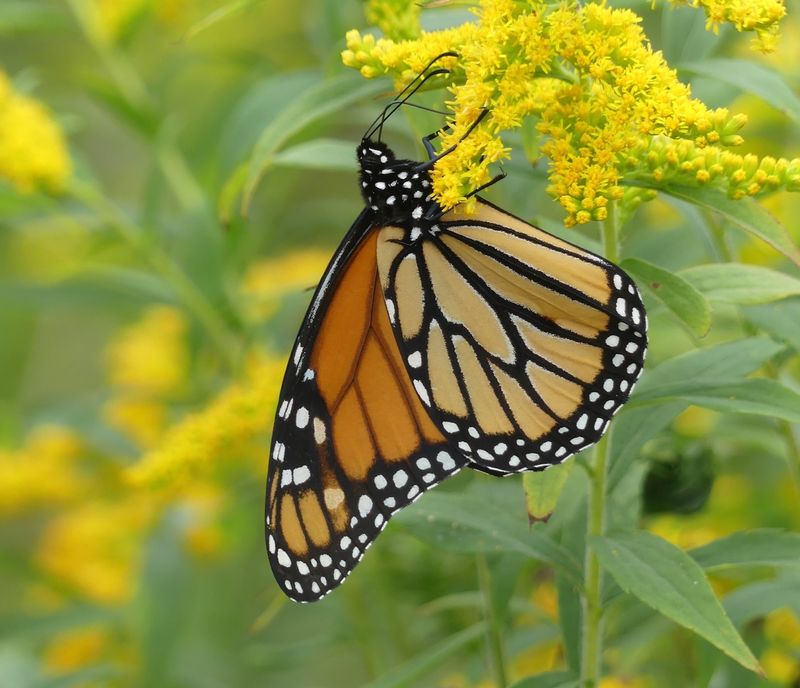
Goldenrod gets a bad reputation. Many people blame it for fall allergies, but goldenrod pollen is too heavy to travel far in wind.
It is actually a powerhouse nectar source that blooms right when monarchs need it most.
Several goldenrod species native to the Southeast flower from late August through October. That timing overlaps almost perfectly with peak monarch migration.
A patch of goldenrod in a yard or along a fence line can draw multiple butterflies on a good migration day.
Asters work similarly. Purple, white, and blue aster varieties bloom from September into November depending on species.
Their small, daisy-like flowers are easy for monarchs to land on and rich enough in nectar to make the stop worthwhile.
Both plants grow readily in sunny spots with average soil. They spread over time, which means a small planting can expand into a larger patch without much effort.
Neither requires heavy fertilizing or frequent watering once established, though conditions vary by soil type and location.
Having both in a yard creates a longer bloom window. Goldenrod tends to peak slightly earlier, with asters following behind.
Together, they can keep a yard stocked with nectar through most of the fall migration period, giving passing monarchs a reliable place to refuel.
5. Milkweed Plays A Different Role During Fall Migration
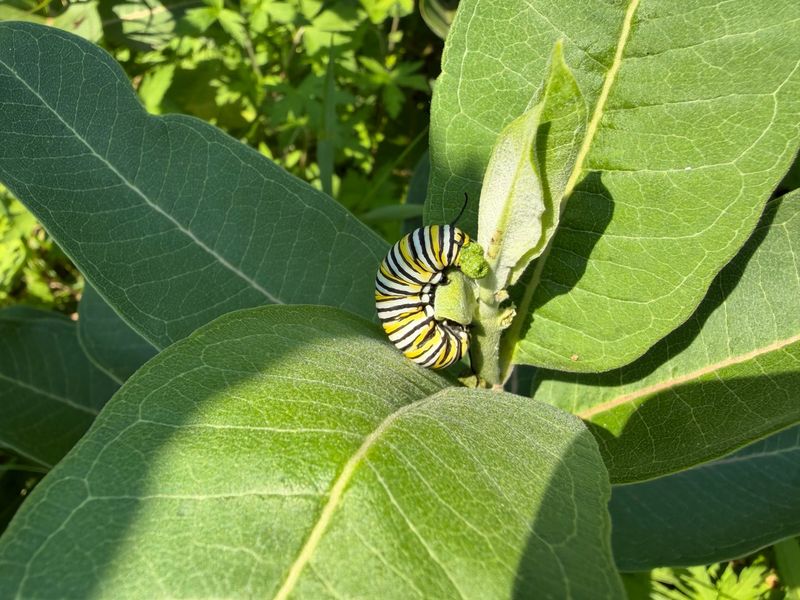
Milkweed gets most of the attention in monarch conservation, and for good reason. It is the only plant monarch caterpillars can eat.
Without it, there is no next generation.
During fall migration, though, adult monarchs are not looking for milkweed to feed on. Their goal is nectar, and milkweed flowers are not always available or blooming by September.
The butterflies passing through in fall are focused on fueling the journey, not laying eggs.
That said, milkweed still matters in fall in a specific way. If late-season milkweed is still green and leafy, a monarch may occasionally lay eggs on it.
Those late caterpillars face long odds of surviving to join the migration, but the behavior does occur.
Keeping milkweed in a yard is still a worthwhile choice year-round. It supports spring and summer breeding populations, which are the ones that ultimately produce the fall migrants.
Removing milkweed entirely would hurt the population upstream of migration.
Just do not expect fall migrants to spend much time on milkweed plants. Focus on nectar sources for September visitors.
Milkweed can stay in the garden, but goldenrod and asters will do more work for butterflies that are actively traveling through your yard this time of year.
6. Some Visitors May Pause Before Continuing South
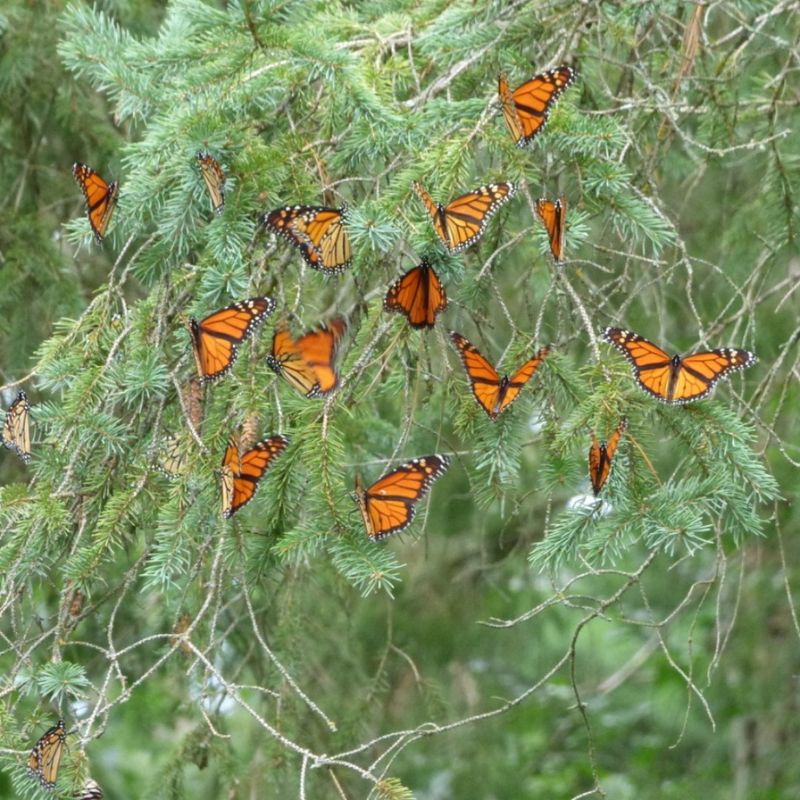
Not every monarch that enters your yard is just passing through quickly. Some stop for hours.
Others stay overnight, and a few may linger for a couple of days if conditions push them to rest.
Roosting is a normal part of migration. Monarchs do not fly at night.
As evening approaches, they look for sheltered spots in trees, often clustering together in groups. A yard with mature trees near good nectar sources becomes a convenient overnight location.
Weather also forces pauses. Strong headwinds, cold rain, and temperature drops below around 55 degrees Fahrenheit can ground butterflies until conditions improve.
During those windows, monarchs stay put and feed as much as possible before continuing south.
Roosts can be easy to miss. Closed wings fold to reveal the dull underside, which blends into bark and dry leaves.
Looking carefully at tree branches near a nectar-rich garden in the evening may reveal several butterflies settled in for the night.
A yard that offers both nectar and roosting trees is especially useful to traveling monarchs. Neither element needs to be elaborate.
Tall trees of almost any species work for roosting. The combination of food and shelter is what makes certain yards stand out as quality rest stops along the migration route.
7. The Biggest Movement Is Still Ahead In Early Fall
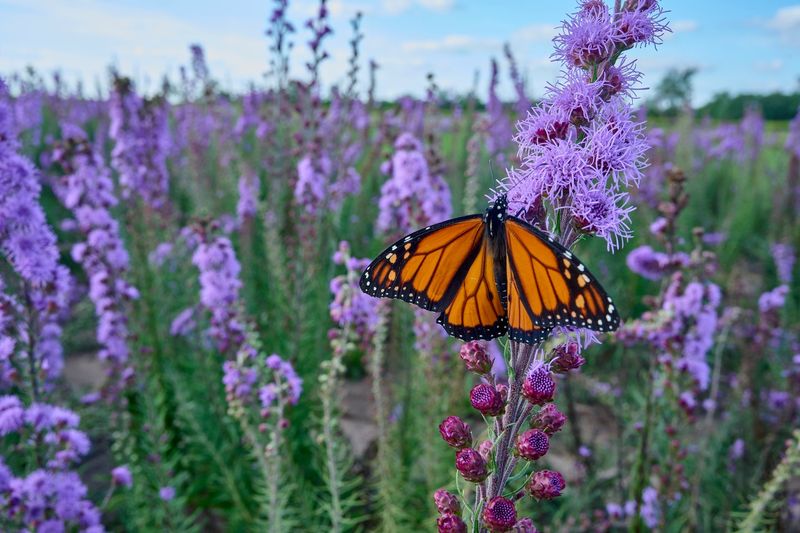
September sightings are exciting, but they are just the opening act. Peak monarch migration through the Southeast tends to build through late September and often reaches higher numbers in early to mid-October.
Early September monarchs are typically the first wave, moving ahead of the main push. Numbers grow as more butterflies from northern breeding areas complete their shift into migration mode and begin moving south.
Timing varies from year to year. Weather patterns across the entire eastern flyway affect when and how fast monarchs move.
A warm, calm fall can spread migration out over several weeks. A series of cold fronts can concentrate movement into shorter, more dramatic bursts.
Paying attention to regional tracking reports can help predict when larger groups might pass through your area. Citizen science programs track monarch sightings across the country and update maps regularly during migration season.
Seeing a monarch in your yard in September is a signal that migration has begun, not that it is nearly finished. Keep nectar plants going as long as possible into fall.
The butterflies that arrive in October may be just as numerous, if not more so, than the ones you spot this month.
Staying ready through the full window gives you the best chance of witnessing a genuinely impressive migration event right outside your door.