Texas Trees That Cause The Fewest Problems Near Power Lines
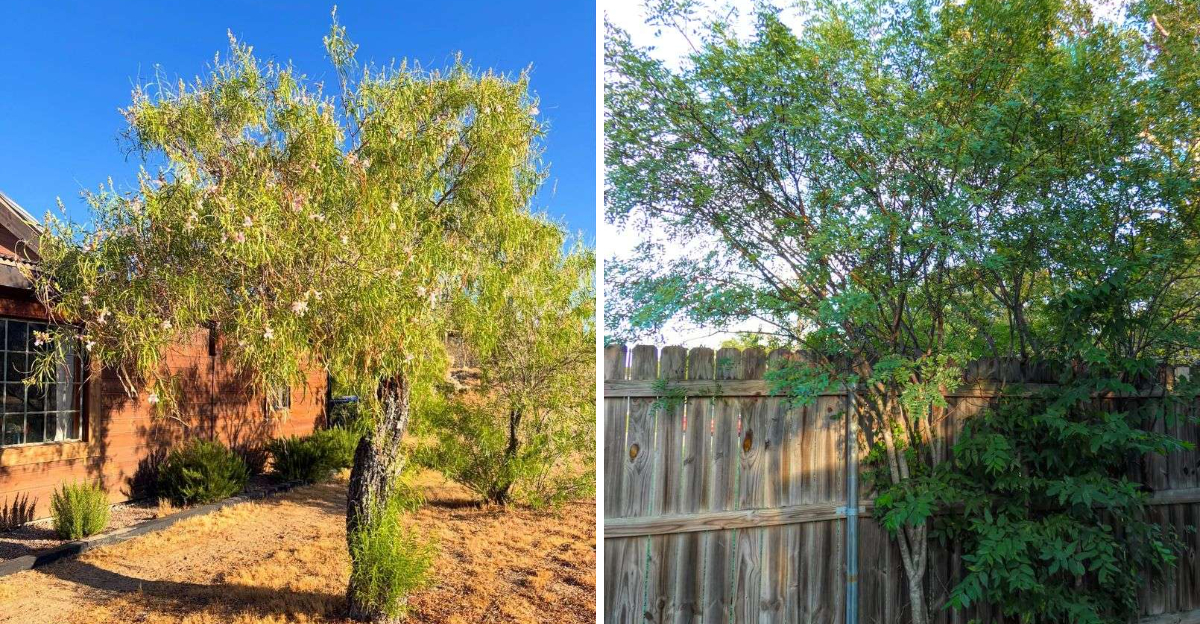
Planting a tree near a power line in Texas is one of those yard decisions that looks fine for several years and then becomes someone else’s problem to manage, usually in the form of utility company pruning that leaves the tree looking disfigured or a hazard situation that requires removal at significant cost.
The gap between how a tree looks at planting and what it becomes as it matures is where most of these problems originate.
Tree selection near power lines comes down almost entirely to mature height and canopy spread.
A tree that stays under the critical clearance threshold needs almost no management in relation to the power line and can live out its natural lifespan without conflict.
A tree that eventually pushes into that zone gets repeatedly cut back in ways that compromise its structure, appearance, and long term health while still never fully solving the problem.
Texas has genuinely attractive, ecologically valuable trees that mature at sizes compatible with power line proximity, and choosing from this list from the start saves an enormous amount of future frustration.
1. Yaupon Holly
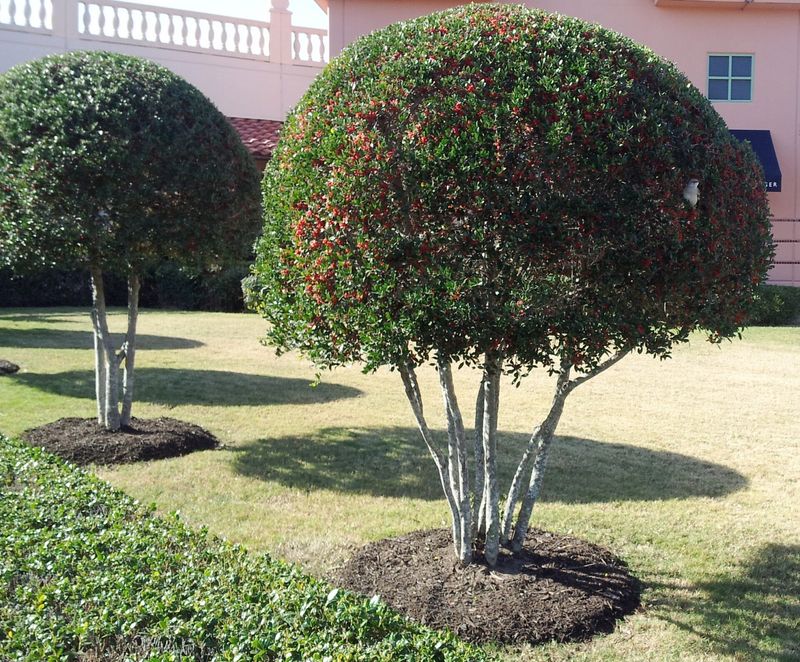
Not many trees can claim the title of Texas’s most adaptable native, but Yaupon Holly comes pretty close.
Growing naturally across East, Central, and even parts of South Texas, this tough little evergreen has been thriving in the Lone Star State long before anyone was planting trees with power lines in mind.
It typically tops out between 15 and 25 feet tall, which puts it comfortably below most overhead utility lines.
One of the best things about Yaupon Holly is how little fuss it requires. It handles clay soil, sandy soil, drought, flooding, and even salty coastal air without complaint.
For Texas homeowners who want a tree that practically takes care of itself, this one is hard to beat. It keeps its leaves year-round, so you get constant green color no matter the season.
Female Yaupon Holly trees also produce clusters of bright red or orange berries that birds absolutely love. Cedar waxwings, mockingbirds, and robins flock to these trees during fall and winter, turning your yard into a lively spot for birdwatching.
Planting a male and female tree close together ensures you get the best berry display each year.
Because Yaupon Holly grows at a moderate pace and stays relatively compact, utility companies rarely need to prune it back. That means fewer disruptions to your landscape and no awkward, lopsided cuts that can make a tree look unhealthy.
You can also trim it yourself into a tidy shape if you prefer a more formal look. For low-maintenance beauty beneath power lines, Yaupon Holly is one of the smartest choices a Texas homeowner can make.
2. Texas Redbud
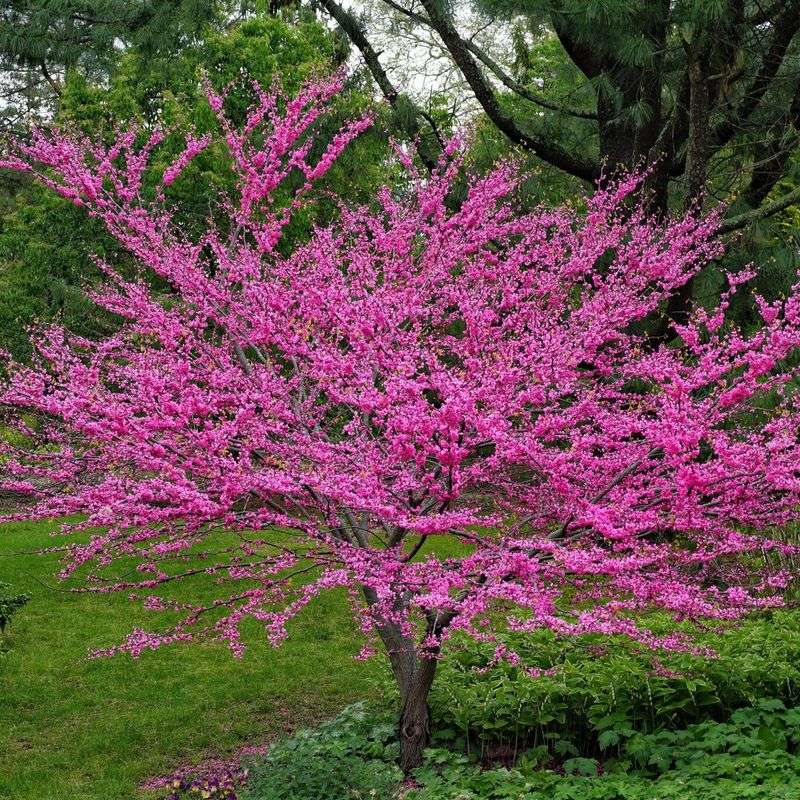
Every spring, the Texas Redbud puts on a show that stops people in their tracks. Before a single leaf appears, the entire tree erupts in clusters of vivid pink to magenta flowers that cover every branch from top to bottom.
It is one of the most recognizable signs of spring across the state, and planting one near your home means you get a front-row seat to that display every year.
Your Texas Garden Changes Every Week. Your Plan Should Too.
Gardening in Texas changes quickly throughout the season. Every Friday you’ll receive a simple weekly plan showing exactly what to plant, prune, fertilize, harvest, and protect so you never miss the right timing.
Beyond its good looks, the Texas Redbud is a practical choice for spots beneath utility lines. It usually grows between 12 and 20 feet tall, making it one of the safer options when overhead clearance is limited.
Its naturally rounded canopy stays tidy without a lot of pruning, and the tree rarely sends up aggressive vertical growth that would threaten nearby wires.
Native to the limestone hills of Central Texas, this tree is built for tough conditions. It handles heat, drought, and rocky soil with ease once it gets established.
Watering it regularly during the first year or two gives it a strong start, but after that, it can survive on natural rainfall in most parts of the state. That kind of low-water toughness is a real bonus in a place like Texas.
The heart-shaped leaves that follow the spring flowers are attractive all on their own, turning yellow in fall before dropping. Pollinators, especially native bees, are drawn to the early blooms at a time when few other plants are flowering.
Planting a Texas Redbud near your power lines means you get seasonal color, wildlife value, and peace of mind, all wrapped up in one small but mighty tree.
3. Desert Willow
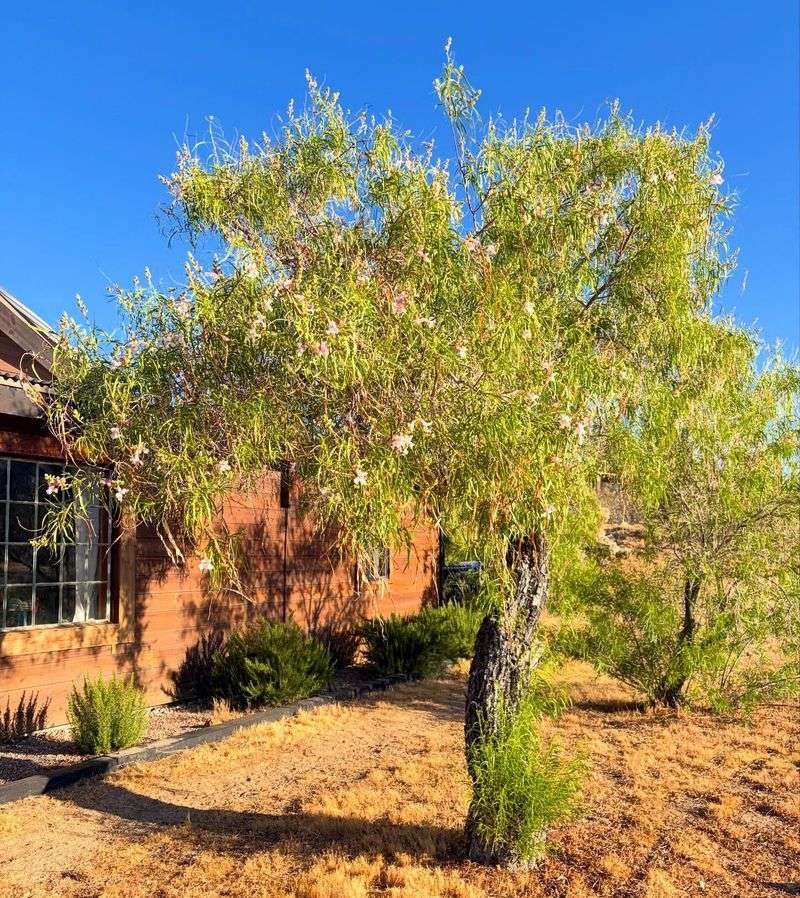
If you live in West Texas or anywhere that gets scorching summers and little rain, the Desert Willow might just become your favorite tree. Despite its name, it is not a true willow at all.
It belongs to a completely different plant family and is far more drought-tolerant than any willow you have ever seen. Gardeners in dry climates have been planting it for decades because it thrives where other trees struggle.
Desert Willow typically grows between 15 and 25 feet tall, which keeps it in a safe range beneath most overhead power lines. Its naturally open, airy canopy does not create the dense bulk that causes problems for utility lines during storms.
The slender, willow-like leaves give it a graceful look that feels right at home in a xeriscape or native plant garden.
The flowers are where this tree really shines. From late spring through fall, Desert Willow produces trumpet-shaped blooms in shades of pink, purple, lavender, and white, depending on the variety.
Hummingbirds are especially attracted to these flowers, and watching them hover around your tree during summer is genuinely entertaining. Some cultivars, like Bubba and Timeless Beauty, have been selected for especially showy flower displays.
Because Desert Willow is so well adapted to hot, dry conditions, it rarely needs supplemental watering once established. It also grows at a moderate rate, so it does not shoot up and hit power lines before you have a chance to manage it.
Utility pruning is seldom needed, which means the tree keeps its natural shape and stays looking attractive for years. For low-water, low-maintenance beauty, Desert Willow delivers in a big way.
4. Possumhaw Holly
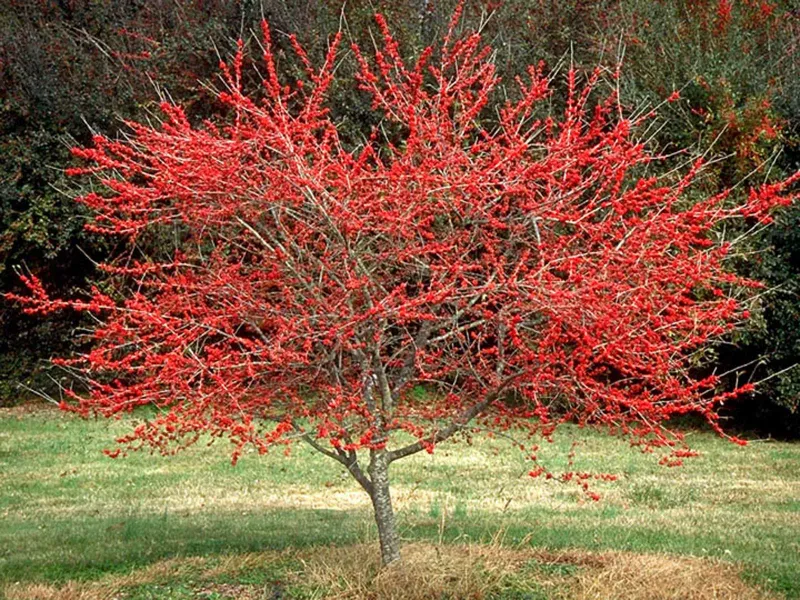
Walk past a Possumhaw Holly in January and you might do a double take. In the middle of winter, when most trees are bare and dull, this small native tree is absolutely loaded with bright red or orange berries that practically glow against a gray sky.
It is one of the most striking winter plants in the Texas landscape, and it earns that title without any extra effort from the gardener.
Possumhaw Holly is a deciduous relative of Yaupon Holly, meaning it drops its leaves in fall to reveal those stunning berry clusters in full view. The berries cling to the branches from November all the way through February or even March in some years.
Birds like cedar waxwings and bluebirds depend on these berries as a winter food source, so planting one benefits your local wildlife community.
In terms of size, Possumhaw Holly is very manageable beneath power lines. Most specimens grow between 7 and 15 feet tall, though some older plants in ideal conditions can reach closer to 20 feet.
Either way, that keeps it well within the range that utility companies consider safe. It tends to grow in a multi-stemmed, shrubby form that takes up more width than height, making it a good fit for restricted spaces.
Growing Possumhaw Holly is straightforward. It tolerates a wide range of soil types, including clay and poorly drained spots that other trees would not survive.
It also handles both full sun and partial shade reasonably well. Plant a male pollinator nearby to ensure the female tree produces its full berry load each season.
Once established, it is a remarkably self-sufficient tree that rewards you with color when you need it most.
5. Anacacho Orchid Tree
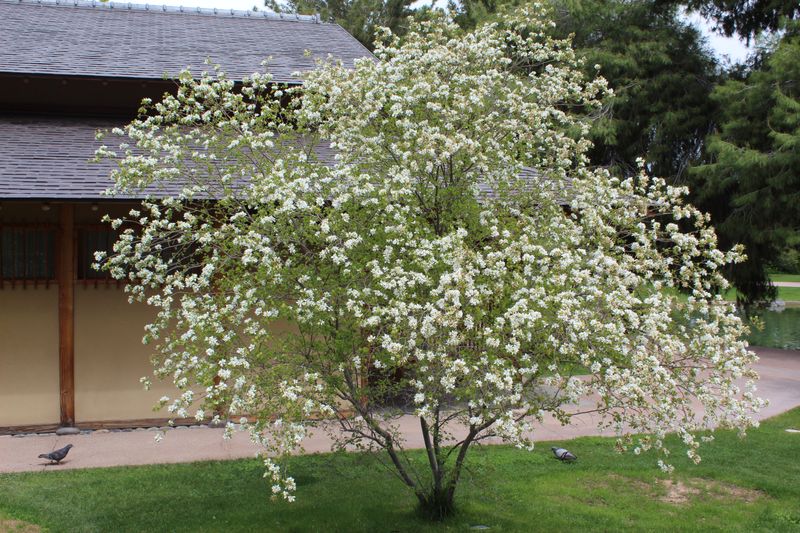
There is something almost magical about a tree that blooms like an orchid in the middle of a Texas spring. The Anacacho Orchid Tree does exactly that, producing clouds of fragrant white to pale pink flowers that look far too exotic for a tough native plant.
Found naturally in the limestone canyons of the Anacacho Mountains near Brackettville, Texas, this tree has a story as interesting as its flowers.
For homeowners worried about overhead utility lines, the Anacacho Orchid Tree is a genuinely reassuring choice. It typically grows between 8 and 12 feet tall, though some specimens in ideal conditions can reach around 15 feet.
That compact mature size puts it firmly in the safe zone beneath most residential power lines. Its rounded, multi-stemmed form stays naturally tidy and rarely requires aggressive pruning.
Beyond the spring flower display, the tree has a lot going for it through the rest of the year. Its small, two-lobed leaves are attractive and provide light, dappled shade beneath the canopy.
In mild winters, the tree may hold some of its leaves and even produce a second flush of blooms in fall. In colder winters, it drops its leaves but bounces back reliably in spring.
Anacacho Orchid Tree thrives in full sun and well-drained, alkaline soil, conditions that are very common across Central and South Texas. Once established, it is quite drought-tolerant and needs very little supplemental watering.
It is also relatively pest-free, which keeps maintenance simple. Pollinators, including bees and butterflies, flock to the fragrant flowers each spring.
For a small tree with big personality that plays nicely with overhead lines, this one is genuinely hard to pass up.
6. Eve’s Necklace
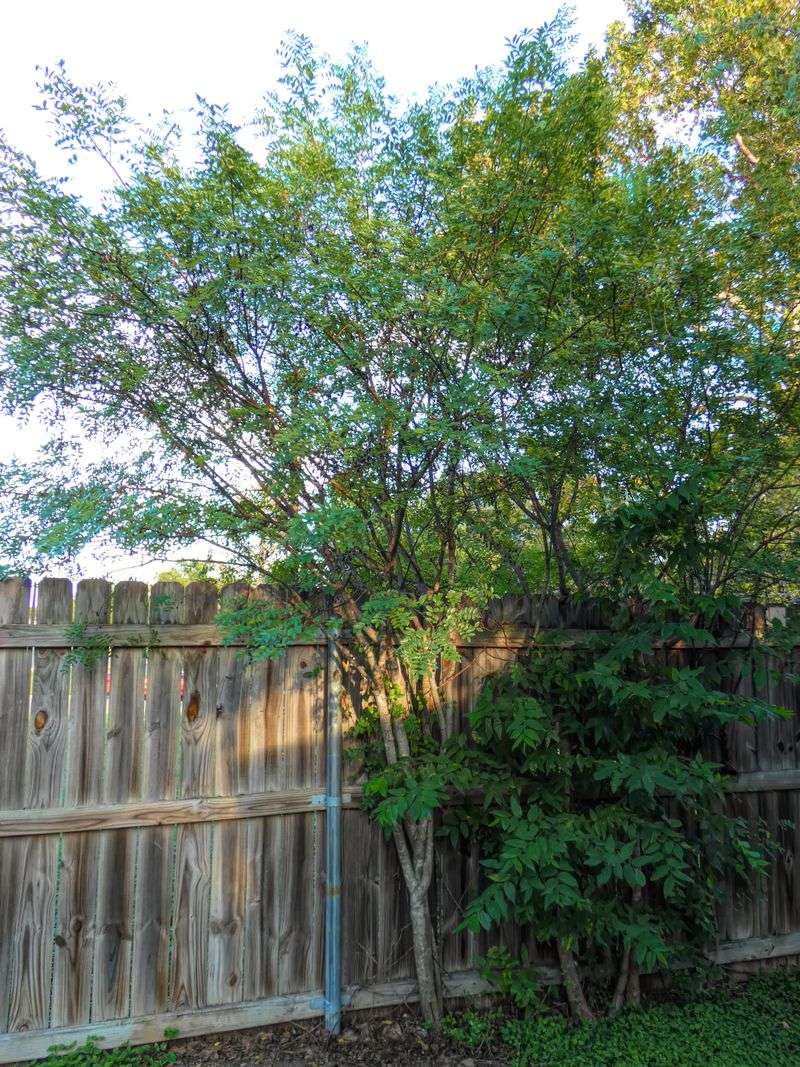
Not every great tree gets the attention it deserves, and Eve’s Necklace is a perfect example of an underused gem.
This small native tree grows across the limestone hills and woodlands of Central and North Texas, quietly doing its thing while flashier plants steal the spotlight.
Once you learn what it offers, you will wonder why more people are not planting it beneath their power lines.
Eve’s Necklace earns its unusual name from its seedpods. After the spring flowers fade, the tree produces long, dark, segmented pods that look remarkably like a string of beads or a necklace.
These pods hang from the branches through fall and into winter, giving the tree an ornamental quality that extends well beyond the blooming season. They are genuinely distinctive and spark a lot of curiosity from visitors who have never seen the tree before.
The spring flowers themselves are worth celebrating. Clusters of fragrant pink blooms appear in April and May, attracting bees and other pollinators at a time when native insects are actively searching for food.
The flower clusters look similar to wisteria in their hanging form, which adds a soft, romantic quality to the tree during peak bloom.
In terms of size, Eve’s Necklace typically grows between 10 and 20 feet tall, keeping it safely within the height range that works beneath most overhead utility corridors. It prefers well-drained, rocky, or limestone soil and handles drought well once established.
Full sun to partial shade suits it just fine. Because it grows at a moderate pace and stays naturally compact, utility pruning is rarely necessary.
For a tree that offers spring flowers, interesting seedpods, and power-line-friendly size, Eve’s Necklace checks every box.