How To Tell When Oregon Pears Are Ready To Pick Before They Feel Ripe
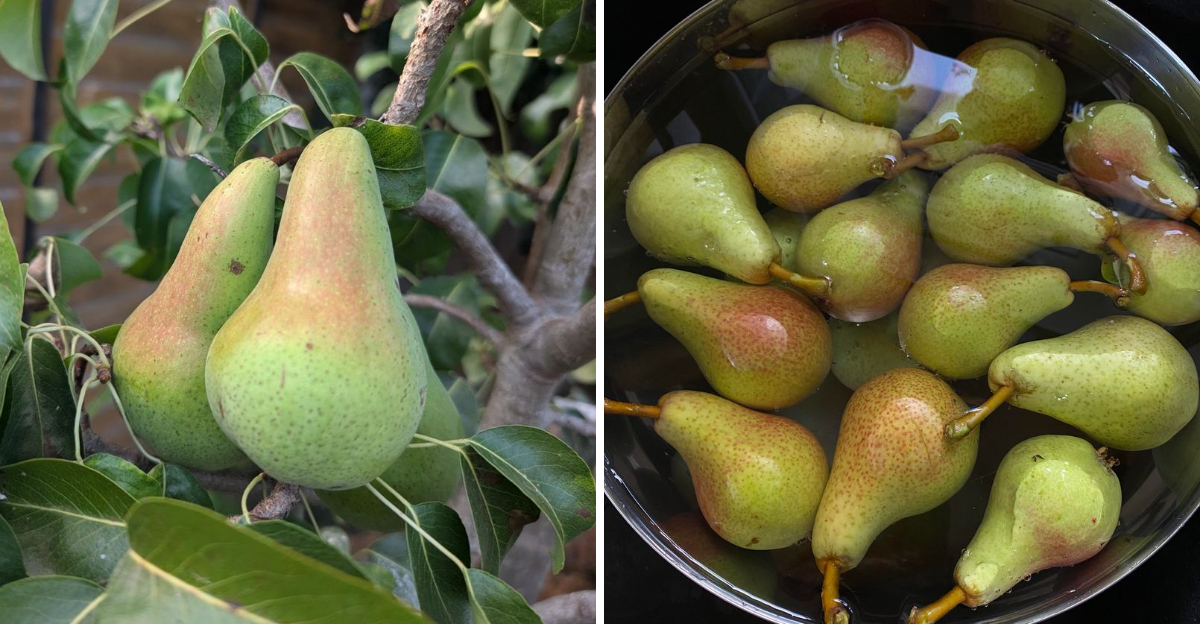
An Oregon pear tree can look ready long before the fruit is actually prepared to leave the branch.
The skin may be full-sized. The color may be changing. A few fruits might even look tempting enough to eat right there in the yard.
That is where harvest timing gets tricky.
For several common pears, softness is not the signal you are waiting for. In fact, waiting for that familiar give can mean the best picking window has already slipped past.
So what should you watch instead?
The clues are quieter.
A small change at the stem, a shift in background color, the condition of the seeds, and the way one sample tastes can tell you far more than squeezing the fruit ever will.
Oregon growers who learn those signals can bring pears indoors at the stage when they still have the firmness needed to finish ripening properly.
The fruit may not feel ready yet.
That is exactly the point, because the best harvest often happens before ripeness becomes obvious outside.
1. Lift The Pear To A Horizontal Position
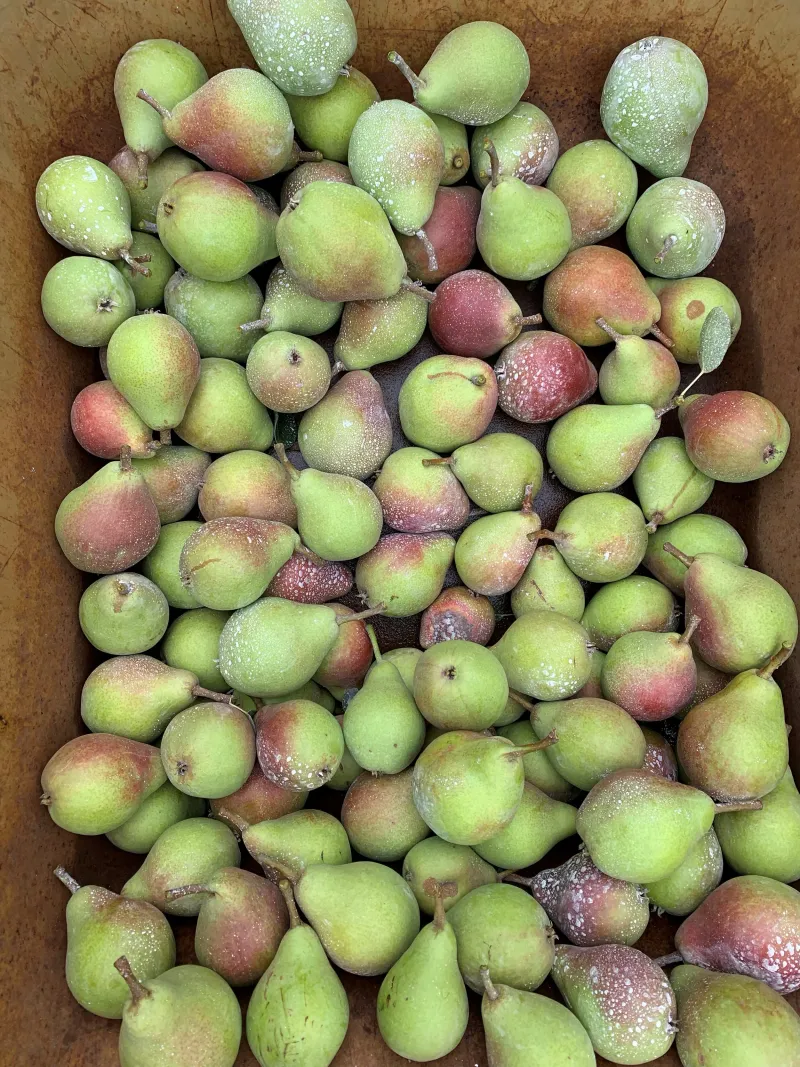
A pear that is mature enough to harvest often loosens at the stem before anything about the flesh feels ripe.
Cup the fruit in your hand and lift it gently toward a horizontal position. Do not pull straight down. When a European pear is ready, the stem may separate cleanly from the spur with very little force.
That easy release is one of the most useful orchard checks because it tests how the fruit is attached rather than how soft it feels.
Try several pears from different parts of the tree.
Fruit on the sunnier outer canopy can mature at a slightly different pace from fruit tucked deeper inside. One easy release does not automatically mean every pear should come off the same afternoon.
A stubborn stem means wait.
Do not twist harder until the fruit comes free, because force can break the spur or make an immature pear look ready when it was simply pulled loose.
Handle the fruit gently after picking too.
European pears are firm at harvest, but they can still bruise beneath the skin. Those bruises may not become obvious until the pear finishes ripening indoors.
The trick is wonderfully simple.
Lift instead of tug.
When several representative fruits release cleanly and other maturity clues line up, the tree is telling you the harvest window has opened.
2. Watch Dark Green Skin Turn Paler
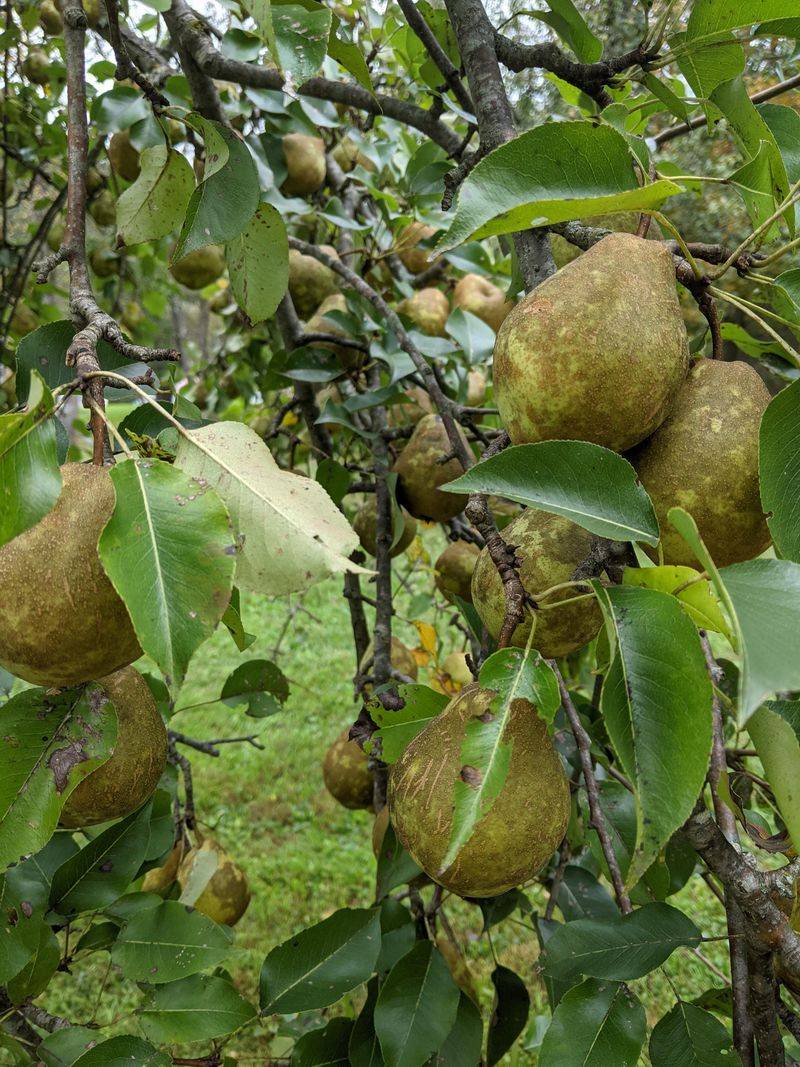
Color can help confirm that the harvest window is approaching, but the useful change is usually subtler than waiting for a pear to turn completely yellow.
Bartlett is the easiest example.
As harvest nears, its background color begins moving from a deep, hard green toward a lighter green or yellow-green.
The fruit should still feel firm. A Bartlett that has become soft and fully yellow while hanging on the tree is already much farther into ripening than you want for normal harvest and storage.
Bosc plays by different visual rules.
Its brown russeted skin does not give you the same dramatic green-to-yellow transition, so color becomes a supporting clue rather than the main decision.
Your Oregon Garden Changes Every Week. Your Plan Should Too.
Gardening in Oregon changes quickly throughout the season. Every Friday you’ll receive a simple weekly plan showing exactly what to plant, prune, fertilize, harvest, and protect so you never miss the right timing.
Comice and Anjou can also show more restrained changes that are easier to notice when you compare fruit from the same tree over several days.
That makes photos surprisingly useful.
Take a close picture of a few representative pears, then compare the background color every several days as expected harvest approaches.
Do not compare one cultivar with another.
A ripe-looking Bartlett and a harvest-ready Bosc can have completely different surface colors while both are at the correct picking stage.
Use color together with stem release, internal maturity, and expected timing.
The skin can whisper that harvest is close.
It rarely deserves the final vote by itself.
3. Check The Fruit Dots For Brown Color
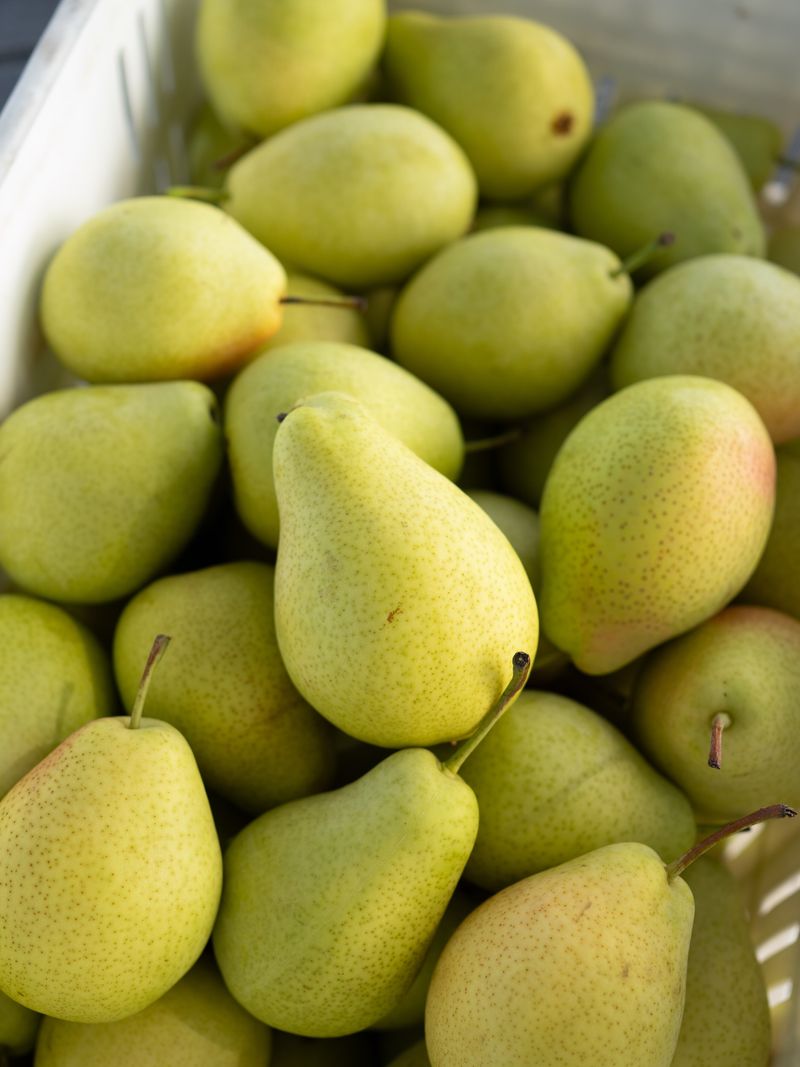
Those tiny dots scattered across pear skin can change as fruit matures, but they are better treated as a supporting clue than a harvest command.
The dots are lenticels, natural openings in the skin involved in gas exchange. On some smooth-skinned cultivars, they become darker or more noticeable as the pear approaches maturity.
That can be useful when you have watched the same tree for several seasons.
On Bartlett, for example, the lenticels may stand out more clearly against a background color that is also beginning to lighten. On heavily russeted Bosc fruit, however, the surface pattern makes this cue much harder to read.
Do not pick an entire Oregon pear crop because the dots suddenly look brown.
Lenticel appearance varies with cultivar, growing conditions, sun exposure, and the natural finish of the skin. It is much less dependable than a clean stem release or a variety-specific harvest window.
Use it to strengthen a pattern you are already seeing.
Several pears lift easily. Background color has shifted. Sample fruit shows mature seeds. The lenticels also look more developed than they did a week earlier.
Together, those clues become persuasive.
Keep Asian pears separate from this logic.
Asian pears are generally harvested when they have developed their eating quality on the tree, unlike European pears that are commonly picked mature but firm.
The dots can help you notice change.
They should never make the decision alone.
4. Look For Brown Seeds Inside
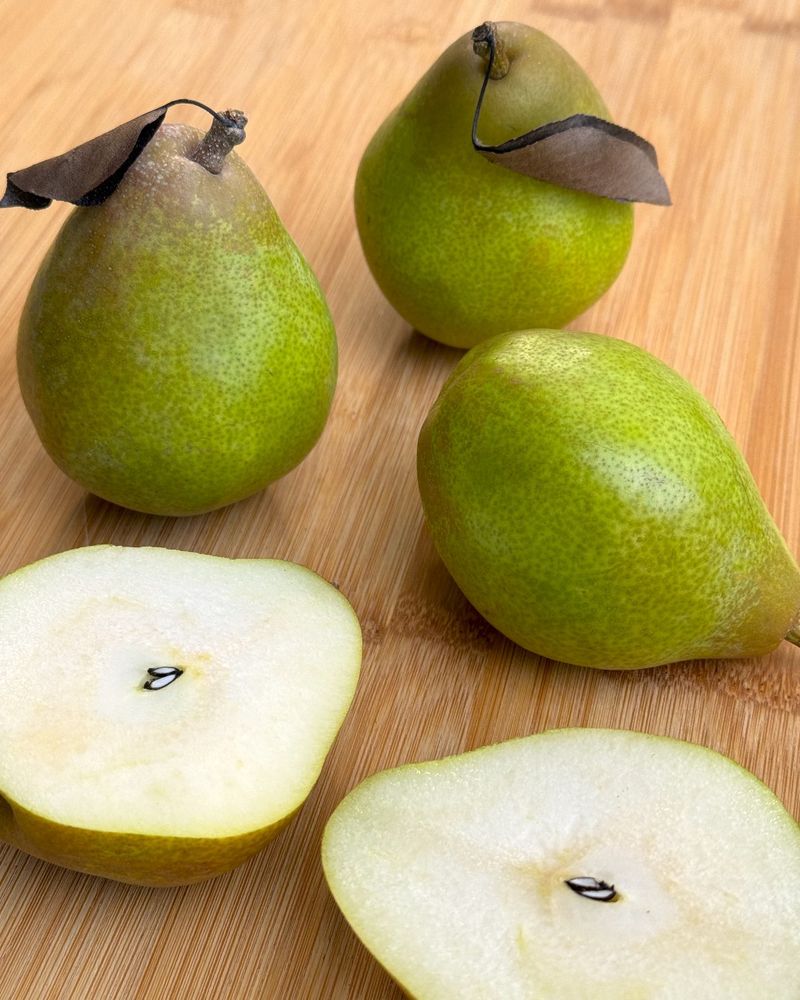
Cutting open one sample pear can reveal something the outside cannot show you.
As many European pears approach harvest maturity, the seeds inside darken from pale cream toward tan or brown. That change can support the other signs you are seeing on the tree.
Do not expect seed color to behave like an on-off switch.
A pear can contain dark seeds while still lacking some of the other qualities you want at harvest, and fruit on different parts of one tree can mature at slightly different rates.
Sample more than one fruit.
Take one from a sunny outer branch and another from a less exposed part of the canopy. Slice through the core and compare the seeds while also noting the flesh texture, background color, and how easily each fruit separated from the tree.
Pale seeds across several samples suggest more time may be useful.
Predominantly brown seeds combined with easy stem release and the expected seasonal timing give you a stronger case for beginning harvest.
The sacrificed samples do not need to be wasted.
Taste them and use the firmness and flavor as another reference point for the crop.
This test becomes especially helpful when visual color is difficult to judge, as it can be with russeted cultivars.
Think of seed color as confirmation from inside the fruit.
It supports the diagnosis.
It does not replace the other harvest clues around it.
5. Feel For A Smoother Waxy Skin
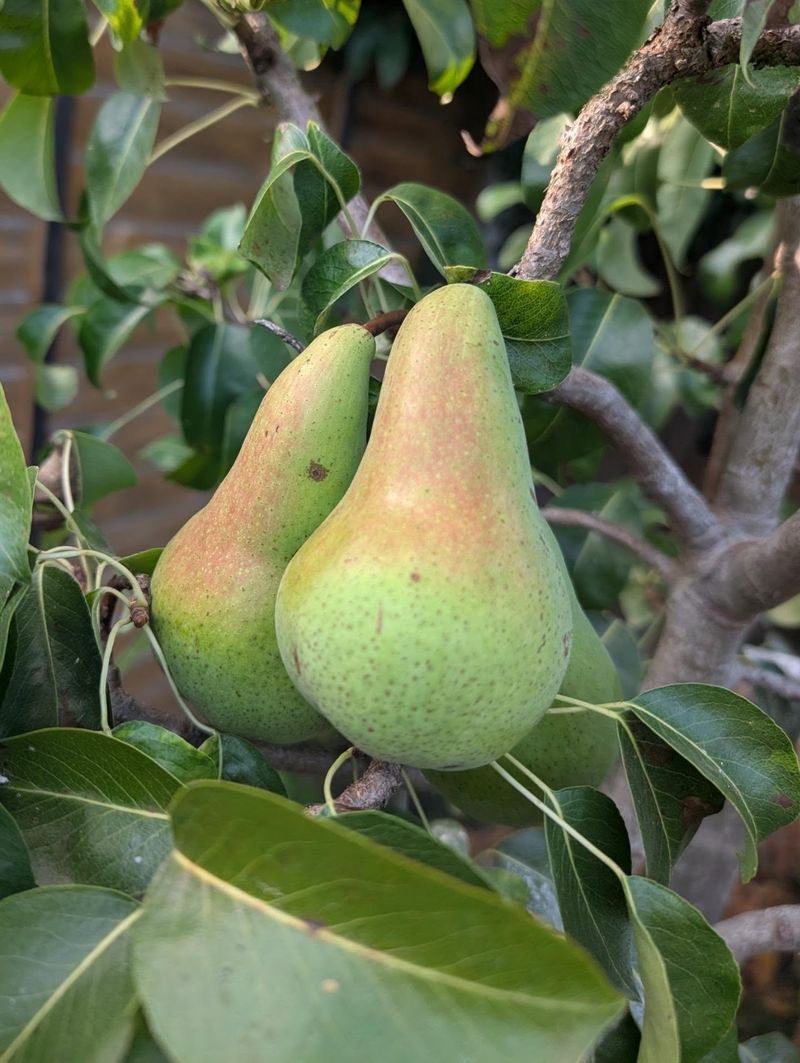
Touch can help with pear harvest, but softness is the wrong thing to test while European pears are still hanging on the tree.
A harvest-ready Bartlett, Bosc, Comice, or Anjou should generally remain firm.
That firmness is part of what allows the fruit to complete its ripening process after harvest without becoming overmature around the core first.
Surface feel can change slightly as pears mature.
Some smooth-skinned cultivars may feel less matte or develop a faintly waxier finish, but that difference is subtle and varies too much to use as a primary test.
Bosc is even harder to judge this way because its russeted skin naturally feels different from smooth varieties.
Keep your fingers gentle.
Repeated squeezing is not a reliable orchard test and can bruise fruit that would otherwise store beautifully. A thumb pressed hard into the side can damage flesh long before a mark appears outside.
Save the familiar softness test for later.
Once a European pear has been harvested and given the conditioning or room-temperature ripening its cultivar needs, check near the neck close to the stem.
A slight give there is a much better sign that the fruit is approaching eating ripeness.
At harvest, your hand should be looking for release, not softness.
Lift the pear gently and notice how it separates.
Let skin texture remain a minor supporting clue.
The fruit can be perfectly ready to pick while still feeling surprisingly hard.
6. Taste For Sweetness While Flesh Stays Firm
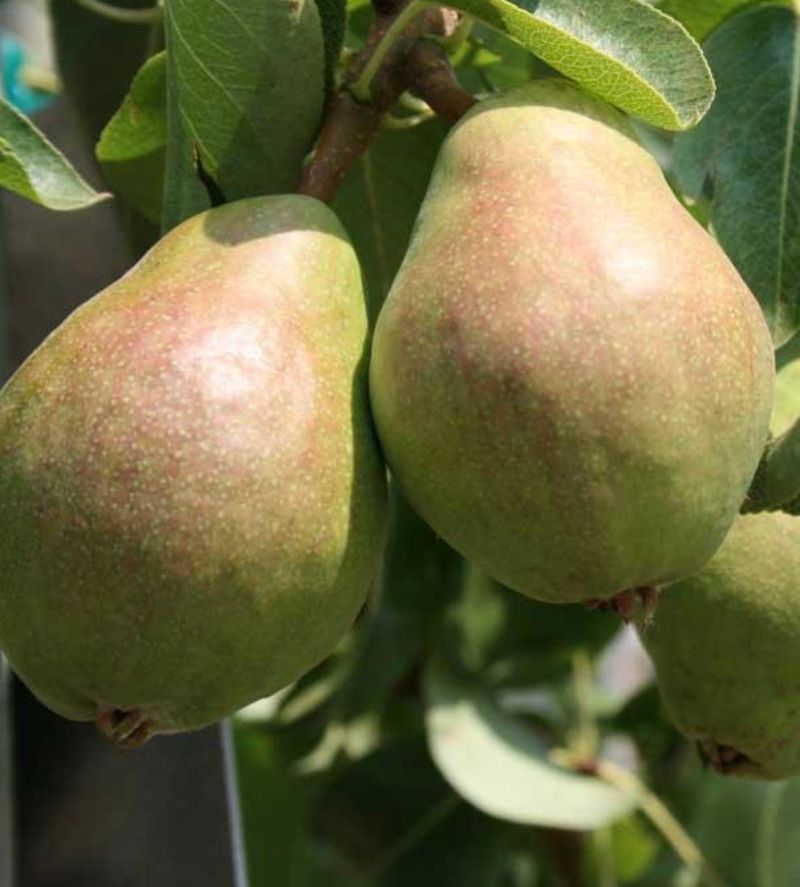
A sample pear can taste immature even when it looks full-sized, which makes flavor another useful supporting check as harvest gets close.
Do not expect dessert texture yet.
A European pear picked at the proper mature stage is still firm, and some cultivars need time off the tree before their familiar aroma, juiciness, and buttery texture develop.
What you are looking for is progress.
Slice a representative fruit and compare it with one you tested several days earlier. Extremely starchy, grassy, or undeveloped flavor suggests the crop may still need time.
A pear approaching maturity should begin showing more of the sweetness and characteristic flavor that will deepen during ripening.
Texture matters too.
The flesh should still be firm rather than soft around the core. Waiting until an on-tree sample feels beautifully melting can mean you have waited beyond the ideal picking stage for many European cultivars.
Taste more than one sample when the crop is uneven.
Sun exposure, crop load, and branch position can create small differences across the same tree.
Then combine the result with stronger clues.
Fruit is lifting cleanly. Background color has begun to shift. Seeds have darkened. The sample tastes more developed while remaining firm.
That combination is far more useful than sweetness alone.
The orchard sample is not supposed to taste like the pear you serve at the table.
It is a preview of a fruit that is mature enough to finish the job indoors.
7. Watch For The First Sound Fruit Drop
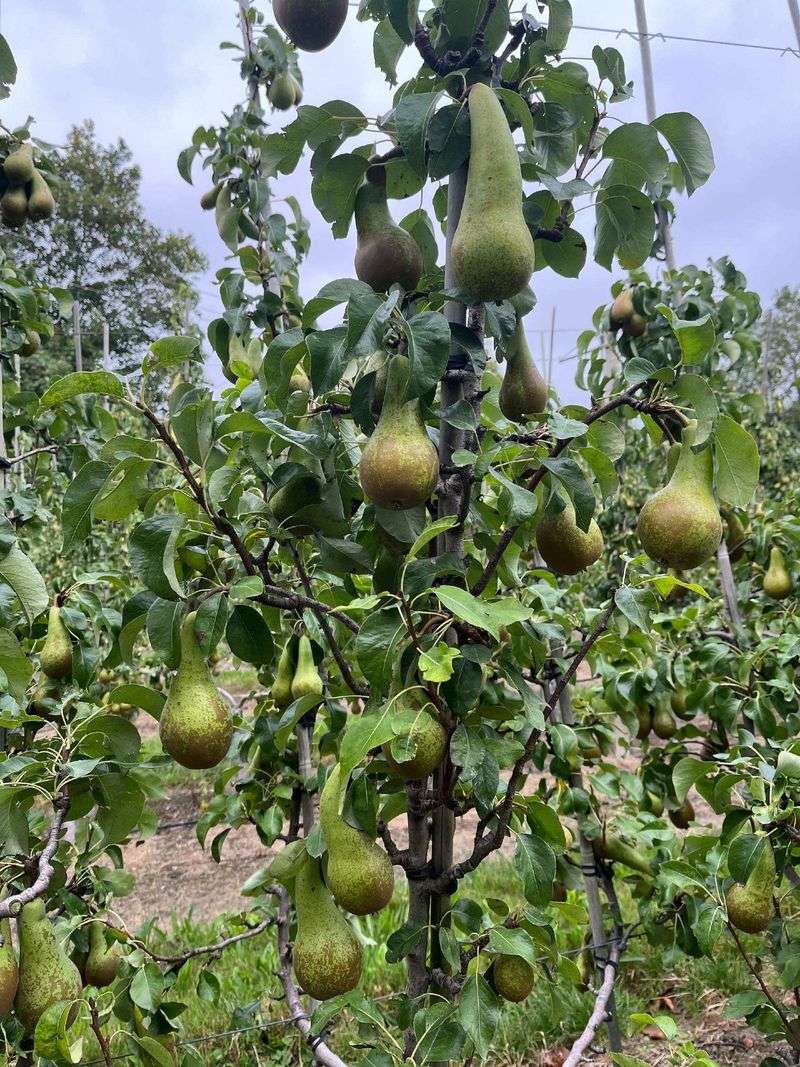
The first healthy pear on the ground should get your attention, but it should not send you racing for every fruit on the tree.
Natural drop can increase as pears approach maturity because the connection at the stem begins loosening.
A sound, full-sized pear lying beneath the canopy can therefore be a useful signal that it is time to start checking the crop carefully.
Inspect the fallen fruit first.
Wind can knock pears loose. Insect injury, disease, bird damage, or a broken stem can also send fruit down early. A damaged pear is not reliable evidence that the rest of the tree has reached harvest maturity.
Use a healthy drop as a prompt.
Try the lift test on several attached fruits. Check background color. Cut a sample and look at seeds and flesh. When those clues agree, you can begin harvesting.
Do not wait for the ground to fill.
By the time large numbers of European pears are dropping naturally, some fruit may already be moving beyond the best stage for storage and controlled ripening.
Ground fruit creates another reason to check frequently.
Split or bruised pears can attract yellowjackets and other insects around the tree, making harvest less pleasant and increasing waste.
During the final stretch before picking, walk under the canopy regularly.
One good pear on the ground is not the harvest.
It is the tree’s way of telling you to start paying much closer attention.
8. Pick European Pears Before They Soften
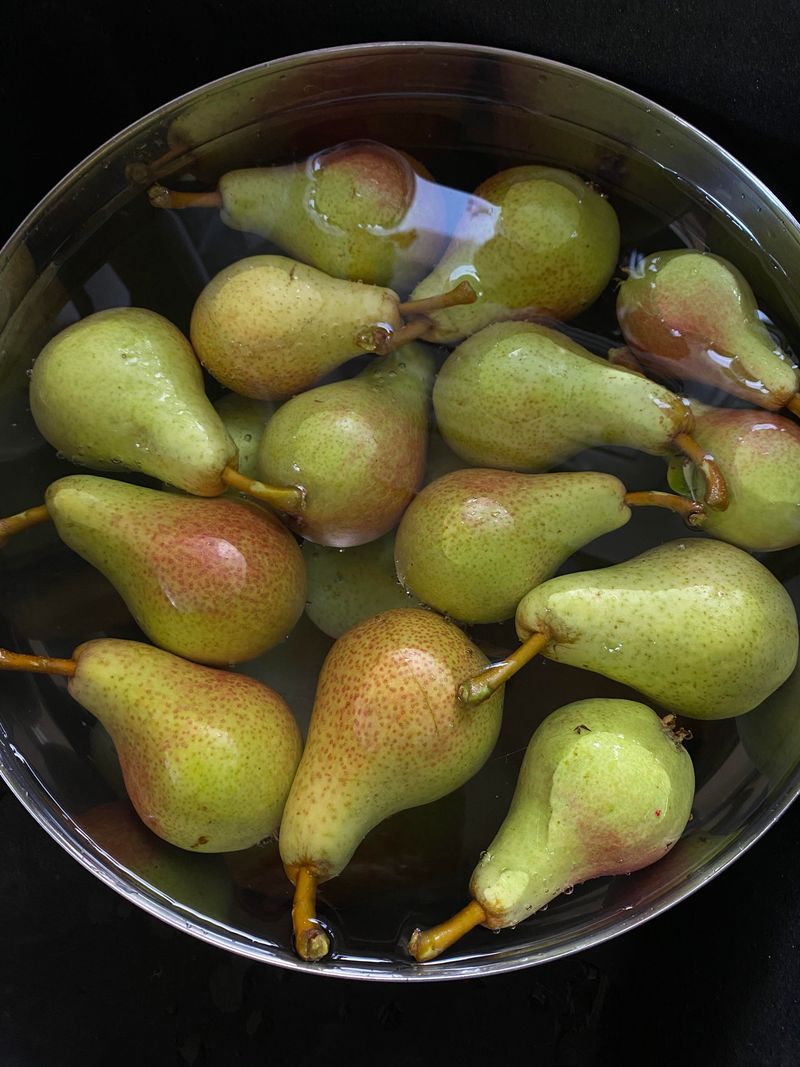
The biggest pear-harvest adjustment for many Oregon gardeners is accepting that firm can mean ready.
European pears such as Bartlett, Bosc, Comice, and Anjou are generally harvested when physiologically mature but still firm. They then complete ripening off the tree, where texture can develop more evenly.
That is why waiting for softness on the branch works against you.
Once picked, the next step depends on cultivar and how long you plan to store the fruit.
Bartlett can finish ripening relatively quickly after harvest, while winter pears such as Bosc, Comice, and Anjou commonly benefit from a period of cold conditioning before they soften properly at room temperature.
A household refrigerator can help with small crops, provided the fruit is kept cold without freezing and checked for damage.
Then bring out only as many pears as you want to ripen.
At room temperature, test the neck near the stem rather than squeezing the widest part of the fruit. A slight give there signals that eating ripeness is approaching.
Asian pears need a separate routine.
They are generally left on the tree until they develop the crisp, sweet eating quality expected from the cultivar and should not be handled like European pears.
Know which type you grow before harvest begins.
For European pears, softness belongs at the end of the process.
The orchard harvest happens earlier, while the fruit still feels firm enough to make a first-time grower wonder whether it could possibly be ready.