Why Your Wisconsin Lawn Turns Brown In Patches Every Fall And What Actually Fixes It
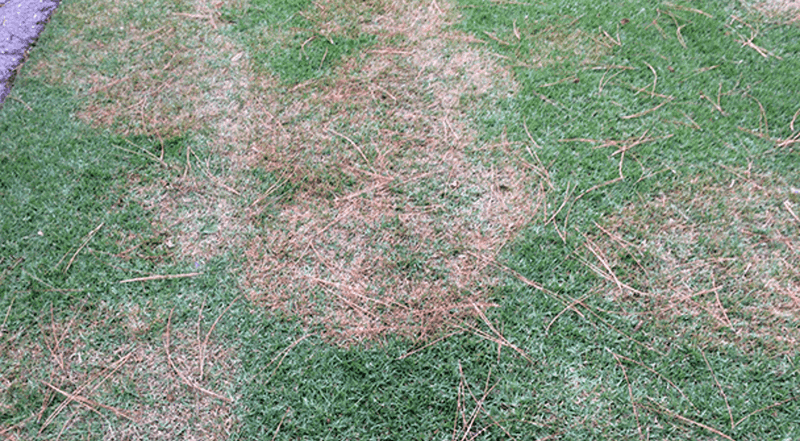
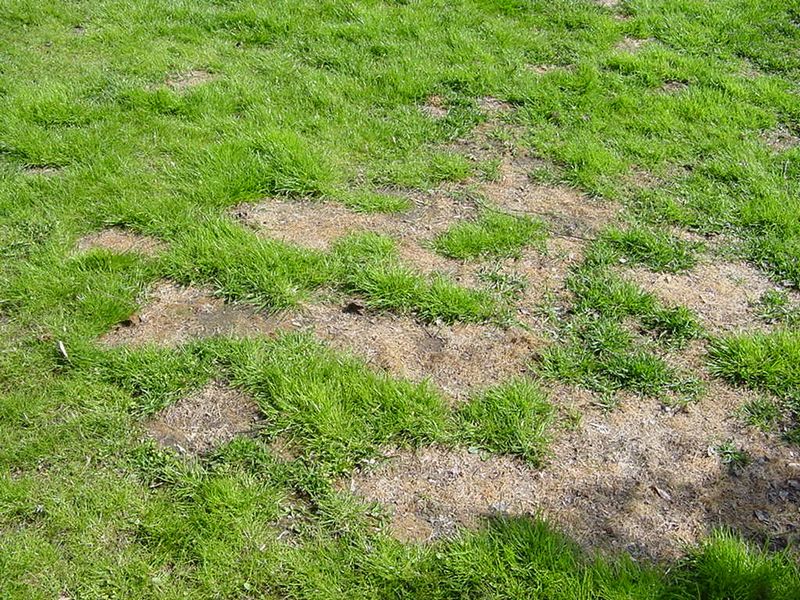
Brown patches showing up in your Wisconsin lawn can feel alarming, but they don’t always mean something is seriously wrong. Wisconsin lawns can develop uneven color in late summer or fall for a wide range of reasons, and not every patch points to the same problem.
Understanding what you’re actually looking at before spending money on pesticides or repairs can save you time, frustration, and a lot of guesswork.
Why Wisconsin lawns can brown unevenly in late summer or fall
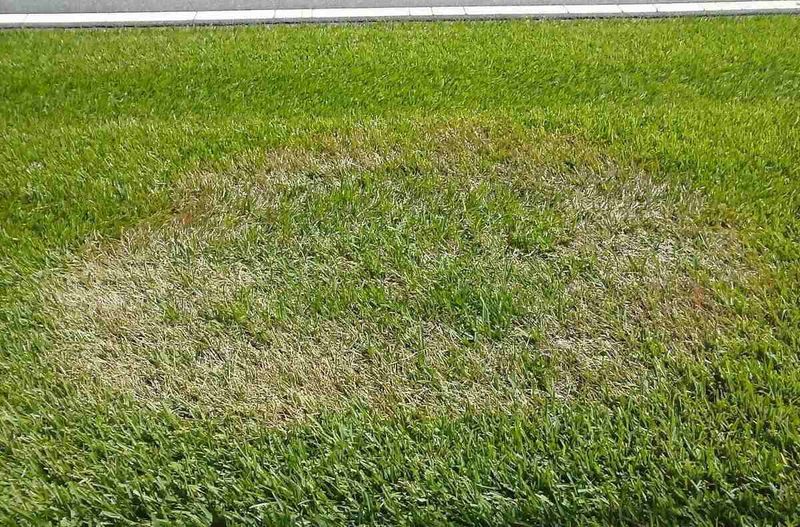
Brown patches in a Wisconsin lawn don’t always mean something has gone wrong. One of the most overlooked explanations is drought dormancy, and UW-Madison Extension’s fall lawn care guidance specifically cautions Wisconsin homeowners not to assume every brown area is dead or diseased.
Kentucky bluegrass, the dominant lawn grass across Wisconsin, can enter dormancy during dry or hot stretches and remain brown for several weeks while still very much alive.
Wisconsin also has a mix of grass species and cultivars that don’t all slow down at the same pace. One corner of a lawn might hold a cultivar that browns earlier under heat or moisture stress, while an adjacent section stays green longer.
That difference alone can create a patchy, uneven look that has nothing to do with pests or disease.
A few early clues can help you decide whether dormancy is a reasonable explanation. Broad, gradual color changes that follow a dry spell, a heat wave, or a shift into cooler fall temperatures are more consistent with dormancy than with pest or disease injury.
Wisconsin lawns experiencing widespread color change across sunny, open areas after a dry August or September are strong candidates for this explanation.
Turf that is firmly rooted and doesn’t pull up easily is another sign worth noting. If you tug on a brown patch and the grass holds its ground, the root system is likely intact, which is more consistent with dormancy or surface stress than with grub feeding.
That said, intact roots don’t rule out disease, and dormancy doesn’t explain every sharply defined or irregularly shaped patch. Several causes can overlap in the same Wisconsin lawn at the same time, so treat dormancy as a starting probability rather than a final answer.
Use Wisconsin patch patterns as clues, not proof
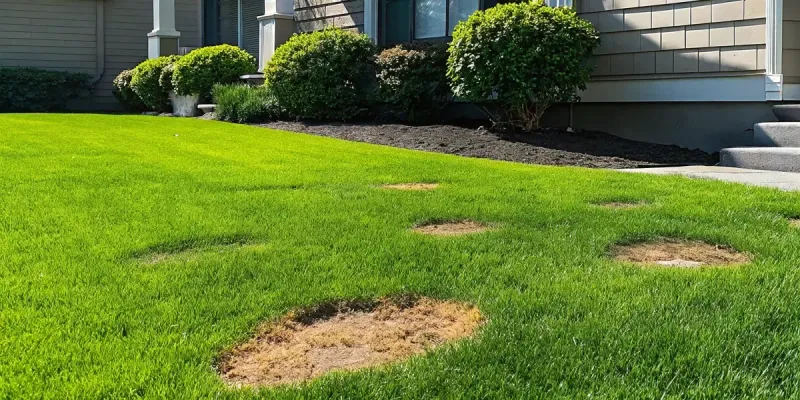
Before you pull up any turf or reach for a product, spend a few minutes observing the patches from a distance and up close. Record what the edges look like, whether the shape is irregular or ring-like, when the patches first appeared, and whether you’ve seen them in the same spots in previous years.
That information narrows the possibilities considerably, even if it doesn’t give you a definitive answer on its own.
Irregular patches with ragged or soft edges that appeared in late summer or early fall, combined with sod that feels loose when you press down, are patterns worth investigating for grub activity or wildlife damage. Wisconsin Horticulture’s grub control guidance points to animal digging by skunks, raccoons, crows, and turkeys as a visible field sign that grubs may be present in the root zone.
Your Wisconsin Garden Changes Every Week. Your Plan Should Too.
Gardening in Wisconsin changes quickly throughout the season. Every Friday you’ll receive a simple weekly plan showing exactly what to plant, prune, fertilize, harvest, and protect so you never miss the right timing.
Missing roots and turf that peels back like a loose mat are additional clues in the same direction.
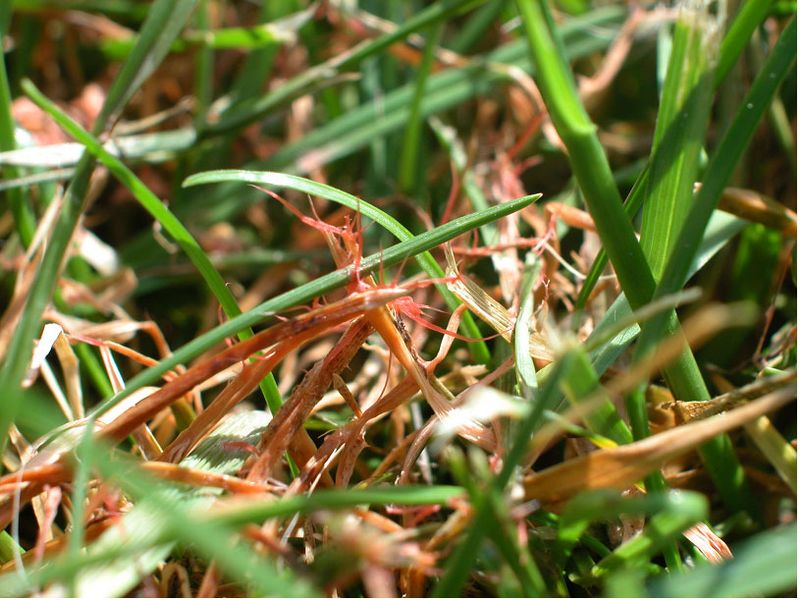
Patterns that suggest disease look different. Circular or ring-shaped outlines, a straw-colored or bleached center surrounded by darker grass, lesions on individual blades, red or orange powdery spores, or matted turf after wet weather are all clues that lean toward a fungal problem rather than insect feeding.
UW-Madison’s lawn disease quick reference lists several Wisconsin turf diseases with distinct visual signatures, and recurring patches in the same location year after year are a particularly meaningful clue for disease.
The important qualifier is that none of these clues work as proof in isolation. Grubs and disease can coexist in the same Wisconsin lawn.
A lawn with compacted soil and poor drainage may be dealing with both weakened roots and a fungal infection at the same time. Pattern observation is the first step in a sequence of overlapping checks, not a shortcut to a single diagnosis.
Inspect Wisconsin roots at the brown-to-green border
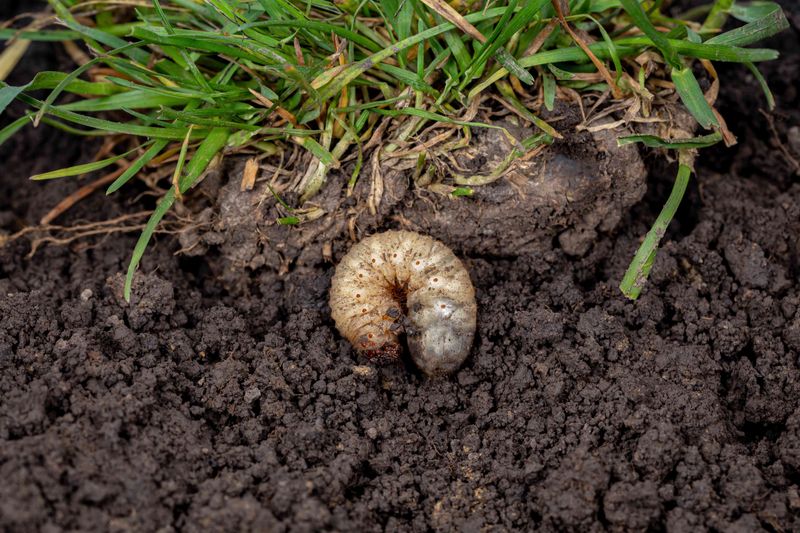
Root inspection is the most direct way to gather evidence for or against grub damage in a Wisconsin lawn. The most productive place to look is the transition zone, the area where brown turf meets healthy green grass, rather than the center of the patch where the damage may already be complete and grubs may have moved on.
Mark out several one-square-foot areas along that border. Use a sharp spade or knife to cut through the sod and carefully peel it back, then examine the thatch layer and the top two to three inches of soil.
You’re looking for pale, C-shaped larvae with a cream or white body and a tan or brown head, along with roots that are missing, chewed short, or absent entirely. The Wisconsin Lawn Care Calendar recommends inspecting several spots rather than just one, since grub populations are rarely uniform across a lawn.
After each inspection, replace the sod and water the area to help it reestablish.
The UW-Madison Extension publication on white grubs in turfgrass explains that grubs feed on grass roots from midsummer through fall, and that turf with severely reduced roots loses its ability to take up water, causing it to wilt and die even when moisture is present. That connection between root loss and surface browning is what makes the inspection meaningful.
Wildlife signs add useful context. Skunk digging tends to leave small cone-shaped holes or overturned patches of sod.
Raccoons often roll back larger sections. Crows and turkeys probe and peck in clusters.
These animals follow grub scent, so their activity near a brown patch raises the probability that larvae are present. However, the tearing and turf loss caused by the animals themselves can be more visible than any root damage from the grubs, so finding wildlife activity is a clue to investigate further rather than automatic confirmation that grubs caused the entire brown area.
Wisconsin Extension’s grub guidance notes that most lawns contain some grubs without requiring any treatment, which is why counting matters.
Interpret Wisconsin grub counts without an automatic treatment rule
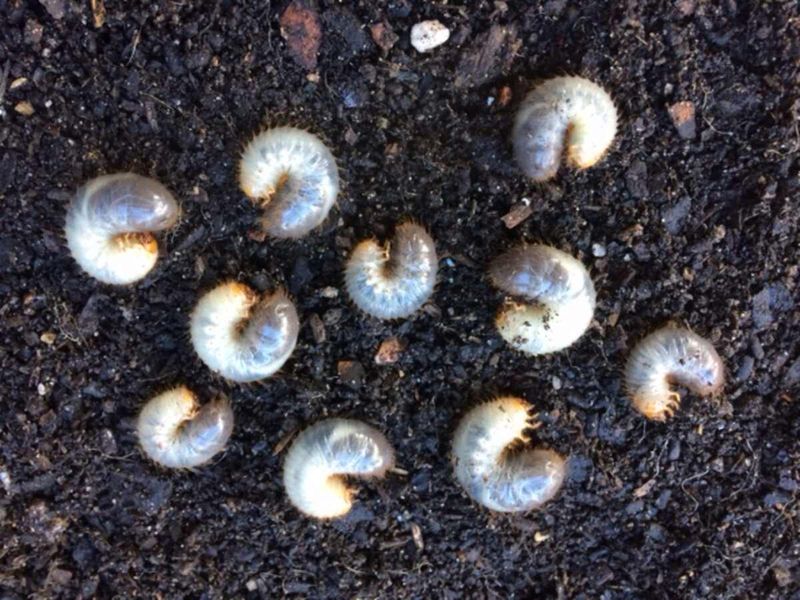
Finding grubs during an inspection doesn’t automatically mean your Wisconsin lawn needs treatment. The number of grubs per square foot matters, and so does the condition of the turf, the soil, and how much root loss has actually occurred.
UW-Madison’s turfgrass white grub publication describes roughly five or more grubs per square foot as a level that can cause damage, but frames that figure as a scouting reference rather than a universal trigger.
Grub species matters too. The Wisconsin Extension European chafer fact sheet describes lower thresholds for low-maintenance turf that isn’t irrigated and higher thresholds for irrigated lawns that can better tolerate some root loss.
A healthy, well-watered lawn with good soil can withstand a modest grub population without showing visible browning. A stressed, compacted, or drought-weakened Wisconsin lawn may show symptoms at lower counts.
Tolerance for cosmetic injury also varies by homeowner, which is why thresholds are guides rather than prescriptions.
The timing of any grub-related decision depends on whether you’re considering prevention or a response to confirmed damage. Preventative products are timed around egg-laying and early larval development, which in Wisconsin typically falls in late spring or early summer depending on the species.
Curative products are intended for situations where grubs and damaging symptoms are already present, and Wisconsin Horticulture’s grub control page lists species-specific curative windows that can extend from August into October. The product label controls the legal application instructions and timing in every case.
Routine annual insecticide applications are not supported by Wisconsin guidance when there is no confirmed need. The Wisconsin Pollinator Protection Plan from the Department of Agriculture, Trade and Consumer Protection reinforces that pesticide users must read and follow labels exactly and should confirm that treatment is actually necessary before applying any product.
A background population of a few grubs with no visible turf injury does not meet that bar.
Look for Wisconsin disease evidence on blades and in the soil
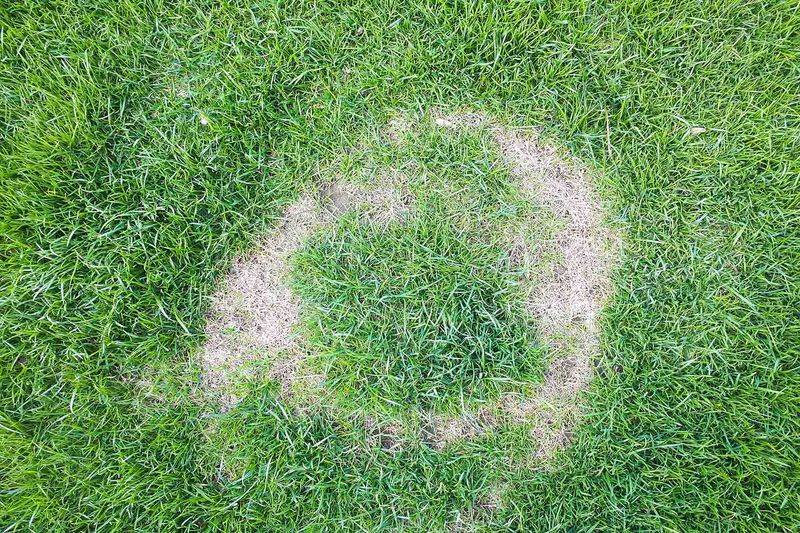
When a root inspection turns up few or no grubs, or when the patch shape and timing don’t fit a grub pattern, the next step is a close look at the grass blades and soil conditions. Wisconsin lawn diseases often leave marks that a grub problem doesn’t, and spotting them can redirect the diagnosis before any money is spent on the wrong product.
Circular or ring-shaped patches with straw-colored or bleached centers are a meaningful visual clue. So are patches that return to the same location in the same rough shape year after year.
Leaf lesions, which can appear as tan, brown, or water-soaked spots on individual blades, point toward fungal activity rather than root feeding. Red or orange powdery spores on blades indicate rust.
Matted, collapsed turf after extended wet or cool periods is consistent with several Wisconsin fungal diseases. UW-Madison’s lawn disease quick reference covers the visual signatures of necrotic ring spot, leaf spot, rust, red thread, and snow molds, among others.
Necrotic ring spot deserves particular attention in Wisconsin because Kentucky bluegrass is susceptible to it, and the disease can become visible after a sequence that doesn’t always feel like a disease problem. The fungus infects roots and crowns during cool, wet periods in spring or fall, but the characteristic bleached rings or frogeye patterns often don’t appear until summer heat and drought stress arrive weeks later.
That delay can make the problem look like a drought or grub issue at first glance.
Soil and site conditions are part of the picture too. Compacted soil, poor drainage, excessive thatch, prolonged leaf wetness, and a history of heavy nitrogen use can all predispose a Wisconsin lawn to fungal problems.
Wisconsin Horticulture’s lawn maintenance guidance emphasizes that correct diagnosis matters before reaching for a fungicide, and that cultural factors driving disease are often more important to address than the fungus itself.
Account for Wisconsin stress, soil, and wildlife damage
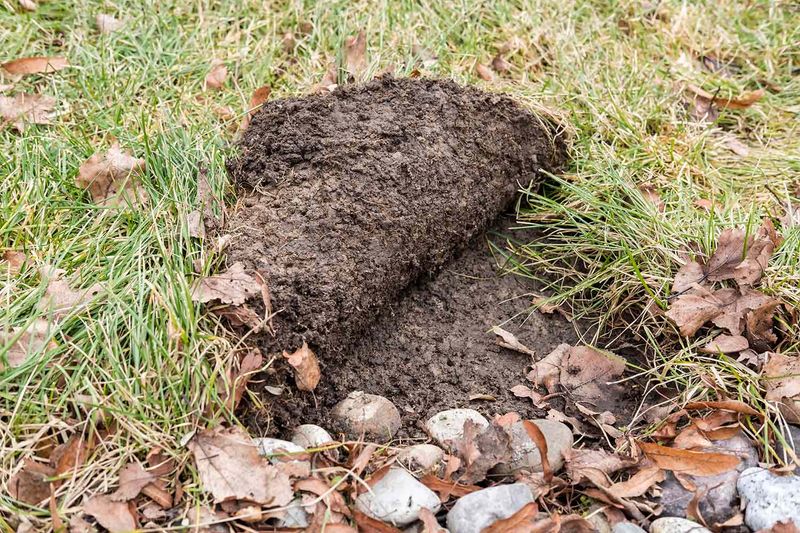
Grubs and disease get most of the attention, but Wisconsin lawn browning often has a nonliving contributor mixed in. Drought stress, compaction, poor drainage, chemical injury from fertilizer spills or herbicide drift, and dog urine can all produce brown patches that look similar to pest or disease damage.
Compacted soil in particular creates a chain reaction: it reduces root depth and water infiltration, which weakens the turf’s ability to handle dry spells or recover from any root loss caused by grubs or disease.
Root loss from grubs can make drought stress significantly worse. A Wisconsin lawn that might have tolerated a two-week dry stretch with an intact root system may brown faster and more severely when grubs have reduced the roots’ reach into the soil.
That interaction means grub damage and drought stress can amplify each other, and addressing only one of them may leave the other unresolved. UW-Madison Extension’s fall lawn prep guidance notes that multiple causes can overlap in the same Wisconsin lawn.
Wildlife damage deserves a separate accounting. Skunks, raccoons, crows, and turkeys following grub scent can tear up more turf than the larvae themselves.
Killing the grubs with an insecticide won’t repair sod that has already been ripped apart by animals, and the visible tearing can persist or worsen even after any grub population has declined. Wisconsin’s grub control guidance separates animal-created damage from root-feeding injury for this reason.
Snow mold is sometimes offered as a fall explanation for Wisconsin brown patches, but that framing is usually off. UW-Madison’s disease quick reference describes snow mold primarily as a spring-visible problem whose severity is shaped by fall conditions, including how tall the grass was left, whether leaves were removed, and whether late-season nitrogen was applied.
A patch that appears in October is unlikely to be snow mold; it’s more likely one of the other causes already covered.
Match the Wisconsin repair to the confirmed cause
Once you have a working diagnosis, the repair path becomes much clearer. Different causes in Wisconsin call for genuinely different responses, and applying the wrong one at best wastes money and at worst makes the problem harder to solve next season.
For confirmed damaging grub populations, the treatment must match the grub species, the timing relative to the life cycle, and the documented level of injury. Wisconsin Horticulture’s grub control guidance lists curative product options with species-specific timing windows.
Whatever product you choose, the label is the legal instruction document and must be followed exactly, including any watering-in requirements. After treatment, wildlife-torn or root-damaged turf in Wisconsin will still need physical repair: loosen the soil, reseed with a suitable grass mix, keep the area moist through germination, and protect it from further digging if animals return.
Disease-related repairs center on changing the conditions that allowed the problem to develop. For necrotic ring spot and similar root-infecting fungi, Wisconsin Horticulture’s lawn maintenance page points to reduced compaction, improved drainage, appropriate fertility, and careful irrigation as the core responses.
Fungicide is not normally recommended for necrotic ring spot because its effectiveness against a root-infecting fungus is limited and difficult to achieve. Reseeding with a less-susceptible grass variety or blend is often more productive than repeated fungicide applications in Wisconsin.
Dormancy and environmental stress call for a more patient approach. The Wisconsin Lawn Care Calendar recommends continuing to mow until growth stops, keeping up with leaf removal, and avoiding excessive late-fall nitrogen, which can promote lush growth that increases snow mold risk over winter.
Reseed genuinely bare or dead areas in early fall when soil temperatures still support germination. UW-Madison’s fall lawn prep guidance and the Wisconsin Pollinator Protection Plan both reinforce that pesticide applications should be reserved for confirmed needs, not applied as a precaution when the diagnosis is still uncertain.
Use a Wisconsin turf diagnosis when the evidence stays mixed
Not every Wisconsin lawn investigation ends with a clear answer. Causes overlap, symptoms look alike, and the same patch can have more than one thing going on at once.
When the evidence stays mixed after working through the checks above, a structured sequence helps more than guessing.
Start by comparing the browning pattern against what you know about recent weather, watering, and the lawn’s history. Check roots at the brown-to-green border in several spots.
Examine individual blades for lesions or spores. Assess soil drainage and compaction, and account for any wildlife activity or chemical exposure.
No single result from any of these steps automatically excludes other causes or confirms a mixed problem, so weigh them together rather than stopping at the first clue that fits.
If the picture remains unclear after that process, avoid applying insecticide, fungicide, repeated heavy watering, or turf replacement before you know what you’re treating. Those steps can mask symptoms, harm beneficial insects, or delay a correct repair by another season.
The UW-Madison Turfgrass Diagnostic Lab offers homeowner diagnostic services that can identify fungal pathogens, confirm insect damage, and rule out other causes. The lab’s sample submission guidance specifies that the most useful sample comes from the transition zone between healthy and affected turf and should include roots, thatch, and soil along with both green and brown grass.
Sending only dead material from the center of the patch gives the lab far less to work with.
A Wisconsin lawn that browns in patches is telling you something, but it rarely speaks in one voice. The homeowner who takes a few careful steps before reaching for a product is the one most likely to fix the right problem the first time.