The Hard Foamy Brown Blob On Your Arizona Plant Stems That Looks Like A Toasted Marshmallow
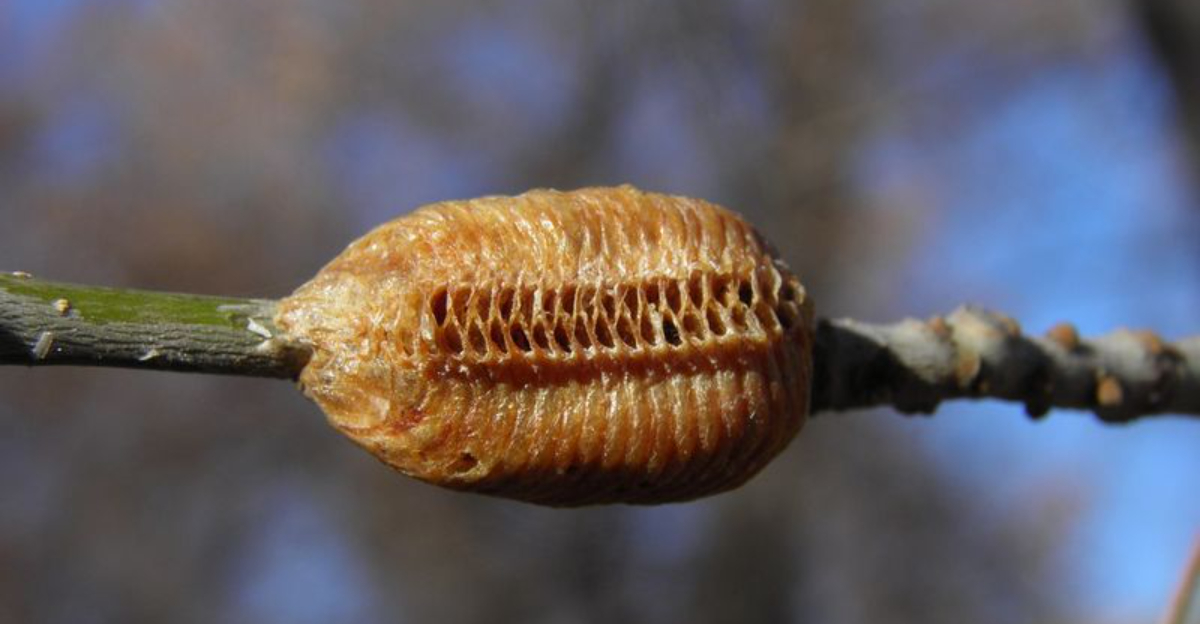
Spotting a strange, crusty brown lump on one of your Arizona garden plants can stop you in your tracks. That toasted-marshmallow shape clinging to a stem or twig has a name, and knowing what it is matters before you reach for a spray bottle or start scraping.
It could be a praying mantis egg case, called an ootheca, but looks alone cannot confirm that, and a few other stem growths can fool even experienced gardeners. Getting the identification right is the first step to protecting both your plant and whatever might be living inside that lump.
That Arizona Toasted-Marshmallow Shape Could Be an Ootheca
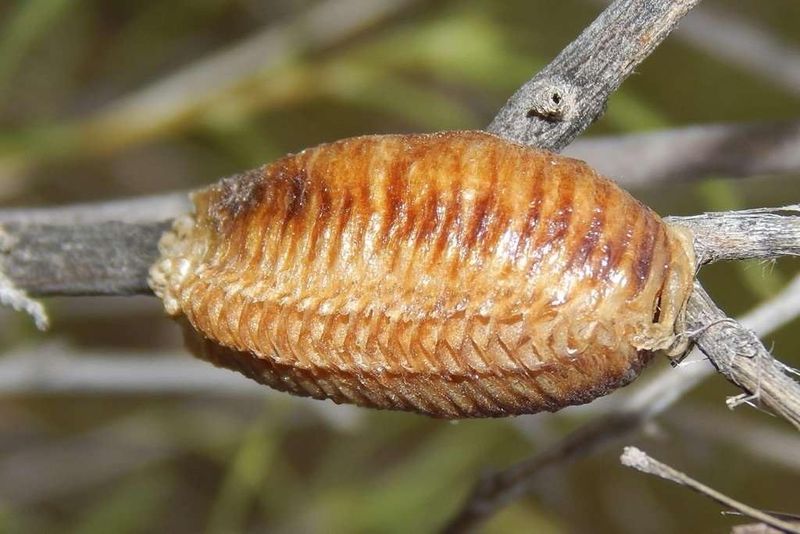
Finding a hard, foam-textured blob on an Arizona plant stem is enough to make any gardener pause. The object you are looking at could be a praying mantis egg case, known as an ootheca, but that description alone cannot confirm it.
Color, size, and a passing resemblance to a toasted marshmallow are not enough to rule out other possibilities, including stem galls, scale insect colonies, fungal growths, or other plant abnormalities that can appear on Arizona shrubs and trees.
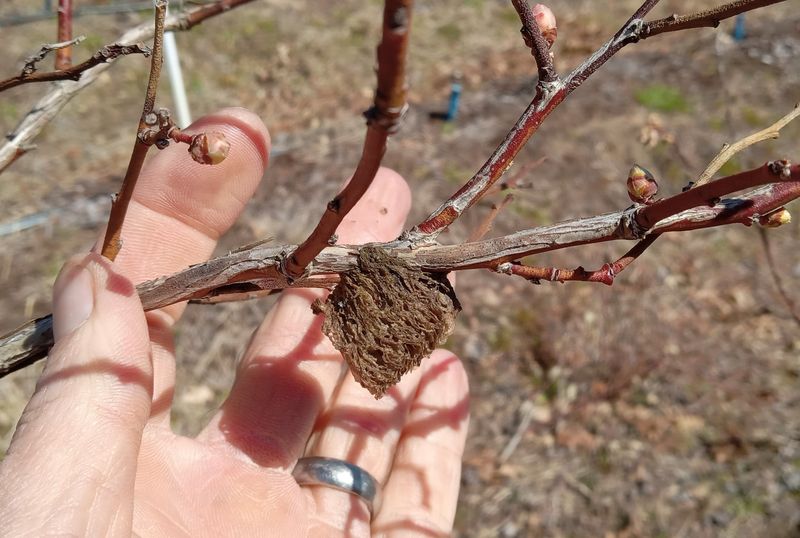
A likely mantis ootheca has a few specific features worth checking in your Arizona yard. University of Arizona Cooperative Extension materials describe Arizona mantis egg cases as starting out white and darkening to brown over time.
The exterior tends to be ridged or rough rather than smooth, and the whole structure feels dry and firm, similar to rigid foam or hardened styrofoam, not soft or squishy.
Texture, firmness, and attachment style matter more than color alone when you are trying to make a call in Arizona. A confirmed ootheca is glued tightly to the stem or twig as a single distinct mass, not growing from inside the plant tissue or oozing any liquid.
If the object is soft, wet, crumbling, irregular in a way that suggests it is part of the plant, or surrounded by visible insects or plant damage, a photograph and a closer expert look are the safer next steps before drawing any conclusions.
What a Confirmed Mantis Ootheca Contains
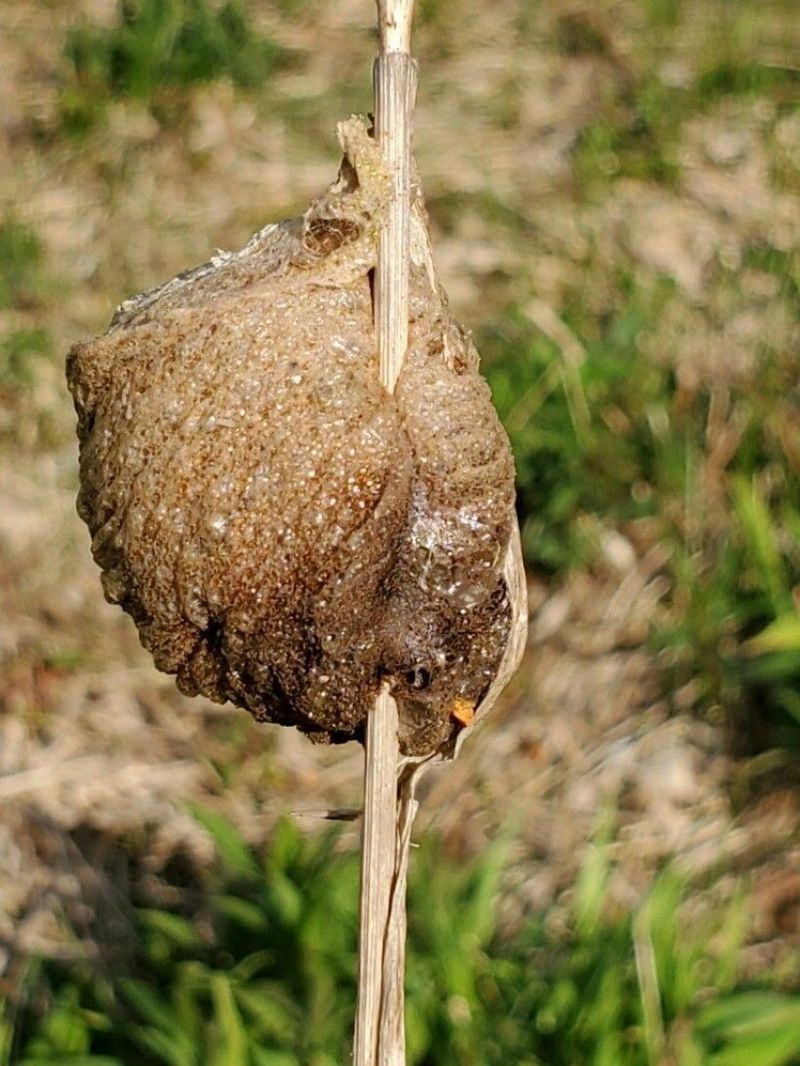
When a female praying mantis is ready to lay eggs in Arizona, she produces a frothy, protein-rich secretion around her eggs and then uses her abdomen to whip it into a foam. That foam hardens within hours into a tough, protective shell, and the result is the ootheca.
The word ootheca comes from Greek roots meaning egg container, so calling it a cocoon is technically off the mark. A cocoon is generally associated with the pupal stage of insects like moths or butterflies, while an ootheca is purely an egg case with no pupal stage involved.
Calling it an “egg sac” is understandable in casual Arizona gardening conversation, but ootheca is the more precise term and helps avoid confusion with spider egg sacs or silkworm cocoons. Ask Extension guidance on mantis cases confirms that a confirmed mantis ootheca is an egg case, not a cocoon, fungus, gall, or plant growth, which is an important distinction before applying any of the following facts to an unconfirmed blob in your yard.
Your Arizona Garden Changes Every Week. Your Plan Should Too.
Gardening in Arizona changes quickly throughout the season. Every Friday you’ll receive a simple weekly plan showing exactly what to plant, prune, fertilize, harvest, and protect so you never miss the right timing.
Egg counts inside an Arizona ootheca vary more than many sources suggest. University of Arizona Cooperative Extension gives a general range of about 40 to 100 eggs per case.
A field study of the bordered mantis, Stagmomantis limbata, in southern Arizona reported a wider range of roughly 50 to 250 eggs. Neither figure applies universally to every Arizona mantis species or every individual case, so treat both numbers as a range rather than a promise of how many nymphs might emerge from any particular case you find.
Why a Mantis Uses a Stem or Twig
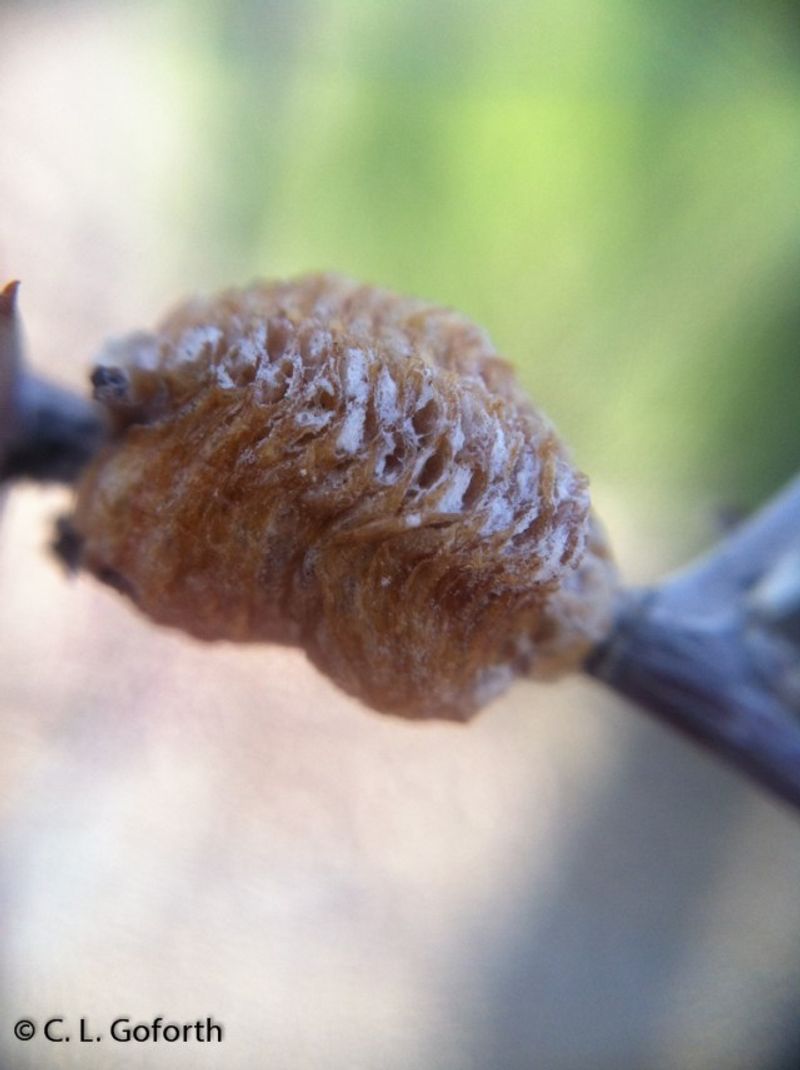
A praying mantis does not choose a plant stem because it wants to feed on the plant. In Arizona, a confirmed ootheca uses a stem, branch, or another firm surface purely as a physical anchor, somewhere stable enough to keep the case secure through wind, monsoon rain, and temperature swings.
The plant itself is not being damaged, infested, or colonized by the mantis in any way.
Southern Arizona field research on Stagmomantis limbata found that females in that region commonly deposit their oothecae on woody desert plants, with mesquite and acacia branches appearing as frequent attachment sites. That Journal of Animal Ecology study documented oothecae in natural Arizona desert habitat, but mantis egg cases are by no means limited to those two plant genera.
Cases can also appear on other shrubs, woody perennials, fences, rock walls, and the sides of structures, anywhere a female finds a surface that offers adequate support.
Because the ootheca is attached to the plant rather than embedded in plant tissue, finding one on your Arizona mesquite, creosote, or palo verde does not mean the plant is sick or under attack. University of Maryland Extension confirms that a mantis egg case on a stem is a sign of where a female chose to lay her eggs, not a sign of infestation or disease.
If the plant itself looks healthy and the blob is dry and firmly attached, the stem is simply serving as a convenient shelf.
Compare the Hard Case With Soft Spittlebug Foam
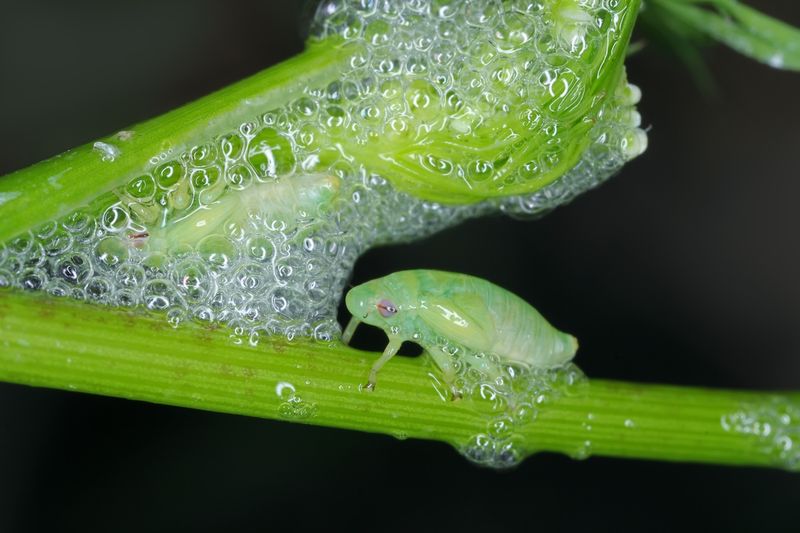
Not every foamy blob on an Arizona plant stem belongs to a mantis. One of the most common look-alikes that gardeners encounter is spittlebug foam, and the two are different enough in texture that a careful look can usually separate them.
Knowing the contrast helps you avoid unnecessary alarm, but it does not replace a proper identification when the object does not fit either description cleanly.
A possible mantis ootheca in Arizona is one firm, self-contained mass. It stays put when you press it gently, does not wipe away, and has a dry, ridged, Styrofoam-like surface.
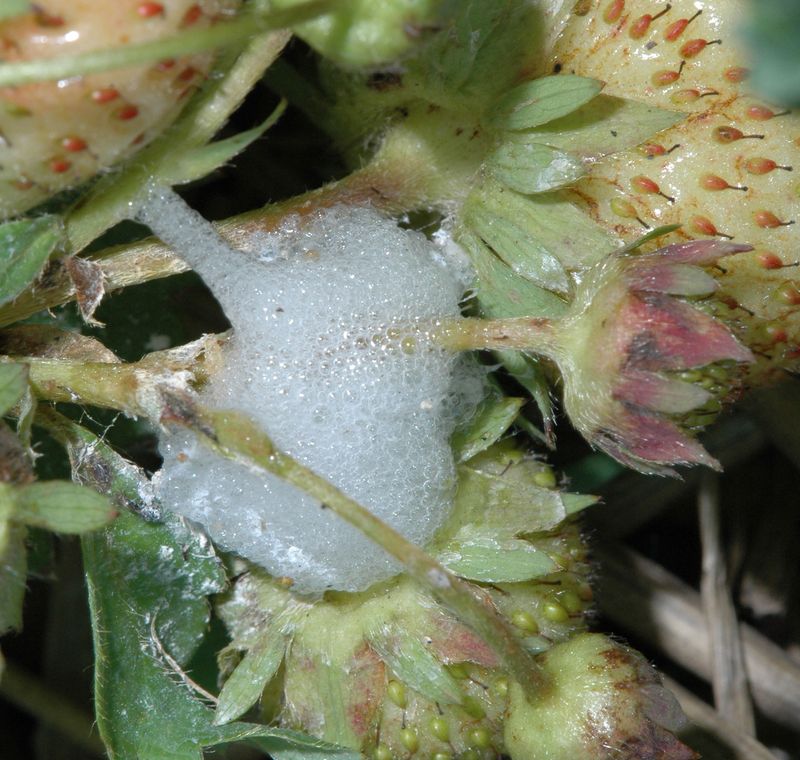
Spittlebug foam is a completely different situation. Arizona Cooperative Extension notes spittlebug activity on plants like rosemary and salvia, where a nymph shelters beneath a wet, bubbly white mass while feeding on plant sap.
That foam looks more like soap suds than a hard shell, and it generally wipes or rinses away with a strong spray of water or a gloved hand, leaving no firm structure behind.
Spittlebug feeding usually causes minimal lasting damage to Arizona plants, but the foam itself is a clear sign that a small insect is actively drawing sap from the stem. A hard, dry, firmly attached case with no visible insect activity around it fits the profile of a mantis ootheca more closely.
Still, if the object you are examining is soft, wet, associated with visible insects, or accompanied by yellowing or wilting plant tissue in your Arizona garden, resist the urge to treat immediately. An object matching neither description warrants closer inspection or a photograph sent to your local cooperative extension office before any action is taken.
Use Arizona Season and Location as Supporting Clues
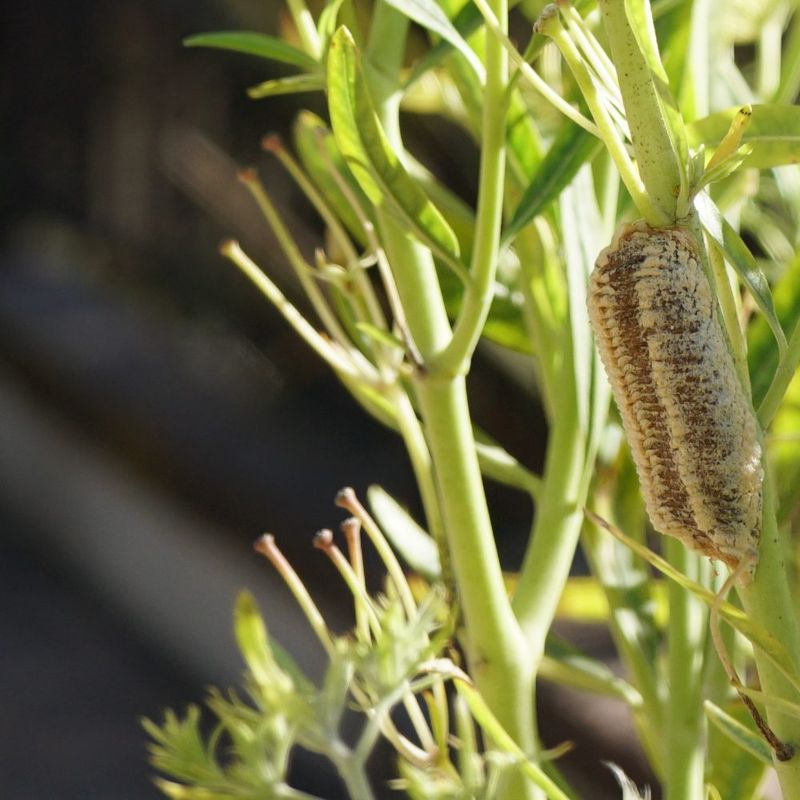
Timing and location in Arizona can support a mantis identification without sealing it. Finding a hard, foam-textured case on a woody Arizona shrub between late summer and early winter fits a known pattern, but that pattern comes with important limits that are worth understanding before drawing conclusions.
Research on Stagmomantis limbata, the bordered mantis studied in southern Arizona, found that females in that region generally deposit their oothecae from August through November, with nymphs hatching the following spring. That schedule lines up with Arizona’s monsoon and post-monsoon season, when insect activity peaks and plant growth is active.
However, the documented timing applies specifically to a southern Arizona population of one species at a particular elevation range. Conditions in the Phoenix low desert, higher-elevation areas like Prescott or Flagstaff, and other parts of the state can differ, and other Arizona mantis species may operate on different schedules or deposit cases with somewhat different shapes.
Arizona’s mantis diversity adds another layer of caution. The state is home to native species including the bordered mantis, and a new species, the Sonoran Tiger Mantis, was formally described from Arizona in 2024, underscoring that the region’s mantis fauna is still being documented.
Identifying a case to species from a casual description or photograph is not realistic without expert review. Saying “likely a mantis ootheca found in an Arizona yard” is honest and useful.
Assigning a species name without a clear image and expert confirmation is a step further than the evidence supports in most backyard situations.
Leave a Confirmed Outdoor Case Alone When You Can
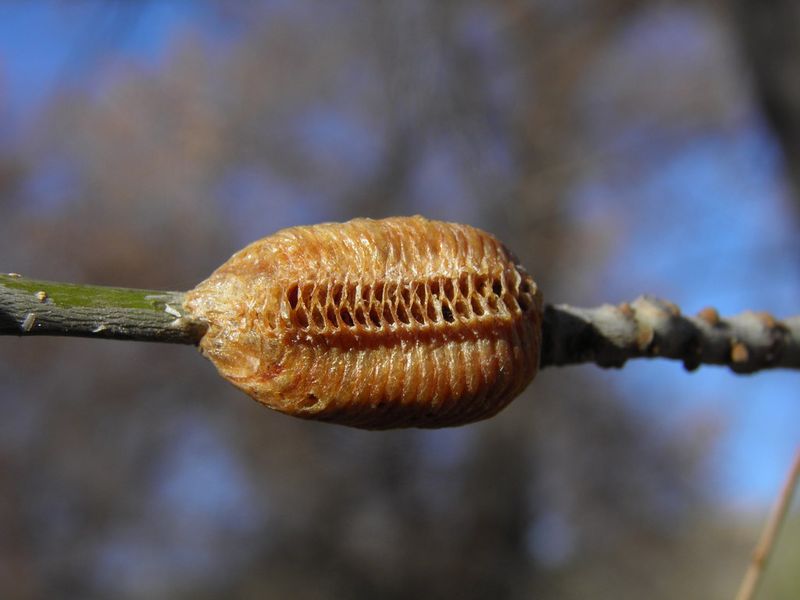
Once you have a good reason to believe the object in your Arizona garden is a mantis ootheca, the most protective thing you can do is often nothing at all. A case that is already attached outdoors is already in the right environment, positioned where the female chose to place it, and sheltered by whatever plant or structure it is clinging to.
Scraping it off, handling it repeatedly, or pressing on the exterior can crack the protective shell and expose the eggs inside to drying, heat, or predators.
Keeping it outdoors is non-negotiable. Bringing an intact Arizona ootheca inside as a curiosity or for observation is a decision that frequently backfires.
Purdue Extension specifically warns that warm indoor conditions can restart development and trigger a mass hatch inside the home. Dozens to hundreds of tiny mantis nymphs emerging in a living room or kitchen is not a pleasant outcome for the homeowner or for the nymphs, which need outdoor conditions to survive.
Leave the case where it is and check on it from a safe distance as spring approaches.
If an Arizona pruning project requires cutting back the branch the case is attached to, do not simply toss the branch in a yard waste bin or compost pile with the case still on it. Instead, preserve the section of stem containing the ootheca and set it in a sheltered outdoor spot, leaning against a fence or tucked into a shrub, where it can continue developing through the cool months.
Ask Extension guidance supports leaving confirmed cases outdoors and undisturbed whenever the location allows. A little patience costs nothing and gives the eggs the best chance of hatching successfully in your Arizona yard.
Relocate Only When the Case Faces a Real Hazard
Relocation is not a first resort for an Arizona mantis ootheca, and it carries real risks even when done carefully. Moving the case should only come into play when a confirmed ootheca genuinely cannot stay where it is, such as when a branch must be removed for safety, the stem sits in a spot that will be graded or paved, or the case is in a high-traffic area where it is likely to be crushed underfoot or by equipment.
When relocation is truly unavoidable in an Arizona situation, the priority is keeping the protective exterior completely intact. Do not cut into the case or try to peel it from the stem.
If the case is on a removable branch, preserve that whole section of stem and work with it rather than trying to detach the ootheca from the wood. Maintain the original orientation of the case as closely as possible, keeping the same side facing up that was facing up when it was attached.
Ask Extension guidance on mantis cases recommends attaching the case or stem section to a sheltered vertical outdoor surface, such as a fence post or the sheltered side of a wall, where it is protected from direct rain and extreme temperature swings but still exposed to natural outdoor conditions.
Even a well-executed relocation in Arizona is not guaranteed to produce the same result as leaving the case in place. Some eggs may not survive the disturbance, and nymphs that hatch in a new location face whatever conditions exist there rather than the microhabitat the female originally selected.
Treat relocation as an imperfect backup plan, not a routine option.
Do Not Expect a Mantis Case to Control Every Arizona Pest
Praying mantises have a reputation as garden defenders, and Arizona gardeners sometimes assume that a hatching ootheca will solve their pest problems. The reality is more complicated, and overstating the mantis role can lead to skipping treatments that a real pest situation actually needs.
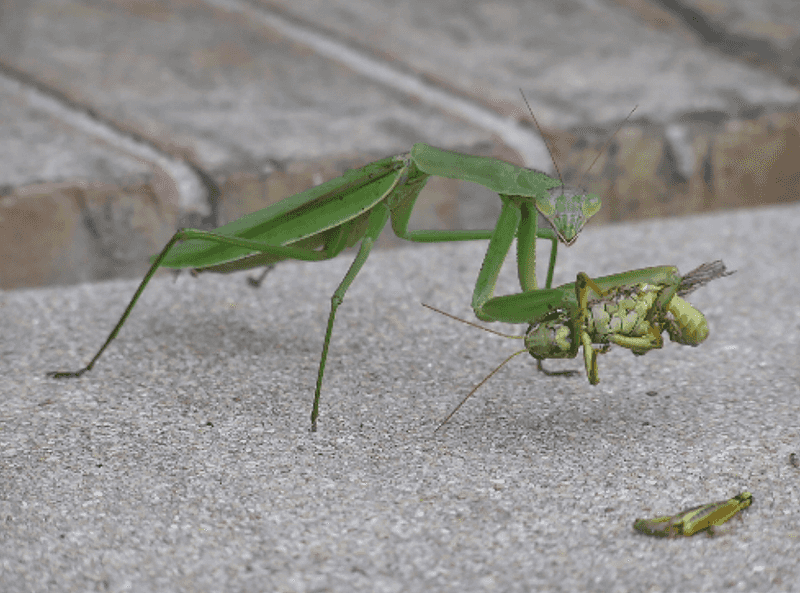
Mantises in Arizona will eat aphids, flies, grasshoppers, and caterpillars when those insects cross their path. They will also eat honey bees, native bees, butterflies, syrphid flies, and other insects that gardeners actively want in their yards.
UC IPM is direct on this point: mantises are generalist predators that do not actively seek out pest species and cannot be counted on as reliable biological control agents. They eat whatever prey is available and the right size, beneficial or not.
An ootheca in your Arizona yard does not guarantee pest suppression, and it does not mean you should hold off on addressing a confirmed pest problem elsewhere on the plant. If you notice separate insect damage, discoloration, or another plant health issue alongside the case, identify that problem on its own terms first.
Reaching for a broad-spectrum pesticide without a confirmed target pest can harm the mantis eggs, other beneficial arthropods, and pollinators that your Arizona garden depends on. UC IPM guidance on biological control and natural enemies of invertebrates emphasizes targeted treatment based on confirmed identification, using only products labeled for the specific pest at hand.
A mantis ootheca is worth protecting, but it is not a substitute for sound pest management in Arizona gardens.
The Safe Arizona Takeaway
A hard, dry, firmly attached foam-like mass on an Arizona stem fits the profile of a mantis ootheca more closely than most other common stem growths. Soft, wet, bubbly white foam fits spittlebug activity more closely.
Neither comparison rules out every alternative, including galls, scale, fungal growths, or other abnormalities that can appear on Arizona plants.
The safest approach in Arizona is to resist the urge to spray or scrape before you know what you are dealing with. If the object is dry, hard, and firmly attached with no sign of plant damage nearby, leave it alone and let it stay outdoors.
If the object is soft, wet, irregular, associated with visible insects, or accompanied by plant symptoms, take a photograph and contact your local Arizona cooperative extension office or a certified arborist for a closer look.
Keeping a confirmed ootheca outdoors, undisturbed, and in its original location costs you nothing and gives the eggs the best chance of surviving an Arizona winter and hatching in spring. Getting the identification right first is the one step that makes every other decision easier.