7 Places Black Widows Hide in Arizona Garages and Patios Once Nights Turn Cold
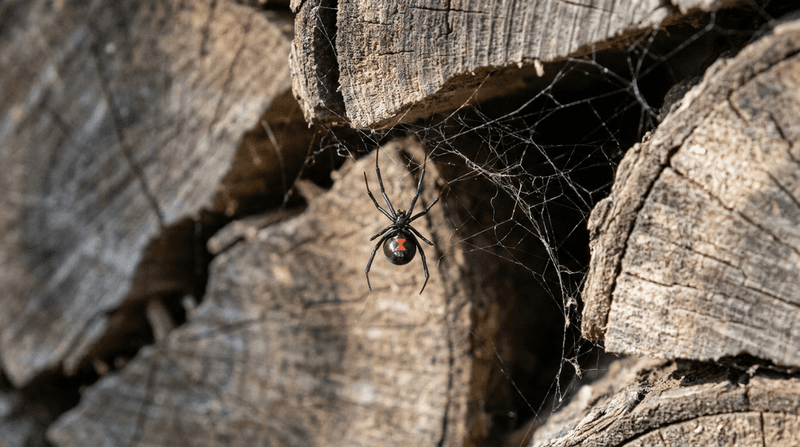
When desert nights finally cool off, you are not the only one looking for a cozy spot. Black widows across Phoenix and Tucson start tucking into garages and patios where the temperature stays steady and insects keep wandering in.
Knowing their favorite hideouts helps you reach for a box or a chair cushion without an unpleasant surprise. Here are seven spots worth checking before you grab, stack, or sit.
1. Cluttered Garage Shelves and Storage Boxes
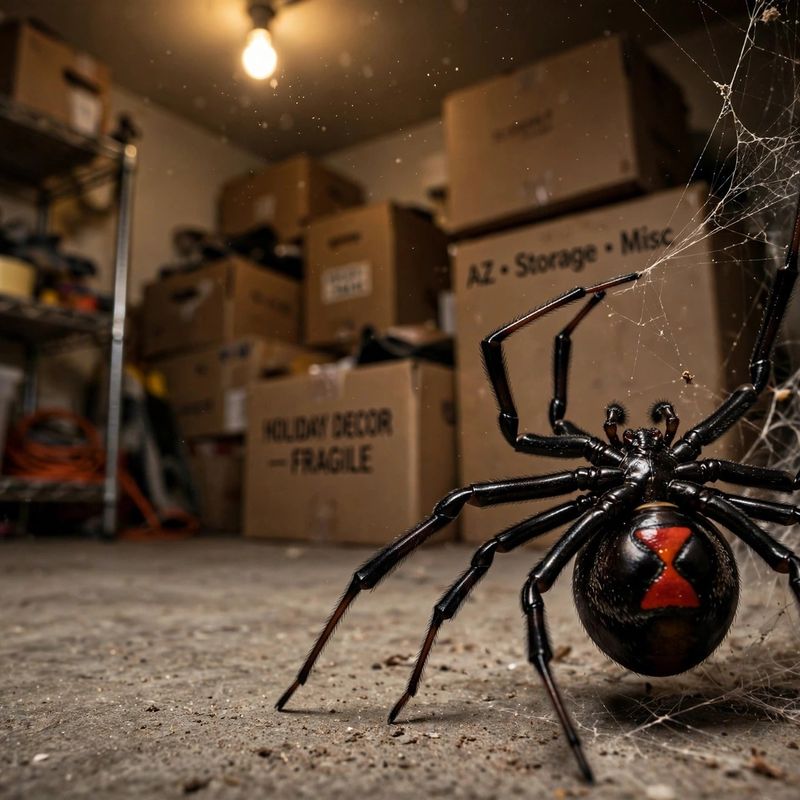
Picture that stack of cardboard boxes you have not touched since the last move. To a black widow, it looks like a five-star desert hotel with free room service.
Dark gaps between boxes copy the rocky crevices these spiders use out in the wild.
Garages in the low desert hold heat longer than the open yard once October and November nights dip. That steady warmth, plus crickets and roaches drifting in under the door, makes shelving a smart winter address.
Black widows build messy, tangled webs low and close to the hiding spot, often near the floor or on the back side of a shelf.
A few simple swaps can make shelves far less inviting. Trade cardboard for sealed plastic bins with snug lids, since cardboard offers both shelter and edges for anchoring silk.
Keep stored items lifted off the floor and leave a small gap between shelves and the wall so you can see behind them.
Wear gloves when you pull down holiday decorations or camping gear. Use a flashlight to peek into the back corners first.
A quick sweep with a long broom every few weeks breaks up new webs before anyone settles in for the season.
2. Garage Door Tracks and Wall Crevices
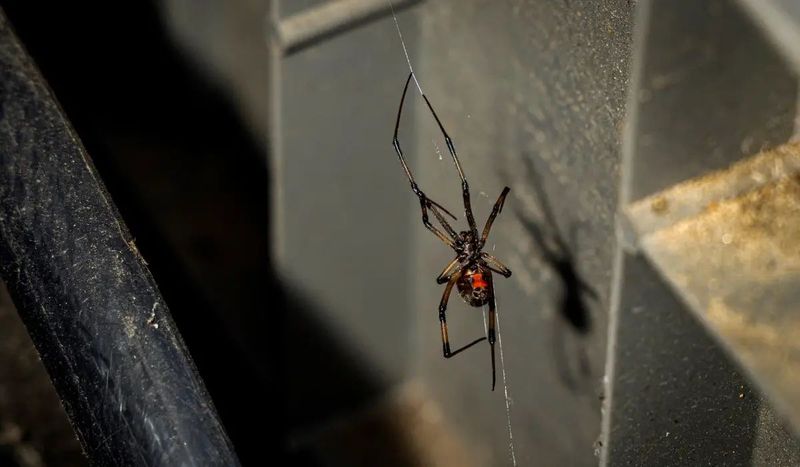
Ever notice a scraggly web near the bottom corner of your garage door? That little tangle is often a clue.
The seam where the door meets the frame is a favorite black widow nook in Arizona homes.
Garage doors leave tiny pockets everywhere, along the inside of the tracks, behind the weatherstripping, and in the joint between the slab and the wall. Cracks in concrete foundations or loose drywall edges add even more options.
Because these spots sit right at the entry point, they catch a steady parade of beetles, crickets, and other bugs sneaking inside as evenings cool.
Start with a slow walk around the door with a bright flashlight, especially after sunset when these nocturnal spiders are most active. Look for the shiny black body and the red hourglass on the underside, but keep your hands well back.
Sealing visible cracks with caulk and replacing worn door seals can reduce both spider hideouts and the insects they feed on. Swapping bright white porch lights for warm yellow bulbs may also attract fewer bugs to the doorway.
Fewer snacks often means fewer spiders hanging around the tracks.
3. Undersides of Patio Furniture and Grill Covers
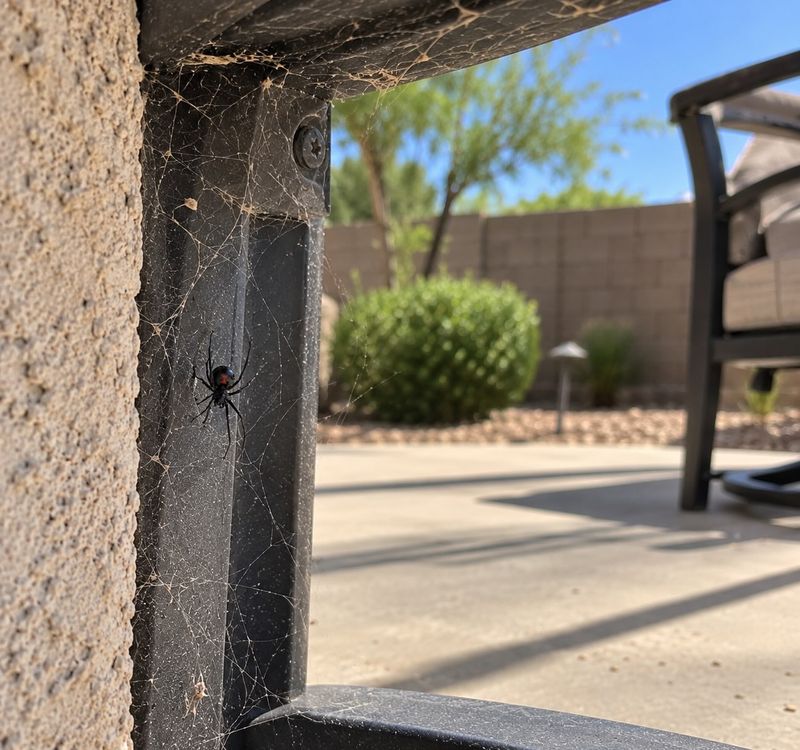
Flip over a patio chair in December and you might meet a tenant you never invited. Patio furniture spends long stretches untouched once the weather shifts, and black widows notice.
Your Arizona Garden Changes Every Week. Your Plan Should Too.
Gardening in Arizona changes quickly throughout the season. Every Friday you’ll receive a simple weekly plan showing exactly what to plant, prune, fertilize, harvest, and protect so you never miss the right timing.
The underside of a seat or tabletop offers shade, shelter, and quiet.
Grill covers rank high on the list too. Folds of fabric trap a bit of leftover warmth and block the wind, creating a snug pocket on chilly nights.
Deck boxes stuffed with cushions or pool toys work the same way, especially when the lid only gets opened a few times each winter.
Here is a simple habit to adopt: tilt, look, then touch. Before sitting down or lifting a cover, tip the furniture slightly and scan the frame and joints.
A long-handled brush can sweep away webs without bringing your fingers anywhere near them.
Storing cushions indoors or in sealed bins cuts down on soft hiding spots. Shaking out grill covers once a week also discourages spiders from moving in.
Fun fact: only the female black widow wears the bold red hourglass, and she is the one most likely to stay put in a sheltered web for months.
4. Block Walls and Weep Holes
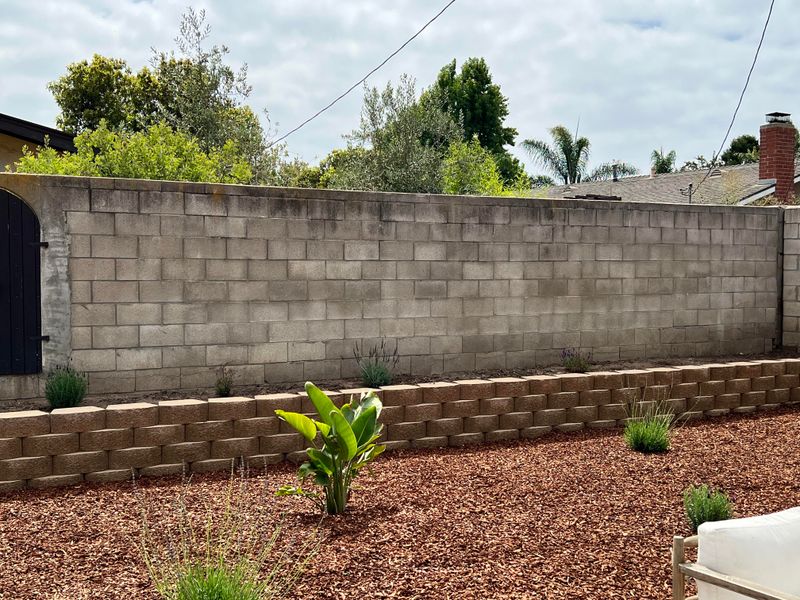
Almost every Phoenix and Tucson backyard has one: the classic tan block wall. Those walls look solid, yet they are full of hidden real estate for spiders.
Weep holes, hollow cores, and chipped mortar joints create tiny caves with steady temperatures.
Block absorbs daytime sun and slowly releases warmth after dark. On a crisp November night, that gentle heat makes a wall cavity feel like a heated blanket.
Black widows tuck their webs right at the opening, so they can grab passing insects and retreat inside in seconds.
Walls near patios and garage entries deserve the closest look. Scan the bottom rows at dusk with a flashlight, since webs near the ground tend to be messy and irregular rather than neat circles.
Weep holes should stay open to drain water, so avoid packing them with mortar. Small mesh inserts made for weep holes can block spiders while still letting moisture escape.
Patching cracked mortar joints and pulling back gravel or plants piled against the base helps too. A clear strip along the wall makes it easier to spot activity and gives prey insects fewer places to gather, which can make the whole area less appealing.
5. Pool Equipment Areas
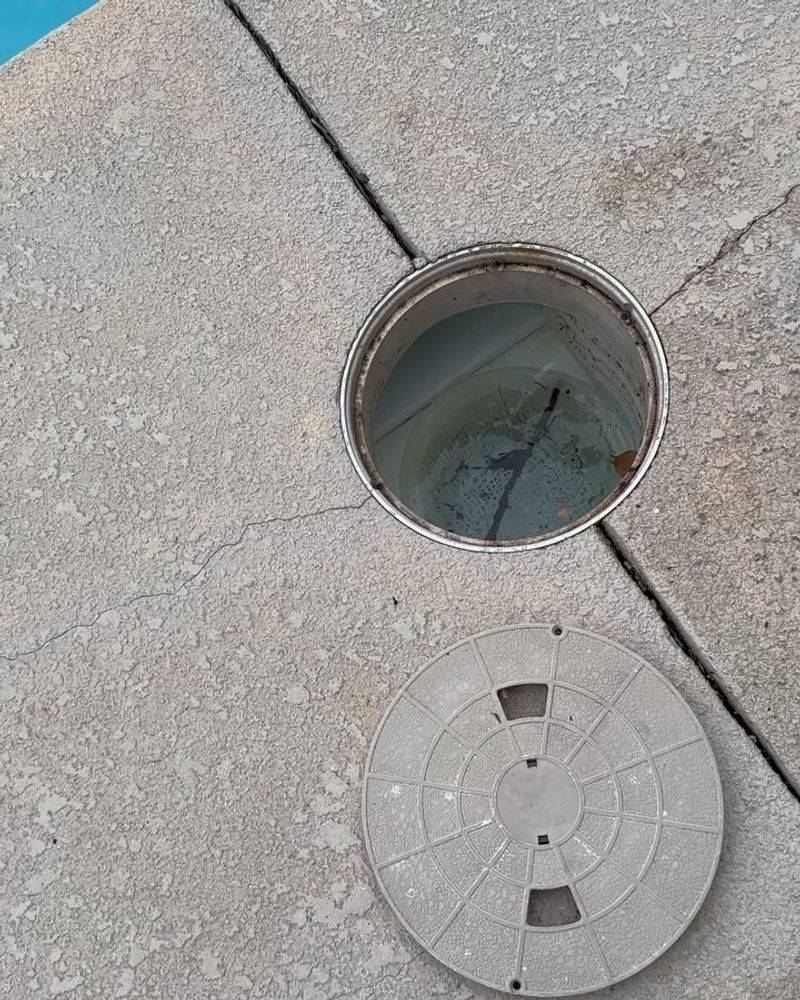
Pool pumps hum quietly all year, and that soft warmth makes the equipment pad a surprise winter hangout. Few homeowners poke around back there unless something breaks.
That lack of traffic is exactly what a black widow wants.
Pump housings, filter tanks, timer boxes, and valve lids form a maze of dark gaps. Skimmer lids and in-ground valve boxes are classic trouble spots, since the cover keeps out light and wind.
Moisture near the pool also draws insects, giving spiders a dependable meal plan even in cooler months.
Pool techs in the low desert often learn this lesson the hard way. Before lifting any lid or reaching behind the filter, shine a light first and use a tool or stick to open covers.
Thick gloves add a smart layer of protection.
Keeping the equipment area tidy makes a real difference. Clear away dry leaves, old chemical buckets, and spare hoses that pile up around the pad.
If you have an enclosure or equipment closet, check the door seal and corners each month. A quick brush-down of webs during routine pool chores can help stop new spiders from setting up long-term housekeeping.
6. Children’s Outdoor Toys and Play Equipment
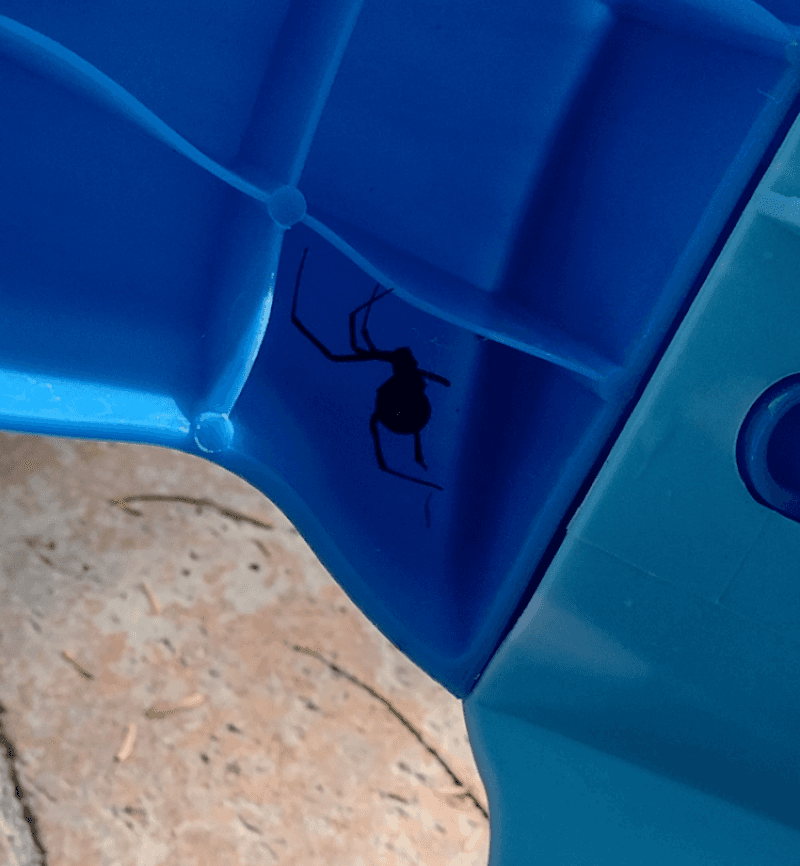
Kids may lose interest in the backyard playhouse once it gets chilly, but black widows find it fascinating. A plastic slide, sandbox lid, or ride-on toy left alone for a few weeks becomes the perfect shelter.
Hollow parts and shaded undersides are especially tempting.
Plastic play sets often have hidden cavities inside the frame or under steps. Sandbox covers trap a little warmth and stay dark all day.
Toy bins parked against a wall can quietly fill with webs while everyone stays indoors for the winter.
Parents, a short safety routine goes a long way. Check toys before little hands reach them, flipping items over and looking into tubes and corners.
Make it a game where kids watch you do a flashlight inspection, so they learn to look before they grab.
Storing smaller toys in a sealed bin or inside the house during cooler months removes lots of hiding spots. Rinsing slides and playhouses with a hose now and then helps clear webs and insects.
Moving play equipment a few feet away from walls and shrubs can also make it less inviting, since spiders prefer protected edges over open, sunny ground.
7. Woodpiles and Landscape Debris
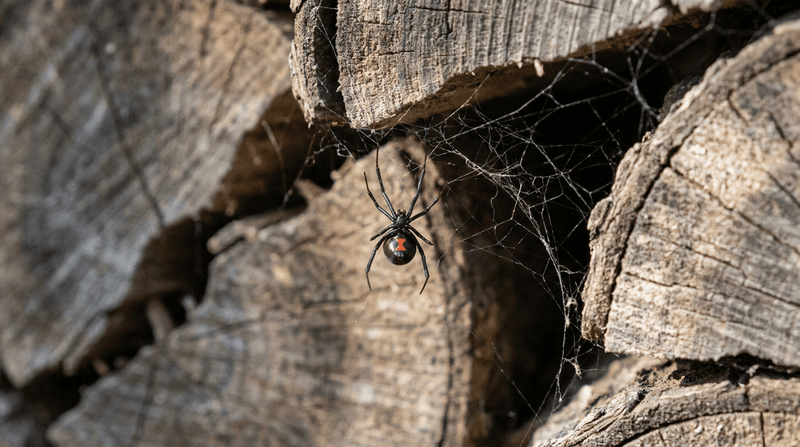
Firewood season and black widow season overlap more than most people realize. As desert nights get cool enough for the fire pit, homeowners reach into woodpiles that spiders have quietly claimed.
Gaps between logs make ideal hideaways.
Debris piles work the same way. Fallen palm fronds, stacked pavers, leftover bricks, and thick mats of leaf litter all create shelter, plus they host the insects black widows eat.
Dense plant edges near irrigated beds can add to the mix, since moisture tends to attract prey.
Stack firewood on a raised rack at least a few feet from the house and garage walls. Bring in only what you will burn that evening, and shake each piece outside first.
Gloves are a must here.
For the rest of the yard, tidy up rubble and trim dense growth away from foundations. Native, low-water plants like desert marigold, brittlebush, and globe mallow can be spaced with open gravel between them, which leaves fewer cluttered pockets than tangled, thirsty hedges.
That open layout also welcomes lizards and birds, natural insect eaters that may help keep the bug buffet, and the spiders it supports, a bit smaller.