9 Mistakes That Keep Mums From Looking Their Best In Fall
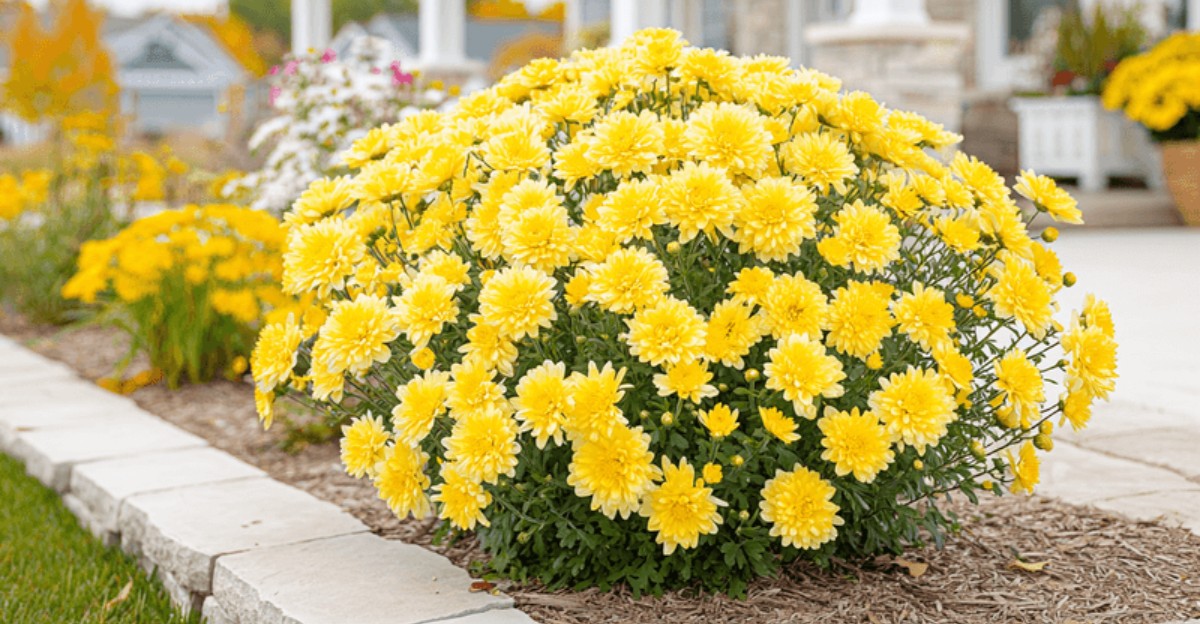
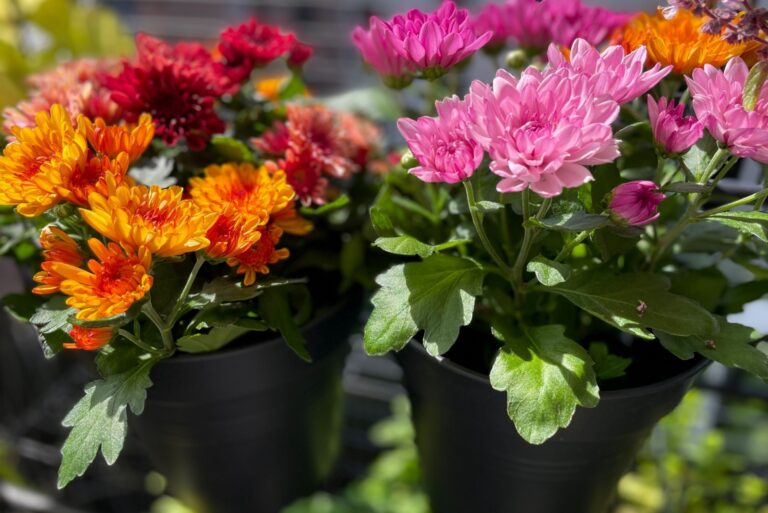
Every September, garden centers fill up with round, jewel-toned domes that look like they were rolled out of a paint box. Two weeks later, half of them sit on porches looking sad, floppy, and crispy at the edges.
The strange part is that the plant itself rarely deserves the blame. Small habits, repeated day after day, quietly decide whether those blooms glow through November or fizzle by Halloween.
Most of these habits feel harmless. A splash of water here, a sunny spot there, a pot that seemed cute at the checkout counter.
Once you spot the patterns, fixing them takes minutes and costs almost nothing. Here are the nine slip-ups that trip up gardeners most often, plus simple ways to turn things around.
1. Buying Plants That Are Already In Full Bloom
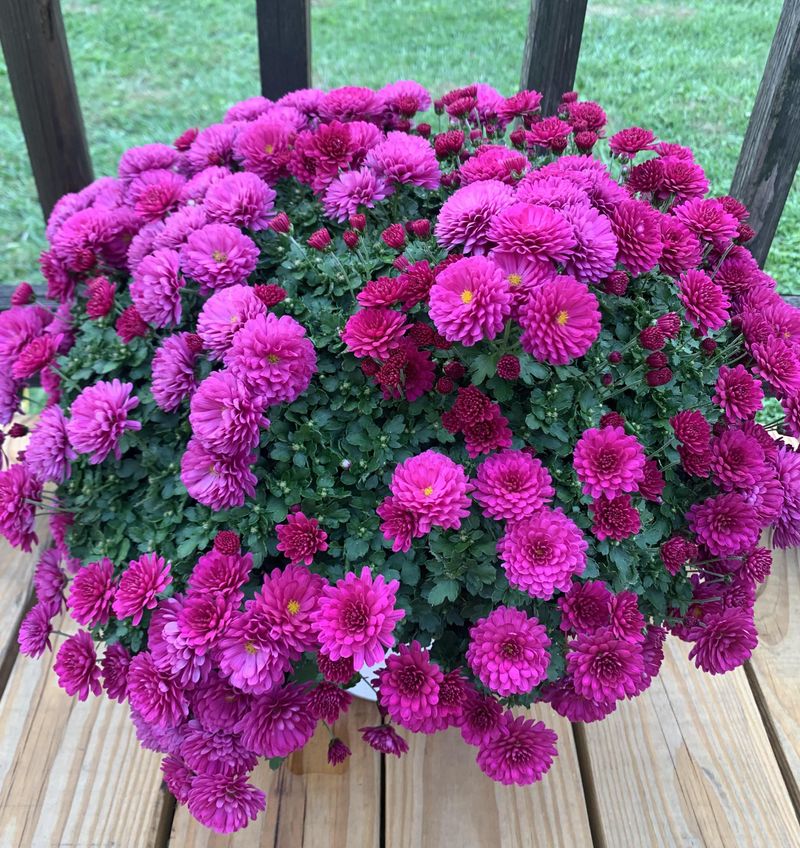
Walk into any garden center in September and your eyes go straight to the fullest, brightest dome on the shelf. That instinct is exactly what shortens your display.
A mum in peak bloom has already spent most of its flowering energy. You are buying the tail end of the show, which usually leaves you ten to fourteen days of color before the petals brown.
The smarter pick sits nearby and looks slightly boring. Look for plants covered in tight buds with just a few open flowers peeking through, showing you the color without spending it.
Those bud-heavy pots can hold their display for four to six weeks, sometimes longer if nights stay cool. You get triple the color for the same price.
Squeeze a bud gently between your fingers before buying. Firm and plump means it is ready to open, while soft or shriveled buds often will not develop at all.
Check the base of the plant too. Yellowing lower leaves or a woody, hollow center suggests the mum sat on the sales rack too long and dried out at some point.
Here is a fun bit of history. Chrysanthemums were cultivated in China over 3,000 years ago and were valued as much for tea and medicine as for their looks.
Shop early in the season if you can. The first shipments usually arrive tight and fresh, while late-season leftovers have been stressed by heat, handling, and inconsistent watering.
2. Letting The Root Ball Dry Out Between Waterings
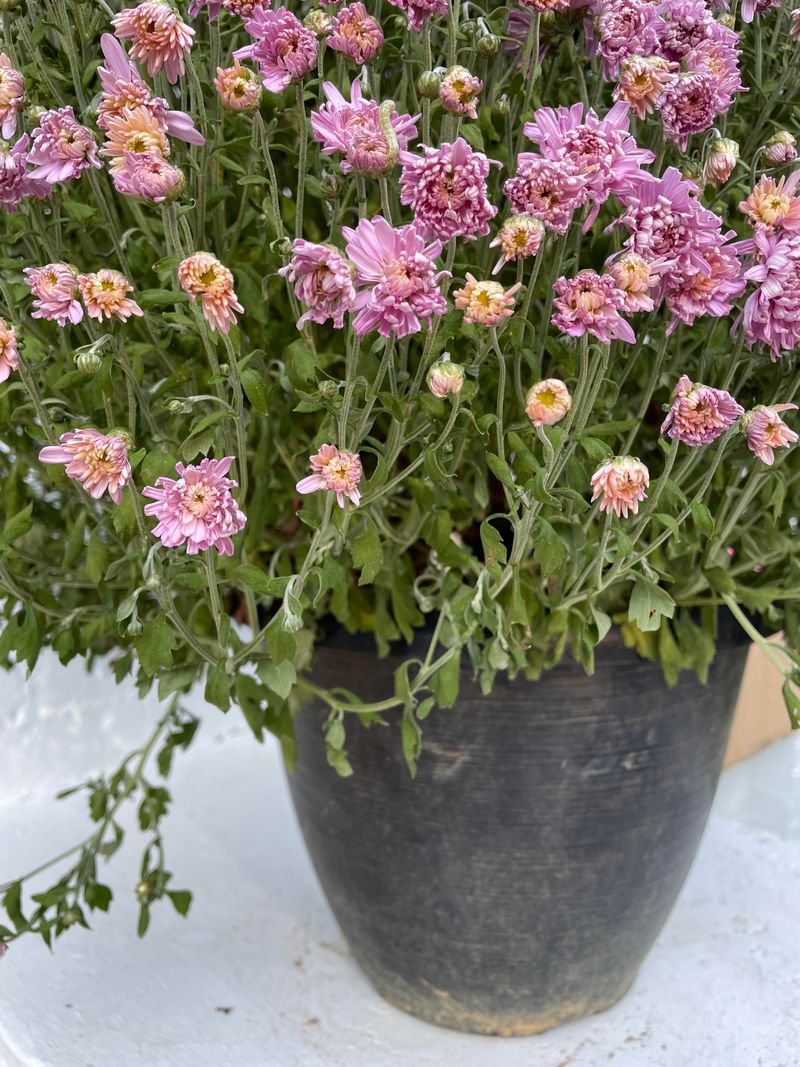
Mums are thirsty in a way that surprises new gardeners. Those thick clusters of blooms and dense foliage pull moisture out of the pot faster than almost anything else on your porch.
Skip watering for a single warm afternoon and the whole plant can wilt into a droopy mess. Skip it twice and the lower leaves turn crisp and brown, damage that does not reverse.
Stick your finger about an inch into the soil each morning. If it feels dry at your fingertip, the plant needs a drink right then, not later that evening.
During warm early-autumn stretches, a nursery pot may need water daily. Once temperatures cool into the fifties, every two or three days usually keeps things happy.
Aim the water at the soil line rather than over the top of the flowers. Wet petals invite rot and turn brown blotchy fast, especially when nights get damp.
Water until it runs freely from the drainage holes, then let the excess drain away. A shallow sprinkle only wets the top layer and leaves the deeper roots parched.
Those black nursery pots are usually packed tight with roots and very little soil. Repotting into something a couple of inches wider gives you a real moisture buffer.
If a plant does collapse, set the entire pot in a bucket of water for fifteen minutes. Full rehydration works far better than pouring from the top.
3. Parking Pots In Deep Shade On The Porch
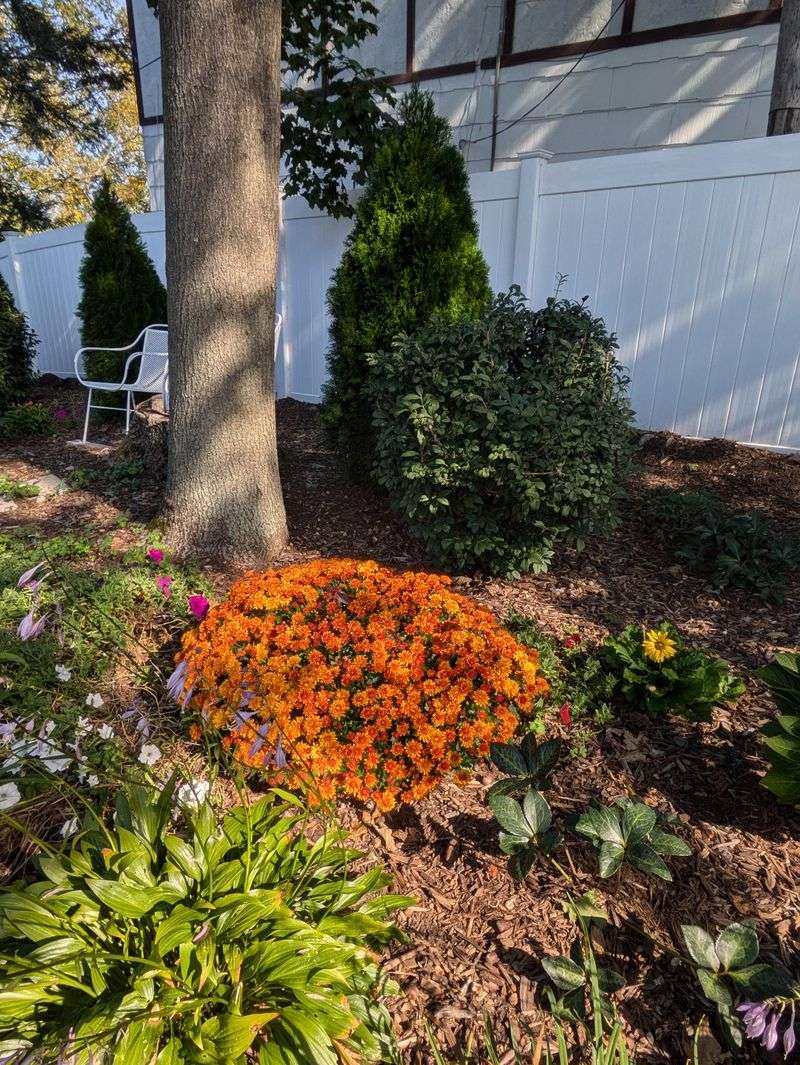
Front porches are the classic spot for mums, and they are also the reason so many plants stretch and flop. Most covered porches get a fraction of the light these sun-lovers want.
Chrysanthemums perform best with at least six hours of direct light each day. Give them less and the stems reach, the buds open slowly, and the color looks washed out.
Shade also keeps the soil damp for longer stretches. Combine that with cool autumn nights and you have ideal conditions for mildew spotting the leaves.
You do not have to abandon the porch look entirely. Move the pots into a sunny spot during the day and return them for evenings and weekends when guests arrive.
Rotate each pot a quarter turn every couple of days. Otherwise the side facing the light fills in beautifully while the back stays thin and leggy.
Watch for the tell-tale lean. A plant tipping steadily in one direction is telling you exactly where it wishes you had placed it.
Morning sun is gentler than blazing afternoon light, especially in warmer regions. East-facing steps often hit the sweet spot without scorching petals.
If your entryway is genuinely dark, treat the mums as a rotating display. Keep two or three pots in a sunny side yard and swap them in as each one peaks.
4. Leaving Spent Blooms On The Plant

A mum covered in browning flower heads reads as tired long before it actually is. Ten minutes of tidying can knock weeks off its apparent age.
Faded blooms are not just an eyesore. The plant keeps funneling energy toward those finished flowers instead of pushing the buds waiting underneath.
Pinch or snip each spent head just below the flower, where the stem is still green and firm. A quick twist of thumb and finger works fine for most.
Do a pass every three or four days rather than one big cleanup. Little and often keeps the dome shape looking crisp and even.
Brown petals that fall into the crown tend to mat down and hold moisture. That soggy layer is where rot and fungus usually get their start.
Shake the plant gently over a bin now and then to dislodge loose debris. It takes seconds and makes a visible difference.
Florists rely on the same trick, which is partly why arrangements look fresh so much longer than the pot on your steps. Grooming is half the illusion.
Keep your snips clean between plants. Wiping the blades with a disinfecting solution prevents you from carrying leaf spot from one pot to the next.
When most of the buds have opened and finished, stop removing spent blooms and let the plant rest. At that point you are shaping for next season, not this one.
5. Skipping The Pinch Back In Early Summer

Here is a mistake that happens months before anyone is thinking about autumn. Garden mums left unpinched in June turn into tall, floppy, sparse plants by September.
Pinching means removing the top inch of each growing stem with your fingers. Each pinch usually encourages branching, and each new branch tends to carry more buds.
Start when new growth reaches about six inches, usually in late spring. Repeat every two or three weeks until roughly the Fourth of July.
Stop after mid-July in most regions. Pinch later than that and you remove the buds forming for the autumn display.
The payoff is that rounded, bloom-packed shape everyone admires. Commercial growers pinch too, which is why nursery plants look so tidy compared to garden survivors.
An unpinched mum often reaches three feet and then splits open in the middle after the first heavy rain. Staking helps, but it never looks as good.
This trick applies to hardy garden mums planted in the ground. Potted florist types bought in bloom are already shaped and need nothing from you.
Toss the pinched tips into the compost or root a few in damp soil. Mums propagate from cuttings easily, so you can multiply your favorite color for free.
Mark a reminder on your calendar for late May. Future-you, admiring a perfectly domed plant in October, will be grateful for the nudge.
6. Planting Too Late In The Season For Winter Survival
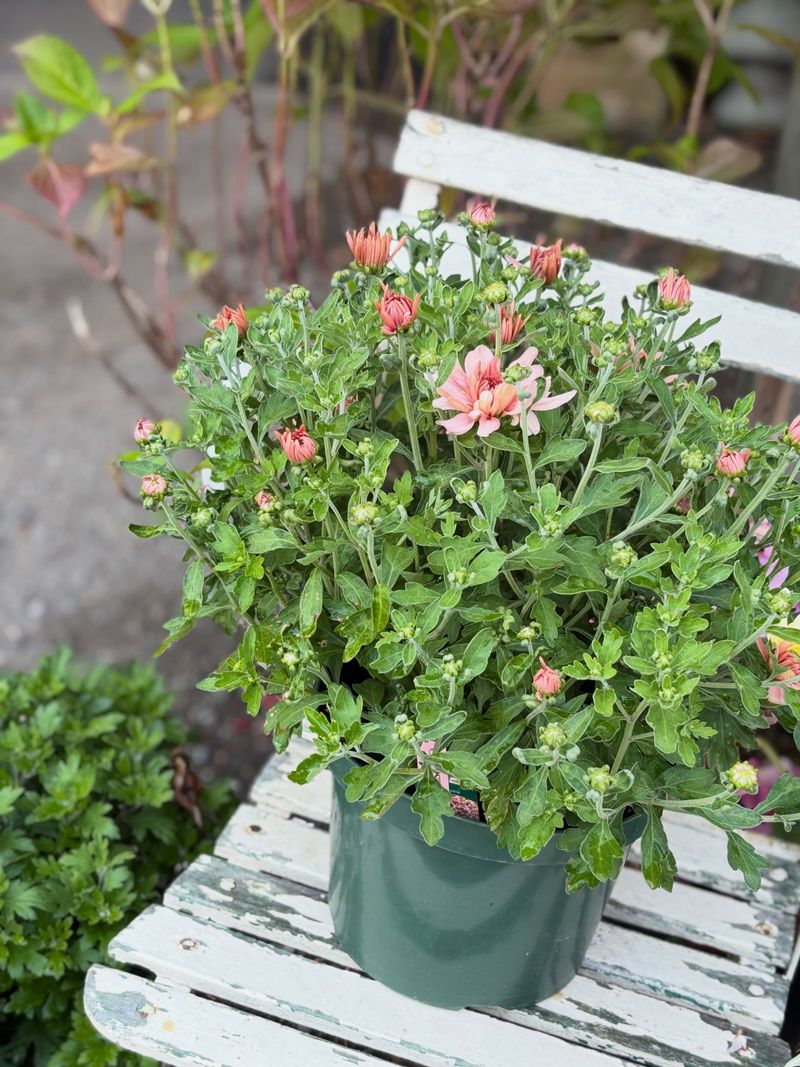
Plenty of people plant their autumn mums in the garden in October and expect them back the following year. Most of those plants do not return.
Roots need time to spread before the ground cools and hardens. A plant tucked in during mid-autumn has only a few weeks to establish itself.
Spring planting changes the odds dramatically. Set hardy varieties in the ground in April or May and they build a full root system over the entire growing season.
Check the label for the word hardy rather than florist or greenhouse. Many pots sold in autumn are bred for a single season of color, not for overwintering.
Choose a spot with sharp drainage. Mums tolerate cold far better than they tolerate soggy winter soil sitting around their crowns.
Leave the old stems standing through winter instead of cutting them to the ground. The dried growth traps snow and shields the crown from freeze and thaw swings.
Add a few inches of mulch after the ground freezes, not before. Mulching too early keeps soil warm and encourages growth that will not survive.
Straw, shredded leaves, or pine needles all work well. Pull the layer back in early spring when new shoots start pushing up.
If autumn planting is your only option, get pots in the ground by early September and water deeply until frost arrives.
7. Feeding At The Wrong Time Of Year

Fertilizer feels like a fix for a struggling plant, so out comes the bottle the moment a mum looks tired in October. That timing does more harm than good.
Once buds have formed, the plant is not building new growth. Extra nitrogen at that stage pushes soft leafy shoots that frost damages easily.
The real feeding window opens in spring. A balanced granular fertilizer applied when new growth appears fuels the stems and roots that carry autumn flowers.
Feed every four to six weeks through early summer, then stop by mid to late July. From that point the plant shifts its focus to bud production.
Container mums bought in bloom rarely need any food at all. The potting mix usually contains slow-release granules that last through the display period.
If a potted plant looks pale and hungry by late October, a diluted liquid feed at half strength is the most it should get. Anything stronger can burn stressed roots.
Watch the leaf color for clues. Deep green with strong stems means the plant is content, while yellowing lower leaves more often signal watering problems than hunger.
Avoid high-nitrogen lawn fertilizer near your beds. Overspray produces lush foliage and disappointingly few flowers.
Compost worked into the soil each spring covers most needs. Rich, living soil beats a rescue bottle every time.
8. Cramming Plants Into Pots With Poor Drainage

That gorgeous glazed planter with no hole in the bottom is a trap. Water collects underneath, roots sit in it, and the plant declines from the base upward.
Mums want moisture constantly but hate standing water. Drainage is the difference between a plant that thrives and one that turns mushy at the stem.
Drill holes if the container allows it. A masonry bit and slow, steady pressure handles most ceramic pots without cracking them.
Another approach keeps things simple. Leave the mum in its nursery pot and drop that inside the decorative container as a liner you can lift out.
Elevate the pot slightly on feet or a couple of flat stones. Airflow underneath prevents that suction seal that traps water against the deck.
Skip the old gravel-in-the-bottom trick. Research shows it actually raises the waterlogged zone rather than improving drainage.
Use a quality potting mix instead of garden soil. Dense yard dirt compacts in containers and squeezes out the air roots need.
Size matters too. Jamming three plants into one small pot creates competition for water and traps humid air in the middle where mildew starts.
Give each mum a container roughly two inches wider than its root ball. That extra room holds moisture without drowning anything.
Empty saucers after heavy rain. A pot standing in a puddle for days rarely recovers its good looks.
9. Ignoring Frost Warnings On Cold Autumn Nights
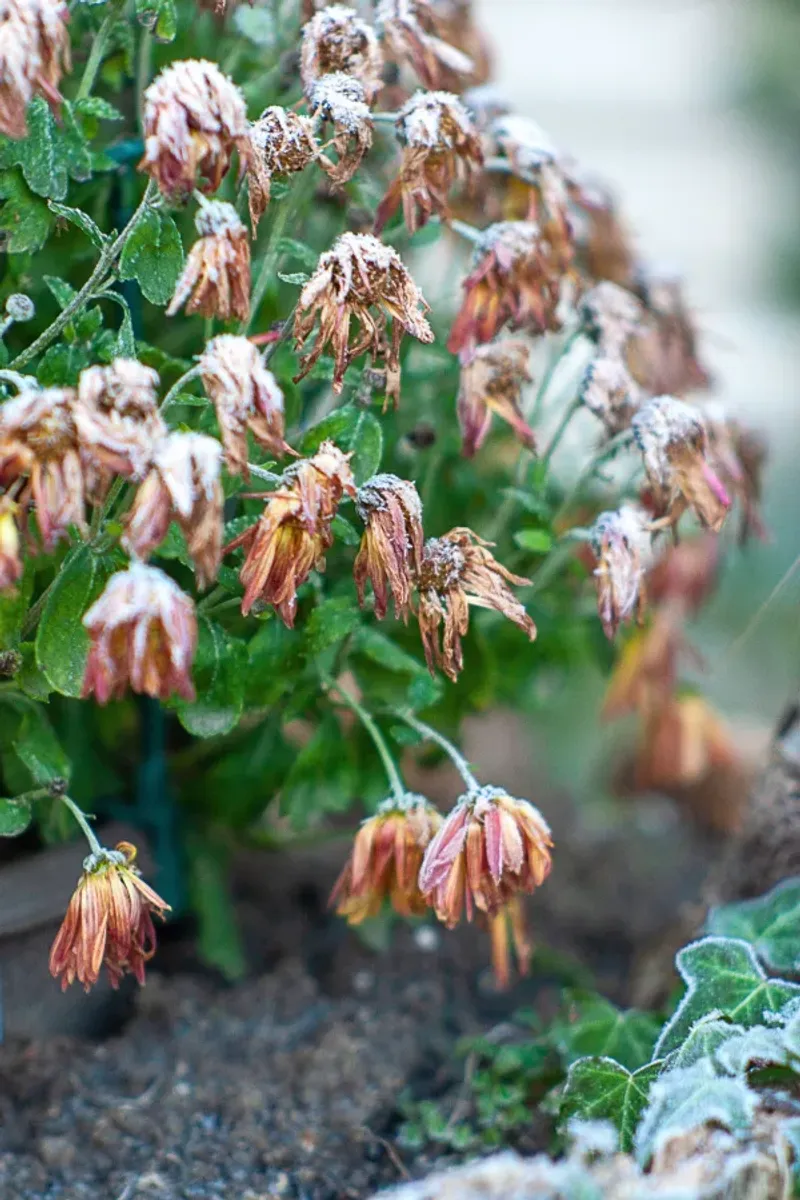
A single unexpected cold night can undo weeks of careful tending. Frost turns bright petals translucent, then brown, usually by the following afternoon.
Open blooms are the vulnerable part. Foliage and stems shrug off light chills far better than the flowers do.
Keep an eye on the forecast once nights start dipping toward the mid-thirties. Clear, still nights are riskier than cloudy or breezy ones.
Draping an old sheet or a lightweight row cover over the plants traps enough warmth to make the difference. Remove it in the morning so light and air get through.
Avoid plastic laid directly on the blooms. Where it touches the petals, cold transfers straight through and leaves brown patches.
Containers can simply move. Tuck them into a garage or against a house wall for the night, then carry them back out at breakfast.
Watering the soil in the afternoon before a cold night helps as well. Moist soil holds heat and releases it slowly after dark.
Garden mums planted in the ground handle frost more comfortably thanks to soil insulation around their roots. Potted plants have almost none.
Once hard freezes settle in for good, let the display finish gracefully. You will have squeezed a few extra weeks of color out of the season, which is the whole point.