What It Means When You Spot A Hickory Horned Devil Caterpillar On Your Tennessee Patio
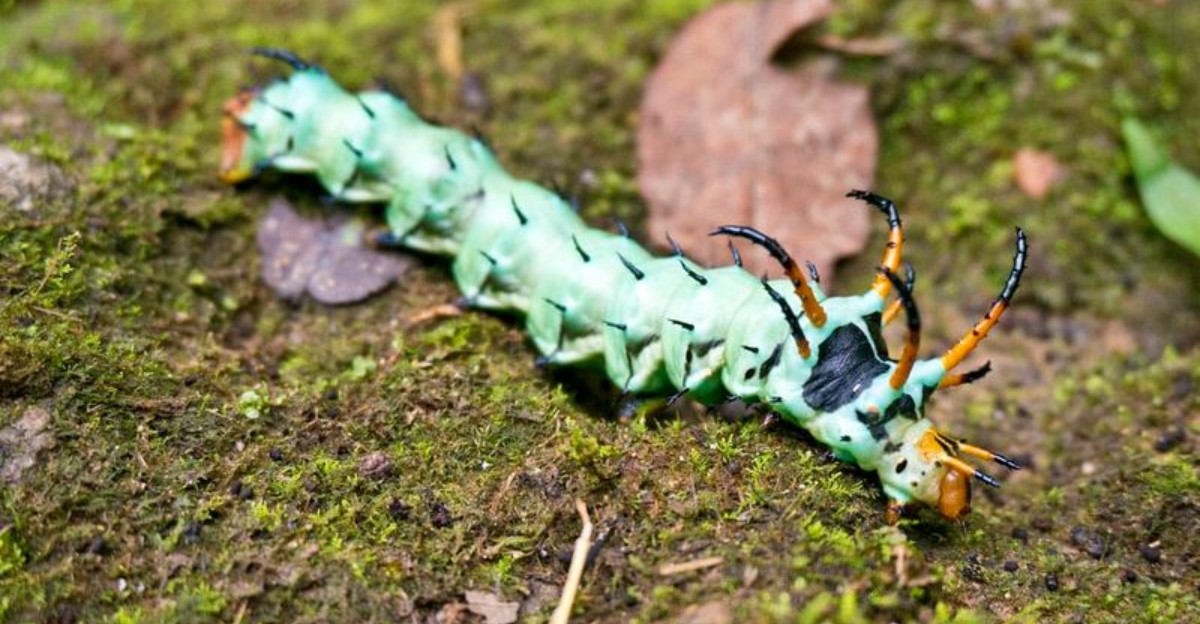
Your morning stops the instant you spot it. Spikes rise from its back like something borrowed from a monster film. Green skin catches your eye and refuses to look away.
Tennessee backyards see strange guests, but rarely anything this bold. Alarm seems like the natural reaction, yet you should pause anyway.
Hickory horned devils grow larger than any caterpillar you can imagine. Naturalists tell you it’s spectacular, not sinister. Farmers across Tennessee know this creature by sight. Its spikes look fierce but serve only as bluff.
Regal moths eventually emerge, wings dusted the color of dusk. Understanding this visitor reshapes how you see your own backyard. Curiosity wins over unease once the details start unfolding.
This patio just became the setting for something worth understanding. Little about this encounter feels ordinary, and you are about to learn why. You will want the full story before you step back inside.
Meet North America’s Biggest Caterpillar (And Yes, It Is Harmless)
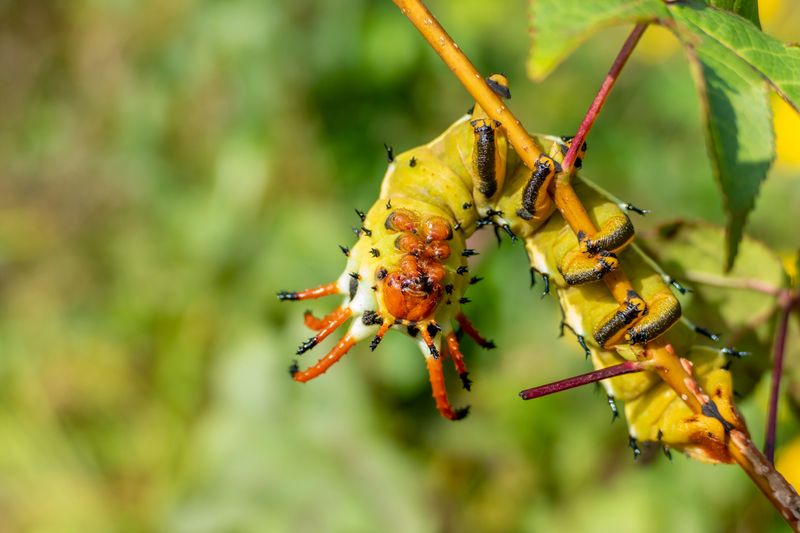
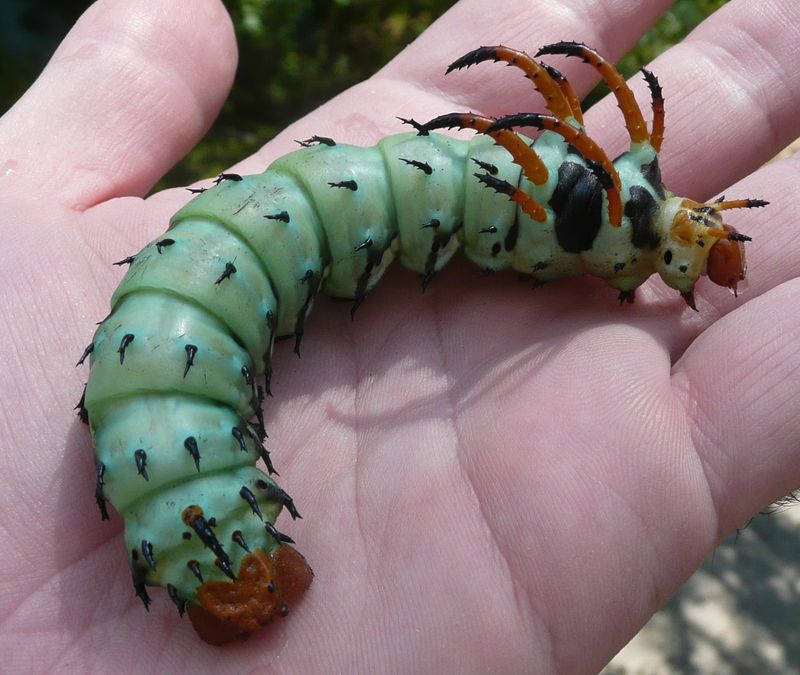
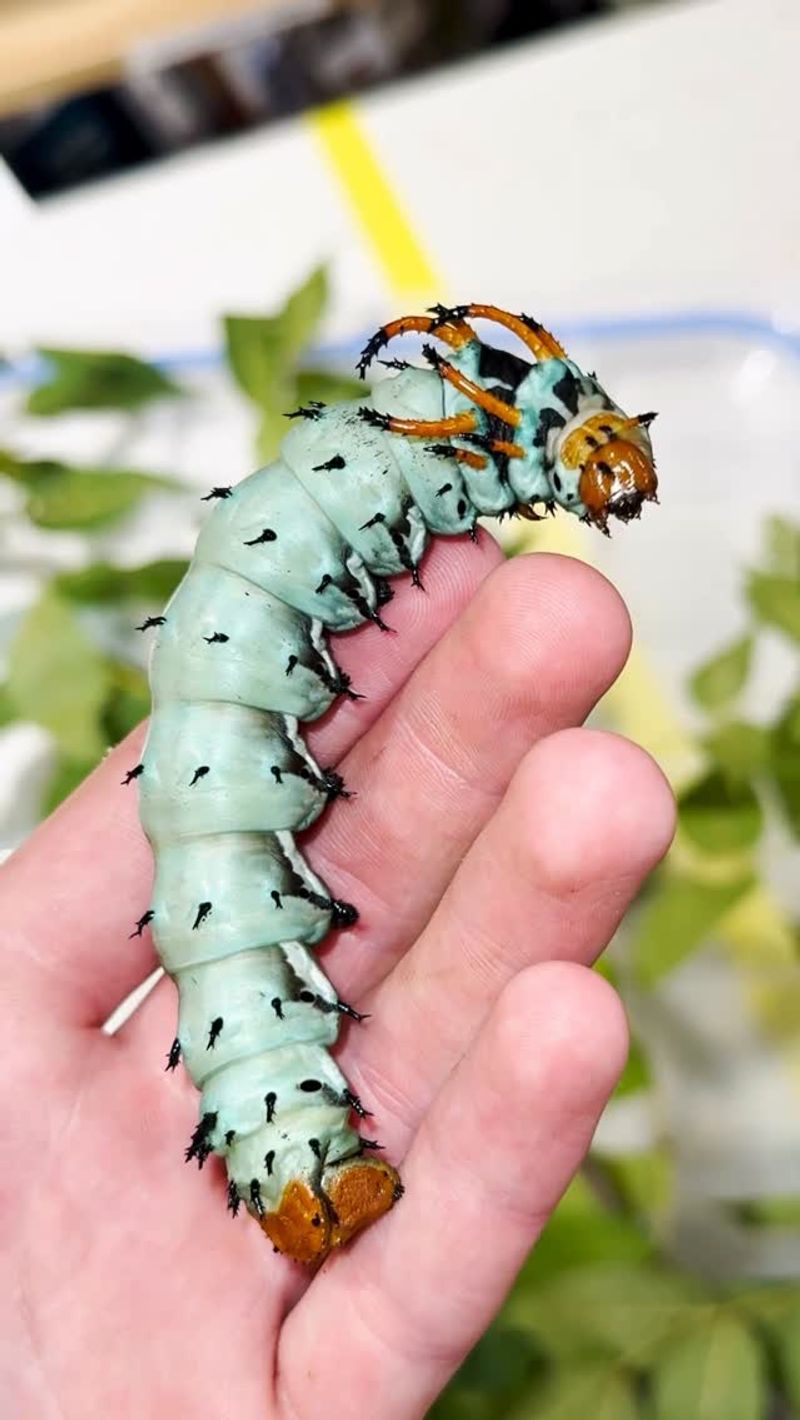
Five inches of blue-green muscle, tipped with curved orange horns. That is what is sitting on your patio, and it looks like it belongs to an entirely different era.
The hickory horned devil is the larval stage of the regal moth, also called the royal walnut moth. It holds the title of largest caterpillar in North America, sometimes stretching close to six inches when fully grown.
Here is the surprising part. Those dramatic horns are mostly a bluff. They have no stinger, no venom, and no ability to break skin.
The spikes bend slightly when touched and serve one job, which is convincing birds and squirrels to look elsewhere for lunch. A creature this large and this slow needs a good bluff, and evolution handed it a fantastic one.
If the caterpillar feels threatened, it may rear up, thrash its front end, and click softly. Plenty of Tennessee homeowners have jumped back at that display, then felt a little sheepish afterward.
You can pick one up if you want to move it, though a gloved hand or a piece of cardboard works just as well. The spines feel stiff and rubbery, a bit like flexible plastic.
Understanding that harmlessness changes the whole encounter. Instead of reaching for a shoe or a spray bottle, you get to stand there and appreciate one of the most spectacular insects in the eastern United States, right outside your kitchen door.
Your Yard Probably Has Its Favorite Trees Nearby
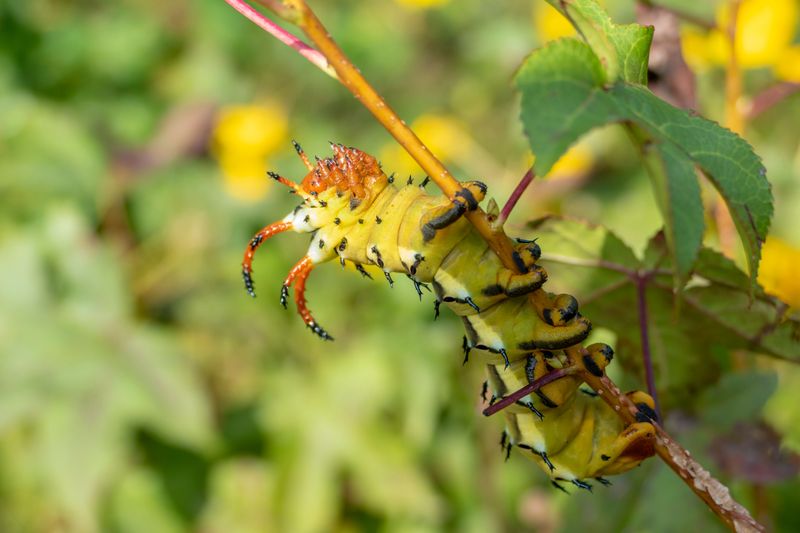
Caterpillars do not wander far from the buffet. Spotting one on your patio is a fairly reliable clue about what is growing overhead or just past the fence line.
Hickory horned devils feed on hickory, pecan, black walnut, butternut, persimmon, sumac, sweetgum, and sometimes ash. Middle and East Tennessee are loaded with exactly those species, which is why sightings here happen more often than in many other states.
Take a walk around the property and look up. A mature shagbark hickory or a black walnut within a hundred feet is usually the source.
Your Tennessee Garden Changes Every Week. Your Plan Should Too.
Gardening in Tennessee changes quickly throughout the season. Every Friday you’ll receive a simple weekly plan showing exactly what to plant, prune, fertilize, harvest, and protect so you never miss the right timing.
The caterpillar spent weeks up in that canopy, chewing leaves and growing through five stages called instars. Early on it was small, dark, and spiny. By September it has ballooned into the green giant you found.
Something worth knowing is that the feeding damage barely registers. A handful of these caterpillars in a full-sized hickory removes a tiny fraction of the leaves, and the tree keeps right on going.
Fruit growers with young pecan saplings occasionally notice more chewing, though most trees recover without intervention.
So there is no reason to treat your trees or hunt for more caterpillars. Consider the sighting a compliment to your landscape.
Native hardwoods that support giant silk moths are getting harder to find in suburban neighborhoods. Yours apparently still does the job.
Wandering On Concrete Signals The Big Move Underground
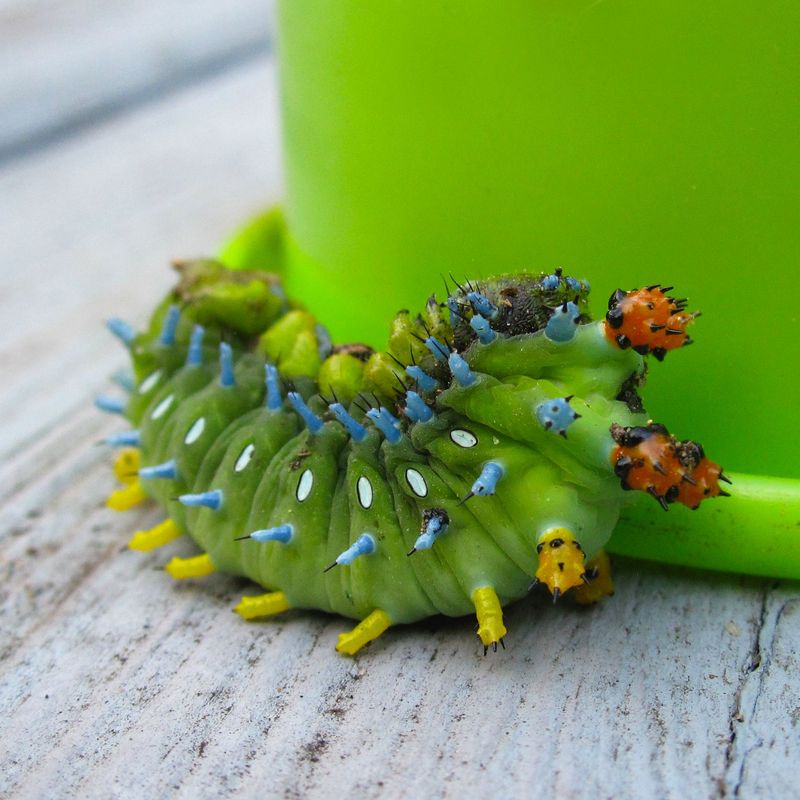
Timing tells you almost everything here. A hickory horned devil crossing open pavement in late summer or early fall is not lost.
It is on a mission. Once the caterpillar finishes feeding, it drops from the tree and travels along the ground searching for loose, workable soil.
That journey is why patios, driveways, sidewalks, and porches become sighting hotspots in Tennessee during late August and September. The caterpillar simply needs to cross your hardscape to reach a garden bed on the other side.
You may also notice a color shift right before this stage. The bright turquoise green often deepens toward a dusky blue or brownish tone, which is a normal signal that pupation is coming.
Once it finds the right spot, the caterpillar burrows several inches down. It forms a small chamber and transforms into a dark brown pupa, no cocoon required.
That pupa waits underground through fall and winter. Come late spring or early summer, a regal moth pushes up through the soil.
Knowing all this helps you respond well. Do not put the caterpillar back in a tree, because it has already finished eating and climbing would waste precious energy.
Instead, set it down near soft mulch, leaf litter, or a bare patch of garden soil. That small courtesy lets the whole process finish the way it should.
A Regal Moth Is Waiting On The Other Side
Picture a moth with a wingspan wider than your palm. Gray wings streaked with burnt orange veins, dotted with pale yellow spots, and a fuzzy orange body underneath.
That is the regal moth, and it is the reason the caterpillar exists at all. Citheronia regalis belongs to the giant silk moth family, the same group that gives us luna and cecropia moths.
Adults live only about a week. They have no working mouthparts, so they never feed, and their entire job is finding a mate and laying eggs.
Females release a scent that males can detect from remarkable distances. Eggs get placed on host tree leaves, usually a few at a time, and hatch in about a week.
Because adults fly at night and last such a short time, seeing one is genuinely rare. The caterpillar on your patio is far more likely to be noticed than the moth it becomes.
There is a bit of a naming quirk worth mentioning. The moth carries dignified titles like regal and royal, while the caterpillar got stuck with devil. Same animal, wildly different reputations.
If you want a shot at spotting the adult, watch porch lights and outdoor fixtures in June and July. Warm, humid Tennessee nights bring them in.
Turning off unnecessary lights helps too, since bright yards can pull moths off course during their brief window.
Populations Are Shifting In Some Regions, So Your Sighting Actually Counts
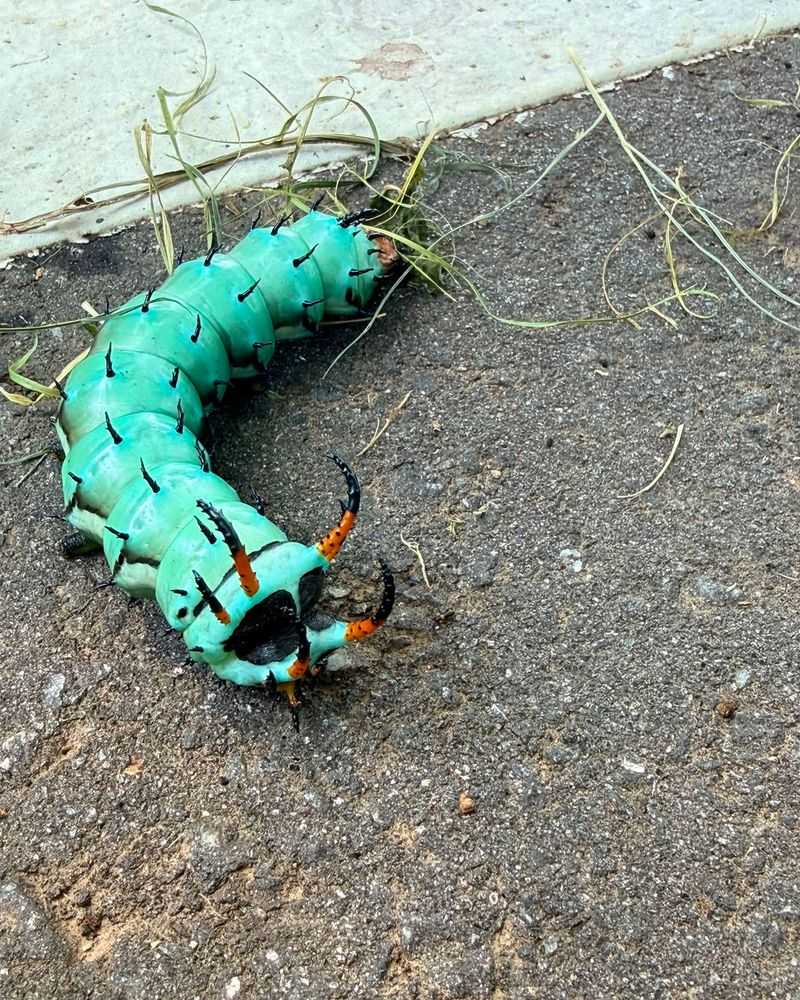
Researchers have noticed a notable shift over the past several decades. Regal moths have disappeared from much of their former range in the Northeast, and numbers have slipped in other regions too.
The southern Appalachians, including Tennessee, are widely considered one of the stronger regions for the species.
Several pressures stack up against these insects. Loss of mature hardwood forests removes host trees, and heavy outdoor lighting disrupts the short adult flight period.
A parasitic fly introduced long ago to control gypsy moths also affects native silk moths, and broad-spectrum insecticides do not distinguish between pests and giants like this one.
Your patio visitor represents a survivor of a demanding natural process. Out of hundreds of eggs a female lays, only a small number reach this size.
Snapping a photo takes ten seconds and adds real value. Platforms like iNaturalist and BugGuide let you upload the image with a date and location, and scientists genuinely use that data.
Tennessee also has active citizen science communities through university extension programs and regional naturalist groups. Sharing a sighting there connects you with people who get excited about the same things.
Beyond the science, there is the simple joy of it. Kids who meet a hickory horned devil tend to remember it for years.
Handing that experience to a curious neighbor or grandchild costs you a few minutes and pays off in wonder.
Simple Ways To Roll Out The Welcome Mat
Say you want more of these visitors, not fewer. Good news, because the changes involved are mostly about doing less rather than more.
Leave a patch of ground unraked and unmulched-free beneath your hickories or walnuts. Loose soil and a layer of fallen leaves give burrowing caterpillars a safe place to settle for winter.
Skip the heavy tilling in those zones. A pupa resting four inches down does not survive a rototiller in October.
Rethink your lighting next. Swapping bright white bulbs for warm amber ones, or putting outdoor fixtures on a motion sensor, reduces the pull on night-flying moths.
Keep insecticide use targeted and minimal. Broad sprays aimed at other insects often catch caterpillars that were doing no harm at all.
Planting native hardwoods matters over the long haul. A young persimmon, sumac, or hickory planted this fall becomes a nursery tree in a decade or two.
If you find a caterpillar somewhere risky, like a busy sidewalk or a driveway where cars park, move it gently to a quieter corner with soft ground.
Resist the urge to raise one in a jar unless you can provide fresh host leaves daily and deep soil for burrowing. Outdoors usually serves it better.
Small choices like these turn an ordinary Tennessee yard into a place where something spectacular can keep showing up, year after year.