This Overlooked New Jersey Tree Is Quietly Producing Fruit Right Now
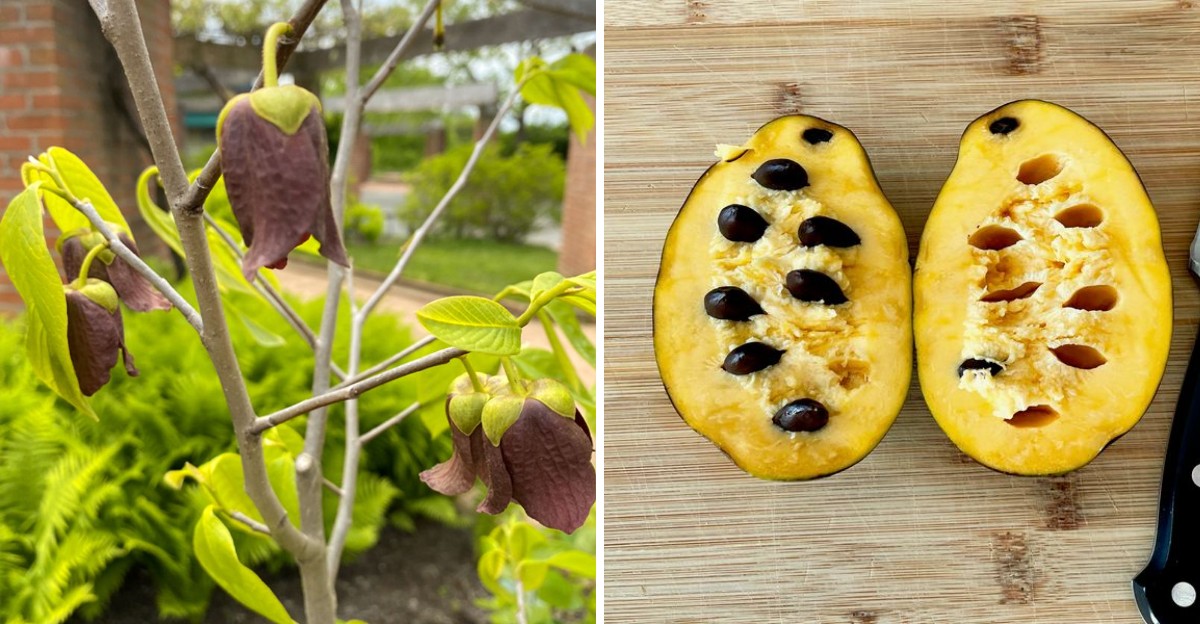
Something sweet drifts through New Jersey creek bottoms this September. You smell it before you spot it. Broad leaves droop low, hiding lumpy green fruit underneath.
Locals walk past this tree year after year, unaware. Farmers markets skip it without explanation. Grocery stores pretend it does not exist. Few people know its name or its flavor.
New Jersey hides this native harvest in plain sight. September hands you a narrow window to catch it. Wait too long and you lose your chance. This fruit tastes unlike anything sold in stores. Bite into it and your plans change fast.
Native trees like these thrive in shaded creek bottoms. Mercer County holds pockets of hidden groves. Taste hints at mango, banana, and vanilla custard.
Shipping ruins the fruit within days of picking. Stores avoid stocking something so fragile and fleeting. Patience rewards you with flavor you won’t find in stores.
Meet the Pawpaw, America’s Overlooked Native Fruit
Picture a mango and a banana having a quiet conversation in a New Jersey forest. That flavor mash-up is the pawpaw, Asimina triloba, the largest edible fruit native to North America.
Despite the tropical taste, pawpaw grows wild from Florida up through New York, and New Jersey sits comfortably in its range. The tree is usually small, around 15 to 25 feet tall, with smooth gray bark and leaves that can stretch a foot long.
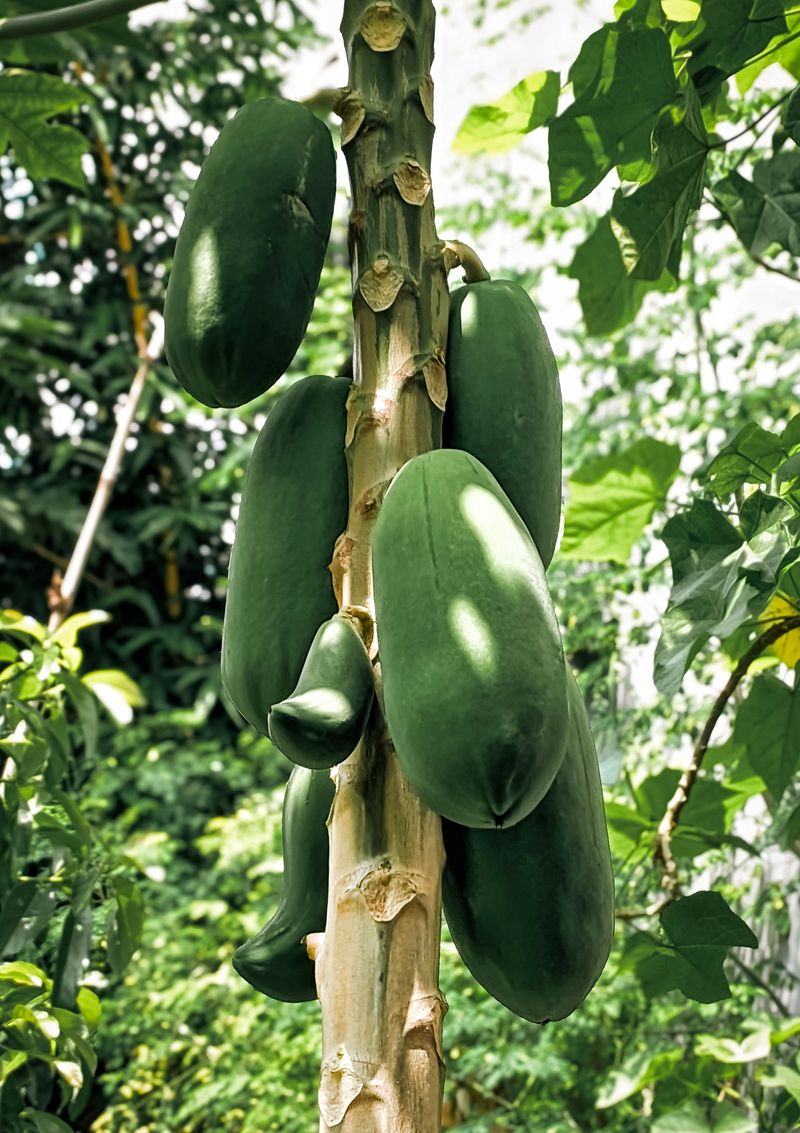
The fruit itself looks unassuming. Think of a stubby green potato, three to six inches long, sometimes growing in clusters like fat fingers.
Slice one open when ripe and you get custard-yellow flesh, silky and soft enough to eat with a spoon. Inside sit large brown seeds arranged in two rows, which you spit out or save for planting.
Botanically, pawpaw belongs to the Annonaceae family, the same group as cherimoya and soursop. It is the lone member of that tropical family hardy enough to handle a Garden State winter.
Fun bit of history: Lewis and Clark reportedly relied on pawpaws during a difficult stretch of their return trip in 1806. George Washington is said to have enjoyed them chilled, according to popular pawpaw lore, and Thomas Jefferson planted them at Monticello.
So why the disappearing act? The fruit bruises easily and lasts only a few days at room temperature, which makes shipping a headache.
That fragility kept pawpaw out of supermarkets and turned it into a local secret worth learning.
Where These Trees Hide Across The Garden State
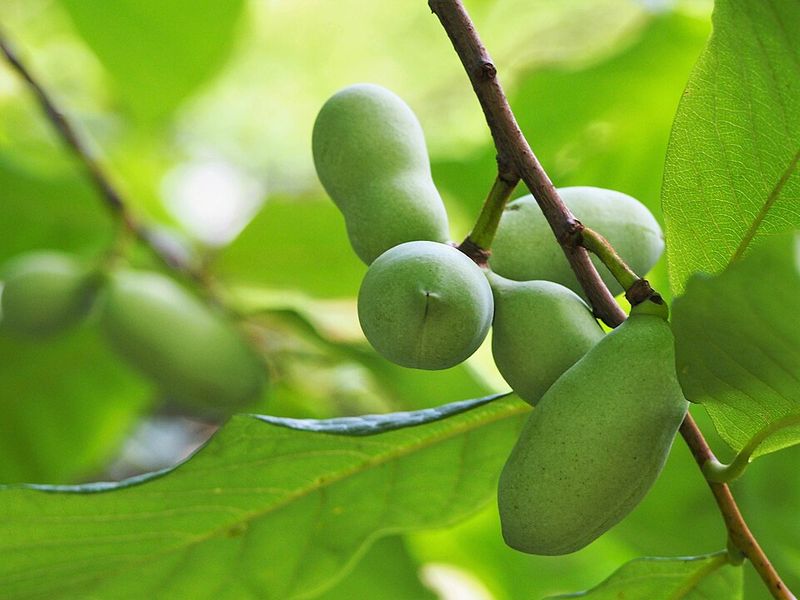
Pawpaws are creatures of the shade, and that habit explains why so many hikers miss them. Instead of standing out along sunny trail edges, they cluster in the damp understory beneath oaks, maples, and sycamores.
Stream corridors are the classic spot. Look along the Delaware and Raritan Canal towpath, the floodplains of the Musconetcong, and the wooded bottomlands of Hunterdon, Somerset, and Mercer counties.
South Jersey has its share too, tucked into moist woods near the Rancocas and along tributaries feeding the Delaware River. Even parts of Essex and Bergen county parks host old patches that predate the neighborhoods around them.
Your New Jersey Garden Changes Every Week. Your Plan Should Too.
Gardening in New Jersey changes quickly throughout the season. Every Friday you’ll receive a simple weekly plan showing exactly what to plant, prune, fertilize, harvest, and protect so you never miss the right timing.
One clue makes searching easier. Pawpaws spread by root suckers, so they form colonies of genetically identical stems rather than single scattered trees.
When you spot a patch of understory saplings with unusually large, drooping leaves all growing together, slow down. That leaf shape is broad in the middle and tapers at both ends, and it hangs downward like a tired flag.
Crush a leaf between your fingers and you get a sharp, slightly unpleasant smell, sometimes compared to green bell pepper or motor oil. That odor is a reliable identification trick.
Before you harvest anywhere, check the rules. State parks and county preserves have different policies on picking fruit, and some prohibit it entirely.
Private land needs permission, plain and simple. Many landowners are happy to share once they learn what is growing on their property.
Reading The Signs Of Perfect Ripeness
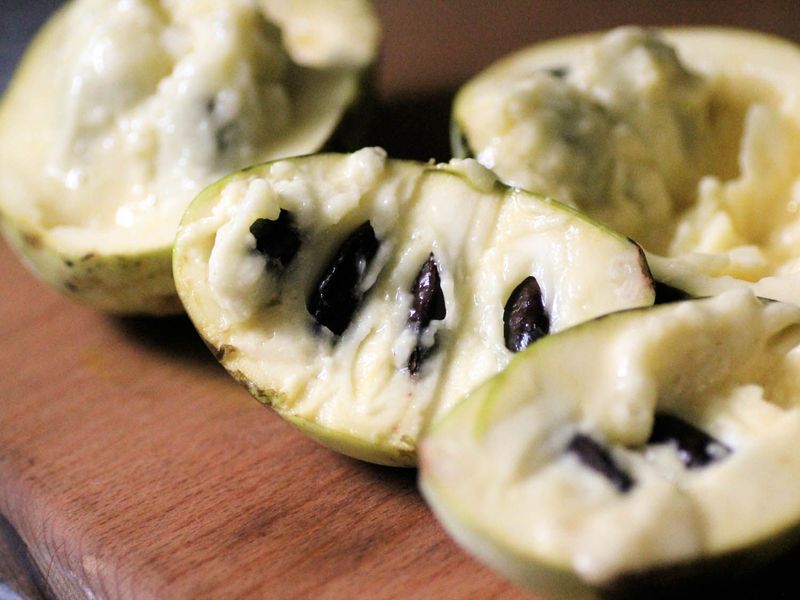
Timing is the whole game with pawpaws. Pick too early and you get a bitter, chalky mouthful that will turn you off the fruit for years.
In New Jersey, the harvest usually runs from late August into early October, with the first half of September hitting the sweet spot. Warm springs can nudge the window earlier, cool ones push it later.
Ripe fruit gives slightly when you press it with your thumb, similar to a peach ready for slicing. The skin often shifts from bright green toward a paler yellow-green, sometimes with brown freckles or dark patches.
Smell is your best friend here. A ripe pawpaw broadcasts a sweet, floral, fruity perfume you can catch from several feet away.
Experienced foragers give the trunk a gentle shake and gather whatever drops. Fruit that falls on its own is usually at peak flavor, though it bruises fast on hard ground.
Check the leaf litter as well. Fallen pawpaws hide well against the forest floor, and squirrels, raccoons, and opossums will find them quickly if you do not.
Skip anything mushy with split skin or a fermented, boozy smell. Small brown spots on the outside are normal and rarely affect the flesh inside.
Once home, ripe fruit holds about two to three days on the counter and roughly a week in the refrigerator. Eat them soon, or process them right away for later.
Growing Your Own Patch In A Backyard
Here is good news for anyone tired of hunting. Pawpaws take well to New Jersey yards, and the state falls squarely inside their comfort zone in zones 6 and 7.
Start with two genetically different trees. Pawpaws are poor at pollinating themselves, so a lone tree may flower beautifully and set almost no fruit.
Grafted named varieties such as Shenandoah, Susquehanna, Mango, and Allegheny fruit sooner and taste more consistent than random seedlings. Expect fruit in roughly four to six years from a grafted tree, longer from seed.
Young pawpaws dislike harsh sun, which surprises people. Give saplings partial shade or a shade cloth for their first two summers, then let them move into fuller light as they mature.
Soil should be rich, well drained, and slightly acidic. Work in compost at planting and mulch the root zone to hold moisture during dry July stretches.
Handle the roots carefully. Pawpaws grow a long taproot and sulk badly when transplanted roughly, so container stock planted in spring tends to settle in best.
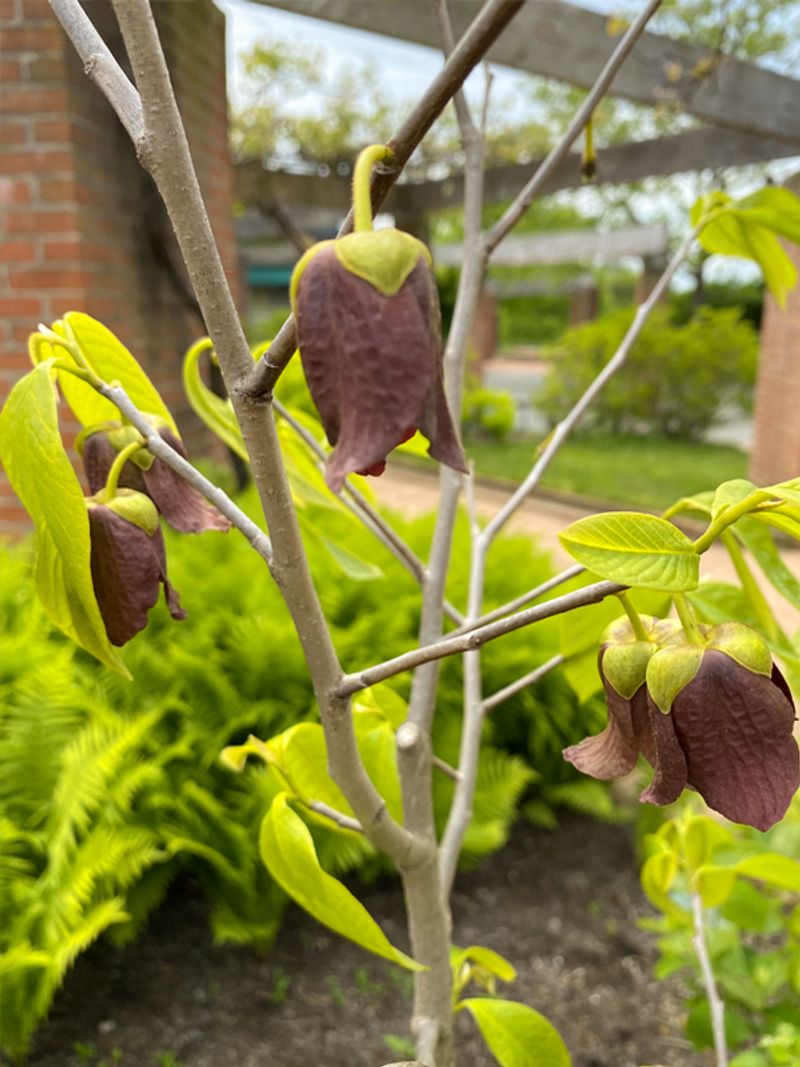
Pollination can be quirky. The maroon spring flowers smell faintly of fermenting fruit and attract flies and beetles rather than bees, so some growers hand-pollinate with a small paintbrush for better yields.
Deer largely leave the foliage alone, thanks to natural compounds in the leaves. That resistance alone makes pawpaw worth considering in suburban neighborhoods where deer treat gardens like a buffet.
Kitchen Ideas Beyond Eating It Raw
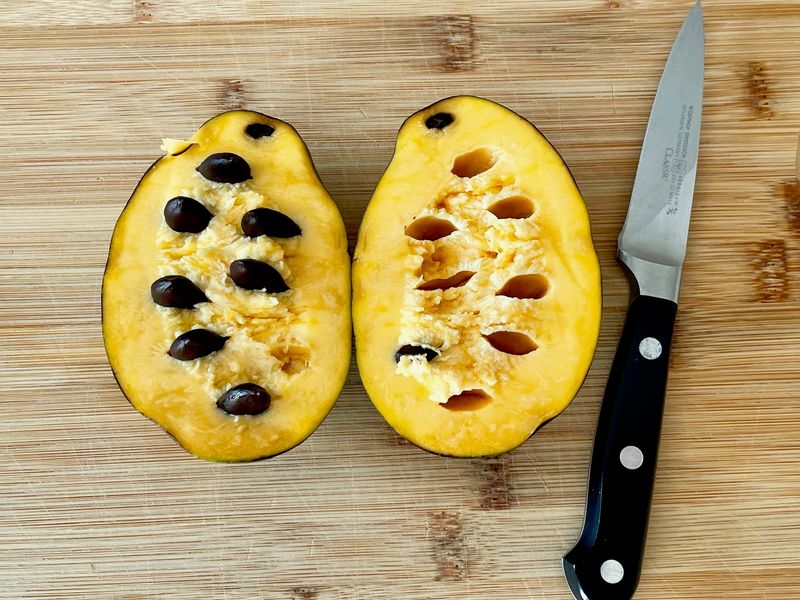
Ask ten pawpaw fans how to eat one and nine will say the same thing: cut it in half and grab a spoon. The flesh is already the texture of pudding, so nature did the prep work.
For anything fancier, you need pulp. Scoop the flesh, press it through a colander or food mill to catch the seeds, and you have a golden puree ready for the freezer.
Frozen pulp keeps well for months and thaws into smoothies beautifully. Blend it with banana, a splash of milk, and a little honey for a breakfast that tastes like a tropical vacation.
Pawpaw ice cream is the crowd favorite. The natural creaminess means you barely need to adjust a standard custard base.
Quick breads and muffins work nicely too. Swap pawpaw pulp in wherever a recipe calls for mashed banana, keeping the ratio close to one to one.
Heat changes things, though. Long baking can bring out a faint bitterness, so gentle cooking and shorter bake times generally taste better.
Some New Jersey and Pennsylvania breweries have released pawpaw beers in past autumns, and small-batch pawpaw jam shows up at farm stands if you look hard.
One safety note worth respecting: skip the skin and seeds, which contain compounds that upset some stomachs. A small number of people also react poorly to the pulp, so try a spoonful first before committing to a whole bowl.
Why Wildlife And Native Gardeners Cheer For It
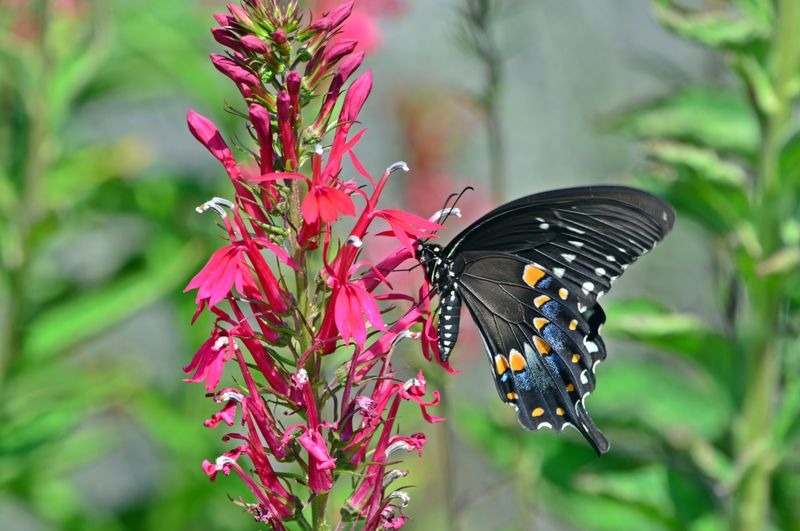
There is a black-and-white striped butterfly in New Jersey that owes its existence to this tree. The zebra swallowtail lays eggs only on pawpaw leaves, and its caterpillars feed on nothing else.
No pawpaws in an area means no zebra swallowtails, which is a strong argument for planting a patch. Gardeners who add two or three trees sometimes spot the butterflies within a few seasons.
Wildlife appreciates the fruit as well. Opossums, raccoons, foxes, box turtles, and gray squirrels all raid ripe pawpaws, which is part of why fallen ones disappear so fast.
Those animals earned their meal. Large seeds get carried away and dropped, helping colonies spread along stream corridors over decades.
Ecologists have a theory about the oversized fruit. Ancient large mammals such as mastodons likely spread pawpaw seeds thousands of years ago, leaving today’s trees with fruit built for animals that are no longer around.
For native plant fans, the tree checks a lot of boxes. It thrives in shade where few fruit trees bother, supports pollinators with early spring blooms, and rarely needs spraying for pests.
Deer avoidance is a bonus in a state where browsing pressure reshapes whole forests. Some biologists even track spreading pawpaw thickets as a sign of heavy deer populations nearby.
Plant one and you get shade, fruit, butterflies, and a conversation starter. Few native trees offer that much in such a modest package.