Why Georgia Magnolia Leaves May Start Turning Yellow In September
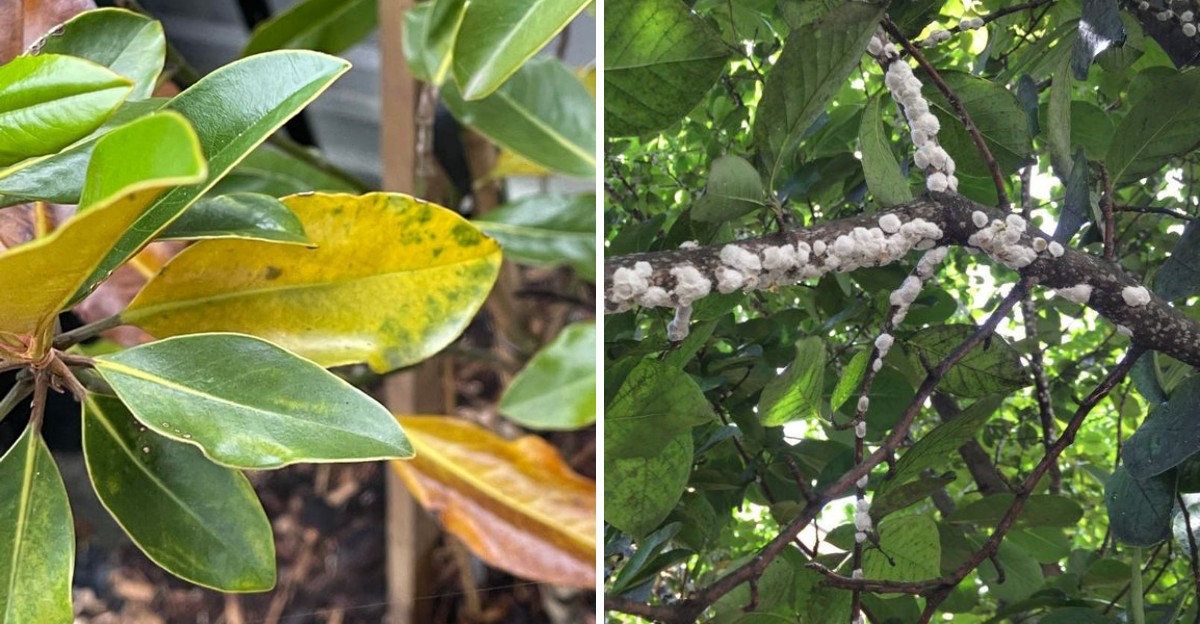
Yellow leaves on a magnolia can grab your attention when the rest of the tree still looks green. In September, that color change does not always signal trouble.
Magnolias naturally replace older leaves, so some yellowing can be part of normal leaf turnover.
Pay close attention to how much foliage is changing and where it appears. Georgia weather can influence how a magnolia looks as summer conditions begin easing.
So the pattern matters more than a few yellow leaves scattered through the canopy.
Take one careful closer look before changing your watering or reaching for fertilizer. Healthy leaf turnover looks different from yellowing connected with stress or another issue.
Learn those differences, and you can decide whether your magnolia needs attention or is simply moving through a normal September change.
1. September Yellowing Does Not Always Point To The Same Problem
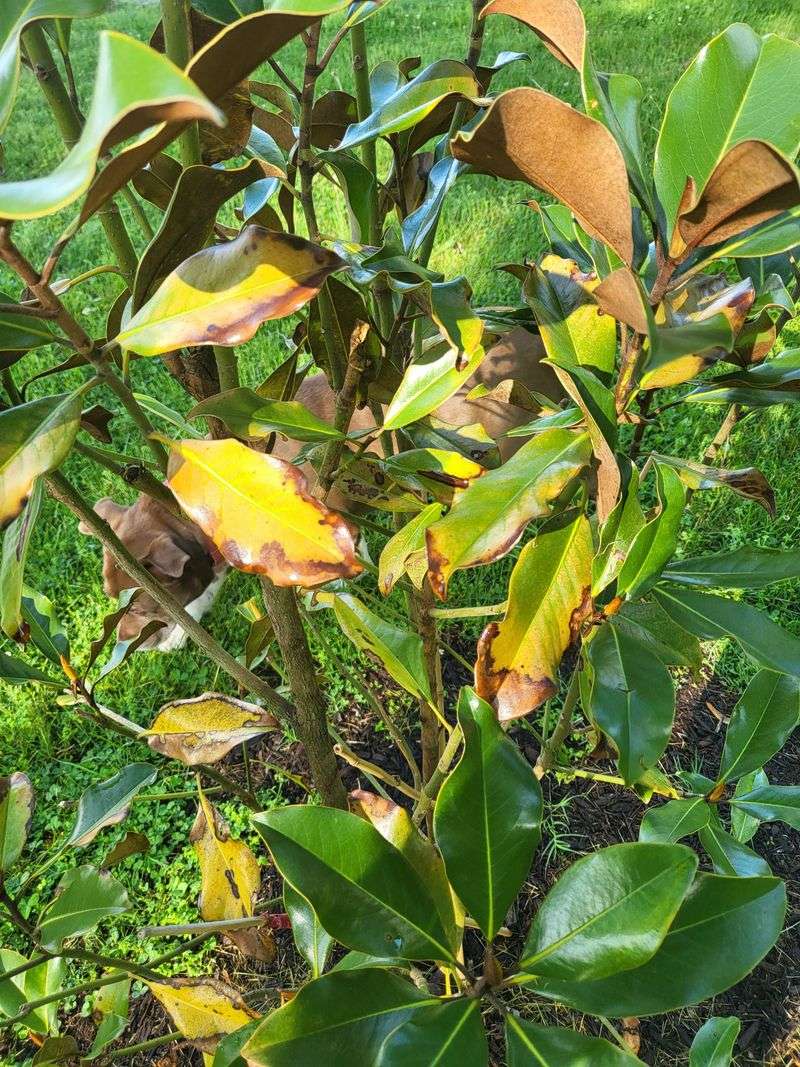
Yellow magnolia leaves in early fall can mean five different things at once. That is what makes them so confusing.
Southern magnolias are evergreen, but evergreen does not mean permanent. Leaves live about two years, then turn yellow and drop, often in warm weather.
Late summer shedding is common across Georgia, especially after a hot, dry August. Older interior leaves go first because they get the least light.
So before you treat anything, slow down and look at the whole tree. A handful of yellow leaves scattered through the canopy usually means normal turnover.
Trouble looks different. Widespread yellowing, thin growth, or leaves dropping while still mostly green points to stress somewhere in the roots or branches.
Age matters too. Newly planted magnolias yellow more easily because their root systems have not spread out yet.
Keep a rough mental record of what your tree did last September. Trees repeat their habits, and knowing the pattern saves you from guessing every year.
Weather plays a big role, and no two seasons match. A soggy spring followed by a droughty September can produce yellowing that has nothing to do with pests or disease.
The rest of this list walks through the usual suspects. Check them in order rather than jumping straight to fertilizer or spray.
2. Dry Soil May Be Taking A Toll On The Tree
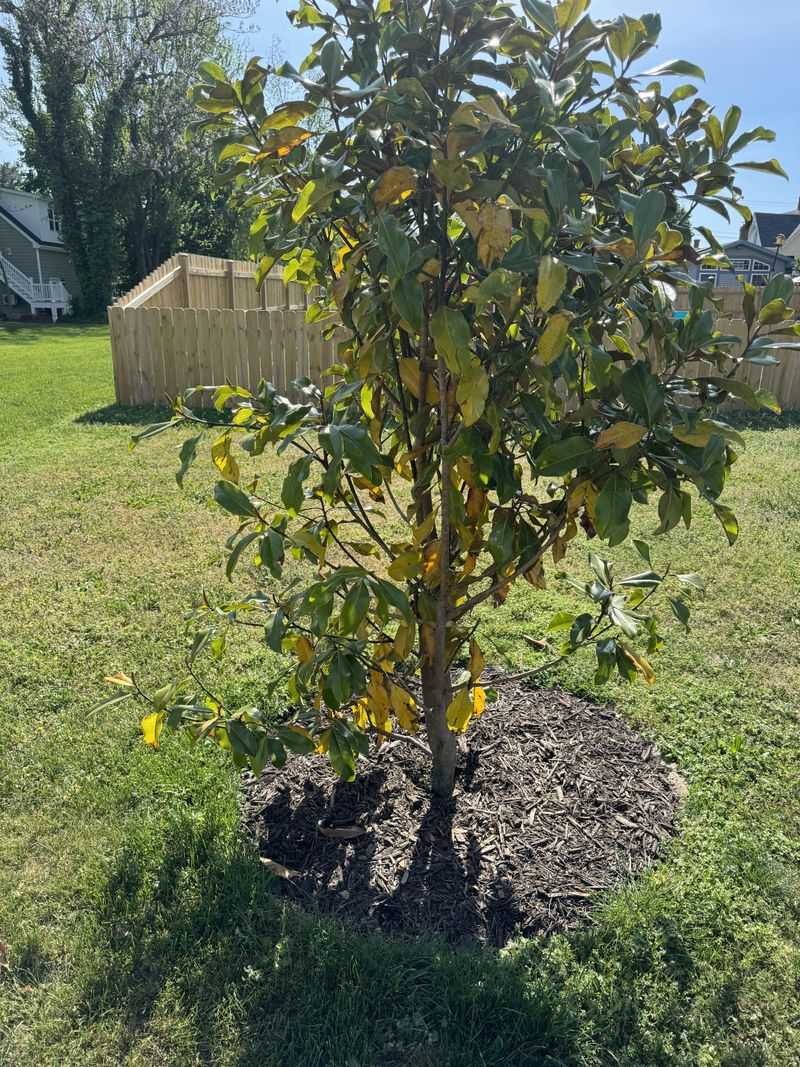
Thirsty magnolias yellow from the bottom up. It is one of the most common reasons homeowners here see color changes in September.
August and early September often bring long gaps between real rain. Soil dries out faster than people expect, especially in sandy or heavily amended beds.
Dig down three or four inches with a trowel and feel the soil. If it crumbles dry at that depth, the tree needs water.
Magnolias have wide, shallow root systems that sit near the surface. Quick sprinkler runs wet the grass but rarely reach where those roots actually drink.
Slow, deep watering works better. Let a hose trickle at the base for twenty or thirty minutes, then move it to a new spot under the canopy.
Drought-stressed leaves often curl slightly or develop crispy brown edges before turning yellow. That combination is a strong hint.
Your Georgia Garden Changes Every Week. Your Plan Should Too.
Gardening in Georgia changes quickly throughout the season. Every Friday you’ll receive a simple weekly plan showing exactly what to plant, prune, fertilize, harvest, and protect so you never miss the right timing.
Mulch helps more than most people realize. Two to three inches of pine straw or shredded bark holds moisture and keeps the root zone cooler.
Just keep mulch off the trunk itself, since piled material against bark can cause rot over time.
Trees planted within the last two or three years need the most attention during dry Georgia fall stretches. Established magnolias handle short dry spells much better, though even they show it eventually.
3. Too Much Water Creates A Different Kind Of Stress
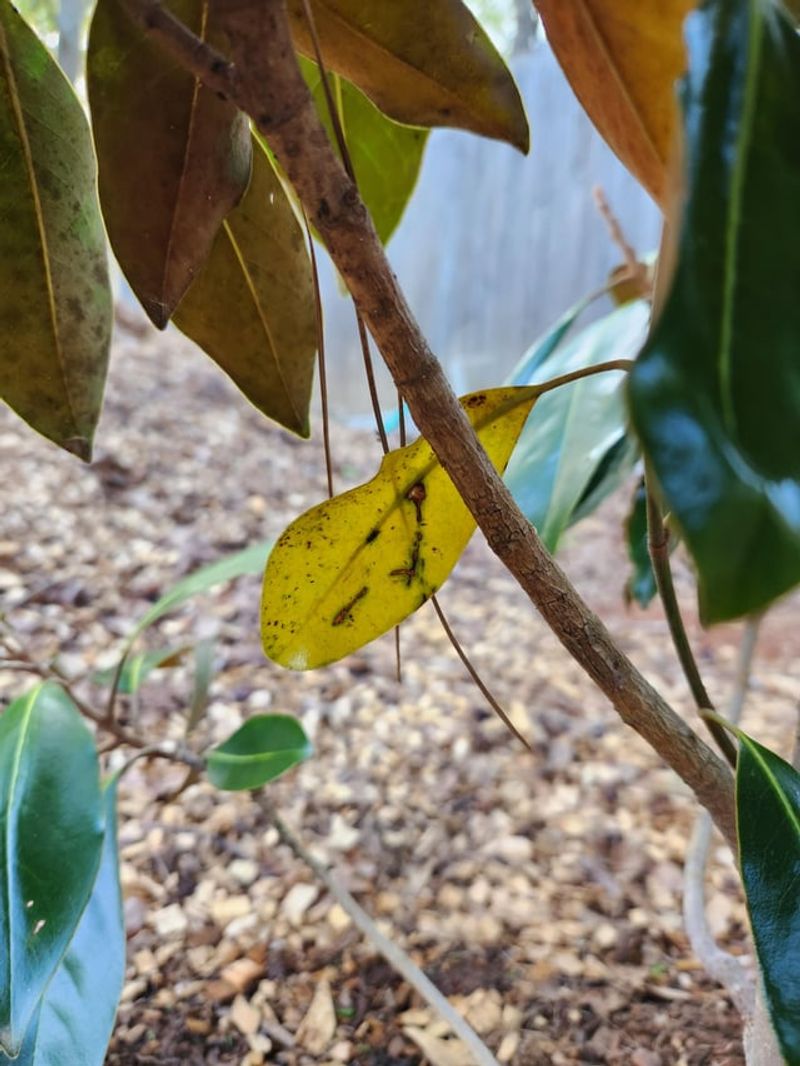
Overwatering fools almost everyone. Yellow leaves look like thirst, so people water more, and the problem gets worse.
Roots need air pockets in the soil just as much as they need moisture. Waterlogged ground pushes that air out.
When roots cannot breathe, they stop moving nutrients upward. Leaves fade to a soft, uniform yellow, sometimes with limp texture rather than crispy edges.
Summer thunderstorms plus an irrigation system on a timer is a common combination in Southern yards. The tree ends up soaked week after week.
Turn the timer off for a few days and test the soil by hand before running it again.
Lawn watering schedules rarely match tree needs. Grass likes frequent shallow water, while magnolias prefer less frequent, deeper soaking.
Another clue is smell. Soggy soil around the root zone sometimes has a sour, swampy odor when you dig into it.
Leaf drop from too much water often happens fast, with several leaves letting go over a few days rather than gradually.
Recovery takes patience. Once soil dries to a normal moisture level, new growth usually comes in with better color, though damaged leaves will not turn green again.
Homeowners in wetter parts of Georgia should watch this closely through September, since fall rains can arrive suddenly and stay for days.
4. Poor Drainage Leaves Magnolia Roots Struggling Below The Surface
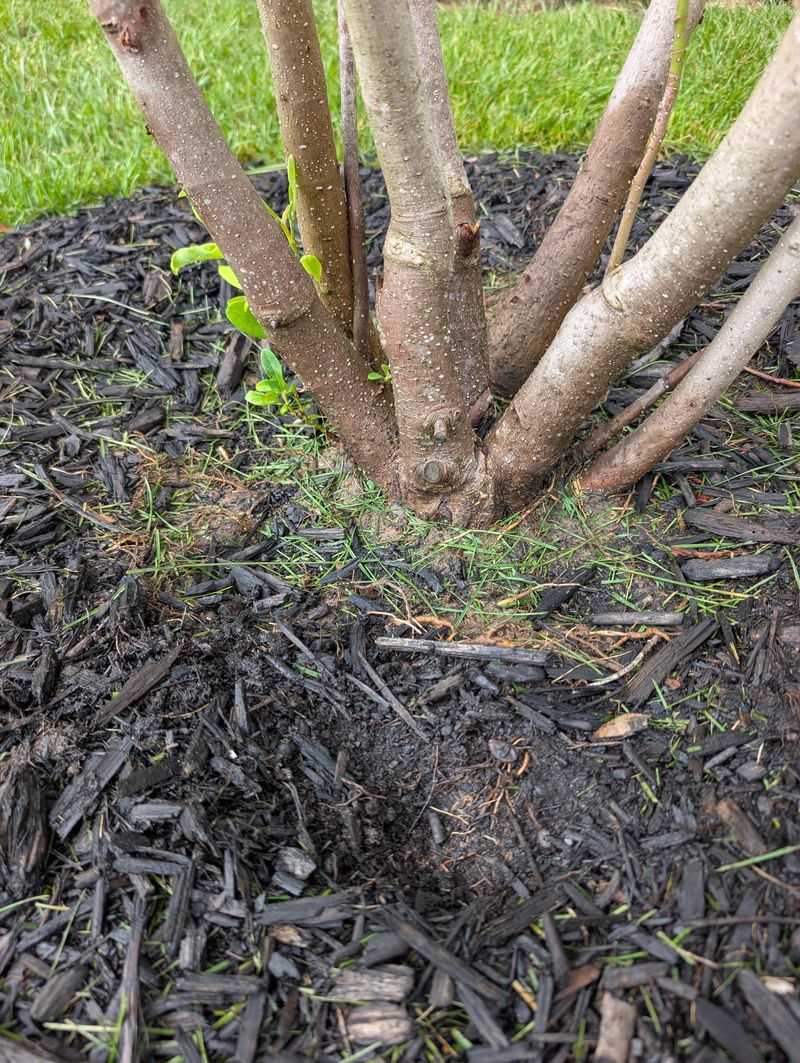
Heavy clay is the quiet culprit in countless yards. Water sits on top of it instead of soaking through.
Much of Georgia sits on red clay, and magnolias planted in unamended clay pockets often show yellowing every fall. The roots stay damp long after rain stops.
A simple test tells you a lot. Dig a small hole about a foot deep, fill it with water, and see how long it takes to drain.
Water still standing after several hours means drainage is slow. Roots in that spot are dealing with low oxygen for long stretches.
Compaction adds to it, especially near driveways, sidewalks, or spots where equipment has rolled across the lawn.
You cannot rebuild soil overnight, but you can improve it. Spreading compost over the root zone each year lets earthworms and rain carry organic matter downward.
Avoid tilling deeply under an existing magnolia, since the shallow roots damage easily.
Raised beds or berms help with new plantings in problem areas. Planting slightly high, with the root flare visible, gives roots a better shot.
Redirecting downspouts away from the trunk also makes a real difference in low spots.
Improvement tends to be gradual rather than dramatic, and results depend on how severe the drainage issue is to begin with.
5. Look More Closely When Yellow Leaves Also Develop Spots
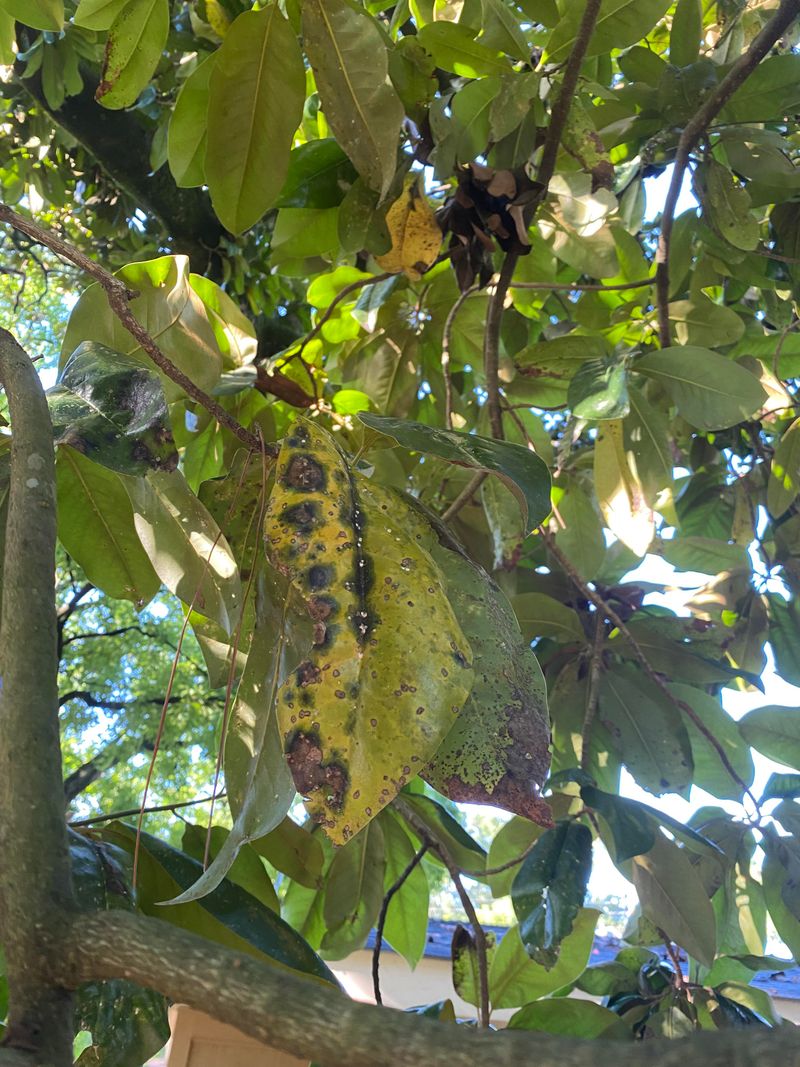
Spots change the story. A yellow leaf with dark blotches is usually dealing with a fungus, not a watering issue.
Warm, humid weather feeds leaf spot problems, and September in the South delivers plenty of both. Spores splash from soil onto low leaves during rain.
Typical signs include brown or purplish spots with yellow halos, often on older leaves near the bottom of the tree.
Most leaf spot fungi look worse than they are. Healthy magnolias tolerate a fair amount of spotting without any lasting harm.
Sanitation is your best move. Rake up fallen leaves under the canopy instead of leaving them to overwinter there.
Airflow matters too, so thin out crowded shrubs planted right against the trunk. Better circulation dries leaf surfaces faster after storms.
Watering at ground level rather than overhead cuts down on splashing. Soaker hoses work well for this.
Fungicides exist, but they mainly prevent new infections rather than fixing spotted leaves already on the tree.
Bacterial issues and cold injury can also cause spotting, so heavy or unusual damage is worth showing to your county Extension office.
Keep an eye on whether spots spread to new growth next spring. That tells you whether the problem is persistent or just a rough humid stretch.
6. Magnolia Scale May Be Hiding Along The Branches
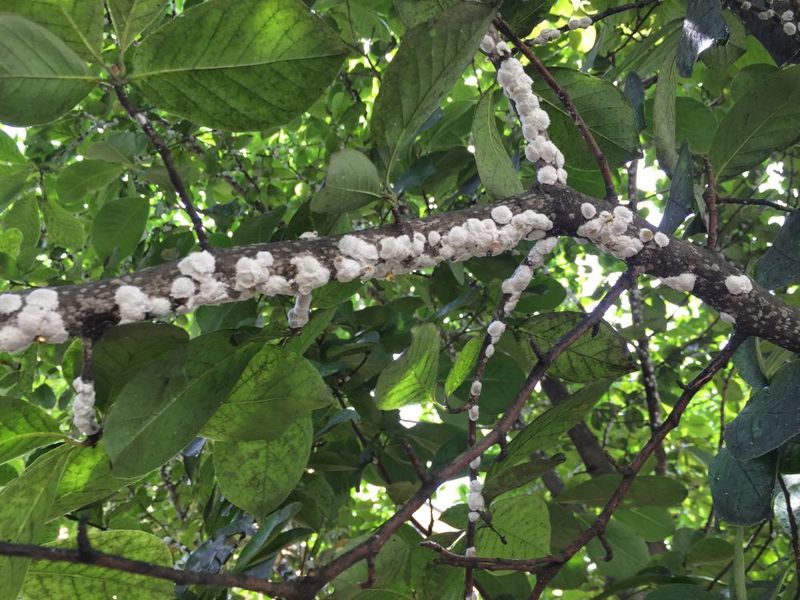
Run your hand along a magnolia twig. If it feels sticky, insects are probably involved.
Magnolia scale is one of the larger soft scales, and heavy populations show up as bumpy, waxy white or brownish lumps along stems.
These insects feed on sap, which drains energy from the tree. Leaves respond by yellowing, and growth slows down.
Honeydew is the giveaway. Scale insects excrete sugary waste that coats leaves, then black sooty mold grows on top of it.
Wasps, ants, and bees hanging around a magnolia in late summer often signal a scale problem rather than a flower attraction.
Late summer into early fall is when young crawlers move around, and that is the window when treatments work best.
Horticultural oil applied thoroughly can smother crawlers and settled scale. Coverage matters more than product strength.
Light infestations on small trees can sometimes be scrubbed off by hand or pruned out with a few affected twigs.
Timing and follow-up are important, since one application rarely handles a large population. Repeat inspections through the season help.
Plenty of magnolias around Georgia neighborhoods carry low scale numbers without visible trouble, so treatment is worth considering only when insects are clearly abundant and leaves are fading.
7. Where The Yellowing Appears Offers An Important Clue
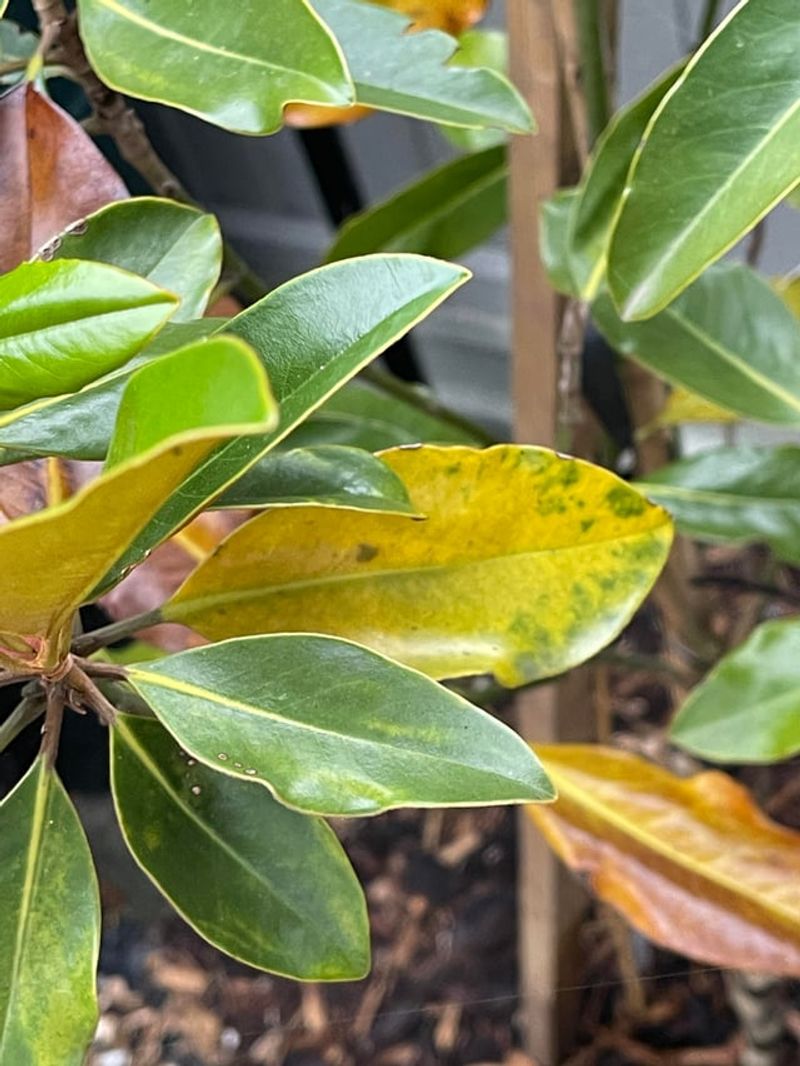
Location on the tree narrows things down fast. Inner leaves and outer leaves yellow for different reasons.
Yellowing tucked deep inside the canopy usually means normal shedding of shaded, older foliage. That pattern shows up every year in Georgia landscapes.
Yellowing at the tips of new growth is more concerning, since young leaves should be the healthiest on the tree.
Pale new leaves with green veins often point to a nutrient issue, frequently tied to soil pH being too high for magnolias.
A soil test through your county Extension office costs little and removes the guesswork. Guessing at fertilizer can make things worse.
One-sided yellowing is worth investigating separately. Root damage from trenching, construction, or driveway work often shows up on just that side of the canopy.
Uniform yellowing across the whole tree, top to bottom, usually traces back to water or roots rather than pests.
Take a photo every couple of weeks so you can compare. Patterns are easier to spot in pictures than in memory.
Also check the trunk flare for mulch piled too high or string trimmer damage, both of which affect the whole canopy.
When the pattern stays unclear or worsens through fall, a certified arborist can inspect roots and bark directly.