The Foam-Like Blob Glued To Maryland Shrubs Is A Winter Nursery
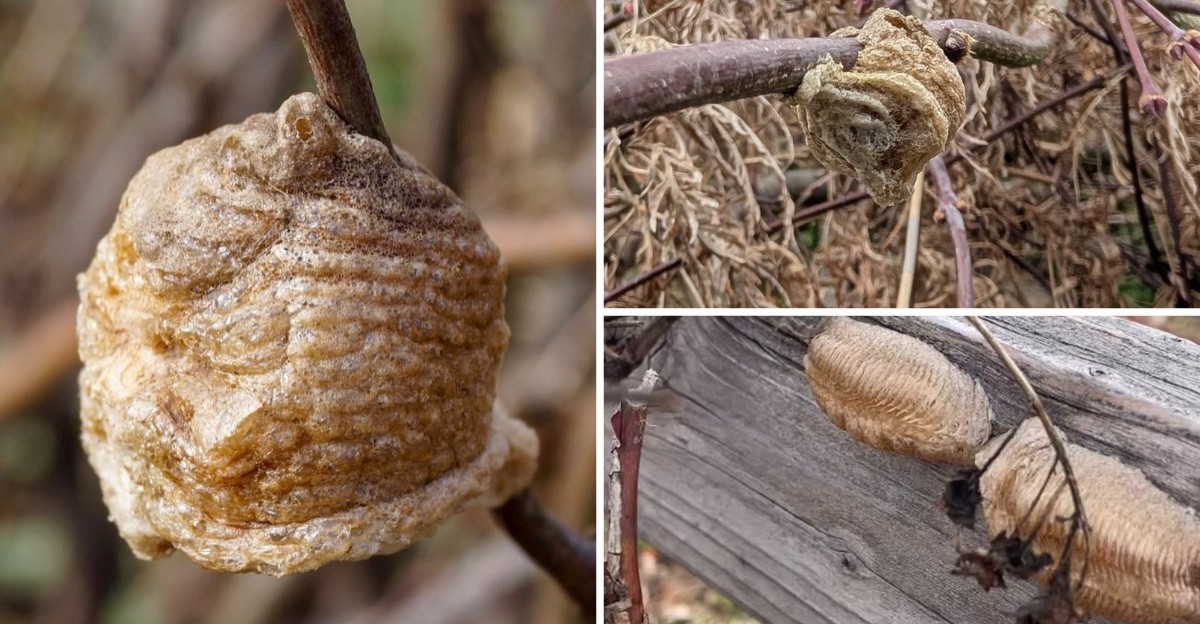
Walk past a Maryland hedge in January and you might spot a tan lump stuck to a twig. It looks like someone squirted spray foam on the shrub and walked away without saying sorry.
Most folks assume it is a fungus, a wasp nest, or a wad of leftover packing material. Gardeners grab the pruners, snip the branch, and toss the whole odd thing in the yard bin.
That lump, though, is not trash and it is not a problem for your shrub. It is a tiny sealed apartment building, packed with hundreds of very patient winter tenants.
They are waiting out the cold behind walls tougher than they look, ignoring snow, wind, and squirrels. Toss that twig, and you have just evicted a whole neighborhood before anyone even paid rent.
The Tan Papery Case Of A Praying Mantis
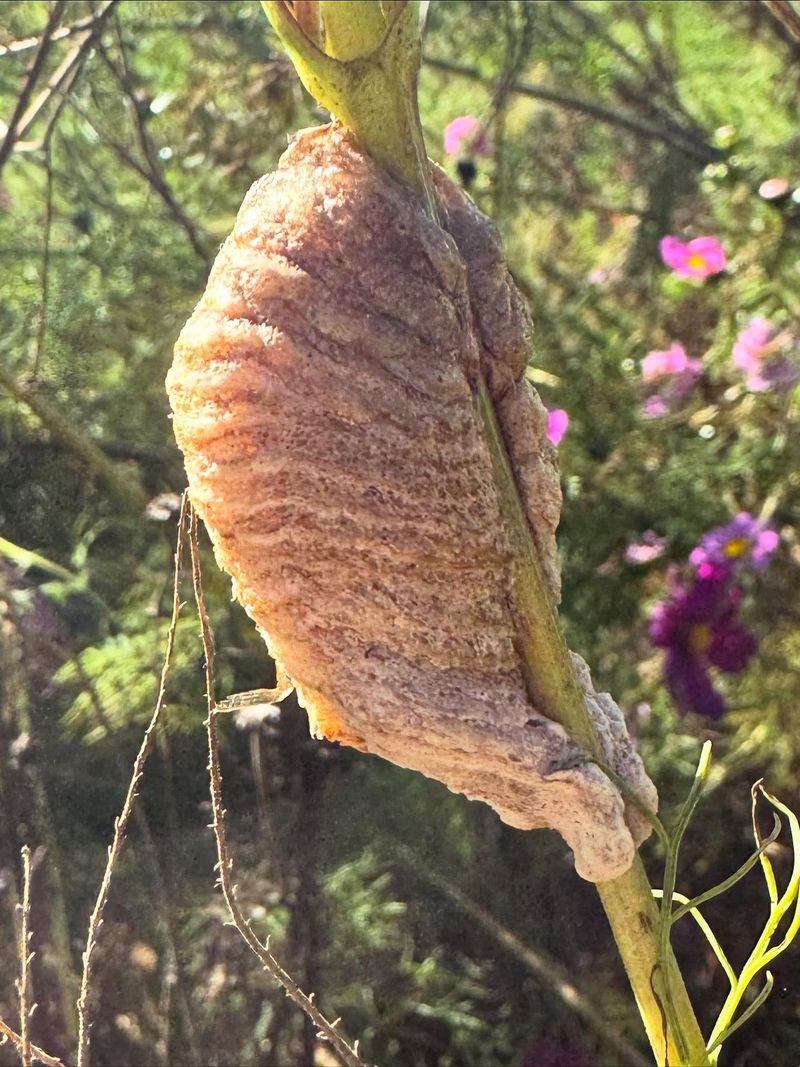
Crack the mystery early, because that blob is an ootheca, the egg case of a praying mantis. A female whipped it up from liquid protein that hardened into stiff, weatherproof foam.
Each case holds roughly 100 to 300 eggs, tucked in neat chambers like a honeycomb. The outer shell feels like dried marshmallow, light and dry, yet surprisingly tough under a thumbnail.
Maryland hosts a few species, and the case shape gives away which one built it. Chinese mantis cases are round and puffy, about the size of a walnut.
Carolina mantis leaves a flatter, longer case, often gray and pressed tight against bark. The native Carolina mantis is smaller and easy to overlook beside its bigger imported cousin.
Color runs from pale straw to caramel brown, darkening slightly as winter drags on. You will find them on stems, fence rails, siding, and the underside of deck railings.
The foam is not glue in the household sense, though it grips like industrial adhesive. Pulling one off with bare fingers usually tears the base and cracks the sealed chambers.
Nothing inside is active right now, so there is no buzzing, crawling, or movement. Hold one gently and it feels weightless, like a scrap of hardened sea sponge.
Maryland gardeners often find them on butterfly bush, forsythia, hydrangea, and tall ornamental grasses. Any sturdy stem at knee height works fine for a picky mantis mother.
Once you learn the shape, you start noticing them everywhere on winter walks. Neighbors will think you are odd for photographing twigs, which is a fair trade.
Late Autumn Laying And The Long Cold Wait
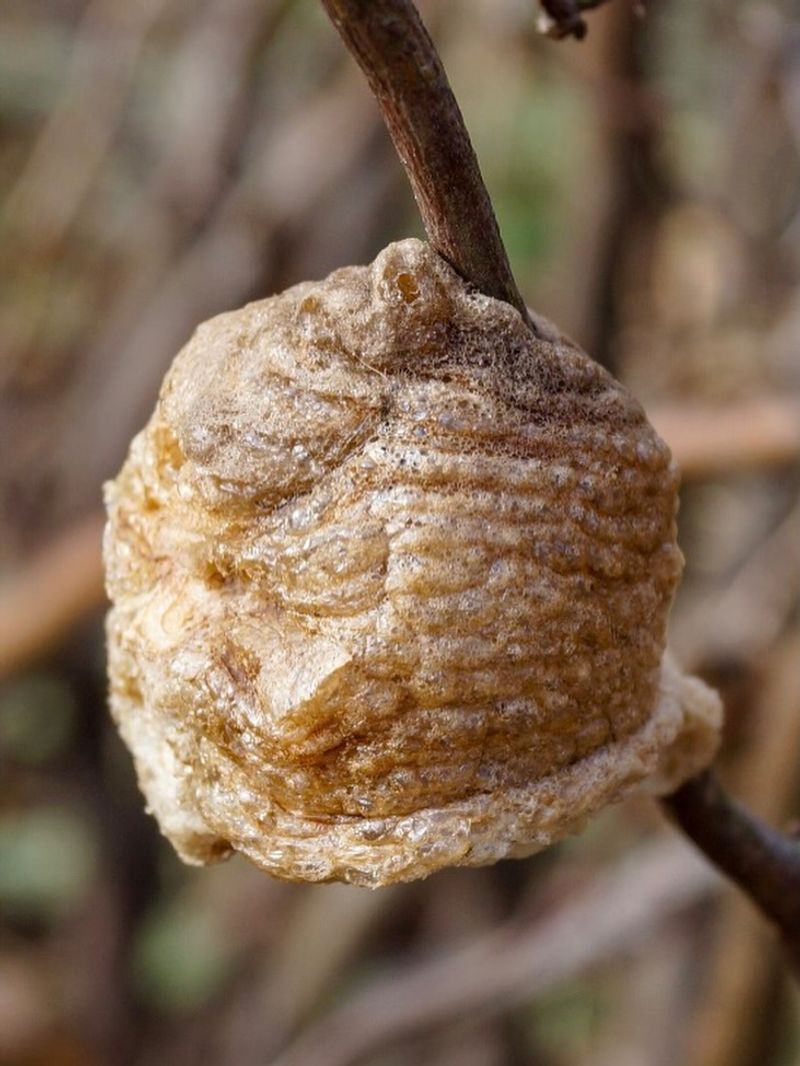
Timing tells the whole story here, and it starts back in September. Adult females spend early fall eating heavily, then search for a sheltered stem to build on.
Egg laying peaks across Maryland from late September through the first hard frost in November. The female produces a frothy liquid, whips it with her abdomen, and shapes it fast.
Construction takes three to five hours, and she may build several cases before winter arrives. Once the foam sets, she walks away, and her season quietly ends soon after.
Inside, the eggs enter diapause, a paused state that stalls development until temperatures climb. Cold is required, not harmful, because the chill acts like a timer for spring.
Your Maryland Garden Changes Every Week. Your Plan Should Too.
Gardening in Maryland changes quickly throughout the season. Every Friday you’ll receive a simple weekly plan showing exactly what to plant, prune, fertilize, harvest, and protect so you never miss the right timing.
A warm December rarely tricks them, and neither does a January thaw. They need weeks of steady warmth, which Maryland usually delivers in late April or May.
Snow, ice storms, and single digit nights barely bother a properly attached case. The foam traps air pockets that insulate the eggs like a tiny sleeping bag.
Hatching lines up with the arrival of aphids, small flies, and other soft prey. Nature scheduled the alarm clock long before anyone thought to plant a vegetable bed.
So a blob spotted in February has been sitting there for four or five months. It has outlasted leaf drop, holiday lights, and probably two rounds of your raking.
Watch the same twig each week and you will notice almost nothing changes. That stillness is the point, since patience is the only strategy these eggs have.
The Pruning Slip That Costs You Hundreds Of Hatchlings
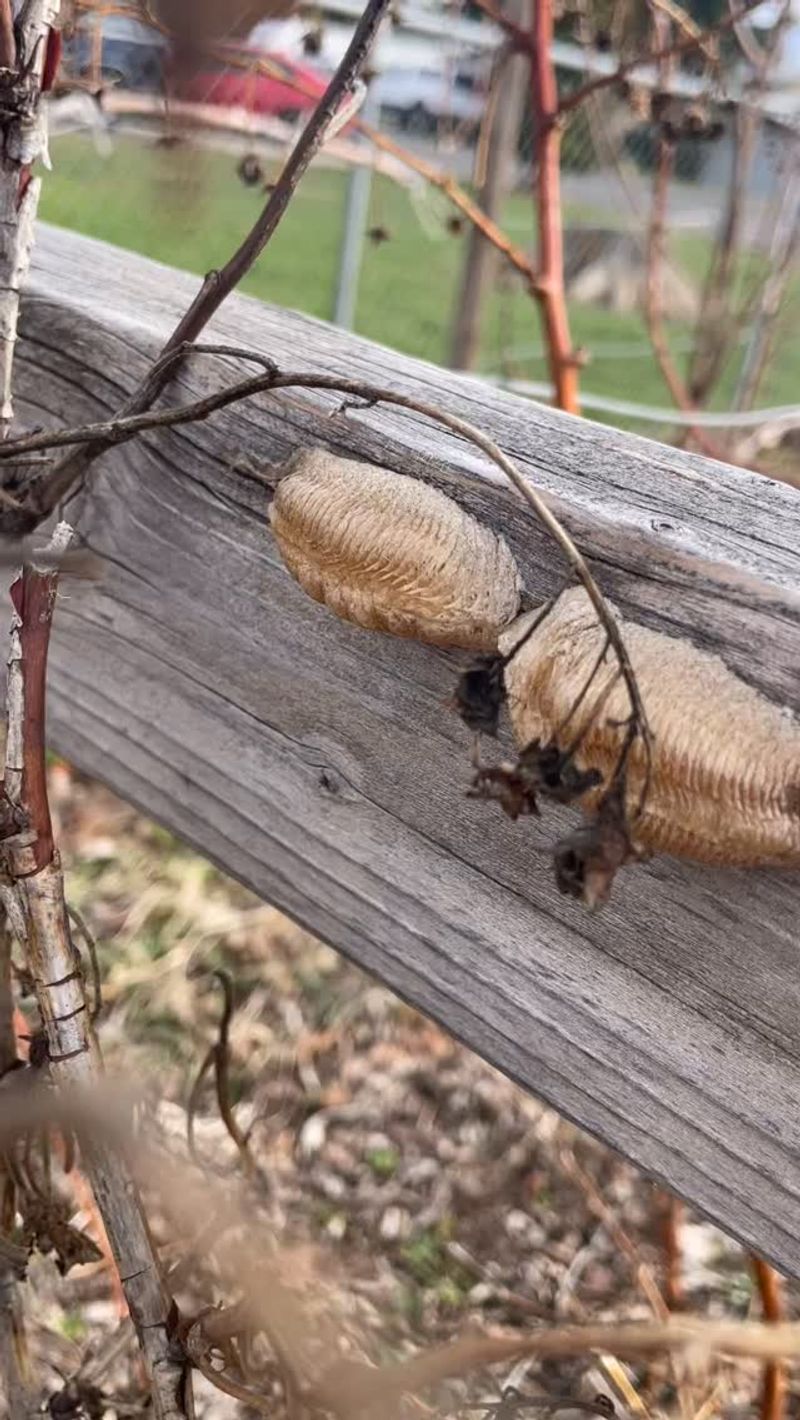
Here is where good intentions go sideways in a tidy Maryland yard. Winter pruning season overlaps perfectly with the months these cases sit exposed on bare branches.
Homeowners shear boxwood, cut back butterfly bush, and haul everything to the curb in bags. The cases ride along, get chipped or composted, and the whole brood is lost.
Another common misstep is scraping them off siding with a putty knife or pressure washer. High pressure water shreds the foam and floods the chambers, which ruins the eggs’ chances.
Some folks mistake the lump for a tent caterpillar nest or spotted lanternfly eggs. Lanternfly masses look flat, gray, and smeared, like dried mud spread with a spatula.
A mantis case stands up in three dimensions and shows clear ridges down its center. Scraping the wrong one wastes a beneficial insect that eats garden pests for free.
Bringing a case indoors ranks as the most surprising mistake of all. Warm house air fools the eggs into hatching in January, weeks before any food exists.
Hundreds of pinhead mantises then wander your living room, and they get hungry quickly. Only the fastest hunters make it past that first crowded hour.
Check shrubs before you hire a crew, since hired shears move fast and ask nothing. Flag the branch with ribbon and most landscapers will happily work around it.
Skip the vacuum and skip the trash bag when you spot one on a stem. A five second pause during pruning saves a whole generation of tiny hunters.
Safe Relocation For Cases On Cut Branches
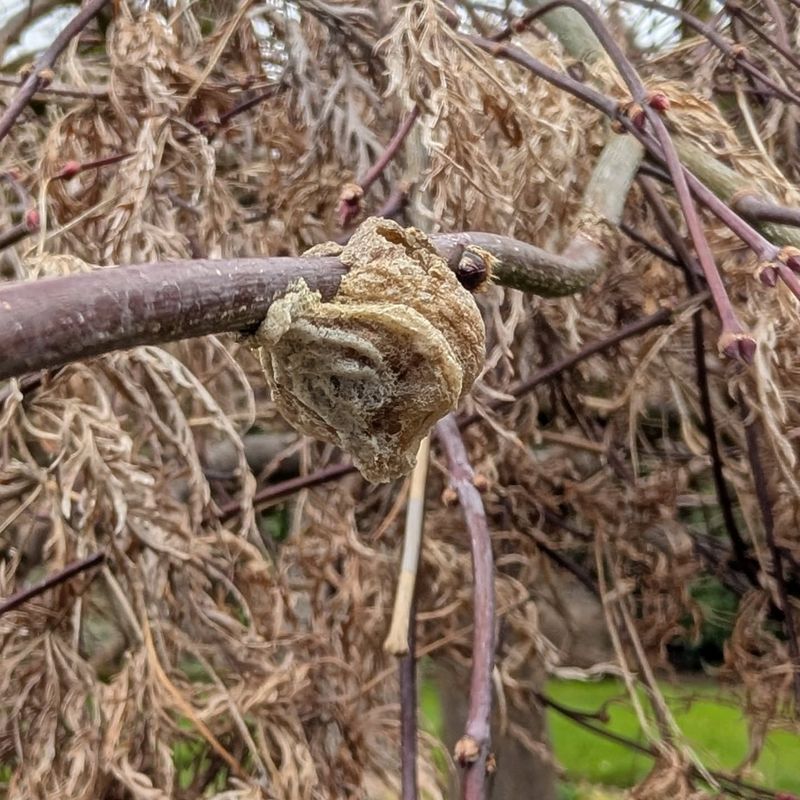
Accidents happen, and a snipped branch with a case attached is a fixable problem. Leave the egg case on its original twig instead of prying the foam free.
Cut the stem several inches below and above the case so you have a handle. Carry it outside within a day, ideally to a spot with similar sun exposure.
Wedge that twig into a shrub fork, or tie it with garden twine at waist height. Aim for two to four feet off the ground, away from foot traffic and mowers.
Height matters because hatchlings need vegetation nearby to hide in during their first hours. A bare fence post leaves them exposed to birds, ants, and spiders with good timing.
Keep it outdoors, even in freezing weather, since cold is part of the plan. A garage or shed stays too warm and dry, which dries out the eggs.
Avoid sealing a case in a jar or plastic bag for safekeeping over winter. Trapped moisture grows mold, and the foam needs to breathe through its tiny pores.
If the case came off cleanly with a patch of bark, tuck it into a bush. Nestle it between branches so it stays upright, with the ridged seam facing down.
Mark the location with a stake so you remember to watch it in May. Future you will appreciate the reminder when a hundred specks start marching down a stem.
Handling with dry hands is fine, since the case cannot sting or bite. Treat it like a bird egg made of stiff foam.
Spring Hatch Day In A Maryland Garden
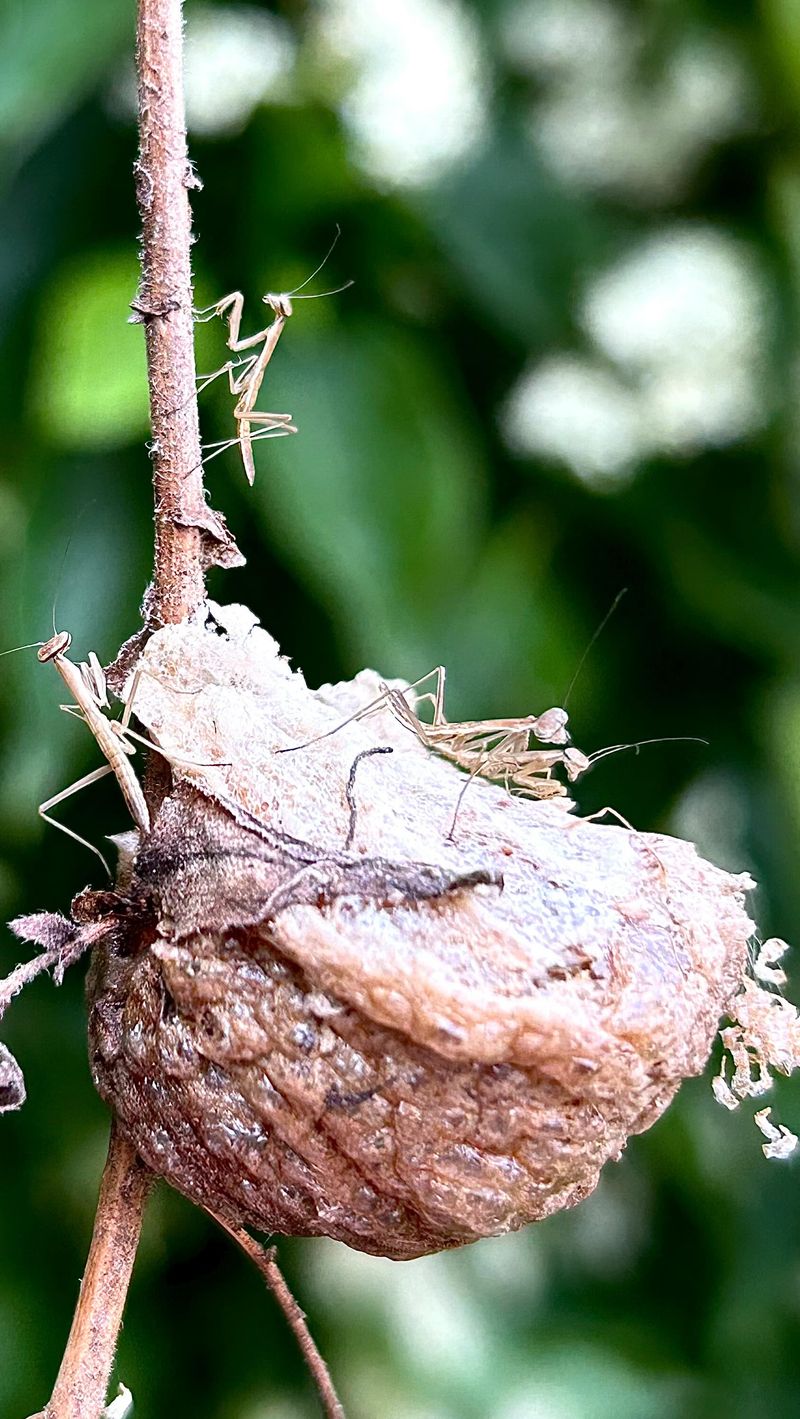
One warm May morning, the case seems to sprout a beard of wriggling threads. Those threads are nymphs, and they emerge in a rush that lasts under an hour.
Between 100 and 300 hatchlings squeeze out through a seam along the case’s ridge. Each one dangles from a thin filament, then molts free and unfolds working legs.
Newborn mantises stand about a quarter inch tall and look like translucent commas. They scatter fast, because staying close to siblings is a poor survival plan.
Within days they hunt aphids, fruit flies, leafhoppers, and anything smaller than themselves. A single garden case can put a real dent in your soft bodied pest problem.
Survival odds are humbling, since maybe one or two reach full adult size. Birds, wasps, and spiders thin the numbers fast by midsummer.
The lucky ones grow through six or more molts, doubling in size each round. By August they are palm sized, green or brown, and impossible to miss.
Watching a hatch is a genuine backyard event worth setting an alarm for. Check the case every morning once daytime temperatures hold above seventy degrees.
Kids love it, and the show costs nothing but a little patience and a chair. Fair warning, though, the whole thing ends before you finish your coffee.
Empty cases stay stuck to the branch for a year or longer afterward. A papery shell with an open seam means the show already happened there.
Garden Habits That Keep Next Season’s Cases Safe
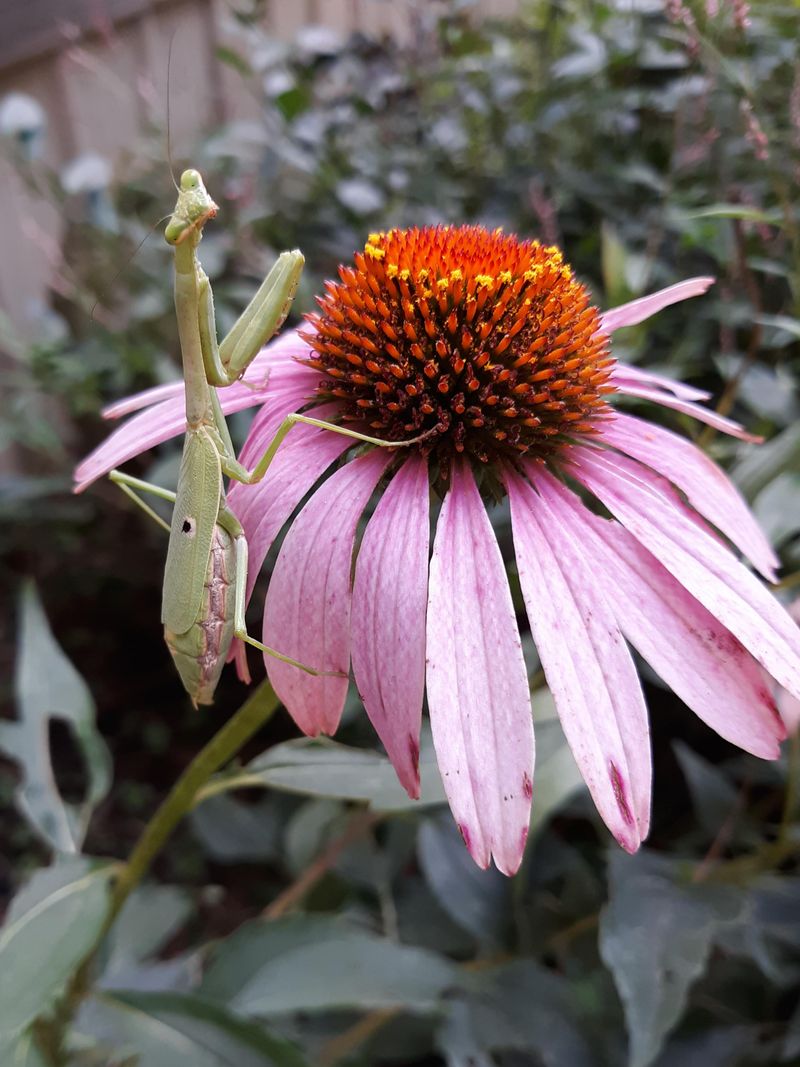
Encouraging more cases next fall comes down to leaving a few things alone. Mantises need standing stems in autumn, so hold off on the big cleanup until spring.
Leave ornamental grasses, coneflower stalks, and shrub twigs standing through the Maryland winter. Those stems double as egg case anchors and shelter for other helpful insects.
Broad spectrum insecticides remove the aphids and small flies that young mantises depend on. Spot treat problems instead, and let predators handle the background noise in the beds.
Skip the mail order egg cases sold online, since most are non native Chinese mantis. Local populations do fine on their own when the habitat gives them a reason to stay.
Plant a mix of flowering perennials that keeps small prey around from May to September. Yarrow, mountain mint, goldenrod, and dill all pull in the insects mantises chase.
Mow less often near beds and borders, and keep a rough edge along the fence. Tidy landscapes look sharp, though messy corners raise far more beneficial bugs.
Do a slow walk in December with a flashlight to map every case you own. Note the spots on your phone so spring pruning happens around them, not through them.
Share the habit with neighbors, because mantises roam farther than one property line. A block that leaves stems standing gets more free pest control than any spray bottle.
Small choices stack up over a few seasons in a quiet, satisfying way. One winter you look up and realize the hedge came with its own security team.