What To Plant In Your Arizona Yard Now That The Fall Planting Window Is Wide Open
October and November are the best months to plant in low-desert Arizona, and your window is wide open right now. Cooler nights and warm days let new roots grow strong before summer heat comes roaring back.
The right native plants can turn your yard into a wildlife hangout, cut your water bill, and even make your space less inviting to pests. Here are nine desert-adapted picks worth digging into this fall.
1. Desert Willow (Chilopsis linearis)
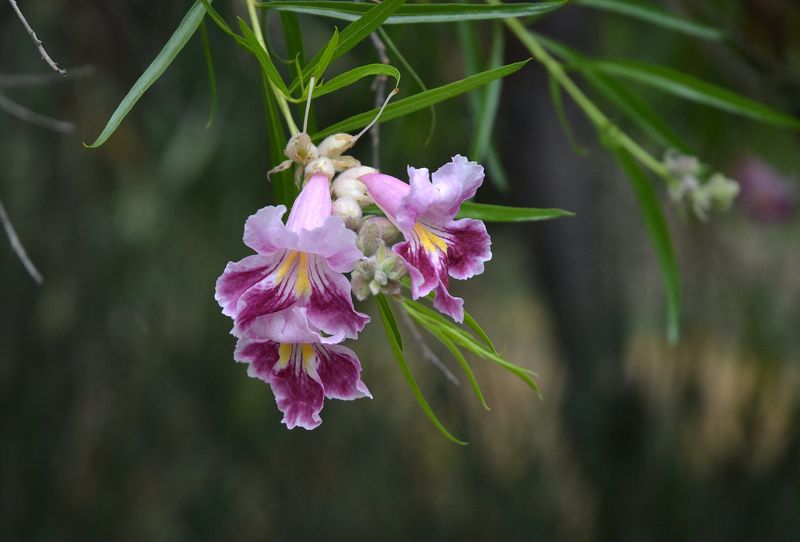
Hummingbirds treat this tree like a personal buffet, darting between its trumpet-shaped blooms all through the warm months. Despite the name, it is not a true willow at all, just a graceful desert native that shrugs off heat and drought like a champ.
Plant one this fall and it settles in fast, rewarding you next spring and summer with waves of pink, lavender, and burgundy flowers. You can train it as a single-trunk shade tree or let it grow bushy as a large screening shrub.
The fall planting timing matters here because the roots get a head start during mild weather. Once established, it needs only occasional deep watering, making it a genuine water-saver for Phoenix and Tucson yards.
Birds appreciate the seed pods, and pollinators work the flowers from morning to dusk. Thornless varieties keep pathways friendly for bare feet and pets.
Give it full sun and a spot with room to spread, since crowding invites the extra pruning nobody enjoys. Skip the pesticides so the hummingbirds and bees keep coming back, and you will have a low-fuss centerpiece that earns its place every single season.
2. Palo Verde (Cercidium floridum)
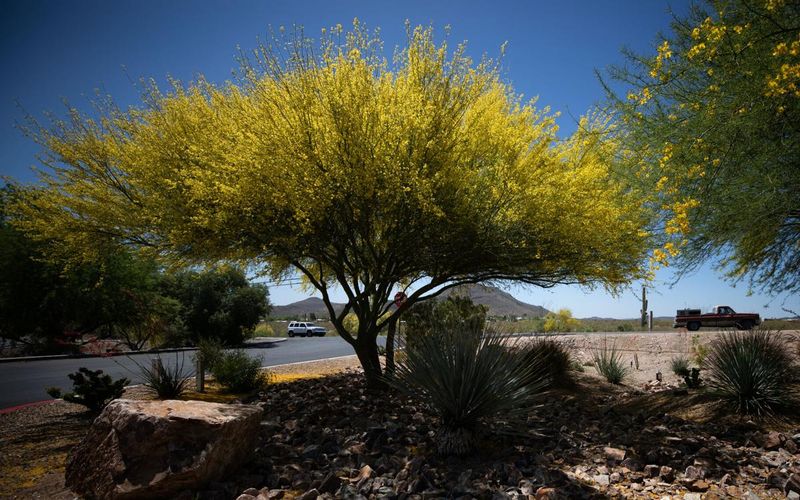
Arizona’s state tree pulls double duty, throwing filtered shade over your yard while glowing gold with flowers each spring. Its green bark actually photosynthesizes, which helps it survive when leaves drop during the driest stretches.
Fall is prime time to get one in the ground because the fast-growing roots take hold before the intense season. Within a few years you get a real cooling canopy, and shade trees like this can knock serious degrees off a sun-baked patio.
Birds love it too. Hummingbirds sip the blossoms, while quail, doves, and songbirds find nesting and perching spots among the branches.
The dappled light underneath is perfect for tucking in smaller natives that appreciate a break from full sun.
Once established, it asks for very little water, which is exactly why it thrives across Phoenix and Tucson without fuss.
Pick a thornless hybrid like ‘Desert Museum’ if you want cleaner branches and fewer surprises. Give it space to reach its mature width so you are not fighting it with pruners later.
Water deeply but infrequently the first year, and this tree becomes the hardworking backbone of a functional desert yard.
3. Penstemon (Penstemon spp.)
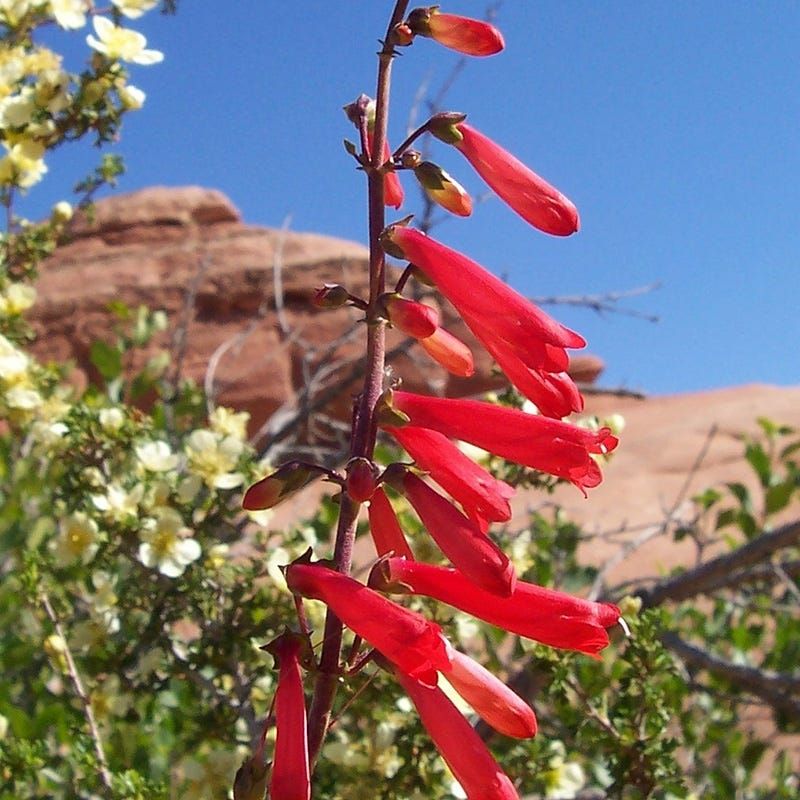
If you want hummingbirds buzzing your yard, few plants deliver like penstemon. Their tall spikes of tubular red, pink, and purple flowers seem custom-built for a hummingbird’s beak, and that is no accident.
Your Arizona Garden Changes Every Week. Your Plan Should Too.
Gardening in Arizona changes quickly throughout the season. Every Friday you’ll receive a simple weekly plan showing exactly what to plant, prune, fertilize, harvest, and protect so you never miss the right timing.
Parry’s penstemon and firecracker penstemon are two low-desert favorites that put on a spring show worth waiting for. Plant them this fall and the cool-season roots set the stage for that first big bloom.
These perennials handle dry, rocky, alkaline soil without complaint and reseed themselves, so a small patch can become a spreading colony over time. Bees show up alongside the hummingbirds, making them a pollinator powerhouse in a compact package.
Water needs stay refreshingly low once the plants settle in. A morning watering that dries by evening keeps things healthy without creating the damp conditions certain pests prefer.
Group them with other water-wise natives so your irrigation stays efficient and your hydro-zones make sense. Full sun brings out the strongest flowering and sturdiest stems.
After the blooms fade, leave some seed heads standing to feed the reseeding cycle and give small birds a snack. Little effort, huge payoff for wildlife lovers.
4. Desert Milkweed (Asclepias subulata)
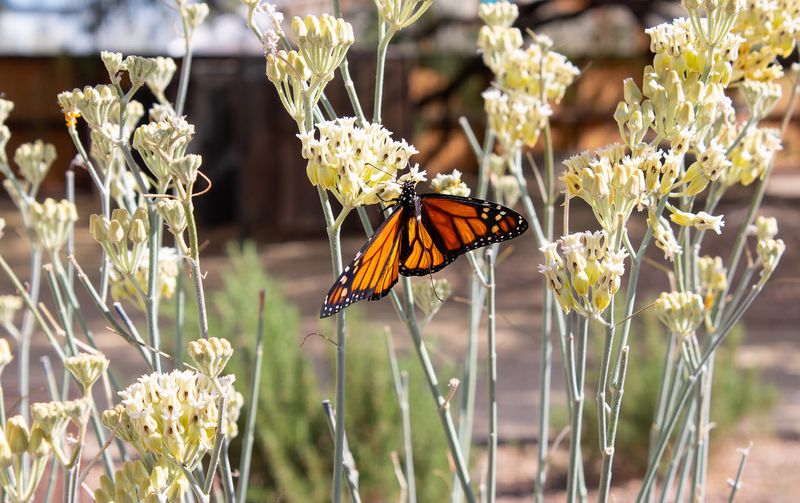
Monarch and queen butterflies depend on this plant to survive, since it is the only kind of plant their caterpillars can eat. Grow desert milkweed and you become a genuine stop on the butterfly highway.
The look is striking and modern, with slim, leafless green stems standing upright like living sculpture, topped by small clusters of yellow-cream flowers. It thrives in full sun and even reflected heat, the kind of brutal spot where other plants fry.
Getting it planted this fall gives the deep roots time to establish before the demanding season arrives. After that, it barely needs water, making it a natural fit for a low-desert yard focused on conservation.
Beyond the caterpillars, the flowers feed bees and other pollinators throughout the warm months. Watching monarchs lay eggs on stems you planted yourself is a quiet thrill that never gets old.
Skip pesticides entirely here, since any spray meant for other bugs can wipe out the very caterpillars you are trying to raise. Place it where you can watch the show up close.
One word of care: the sap can irritate skin, so wear gloves when trimming.
5. Agave (Agave spp.)
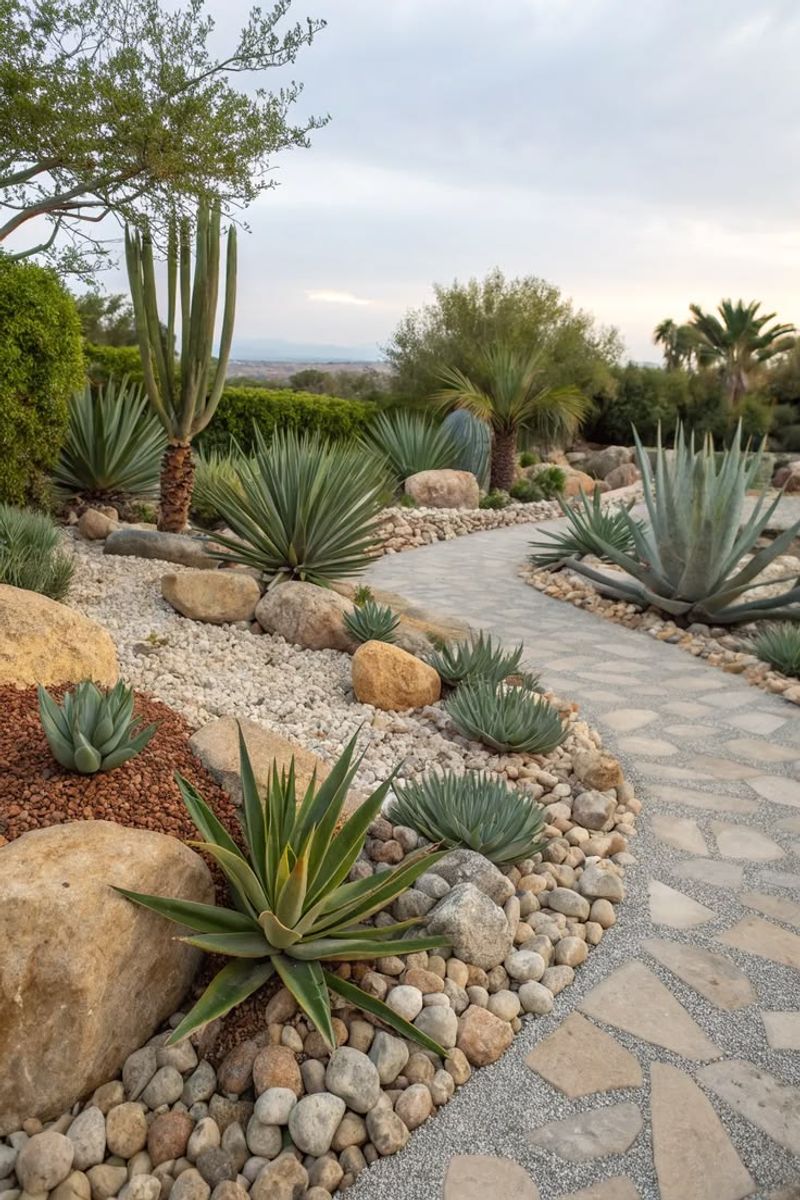
Bold, sculptural, and nearly indestructible, agave brings serious architectural drama to a desert yard. These succulents store water right in their thick leaves, so they laugh off heat, cold, drought, and lousy soil all at once.
Here is the wild part: when a mature agave finally sends up its towering flower stalk, the musky-sweet blooms draw in nectar-feeding bats at night, along with hummingbirds by day. Few plants create a nighttime wildlife scene quite like it.
Fall planting lets the roots anchor before summer, though honestly agave is about as forgiving as plants get. Once in place, it practically cares for itself, needing only the occasional drink.
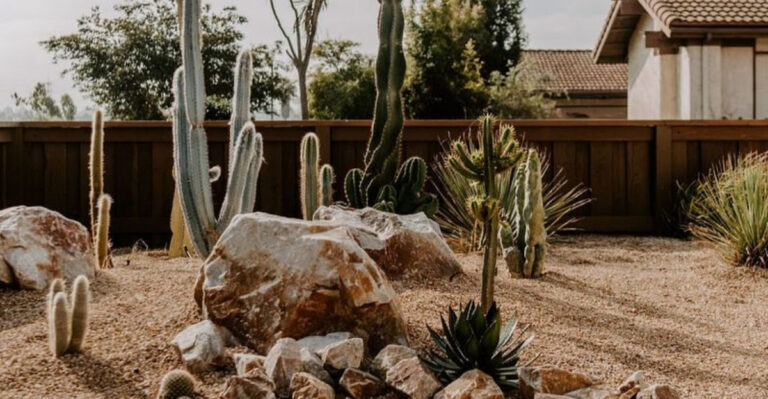
Use it as a striking focal point or repeat it for that clean, modern desert aesthetic that pairs beautifully with gravel and boulders. A little goes a long way, so resist overplanting.
A quick heads-up: the spiny tips are no joke, so keep larger varieties away from walkways, play areas, and doorways. Position them where the sharp leaves add beauty without becoming a hazard.
Give it full sun, sharp drainage, and mostly leave it alone, and this tough survivor rewards you for decades.
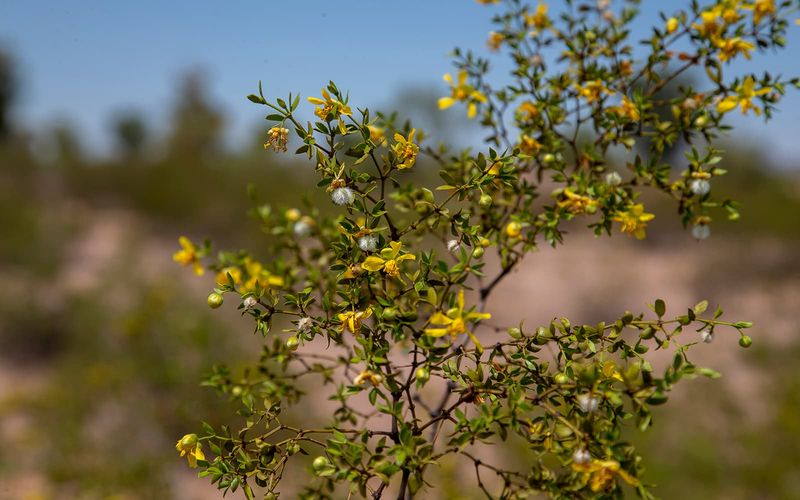
6. Creosote Bush (Larrea tridentata)
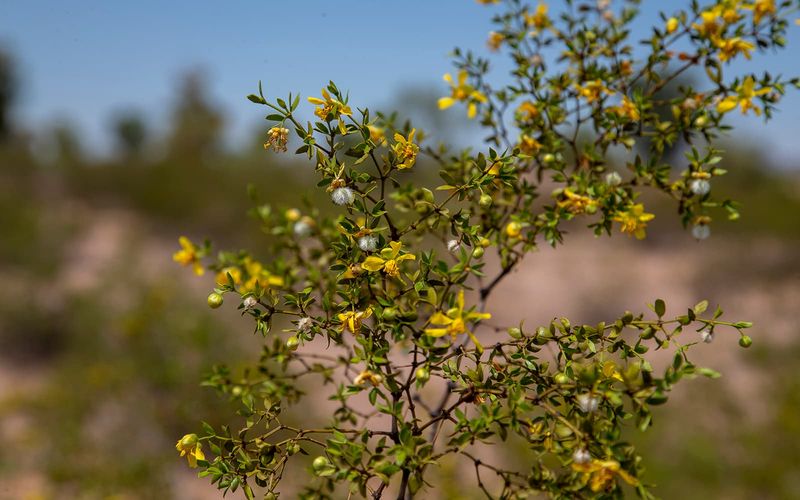
Smell rain in the desert and you are smelling creosote, the shrub responsible for that unmistakable earthy scent after a storm. It is one of the toughest, most authentically native plants you can put in an Arizona yard.
What makes it special for wildlife fans is the chain reaction it starts. The bush shelters insects, those insects feed lizards, and roadrunners are drawn to yards with exactly that mix of cover, open space, and prey to hunt.
Plant it this fall and, once established, it becomes almost maintenance-free, surviving on rainfall alone in most years. Some creosote plants in the wild are thousands of years old, which tells you everything about their staying power.
Small yellow flowers appear after rains, followed by fuzzy seed capsules that add texture. The waxy green leaves stay attractive year-round without shedding much litter.
Give it full sun and well-draining soil, and pair it with open gravel areas to keep the roadrunner-friendly layout intact. Skip pesticides so the insect food web stays healthy.
For anyone who wants a yard that works as real habitat with basically zero fuss, creosote is a foundational pick.
7. Lavender (Lavandula spp.)
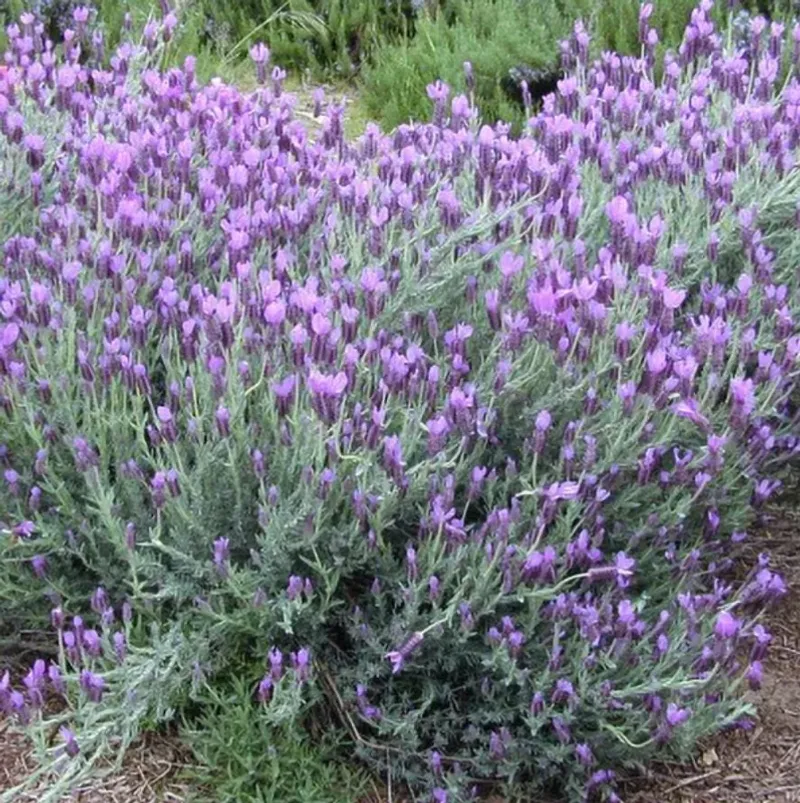
Fragrant, purple, and surprisingly practical, lavender does more than smell wonderful near your patio. Its strong natural compounds are known to help deter scorpions and mosquitoes, which is a big deal in warm-month Arizona.
Tuck a few plants around seating areas and doorways, and you get a pleasant scent for you while making the space less inviting for the pests you would rather avoid. Bees, on the other hand, adore the blooms, so pollinators still get their reward.
Fall planting helps lavender establish before the heat tests it, and choosing heat-tolerant varieties suited to the low desert makes all the difference. Sharp drainage is key, since soggy roots are its biggest enemy.
Water in the morning so the soil dries by evening, a habit that also discourages the damp conditions certain pests love. Keep it in full sun for the most fragrant, sturdy growth.
No product guarantees a pest-free yard, but pairing lavender with smart habits like clearing debris and removing standing water stacks the odds in your favor. Trim it after blooming to keep the shape tidy.
Beautiful, useful, and easygoing, it earns a spot right where you sit.
8. Autumn Sage (Salvia greggii)
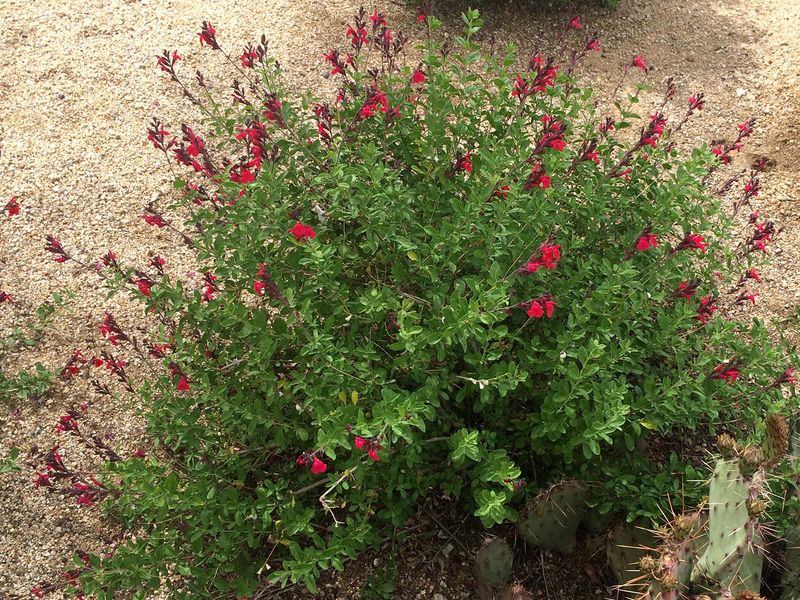
Blooming when many plants have given up, autumn sage carries lush red flowers from summer straight into fall, exactly when your yard could use the color. Hummingbirds adore it, treating the little tubular blooms as a reliable late-season fuel stop.
Don’t let the delicate flowers fool you, because this shrub thrives in desert heat and asks for very little in return. It stays compact and tidy, making it easy to tuck along borders, walkways, or mixed native beds.
Setting it out this fall gives the roots time to grip before the harsh season, and it rewards you with an especially strong first bloom. Beyond red, you can find varieties in pink, coral, and white to suit your palette.
Water needs stay low once it is settled, keeping your irrigation efficient when grouped with other water-wise plants. A light shearing after flowering keeps it bushy and encourages more blooms.
Bees join the hummingbirds, so the plant pulls its weight as a pollinator magnet all season long. Full sun brings out the best flowering, though it tolerates a bit of afternoon shade.
Low fuss, long bloom, and hummingbirds on repeat, it is an easy yes.
9. Red Yucca (Hesperaloe parviflora)
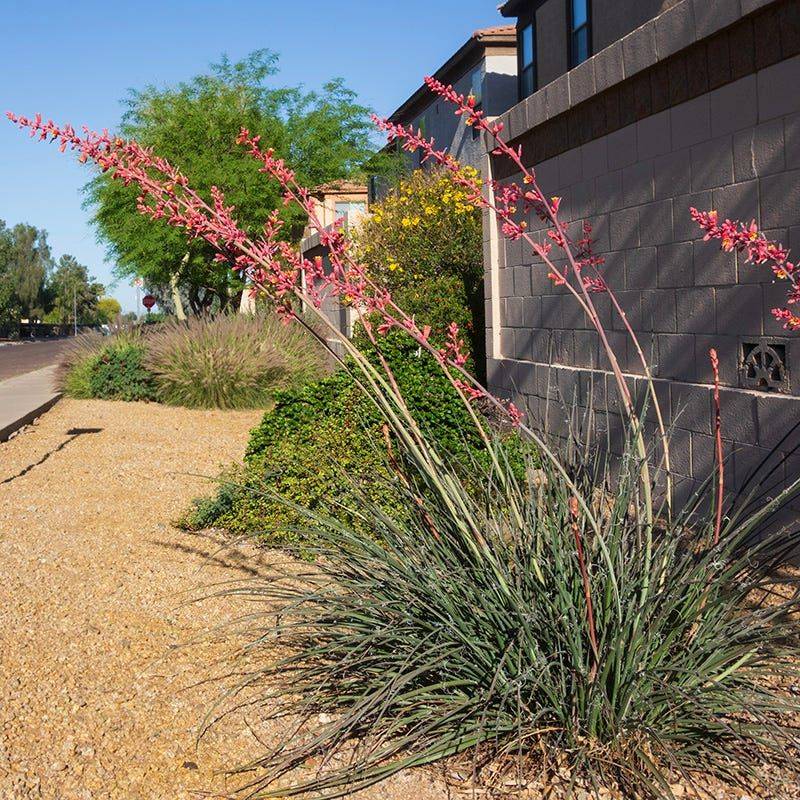
Not a true yucca at all, red yucca sends up tall, arching spikes of coral-pink flowers that seem to bloom forever through the warm months. Those long-lasting spikes are a hummingbird favorite and a low-effort splash of color.
Below the flowers sits a clump of grass-like green foliage that stays neat and evergreen, giving structure even when the blooms take a break. The whole plant reads as clean and modern, perfect for contemporary desert designs.
Get it planted this fall and it establishes with almost comical ease, then coasts on minimal water for years. Heat, cold, poor soil, and drought barely register as problems.
Unlike spiky agaves, red yucca has soft, flexible leaves, so it plays nicely near walkways and seating without the poke risk. That makes it a smart pick for busy or family-friendly spaces.
Hummingbirds and bees work the flower spikes regularly, so it earns its keep as habitat too. Snip spent spikes if you like a tidier look, or leave them for the birds.
Give it full sun and well-draining soil, and this dependable performer delivers color, wildlife appeal, and water savings with hardly any attention from you.