Why More Arizonans Are Planting Esperanza Right By Their Front Door This Fall
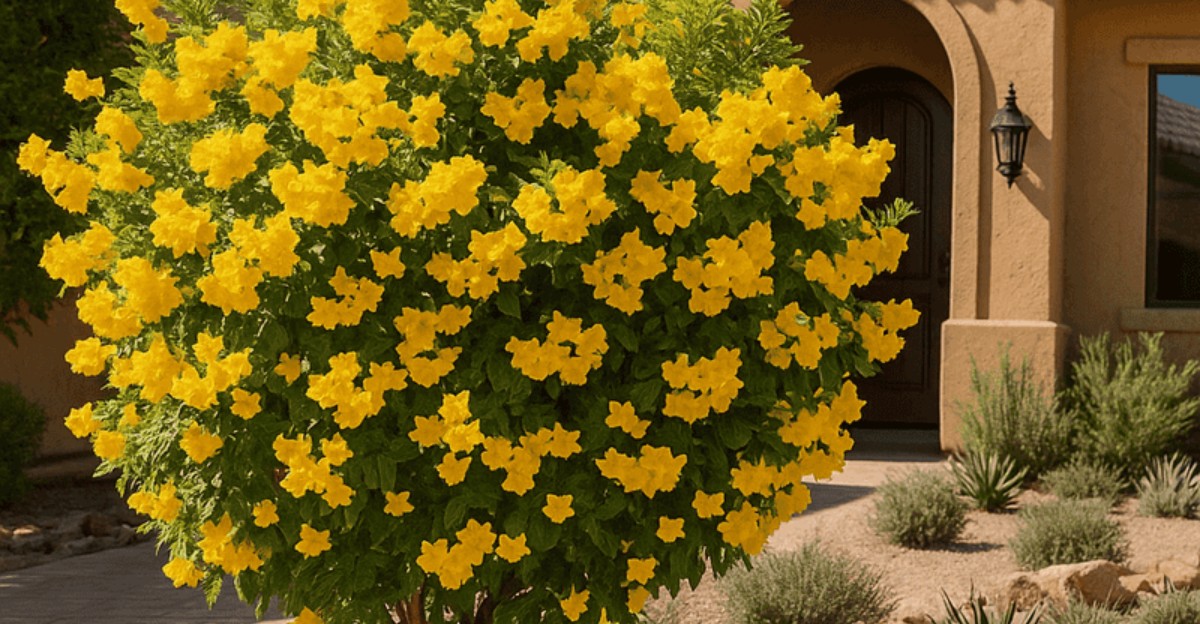
Yellow bells, or esperanza, is one of those shrubs that can stop a neighbor in their tracks when it is covered in bright yellow trumpet flowers during the height of an Arizona summer. Known botanically as Tecoma stans, it is native to Arizona and built for the kind of punishing heat that wilts most ornamentals by July.
Whether you are in the Phoenix metro or a Tucson neighborhood, a well-placed esperanza can give your front yard serious color for months without demanding constant irrigation once it is established. No survey data confirms a statewide wave of front-door plantings, but the shrub earns a second look from any low-desert homeowner who wants a high-visibility spot to work harder.
Esperanza earns consideration for a prominent low-desert planting
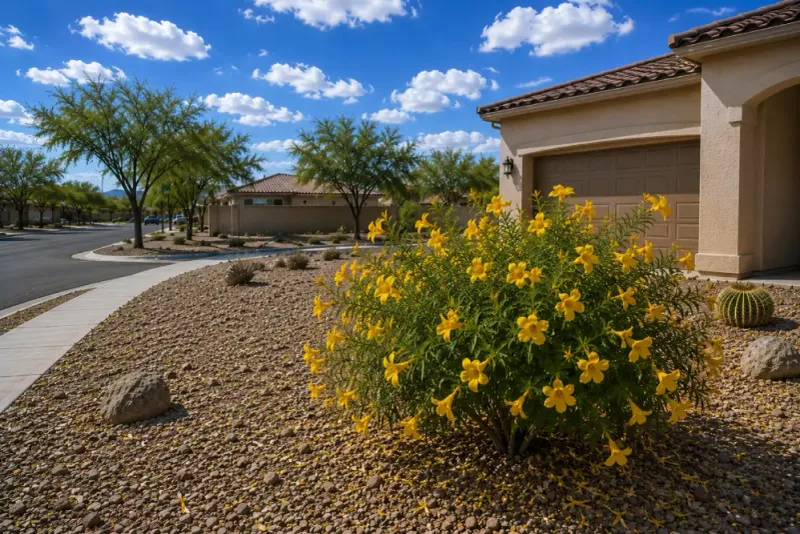
Yellow bells does not need a popularity trend to justify a spot at the front of your yard. What it does have is a genuine combination of traits that suit low-desert Arizona conditions: conspicuous yellow trumpet flowers that appear over a long season, heat tolerance that holds up through triple-digit summers, lower water demand once the roots are settled, and potential value as forage for hummingbirds and other pollinators.
That is a credible set of reasons to give it your yard’s most visible corner.
To be clear, no nursery sales figures, local surveys, or search data confirm that Arizonans are rushing to plant esperanza by their front doors this fall or any other season. The title of this article reflects a common editorial framing, not a documented trend.
What the evidence does support is that the shrub is a strong candidate for a prominent planting in the right site, and that is the premise worth examining.
Identify the form before you buy the plant
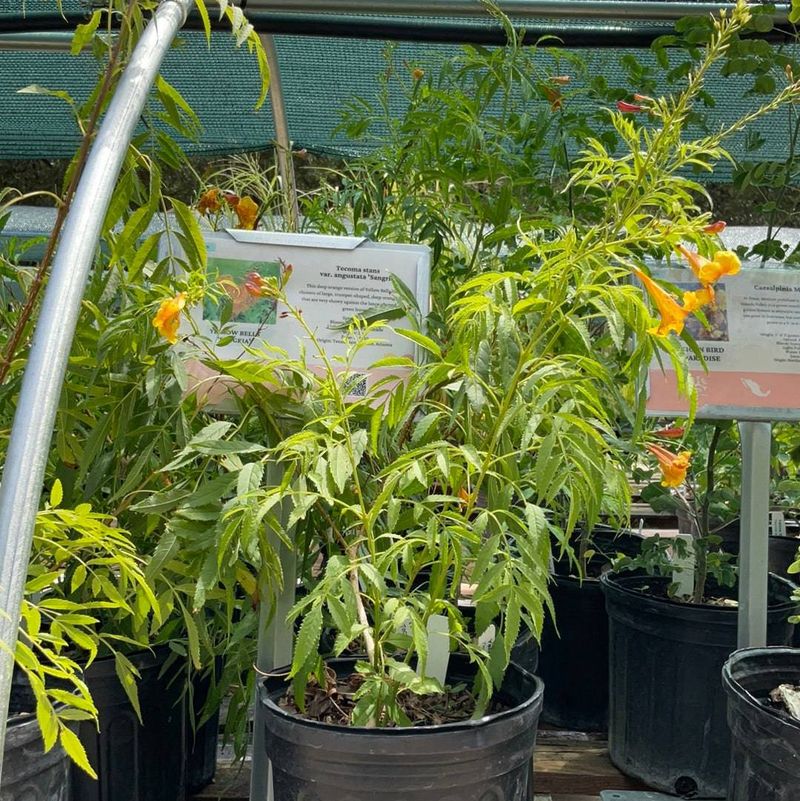
Walking into an Arizona nursery and asking for esperanza may get you several different plants. The name covers Tecoma stans broadly, but the shrubs on the bench can include the narrow-leaved Arizona form, wider-leaved tropical varieties, named cultivars bred for compact size or specific flower color, and orange-flowering hybrids.
Each of those can behave differently in your yard when it comes to mature size, drought tolerance, and cold hardiness.
Plants of the World Online confirms that Tecoma stans is native to Arizona and extends through the American Southwest into Mexico and tropical America. The Arizona-specific form is Tecoma stans var. angustata, the narrow-leaved variety that tends to be more drought- and cold-tolerant than some broader-leaved nursery selections.
The University of Arizona notes this distinction and identifies the narrow-leaf form as the one best matched to desert conditions.
When the plant tag says only “yellow bells” or “esperanza” without specifying a variety or cultivar, ask a staff member which form it is. If size, frost hardiness, or water use matters to your site, knowing whether you are buying the Arizona native variety or a cultivated hybrid is not a minor detail.
It can determine whether the plant thrives in your microclimate or struggles through its first winter.
Your Arizona Garden Changes Every Week. Your Plan Should Too.
Gardening in Arizona changes quickly throughout the season. Every Friday you’ll receive a simple weekly plan showing exactly what to plant, prune, fertilize, harvest, and protect so you never miss the right timing.
The long bloom season adds color and potential pollinator forage
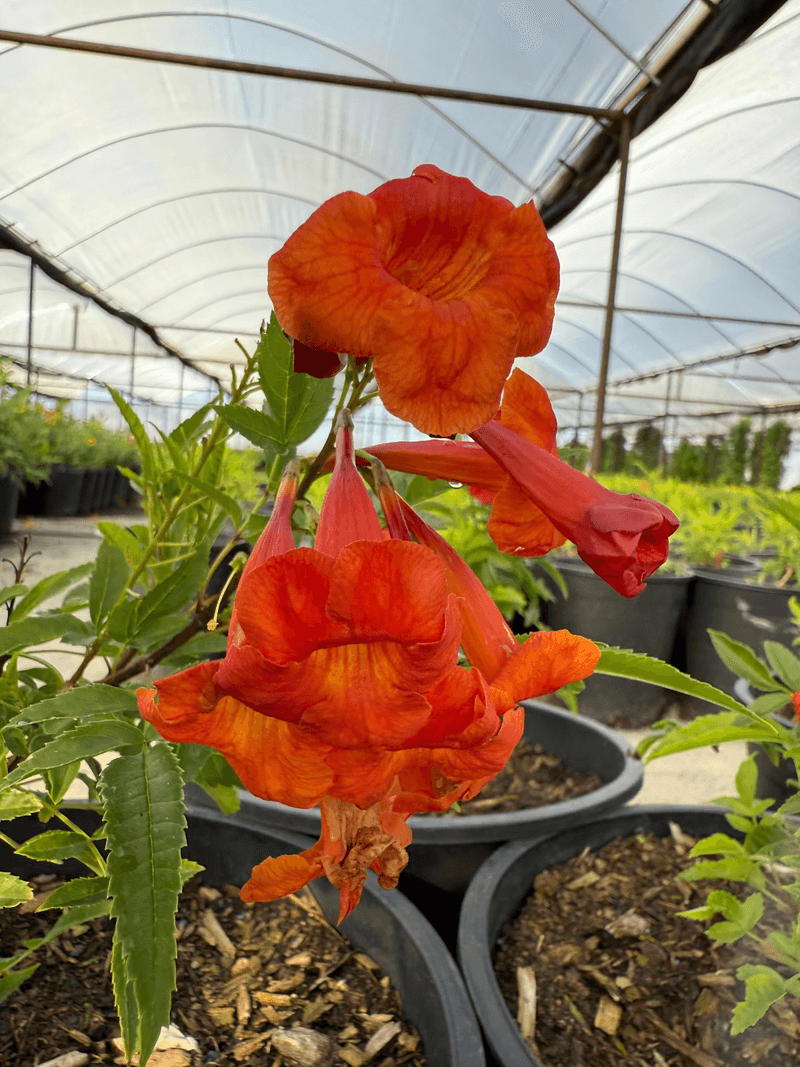
Few low-desert shrubs can match the length of time esperanza stays in flower. The University of Arizona describes bloom from late spring into early fall, and the Arizona Pollinator Gardens database lists Tecoma stans with bloom availability running from March through October.
That is a window of color that outlasts many ornamentals by months, covering the full arc of the monsoon season and into the cooling days of early fall.
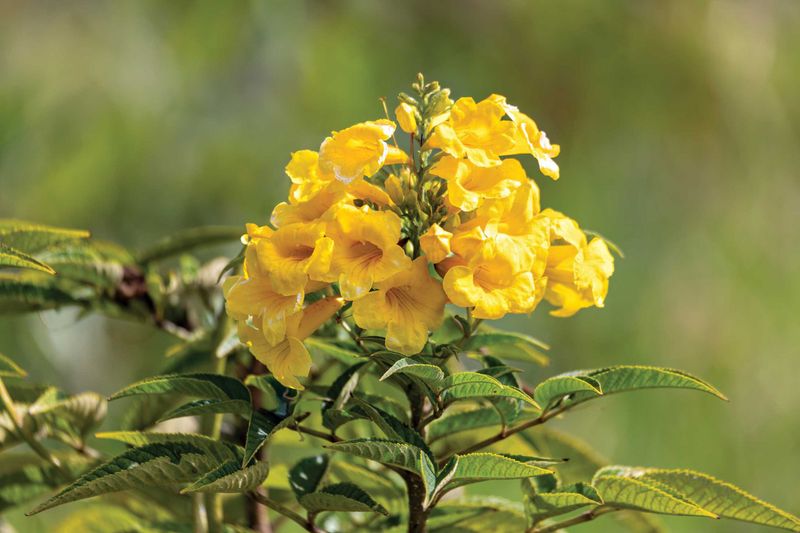
The flowers themselves are hard to overlook. Clusters of bright yellow, trumpet-shaped blooms stand out against the plant’s dark green foliage, and they appear in flushes that keep the display going rather than peaking once and fading.
That said, what shows up in your yard depends on more than just planting the shrub. Flower production varies with cultivar, irrigation, temperature swings, and whether the plant is regularly pruned back hard.
Wildlife activity around any plant also depends on the surrounding habitat and what else is available nearby. Esperanza can attract and provide forage for pollinators, but it is not a guaranteed hummingbird magnet on any given afternoon.
A healthy, well-watered plant in active bloom gives you the best odds.
Place it where mature growth will not block the entry
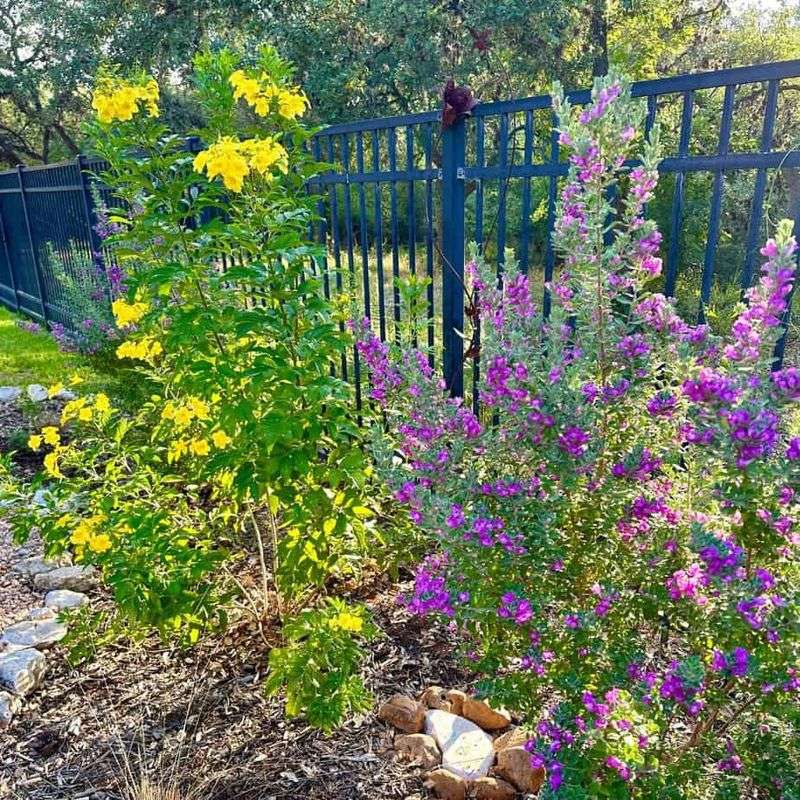
Mature size is the detail most homeowners underestimate when choosing a front-yard shrub. Yellow bells can reach roughly six to eight feet in height and width under typical low-desert conditions, and the City of Tucson landscape guide lists Arizona yellow bells at approximately six by six feet at maturity.
Either way, that is a substantial plant, and one that needs room to spread without crowding a walkway, window, gate, or the door itself.
Before choosing a spot, measure the distance from the proposed planting location to the nearest hard surface, entry point, or utility line. A shrub pressed against a foundation or squeezed between a walkway and a wall will eventually need aggressive cutting to stay manageable, which compromises its natural form and can reduce flowering.
The University of Arizona recommends full sun to partial shade for yellow bells, so a south- or west-facing exposure near a stucco wall is workable, but reflected heat from walls and pavement can intensify stress during peak summer, especially for a newly planted shrub.
The goal is visibility without obstruction. A placement that lets the plant reach its natural shape while keeping foot traffic clear and irrigation accessible makes the most of what the shrub offers.
Dense growth close to a door can also create conditions that benefit scorpions and other insects by providing shelter and proximity to irrigation, so keeping the plant trimmed and maintaining a clear gap between foliage and the entry is a practical habit regardless of the plant species.
Fall planting supports establishment but does not promise instant flowers
Early October sits in a sweet spot for low-desert planting. Soil temperatures are still warm from summer, air temperatures have dropped enough to reduce transplant stress, and the plant has several months to push roots outward before the following summer’s heat arrives.
University of Arizona Cooperative Extension guidance for Pima County recommends planting trees and shrubs early in October in the low desert specifically because those conditions support establishment, and advises gradually reducing irrigation as temperatures cool.
What fall planting does not deliver is an immediate flower show. A shrub transplanted in October is focused on root development, not bloom production.
Depending on how late in the season you plant and whether your site sees frost, the first winter may pass with little visible action above ground. That is normal and not a sign of failure.
The payoff comes the following spring and summer when a well-rooted plant can support a full season of flowering.
Phoenix and Tucson have different frost profiles, and foothill neighborhoods or higher-elevation pockets within either metro can see colder nights than valley floors. The fall planting window applies most cleanly to low-elevation sites with mild winters.
If your yard sits at a higher elevation or in a known frost pocket, the timing question matters more and the plant’s cold tolerance becomes a bigger factor in the decision.
Drainage and establishment watering make the low-water claim credible
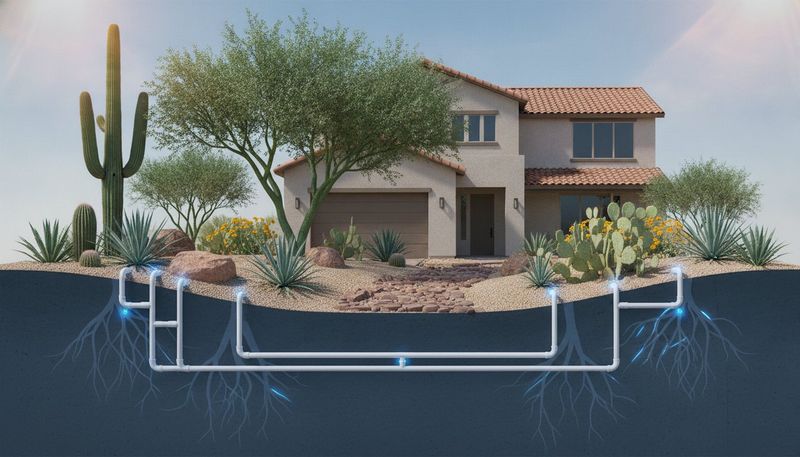
Low-water performance is a real trait of established esperanza, but it does not happen automatically from the day you plant. Getting there requires attention to two things before the shrub goes in the ground: drainage and the soil layers underneath.
Arizona caliche, the hardened calcium carbonate layer found in many low-desert soils, can block root growth and trap water in the planting zone.
Once you have confirmed drainage, planting technique matters. Set the top of the root ball level with or slightly above the surrounding soil surface.
Burying the crown too deep or creating a bowl that holds standing water around the base can cause rot and slow establishment. Water deeply right after planting, then begin the process of gradually stretching the intervals between irrigation sessions as the plant settles in.
The University of Arizona’s southern Arizona watering guide suggests that established desert shrubs in summer may need irrigation every 14 to 21 days, with water applied deeply enough to reach the major root zone. That interval shifts with soil type, plant size, exposure, and equipment.
A shrub planted near a hot wall or reflective pavement will need more attention than one in open ground, and any plant under drought or heat stress may need supplemental water even after it is technically established. Low-water performance is the goal, not a guarantee from day one.
Account for frost and reject the pest-control promise
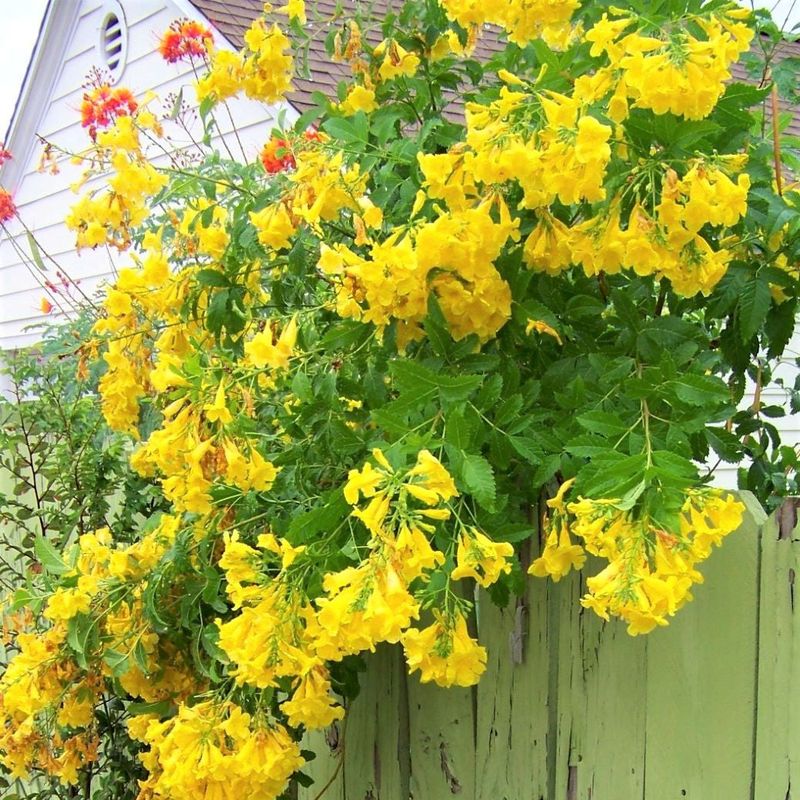
Cold tolerance is where esperanza’s reputation sometimes outruns reality. The University of Arizona notes that foliage may tolerate temperatures down to approximately 28 degrees Fahrenheit, but recommends planting yellow bells where winters are mostly frost-free or pairing them with more cold-tolerant plants in exposed locations.
The narrow-leaved Arizona form handles cold better than some broader-leaved nursery varieties, but form and microclimate both matter. A plant against a south-facing wall in central Phoenix sits in a very different frost environment than one in a Tucson foothill neighborhood or an exposed corner lot at higher elevation.
Know your site before you commit.
Maintenance expectations also need a reality check. Yellow bells generally have few serious pest problems, but that is not the same as requiring no attention.
Occasional shaping keeps the plant from overwhelming a walkway or entry. After a frost, damaged stems need time before you cut them back, since live growth may resume from lower on the plant.
Irrigation adjustments across seasons and periodic checks for stressed or dead wood are routine tasks, not signs that something went wrong.
Esperanza does not repel scorpions, mosquitoes, or any other household pest. A shrub near your door does not change any of those.
Similarly, extension research from Iowa State and NC State confirms that simply placing plants in a landscape does not provide reliable mosquito control. Seal gaps, eliminate standing water, and manage irrigation leaks, regardless of what you plant.
Use this checklist before giving esperanza a front-door spot
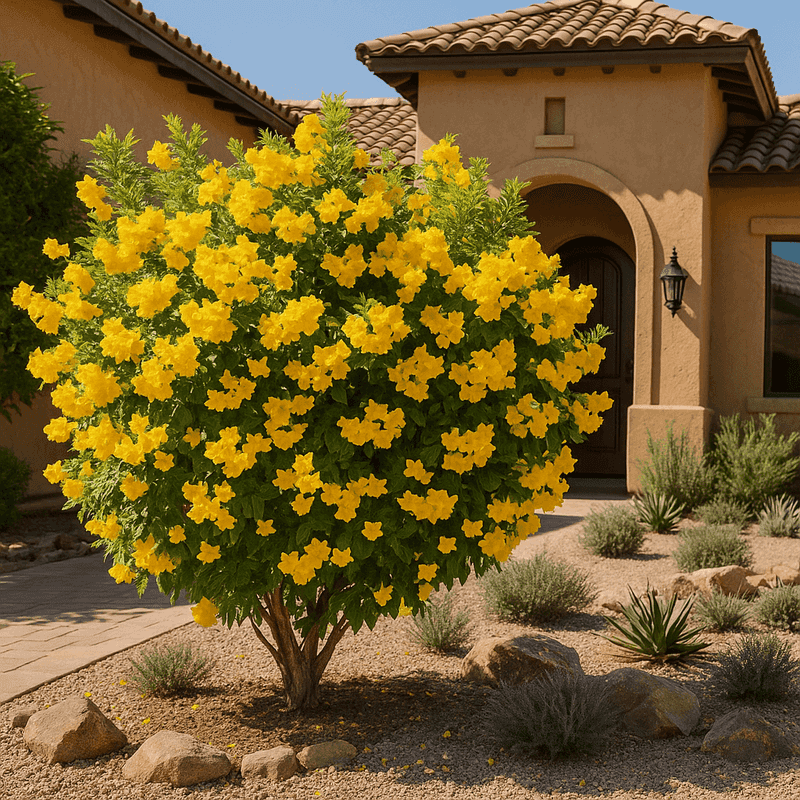
Before placing esperanza at your front entry, run through a short set of practical questions. Does the site stay mostly frost-free, or does your microclimate see hard freezes?
Is there room for a shrub reaching six to eight feet in height and width without crowding the walkway, door, or foundation? Does the spot get full sun or light shade, and can you confirm that the soil drains rather than holds water over a caliche layer?
If those boxes check out, commit to establishment watering from the day you plant. The University of Arizona recommends early October as a favorable low-desert planting window, and that timing gives roots a head start before summer returns.
Plan for regular deep irrigation through the first season before gradually stretching intervals as the plant settles.
Esperanza earns its front-yard spot through heat tolerance, a long bloom season, lower water demand after establishment, and the chance to support hummingbirds and other pollinators. Those are documented traits, not marketing claims.
A shrub that fits its site and gets proper care at the start is the one that rewards you with color every summer.