Can Mandevilla Survive An Ohio Winter? Here’s What Actually Happens
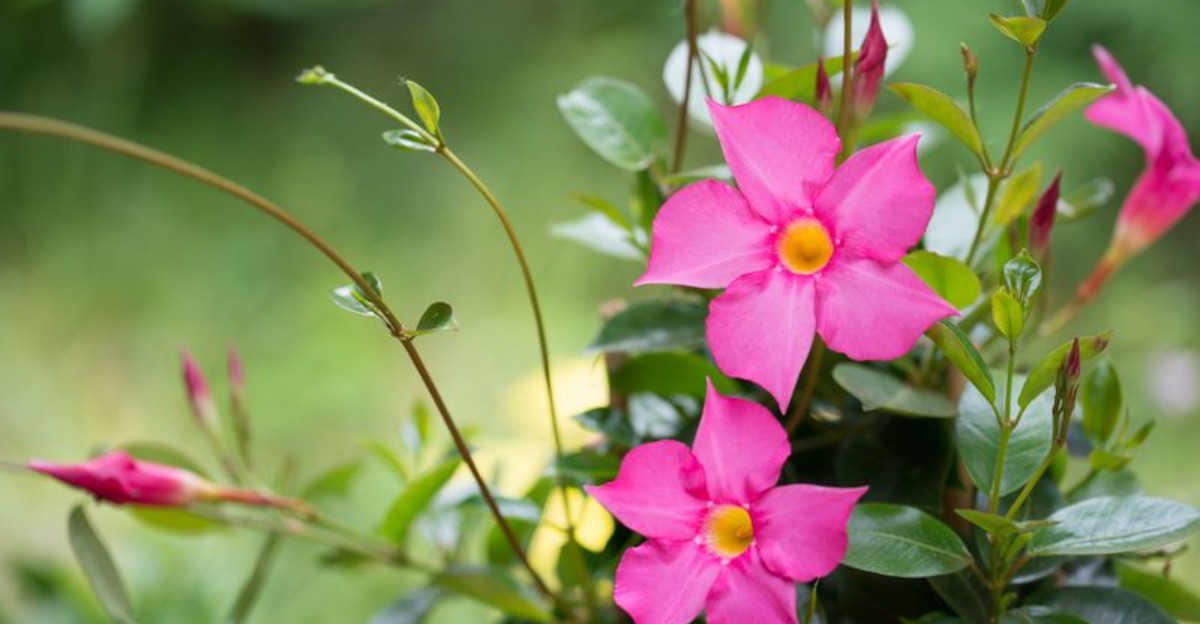
That mandevilla on the trellis has been the star of the patio all summer, blooms going nonstop with almost no complaints.
Ohio winter is coming for it regardless, and what actually happens next depends entirely on choices made in the next few weeks, not on anything the plant can handle by itself.
Left outside, the answer is simple and not in the plant’s favor. Mandevilla is tropical through and through, and it has no defense against the kind of cold a normal Ohio winter delivers without warning.
One hard freeze is enough to turn months of growth into a blackened mess overnight, with nothing left worth saving by morning.
Brought inside before that freeze hits, the story changes completely, and the plant that looked finished for the season can come back next year even bigger than before. The gap between those two outcomes comes down to timing, not luck.
1. Treat Mandevilla As A Tropical Plant In Ohio
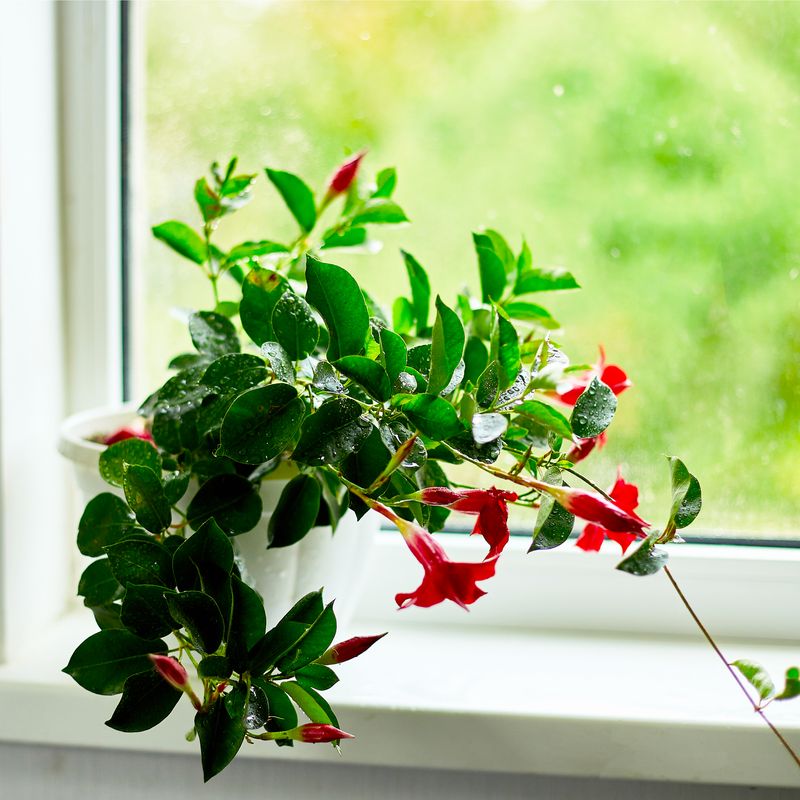
Picture a vine that grew up in the warm forests of Central and South America, then found itself parked on a patio in Dayton. That is mandevilla in a nutshell, and it explains almost everything about its winter behavior.
Also called rock trumpet, this perennial climber pumps out glossy leaves and trumpet-shaped blooms from late spring straight through fall.
It grows best in warm conditions and handles the heat of a summer well, but its tropical nature becomes a problem as soon as fall temperatures begin dropping sharply.
Winter is a different story. Mandevilla becomes increasingly vulnerable as temperatures fall into the 40s, and freezing temperatures can cause severe damage.
Because Ohio sees frost, snow, and long stretches of freezing weather, mandevilla cannot stay outside through the season. Gardeners across the state usually pick one of two paths.
Path one treats it as a cheerful annual, enjoyed for a single summer and then replaced. Path two brings it indoors, which lets the same plant return year after year and often grow bigger each time.
Fun bit of trivia: mandevilla was named after a British diplomat who collected plants in Argentina during the 1800s. Knowing its warm-weather roots makes the fall routine feel less like a chore and more like helping a houseguest settle in.
2. Bring Mandevilla Indoors Before The First Frost
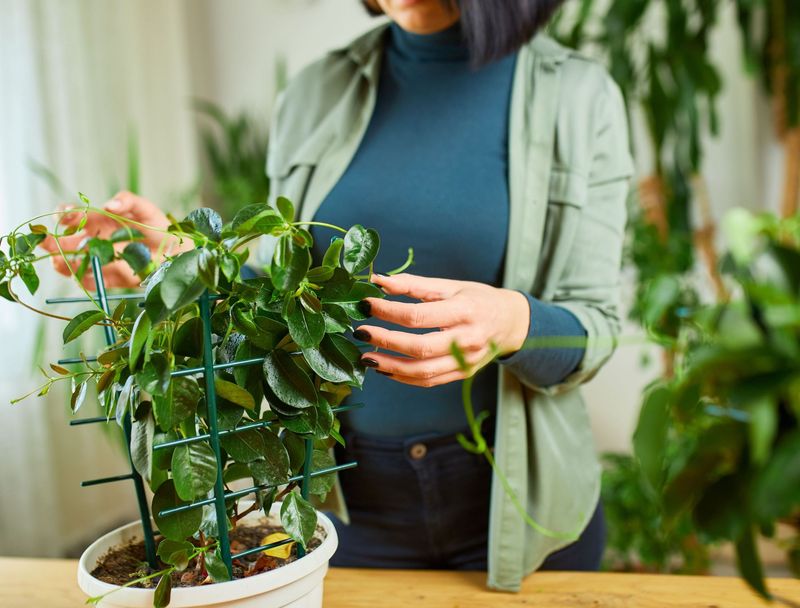
Timing matters more than almost anything else here. Waiting for that first frost warning on the news is cutting it far too close.
Start watching the evening forecast in September. Once nights are consistently getting cooler, begin preparing the plant for its move indoors rather than waiting for a frost warning.
Moving the pot indoors while nights are still comfortably above freezing gives the plant a gentler transition and leaves you plenty of room before the first frost.
The important number is the forecast for frost and freezing temperatures, not one exact fall date. In much of Ohio, that means preparing the plant during September or early October, with the exact timing varying by location and year.
Your Ohio Garden Changes Every Week. Your Plan Should Too.
Gardening in Ohio changes quickly throughout the season. Every Friday you’ll receive a simple weekly plan showing exactly what to plant, prune, fertilize, harvest, and protect so you never miss the right timing.
Northern counties near Lake Erie and the higher ground in the northeast tend to cool off first. Southern areas around Cincinnati often buy you an extra week or two.
Before you lift the container, check the weight and consider a pot dolly or a helper. A mature mandevilla in a big planter gets heavy once the soil is moist.
Set the pot in a garage or porch for a few days first if you can. Gradual transitions soften the change in light and humidity, and your vine will thank you for it.
3. Check Leaves And Stems For Pests Before The Move
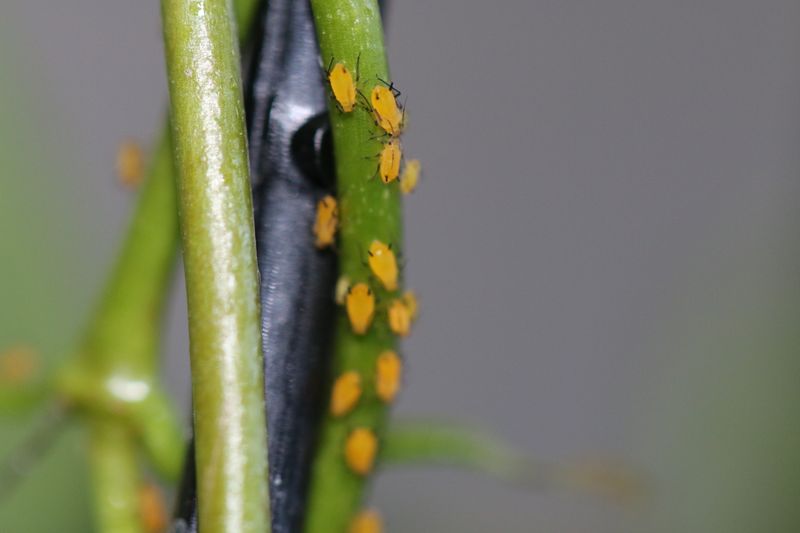
Nobody wants to discover a colony of aphids on the living room curtains in December. A careful inspection before the move is the cheapest insurance you will ever buy.
Flip the leaves over and study the undersides, where the tiny troublemakers like to hide. Look along stems, leaf joints, and the rim of the pot too.
Common freeloaders include aphids, spider mites, whiteflies, mealybugs, and scale. Fine webbing, sticky patches, or speckled leaves are all clues worth taking seriously.
A firm rinse with the hose knocks off a surprising number of them. Wash the remaining foliage well, top and bottom, and let it drip dry in the shade.
Check the soil and drainage holes for insects or other hitchhikers, and remove anything you find before bringing the plant inside. Avoid deliberately flooding the pot, since overly wet soil can create its own problems.
For pests that remain, use an insecticidal soap or another product labeled for the specific pest and plant, following the label directions. Reinspect the plant after treatment and repeat only as directed on the product label.
Give the outside of the pot a quick scrub as well, since eggs sometimes cling to the rim. Ten extra minutes on the driveway in October saves hours of frustration inside your home later in the season.
4. Trim Long Vines To Make Indoor Storage More Manageable
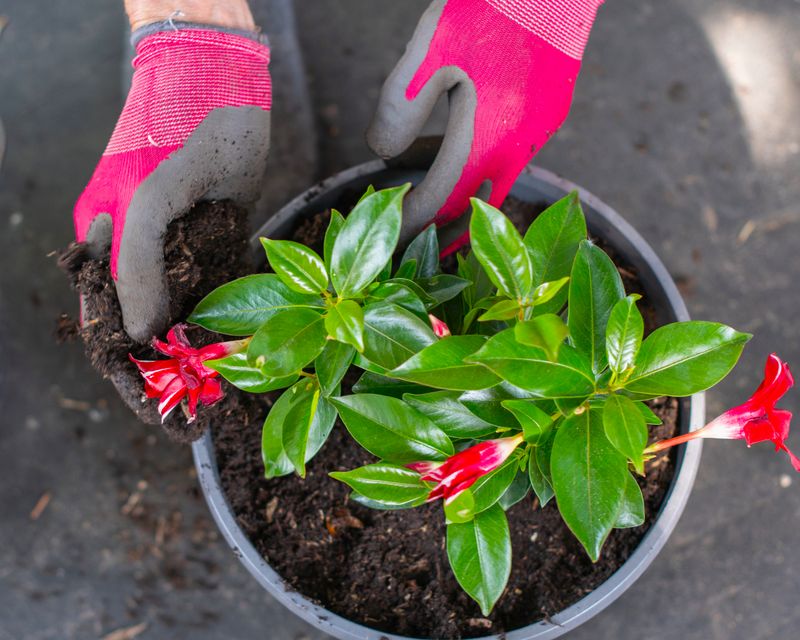
A summer of good weather can turn a modest mandevilla into a ten-foot tangle. Hauling all of that through a doorway is nobody’s idea of fun.
Pruning solves the problem and does the plant a favor at the same time. Fewer leaves mean less water loss while light levels indoors are low.
How much to remove depends on how much indoor space you have and whether you plan to keep the plant actively growing or let it rest.
Shorten long vines enough to make the plant manageable, but avoid removing a large portion of the plant simply because it is moving indoors.
If you plan to keep it dormant, a more substantial cutback can make storage easier, but leave enough healthy woody framework for the plant to regrow next season.
Use clean, sharp bypass pruners and snip just above a leaf node. Wear gloves, because mandevilla stems release a milky sap that can irritate skin.
Toss the clippings rather than composting them if you spotted any insect activity. Also unwind the vines from their trellis slowly to avoid snapping healthy stems.
Here is the encouraging part: mandevilla blooms on new growth, so a hard trim sets up a fuller display next summer. That bare-looking stub on your basement shelf in November often becomes the showiest plant on the patio by July.
5. Keep Mandevilla Growing In A Bright Sunny Room
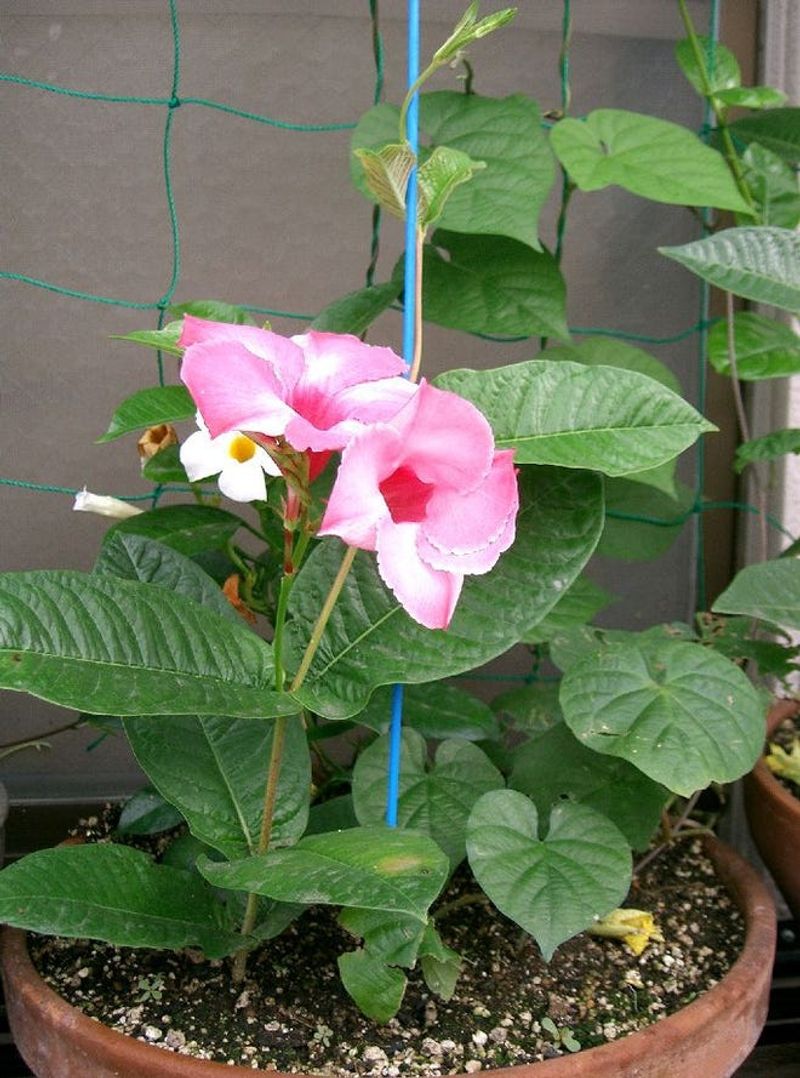
Got a south-facing window going unused? Your mandevilla would love to spend the winter there acting like a regular houseplant.
Bright light is the main requirement. A spot that catches several hours of direct sun keeps the leaves green and may even coax out a stray flower in January.
Daytime temperatures between 60 and 70 degrees suit it nicely. Keep the pot away from heat vents, wood stoves, and drafty exterior doors, since sudden swings cause leaf trouble.
Indoor air in an Ohio winter gets dry fast once the furnace kicks on. Grouping plants together, setting the pot on a pebble tray, or running a small humidifier nearby helps a lot.
A greenhouse or sunroom is the dream setup, but a grow light hung a foot or so above the plant works well too. Twelve to fourteen hours under lights mimics longer days.
Give the pot a quarter turn every week so growth stays even instead of leaning. Dust the leaves occasionally with a damp cloth to keep them soaking up light.
Watch for spider mites, which love warm, dry rooms. Catching them early with a rinse in the kitchen sink usually settles the matter before spring arrives.
6. Give Mandevilla A Cool Rest When Indoor Light Is Limited
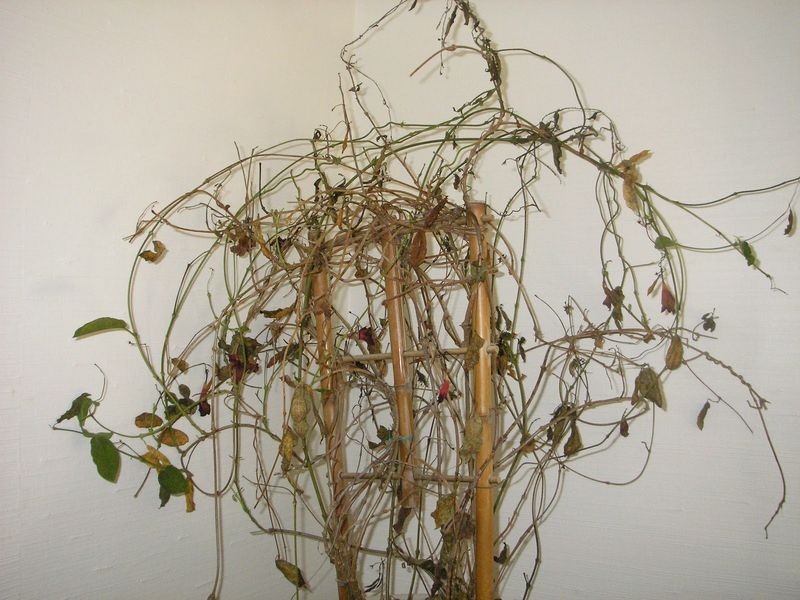
Not everyone has a sunny window to spare, especially in older Ohio homes with small panes and deep eaves. Dormancy is the workaround, and it is refreshingly low effort.
The idea is simple. Tuck the trimmed plant into a cool, protected space where temperatures stay safely above freezing.
A cooler location can encourage the plant to slow down, reducing the amount of light and water it needs during winter.
Basements, crawlspaces, unheated back rooms, and attached garages all work as long as the area holds above freezing. An insulated garage wall or a blanket wrapped around the pot adds protection during a cold snap.
As light levels and temperatures drop, mandevilla may slow its growth or enter a more dormant state. Growth pauses, leaves thin out, and the roots simply wait for longer days.
Check on it roughly every two or three weeks. You are looking for shriveling stems, mushy soil, or any sign of mold, all of which are easy to correct early.
A digital min-max thermometer parked next to the pot takes the guesswork out of things. Ohio basements can run cooler near an outside wall than in the middle of the room.
The plant will look plain and twiggy all winter, which is perfectly normal. Come March, tiny green buds along those bare stems are the payoff for your patience.
7. Cut Back On Water And Skip Winter Fertilizer
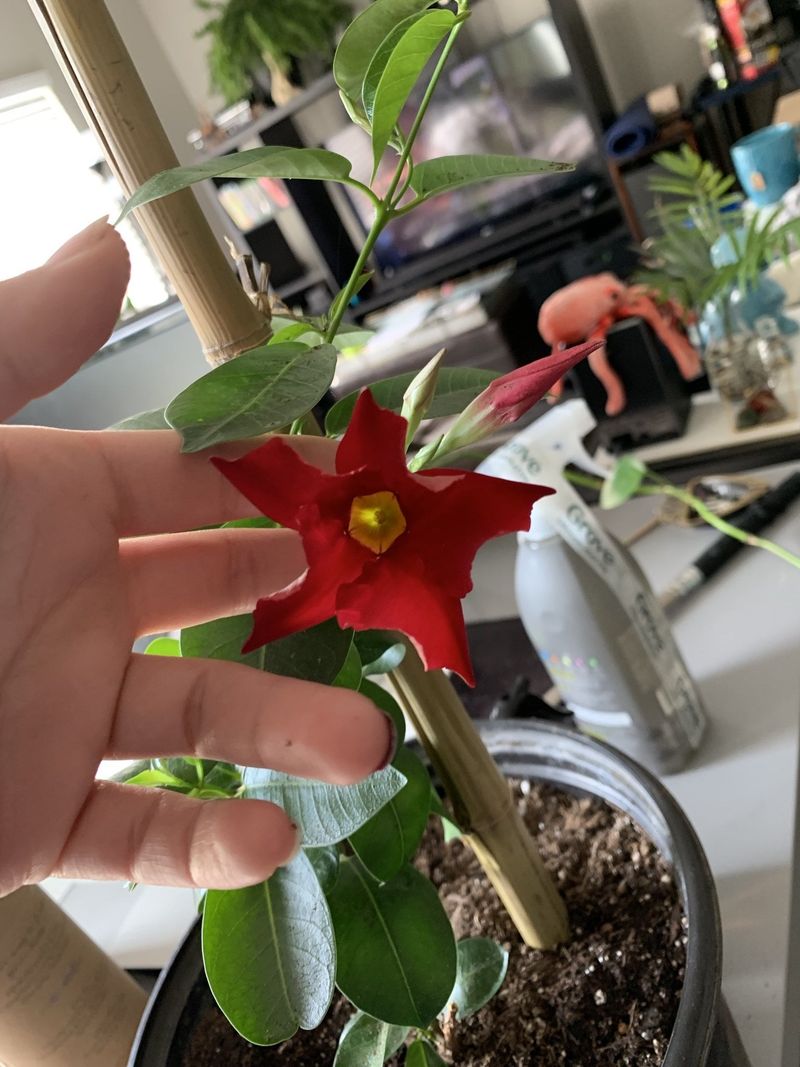
Overwatering causes more winter problems for stored tropicals than cold ever does. Roots sitting in soggy soil with no leaves to drink it up quickly run into rot.
Dial your habits way back. Let the top couple of inches of soil dry out before you reach for the watering can again.
For a dormant plant in a cool basement, that might mean a small drink every two to four weeks. Actively growing plants in a warm sunny room need water a bit more often.
The goal is soil that stays barely moist, not bone dry and not soaked. Poke a finger in, or use a wooden skewer, to judge conditions before deciding.
Skip the fertilizer entirely from fall through late winter. A resting plant cannot use extra nutrients, and unused salts build up in the soil and stress the roots.
Make sure the pot drains freely and dump any water collecting in the saucer. Sitting water is a fast track to trouble.
A quick tip from experienced Ohio gardeners: lift the pot to feel its weight. A light container usually needs water, while a heavy one is telling you to walk away and check back in a week.
8. Expect Leaf Drop As The Plant Adjusts To Indoor Conditions
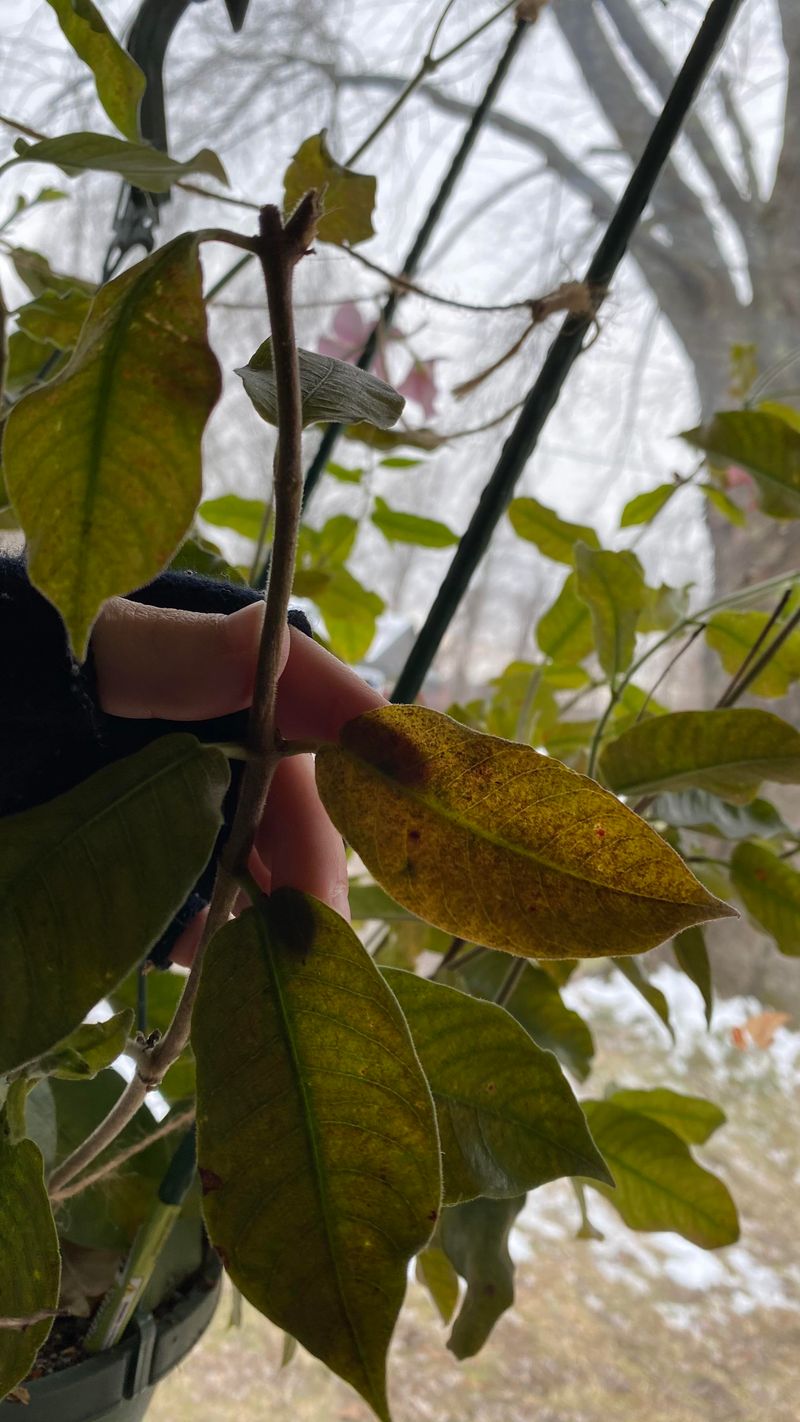
Two weeks after you move the pot inside, the floor around it may be littered with yellow leaves. Resist the urge to panic or start dumping on fertilizer.
Leaf drop is the standard response to a big change in surroundings. Outdoor sunlight is dramatically stronger than anything inside, and furnace air is much drier than an autumn evening.
Flower buds often fall too, sometimes before they open. The plant is simply shedding what it can no longer support and shifting energy to its roots and stems.
Bare stems on a dormant plant are not a bad sign at all. Losing foliage is part of how mandevilla settles into rest for the season.
Scratch a stem lightly with your fingernail to check on things. Green underneath means the vine is fine and just resting.
What deserves attention is rapid collapse paired with soggy soil, or fine webbing and speckling that point to mites. Those are worth acting on right away.
Keep conditions steady and sweep up fallen leaves so nothing sits and molds. Stability beats fussing, and a plant left alone in a consistent spot bounces back faster than one shuffled from room to room every few days.
9. Wake Mandevilla Gradually Before Moving It Outside In Spring
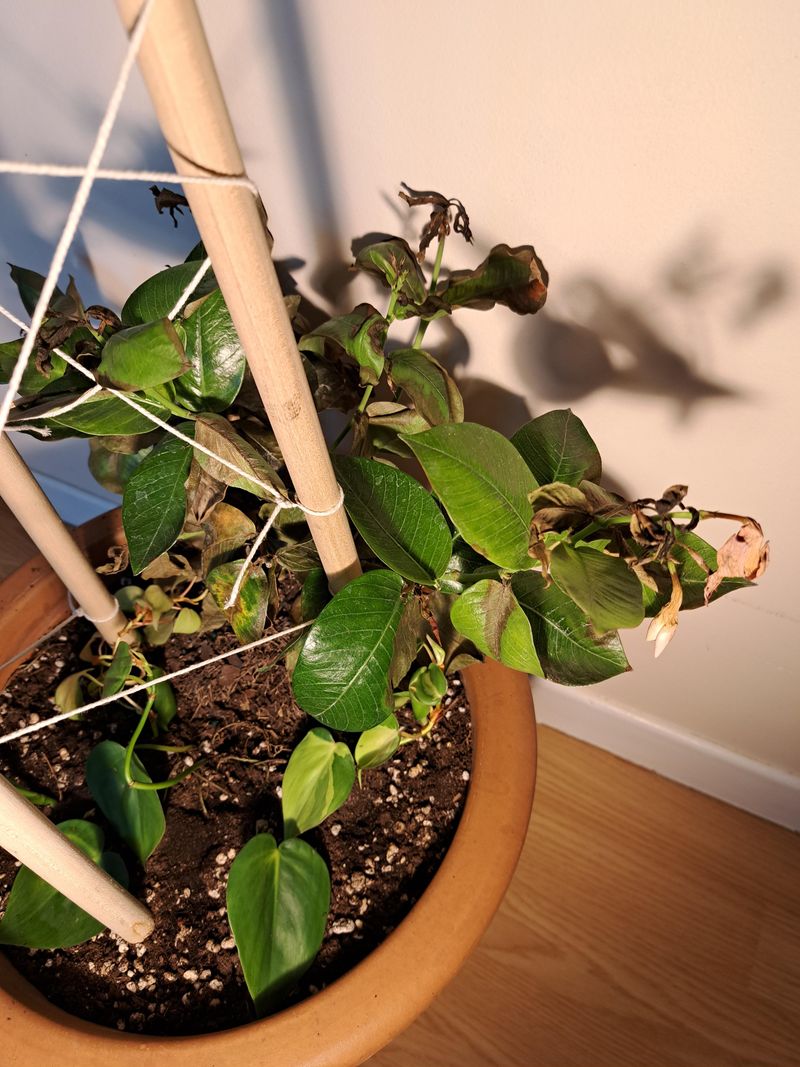
As late winter gives way to spring, watch for new growth along the bare stems. Little green shoots appear along those bare stems, and your patience finally pays off.
Move the pot to a bright indoor spot once you spot new growth. Warmth and light tell the plant that the growing season has arrived.
Resume light watering as leaves expand, and pinch the tips of new shoots every few weeks. Pinching encourages branching, which means a bushier vine loaded with more blooms.
Early spring is also a good moment to repot into fresh, well-draining potting mix. A container one size up gives roots room without drowning them in soggy soil.
Once growth is truly underway, begin feeding with a water-soluble fertilizer at the strength listed on the label. That boost fuels the vines and flower buds forming for summer.
Hold off on the permanent move outdoors until frost danger has passed and nighttime temperatures are consistently warm enough for a tropical plant.
Harden the plant off over a week or two, starting with an hour of shade and slowly adding sun. Rushing this step causes scorched leaves, while easing into it gives you a thriving vine ready for another season of trumpet-shaped color.