The Garden Mistake That Can Stress Michigan Spruce Trees Before Winter Arrives
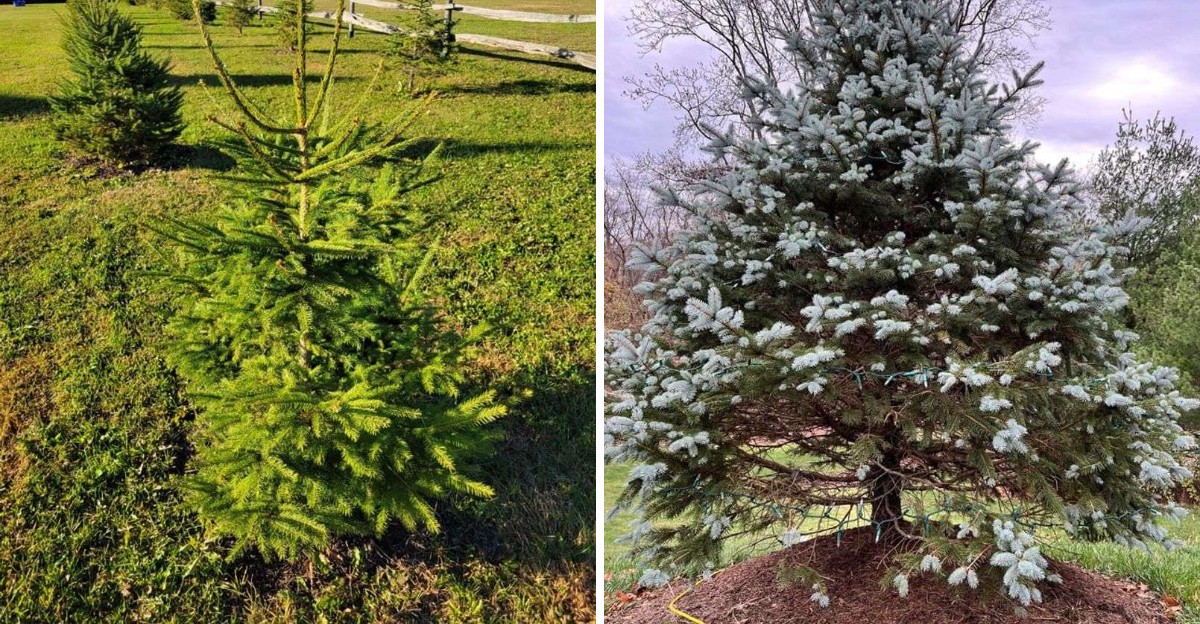
A common mistake continues to stress Michigan spruce trees right as they should be preparing for winter dormancy, and it often goes unnoticed until real damage sets in.
Watering habits, soil conditions around the base, or improperly timed fertilizing can all interfere with a spruce’s natural transition into its cold-weather resting period.
Because spruce trees are evergreen and continue losing moisture through their needles even in winter, entering the season already stressed makes them significantly more vulnerable to winter burn and wilt.
This kind of damage frequently doesn’t show up until months later, once new growth fails to emerge properly in spring. Avoiding this mistake now gives Michigan spruce trees a much stronger foundation heading into the coldest part of the year.
1. Avoid Keeping Spruce Roots Too Wet
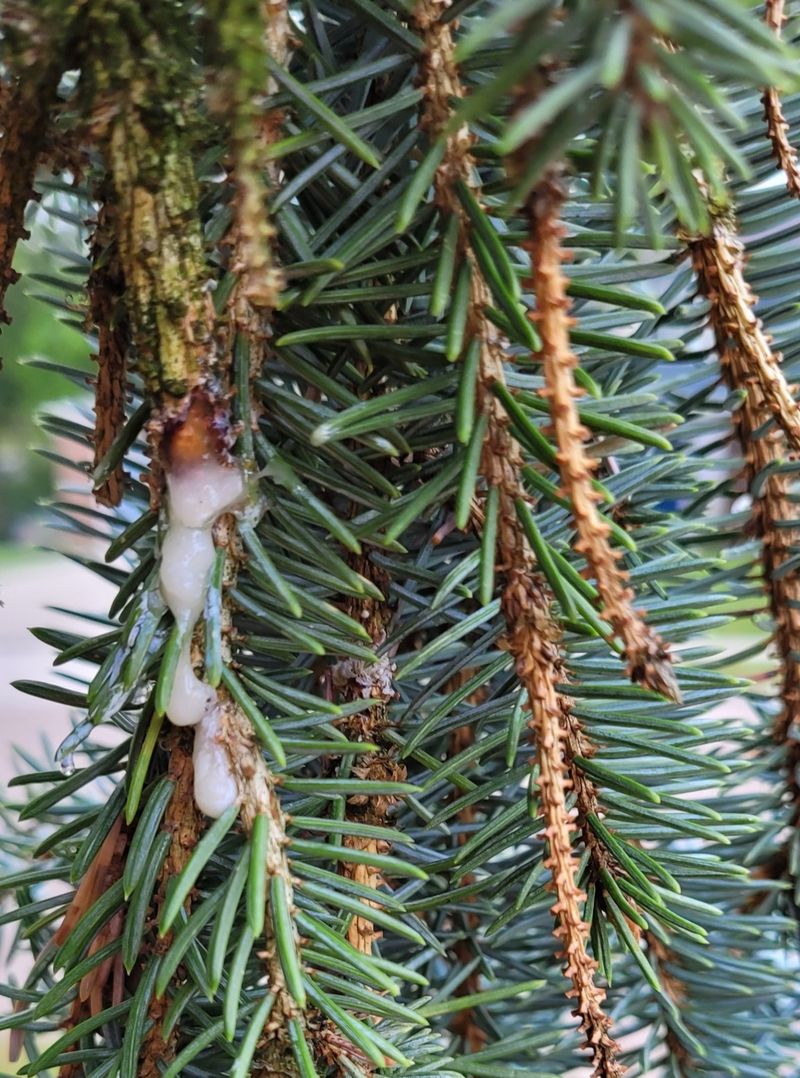
Soggy soil might seem like a gift to your spruce, but it often causes the opposite of what you want. Roots need air just as much as they need water, and when soil stays soaked, the tiny pockets that hold oxygen fill up completely.
Without enough air, roots start to weaken and struggle to take in nutrients. Over time this stress shows up as thin, fading needles and slow growth. A spruce heading into winter in this shape has fewer reserves to handle the cold.
Drainage is the fix here. If water pools around the trunk after rain, your tree may be sitting in a low spot that traps moisture. Adding a gentle slope or planting spruce on slightly raised ground helps extra water move away instead of hanging around.
Clay soil, which shows up in many Michigan yards, holds water longer than sandy soil. Mixing in compost when you plant can loosen heavy clay and let it breathe better.
Before the ground freezes, check how fast water drains near the base. Dig a small hole, fill it with water, and see how quickly it empties. If it takes many hours, drainage needs attention.
Keeping moisture balanced matters most in fall, when roots are storing energy for the season ahead.
A spruce with healthy, airy soil enters winter far stronger than one stuck in a puddle. Give those roots room to breathe, and your tree rewards you with steady green color.
2. Do Not Ignore Fall Watering After Drought
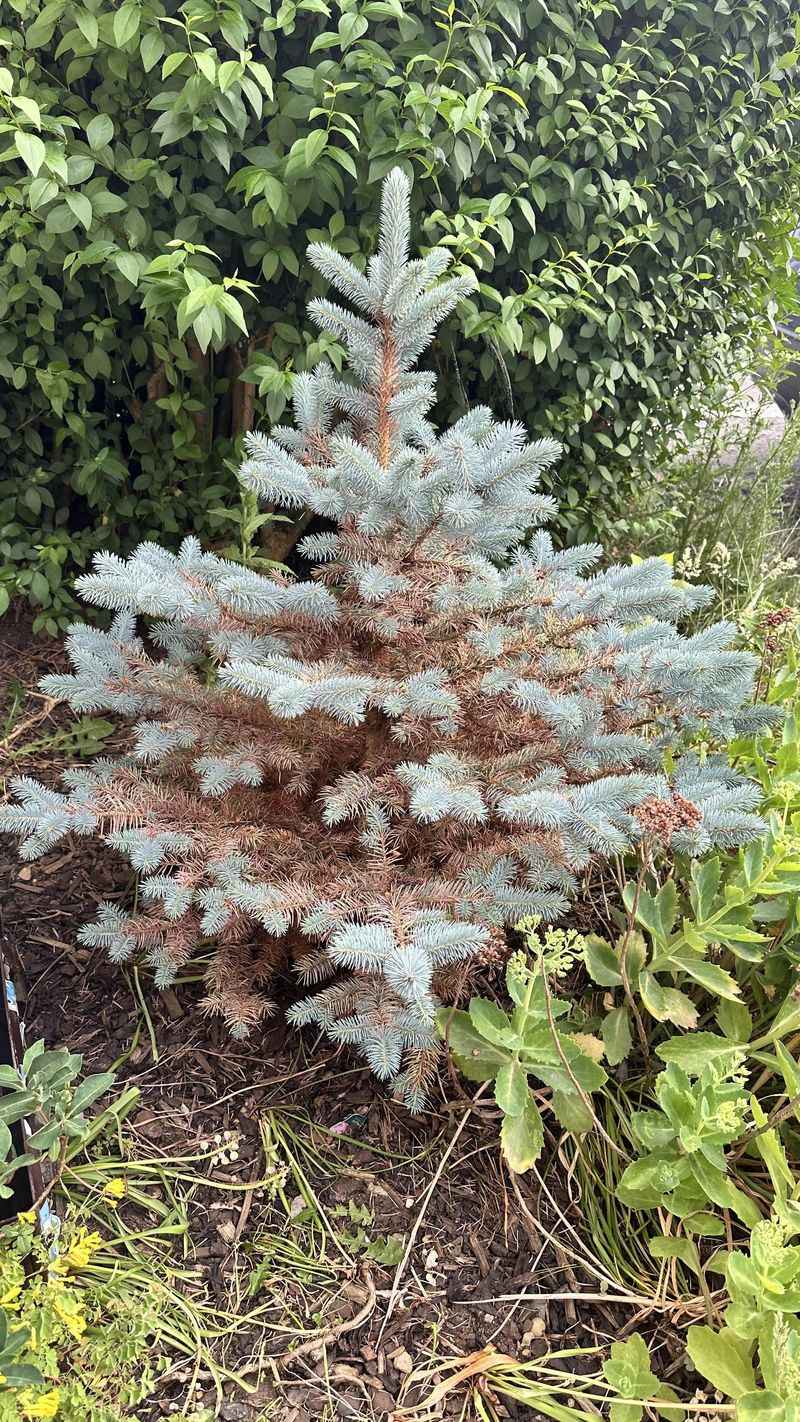
After a long, dry summer, your spruce may look fine on the outside while quietly running low on moisture inside. Evergreens hold onto their needles through winter, and those needles keep losing water even when the ground is frozen.
A tree that goes into the cold months already thirsty faces a tough road. The frozen ground makes it hard for roots to pull up more water, so any moisture stored in fall becomes a lifeline.
That is why deep watering before the ground freezes is so helpful. Instead of quick sprinkles, let a hose run slowly at the base for a while so water soaks down to the deeper roots.
Aim to water in the morning on days above freezing, giving the tree time to absorb it before night. One good soaking each week during a dry fall usually does the trick until the ground hardens.
You can check if watering is needed by pushing a screwdriver into the soil near the roots. If it slides in easily, moisture is fine. If it fights you the whole way, the soil is too dry.
Drought-stressed spruce often show browning needle tips or a dull color, and these signs get worse if they enter winter without help. A little attention in October and November builds a cushion of moisture.
Think of fall watering as packing a snack before a long trip. Your spruce will lean on that stored water all winter, staying greener and steadier until spring warms things back up.
3. Avoid Heavy Late Fertilizer Applications
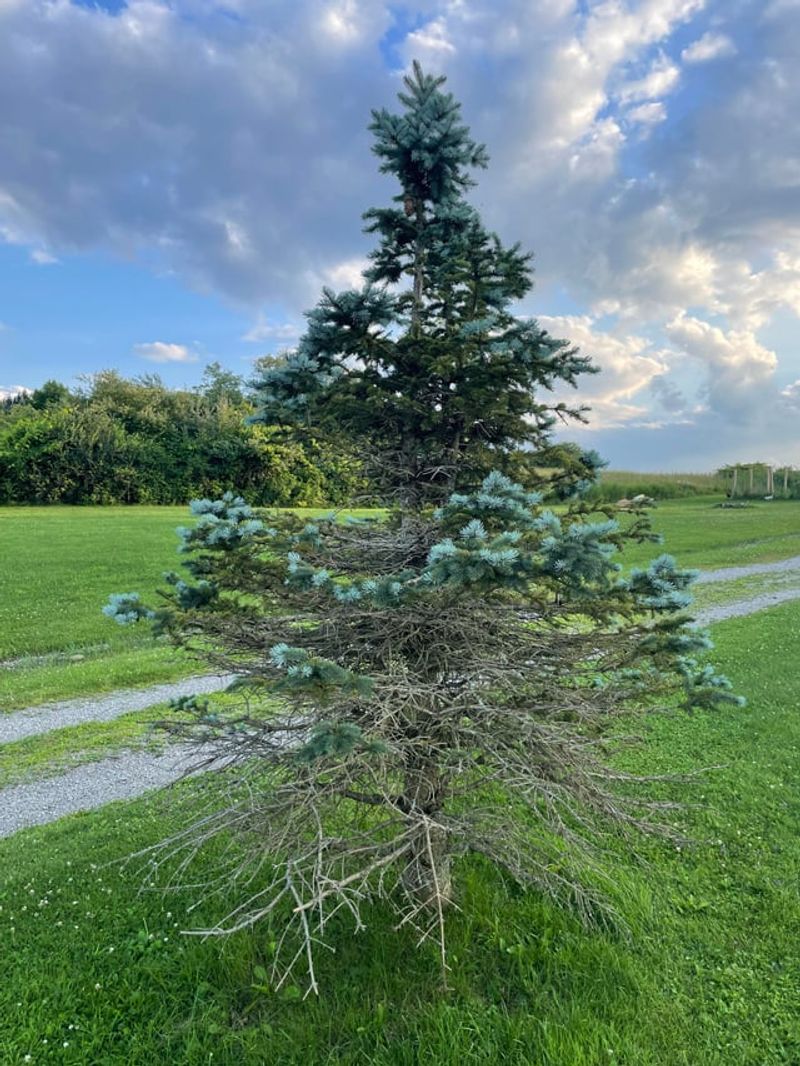
Reaching for fertilizer in late fall feels like a caring move, but it can backfire in a big way. Nitrogen, the nutrient that pushes leafy growth, tells your spruce to produce fresh, tender shoots.
The problem is timing. New growth that appears late in the season does not have enough time to toughen up before Michigan turns cold. Soft, young shoots get harmed easily once frost and freezing winds arrive.
Instead of helping, a heavy late feeding can leave your tree with weak tips that struggle through winter. That extra stress is the last thing an evergreen needs when it should be slowing down and storing energy.
Spruce trees naturally shift into rest mode as days grow shorter. Pushing them to grow at that point works against their own rhythm and wastes energy they need for the cold season.
If your soil truly lacks nutrients, the better window for feeding is early spring or early summer. That timing lets fresh growth harden fully during warm months.
A soil test can tell you whether your spruce even needs extra feeding. Many established trees do fine with the nutrients already in the ground, especially when mulch slowly breaks down and adds more.
When fall arrives, focus on water and mulch rather than fertilizer. Let your tree wind down the way nature intended.
Skipping that late feeding might feel like doing nothing, but sometimes the kindest thing is letting your spruce rest. It enters winter calmer, sturdier, and far better prepared.
4. Check Mulch Depth Around Spruce Trees
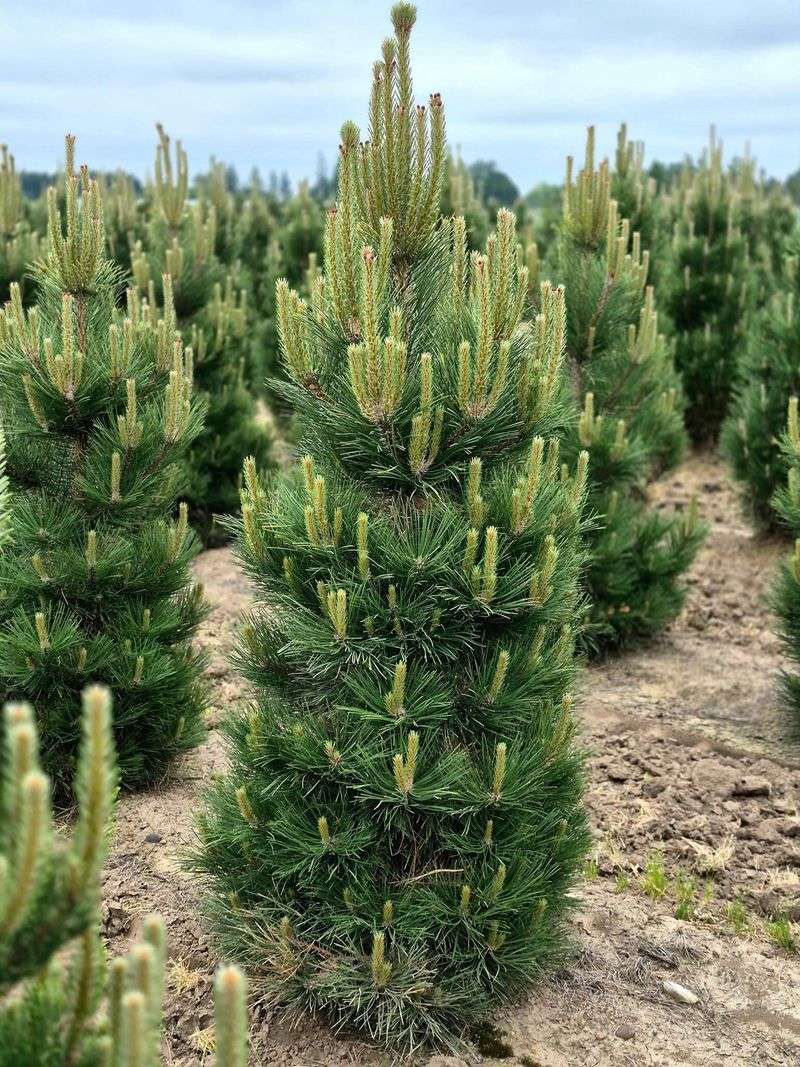
Mulch is one of the best friends a spruce can have, but only when you use it the right way. A good layer keeps roots cozy, holds in moisture, and blocks weeds that steal nutrients.
The trouble starts when gardeners pile mulch high against the trunk in a shape people often call a mulch volcano. That mound traps moisture right against the bark, where it does not belong.
Bark that stays damp for long stretches can rot and invite pests and disease. It also hides the base of the tree, making problems easy to miss until they grow serious.
The fix is simple and quick. Spread mulch in a flat, even layer about two to three inches deep, and pull it back so there is a small gap around the trunk.
Think of it like a doughnut, not a cone. That open space lets the bark breathe and keeps water moving away from the base instead of pooling there.
Extend the mulch ring outward toward the branch tips if you can, since that covers the widest spread of feeding roots. Shredded bark or wood chips work great in Michigan yards.
Fall is a smart time to refresh the layer, because it shields roots from harsh temperature swings once winter settles in. Just resist the urge to overdo it.
A well-shaped mulch ring protects moisture, steadies soil temperature, and keeps the trunk safe. Take a minute to check yours this season, and your spruce will head into the cold months in far better shape.
5. Do Not Compact The Soil Around Roots
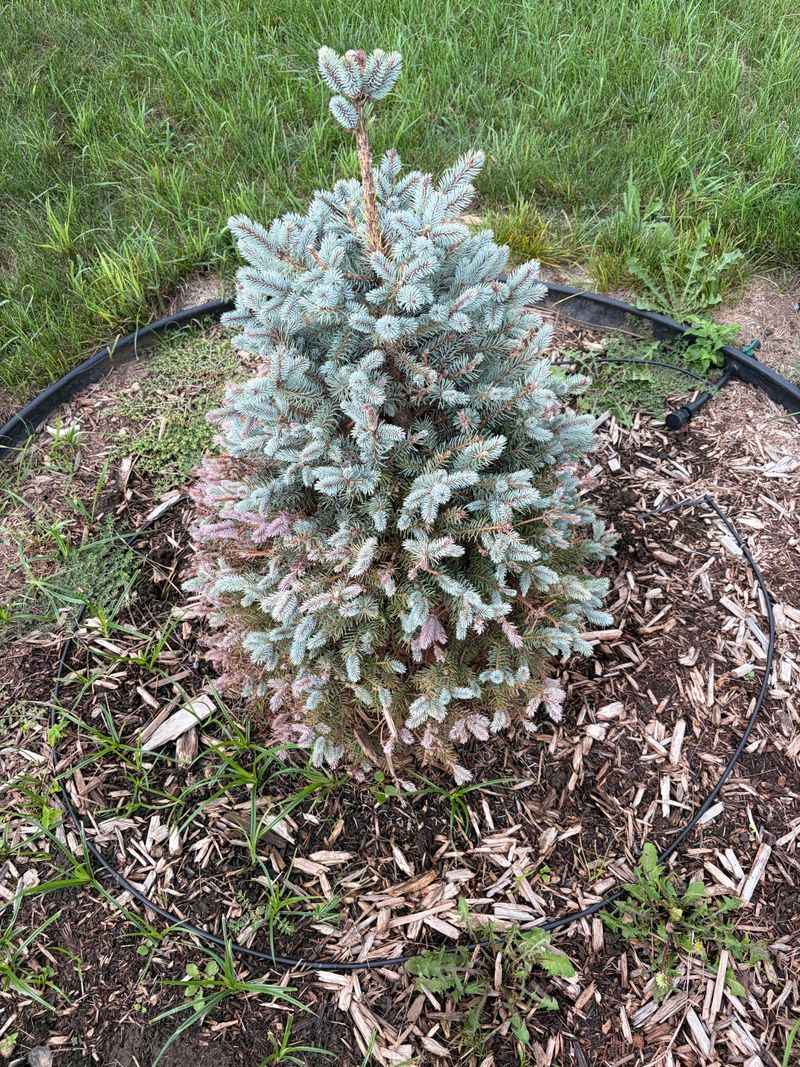
It is easy to forget that a tree’s roots stretch far beyond its trunk, spreading wide just under the surface. Those roots need loose, airy soil to grow and gather what the tree needs.
When people walk the same path, park a vehicle, or stack heavy items over the root zone, the soil packs down tight. Squeezed soil loses the tiny air pockets that roots depend on.
With less air and space, roots struggle to breathe and take up water. Rain also has a harder time soaking in, so it runs off instead of reaching the roots below.
A spruce dealing with packed soil often grows slower and shows stress through fading needles. Going into winter that weak makes the cold season even harder to handle.
The good news is that prevention costs nothing. Keep foot traffic, mowers, and vehicles away from the area under and around the branches whenever you can.
If part of the root zone already feels rock hard, you can loosen it gently. A layer of mulch helps cushion the ground and slowly improves the soil over time.
Adding stepping stones or a mulched path gives people a set route and keeps the rest of the root zone soft. Small changes like this protect your tree for years.
Treat the ground beneath your spruce as off-limits for heavy activity. Give those roots room to spread and breathe, and your evergreen stays healthier as winter rolls in.
6. Inspect For Winter Stress Before It Arrives
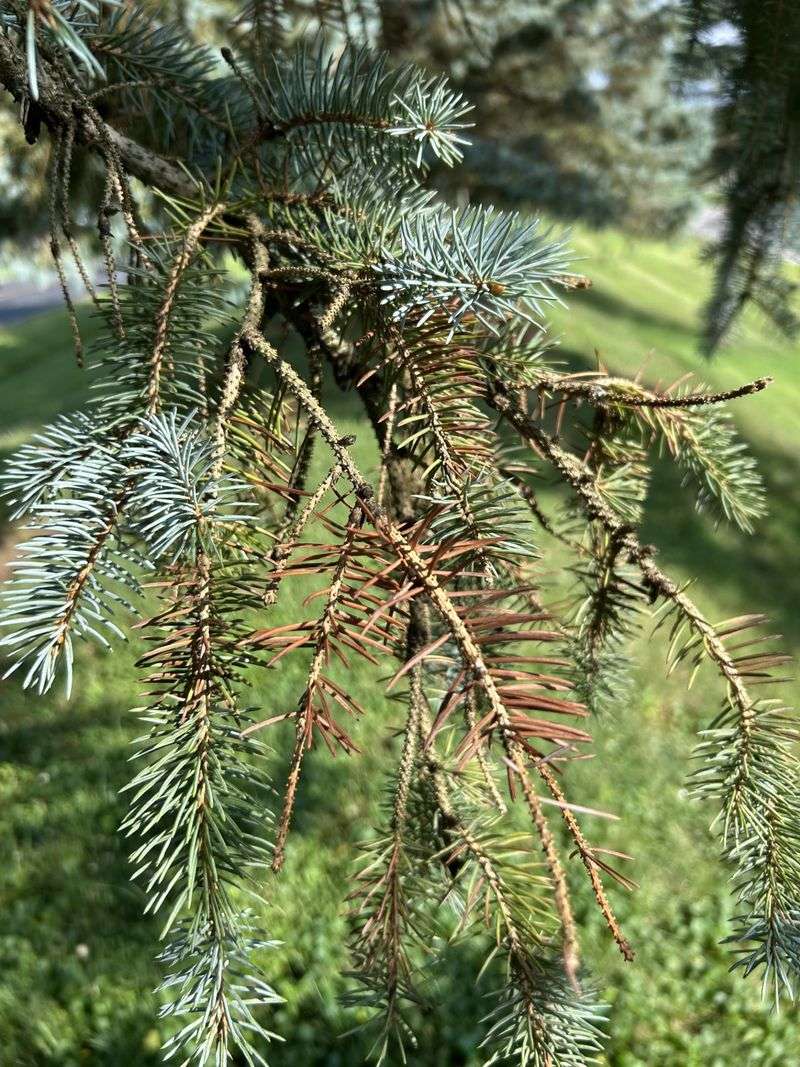
A quick fall checkup can save your spruce from a rough winter. Trees often send small warning signals long before big trouble shows up, and a little detective work helps you catch them early.
Start with the needles, since they tell you a lot about how the tree feels. Healthy spruce needles look full and hold a rich green or blue-green color across the whole tree.
Browning tips, thinning spots, or needles dropping heavily can point to drought stress or a possible disease. Catching these signs in fall gives you time to act before the cold locks everything in.
Look over the branches too, checking for weak, bare, or oddly discolored areas. Small holes, sticky spots, or unusual bumps might mean pests are visiting.
The soil deserves a glance as well. Push a finger or screwdriver into the ground near the roots to feel whether it is too dry, too soggy, or packed hard.
Walk around the whole tree slowly, since problems often hide on one side. Comparing sections helps you spot trouble that a quick look would miss.
If you notice something worrying, you still have time to water deeply, adjust mulch, or ask a local tree expert for advice. Early action beats scrambling in spring.
Think of this inspection as a yearly wellness visit for your evergreen. A few minutes of careful looking in fall helps your spruce head into winter with fewer surprises and a much better chance of staying strong.
7. Avoid Unnecessary Fall Pruning
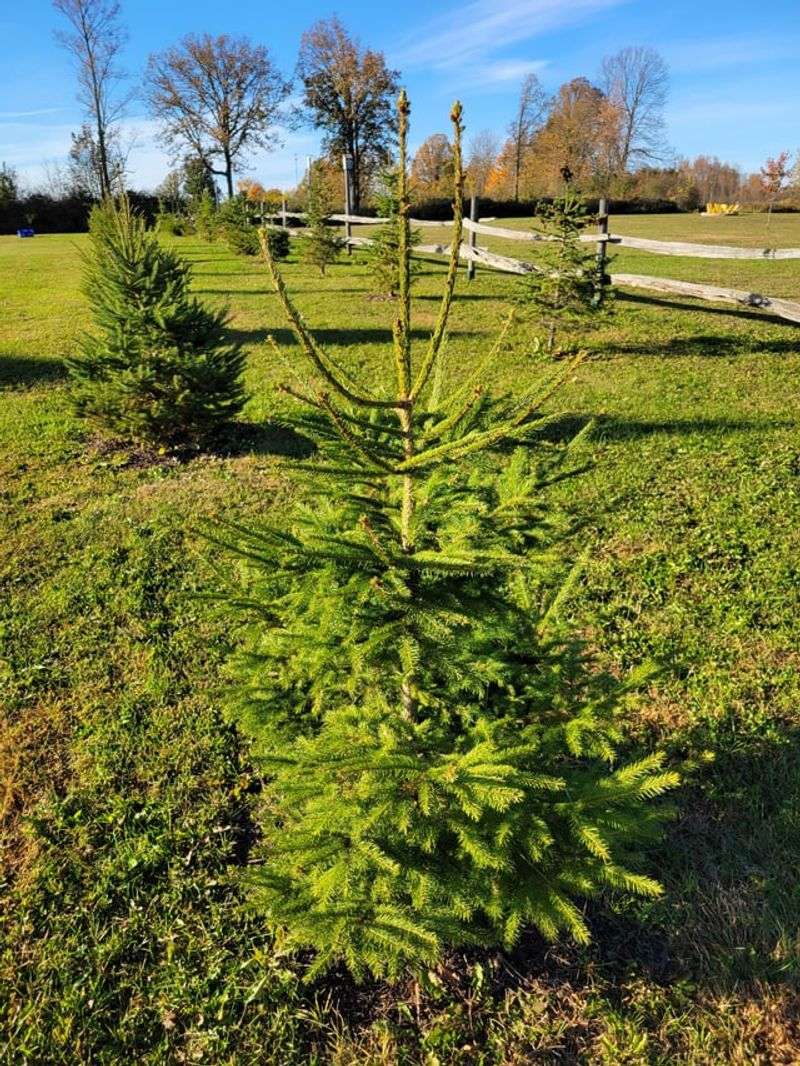
Trimming feels productive, but spruce trees rarely need a big haircut before winter. Most of the time these evergreens keep a nice shape on their own without much help from you.
Cutting away healthy branches in fall removes growth the tree counts on to stay strong. Every branch full of needles helps gather energy, and losing too many leaves the tree with less to work with.
Fresh pruning cuts also create open wounds. Late in the season, the tree does not have time to seal those cuts before the cold arrives, which leaves openings for problems.
Heavy trimming can even trigger a little new growth at the wrong time. That tender growth gets harmed by frost and adds stress right when the tree should be resting.
There is a smarter approach. Save major shaping for late winter or early spring, when the tree is dormant and ready to heal once warmer days return.
Fall pruning should stay light and limited to clear needs. Removing broken, damaged, or clearly unhealthy branches is fine, since those do not help the tree anyway.
When you do make a cut, use clean, sharp tools to keep the wound neat. A tidy cut heals better than a ragged one.
Resisting the urge to trim is often the best choice you can make in autumn. Let your spruce keep its full set of branches, store up energy, and glide into winter with everything it needs to stay steady.
8. Help Spruce Enter Winter Strong
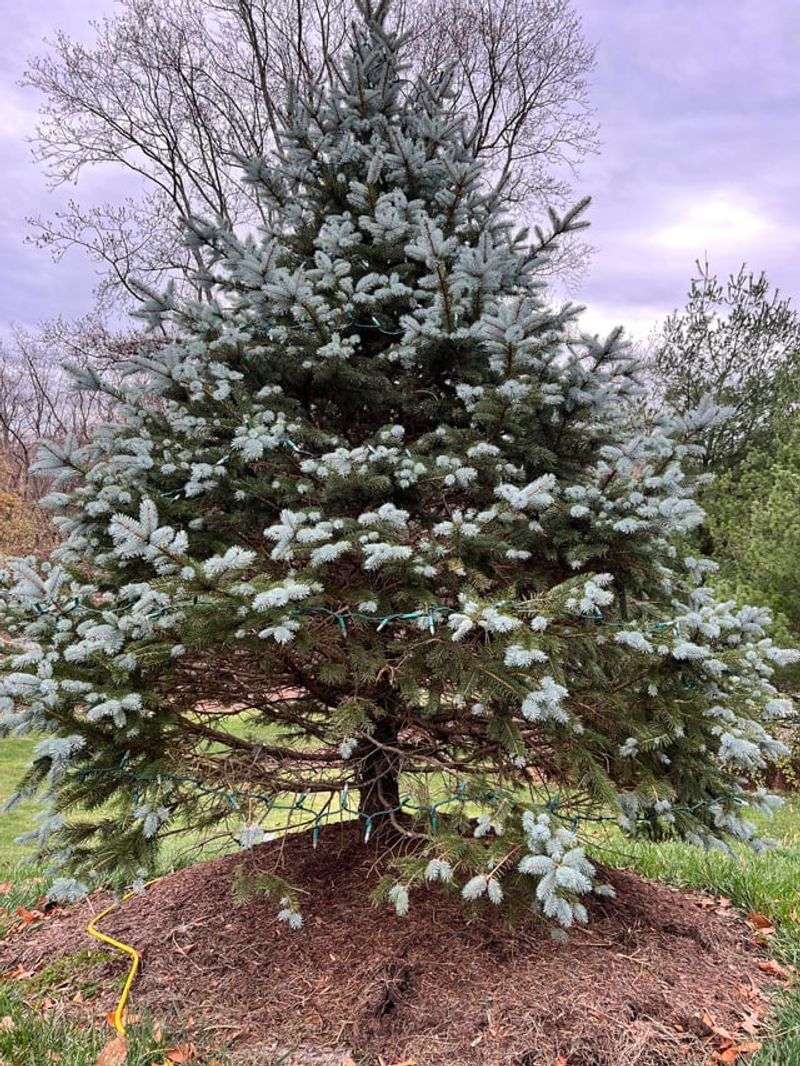
Everything comes together when you look at spruce care as a full routine rather than a single task. A tree that is watered well, mulched right, and left to rest naturally has the best shot at a smooth winter.
Balanced soil moisture before winter helps reduce drought stress and gives spruce trees a stronger start going into the frozen season.
Good drainage backs that up by keeping air around the roots. Loose, breathable soil lets roots do their job instead of struggling to survive.
Mulch adds another layer of protection, steadying soil temperature and locking in the moisture your tree worked hard to gather. Just keep it flat and away from the trunk.
Skipping late fertilizer lets the tree wind down on its own schedule. Instead of pushing tender new shoots, it saves energy for staying strong through the cold.
Protecting the root zone from heavy traffic keeps the whole foundation healthy. Soft, airy ground means roots can keep breathing and drinking all season.
Put these habits together and your spruce heads into winter with real staying power. Each small step supports the others, building a tree that handles snow, wind, and freezing days with ease.
Come spring, that care shows itself in fresh, vibrant growth and rich color. A little effort in fall pays off with an evergreen that keeps your Michigan yard looking sharp all year long.