These Are The Michigan Edible Plants That Grow Themselves Along Fence Lines
Nobody planted them. Nobody waters them. Nobody even thinks much about them.
And yet, right along Michigan fence lines, old pasture edges, and scrubby roadsides, some genuinely useful edible plants just show up and get on with it.
These in-between spaces – too wild to be a garden, too productive to ignore – have been quietly feeding people for generations. Most Michigan gardeners walk right past them without a second thought, which is honestly a little bit of a missed opportunity.
The plants growing along a sunny fence row or field edge do not need your help, your fertilizer, or your attention. They just need someone who knows what to look for.
Turns out, that knowledge alone is worth quite a lot.
1. Black Raspberry Brings Sweet Berries To Rough Fence Lines
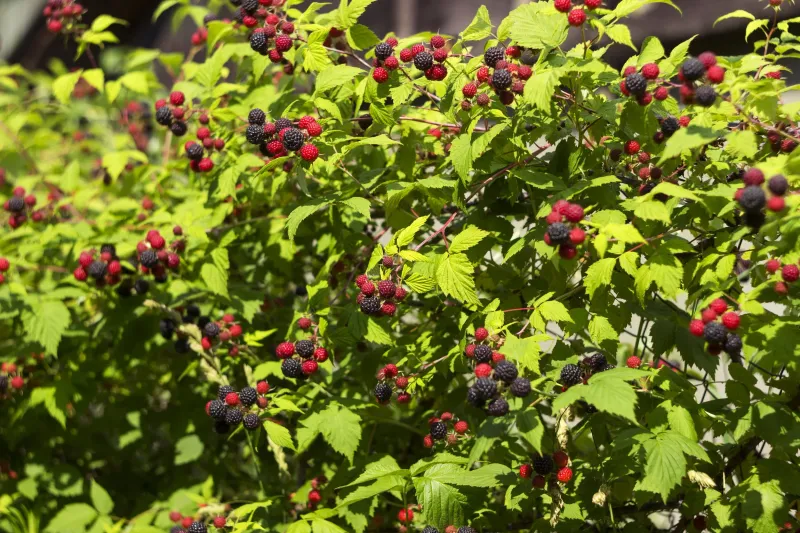
Thorny, arching canes loaded with dark berries are one of the more rewarding sights along a fence row in midsummer.
Black raspberry, known botanically as Rubus occidentalis, is a native shrub that tends to show up on its own along fence lines, old pasture edges, and sunny roadsides throughout much of Michigan.
It spreads naturally through seeds dropped by birds and through tip rooting, where the arching cane tips touch the ground and take root to form new plants.
The berries ripen from late June into July, turning from red to a deep purplish-black when ready. They look similar to blackberries but pull free from the stem with a hollow center, which is one of the easiest ways to tell them apart in the field.
The flavor is rich, slightly tart, and excellent eaten fresh, baked into pies, or turned into jam.
Gardeners who find black raspberry growing along a fence line are often pleasantly surprised by how productive a patch can become with minimal attention. The canes do have thorns, so gloves are a smart choice when picking.
Before harvesting, make sure the fence line has not been sprayed with herbicides, since many roadsides and field borders in Michigan are treated seasonally.
Positive identification is also worth taking seriously, as some similar-looking plants grow in comparable spaces.
Black raspberry is a genuine Michigan native with a long history of use and a flavor that makes finding a wild patch feel like a real discovery.
2. Wild Grape Climbs Fences With Edible Summer Fruit
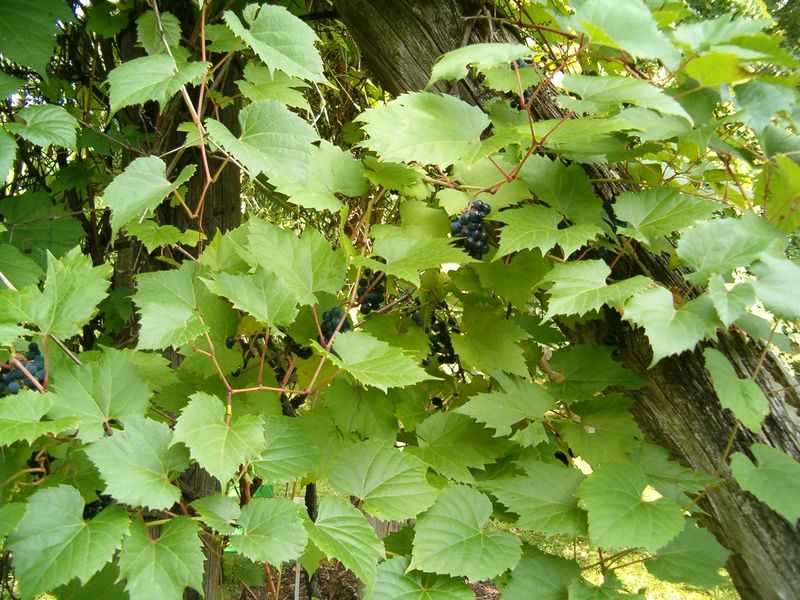
Few plants claim a fence line as enthusiastically as wild grape.
Vitis riparia, commonly called riverbank grape or frost grape, is one of the most widespread native vines in Michigan and a frequent visitor to fence rows, shrubby borders, roadsides, and field edges across the state.
Once it finds something to climb, it moves fast, draping itself over fences, shrubs, and small trees with heavy, lobed leaves and twisting tendrils.
The fruit clusters ripen in late summer and early fall, turning dark blue to nearly black when ready. Wild grapes are small and can be quite tart compared to cultivated varieties, but they are genuinely edible and have been used for juice, jelly, and wine for generations.
Your Michigan Garden Changes Every Week. Your Plan Should Too.
Gardening in Michigan changes quickly throughout the season. Every Friday you’ll receive a simple weekly plan showing exactly what to plant, prune, fertilize, harvest, and protect so you never miss the right timing.
The young leaves are also edible and are sometimes used in cooking, which adds an extra layer of interest for foragers who notice the vine early in the season.
In Michigan, wild grape is easy to spot once you know what to look for. The combination of climbing habit, lobed leaves with toothed edges, forked tendrils, and loose clusters of small fruit is fairly distinctive.
That said, moonseed, a toxic vine, can grow in similar spaces and produce clusters of dark berries that look superficially similar.
Moonseed has crescent-shaped seeds and lacks the true tendrils that grape vines produce, so careful identification before eating is important.
Wild grape growing along a fence line is a genuine find, but it rewards patience and a close look before harvesting.
3. Elderberry Fills Michigan Edges With Useful Clusters
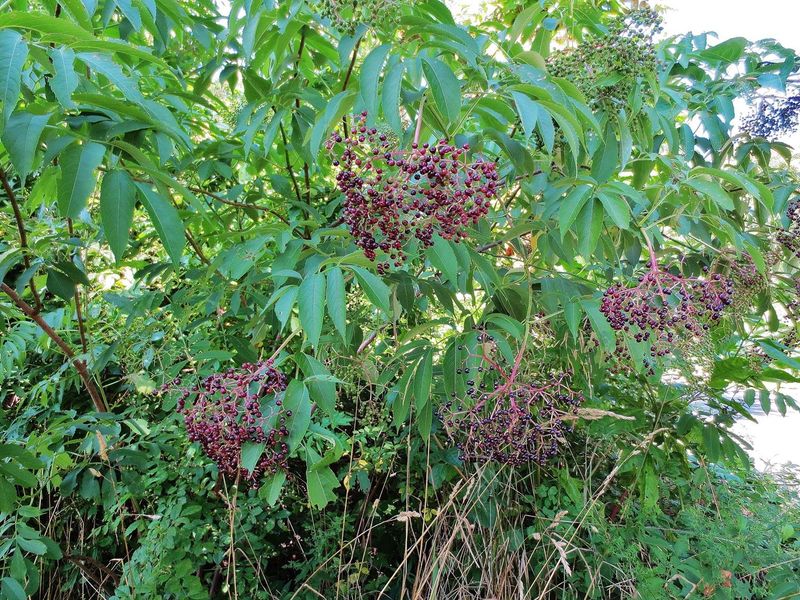
Walk along almost any low, moist fence line or roadside ditch in Michigan during late summer, and there is a reasonable chance you will spot the flat-topped, dark berry clusters of American elderberry.
Sambucus canadensis is a native shrub that seems to genuinely prefer the kind of rough, disturbed edges where fence rows meet old fields, wet meadows, or woodland borders.
It spreads readily through root sprouts and bird-dropped seeds, which is why it so often turns up without being deliberately planted.
The berries, which ripen from August into September, are the most commonly harvested part of the plant. Deep purple-black when fully ripe, they are used in syrups, jellies, and juice.
Elderberries should be cooked before eating in quantity, as raw berries can cause stomach upset in some people. The flowers, which appear in June as large creamy-white clusters, are also edible and sometimes used to make elderflower cordial or fritters.
Gardeners who find elderberry along a fence line often appreciate how little the shrub asks for in return for what it offers. It grows quickly, tolerates wet feet, and provides food for birds as well as people.
A few things are worth keeping in mind before harvesting. The red-berried elderberry, Sambucus racemosa, also grows in Michigan and is considered toxic, so cluster shape and berry color matter for identification.
Stems, leaves, and unripe berries of American elderberry also contain compounds that can cause illness, so sticking to fully ripe, cooked fruit is the sensible approach.
4. American Plum Grows Thick Along Fence Rows And Roadsides
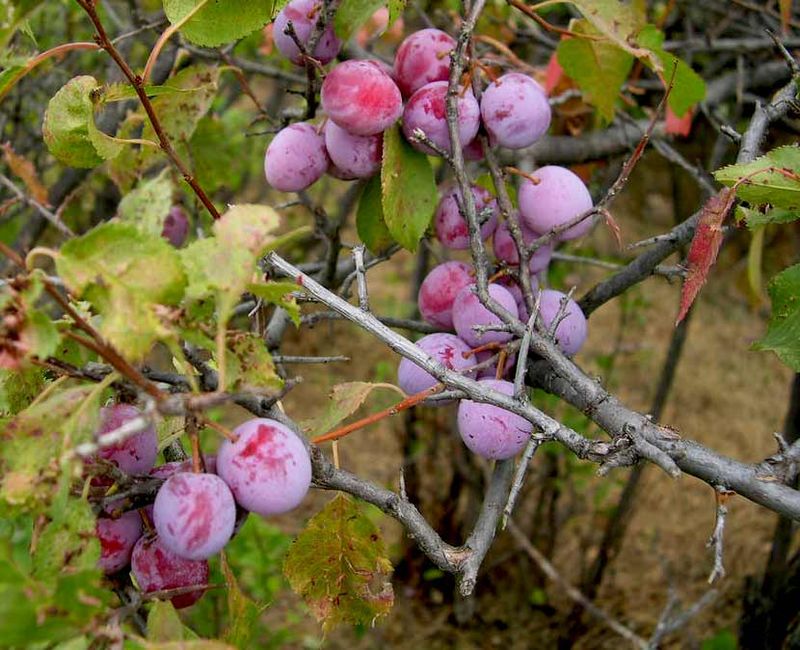
Rough, thorny thickets growing along old fence rows in Michigan sometimes turn out to be something more rewarding than they first appear.
American plum, Prunus americana, is a native shrub or small tree that forms dense, spreading colonies along fence lines, roadsides, old pasture edges, and disturbed ground throughout much of the state.
Birds and other wildlife spread the seeds, and the plant suckers readily from the roots, which is why a single plum can become a whole thicket over time.
The fruit ripens from late July through September, depending on the location and the individual plant. American plums are small, typically about an inch across, and range in color from yellow to red to a deep reddish-purple when fully ripe.
The flavor can be quite tart right off the branch, but the fruit softens and sweetens as it fully ripens and is excellent for jams, jellies, sauces, and preserves. Some people enjoy them fresh once fully ripe, especially the sweeter individuals within a patch.
Gardeners who come across an American plum thicket along a fence row have found something genuinely useful. The shrub is tough, cold-hardy, and well-suited to the Michigan climate.
The thorns make the thicket good wildlife habitat and also mean that harvesting calls for some care. As with any roadside or fence-line plant, it is worth making sure the area has not been sprayed before picking.
Positive identification is straightforward once you see the small, round fruit and the characteristic thorny branching habit of the shrub.
5. Wild Asparagus Pops Up In Unexpected Sunny Edges
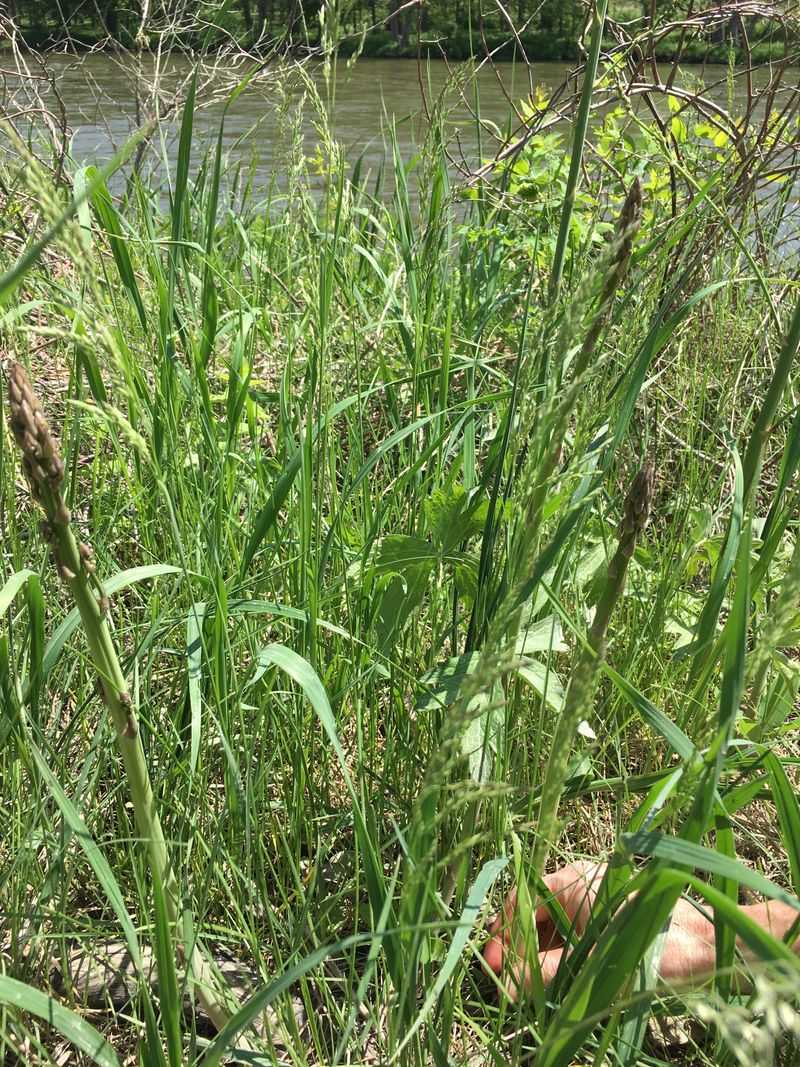
Spotting wild asparagus for the first time feels a little like finding something hidden in plain sight.
The trick most experienced Michigan foragers use is to look for the tall, feathery, fern-like foliage that remains standing along sunny fence lines and roadsides in late summer and fall.
Returning to those same spots the following spring is when the reward comes, right as the edible spears push up from the ground.
Asparagus officinalis is not a Michigan native but has naturalized widely across the state after escaping from gardens and farms over many decades.
Wild asparagus tends to show up along sunny, open fence rows, roadsides, old fields, and disturbed ground where the soil drains reasonably well. It prefers full sun and open conditions, which makes fence lines and road edges reliable places to check.
The spears emerge in spring, typically from April into May, and are harvested just as they push up before the tips begin to open and branch out.
The flavor of wild asparagus is similar to cultivated asparagus, sometimes described as slightly more intense. Once you find a productive patch, it tends to return year after year from the same root system.
A few cautions are worth keeping in mind. Asparagus grows in sunny edges alongside many other plants, and young spears of some other species can look unfamiliar to a beginning forager.
Learning to recognize the distinctive feathery foliage from the previous season is the most reliable way to locate a patch with confidence before the spears emerge in spring.
6. American Hazelnut Adds Edible Nuts To Shrubby Borders
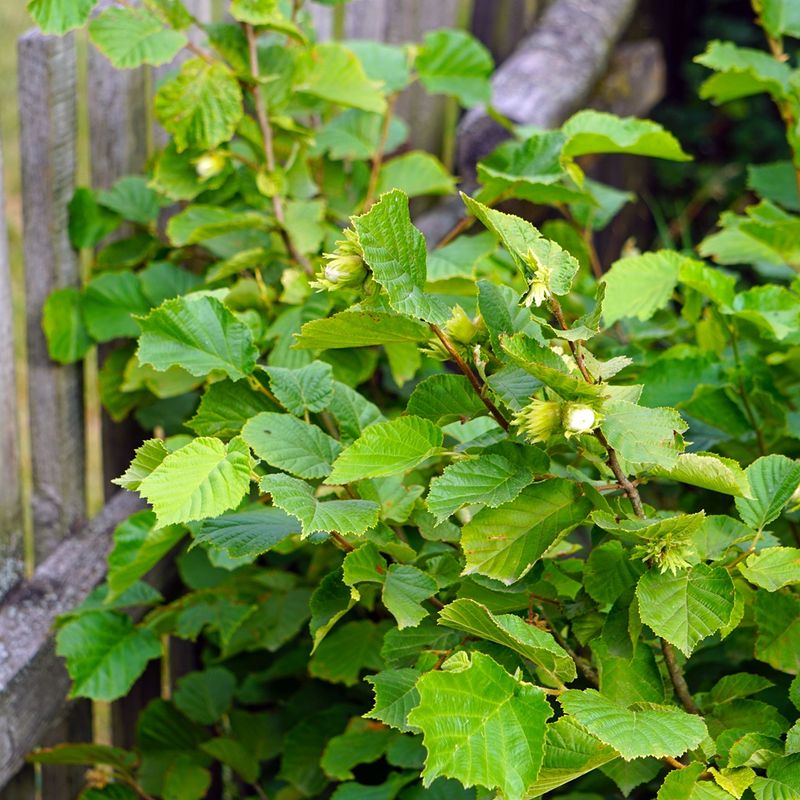
Shrubby, multi-stemmed and easy to overlook until you notice the distinctive husked nuts, American hazelnut is one of those Michigan native plants that rewards anyone who takes the time to learn it.
Corylus americana grows naturally along fence rows, field edges, open woodlands, roadsides, and shrubby borders across much of Michigan, often forming dense, spreading colonies that wildlife and people both find useful.
The nuts ripen from late August into September, tucked inside leafy, fringed husks that make them easy to identify once you know what to look for.
The husks are distinctive enough that hazelnut is fairly straightforward to recognize during harvest season.
Inside, the small round nuts have a flavor similar to commercial hazelnuts, though slightly milder. They can be eaten raw, roasted, or used in baking, and they store well once dried.
Squirrels, deer, and other wildlife compete enthusiastically for hazelnut crops, so getting to a patch before the nuts fully drop takes some attention to timing.
Gardeners who find hazelnut growing along a fence line or shrubby border may also find that the shrub is worth encouraging, since it is a genuine native species that provides food and cover for a wide range of wildlife.
It tolerates a range of soil conditions and handles winters without any difficulty. As with any fence-line or roadside plant, checking that the area has not been treated with herbicides before harvesting is a practical step worth taking every season.