12 Desert Shrubs Arizona Gardeners Plant Once For Privacy That Comes Back Thicker Every Year In Caliche
Living in the low desert means fighting hard soil, brutal summer heat, and water bills that climb fast. The good news is that some tough native shrubs will give you a living privacy wall without constant fuss, coming back fuller every single year even in rocky caliche.
These plants shrug off the sun, sip very little water, and often invite birds and pollinators to your yard. Here are 12 shrubs Arizona gardeners plant once and enjoy for years.
1. Hop Bush (Dodonaea viscosa)
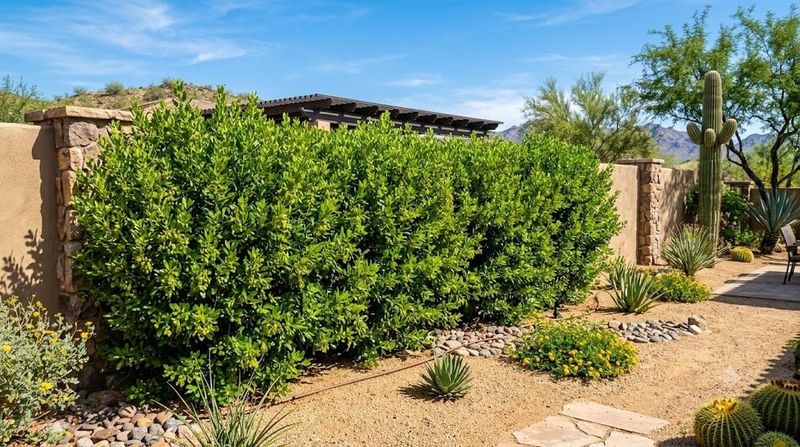
Gardeners who want a screen up fast tend to reach for hop bush first, and for good reason. It shoots upward quickly and fills in dense, giving you real privacy in a season or two rather than a decade.
The glossy, willow-like leaves stay green all year, so your barrier never thins out during winter. You can shear it into a tidy formal hedge or let it grow loose and natural, and either way it bounces back thicker after every trim.
Native to Arizona, this shrub laughs at caliche and rarely asks for extra water once its roots settle in. Full sun suits it best, and it handles the reflected heat off block walls that kills fussier plants.
Because it needs so little babying, hop bush earns its spot for busy homeowners who would rather plant once and forget it. Tuck a row along a property line in fall, water it through the first summer, and step back.
Within a couple of years you will have a soft green wall doing the work of a fence, minus the maintenance headaches.
2. Arizona Rosewood (Vauquelinia californica)
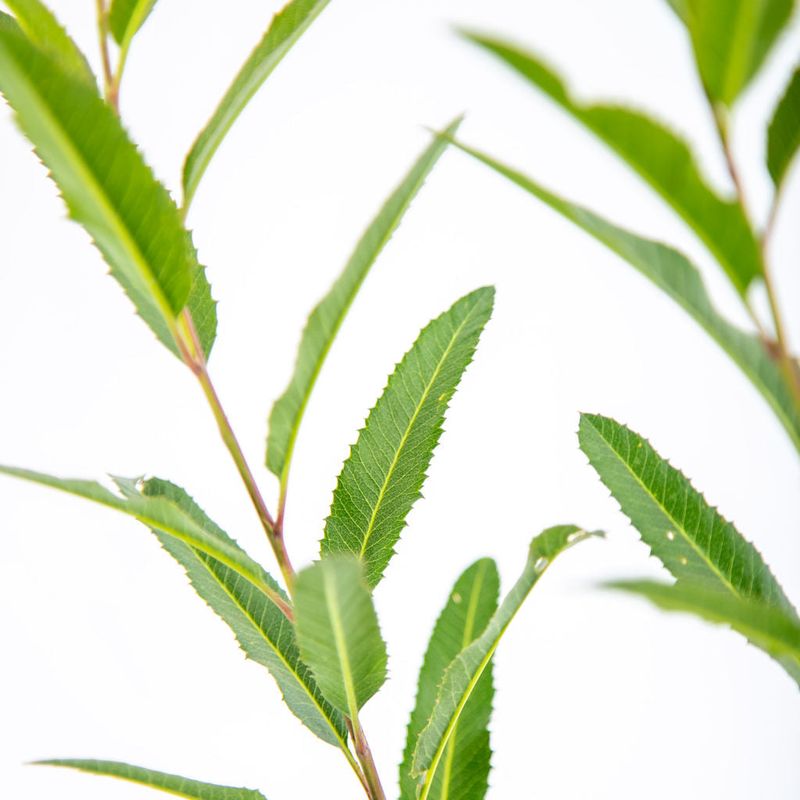
If you have ever wished for something like oleander without the poison problem, Arizona rosewood is your answer. This handsome native forms a thick evergreen screen and holds its shape beautifully with almost no attention from you.
It starts slow, then picks up the pace with regular water, eventually reaching 10 to 15 feet and sometimes climbing toward 30 over the years. That size makes it perfect for blocking a two-story view next door.
Leathery, serrated leaves give the plant a refined look, while small white flower clusters draw in bees and other helpful visitors. Because it is a true native, it already knows how to handle alkaline soil and stony caliche without complaint.
Drought-tolerant once established, rosewood genuinely thrives on neglect, which is rare praise for a plant this attractive. Skip the fussy chemicals and heavy pruning that oleander hedges demand.
Plant it in fall, give the roots one solid summer of watering, and you gain a wildlife-friendly living wall that grows denser and taller every year while asking for practically nothing in return.
3. Texas Sage (Leucophyllum frutescens)
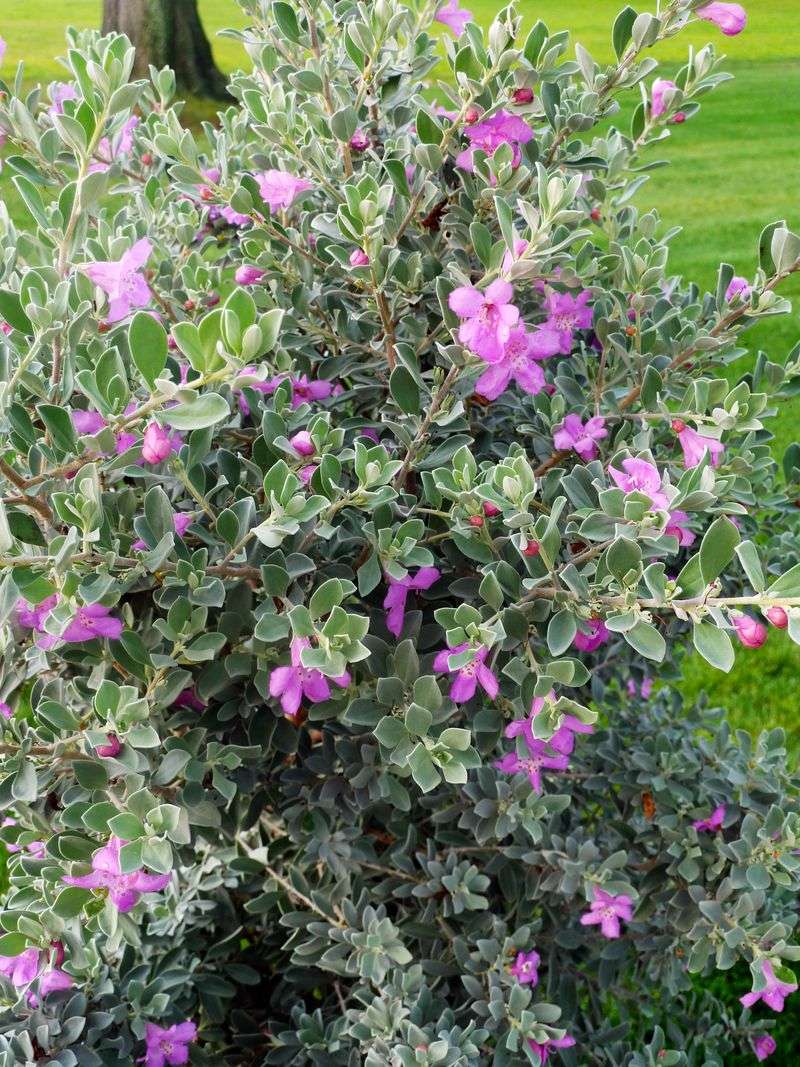
Few shrubs put on a show quite like Texas sage does after a monsoon storm. One good rain and the whole plant erupts in purple blooms, earning its nickname as the barometer bush.
Beyond the flowers, it ranks among the most dependable screening shrubs in the Southwest. It naturally rounds itself into a full, dense mound, so you get privacy without standing out there with shears every weekend.
Your Arizona Garden Changes Every Week. Your Plan Should Too.
Gardening in Arizona changes quickly throughout the season. Every Friday you’ll receive a simple weekly plan showing exactly what to plant, prune, fertilize, harvest, and protect so you never miss the right timing.
Full sun is where it shines, and once its roots are down it wants very little irrigation. Alkaline soil and caliche pose no trouble, since this shrub was practically built for desert conditions.
The soft silvery-gray foliage is a bonus, cooling down the look of a hot yard and contrasting nicely against green neighbors. When those purple blossoms appear, bees and other pollinators show up in force.
Low fuss, high reward, and reliably thicker each season, Texas sage is the kind of plant you set in the ground and simply enjoy. Space several in a row and you will have a colorful, buzzing hedge that keeps prying eyes out.
4. Jojoba (Simmondsia chinensis)
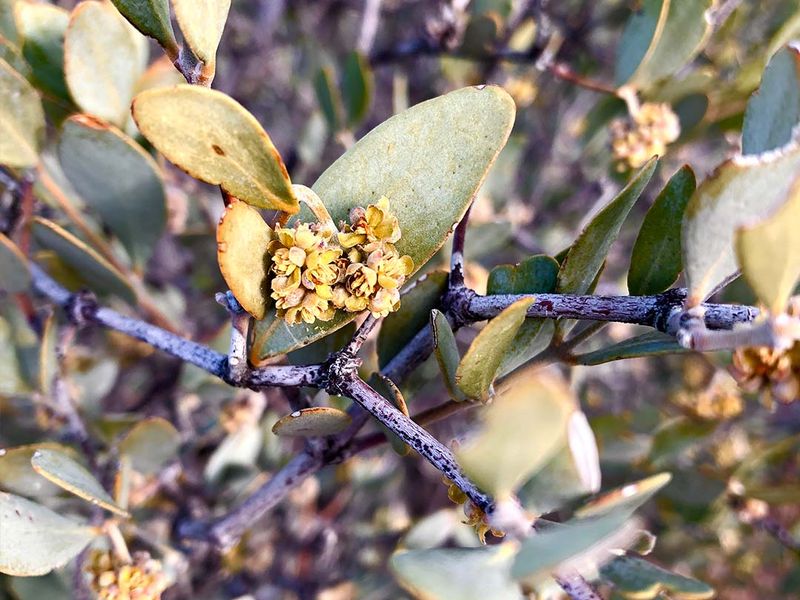
Here is a native that quietly earns its keep while most people walk right past it. Jojoba is the same plant behind that oil in your shampoo, and in the yard it doubles as a sturdy little privacy shrub.
Growing up to about 6 feet, it stays evergreen and thick, giving you a solid green screen at eye level along a patio or fence line. Its leathery gray-green leaves stand upright, cutting down on water loss during the worst of the heat.
Being Arizona native, jojoba drinks very little and shrugs off alkaline caliche without a fuss. It happily takes full sun but also tolerates a bit of shade, making it flexible for tricky spots.
Birds and other wildlife appreciate the shelter and seeds it provides, so your privacy hedge becomes a small habitat too. That functional payoff is exactly what desert gardeners look for.
Plant it once in fall, ease it through the first summer, and jojoba rewards you with dense, dependable growth that thickens year after year with almost zero effort on your part.
5. Creosote Bush (Larrea tridentata)
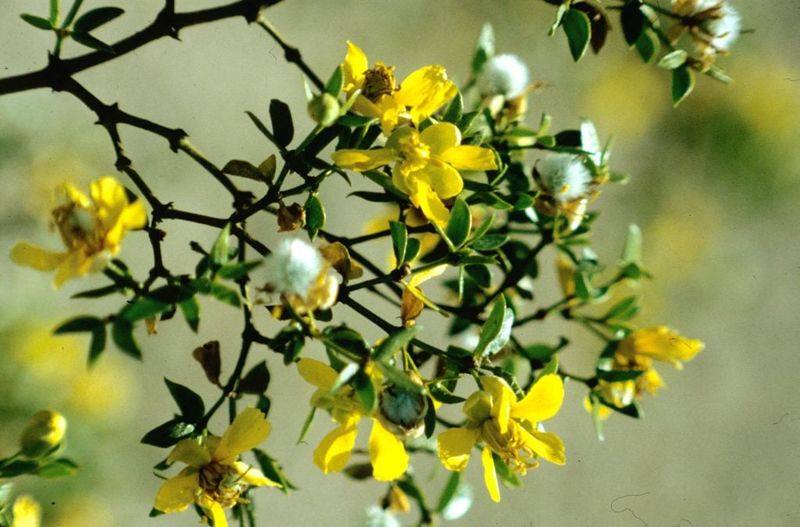
Ever notice that unmistakable smell right before a desert rain? That is creosote, one of the toughest and oldest plants in the Southwest, some living for thousands of years.
On its own it grows airy and open, but planted in a mass it forms an informal screen or windbreak that keeps filling in over time. Think of it as a natural, fragrant barrier rather than a formal hedge.
Nothing beats it for pure desert grit. It survives on the harshest, driest ground and handles alkaline caliche like it was born there, because it essentially was.
The small waxy leaves stay green year-round, and bright yellow flowers pop up after rains. Beyond looks, creosote holds soil in place and offers shelter to desert wildlife.
The resin coating those leaves gives off that famous scent and helps the plant survive months without water. For a homeowner who wants a hands-off boundary that asks for essentially nothing, creosote delivers.
Group several together in fall, water lightly the first year, and let this ancient survivor thicken into a living, aromatic wall around your space.
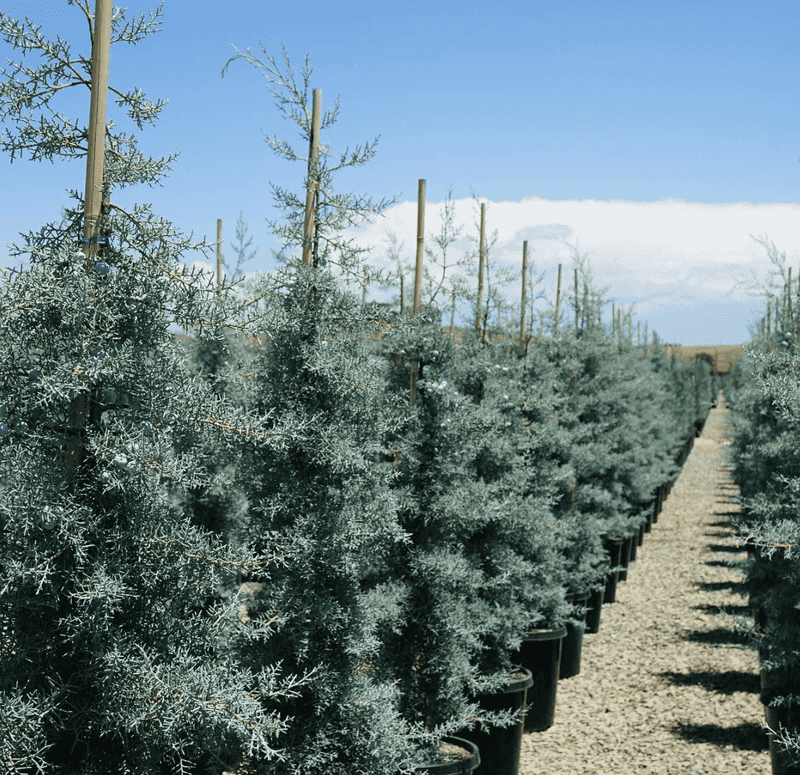
6. Arizona Cypress (Cupressus arizonica)
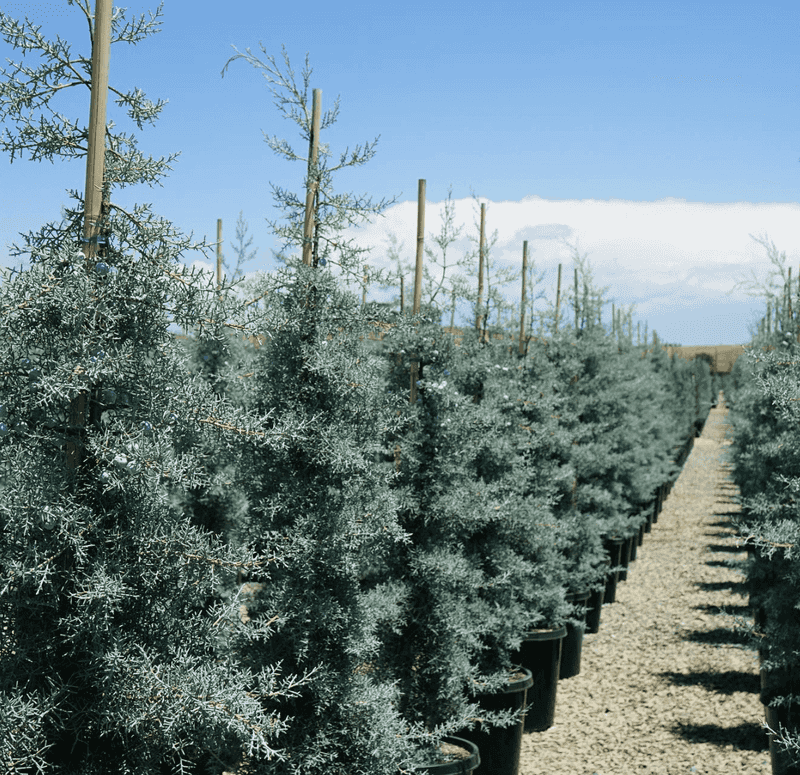
When you need serious height and a wall of green in a hurry, Arizona cypress steps up. This fast-growing evergreen shoots skyward in a neat pyramid shape, packed with dense branches that block views completely.
Technically a tree, it works beautifully as a privacy screen or windbreak when planted in a row. The soft gray-green foliage stays put all year, so you never lose coverage in the cooler months.
Native to the Southwest and genuinely hardy, it tolerates low desert heat and takes to alkaline soils without protest. Caliche does not scare it off the way it does many taller plants.
Beyond privacy, those thick branches throw welcome shade and give birds a safe place to nest and roost. On a scorching afternoon, the cooling shadow it casts is a real gift.
Space a line of them along a windy or exposed edge of your lot and you build a natural barrier against dust, glare, and nosy neighbors at once.
Get it in the ground during fall, keep the roots moist that first year, and watch it climb into a lush, towering screen.
7. Black Dalea (Dalea frutescens)
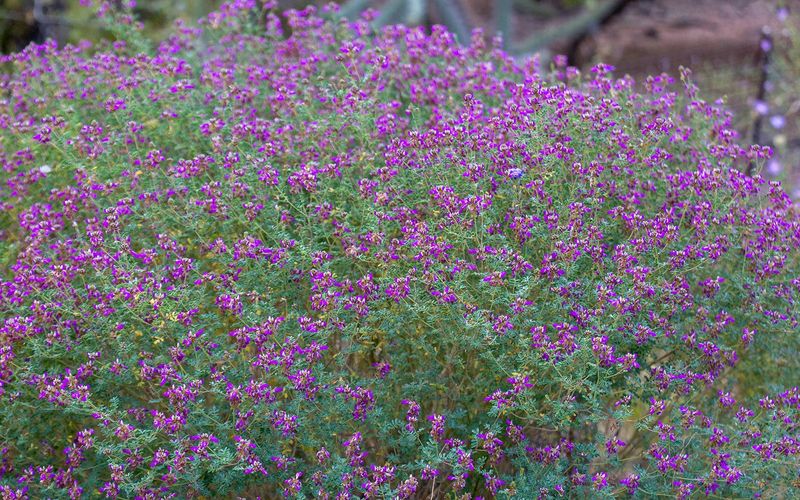
Bloom timing is where black dalea sets itself apart from the crowd. While most of your yard goes quiet, this shrub bursts into purple flowers during fall and winter, feeding bees when little else is around.
Very dense and finely textured, it can reach up to 12 feet tall and 9 feet wide, giving you plenty of substance for a screen. Its low, spreading habit fills in gaps other shrubs leave behind.
A Chihuahuan Desert native, it is perfectly at home in Arizona’s arid heat and alkaline caliche. Drought-tolerant and sun-loving, it asks for very little once its roots take hold.
The abundance of bees it draws in makes it a favorite for gardeners who see the yard as living habitat rather than just decoration. That pollinator activity is a genuine bonus.
Fine green foliage keeps the plant looking soft and full even between bloom cycles. Plant it in fall, water through the first summer, and black dalea rewards you with a thicker, busier hedge and off-season color that keeps the desert alive.
8. Desert Hackberry (Celtis pallida)
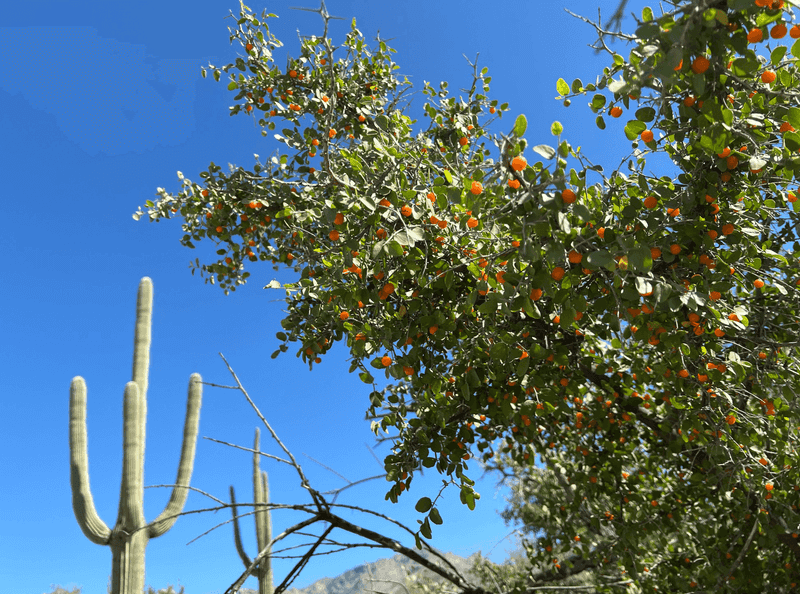
Want a hedge that doubles as a security barrier? Desert hackberry brings thorns to the party, weaving into a dense, spiny thicket that discourages anyone from pushing through.
This native grows thick and tangled, providing excellent screening thanks to its heavy branching. Left to its own devices, it reaches a respectable size that easily blocks sightlines along a fence or property edge.
Tough as they come, it is highly drought-tolerant and thrives right in caliche where softer plants sulk. Desert conditions are its comfort zone, not a challenge to overcome.
The thorny structure serves double duty, acting as a natural fence while sheltering songbirds that flit through the branches. Its small orange berries feed birds and other wildlife, turning your privacy screen into a busy little sanctuary.
For homeowners who value a yard that works, this shrub delivers privacy, a prickly deterrent, and habitat all in one plant. That trio of benefits is hard to beat.
Set it in the ground in fall, help it through the first summer, and desert hackberry thickens into a secure, wildlife-rich barrier that returns fuller each year.
9. Fourwing Saltbush (Atriplex canescens)
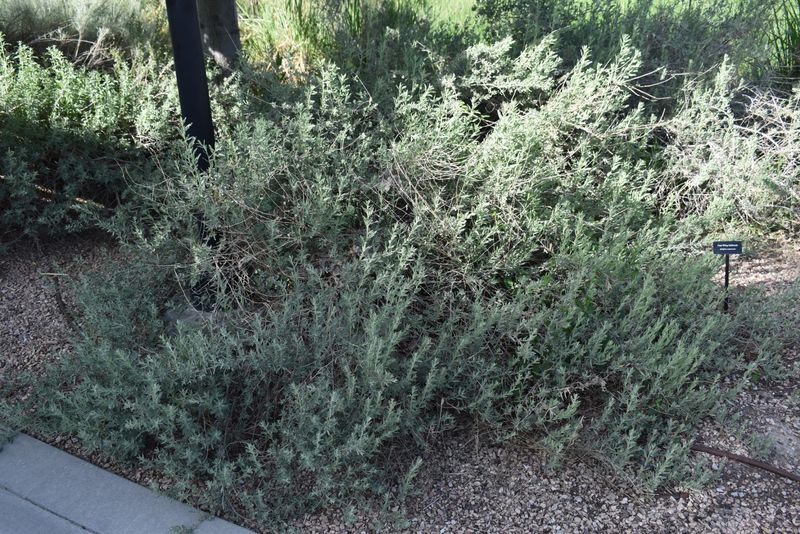
Silvery foliage that glows in the desert light makes fourwing saltbush an easy shrub to fall for. Beyond the good looks, it packs down into a dense screen that blocks views and buffers wind.
Its soft gray leaves reflect harsh sun, helping the plant survive brutal heat while adding a cool, muted tone to the landscape. Grouped together, these shrubs form a natural privacy hedge or windbreak with real presence.
Found across arid and semi-arid country, it is remarkably drought-tolerant and thrives in the salty, alkaline soils that stump other plants. Caliche is no obstacle for this rugged survivor.
Ranchers and gardeners alike prize it for holding soil in place, so erosion-prone spots on a sloped lot benefit greatly. It also feeds and shelters wildlife, giving birds and small critters a reason to stick around.
That combination of function and toughness is exactly what desert homeowners want in a plant they install once. Drop it in during fall, water sparingly the first season, and fourwing saltbush settles in to become a dense, silvery barrier that fills out more with each passing year.
10. Woolly Butterfly Bush (Buddleia marrubiifolia)
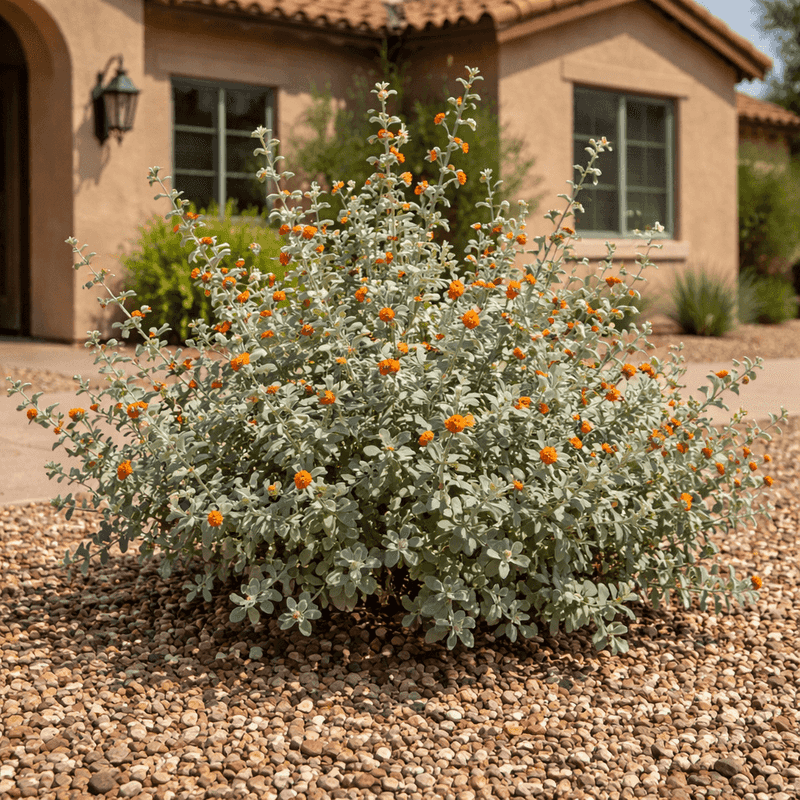
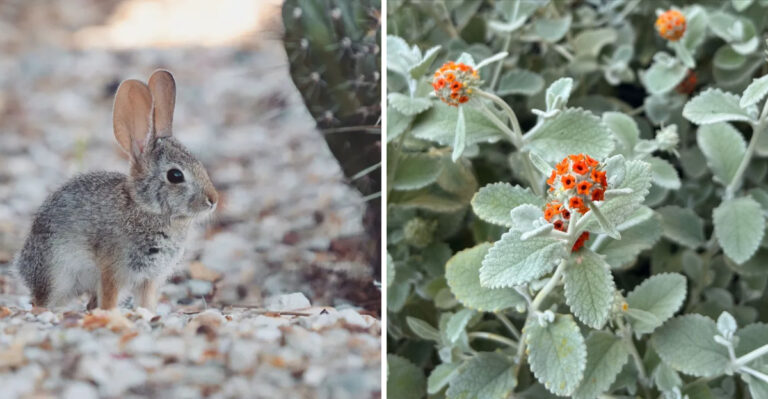
Fuzzy leaves and glowing orange pom-pom flowers give woolly butterfly bush a personality all its own. It is the kind of plant that makes people stop and ask what it is.
Reaching about 5 feet tall with an equal or wider spread, it groups nicely into a soft, informal hedge. The grayish-green, felt-textured foliage lends a gentle, cushiony look that softens hard desert edges.
Straight from the Chihuahuan Desert, it handles intense sun, relentless heat, and drought with ease, and it settles happily into Arizona’s alkaline caliche. Little watering keeps it thriving once established.
The real star turn comes from those bright orange globe-shaped blooms that appear from March into August. Butterflies flock to them, turning a simple privacy planting into a fluttering, colorful spectacle.
For gardeners who want their screen to pull double duty as pollinator habitat, this shrub is a joy. The blooms stretch across most of the warm season, keeping the show going for months.
Plant a cluster in fall, nurse it through summer number one, and woolly butterfly bush grows into a soft, buzzing hedge that returns thicker and busier each year.
11. Wolfberry (Lycium spp.)
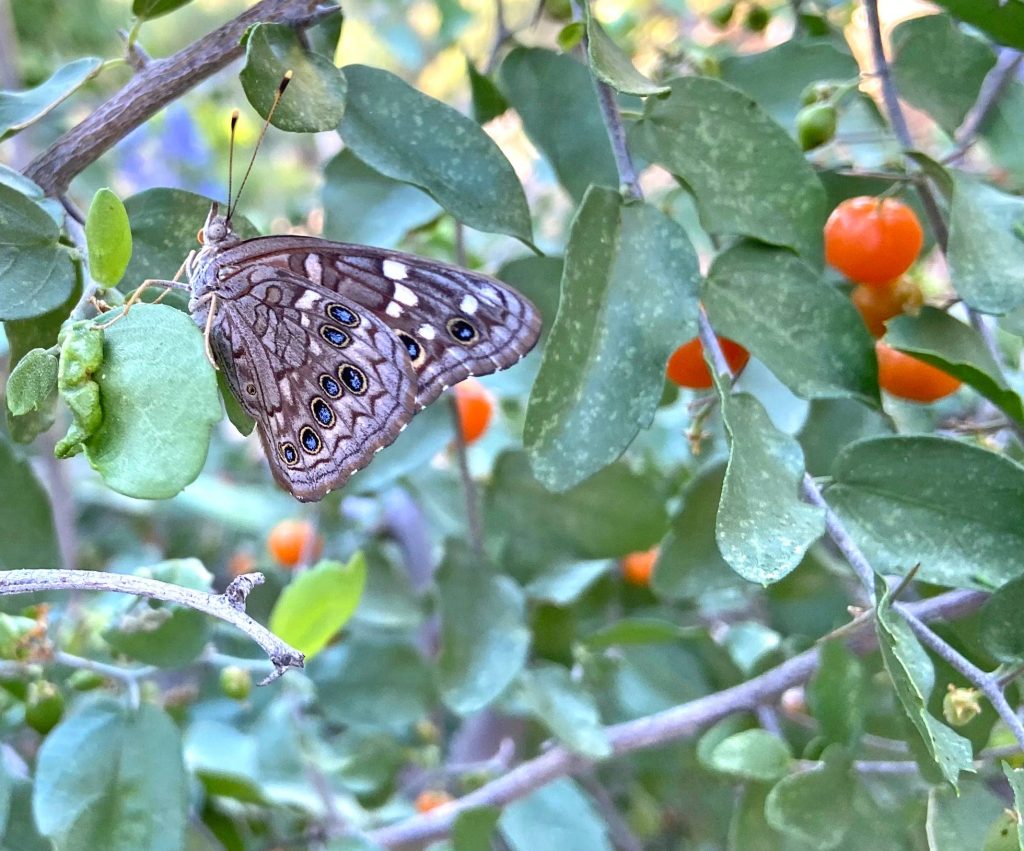
Related to the trendy goji berry, native wolfberry species like Lycium fremontii and Lycium andersonii are true desert workhorses. They weave themselves into dense, thorny thickets that make an outstanding privacy barrier.
Their natural habit is to spread and tangle, so a young planting fills in over time into a secure, hard-to-penetrate wall. That thorny growth quietly discourages anyone from cutting through your yard.
Toughness is their calling card. These shrubs thrive in the harshest desert conditions and shrug off alkaline caliche as though it were premium potting mix.
What really wins over habitat-minded gardeners are the berries. Birds and other wildlife depend on them as a food source, and the shrub itself offers shelter and nesting cover throughout the year.
So you get a living fence that feeds wildlife, deters intruders, and returns thicker every season, all from a plant you install just once. That functional payoff hits every mark desert homeowners care about.
Put it in the ground during fall, water lightly through the first summer, and wolfberry rewards you with a rugged, bird-friendly thicket that keeps getting denser as the years roll on.
12. Yellow Trumpetbush / Arizona Yellow Bells (Tecoma stans)
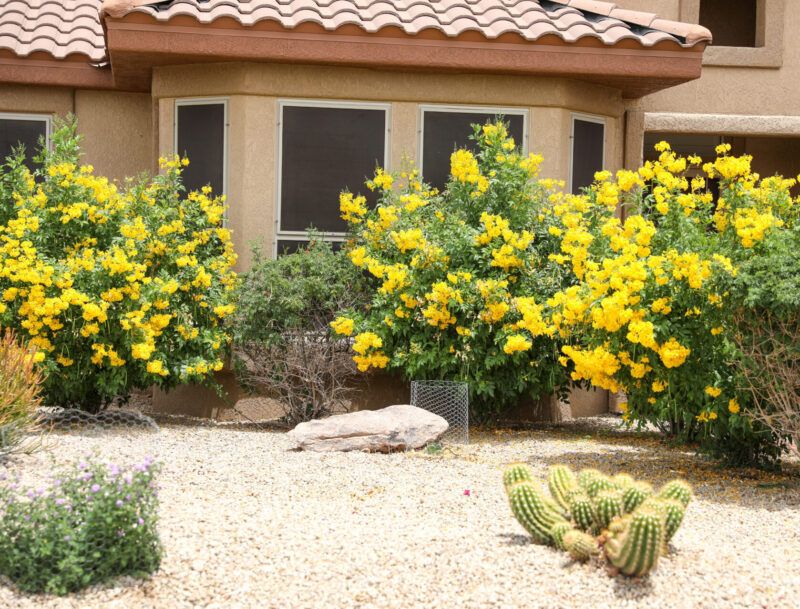
For sheer color, nothing on this list outshines Arizona yellow bells. From April clear through November, it drips with vibrant yellow, trumpet-shaped blooms that light up a boundary line.
Growing up to about 9 feet as a large shrub or small tree, it provides generous seasonal privacy. It is deciduous, but it bounces back fast, and a little pruning encourages the kind of dense growth that screens best.
Heat and desert sun are no problem for this low-water-use plant, and it settles comfortably into alkaline caliche soil. It takes full sun or a bit of shade, giving you placement flexibility.
Those long-blooming flowers are pure magnet material for hummingbirds and other pollinators, so your screen buzzes and flits with activity all season long. For a yard meant to function as habitat, that is a big draw.
Think of it as the cheerful, showy member of the privacy lineup, trading year-round evergreen coverage for months of nonstop color and wildlife visits.
Plant it in fall, water it through summer, prune to shape, and yellow bells returns each year quicker and fuller, keeping your space private and alive with movement.