8 California Shrubs To Plant Now For A Fuller Spring Garden
A bare strip along a driveway in September rarely gets a second look. Dry mulch, a few gaps where summer annuals already gave up, nothing worth stopping for.
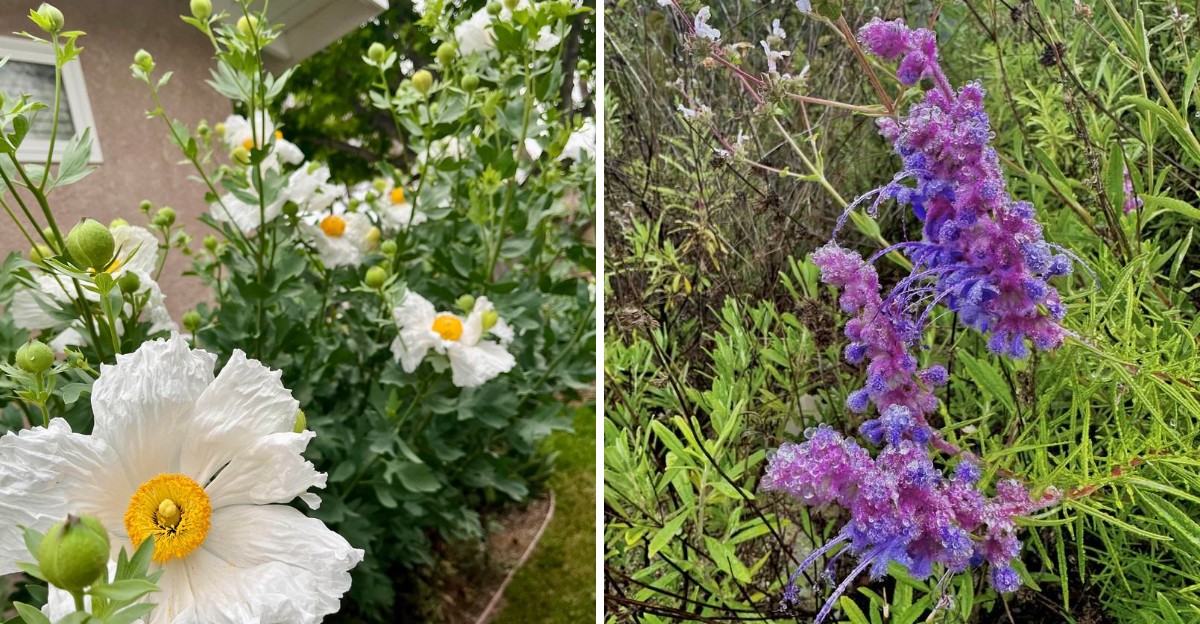
Come March, that same stretch of ground could look completely different. Deep purple woolly blue curls catching the light, orange monkeyflower spilling over a low wall, bees working chamise blossoms before the morning fog even burns off.
The gap between those two versions of the yard comes down almost entirely to timing. California’s cool, rainy months let shrub roots spread quietly underground while the plant itself does almost nothing visible above the soil.
That invisible stretch is where next spring actually gets built. Skip it, and a shrub planted in April spends its whole first year catching up instead of growing.
Eight natives below take full advantage of that fall window. Get them into the ground now, and spring does most of the real work without you.
1. Bush Anemone Blooms White Against Deep Green
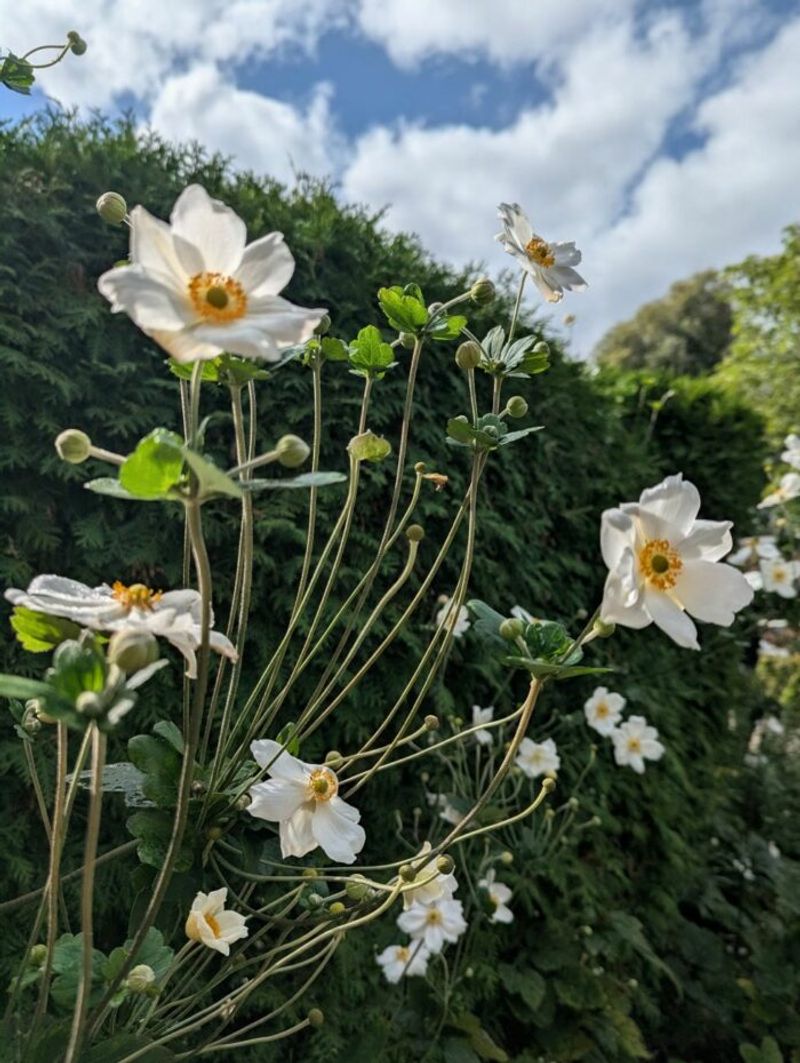
Carpenteria californica, commonly called bush anemone, produces large white flowers with golden centers that stand out beautifully against its glossy, deep green evergreen foliage each spring.
This California endemic grows naturally in a narrow range in the Sierra Nevada foothills, yet it adapts surprisingly well to garden conditions across much of the state once established properly.
Fall planting lets roots settle into cool, moist soil through winter, setting the shrub up for a strong flush of growth once temperatures warm again come spring.
Give it part shade in hotter inland areas, though coastal gardens can handle considerably more sun without the foliage showing stress or scorching along the edges.
Drainage matters here just as much as with other California natives. A slope or raised bed prevents the root rot that quickly develops in heavy, waterlogged clay soil.
Established plants tolerate real drought once their root systems mature, needing only occasional deep watering during the driest stretches of a typical California summer.
Mature size runs modest compared to some shrubs on this list, generally staying around six to eight feet tall, making it a reasonable fit for smaller garden spaces.
Light pruning after flowering keeps the shrub tidy without sacrificing next year’s bloom, since flower buds form on new growth pushed out during the following season.
2. Coffeeberry Offers Quiet, Reliable Structure
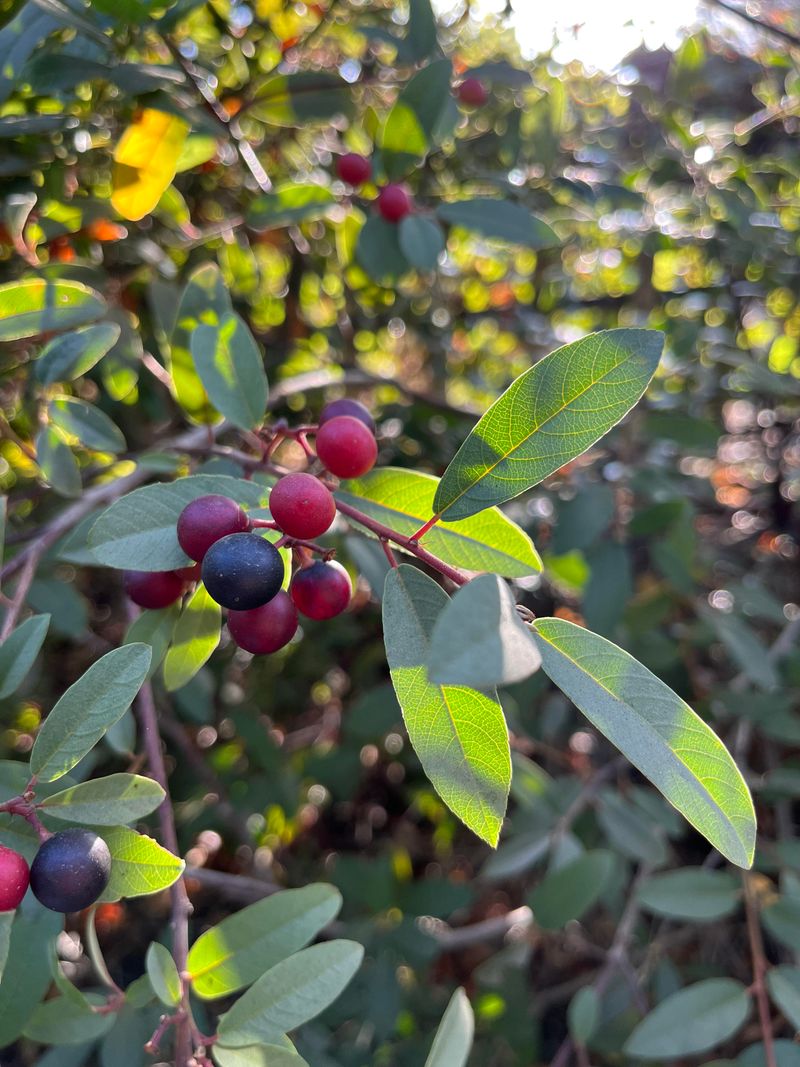
Frangula californica, better known as coffeeberry, rarely gets the attention flashier natives receive, yet it quietly does more work in a garden than almost anything else on this list.
Its small greenish flowers barely register visually, but they draw a steady stream of native bees and beneficial insects throughout spring, feeding pollinators that showier plants often overlook.
Berries follow through summer and fall, shifting from green to red to black on the same branch, feeding thrashers and other birds well into the cooler months.
Fall planting gives coffeeberry a genuine head start, letting roots establish through winter rain before the shrub pushes fresh growth once warmer weather finally returns each spring.
Cultivars like Eve Case stay compact at four to six feet, while wild forms can reach considerably taller, so checking the tag before planting saves a headache later.
Your California Garden Changes Every Week. Your Plan Should Too.
Gardening in California changes quickly throughout the season. Every Friday you’ll receive a simple weekly plan showing exactly what to plant, prune, fertilize, harvest, and protect so you never miss the right timing.
This shrub tolerates clay soil better than many California natives, making it a genuinely practical choice for gardeners working with heavier ground that frustrates pickier plants.
Sun or part shade both work reasonably well, giving coffeeberry real flexibility in where it can go within an existing garden layout without much fuss.
Trim lightly after fruiting rather than shearing it into a formal shape, since flowers and berries form on natural growth that heavy pruning tends to remove.
3. Silk Tassel Adds Winter Interest Few Plants Offer
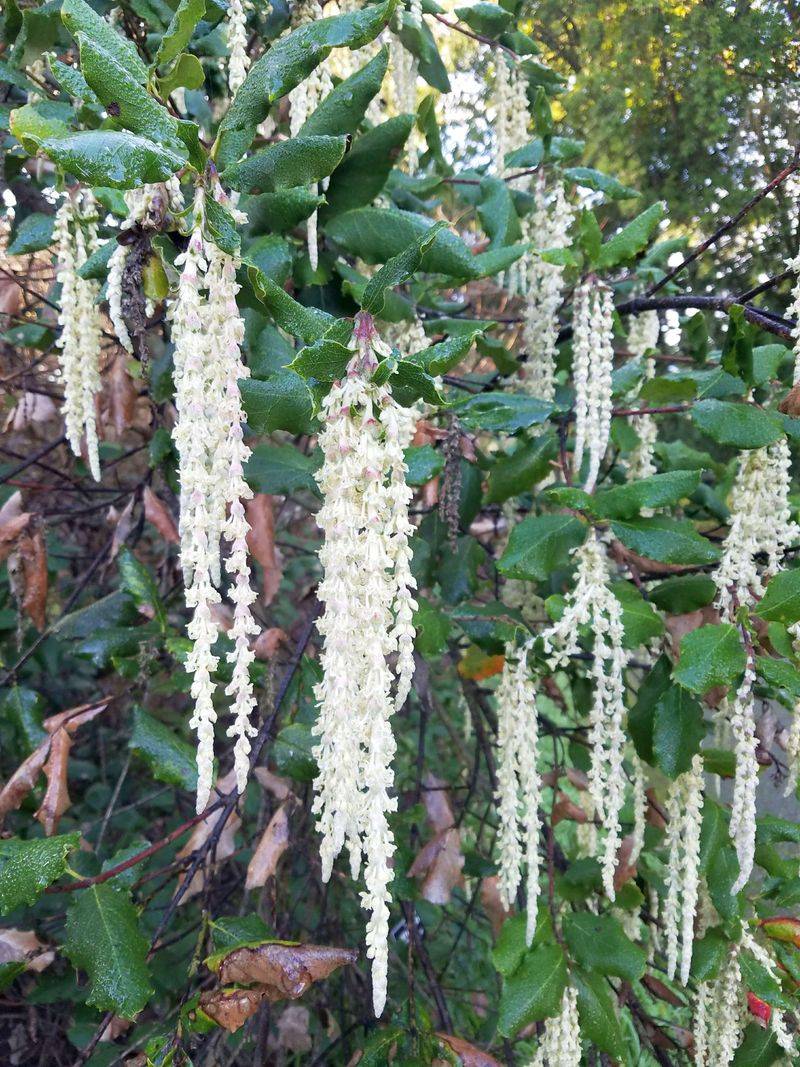
Long, dangling flower clusters appear in the depths of winter, exactly when most of the garden looks its most bare and forgettable to anyone walking past.
Male plants of this species, commonly called silk tassel, produce the showiest tassels, sometimes stretching six inches or longer, while female plants develop smaller flowers followed by dark purple berries.
This coastal native handles fog and salt air remarkably well, making it a strong choice for gardeners along the immediate coast where many other shrubs struggle with constant moisture.
Fall planting suits it particularly well, since the cool, damp months ahead give roots time to establish before the shrub’s winter bloom display gets underway.
Full sun to part shade both work, though inland gardeners should expect more stress during hot summer stretches compared to plants grown closer to the coast itself.
Drainage remains important here too, following the same pattern as most California natives on this list, since soggy roots invite the same fungal problems across nearly every species.
Mature size reaches eight to twelve feet in most gardens, working well as an informal screen or background planting where its unusual winter flowers can be appreciated up close.
Minimal pruning suits this shrub best, since its naturally loose, arching form is part of the appeal, and heavy cutting back removes the branches that produce those winter tassels.
4. Matilija Poppy Delivers Dramatic Summer Flowers
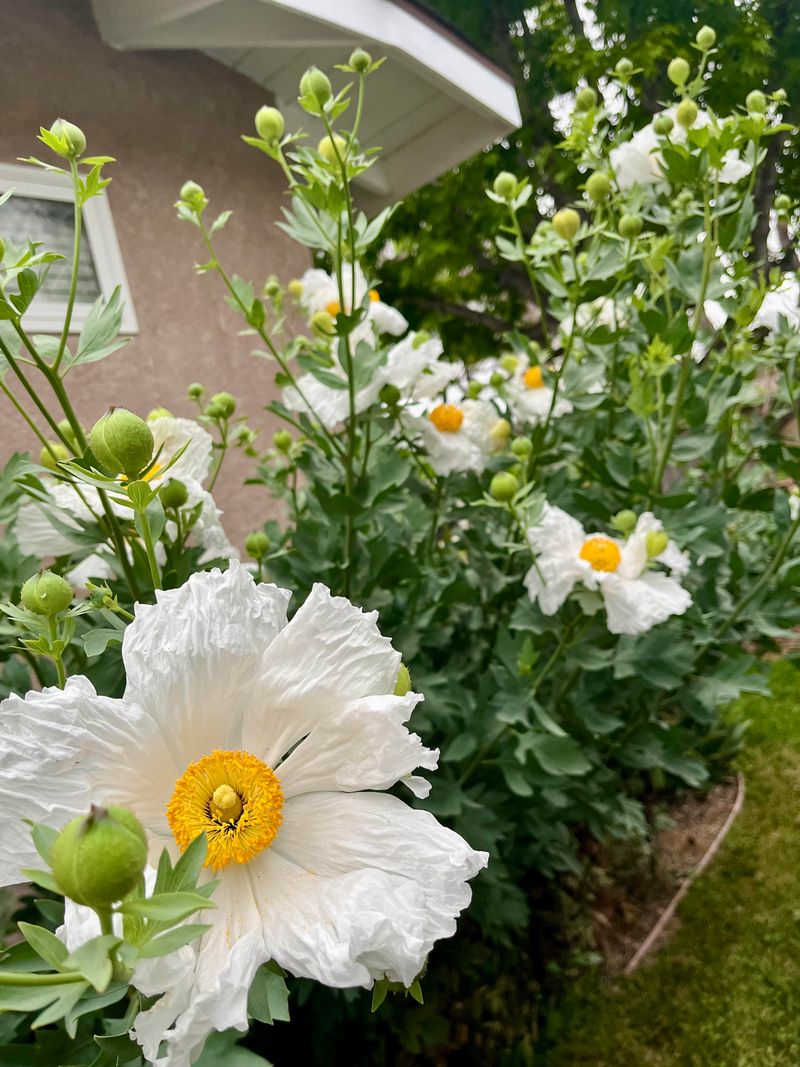
Enormous white petals surrounding a golden center make this one of the largest flowers produced by any California native shrub, often earning it the nickname fried egg plant.
Despite its delicate appearance, this species proves remarkably tough once established, spreading by underground rhizomes into substantial colonies that can eventually cover a considerable area of open ground.
Fall planting gives young plants time to establish a root system before summer heat arrives, though this species can take a full season or two before flowering reliably.
Full sun and excellent drainage are essential here, since this plant struggles badly in heavy clay or anywhere water tends to collect after rain during the wetter months.
Give it serious room to spread, since its rhizomatous habit means a single planting can expand considerably over several years, eventually reaching the size of a small thicket.
Established colonies need remarkably little supplemental water, often thriving on rainfall alone in most of California once their extensive root system has fully developed underground.
Cutting the whole plant back hard in late winter encourages fresh, vigorous growth, and this species actually responds well to that kind of aggressive pruning unlike many other natives.
Consider it for a spot where its spreading habit works as a feature rather than a problem, such as a slope or an area bordered by pavement.
5. Bladderpod Blooms Nearly Year Round
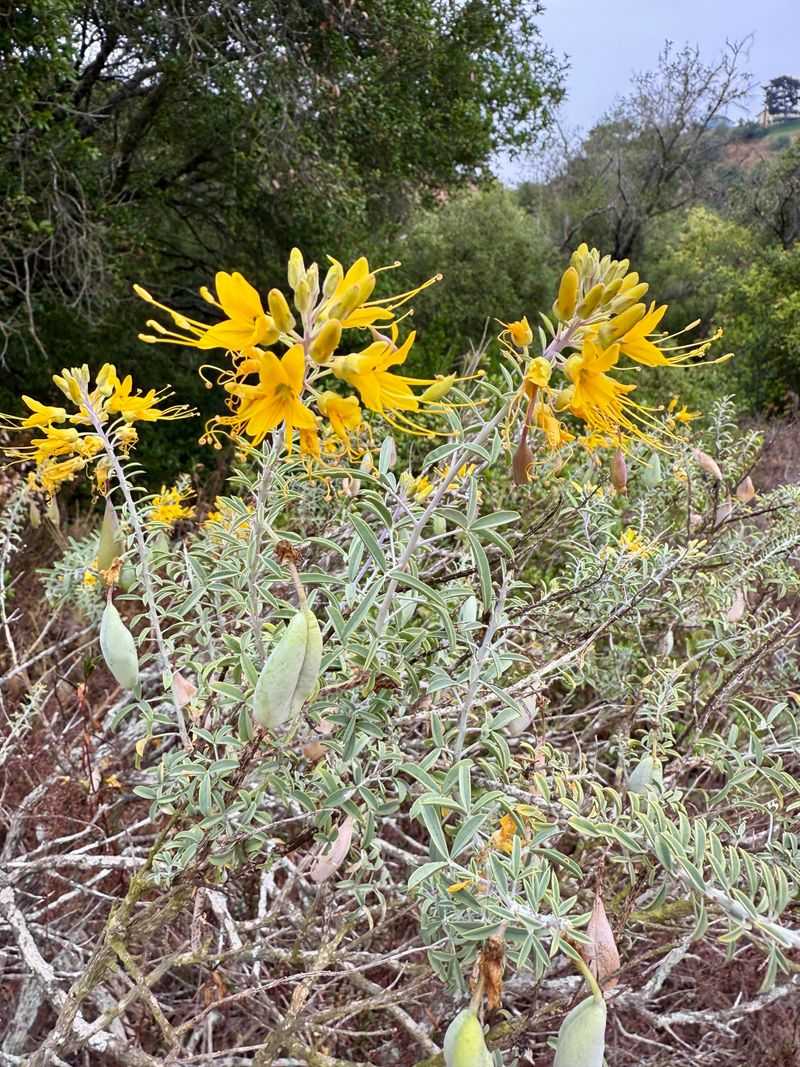
Cheerful yellow flowers appear almost continuously throughout the year in mild coastal climates, offering color when many other natives have finished their seasonal show already.
Curious inflated seed pods, which give this shrub its common name, add an interesting textural element to the garden once flowering finishes and pods begin developing along the stems.
This tough native tolerates genuinely difficult conditions, including salt spray, poor soil, and drought, making it a practical choice for challenging spots where pickier plants simply fail to thrive.
Fall planting works well here, giving roots several months to establish in cool, moist soil before the plant faces its first real test during the following summer’s heat.
Full sun and sharp drainage suit it best, and it performs particularly well in coastal and desert gardens where its natural drought tolerance gets a genuine workout.
Mature size stays relatively modest, typically reaching four to six feet, making this an easy shrub to fit into a mixed border without it overwhelming its neighbors.
The foliage carries a somewhat pungent scent when brushed against, which some gardeners find off-putting, so consider placement carefully if planting near a frequently used walkway or seating area.
Minimal care suits this plant well once established, needing only occasional pruning to remove spent wood and very little supplemental water beyond its first year in the ground.
6. Woolly Blue Curls Draws Pollinators With Fuzzy Blooms
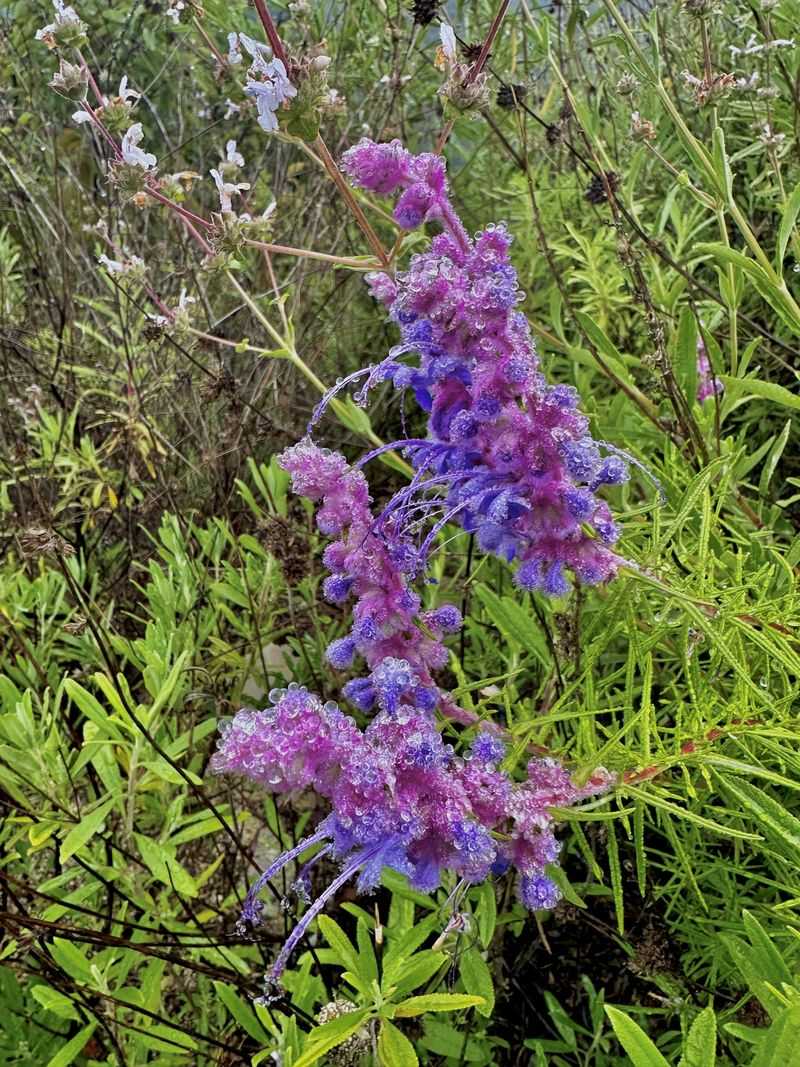
Striking blue and purple flower spikes covered in fine, woolly hairs give this shrub a texture unlike almost anything else in a California native garden, drawing bees and hummingbirds steadily throughout its bloom period.
Known as woolly blue curls, this plant thrives in the same lean, fast-draining soil that many chaparral natives prefer, struggling instead in rich, regularly irrigated garden beds most homeowners default to.
Fall planting suits this species well, giving its roots a full winter of cool, moist soil to establish before the demanding heat of a California summer arrives and tests the young plant.
Full sun brings out the strongest bloom and the most compact growth habit, while too much shade tends to produce a leggy, sparse plant that flowers only weakly along its stems.
This shrub stays relatively short-lived compared to some natives on this list, often thriving for only five to eight years before declining, so many gardeners propagate cuttings to keep a planting going.
Mature size stays modest, generally reaching three to four feet tall and wide, making it an easy fit for a smaller bed or a spot near a pathway where its fragrance can be enjoyed.
Crushing a leaf releases a strong, resinous scent that some gardeners love and others find overwhelming, so consider siting it a little away from windows or frequently used seating areas.
Minimal water once established suits this plant best, and resisting the urge to feed it or amend its soil heavily keeps growth compact rather than encouraging weak, floppy stems.
7. Hollyleaf Cherry Builds A Dense, Useful Screen
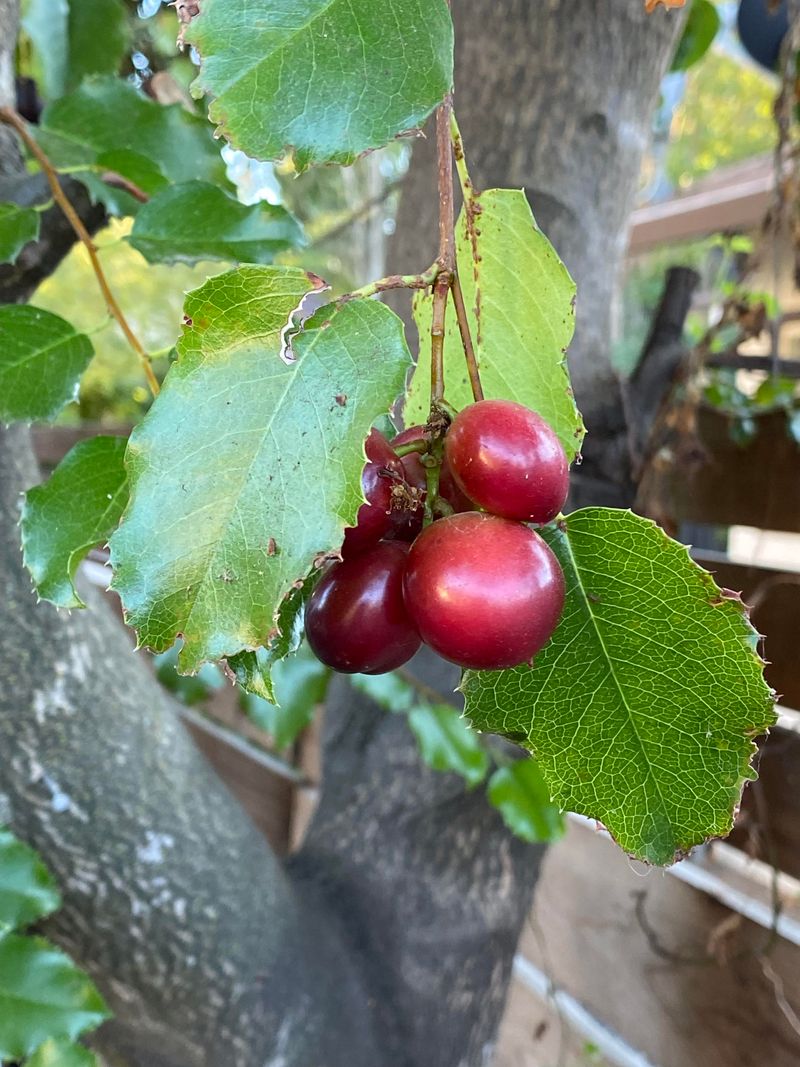
Glossy, spiny-edged evergreen leaves give this shrub a holly-like appearance year-round, holding their color and density through every season in a way few other California natives quite manage.
Commonly called hollyleaf cherry, this large shrub or small tree produces small white flowers in spring, followed by dark red to black cherries that birds and other wildlife readily consume through summer.
Fall planting gives this slower-establishing native a real advantage, letting its root system spread through winter rain before facing the stress of its first full summer in the ground.
Full sun to part shade both work well, and this species tolerates a genuinely wide range of soil types, including the heavy clay that frustrates many other natives on this list.
Given enough time and space, this shrub can reach fifteen to twenty-five feet, making it one of the larger options here and a strong candidate for screening or hedging along a property line.
Established plants handle drought remarkably well, needing only occasional deep watering during extended dry stretches once their root system has had a few years to mature properly underground.
Regular pruning shapes this shrub into a formal hedge if desired, though many gardeners prefer letting it grow into its natural, denser form for wildlife habitat and privacy screening purposes.
The fruit, while edible to wildlife, contains cyanide-producing compounds in the pit, so keep that in mind around children or pets prone to sampling things they find in the yard.
8. Deerweed Fills Gaps With Fast, Cheerful Color
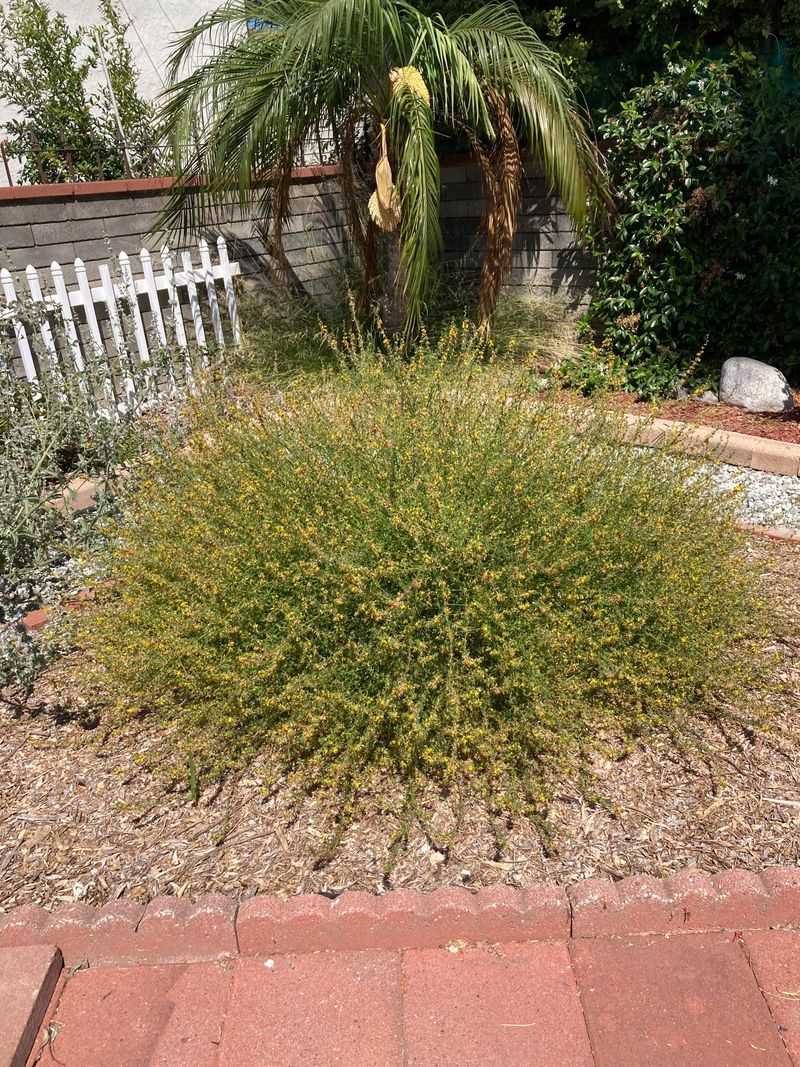
Small yellow and red pea-like flowers cover this low, sprawling shrub through much of spring and into summer, offering fast color in spots where slower natives would take years to fill in.
Commonly called deerweed, this plant belongs to the pea family and actually fixes nitrogen in the soil, quietly improving conditions for neighboring plants rather than simply competing with them for nutrients.
Fall planting works well here, though this species also establishes quickly from seed sown directly into the ground once the rainy season begins providing consistent moisture through winter.
Full sun and lean, well-drained soil suit this plant best, and it performs particularly well on disturbed or recently graded ground where little else has managed to establish yet.
This shrub tends to be relatively short-lived, often just a few years, behaving almost like a native annual or short-lived perennial that reseeds itself readily once established in a spot.
Mature size stays low and spreading, generally under three feet tall, making it a useful groundcover-like filler between larger, slower-growing shrubs still working toward their mature size.
Minimal care suits this plant well, needing no supplemental fertilizer given its nitrogen-fixing ability, and very little water beyond what a typical California winter and spring already provide naturally.
Consider it for a newly cleared bed or a slope needing quick coverage, since its fast growth and reseeding habit can stabilize soil and add color while slower natives elsewhere in the garden mature.