Why Ringtails Are Showing Up In More California Backyards This Fall
A quiet October night in the foothills, and something catches your eye out the window.
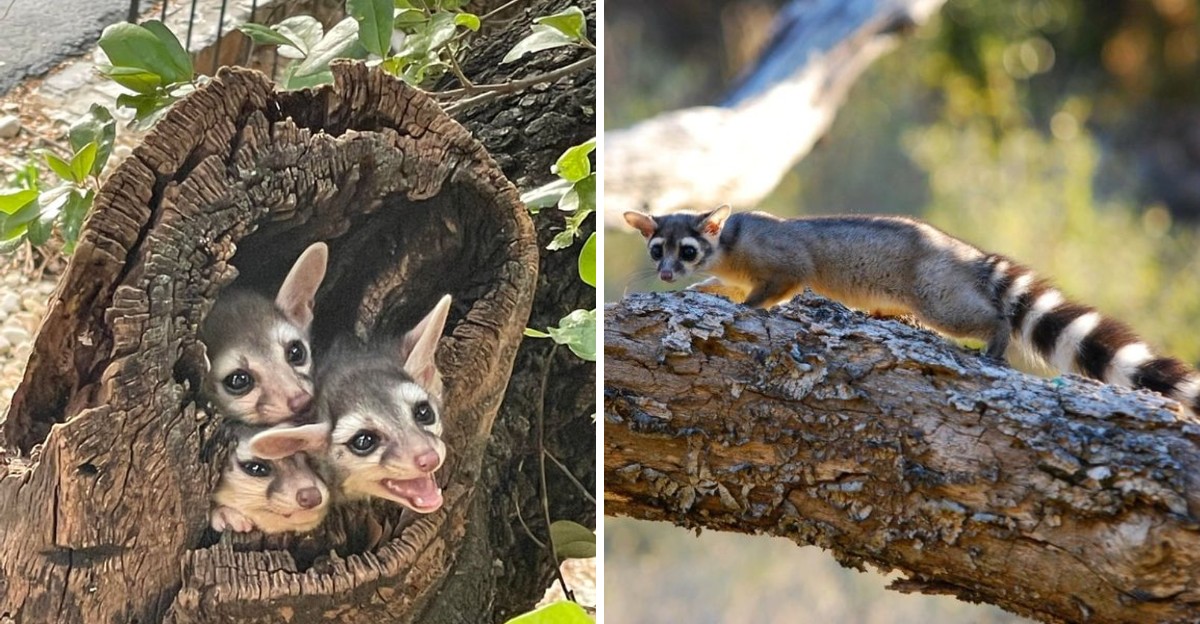
A small, masked animal with a huge striped tail tiptoes along your fence, and it’s clearly not a raccoon or a cat.
Whatever it is moves differently. Climbs differently. Watches you differently.
Something about this particular fall seems to be bringing this creature closer to backyards than usual, and the reasons behind that shift turn out to be a lot stranger and more interesting than a simple “animals get hungry in autumn” explanation.
Curious what’s actually drawing this masked visitor toward porches and fences right now? The truth starts with an animal that never actually sleeps through the seasons at all.
1. Ringtails Stay Active Through Every Season
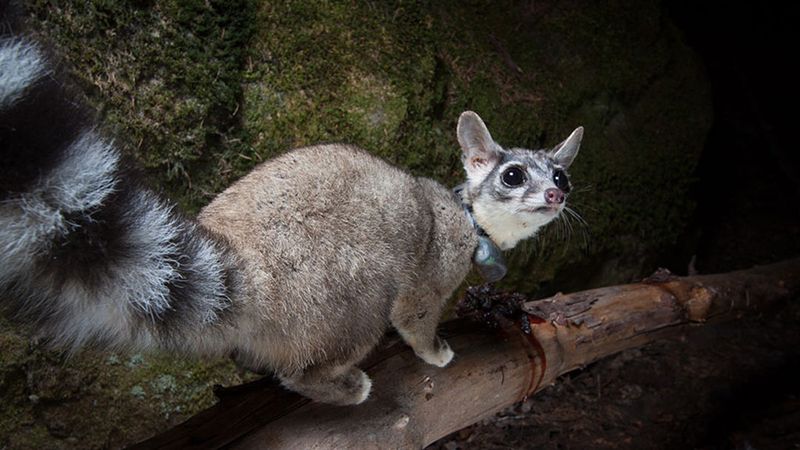
Winter naps are for bears, not ringtails.
According to the California Department of Fish and Wildlife, these small, big-eyed hunters stay active all year long instead of hibernating or going dormant when the weather cools.
That detail matters if you’re trying to solve the fall sighting mystery.
Because ringtails are out and about in every season, wildlife agencies don’t describe a clear, measured jump in sightings each autumn. Any fall increase people notice is best treated as a possible pattern, not a proven fact.
So why might it feel like there are more of them right now?
Part of the answer could be simple timing. Longer nights give these nocturnal animals more dark hours to roam, and people often spend more time outside around dusk as days get shorter.
Ringtails are also masters of hiding.
They spend daylight hours tucked into rock cracks, hollow trees, brush piles, and sometimes quiet sheds or attics, then slip out after sunset to hunt.
Many Californians live close to them for years without ever catching a glimpse.
Here’s a fun fact worth knowing. Early miners and settlers sometimes kept ringtails around their cabins to catch mice, which earned them the nickname miner’s cat.
If you spot one this fall, you’re seeing an animal that was probably nearby all along. The difference is that, this time, your paths happened to cross.
2. Fall Foraging Sends Them Searching Farther
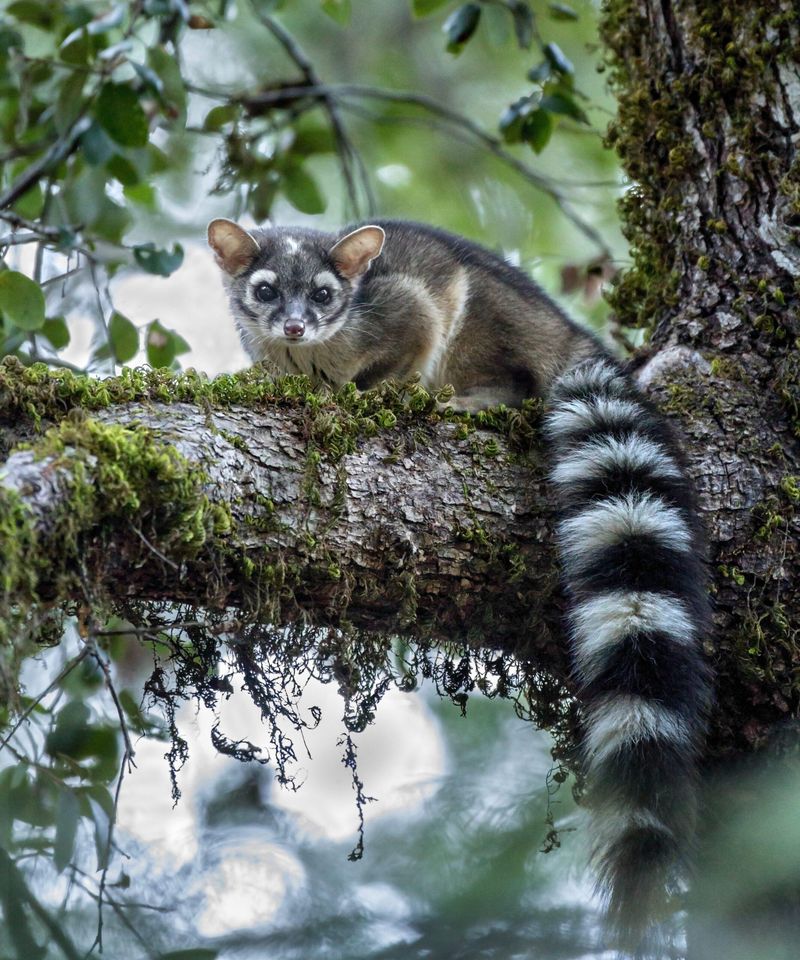
Consider a grocery store where the shelves slowly empty out.
By late summer and fall, many of the insects, berries, and other easy meals ringtails depend on start to thin out in dry parts of California.
When food gets harder to find, it makes sense that an animal would travel farther to fill its belly.
Ringtails are omnivores, and they eat a wide mix of foods, including small rodents, birds, lizards, insects, and fruit.
That flexible menu lets them take advantage of whatever turns up during a longer nightly search.
A wider search area could bring some of them closer to homes.
This is a reasonable explanation for more fall sightings, though it hasn’t been measured as a confirmed statewide trend. Wildlife agencies haven’t published solid numbers proving that ringtails show up in yards more often every autumn.
Your California Garden Changes Every Week. Your Plan Should Too.
Gardening in California changes quickly throughout the season. Every Friday you’ll receive a simple weekly plan showing exactly what to plant, prune, fertilize, harvest, and protect so you never miss the right timing.
Young ringtails may add to the traffic too.
Babies are usually born in late spring, and by late summer or fall the youngsters are old enough to leave their parents and find territories of their own.
Inexperienced travelers wandering through unfamiliar ground are more likely to end up somewhere unexpected, like your patio.
You can help by keeping your yard less tempting.
Pick up fallen fruit, close up gaps under decks and sheds, and bring pet dishes inside at night.
A ringtail that finds nothing to eat will simply keep moving along its route.
3. Fruit Trees And Compost Draw Them In
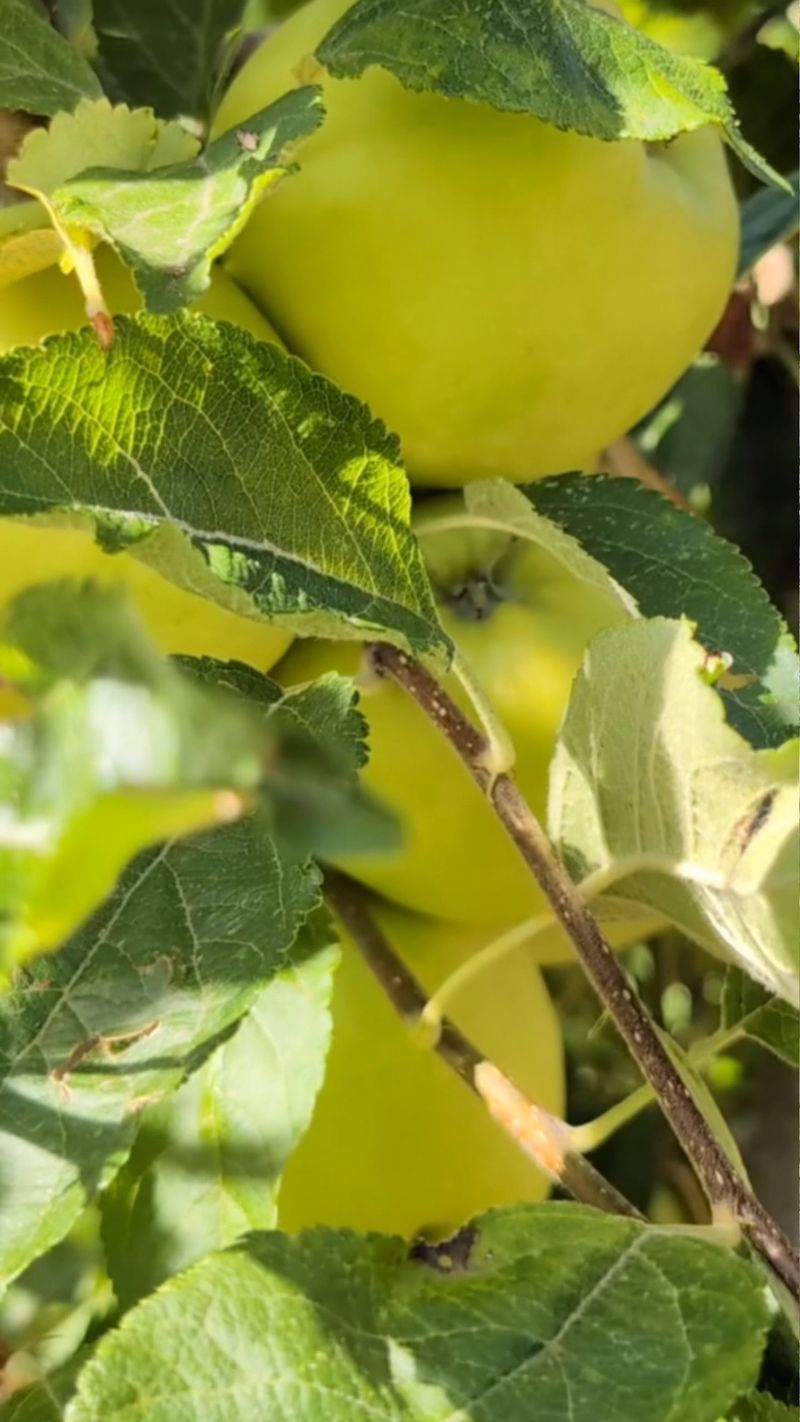
Ripe persimmons, a pile of fallen figs, a warm compost bin buzzing with bugs. To a hungry ringtail, that sounds like an all-you-can-eat buffet.
Fall is harvest time in many California backyards.
Fruit trees drop extra snacks on the ground, grapevines hang heavy, and compost piles fill up with kitchen scraps. All of it gives off smells that can travel a long way on a cool night.
Ringtails are quick and agile climbers.
They can rotate their hind feet backward, which helps them scramble headfirst down trees and rocky walls with ease.
A fruit tree near a fence or roofline is easy for them to reach.
Compost bins attract them in two ways.
The scraps themselves are tasty, and the insects and mice drawn to the pile are exactly the kind of prey ringtails like to hunt.
Pet food left outside on a porch works the same way, and it can also pull in raccoons, skunks, and opossums.
A few small changes make a big difference.
Pick up fallen fruit every day or two, and harvest ripe fruit before it drops. Use a compost bin with a tight lid, and avoid tossing meat, dairy, or oily foods into it.
Feed pets indoors, or remove bowls before dark. Never leave food out on purpose to attract a ringtail, since feeding wildlife can change natural behavior and create new problems.
4. Water Sources Become More Valuable Late Season
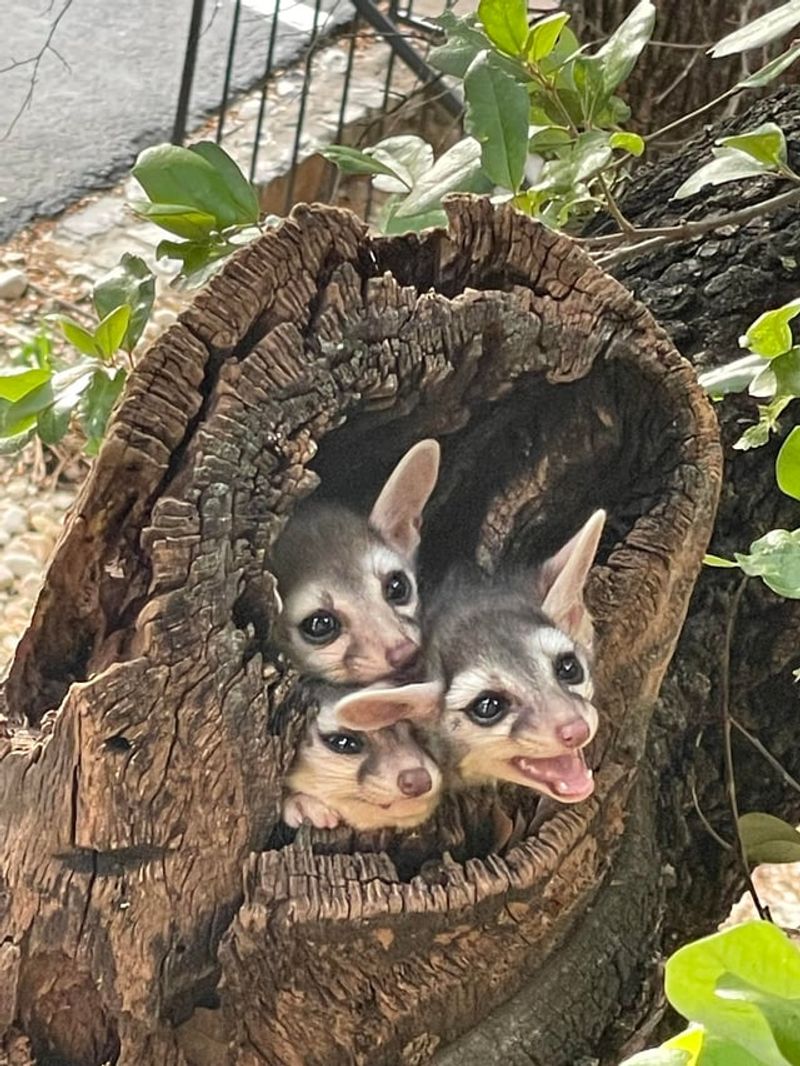
Every living thing needs a drink, and by October much of California has gone months without real rain.
Ringtails are usually found near water. They often live in rocky canyons, streamside woodlands, and brushy hills where creeks, springs, or seeps are close by.
As the dry season stretches on, many of those small natural water sources shrink or disappear entirely.
That’s when a backyard can start to look very inviting.
Birdbaths, fountains, fish ponds, dripping hoses, swimming pools, and even pet water bowls offer a steady supply that does not dry up. For an animal on the move, a dependable drink can be worth a detour.
There’s no official data proving that ringtails visit yards more often for water in fall.
Still, it’s a sensible idea to consider, especially in places where homes sit near canyons or creek beds. Many kinds of wildlife, from coyotes to songbirds, are known to use backyard water during dry spells.
If you’d rather not host late-night visitors, a few easy steps can help.
Fix leaky outdoor faucets and irrigation lines, empty birdbaths at night, and bring pet bowls inside after dinner.
On the other hand, if you enjoy wildlife, a simple birdbath is not a big problem. Just keep it clean, and remember to watch any drinker from a respectful distance.
5. Suburban Edges Now Overlap Their Habitat
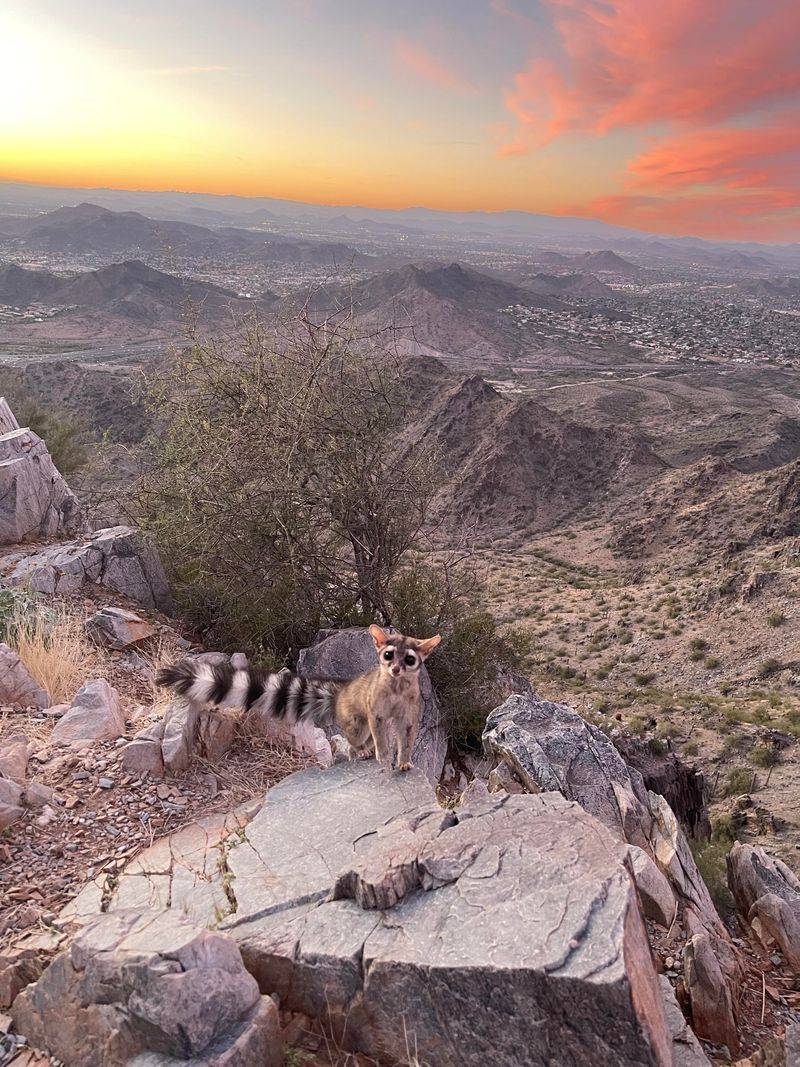
Fifty years ago, many of today’s hillside neighborhoods were nothing but boulders, oak trees, and chaparral.
Now those same slopes are dotted with houses, cul-de-sacs, and backyard patios.
Ringtails prefer rocky areas, cliffs, canyons, and riparian zones, which are the lush strips of land along streams and rivers. They also use oak woodlands and brushy hillsides.
As California keeps growing, more homes are being built right up against these kinds of wild places.
When a neighborhood sits at the edge of good ringtail habitat, overlap is almost unavoidable.
The animals do not suddenly move into town. Instead, the town moves closer to where they have always lived.
Planners call this the wildland-urban interface, the zone where houses meet open land.
People living in these areas often see deer, coyotes, bobcats, and foxes too. Ringtails are just much harder to spot because they’re small, shy, and only come out at night.
Some features of suburban life may even resemble their natural homes.
Rock walls, woodpiles, attics, crawl spaces, and garden sheds can mimic the cracks and crevices ringtails use as dens.
If you live near a canyon, creek, or rocky hillside, it helps to think of your yard as shared space. Seal openings into attics and under decks, keep woodpiles tidy, and enjoy knowing that your neighborhood still supports some remarkable native wildlife.
6. They Are A Fully Protected California Species
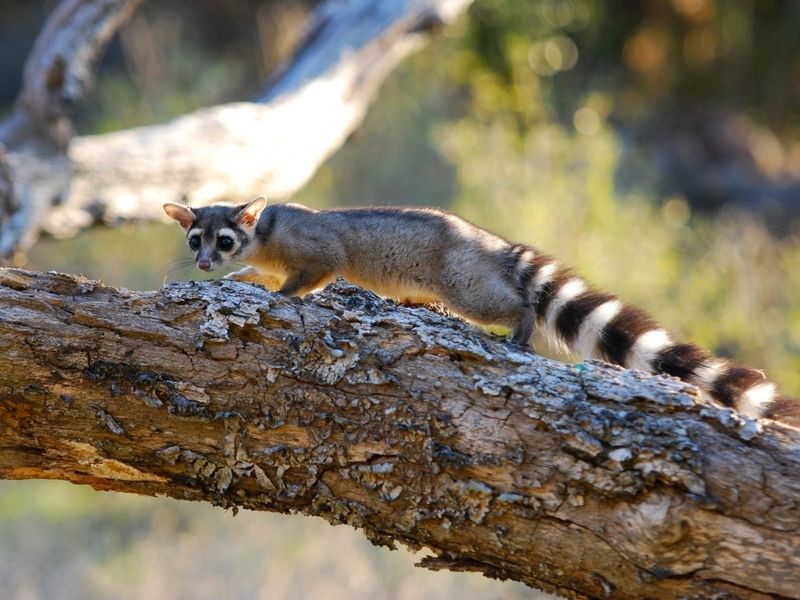
Here’s the most important rule in this whole article. Ringtails are a fully protected species in California.
Under state law, fully protected mammals cannot be hunted, trapped, captured, or harmed.
That means a homeowner may not trap a ringtail, poison it, harm it, or relocate it, even if it keeps hanging around the yard. Wildlife officials are very clear on this point.
Moving the animal yourself is not a helpful shortcut either.
Relocated wildlife often struggles to survive in unfamiliar territory, and it can spread disease or end up fighting with animals that already live there. Setting a live trap for a ringtail is still against the law, no matter how kind your intentions are.
Pest control companies should know these rules, but it never hurts to ask.
If you hire someone to handle a raccoon or rat problem, make sure they understand that ringtails cannot be trapped. Mention it clearly before any traps go out.
So what can you do if a ringtail is causing real trouble, such as denning in your attic?
Contact your regional wildlife office for advice first. Staff can explain legal ways to encourage the animal to leave on its own, like sealing entry points after you’re sure it has moved out.
Quick fact worth knowing: ringtails are Arizona’s official state mammal. Their protected status in California reflects how special, and how rarely seen, these animals really are.
7. Sightings Rarely Mean Any Real Danger
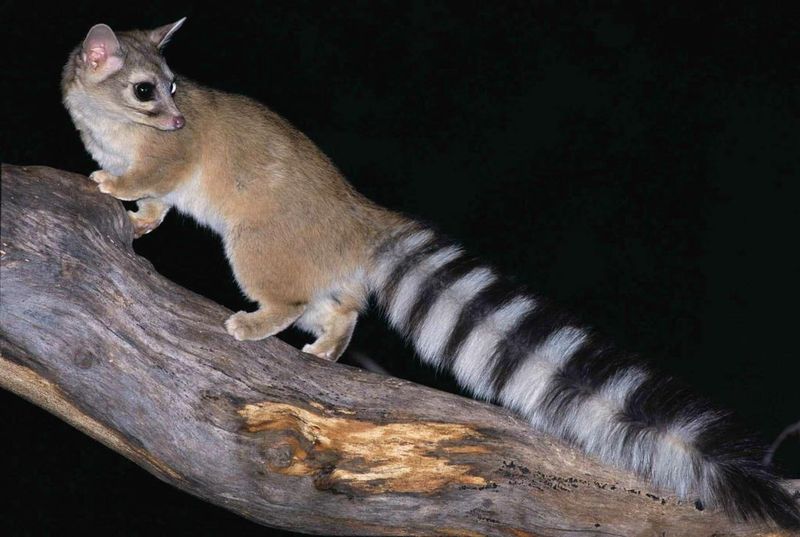
Take a deep breath. A ringtail on your fence is far more likely to run from you than toward you.
Adults usually weigh only about two pounds, which is smaller than many house cats.
Their bodies are slim, their faces are sweet and fox-like, and much of their length comes from that bushy, black-and-white banded tail. They’re built for climbing and sneaking, not for picking fights with people.
Ringtails are famously shy.
They stay hidden during the day and generally avoid humans whenever they can. Most sightings last only a few seconds before the animal slips into the shadows.
That does not mean you should try to touch or pet one.
Like any wild animal, a cornered or frightened ringtail may bite or scratch to defend itself. Wild mammals can also carry diseases and parasites, so hands-off is always the safest choice.
Pets deserve a little extra thought.
A curious dog or outdoor cat could chase a ringtail, and a scuffle might lead to injuries on either side. Keeping pets inside at night, especially in canyon or creek neighborhoods, lowers that risk.
Backyard chickens can be at some risk too, since ringtails do eat birds. A sturdy coop with hardware cloth and a locked door at night solves most problems.
If an animal seems sick, injured, or acts strangely during daylight, keep your distance and contact wildlife officials or a licensed rehabilitator. Otherwise, count yourself lucky. Plenty of lifelong Californians have never seen one.
8. Leave Them Alone And Let Them Pass
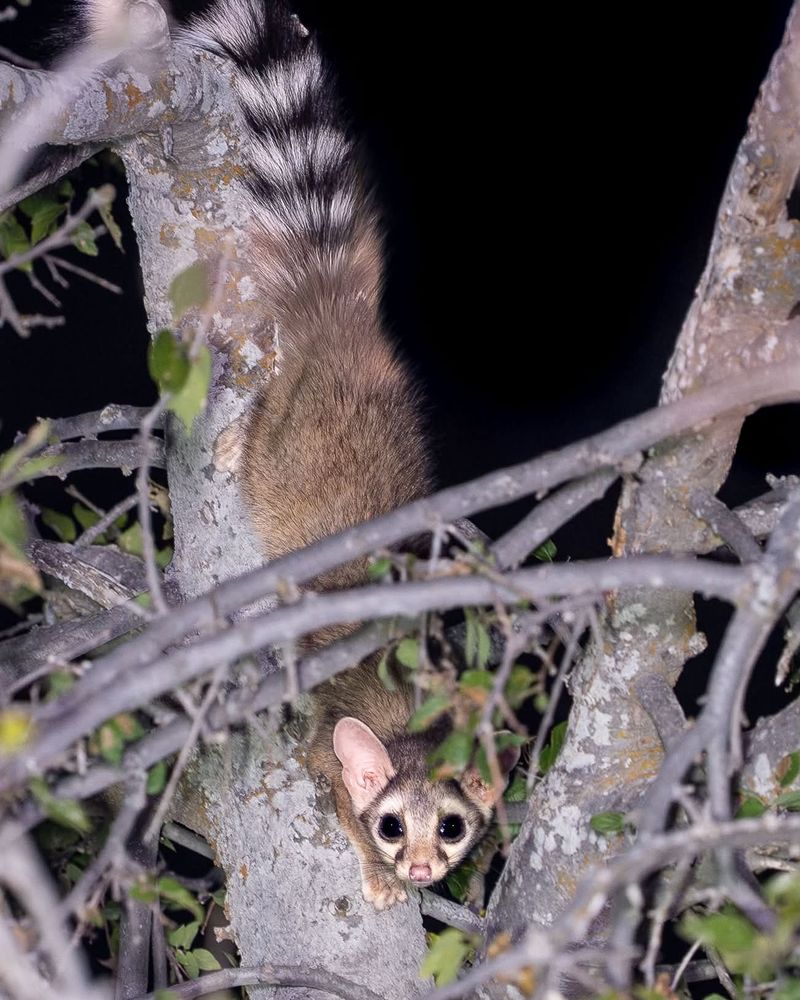
Sometimes the best thing you can do for wildlife is absolutely nothing at all. When you spot a ringtail, stay calm and keep your distance.
Turn off bright lights if you can, stay quiet, and simply watch from a window or porch. Most visitors will move on within minutes once they realize there’s nothing worth sticking around for.
Resist the urge to chase, corner, or feed it.
Tossing out snacks might feel friendly, but it teaches wild animals to depend on people and hang around homes. That can lead to more conflict later, which is bad news for a protected species.
Want a record of your visitor?
A motion-activated trail camera is a great, low-stress way to capture photos without bothering the animal. Many families find that checking the camera each morning becomes a fun habit.
If you want to discourage return trips, focus on the attractions instead of the animal.
Clean up fallen fruit, secure compost and trash, bring in pet food and water at night, and seal gaps under decks, sheds, and rooflines. Always make sure no animal is inside before closing any opening.
Reporting unusual sightings can help too.
Your local wildlife office or a community science app like iNaturalist lets you share what you saw, which may help researchers better understand how ringtails use suburban areas.
A masked visitor on the fence is a rare gift. Enjoy the moment, then let it slip back into the night.