8 Desert Shrubs Arizona Gardeners Plant This Fall to Cut Cooling Bills All Summer
When your west wall hits 140 degrees on a July afternoon, your air conditioner feels it too. The right desert shrubs can shade that wall, cool the ground, and help your home stay more comfortable.
Fall is the best time to plant them in Phoenix and Tucson, because roots get months of mild weather to grow before the heat returns. Here are eight tough, water-wise shrubs that may lower your cooling bills and invite birds, bees, and butterflies into your yard.
1. Desert Hackberry
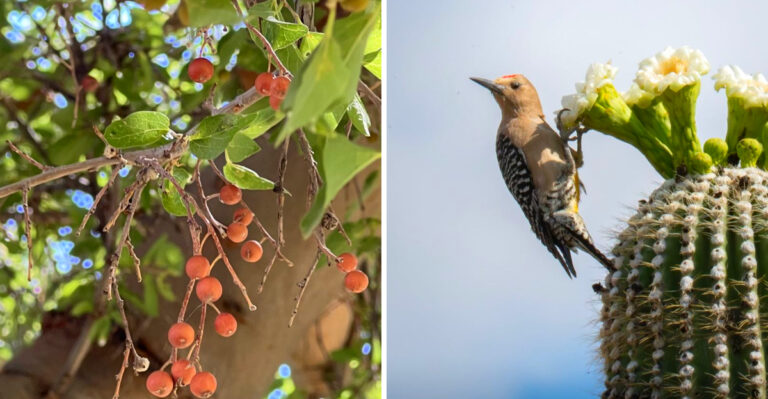
Picture a Curve-billed Thrasher tucked deep in a thorny thicket while the yard around it bakes at 110 degrees. That hideout is often a Desert Hackberry, and it may be the hardest-working shrub a Phoenix or Tucson yard can hold.
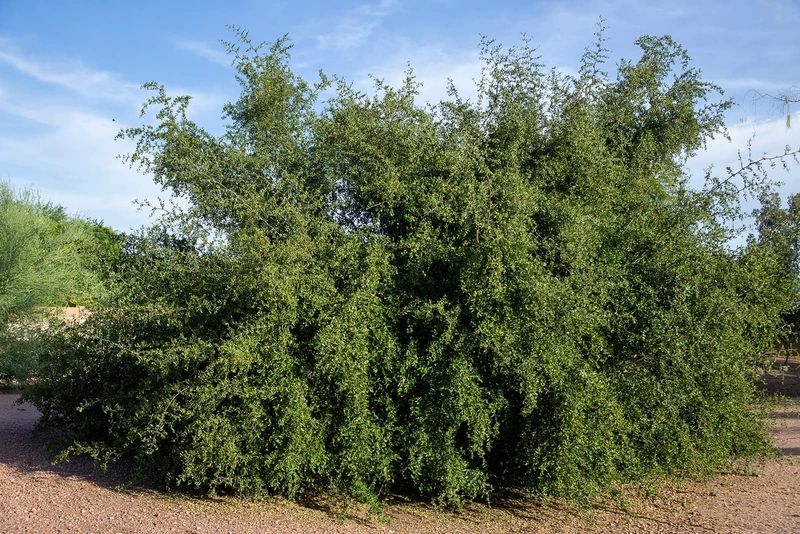
Growing 6 to 15 feet tall and up to 12 feet wide, it forms a dense, tangled canopy that casts filtered shade.
Plant one near a sun-blasted patio or along the west side of a block wall, and it can help keep that hard surface from soaking up afternoon heat. Cooler walls mean your air conditioner may not have to run quite as hard in July.
Fall is a prime time to plant, since cooler soil lets roots spread before summer arrives.
The wildlife payoff is huge. Small orange berries feed cardinals, Gambel’s Quail, mockingbirds, Phainopeplas, and Abert’s Towhees, while the thorny branches give birds safe nesting spots away from predators.
Leilia Hackberry and American Snout butterflies also use it as a host plant for their caterpillars.
Once established, it shrugs off full sun, reflected heat, and rocky caliche. Water deeply every week or two the first summer, then taper off to occasional drinks.
2. Desert Willow
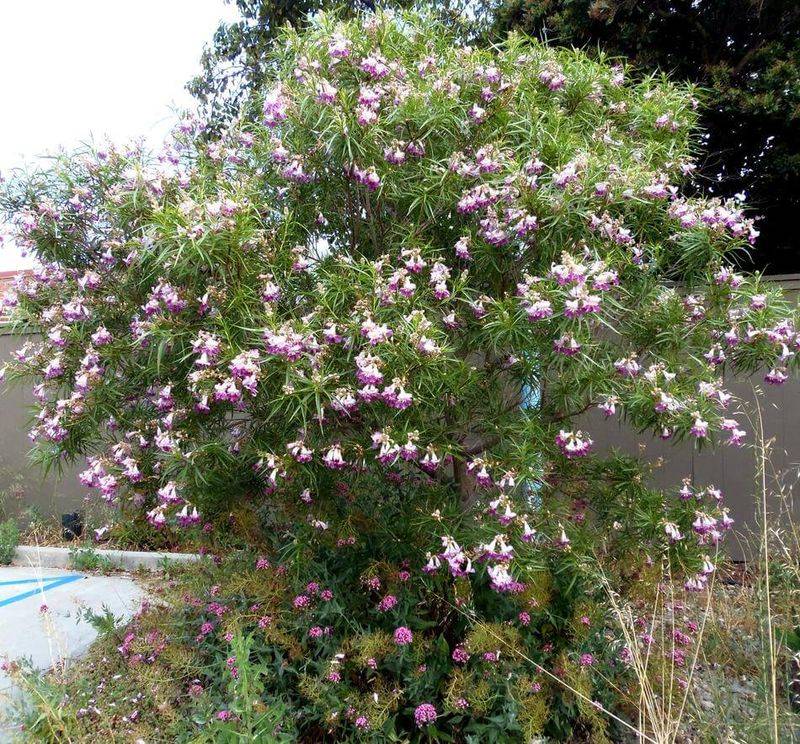
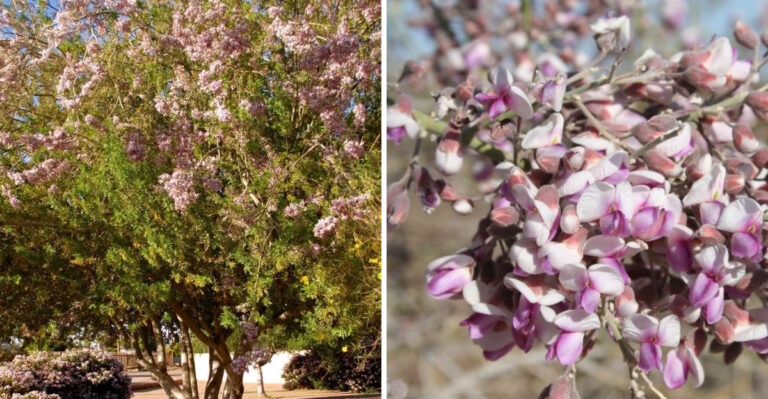
Ask a longtime Tucson gardener for a shade shrub that plays fair with the seasons, and Desert Willow comes up fast. Its best trick is timing.
Leafy branches block the brutal summer sun, then the leaves drop in winter so warm light can reach your windows when you actually want it.
Technically a large shrub or small tree, it usually reaches 15 to 20 feet in low-desert yards. Plant it on the south or west side of the house, about 10 to 15 feet from the wall, where its airy canopy can shade glass and stucco during the hottest hours.
That kind of seasonal shade may help trim cooling costs without darkening your home all winter.
From May through September, orchid-like trumpet flowers in pink, lavender, or burgundy pull in hummingbirds, native bees, and butterflies. Later, the long, skinny seed pods feed goldfinches and doves, and the branches offer nesting spots for songbirds.
Fun fact: despite the name, it is not a true willow. It belongs to the same family as catalpa trees and simply borrowed the look of its slender leaves.
Fall planting gives roots months to settle in, and after two or three summers it needs only a deep soak now and then.
3. Jojoba
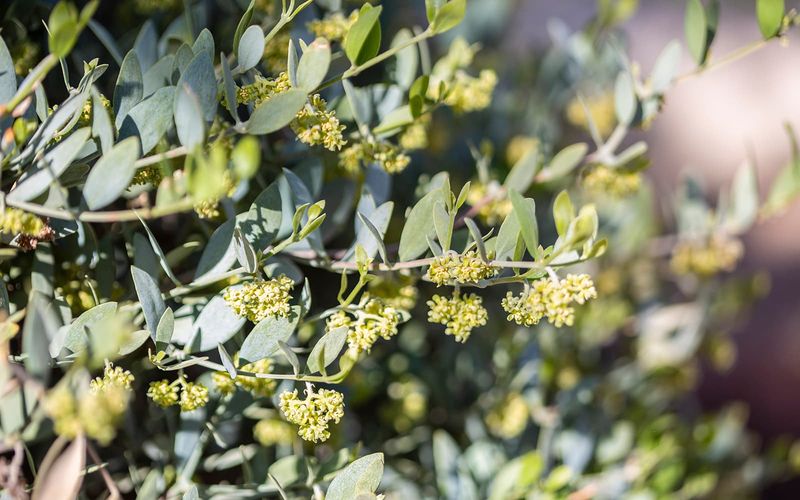
Some plants flash their flowers for attention. Jojoba prefers quiet toughness, and that steady, no-drama attitude is exactly why it earns a spot here.
Your Arizona Garden Changes Every Week. Your Plan Should Too.
Gardening in Arizona changes quickly throughout the season. Every Friday you’ll receive a simple weekly plan showing exactly what to plant, prune, fertilize, harvest, and protect so you never miss the right timing.
Native to the Sonoran Desert, it stays leafy and gray-green through the worst of June.
Its thick, waxy leaves point upward, so they catch less of the harsh midday sun and lose less water. Deep roots chase moisture far below the surface, which means it rarely needs help once established.
Many shrubs sulk in reflected heat, but Jojoba seems to shrug it off.
Most plants stay around 3 to 6 feet, though older ones can grow much taller. Plant a row along a west-facing fence or driveway edge to form a living screen that blocks hot afternoon wind and glare.
Shading pavement and walls this way can help keep nearby rooms from heating up so quickly.
Wildlife loves it too. Quail, rabbits, and ground squirrels nibble the acorn-like seeds, and the dense branches give lizards and small birds a cool place to hide.
Fun bit of history: the seeds hold a liquid wax that has long been used in skin and hair care products.
Plant in October and water every week or two until spring.
4. Arizona Rosewood
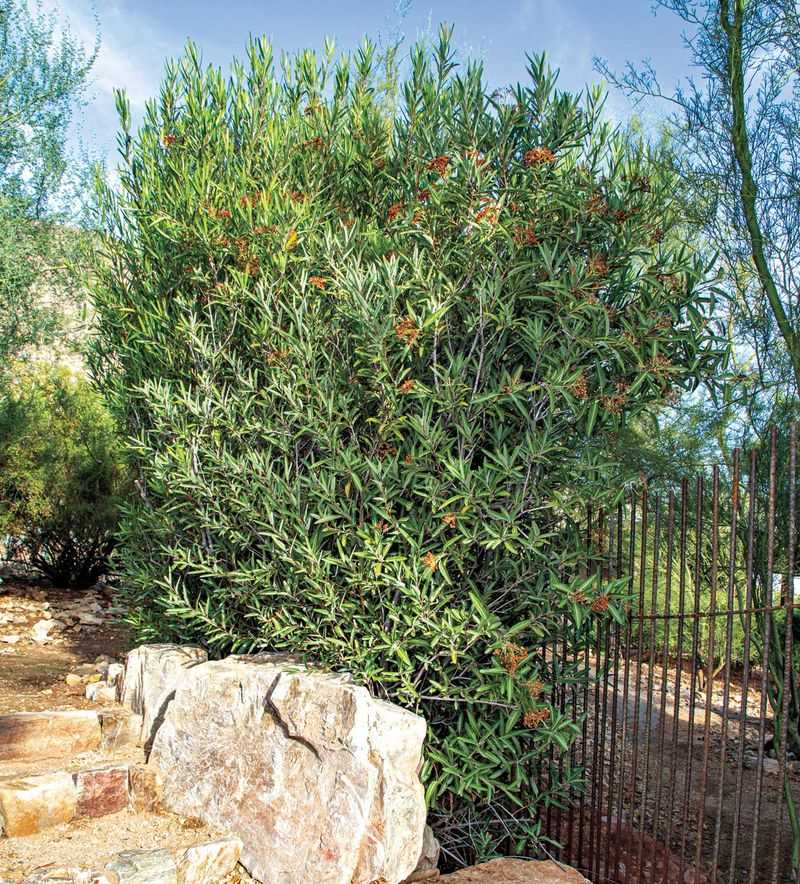
Need a privacy hedge that also works like a sunshade? Arizona Rosewood is the evergreen answer many desert landscapers reach for when oleander feels like the wrong choice.
Unlike oleander, it is native and far less thirsty.
Dense, glossy leaves grow thick from the ground up, forming a wall of green 10 to 15 feet tall. Planted along a sunny property line or beside an exposed west wall, it can block low afternoon rays before they hit the house.
Less direct sun on your walls often means indoor rooms stay a bit cooler into the evening.
Because it stays leafy all year, it also screens neighbors, street noise, and dusty wind in every season. Clusters of tiny white flowers show up in late spring and early summer, drawing bees and other small pollinators.
Birds often tuck nests into the tight branches, safe from hawks and roaming cats.
Growth is slow at first, so patience pays off. Fall planting helps, because the roots get a cool season head start before triple-digit heat returns.
It handles full sun or partial shade, alkaline soil, and light pruning, though it looks best when allowed to keep its natural shape.
5. Texas Ranger
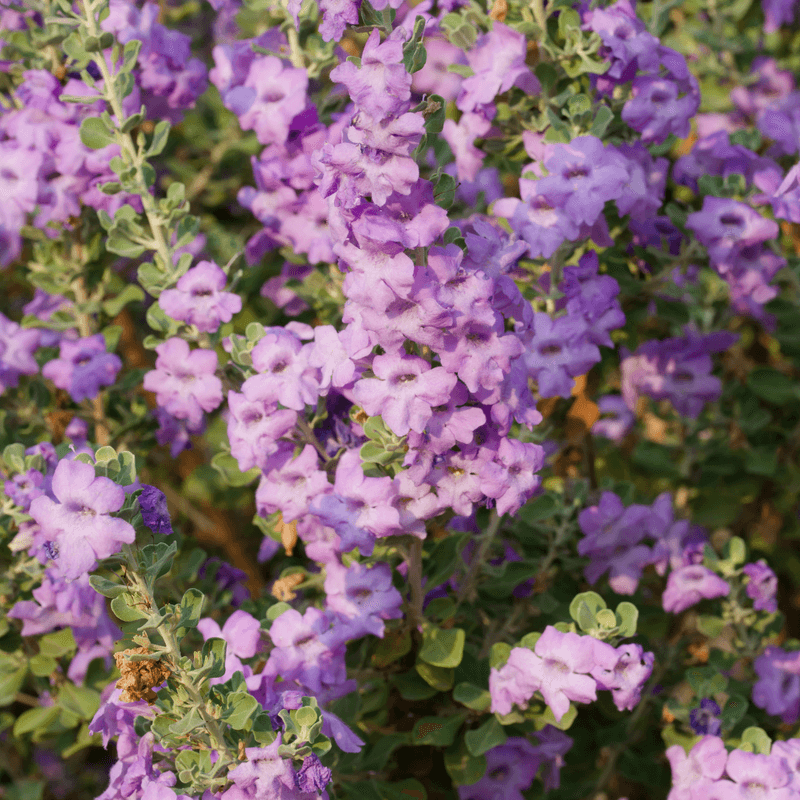
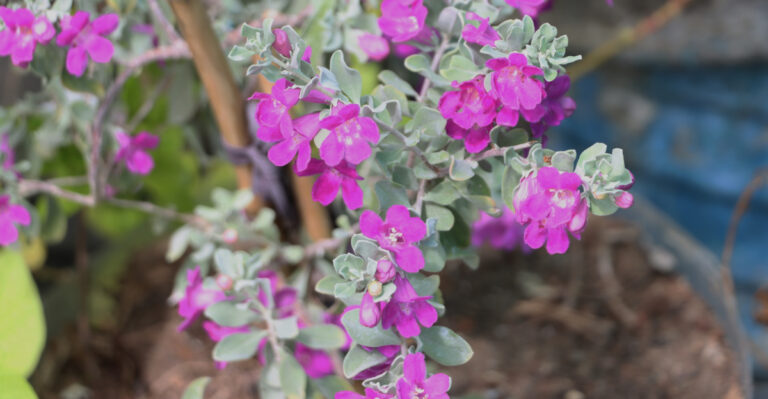
Here is a little desert weather magic: Texas Ranger often bursts into purple bloom right before or after a monsoon storm. Locals sometimes call it the barometer bush because of that uncanny timing.
Originally from Texas and northern Mexico, it has proven itself tough enough for Phoenix and Tucson yards.
Silvery gray leaves reflect sunlight instead of soaking it up, which helps the plant stay comfortable in 110-degree heat. Growing 3 to 6 feet tall and wide, it makes a handy low screen along sunny walkways, air conditioner pads, and driveway edges.
Shading the ground around your outdoor AC unit may help it run a little more efficiently on scorching afternoons. Just leave a few feet of space for airflow.
Bees swarm the flowers after summer rains, and the dense branches give small birds and lizards shelter. Deer and rabbits usually leave it alone, which is a bonus in yards near open desert.
The biggest mistake is too much love. Overwatering and tight shearing into boxes lead to weak growth and fewer blooms.
Plant it this fall, water deeply every couple of weeks through its first summer, and then let it mostly fend for itself.
6. Chuparosa
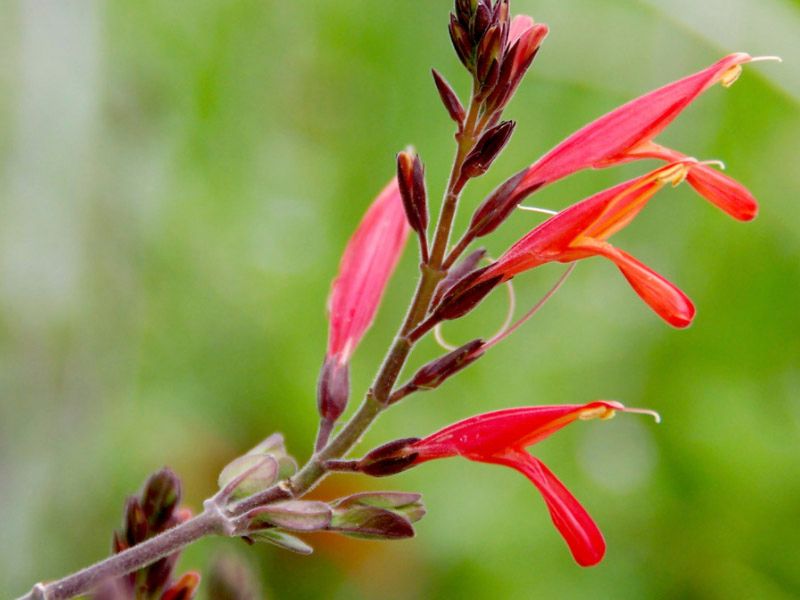
The name says it all. Chuparosa loosely translates to rose sipper, a Spanish nickname for hummingbirds, and the tiny birds treat this Sonoran native like a favorite diner.
Bright red tubular flowers can appear from late winter through spring, with bonus blooms in fall.
What makes it special for cooling is how it handles summer. The green stems can make food from sunlight on their own, so the plant may drop leaves in drought and keep going without extra water.
It grows 3 to 5 feet tall and wide in a loose, sprawling mound that covers bare, heat-trapping ground.
Bare rock and gravel can radiate heat toward your house long after sunset. Mass a few Chuparosas around a patio edge or under windows, and their foliage can help cool the soil and cut down on that stored heat.
Bees and butterflies visit the flowers too.
Rabbits generally avoid it, which is rare praise in the low desert. It thrives in rocky soil and reflected heat, needing only occasional deep watering once settled.
Plant in fall so roots grow before the heat, and give a light trim after spring bloom if it gets leggy.
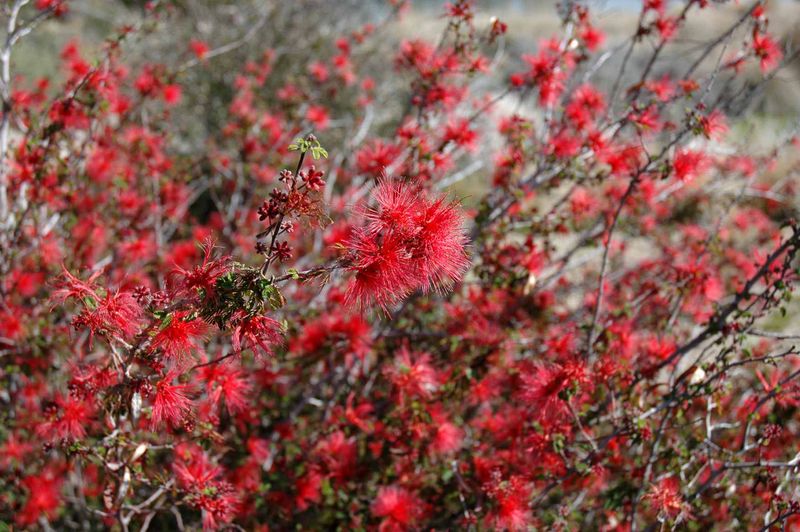
7. Baja Fairy Duster
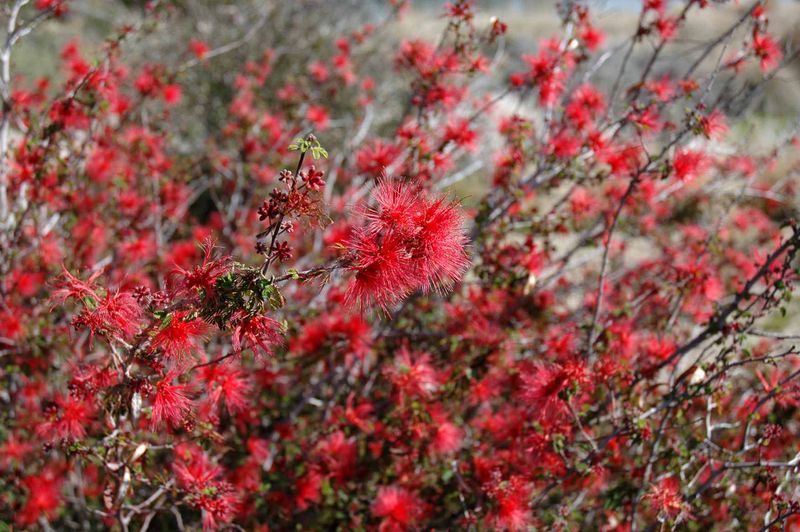
Anyone who has watched a hummingbird dart between fluffy red flower puffs knows why Baja Fairy Duster keeps showing up in desert yards. Those powderpuff blooms look almost too cheerful for a plant that laughs at 115-degree afternoons.
Native to Baja California, it grows about 5 feet tall and wide with feathery, fern-like leaves. Flowers appear on and off through much of the year, peaking from late winter into summer and often returning in fall.
Hummingbirds, butterflies, and native bees visit regularly, giving you a steady wildlife show from the kitchen window.
For cooling, think of it as a soft, living awning. Plant a few along a sunny south-facing wall or around a patio, where the airy branches can filter glare and shade hot gravel.
Because it drops very little litter, it also works near pools, where messier shrubs create cleanup headaches.
It loves full sun and reflected heat, and it handles alkaline soil without complaint. A hard frost can nip the tips in colder pockets of the Valley, but plants usually bounce back quickly in spring.
Fall planting lets it root in during mild weather, and once established, a deep soak every couple of weeks in summer is usually plenty.
8. Arizona Yellow Bells
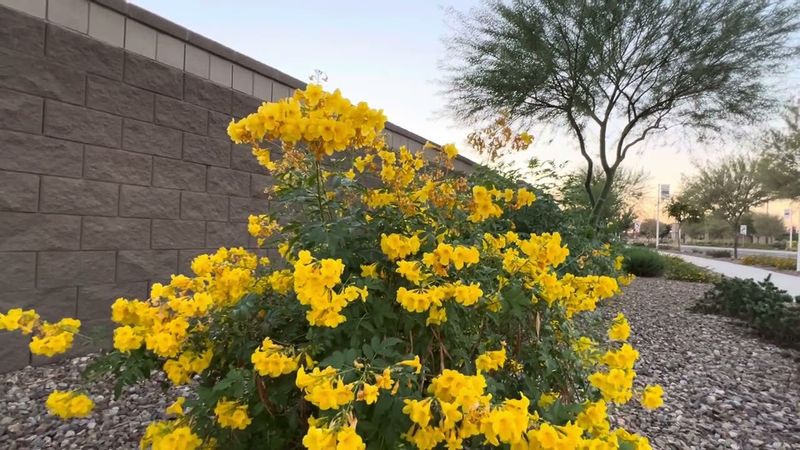
Fast growth is the headline with Arizona Yellow Bells. Plant a small one in October, and by the following summer it may already be pushing 4 to 6 feet tall and wide, dripping with golden trumpet flowers.
Sometimes called Esperanza, it is known for loving heat that makes other shrubs wilt.
That speed matters when you want shade soon rather than in five years. Set a row against a sunny west or south wall, and the thick green foliage can shade stucco before it absorbs afternoon heat.
Walls that stay cooler may help lower indoor temperatures and give your air conditioner a small break during those long July evenings.
Blooms usually show up from spring through fall, just when hummingbirds need nectar most. Bees and butterflies stop by as well, turning a plain wall into a busy pollinator stop.
The narrow-leaf Arizona form handles drought better than tropical types sold elsewhere.
Water deeply every week in the first summer, then stretch to every couple of weeks once roots are established. Frost can damage the branches in winter, so wait until spring to trim any browned growth.
Give it full sun, decent drainage, and room to spread, and it rewards you fast.