Why Palo Verde Trees Drop Yellow Flowers All Over Arizona Yards In May
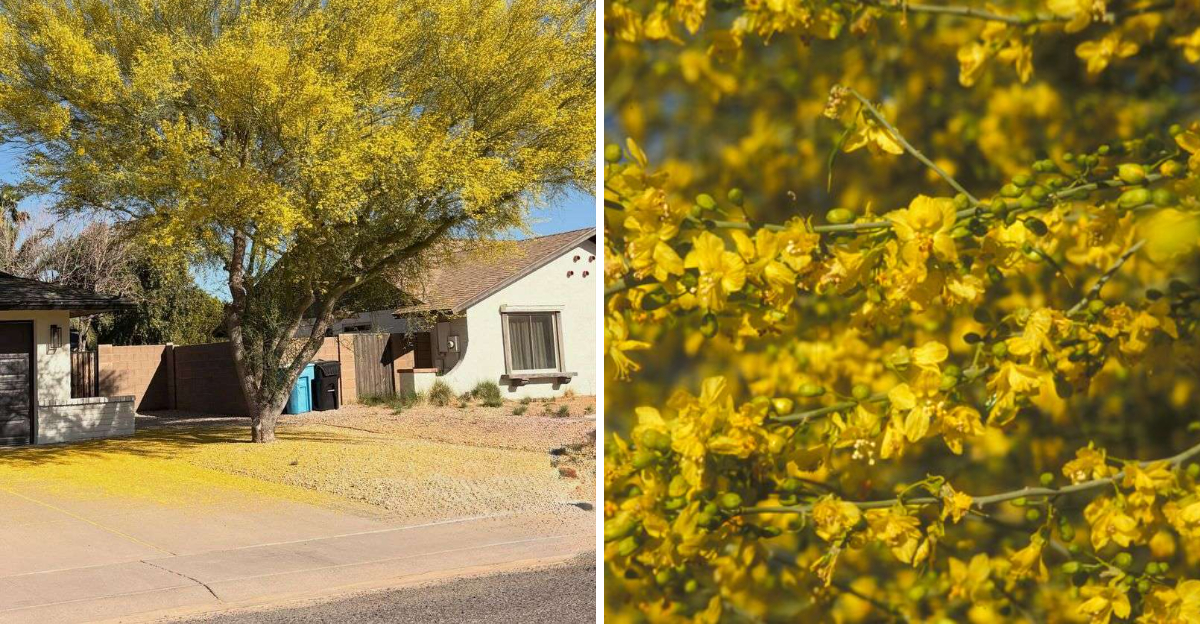
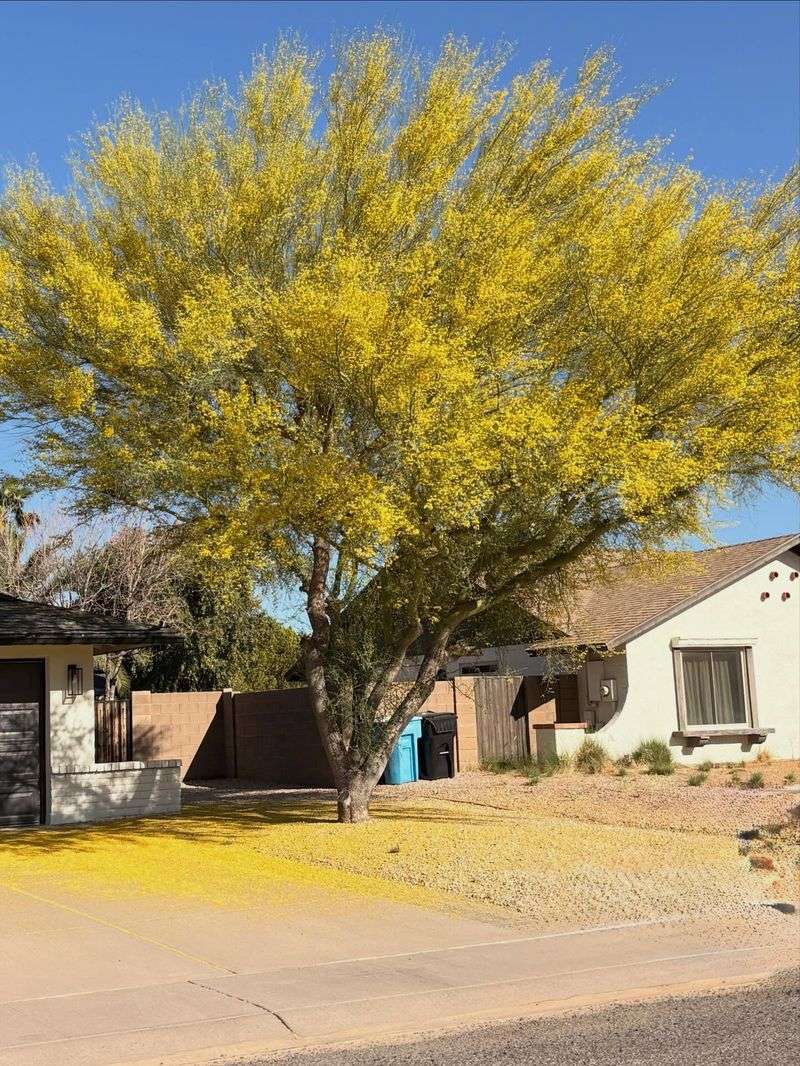
May is when many Arizona neighborhoods suddenly turn yellow underneath palo verde trees. Driveways, patios, sidewalks, gravel yards, and even parked cars start getting covered in bright flower petals almost overnight.
The heavy bloom drop can look surprising at first, especially once flowers start falling faster during warm and windy afternoons. Palo verde trees go through one of their biggest seasonal changes during late spring.
Warm temperatures, dry conditions, and blooming cycles all start lining up around May, which is why so many flowers end up covering Arizona yards at the same time.
Some trees drop a lighter layer of blooms, while others create what looks like a yellow carpet underneath the canopy for days. Strong bloom seasons usually make the flower drop even more noticeable across desert landscapes.
1. Flower Drop Usually Starts After Peak Spring Blooming
Right around the time Arizonans start feeling that familiar desert warmth creeping into their mornings, the Palo Verde trees across the state put on their most spectacular show of the year.
Covered from branch tip to branch tip in tiny golden yellow flowers, these trees transform entire neighborhoods into something that looks almost painted.
But peak bloom never lasts forever, and the flower drop phase follows naturally just days after the tree reaches its fullest, most vibrant display.
Botanically speaking, flower drop is simply the next stage in the tree’s reproductive cycle. Once pollination has occurred, the tree no longer needs to hold onto its blossoms, so they release and fall.
In Arizona, this transition from full bloom to flower drop usually happens sometime between late April and mid-May, depending on the elevation and the specific variety of Palo Verde growing in your yard.
Residents across the Phoenix metro area and in Tucson often notice the shift happen almost overnight. One morning the tree looks like a yellow cloud, and by the following week, the ground beneath it is carpeted in soft golden petals.
2. Warm May Temperatures Speed Up Petal Loss
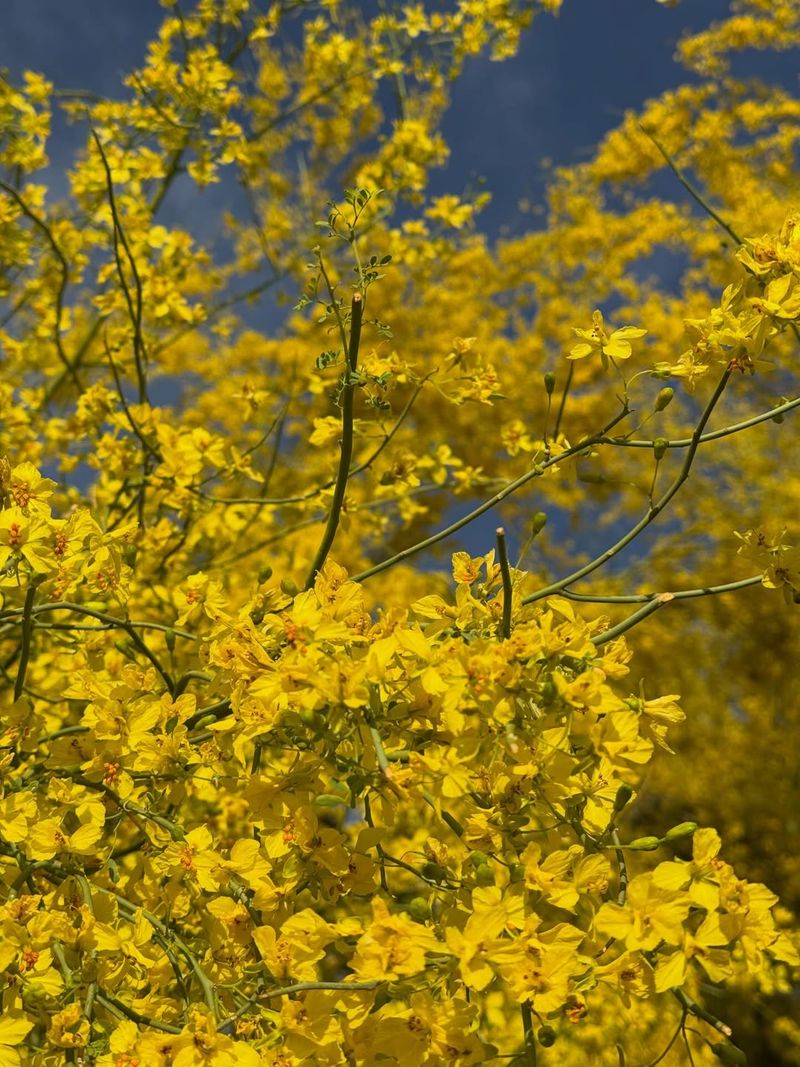
May in Arizona is no gentle spring month. Temperatures across the state regularly climb into the upper 90s and even push past 100 degrees Fahrenheit well before summer officially arrives.
All that heat plays a direct role in how quickly Palo Verde flowers drop from the branches, and homeowners who are new to Arizona are often surprised by just how fast the petals come down once the thermometer starts rising consistently each day.
Heat causes the cells at the base of each flower stem, called the abscission zone, to weaken faster than they would in cooler conditions. Once those cells break down, the flower detaches and falls.
In a mild spring, the bloom period might stretch out for two or even three weeks.
But when May temperatures spike early, the whole process can compress into just seven to ten days, leaving thick layers of yellow petals on driveways, patios, and gravel yards all across Arizona communities.
Tucson homeowners sometimes experience a slightly longer bloom window than those in the Phoenix valley, simply because Tucson sits at a higher elevation and tends to stay a few degrees cooler during the day.
Your Arizona Garden Changes Every Week. Your Plan Should Too.
Gardening in Arizona changes quickly throughout the season. Every Friday you’ll receive a simple weekly plan showing exactly what to plant, prune, fertilize, harvest, and protect so you never miss the right timing.
Either way, once consistent heat sets in, the countdown to petal drop begins in earnest.
3. Fallen Yellow Blooms Often Cover Gravel And Patios Quickly
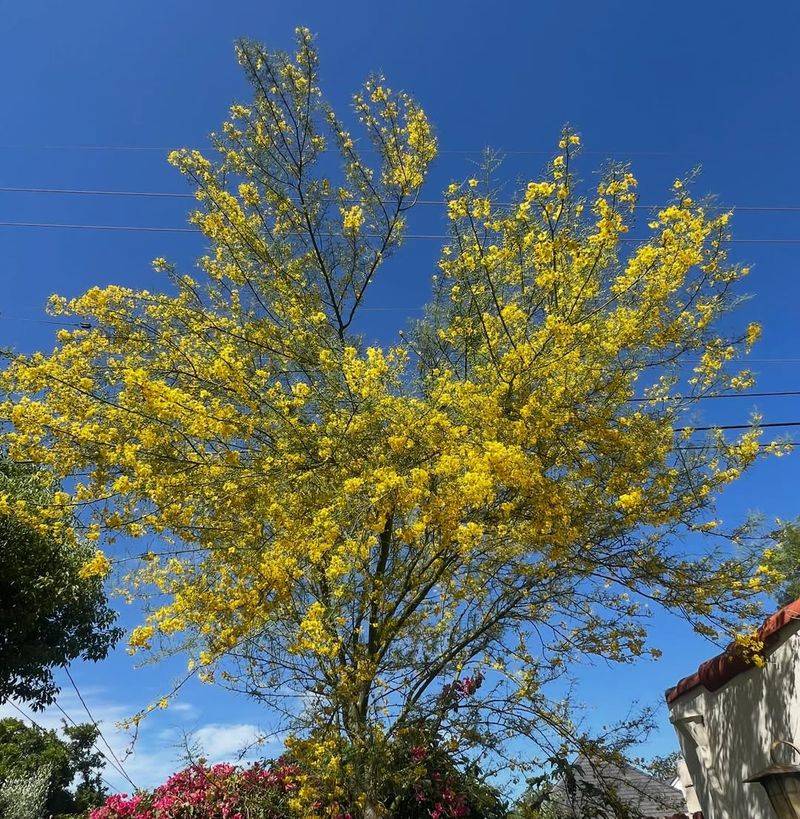
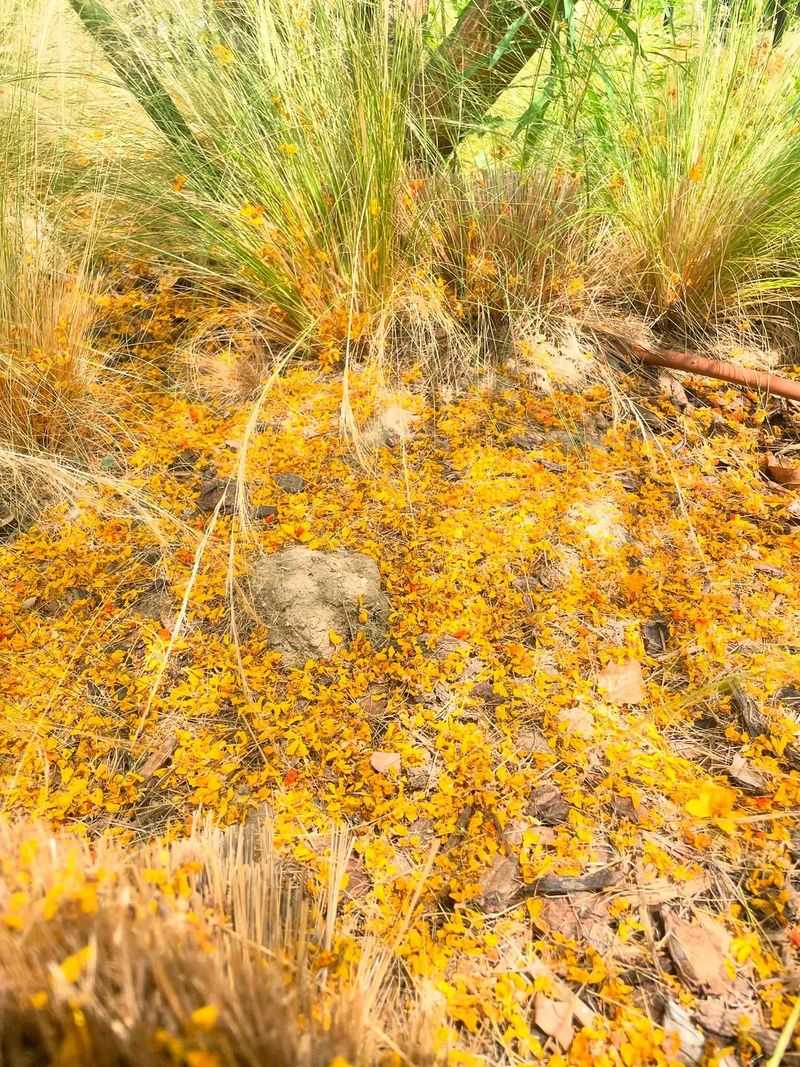
Anyone who has walked out their back door in Arizona during May knows the sight well. Overnight, the gravel that was perfectly clean yesterday is now blanketed in a soft, almost fluffy layer of yellow Palo Verde blooms.
Patios, outdoor furniture, pool decks, and even car hoods become temporary resting spots for thousands of tiny fallen flowers. For new Arizona residents, the speed and volume of the coverage can feel genuinely shocking the first time around.
Gravel yards, which are extremely common in desert landscaping across Phoenix, Scottsdale, Mesa, and Chandler, tend to trap fallen petals more than grass lawns would.
The rough texture of gravel catches and holds the lightweight blooms, making them harder to remove with a simple hose-down.
A leaf blower set to a medium speed works well for clearing gravel without sending all the rocks flying. For patios and smooth surfaces, a soft push broom followed by a quick rinse usually gets the job done efficiently.
Most Arizona gardeners find it easiest to do one solid cleanup per week during peak drop season rather than chasing petals every single day.
Left in place for too long, fallen blooms can get wet from irrigation or monsoon moisture and start to break down into a soft mulch layer, which can actually benefit the soil beneath desert plants if spread thinly.
4. Windy Desert Weather Can Shake Loose More Flowers
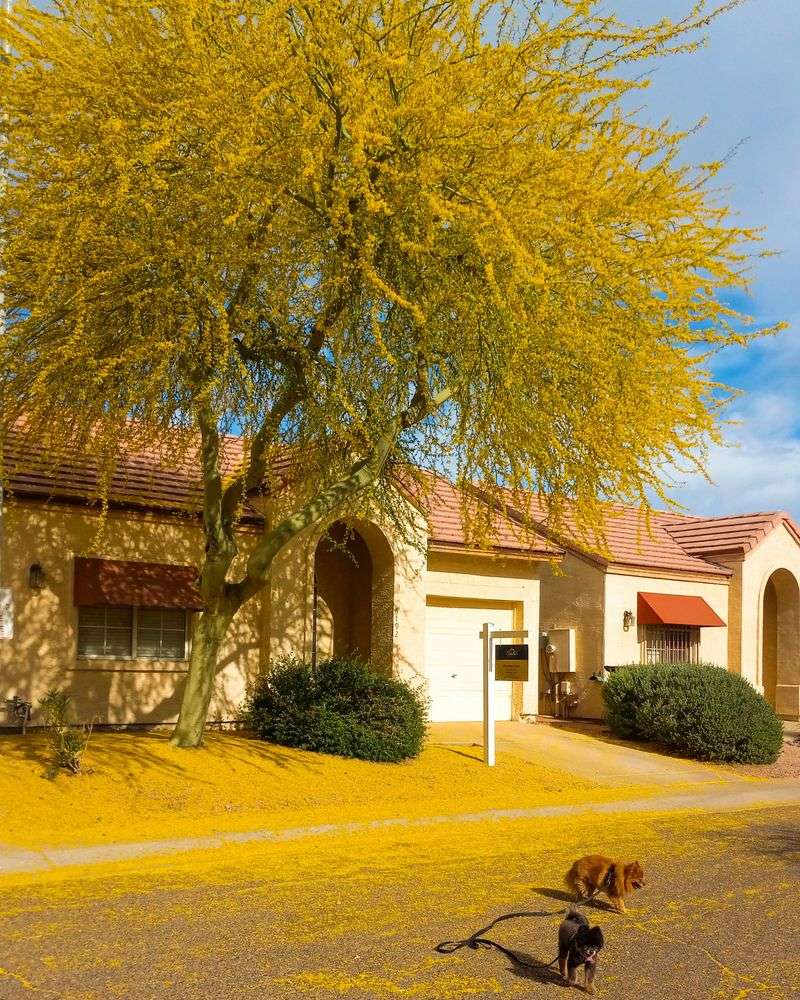
Spring wind is a familiar companion for anyone living in Arizona, and May is no exception to the breezy, gusty patterns that sweep across the desert landscape.
Wind events during this time of year can dramatically accelerate how quickly Palo Verde flowers leave the branches.
What might have been a gradual, gentle drop over several days can turn into a sudden shower of yellow petals the moment a strong afternoon gust moves through your neighborhood.
Desert winds in Arizona can reach 25 to 40 miles per hour during spring storm systems, and even a moderate 15-mile-per-hour breeze is enough to shake loose flowers that are already at the end of their bloom cycle.
Homeowners in open areas or on the edges of neighborhoods near the desert preserve often notice heavier flower fall during windy days simply because there are fewer structures to break up the wind before it reaches their trees.
Tucson and Phoenix both experience these seasonal wind patterns regularly throughout May.
On particularly windy days, it is not unusual for nearly all remaining flowers to come down in a matter of hours. Many Arizona residents actually appreciate these wind events because they speed up the natural cleanup process and leave the tree looking fresh and green again faster.
5. Mature Trees Usually Drop The Heaviest Flower Layers
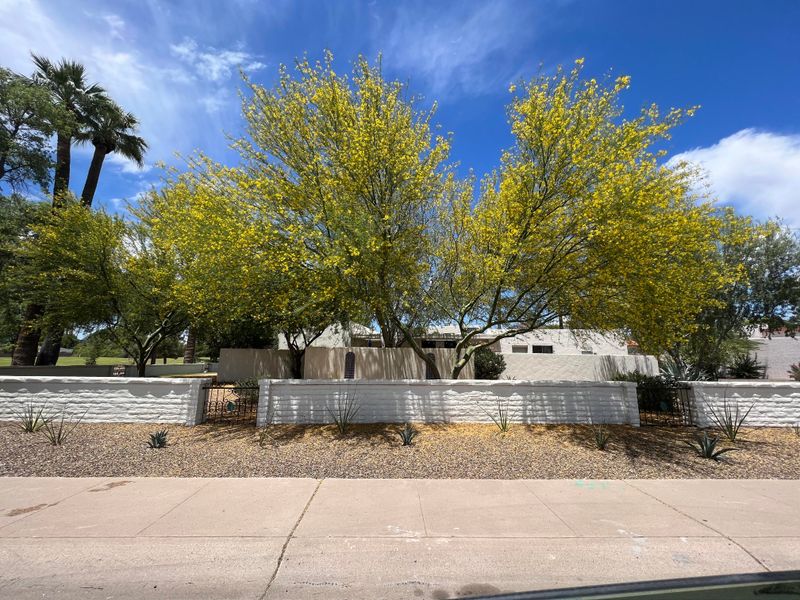
Size matters when it comes to Palo Verde flower drop, and mature trees make that point loud and clear every May.
An established Palo Verde that has been growing in an Arizona yard for ten, twenty, or even thirty years can produce an enormous quantity of blooms, far more than a young sapling that was planted just a few seasons ago.
More flowers on the tree naturally means more flowers on the ground when blooming season wraps up.
Mature Palo Verde trees in older Arizona neighborhoods, especially in established parts of Phoenix, Tempe, and Tucson, can spread their canopy over large portions of a yard.
When those wide, flower-laden branches finally release their blooms, the coverage on the ground below can be several inches deep in some spots.
Homeowners with large, established trees sometimes joke that they need a shovel, not a broom, to deal with the seasonal flower accumulation around their tree bases.
Beyond the cleanup challenge, mature trees are genuinely worth celebrating. A large, established Palo Verde provides significant shade during Arizona’s brutal summer months, reduces nearby surface temperatures, and offers habitat for local birds and pollinators.
The heavy flower drop is simply the price of admission for all those benefits.
6. Extra Water Does Not Stop Seasonal Flower Drop
One of the most common questions Arizona homeowners ask when they see their Palo Verde flowers falling is whether the tree needs more water. It feels logical to assume that if a plant is losing parts of itself, something must be wrong with its hydration.
In reality, seasonal flower drop has nothing to do with water stress, and adding extra irrigation will not slow it down, stop it, or reverse it in any way.
Palo Verde trees are native to the Sonoran Desert and are exceptionally well-adapted to Arizona’s dry climate. Their flower drop cycle is controlled by day length, temperature, and the internal hormonal signals the tree sends after pollination is complete.
No amount of additional water changes those biological triggers. In fact, overwatering a Palo Verde can cause more harm than good, potentially leading to root issues or encouraging weak, fast growth that makes the tree less structurally sound over time.
During May in Arizona, a healthy Palo Verde generally needs water only every one to two weeks at most, depending on soil type and tree size.
Deep, infrequent watering encourages the roots to grow downward, which strengthens the tree and helps it access moisture stored deeper in the desert soil.
7. New Seed Pods Often Begin Forming Right After Blooming Ends
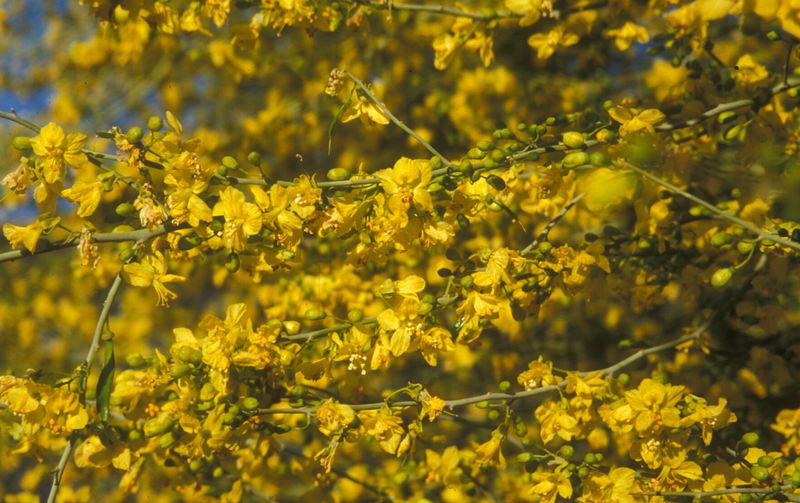
Once the yellow flowers have finished their spectacular run and most of the petals have settled onto Arizona driveways and gravel yards, something new and interesting begins to take shape on the Palo Verde branches.
Tiny green seed pods start forming at the spots where flowers once bloomed, signaling that the tree’s reproductive process is moving into its next phase.
For anyone paying close attention, this transition from flower to pod is one of the most fascinating parts of owning a Palo Verde in Arizona.
Palo Verde seed pods are flat, narrow, and light green when they first appear, somewhat resembling small pea pods. Over the following weeks and into summer, they mature, dry out, and turn a tan or brownish color.
Each pod contains one to several seeds, which can eventually sprout new trees if conditions are right.
In many Arizona neighborhoods, you will notice volunteer Palo Verde seedlings popping up in unexpected spots during monsoon season, a direct result of seeds that traveled from nearby mature trees.
Watching the seed pod development after blooming is a great way to track your tree’s seasonal health and understand its natural growth cycle.