Skip Thirsty Ficus Trees and Plant This Arizona Native Shade Tree Instead
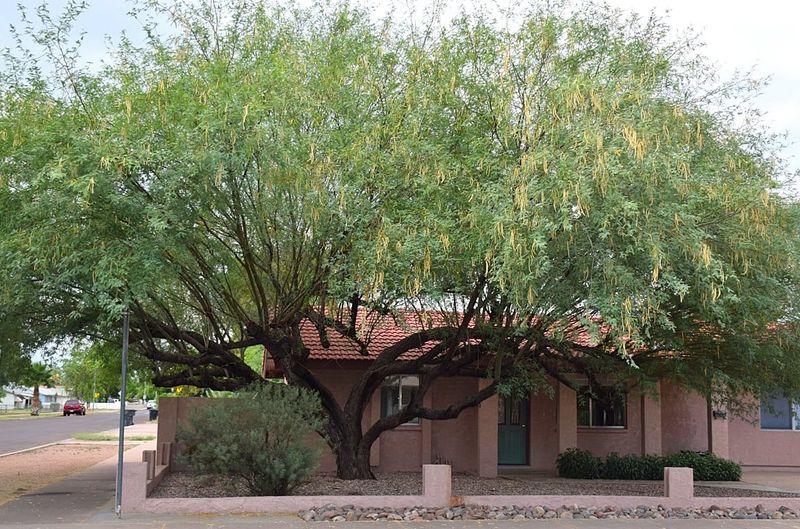
If you have a spacious low-desert yard in Phoenix or Tucson and want a shade tree that belongs here, velvet mesquite is worth a serious look. It is native to central and southern Arizona, handles blistering summer heat, and can grow large enough to shade a patio or outdoor living area.
Before you plant one, though, there are real tradeoffs to understand, from the kind of shade it gives to how much water it actually needs.
The ficus comparison needs a closer look
“Ficus” is a broad label that gets applied to many different plants, from the edible common fig grown for fruit to ornamental species used as landscape screens or shade trees. When someone says ficus trees are thirsty, it is worth asking which ficus they mean, because the water needs of one species do not automatically apply to another.
University of Arizona Extension guidance on growing common figs in the low desert focuses on Ficus carica, the edible fig grown for fruit production. That guidance does not tell us much about the irrigation requirements of ornamental ficus varieties commonly planted as shade trees or screens.
No side-by-side water-use comparison between velvet mesquite and a specific ornamental ficus has been established by the sources available here. The better question is not which tree wins a water contest, but whether velvet mesquite fits your yard in terms of size, shade type, and care.
University of Arizona Extension guidance on mesquite and palo verde in the urban landscape describes velvet mesquite as a native low-desert tree worth considering on its own merits.
A native tree adapted to low-desert conditions
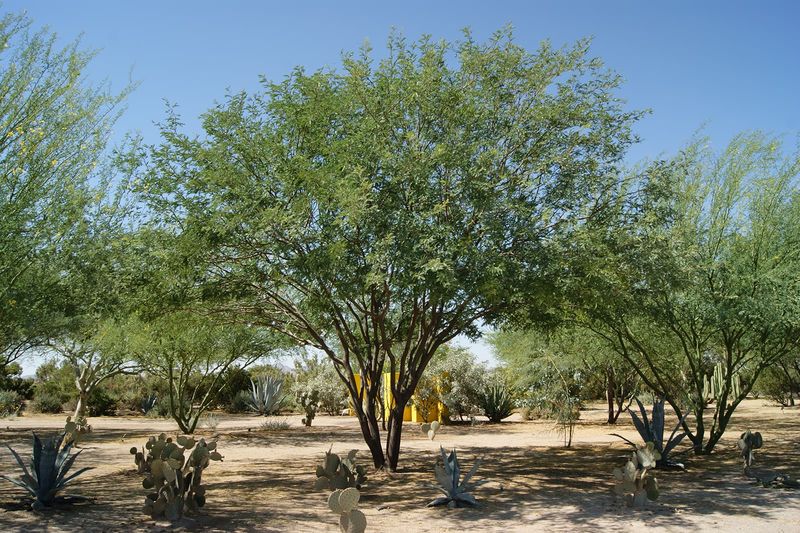
Velvet mesquite, Prosopis velutina, is native to central and southern Arizona, which means it evolved here. It handles the combination of 100-plus-degree summer temperatures, low humidity, and alkaline or poor soils that would stress many non-native trees.
That built-in toughness is one of the main reasons it shows up on low-water landscape plant lists across the Phoenix and Tucson areas.
Being native and heat-tolerant does not mean the tree needs zero water, especially when it is young and just getting established. Adaptation means it is suited to local conditions and can handle dry spells better than many alternatives, not that it will thrive on neglect from day one.
Soil type, planting site, and seasonal weather all influence how much supplemental irrigation a tree actually needs.
University of Arizona Extension guidance on Arizona climate zones points out that low-desert conditions are distinct from higher-elevation parts of the state, so planting advice that works in Flagstaff does not automatically translate to Phoenix or Tucson. Velvet mesquite recommendations here are scoped to the low desert, where the tree is genuinely at home and where its heat and drought tolerance delivers the most practical benefit.
What kind of shade will it provide?
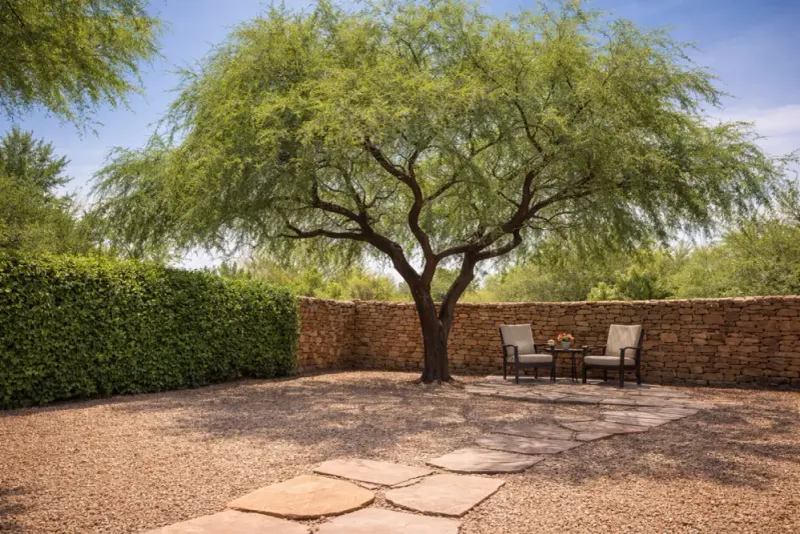
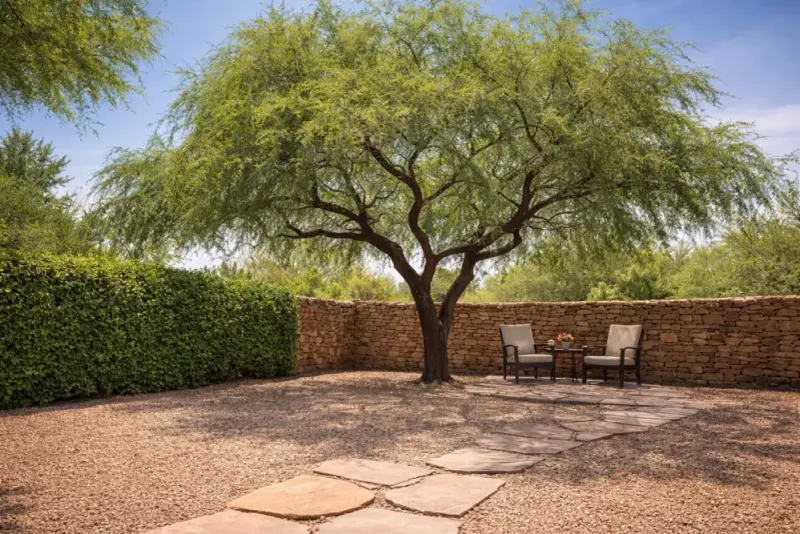
Velvet mesquite provides filtered shade, not the dense, uniform canopy you get from some non-native trees. Light passes through the fine-leafed branches in a way that softens the sun without blocking it completely.
Your Arizona Garden Changes Every Week. Your Plan Should Too.
Gardening in Arizona changes quickly throughout the season. Every Friday you’ll receive a simple weekly plan showing exactly what to plant, prune, fertilize, harvest, and protect so you never miss the right timing.
For a patio or seating area, that can feel comfortable on a summer morning, though it may not fully shade a south-facing wall at peak afternoon heat.
The tree is deciduous, which matters in the desert. Leaves drop in response to cold temperatures or prolonged drought, so the shade it provides shifts with the seasons.
In practical terms, that means you get leafy canopy during the hottest months when you need it most, and more open sky in winter when solar warmth is welcome. As University of Arizona Extension guidance on reducing energy bills with shade trees explains, strategic shade placement can reduce summer heat loading on a home while still allowing winter sun to reach south-facing surfaces.
Denser shade is possible, but it depends on the tree getting enough water and having favorable growing conditions. A mesquite in a tight or dry site will stay smaller and provide lighter coverage than one with room and reliable irrigation during establishment.
Room to grow is part of the decision
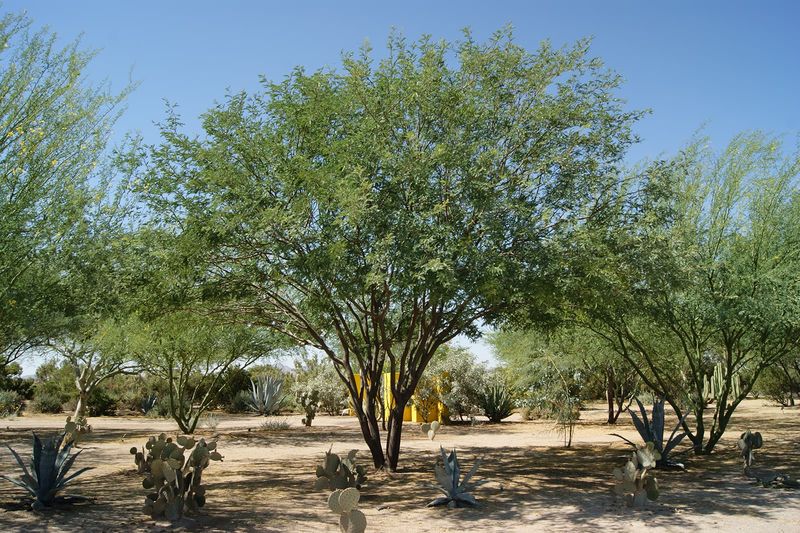
Velvet mesquite grows big. Under favorable conditions, with good soil depth and adequate water, a mature tree can reach roughly 30 to 50 feet in both height and canopy spread.
That scale is an asset in a large yard where you want a statement shade tree, but it can be a poor match for a narrow side yard, a small patio garden, or any site near overhead power lines or a foundation.
Young trees sometimes have small thorns, which is worth knowing if children or pets spend time in the planting area. The thorns tend to become less prominent as the tree matures, but they are a real consideration during the first few years.
Seed pods are another practical factor: mesquite produces them in quantity, and while they attract wildlife and have traditional uses, they also mean regular cleanup if the tree is near a pool or a paved area.
None of those characteristics are reasons to rule the tree out, but they are reasons to think carefully about placement before planting. A velvet mesquite that has room to reach its full size, set back from structures and hardscape, is a very different situation than one squeezed into a constrained corner of a small lot.
Drought-tolerant does not mean water-free
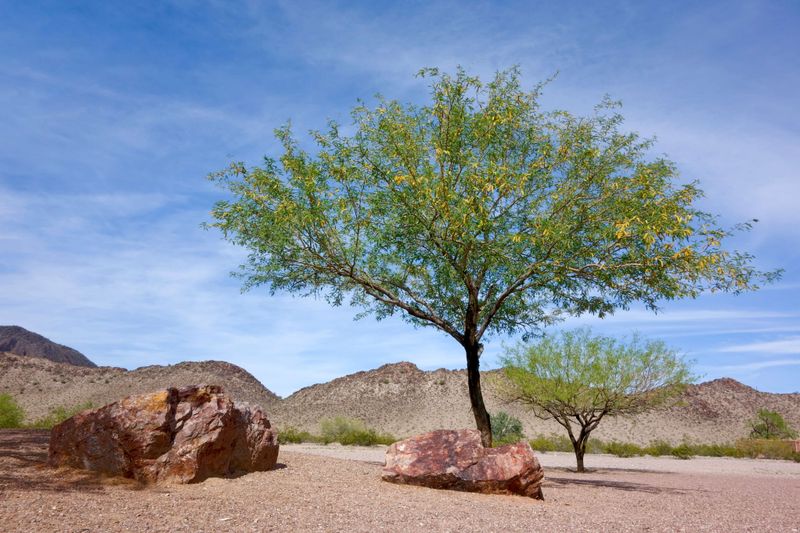
Drought tolerance is about surviving dry periods, not about living without water indefinitely. Velvet mesquite can handle stretches without rain better than many landscape trees, but its actual water needs depend on how large it is, what the soil is like, and what the weather has been doing.
A tree that goes without supplemental irrigation in a wet monsoon year may struggle in a dry one.
A University of Arizona study on irrigation requirements of southwestern landscape trees found that several desert-adapted species, including mesquite, did not show significantly reduced size after four years at reduced irrigation rates. That is useful information, but it does not mean every mature mesquite can thrive without supplemental water in every yard under every set of conditions.
Mesquite is also not the lowest-water shade tree available for the low desert. University of Arizona Extension guidance on understanding the different mesquites notes that mesquite can require more water than palo verde or ironwood in comparable landscape settings.
If minimizing irrigation is the top priority, those alternatives may be worth comparing before making a final choice.
Establish the tree with careful watering
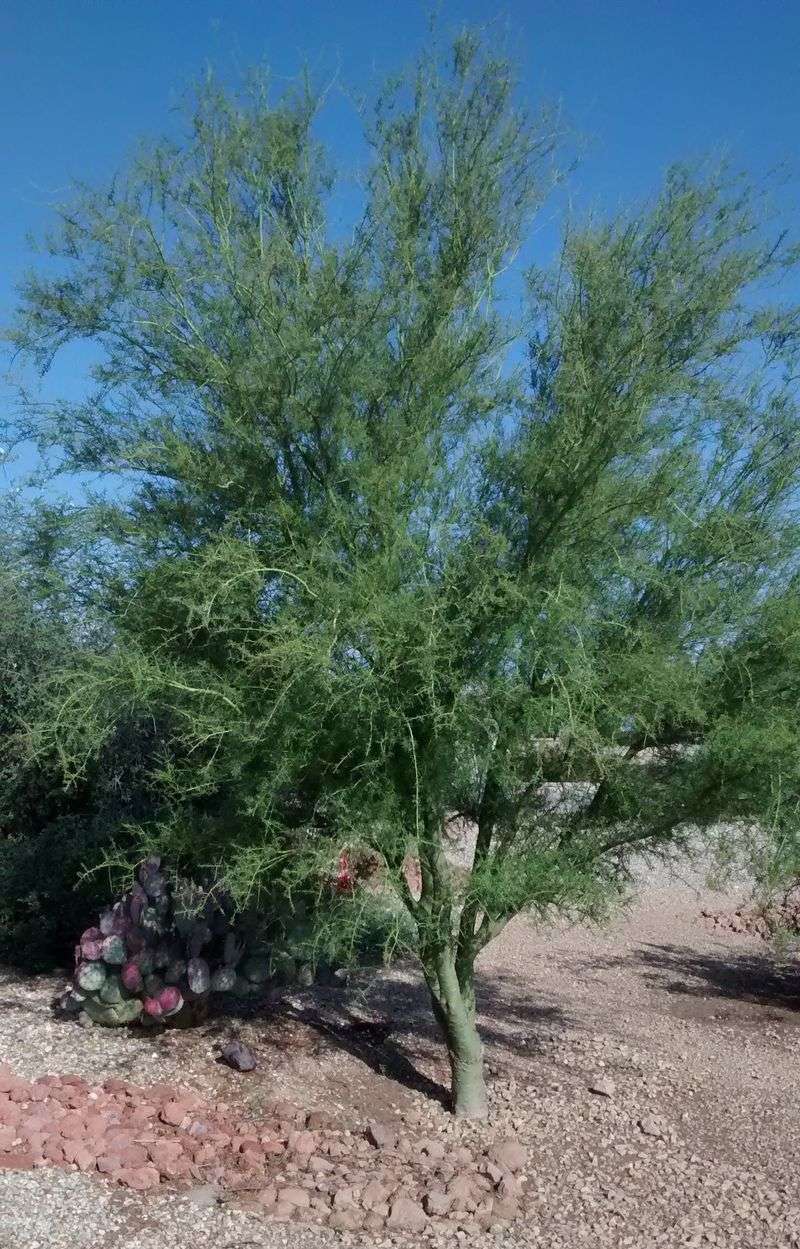
Late fall is the preferred planting window for desert trees in the low-desert regions around Phoenix and Tucson. Cooler temperatures reduce stress on a newly transplanted tree and give roots time to spread before summer heat arrives.
Planting in the hottest months puts a new tree at an immediate disadvantage and usually means more intensive watering to keep it alive.
Right after planting, the goal is to keep the root ball consistently moist while the tree begins anchoring into the surrounding soil. As weeks pass and roots start extending outward, the watering schedule should shift: longer intervals between sessions, but water applied farther out from the trunk to follow where the roots are actually growing.
Keeping emitters right beside the trunk as the tree matures misses the expanding root zone and can leave outer roots dry.
Overwatering carries its own risks. Mesquites that receive too much water, particularly when growing in lawn areas with frequent shallow irrigation, can develop unstable root systems.
University of Arizona Extension planting guidelines for container trees and shrubs caution against excessive irrigation and recommend adjusting the schedule to match the tree’s stage of establishment rather than following a fixed routine year-round. No single watering schedule works for every tree, soil, or yard in the low desert.
Choose mesquite when its tradeoffs fit your yard
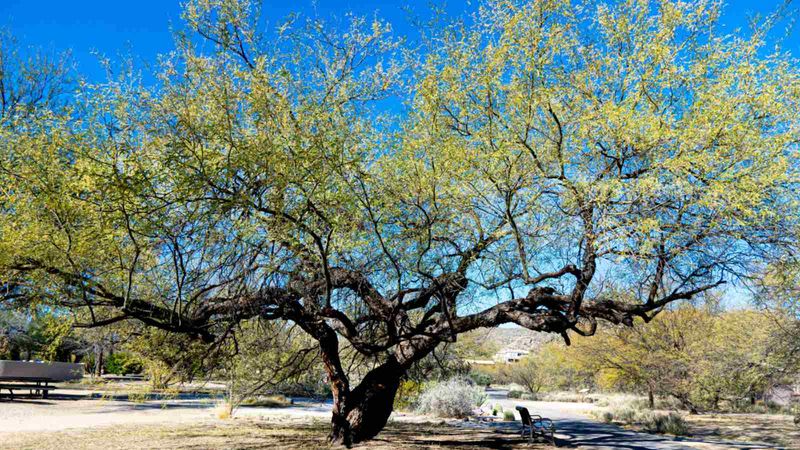
Velvet mesquite makes sense when the yard has genuine room for a large tree, and the homeowner is comfortable with filtered, seasonal shade rather than a dense, year-round canopy. It is a native low-desert tree with real heat tolerance, and it can anchor a spacious landscape in a way that few non-native alternatives match in this climate.
It is not the right fit for every situation. Readers wanting deep uniform shade, a small canopy, or a tree that stays compact near structures will likely find mesquite frustrating rather than rewarding.
And the available evidence does not establish it as a lower-water substitute for ficus as a category, so that alone should not drive the choice.
Pick velvet mesquite because your yard has the space, you understand the seasonal shade it offers, and you are ready to water it appropriately through establishment. A tree chosen for the right reasons tends to stay in the ground for decades.