Why Arizona Citrus Fruit Splits Before Harvest And How To Prevent It
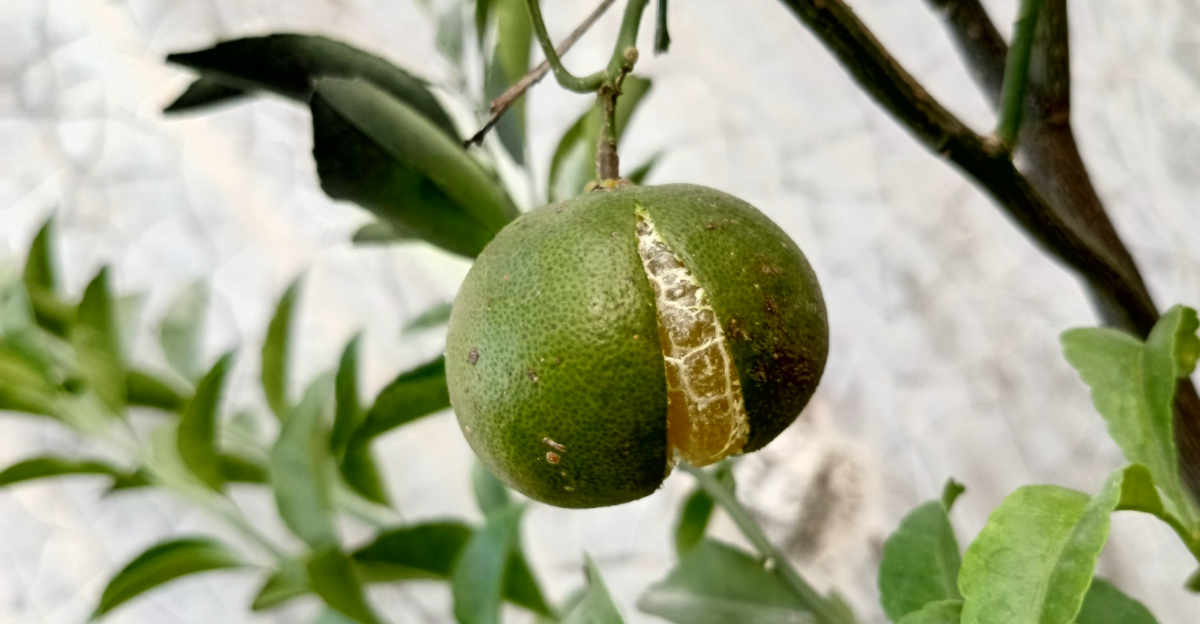
There are few things more disheartening in an Arizona citrus garden than walking outside to check on your fruit and finding it cracked wide open like it just gave up.
You’ve been watering it, watching it grow, looking forward to harvest, and then one morning the orange has essentially split itself in half and the grapefruit looks like it had a rough week.
Deeply frustrating. The slightly surprising part is that splitting usually has nothing to do with pests or disease.
No villain, no infestation, no obvious culprit to point at. It’s almost always a physiological stress response tied to heat, moisture swings, irregular watering, and fruit that simply grows faster than the rind can keep up with.
Arizona summers create the perfect conditions for exactly this kind of thing. The good news is that it’s more manageable than it looks.
1. Moisture Stress Makes Citrus Fruit More Likely To Split
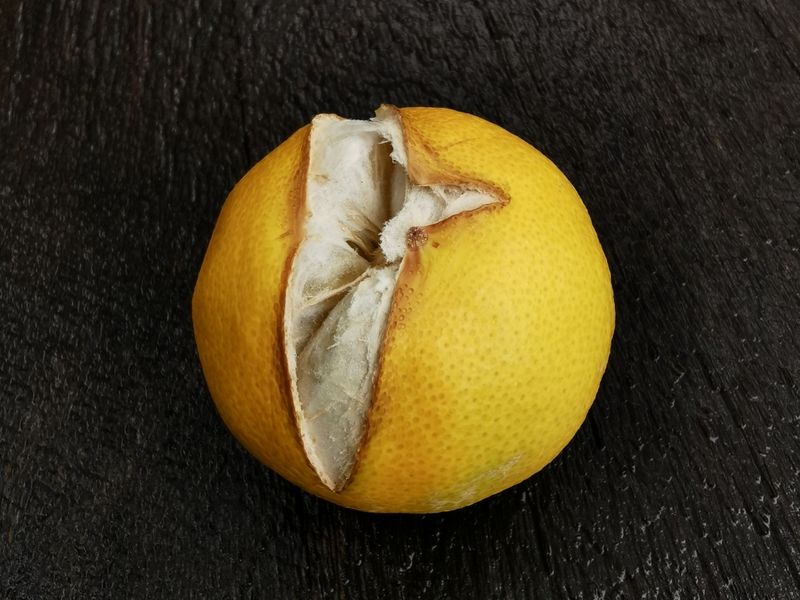
Backyard citrus trees in Arizona deal with moisture stress more often than many homeowners realize, and that stress plays a significant role in fruit splitting.
When a citrus tree goes through periods without enough water, the fruit inside begins to experience internal tension.
The rind slows its development during the dry stretch, becoming thinner and less flexible over time.
Once water becomes available again, the fruit pulp swells quickly as it absorbs moisture. The rind, already weakened from the dry period, cannot stretch fast enough to accommodate the sudden growth.
That mismatch between the expanding interior and the tight outer skin is what causes the fruit to crack open.
In Arizona, moisture stress can happen easily during the hot summer months when evaporation rates are high and soil dries out faster than expected.
Even trees that seem to be getting regular water may still experience stress if the irrigation is not reaching deep enough into the root zone.
Shallow or inconsistent watering leaves the tree vulnerable to these swings.
Homeowners may notice splitting beginning to appear on oranges, mandarins, or grapefruits in late summer or early fall, right around the time when fruit is sizing up.
Keeping soil moisture as consistent as possible throughout the growing season is one of the most helpful steps you can take to reduce this kind of splitting in Arizona yards.
2. Hot Arizona Weather Can Push Fruit Under Pressure
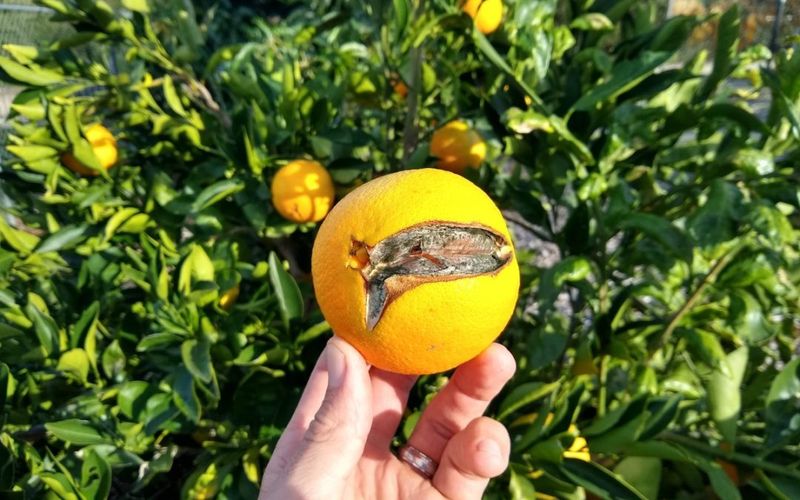
Stepping outside on a July afternoon gives you a quick reminder of just how intense the heat can get. Temperatures regularly climb above 110 degrees Fahrenheit in many parts of the state, and that heat does not just make people uncomfortable.
It puts real physical pressure on citrus fruit hanging on the tree.
High temperatures speed up the rate at which fruit develops internally. The juice sacs inside the fruit expand as temperatures rise, and that internal expansion pushes outward against the rind.
If the rind is already thin or has been weakened by dry conditions, the pressure can become too great and the fruit splits open along a seam or crack.
Your Arizona Garden Changes Every Week. Your Plan Should Too.
Gardening in Arizona changes quickly throughout the season. Every Friday you’ll receive a simple weekly plan showing exactly what to plant, prune, fertilize, harvest, and protect so you never miss the right timing.
Arizona summers also bring intense solar radiation that can heat the fruit surface directly. Fruit on the south or west side of a tree may absorb more heat than fruit shaded by leaves, which can make those exposed fruits more prone to splitting.
Providing some afternoon shade through strategic placement of shade cloth or nearby plants may help reduce direct heat exposure on fruit.
The combination of high air temperatures and dry desert air creates a challenging environment for citrus rinds to stay supple and strong.
Keeping trees well watered during the hottest months helps maintain some moisture in the rind tissue, which may slightly improve its ability to handle the pressure building inside the fruit during Arizona summers.
3. Irregular Watering Creates Sudden Growth Surges
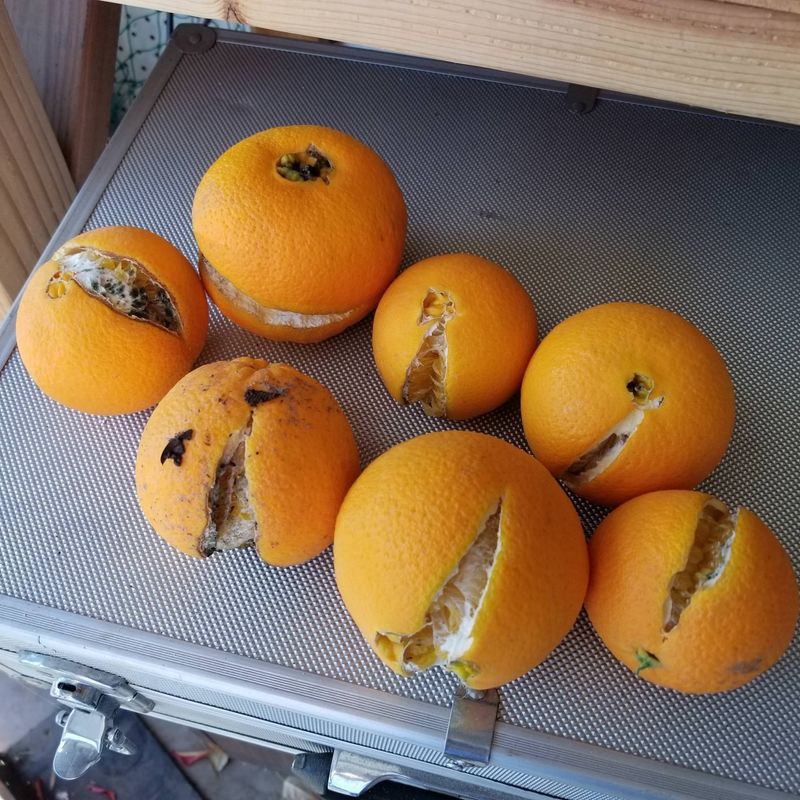
One of the most common watering mistakes in citrus care is inconsistent irrigation. Skipping waterings here and there, or going longer between sessions during busy weeks, might not seem like a big deal.
Over time, though, that inconsistency creates a cycle of dry stress followed by rapid rehydration that can be hard on developing fruit.
When a citrus tree finally receives a deep watering after a dry stretch, it pulls moisture into the fruit quickly. The pulp swells at a faster rate than the rind can comfortably accommodate, and that rapid growth surge is a major trigger for splitting.
The fruit essentially outgrows its skin in a short period of time.
Setting up a consistent irrigation schedule and sticking to it throughout the growing season helps avoid these dramatic swings.
Drip irrigation systems with timers are popular in Arizona because they can deliver water at regular intervals without relying on a homeowner remembering to turn on the hose.
Consistency matters more than the exact amount of water given at any one time.
Fruit sizing up in late summer through fall is especially vulnerable to growth surges. During this window, any sudden influx of water after a dry period can trigger splitting even in trees that have been relatively healthy all season.
Smoothing out the watering schedule during late summer and fall is one of the more practical ways to lower splitting risk in Arizona home orchards.
4. Too Much Water After A Dry Spell Can Cause Splitting
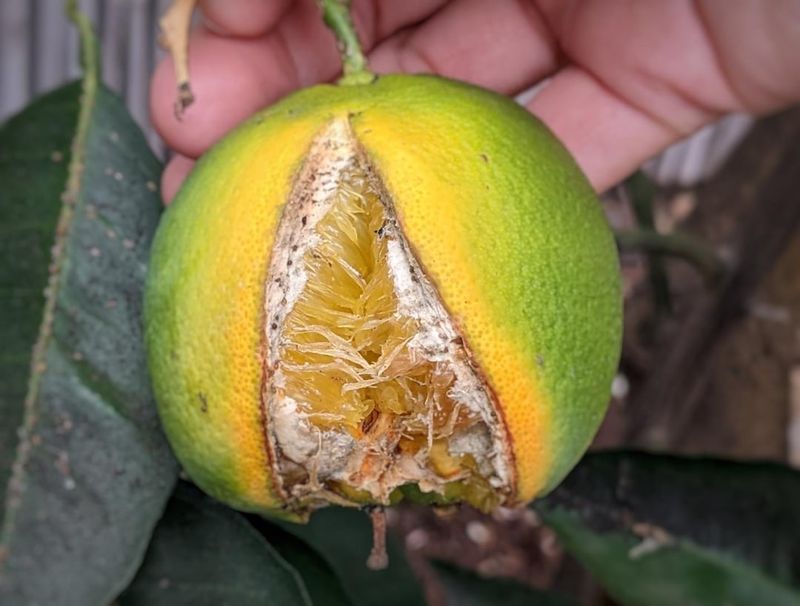
Finding a cracked grapefruit or mandarin right after a heavy monsoon rain or an unusually generous watering session is something many homeowners have experienced. The timing is not a coincidence.
Giving citrus trees a large amount of water after they have been dry for a while is one of the most direct triggers for fruit splitting.
During the dry period, the fruit rind stops growing at the same rate as the internal flesh. The rind becomes less elastic and more brittle.
When a flood of water arrives suddenly, the juice-filled cells inside the fruit expand rapidly, and the rind simply cannot stretch quickly enough to keep up with that surge.
Arizona monsoon season, which typically runs from mid-June through September, can complicate citrus watering management. A series of dry days followed by a heavy monsoon storm can deliver exactly the kind of moisture shock that triggers splitting.
Homeowners who supplement monsoon rainfall with additional irrigation need to be thoughtful about not over-watering right after a storm.
Reducing the amount of water given at any one time, especially after a dry stretch, may help moderate the pace of fruit growth. Gradually increasing water availability rather than jumping from very dry to very wet is a gentler approach for the fruit.
Keeping track of rainfall and adjusting irrigation accordingly is a habit worth building if you grow citrus in Arizona.
5. Shallow Watering Leaves Citrus Roots Struggling
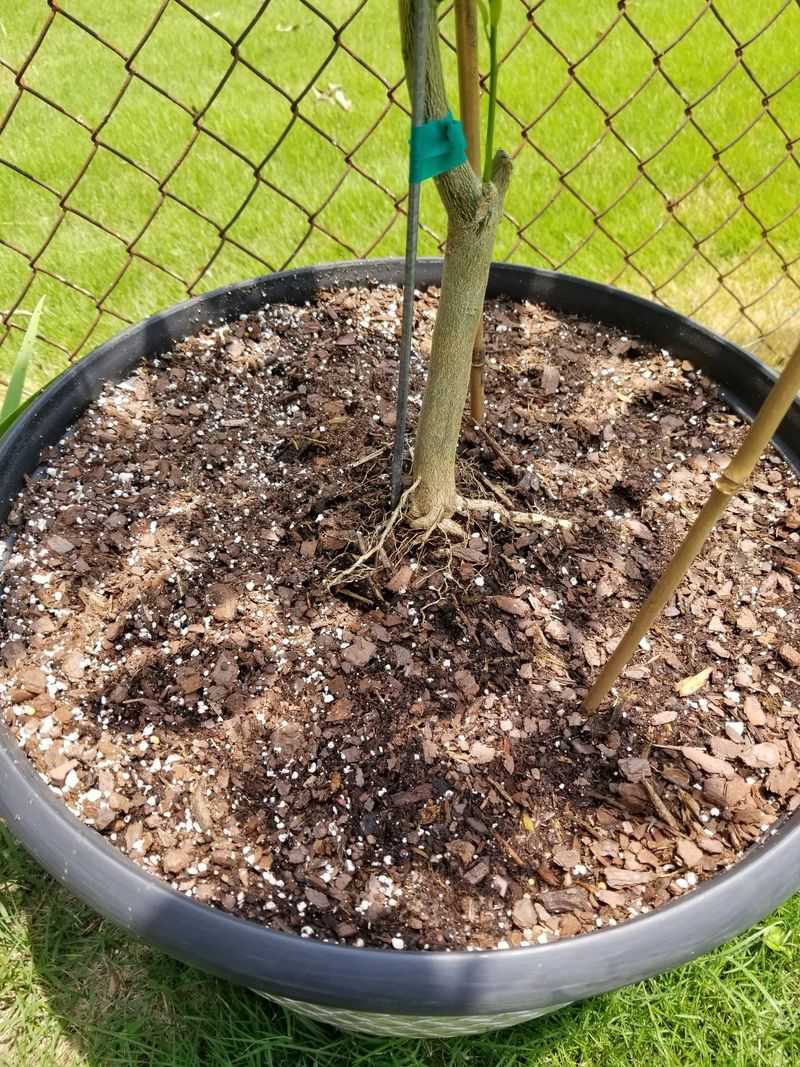
A quick spray of water around the base of a citrus tree might look like sufficient irrigation, but shallow watering often does more harm than good in Arizona. When water only penetrates the top few inches of soil, citrus roots are encouraged to stay near the surface.
Surface roots are far more exposed to the intense heat and are the first to dry out between waterings.
Shallow watering also means the tree never builds up a deep reservoir of moisture in the soil. During hot spells between waterings, the tree draws on whatever moisture is available, and with a shallow root system, that supply runs out quickly.
The tree then experiences drought stress even if it is being watered regularly on a surface level.
That repeated cycle of mild drought stress followed by shallow rehydration contributes to the internal moisture swings that make fruit splitting more likely.
The fruit experiences the same boom-and-bust moisture pattern as the root zone, and the rind pays the price when growth surges happen.
Watering slowly and deeply, allowing water to soak down 18 to 24 inches into the soil, encourages roots to grow deeper where moisture is more stable.
In Arizona, this often means running drip emitters for longer periods at lower flow rates rather than short, frequent bursts.
Deep roots give the tree better access to consistent moisture, which can help keep fruit development steadier throughout the season.
6. Deep Irrigation Helps Keep Fruit Growth Steadier
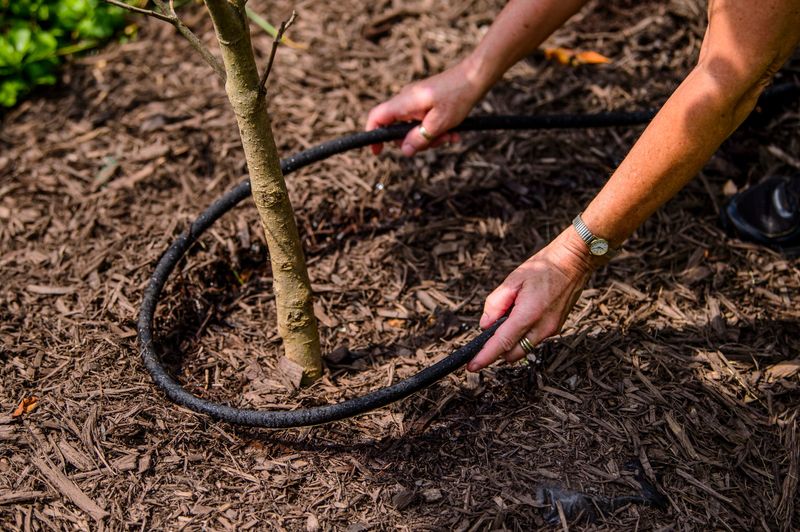
Healthy citrus fruit growth depends on a steady, reliable supply of moisture throughout the season. Deep irrigation is one of the most practical tools homeowners have to help reduce the moisture swings that lead to splitting.
When water reaches deep into the soil, it creates a buffer that the tree can draw from gradually rather than in desperate gulps after dry spells.
In Arizona, deep watering typically means allowing water to penetrate at least 18 to 24 inches below the soil surface. For mature citrus trees, the root zone extends well beyond the trunk, often reaching out to the edge of the tree canopy or beyond.
Placing drip emitters or soaker hoses at the drip line rather than right at the base helps deliver water where the active roots can actually use it.
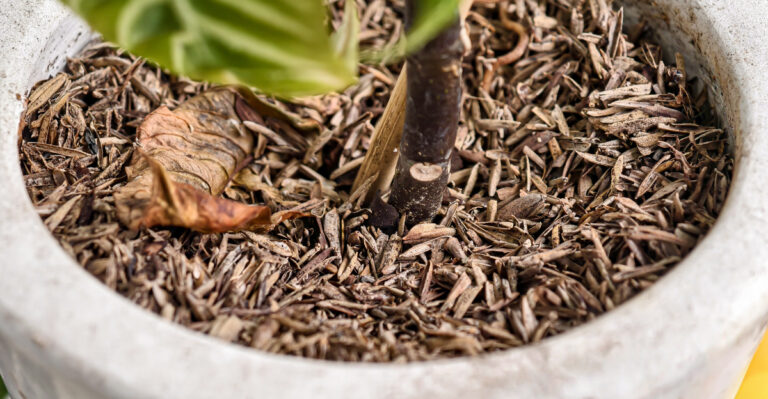
Applying a layer of organic mulch around the base of the tree, keeping it a few inches away from the trunk, helps the soil retain moisture between irrigation sessions.
Mulch reduces evaporation from the soil surface, which is especially valuable in Arizona where summer heat can pull moisture out of the ground quickly.
A mulch layer of three to four inches can make a meaningful difference in how long the soil stays moist after watering.
Consistent deep irrigation does not guarantee that no fruit will split, but it helps smooth out the moisture extremes that put the most pressure on developing rinds during Arizona growing seasons.
7. Potassium Deficiency Can Add To Fruit Splitting Risk
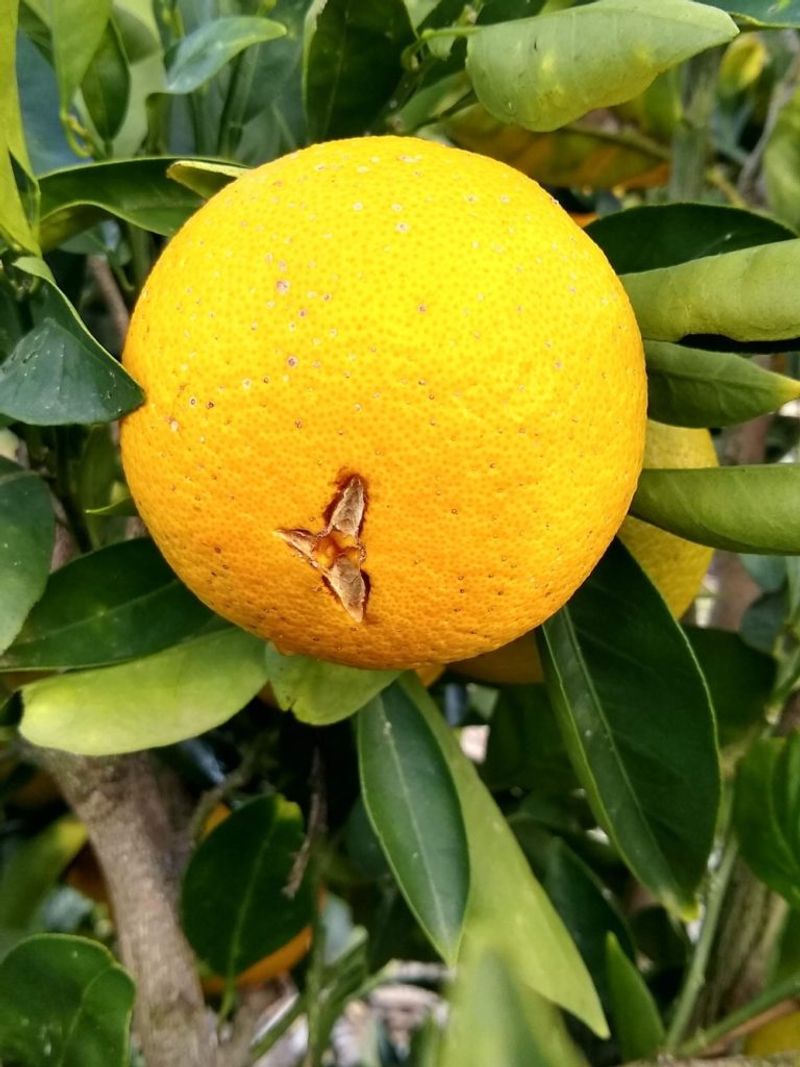
Most conversations about citrus fruit splitting focus on water, and water management is genuinely the biggest piece of the puzzle. Nutrition, though, is a factor that sometimes gets overlooked.
Potassium plays a role in rind development, and trees that are low in this nutrient may produce fruit with thinner, weaker rinds that are more prone to cracking under pressure.
Potassium helps regulate water movement within plant cells and contributes to the overall strength and thickness of fruit skin. When a citrus tree does not have adequate potassium, the rind tissue may develop less robustly than it should.
A thinner rind has less ability to expand gradually as the fruit grows, making it more vulnerable to splitting when internal pressure builds up.
In Arizona soils, nutrient availability can vary depending on soil type, pH, and how much organic matter is present. Alkaline desert soils, which are common across much of Arizona, can sometimes affect how well citrus trees take up certain nutrients.
A soil test can help identify whether potassium or other nutrient levels are out of range for healthy citrus growth.
Applying a balanced citrus fertilizer that includes potassium, following label directions for timing and rates, is a reasonable step for homeowners growing citrus in their yards.
Fertilizing at the right time of year, typically in late winter and again in late spring, supports steady tree health without pushing excessive growth that could stress developing fruit.
8. Some Citrus Varieties Split More Easily Than Others
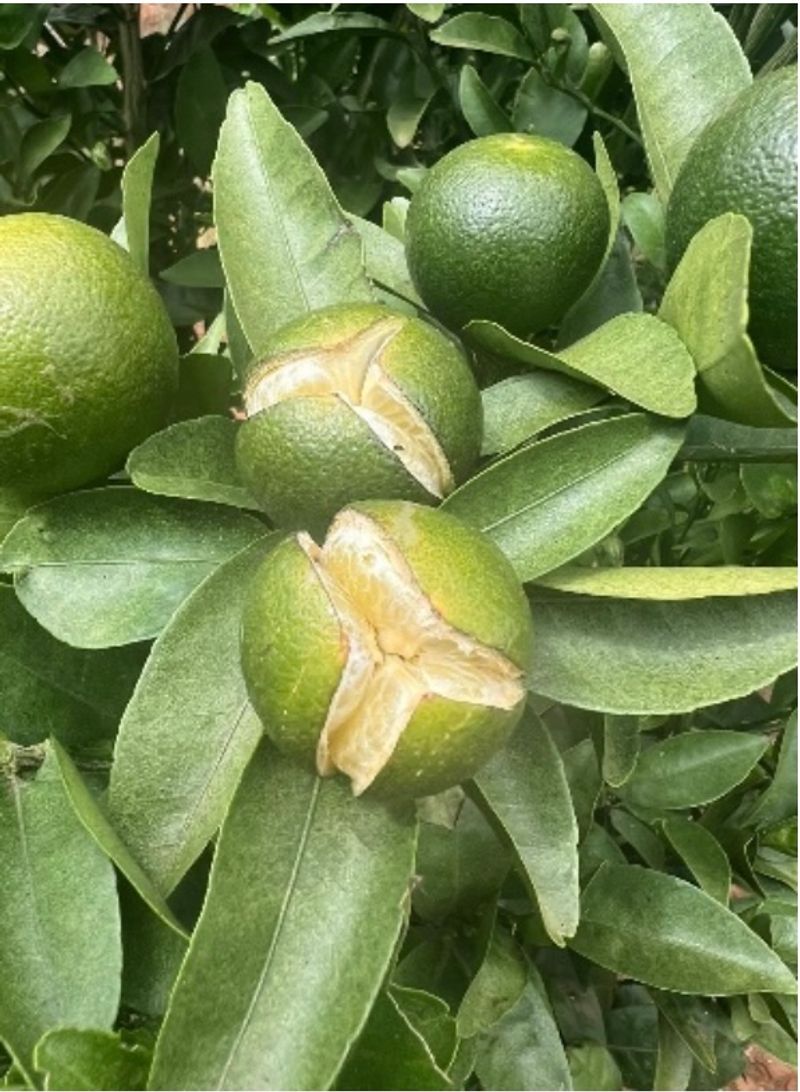
Not every citrus tree in your Arizona yard carries the same level of splitting risk. Variety makes a real difference in how susceptible fruit is to cracking before harvest.
Some types of citrus naturally have thinner rinds or grow fruit that responds more dramatically to moisture swings, which makes them more vulnerable to splitting under Arizona conditions.
Mandarins and mandarin hybrids, including clementines and some easy-peel varieties, are often noted as being among the more splitting-prone types of citrus.
Their rinds tend to be thinner and looser relative to the fruit inside, which means the buffer between internal pressure and the outer skin is smaller.
When moisture surges occur, these varieties may split more readily than thick-skinned types.
Navel oranges can also show splitting susceptibility, particularly when they go through significant moisture fluctuations during the late stages of fruit development.
Grapefruits and lemons tend to be somewhat less prone to splitting, though no variety is completely free from the risk when conditions are stressful enough.
Homeowners who have experienced repeated splitting with a particular variety may want to consider whether a different citrus type might perform better in their specific yard conditions.
Pairing a more splitting-resistant variety with consistent deep irrigation and good soil management gives backyard citrus the best chance of reaching harvest with fruit intact.
Talking with a local nursery familiar with Arizona growing conditions can help with variety selection.