Most Arizona Homeowners Are Clueless About This Desert Tree’s Power — It’s Doing More Than You Think
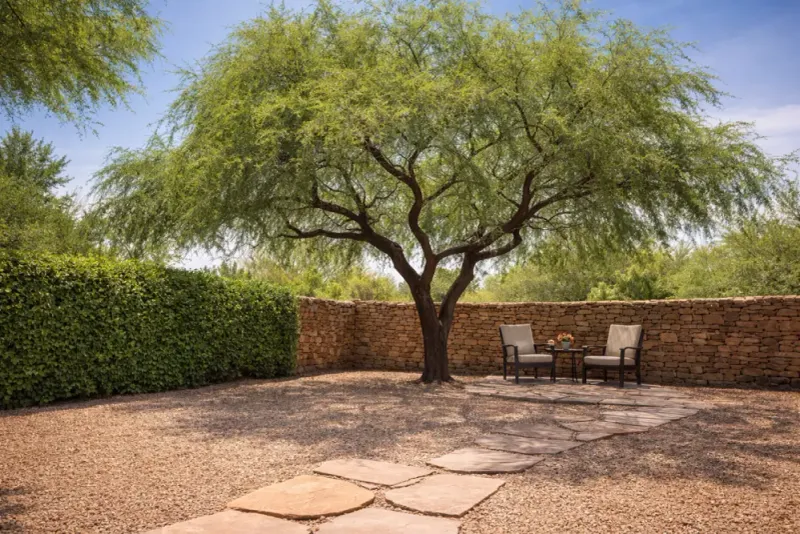
Velvet mesquite grows across the low desert, and most people see it as just a shade tree. But this native Arizona species quietly does a lot more for a yard than block the afternoon sun.
From feeding pollinators to sheltering wildlife, it earns its place in ways that are easy to overlook until you know what to look for.
The tree in question is velvet mesquite
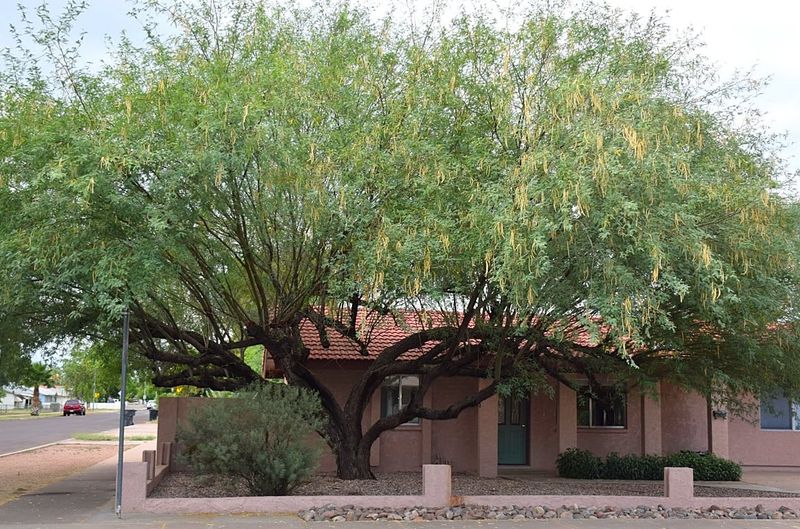
Not every tree called mesquite is the same plant. Velvet mesquite, known scientifically as Prosopis velutina, is the species native to Arizona’s low desert.
Its leaves and young stems have a soft, fine fuzz that gives the tree its name, and it has adapted over thousands of years to the alkaline soils, scorching summers, and unpredictable monsoon rains that define the Sonoran Desert.
Other trees sold under the mesquite label include honey mesquite, Chilean mesquite, and various South American hybrids. Some of those are cultivated specifically for fast growth or a tidier canopy, but they come with different water needs, thorn patterns, and wildlife relationships.
University of Arizona Campus Arboretum records for Prosopis velutina document traits that belong to this species specifically, not to the broader mesquite group.
Before assigning any benefit or warning to a tree in your yard, confirming the species matters. A velvet mesquite and a Chilean mesquite may look similar at a glance, but their long-term behavior in a low-desert yard can differ in meaningful ways.
Knowing which one you have, or which one you are choosing, is the first practical step.
The yard-level payoff
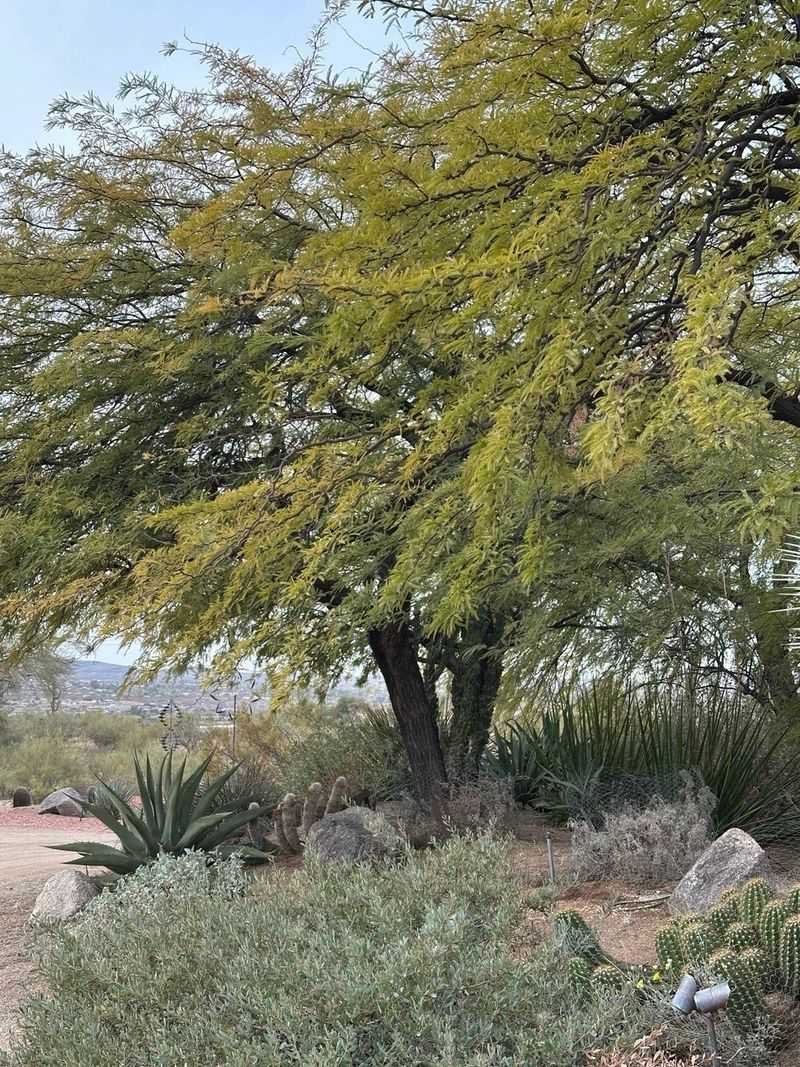
Shade is the obvious reason homeowners plant velvet mesquite, and the canopy delivers on that front during Arizona’s brutal afternoons. The payoff goes further, though, because the tree functions as a small ecosystem when it matures.
Each spring, velvet mesquite produces clusters of pale yellow, catkin-style flowers that attract native bees, honeybees, and other pollinators searching for nectar and pollen. The UA Campus Arboretum’s profile of velvet mesquite in Tucson’s Dunbar Spring neighborhood notes the tree’s value to pollinators and its role in supporting wildlife through its pods and canopy cover.
Birds may use the branches for perching and nesting, and the long seed pods that drop in summer can attract ground-feeding birds and small mammals.
None of that is guaranteed for any particular yard. Local habitat, nearby food sources, and the age and size of the tree all influence which animals show up.
What the tree does reliably provide is the structure and resources that make those visits possible. For a homeowner trying to build a yard that works with the desert rather than against it, that combination of shade, flowers, and pods is a meaningful starting point.
Habitat value is not pest control
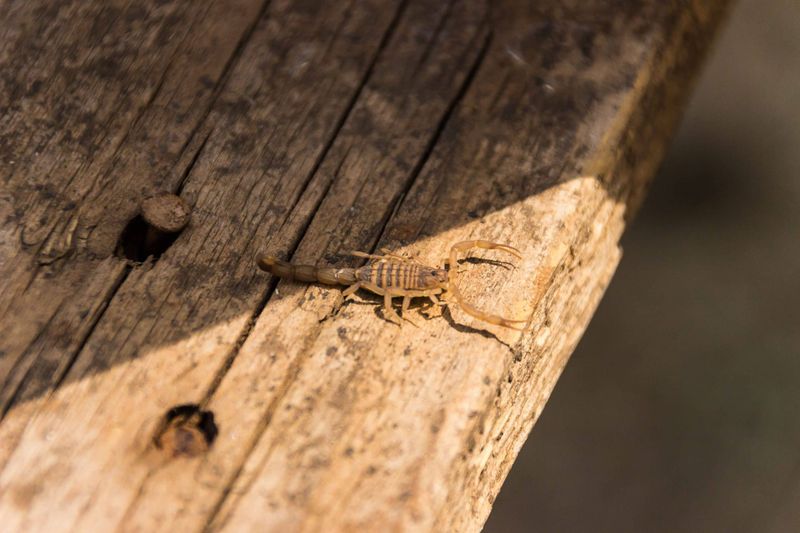
Velvet mesquite supports pollinators and can provide cover for birds and small animals. That habitat role is real, but it does not extend to scorpion control.
No evidence links planting mesquite to fewer scorpions in or around a home.
Your Arizona Garden Changes Every Week. Your Plan Should Too.
Gardening in Arizona changes quickly throughout the season. Every Friday you’ll receive a simple weekly plan showing exactly what to plant, prune, fertilize, harvest, and protect so you never miss the right timing.
Scorpion management focuses on a different set of actions entirely. UA Extension guidance on scorpions recommends reducing the hiding places that bark scorpions rely on near structures.
That means keeping wood piles, debris, and dense ground cover away from exterior walls, and pruning trees and shrubs so their branches do not contact the house. Those steps address how scorpions move and shelter, not what trees grow nearby.
Maintaining clearance between any vegetation and your home’s walls is sound pest-management practice regardless of which trees you plant. Velvet mesquite can be part of a well-managed yard, but treating it as a scorpion deterrent sets up a false expectation.
Keep the tree’s habitat value in one column and your pest-management routine in another, and both will serve you better.
Drought-tolerant still needs water
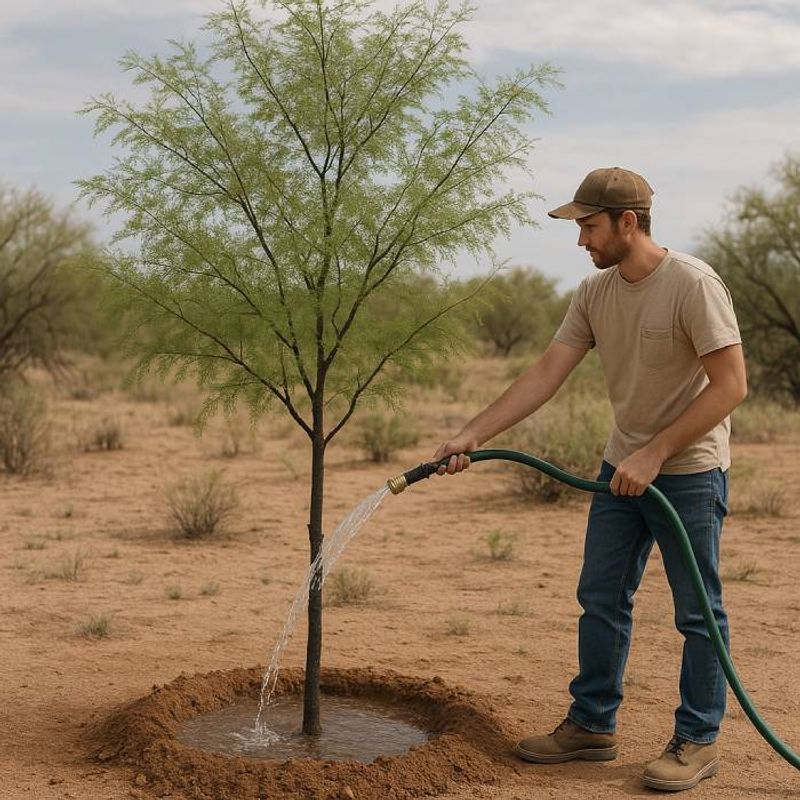
Velvet mesquite handles heat and dry conditions better than most landscape trees, but calling it a no-water plant would be misleading. Young trees need more frequent irrigation during the establishment period, which can stretch across the first two or three years depending on soil, tree size, and season.
Skipping water too early is one of the more common reasons newly planted mesquites struggle.
Once a tree is established, its irrigation needs drop, but they do not disappear. During extended dry stretches, especially before the monsoon arrives or after an unusually dry winter, supplemental deep watering can help the tree stay healthy and maintain its canopy.
UA Extension guidance on mesquite and palo verde in the urban landscape notes that mesquite can actually need more water than palo verde or ironwood, so comparing it to those species as a benchmark is useful when planning your irrigation setup.
Where the water lands matters as much as how much you apply. Watering only at the trunk does little for a tree whose roots spread well beyond the canopy edge.
Distribute water across the full root zone, let it soak in slowly, and allow the soil to dry between sessions. Frequency should reflect your specific soil type, the tree’s current size, and current weather rather than a fixed calendar schedule.
Placement determines whether the trade-offs work
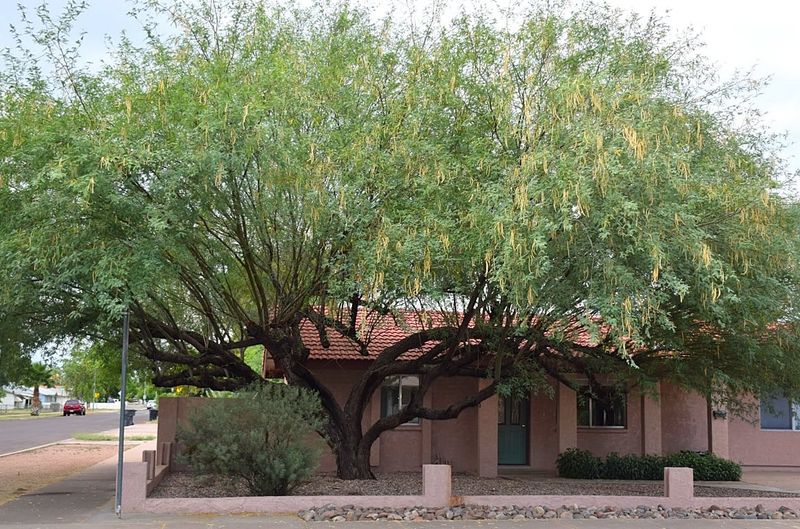
A velvet mesquite planted in the right spot can be one of the most functional trees in a low-desert yard. Planted in the wrong spot, its best traits become the biggest headaches.
Getting placement right before the tree goes in the ground saves a lot of corrective work later.
Mature velvet mesquite can exceed 30 feet in height and spread under favorable conditions, though individual trees vary depending on soil depth, water availability, and growing conditions. That eventual size means a tree planted close to a patio, driveway, or foundation may eventually crowd those structures or require heavy pruning to stay manageable.
Thorns are another factor worth checking before you choose a specific specimen, since thorn length and density can vary and matter a great deal near foot-traffic areas.
Seasonal litter is part of the picture too. Fallen flowers appear in spring, pods drop through summer, and the tree sheds leaves during cold or dry periods.
Near a pool or a frequently used outdoor seating area, that litter requires regular cleanup. Away from high-traffic zones, the same material becomes mulch and wildlife forage.
Reviewing the expected mature size and thorn characteristics of the specific tree you are considering, rather than assuming every velvet mesquite behaves the same way, gives you a more accurate picture of what you are committing to.
Plant during a cooler window and establish it well
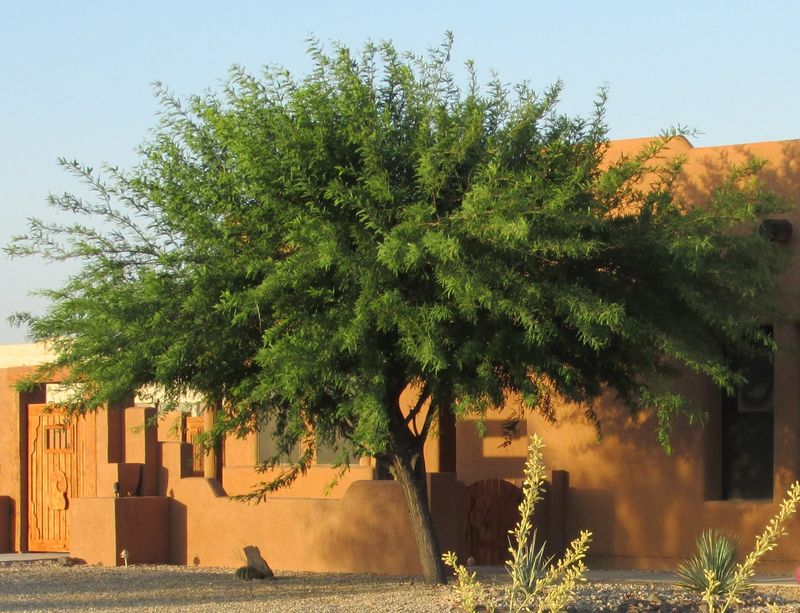
Timing a new tree planting around Arizona’s heat is one of the more straightforward ways to improve its odds of surviving establishment. Fall is a reliable window for low-desert plantings.
October gives roots time to settle and grow before summer returns, and the UA Cooperative Extension October gardening guide for Pima County identifies fall as a good period to get new plants in the ground.
Early spring is another workable option. The March gardening guide for Pima County from UA Extension lists March among the better months for new landscape plants, before triple-digit temperatures arrive and stress newly disturbed roots.
Midsummer planting is harder on young trees and demands more intensive irrigation to compensate.
How the tree goes into the ground matters as much as when. UA Extension planting guidelines for container trees and shrubs recommend setting the top of the root ball level with or slightly above the surrounding grade rather than below it, which helps avoid water pooling around the trunk.
Backfill with the native soil that came out of the hole rather than amended mixes, which can create drainage problems at the boundary between soil types. Keep mulch a few inches away from the trunk, spread it across the root zone to hold moisture and moderate soil temperature, and plan your irrigation schedule around the realistic water needs covered in the previous section.
A good fit when shade and habitat outweigh the upkeep
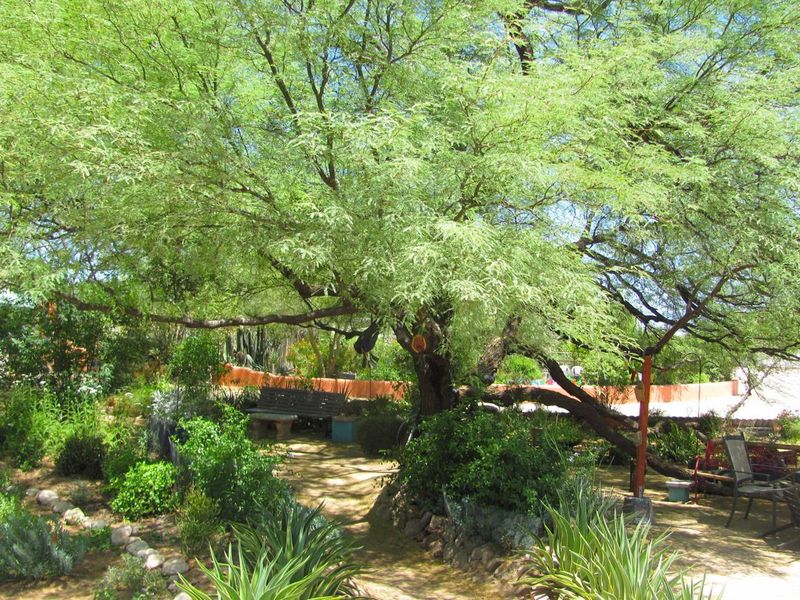
Velvet mesquite earns its place in a low-desert yard when the homeowner goes in with clear expectations. Shade and habitat potential are real benefits.
The flowers draw pollinators in spring, the pods and canopy can attract birds and small animals, and a mature tree delivers meaningful afternoon shade without the water demand of a non-native species.
The trade-offs are just as real. Establishment irrigation is not optional, mature size requires thoughtful placement, thorns and seasonal litter add to the maintenance load, and the tree will not manage scorpions or automatically improve your soil.
Those are separate concerns with separate solutions.
For homeowners who want a native tree that functions as more than a landscape ornament and who can work with its size and upkeep, velvet mesquite is a strong candidate. The tree rewards patience: it grows slowly into something the desert already knows how to use.