The New York Native Shrubs Homeowners Plant Once For Privacy And See Grow Thicker Every Year
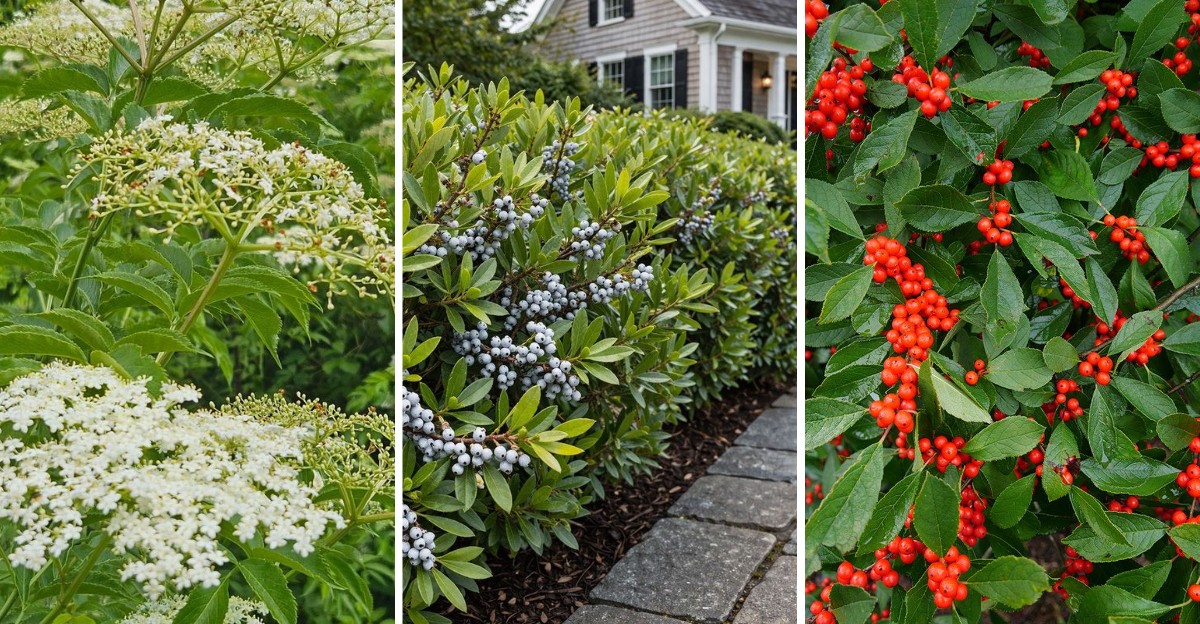
Your neighbor’s patio chairs don’t need to be part of your morning view. Across New York, homeowners are swapping bare fences for living walls that rustle, bloom, and fill in on their own.
Picture creamy flowers in June, scarlet berries in January, and birds chattering in the branches all year. It’s a privacy screen that doubles as a backyard show.
Many native shrubs spread by their roots, so the screen gets fuller each season without much fuss. They already handle cold winters, heavy clay, and soggy spring soil with ease.
Some offer tasty fruit, while others glow with color when snow covers the yard. A few even hold their leaves well into winter.
The shrubs below deliver privacy that improves with age. One of them might be the perfect fit for your yard.
1. Gray Dogwood For Fast, Thicket-Forming Growth
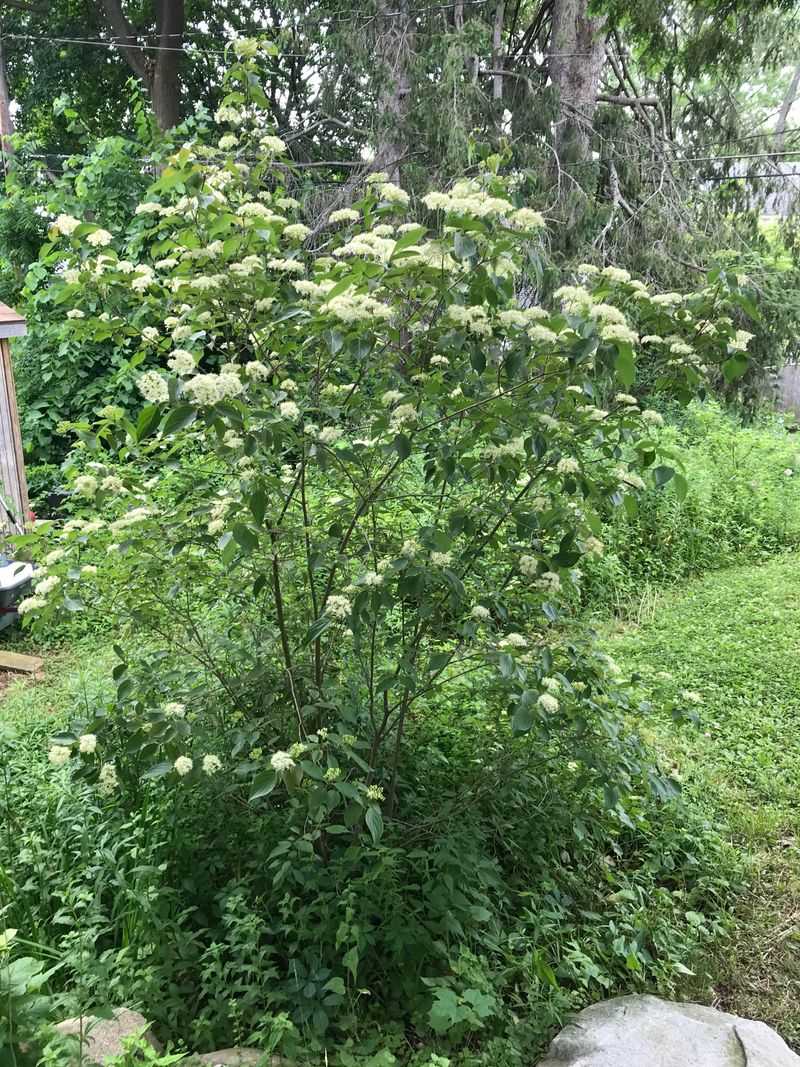
Some shrubs sulk after planting, but gray dogwood gets right to work. Plant a few in spring, and new shoots often pop up nearby within two seasons.
Known to botanists as Cornus racemosa, it grows about 8 to 12 feet tall. Over time, its upright stems knit together into a tight, twiggy colony.
Homeowners in New York love how forgiving it is. Full sun, partial shade, wet clay, or dry gravel rarely slow it down much.
For the thickest screen, space young plants about four to six feet apart. Their roots will send up suckers that fill the gaps faster than you might expect.
Late spring brings flat clusters of creamy white flowers. Bees and small butterflies visit them eagerly on warm afternoons.
Once summer ends, the show shifts to white berries on bright red stalks. Birds such as catbirds and bluebirds strip them quickly, so enjoy the view early.
Fall adds another bonus with leaves that turn a dusky purple-red. Even bare in winter, the dense stems still block a surprising amount of view.
Here is a helpful tip for tidy yards. Mow around the edges of the planting to keep suckers from wandering into your lawn.
Every few years, cut the oldest, thickest stems down to the ground. Fresh growth replaces them, keeping the thicket full from top to bottom.
Budget gardeners will appreciate its low price at native plant sales. A handful of small plants can grow into a full hedge without costing a fortune.
2. Red-Osier Dogwood For Bright Red Winter Stems
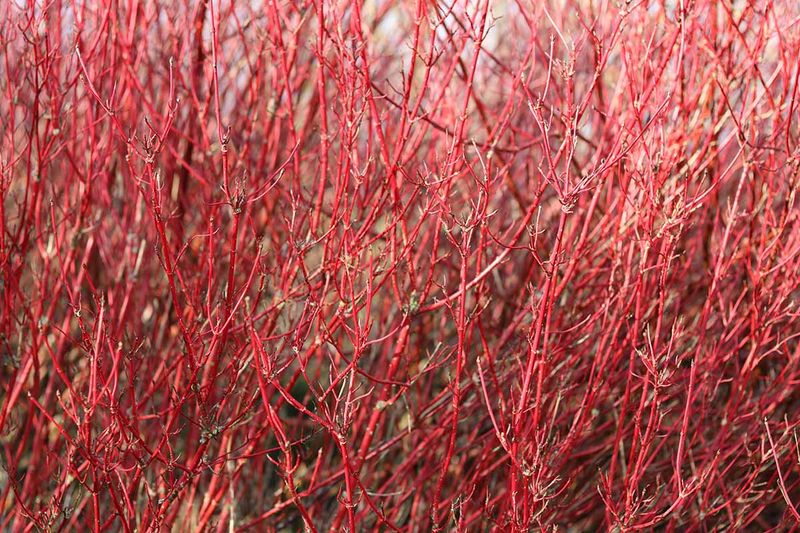
Imagine a gray February morning when your yard suddenly glows like a campfire. Red-osier dogwood makes that happen, with stems the color of cranberries against white snow.
Its scientific name is Cornus sericea, and it usually reaches 6 to 9 feet tall. Stems bend and root where they touch the ground, forming wide, leafy thickets.
Moist spots are where it truly shines. Low corners, rain gardens, and pond edges suit it well, though average soil works too.
Color matters with this plant, so here is the secret. Young stems show the brightest red, while older ones fade to a dull brown.
Each early spring, remove about one third of the oldest stems at ground level. You will get bold color and a denser base at the same time.
Your New York Garden Changes Every Week. Your Plan Should Too.
Gardening in New York changes quickly throughout the season. Every Friday you’ll receive a simple weekly plan showing exactly what to plant, prune, fertilize, harvest, and protect so you never miss the right timing.
Summer brings clusters of small white flowers and later pale berries. Songbirds snack on them, and deer may browse the tips in hungry years.
Across upstate New York, you will spot wild patches along streams and roadside ditches. Seeing them there proves how well they handle deep cold and heavy snow.
For privacy, plant in a staggered double row about five feet apart. Leaves create a solid wall in summer, and stems add a colorful screen in winter.
Fun fact for curious readers: the word osier means a flexible, willowy branch. Native peoples once wove the bendy stems into baskets and used them in other crafts.
3. Black Chokeberry For Spreading Colonies
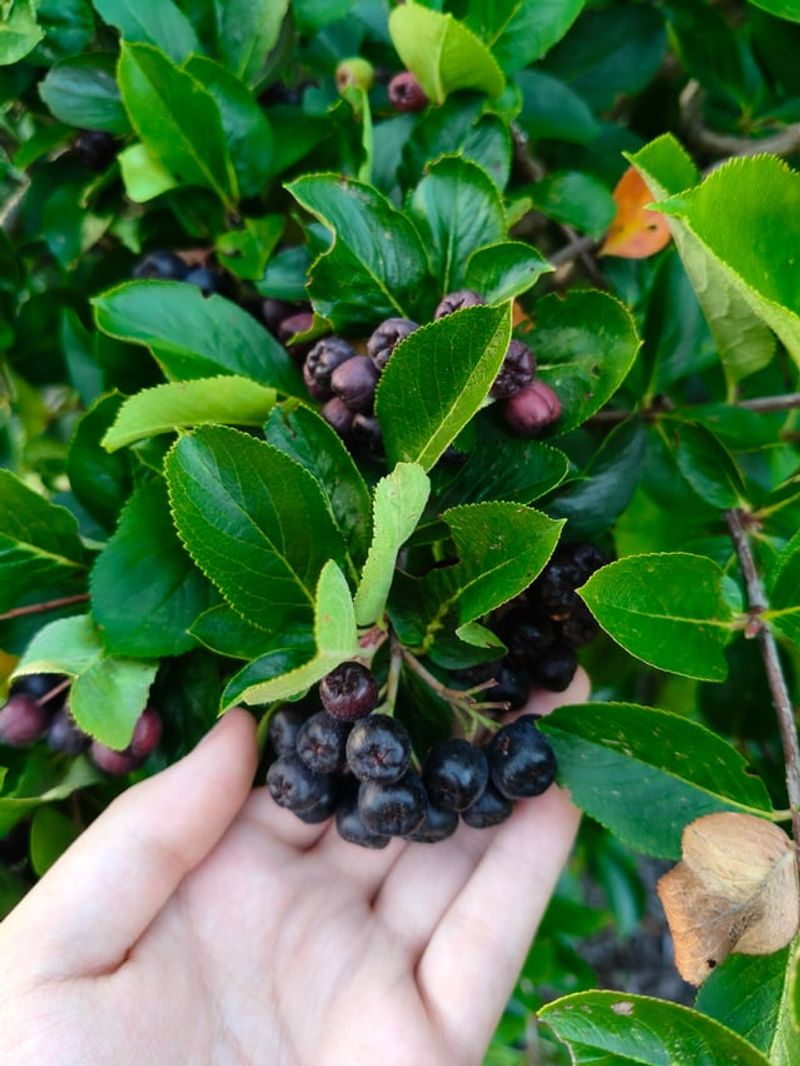
Don’t let the name scare you off. Black chokeberry sounds harsh, yet it may be one of the friendliest shrubs in any garden.
Called Aronia melanocarpa, it grows about 3 to 8 feet tall. Root suckers pop up around the base, slowly creating a thick, spreading colony.
Shorter height makes it handy for lower screens. Use it to hide air conditioners, trash bins, or the gap under a deck.
Spring opens with clusters of small white flowers. Pollinators arrive quickly, and the blooms look lovely against glossy green leaves.
By late summer, shiny black berries weigh down the branches. They taste tart raw, but many people bake them into jams, juices, and muffins.
Autumn might be its finest moment. Leaves turn fiery red and deep purple, giving your yard a burst of color before winter.
Growing conditions are easy to meet. Sun or part shade works, and it handles both wet spots and fairly dry soil.
Plant groups of five or more, spaced about three feet apart. Within a few years, they will merge into one bushy mass.
Want fewer suckers in a tidy bed? Simply snip unwanted shoots at soil level each spring, and share extras with friends.
Its berries often cling to stems into winter. Hungry birds eat them late in the season when other food is scarce.
4. American Hazelnut For Dense Growth And Wild Nuts
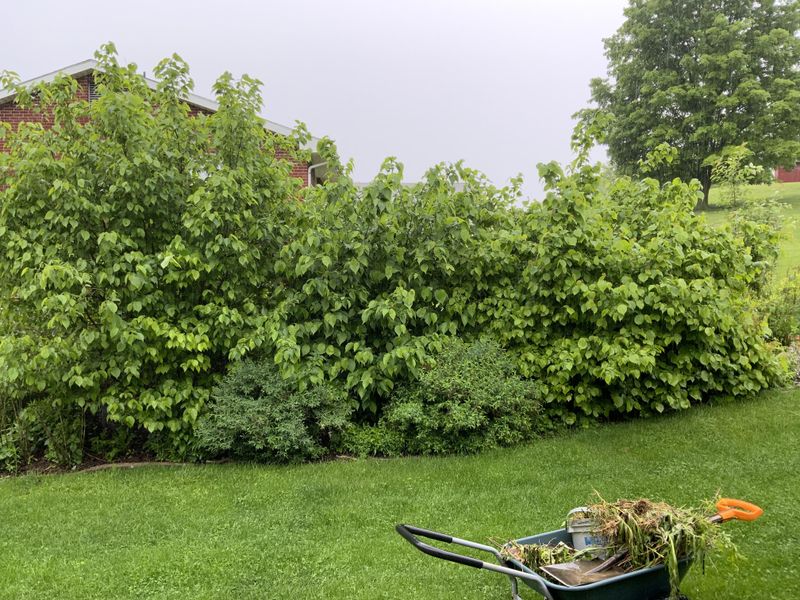
Picture a privacy hedge that also hands you a snack. American hazelnut does just that, producing small, sweet nuts tucked inside frilly green husks.
Known as Corylus americana, it forms a bushy clump of many stems. Mature plants usually reach 6 to 15 feet tall and spread steadily.
Broad, fuzzy leaves overlap into a solid wall of green. By midsummer, you can barely see through a well-established row.
Early spring surprises many gardeners. Long, dangling catkins appear before the leaves, swaying in the wind like tiny yellow tassels.
Nut harvesting takes some speed, though. Squirrels, blue jays, and chipmunks are experts at grabbing them first, often in late August.
Here is a useful trick for hungry humans. Pick husks when they start turning brown, then let them dry indoors for a week or two.
Planting two or more shrubs improves nut production. Cross-pollination between plants means fuller clusters and better yields.
Soil needs are relaxed, and it handles sun or light shade. Many New York yards with average soil grow it without trouble.
Fall color rounds things out nicely. Leaves shift to shades of yellow, orange, and rusty red before dropping.
Its spreading roots also help hold soil on slopes. That makes it a smart choice for hillsides that tend to wash out after storms.
5. Nannyberry For A Tall, Suckering Screen
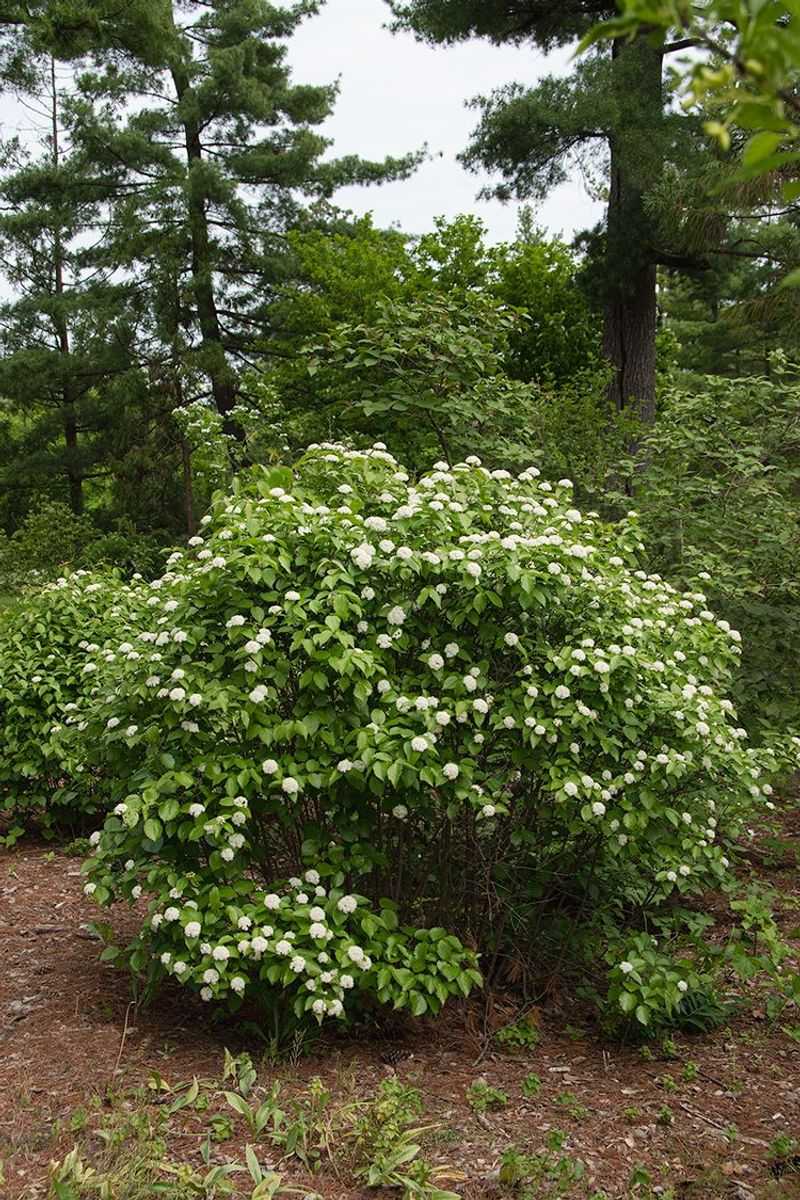
Got a neighbor’s second-story window staring into your yard? Nannyberry is the tall answer many gardeners wish they had planted sooner.
Viburnum lentago can grow 10 to 25 feet, acting like a shrub or small tree. Its suckering roots help it spread into a leafy hedgerow.
Height is its biggest selling point. Few native shrubs can block upper views as well without looking stiff or formal.
In May, creamy white flower clusters cover the branches. They carry a light, sweet scent that drifts across the yard on calm evenings.
Blue-black berries follow in late summer. People have eaten them for generations, and they taste a bit like prunes when fully ripe.
Birds adore them as well, especially during cold snaps. Robins and cedar waxwings often visit for a winter feast.
Soil flexibility makes it easy to place. Nannyberry tolerates wet lowlands and drier upland ground, which suits many New York properties.
Give each plant plenty of elbow room, about eight to ten feet apart. Suckers will fill the spaces between them over several years.
Keep an eye out for powdery mildew in shady, humid spots. Good airflow and full sun usually keep leaves healthy and clean.
Fall paints the foliage in rich reddish purple. Glossy leaves look polished all season, even before that color change arrives.
6. Arrowwood Viburnum For A Thick Summer Wall
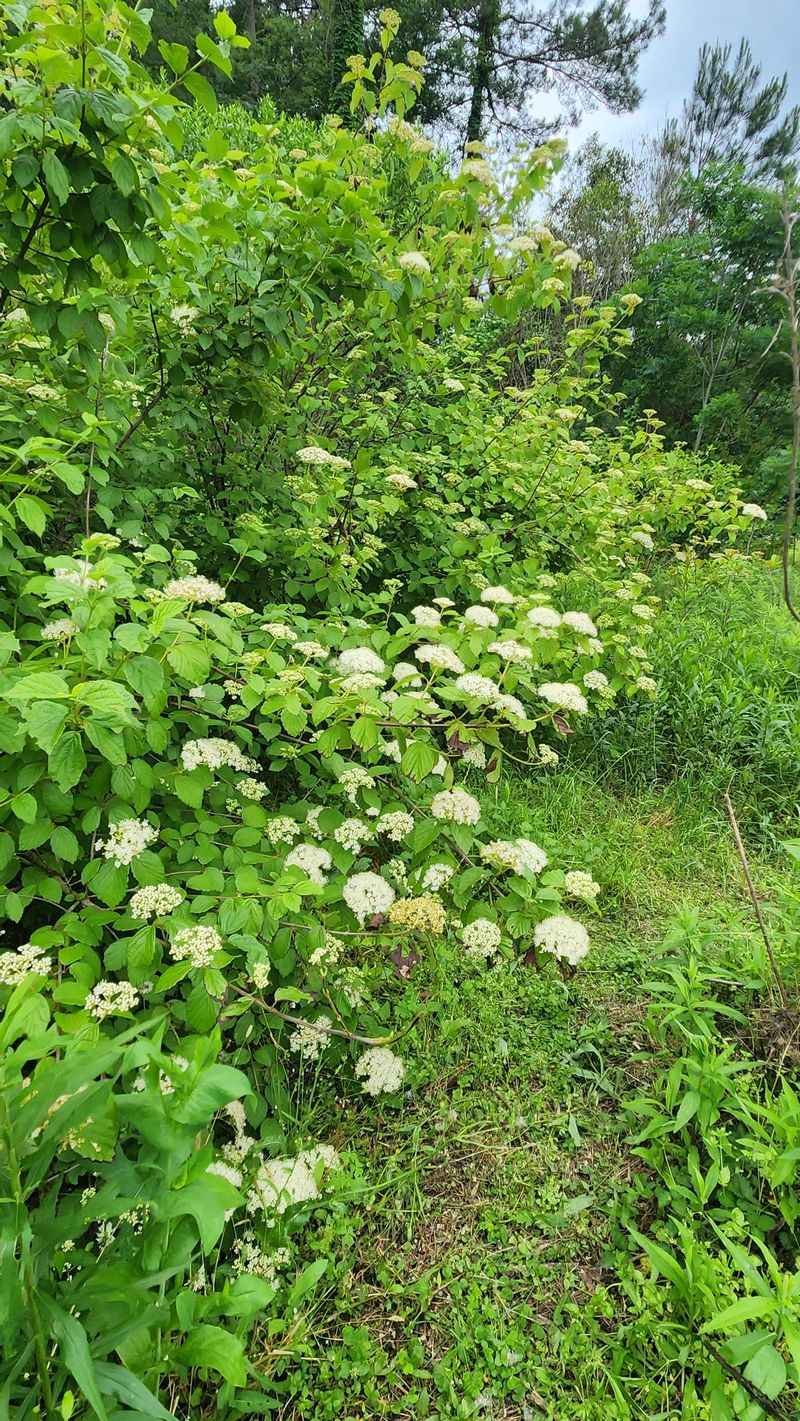
Long before fences existed, Native Americans used this shrub’s straight stems for arrow shafts. Today, homeowners prize those same stems for building a thick green wall.
Arrowwood viburnum, or Viburnum dentatum, grows about 6 to 12 feet tall. Its upright, multi-stemmed shape fills space evenly from the ground up.
Summer is when it truly earns its keep. Toothy, dark green leaves stack so closely that backyard barbecues feel nicely private.
Late spring flowers look like flat white lace. Butterflies and native bees crowd around them during bloom time.
Blue-black berries ripen by late summer. Migrating birds depend on them for fuel before long autumn flights south.
Toughness is another reason gardeners choose it. Clay soil, sandy spots, full sun, and partial shade all seem acceptable to this shrub.
Viburnum leaf beetle is a serious threat, since Cornell rates arrowwood highly susceptible. Prune off twigs with egg scars each winter and check leaves often in spring.
For a fast screen, space plants about five feet apart in a single row. Many gardeners see a solid hedge in about three to four years.
Autumn leaves glow yellow, orange, and wine red. The shifting colors make this workhorse shrub look surprisingly showy.
Planting a few different arrowwood plants helps berry production. Mixed seedlings pollinate one another better than identical clones.
7. Winterberry For Red Berries And Spreading Stems
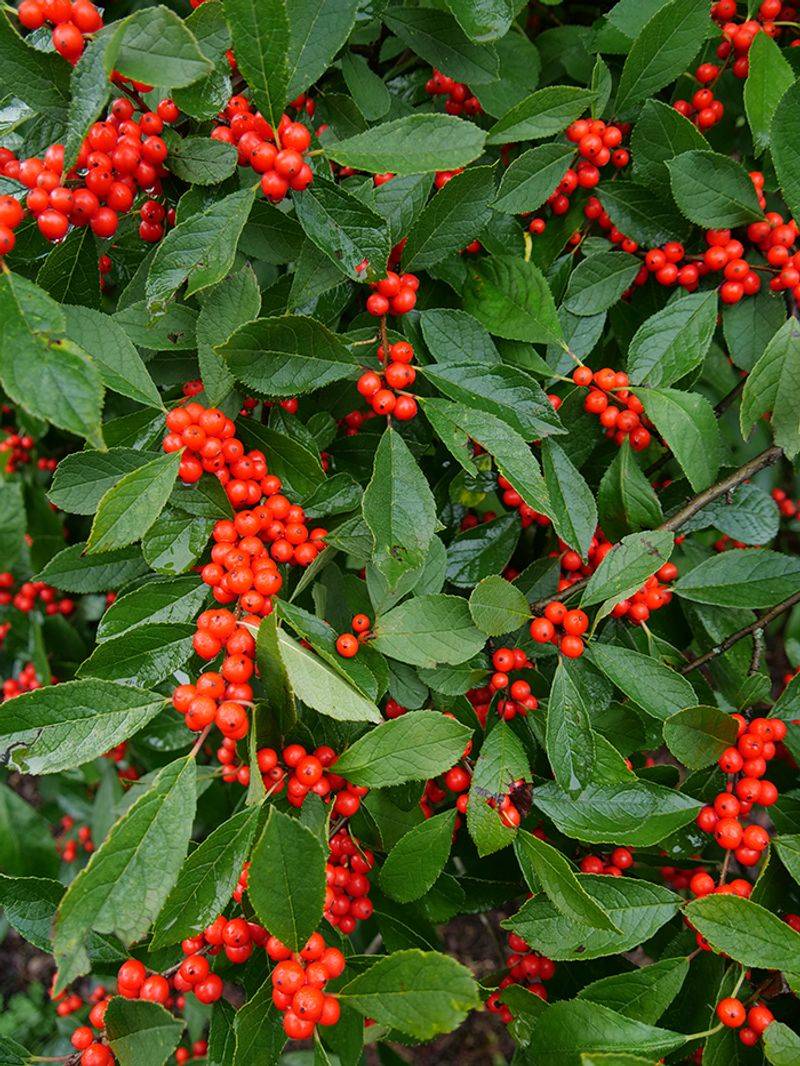
Holiday decorators pay good money for branches like these. Grow winterberry, and you can simply step outside with pruners each December.
Ilex verticillata is a holly that drops its leaves each fall. After that, bare stems stay packed with bright red berries all winter.
Most plants reach 6 to 12 feet tall and wide. In moist soil, they spread by suckers, creating dense, bushy colonies.
Wet ground suits it perfectly. Soggy lawn corners and swampy edges, common across Long Island and the Hudson Valley, are ideal spots.
One detail trips up many beginners. Only female plants make berries, and they need a male plant growing nearby.
A good rule is one male for every five to ten females. Nurseries usually label them clearly, so ask before you buy.
Summer leaves are dark green and fairly dense. Pair winterberry with evergreen shrubs if you want year-round screening.
Birds treat the berries like a winter pantry. Robins, bluebirds, and mockingbirds often feast on them in late winter.
Acidic soil helps keep leaves healthy and green. Yellowing leaves may signal soil that is too alkaline for its liking.
Light pruning in late winter shapes plants nicely. Cutting berry branches for wreaths works as pruning too, so it serves two purposes.
8. Northern Bayberry For Semi-Evergreen Cover
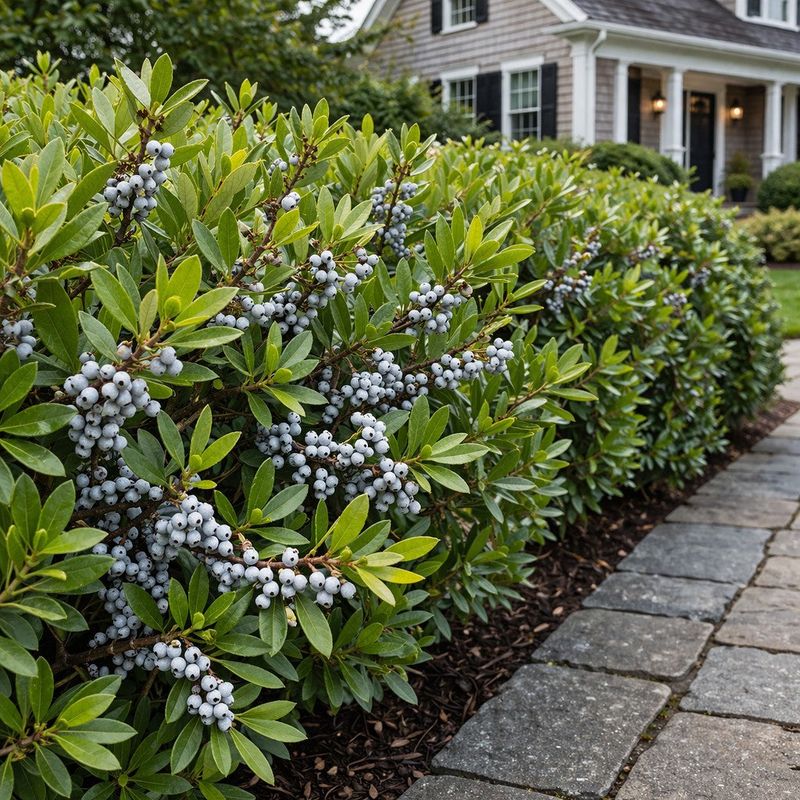
Brush your hand across a bayberry leaf and breathe in. A spicy, clean scent rises up, reminding many people of seaside walks and old-fashioned candles.
Myrica pensylvanica grows into a rounded shrub about 3 to 8 feet tall. It spreads by suckers, forming thick, low colonies over time.
Its leaves often hang on through milder winters. That semi-evergreen habit gives more cover than typical shrubs that drop leaves early.
Salt tolerance makes it a star near the coast. Long Island homeowners plant it along windy shores and salty roadsides with great success.
Poor soil is fine too. Bayberry can pull nitrogen from the air, so sandy, low-nutrient ground rarely troubles it.
Female plants carry grayish-white, waxy berries into winter. Colonists once boiled them to make fragrant bayberry candles.
Like winterberry, it needs both male and female plants for berries. Include at least one male if you want that frosty fruit display.
Tree swallows and yellow-rumped warblers eat the waxy berries. Few birds can digest that wax, which makes this shrub extra special for them.
Space plants about four to five feet apart for a solid screen. Full sun helps keep them bushy and full of leaves.
Pruning is rarely needed at all. Snip any wayward branches in early spring to keep the shape neat and dense.
9. American Elderberry For Quick Height And Summer Fruit
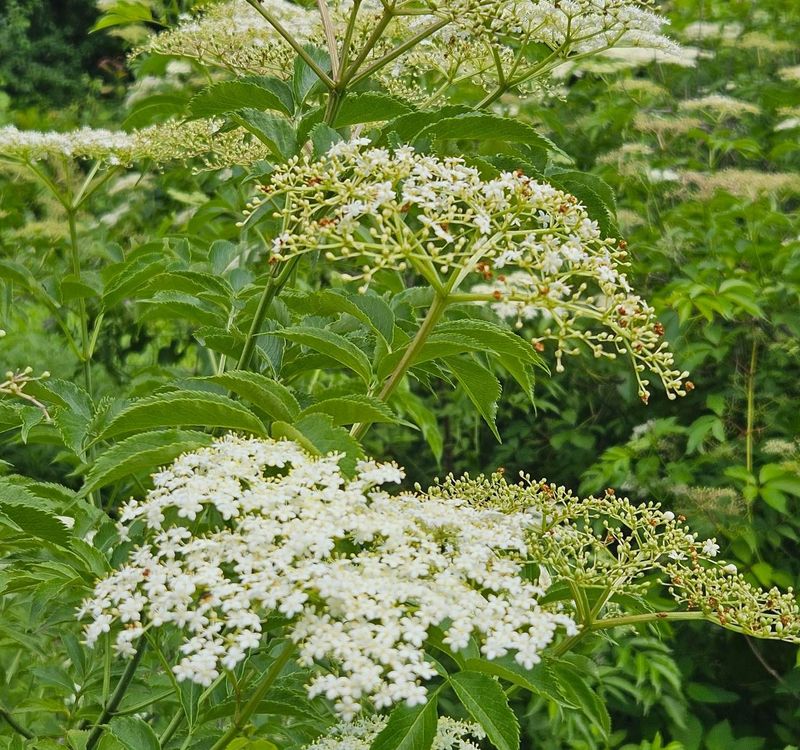
Need privacy by next summer, not five years from now? American elderberry grows so fast that it can surprise even experienced gardeners.
Sambucus canadensis often reaches 5 to 12 feet within a few seasons. Underground runners send up new canes, forming a dense, leafy colony.
Moist soil fuels that speedy growth. It handles wet spots and brief flooding, making it great for rain gardens.
Late spring brings huge, flat clusters of white flowers. Their sweet fragrance draws bees, and some cooks turn them into syrup or fritters.
By August, dark purple berries droop heavily from the branches. Many families cook them into jelly, pie filling, or homemade syrup.
A safety note matters here. Always cook elderberries first, since raw berries, stems, and leaves can upset your stomach.
Birds race people for the harvest, of course. Covering a few clusters with mesh bags can save some fruit for your kitchen.
Canes grow quickly but lose vigor after about three years. Cut the oldest canes to the ground each late winter to keep plants lively.
Plant two different elderberry types for heavier fruit. Cross-pollination helps berry clusters fill out nicely.
Across New York, wild elderberry often lines sunny roadsides and fields. Bringing it home adds fast cover, sweet fruit, and busy wildlife to your yard.