10 Reasons Your Pothos Leaves Are Turning Yellow
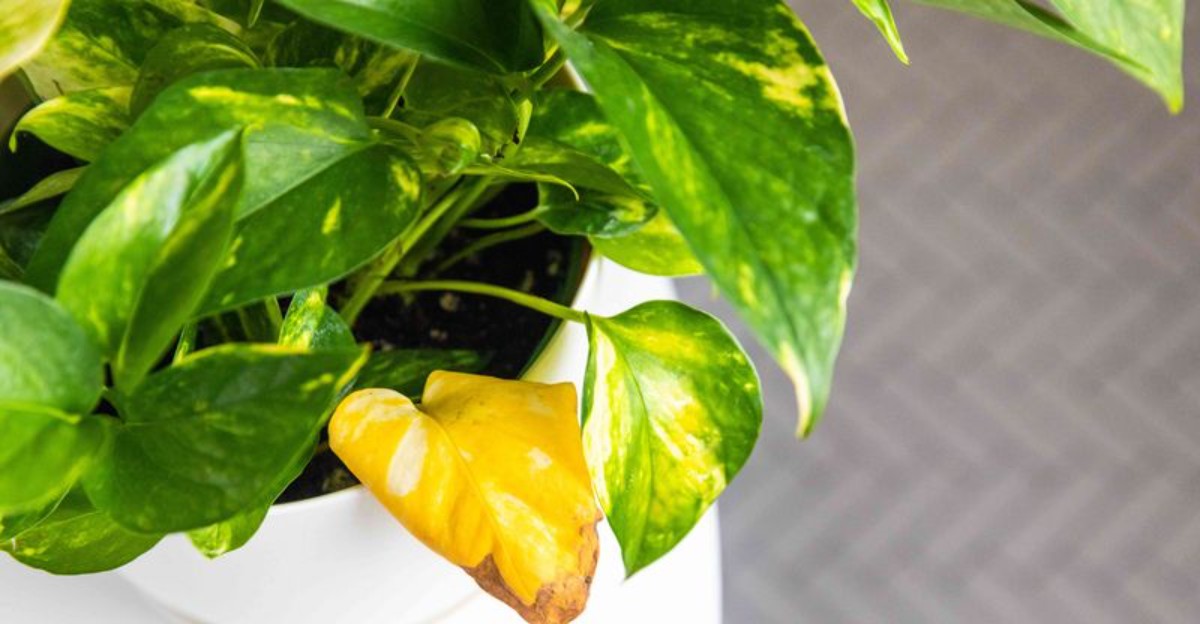
Your favorite trailing houseplant looked lush and glossy last week, spilling happily over the bookshelf like green ribbon. Now a few leaves have turned the color of a banana, and you are wondering what went wrong.
Yellow leaves feel like a tiny alarm bell, ringing softly every time you walk past with your morning coffee. The good news is that plants talk in color, and yellow is one of their loudest words.
Early fall brings shorter days, cooler windows, and furnaces that hum back to life with a dusty smell. Indoor plants respond to those changes, often before we notice them ourselves.
Figuring out the cause takes a little detective work, a curious finger in the soil, and some patience. Once you learn to read the clues, most fixes are simple and inexpensive.
So grab a flashlight, lean in close, and give your pothos a good look. Your plant has likely been showing signs for days, and a few simple checks can point to the cause.
1. Soggy Soil Is Stressing The Roots
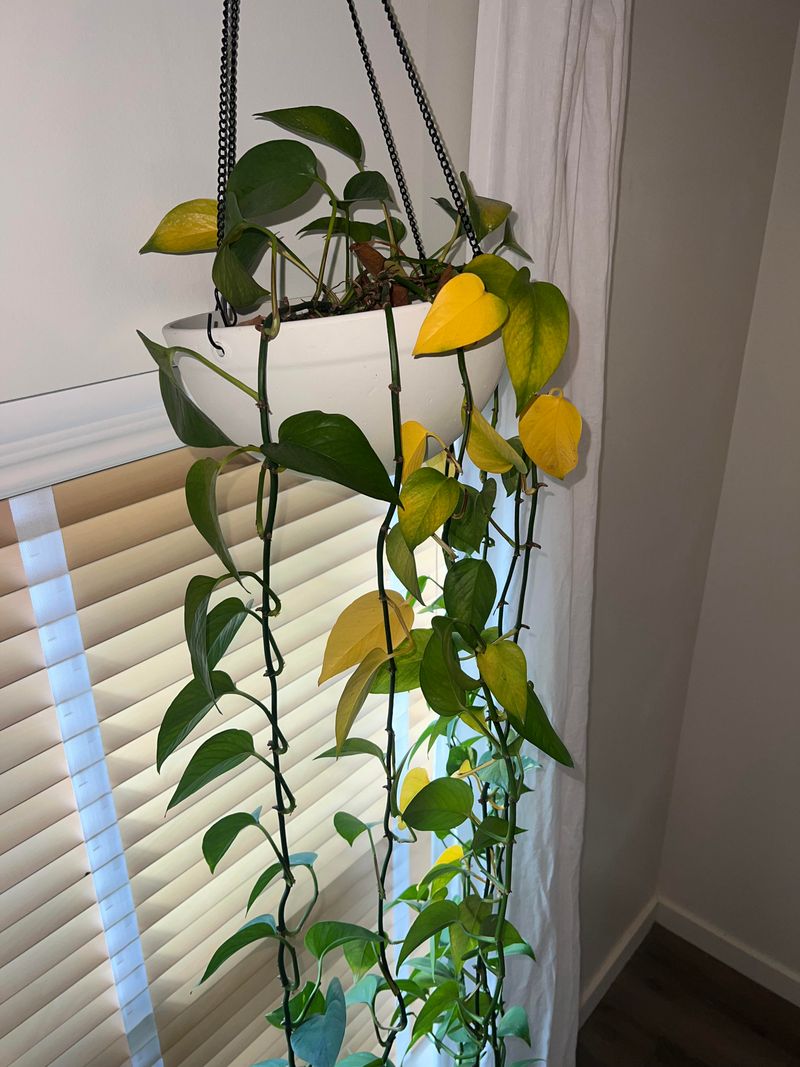
Picture wearing wet socks all day, every day, with no chance to kick them off and dry your toes. Roots stuck in soggy soil feel much the same, and they can start to struggle within a couple of weeks.
Overwatering is one of the most common reasons for yellow leaves, especially the lower ones that turn soft and mushy. Roots need air pockets in the soil, and constant moisture pushes that air out and slowly invites root rot.
Early October makes this problem sneakier because cooler rooms and weaker sunlight slow down how fast the soil dries out. A watering schedule that worked fine in August can leave the soil too wet by the middle of fall.
Before you grab the watering can, push your finger about two inches into the soil and feel around gently. If it feels damp or cool, wait a few more days and check again before adding any more water.
Pots with drainage holes are strongly recommended, so water can escape instead of pooling around the tender roots below. If you notice a sour smell or brown mushy roots, trim the damaged parts and repot in fresh, airy mix.
2. Thirsty Roots Need A Drink
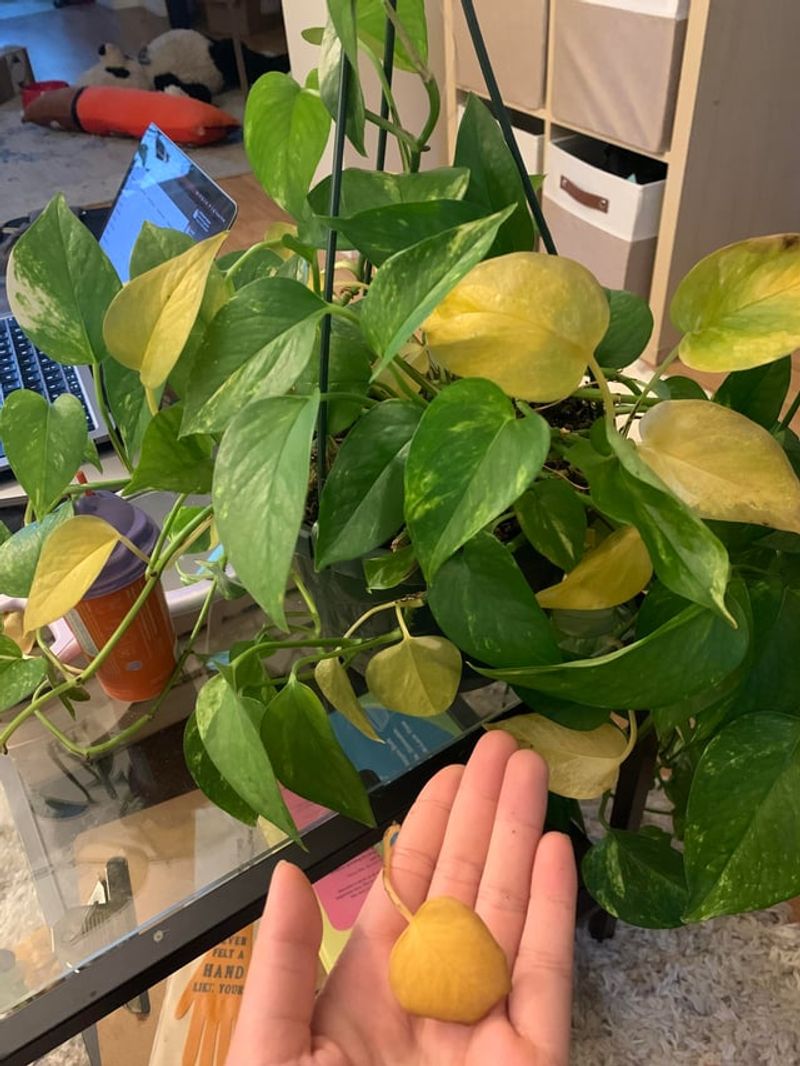
Dry, curling leaves tell a very different story than soggy, droopy ones do. Your plant is likely dry, and it may pull moisture from older leaves to support newer growth.
Older leaves often turn yellow first, then brown at the edges, and may eventually drop onto the dusty floor below. When you lift the pot, it may feel noticeably lighter than usual.
Fall furnaces are sneaky culprits, because heated indoor air pulls moisture from the soil much faster than you might expect. Plants sitting near a heating vent can dry out in just a few days once the heat kicks on.
To fix a bone-dry plant, set the whole pot in a sink filled with a few inches of water. Let it soak for about thirty minutes so the dry, packed soil can drink slowly from the bottom up.
Afterward, move the plant a few feet away from vents and check the soil every five days or so. Yellow leaves from thirst will not turn green again, but fresh new growth should look healthy within a few weeks.
3. Sunlight Is Playing Hide And Seek
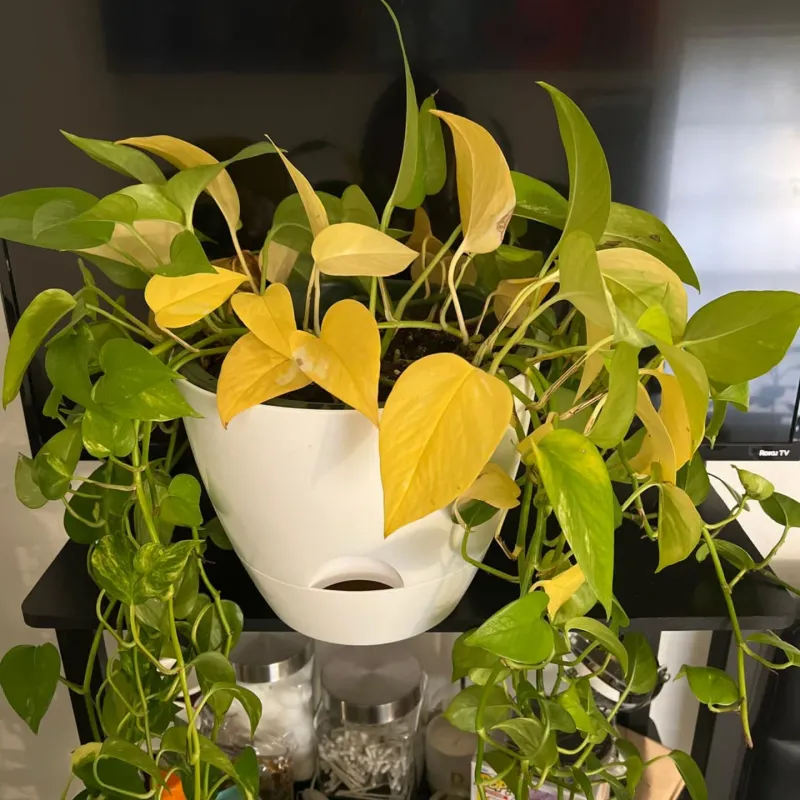
Here is a fun fact that surprises many plant owners: pothos grows wild as a climbing vine in tropical forests. It can survive dim corners, but surviving and thriving are two very different things for this leafy climber.
When light is too weak, the plant cannot make enough food to support all of its leaves at once. It lets the oldest ones turn pale yellow and fall, while new leaves grow smaller, paler, and farther apart.
Variegated types with lots of white or gold marbling often lose their pretty patterns in dim, shadowy rooms too. October makes things harder, since the sun sits lower in the sky and daylight hours shrink a bit each week.
A spot that felt bright in July might now feel dim by late afternoon. Try moving your plant closer to an east or west window where it gets bright, filtered light most days.
If your home runs dark, a simple LED grow light clipped to a shelf can help. Aim for about ten to twelve hours of light each day, and watch those vines perk up nicely again.
4. Harsh Rays Are Scorching The Leaves
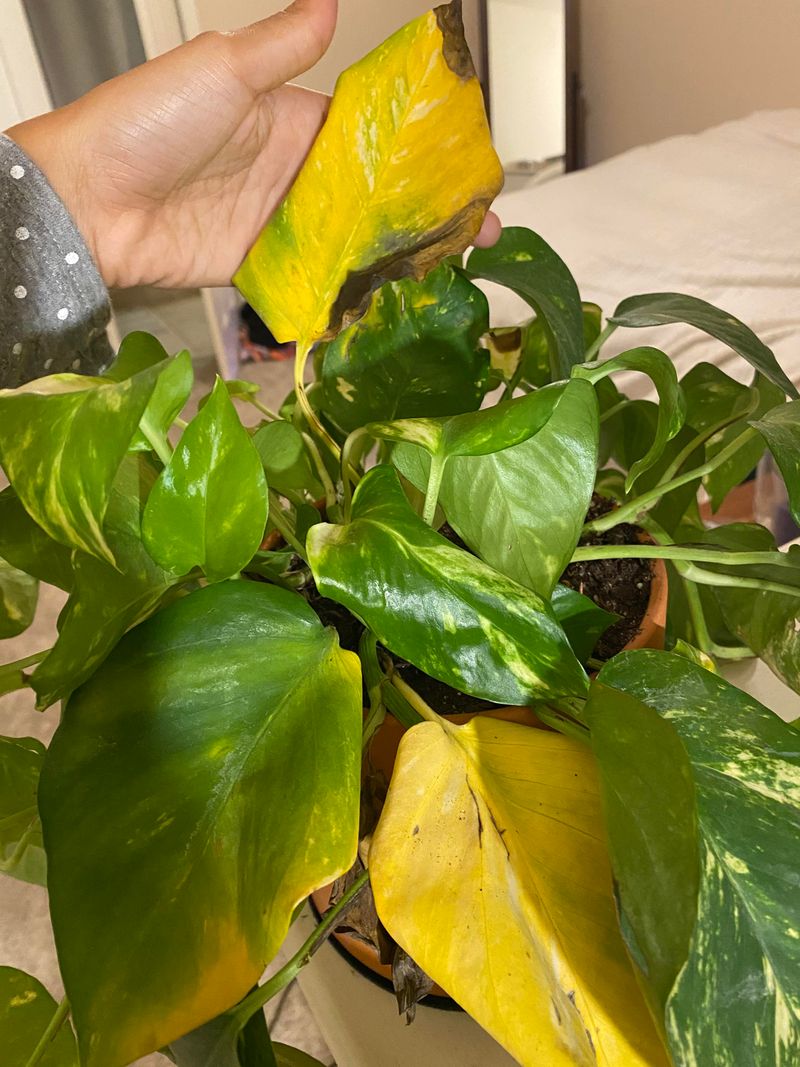
Too much of a good thing can backfire, and blazing sunshine is a perfect example for these tropical vines. In the wild, they grow under a leafy canopy that softens the light.
Placed right against a hot, sunny window, the leaves can bleach to a washed-out yellow with crispy brown patches. Sunburned spots often show up on the side facing the glass, which makes the cause fairly easy to identify.
Early fall sun is gentler than summer rays, but south-facing windows can still pack a surprising and sneaky midday punch. Sunlight through glass can heat up a windowsill quickly, even on clear October afternoons.
The easy fix is to slide your plant back a few feet or hang a sheer curtain over the window. Filtered light keeps the leaves glossy and green without the harsh glare that fades their natural color so quickly.
Scorched leaves will not heal, so snip the worst ones off with clean scissors to tidy things up. Give your plant a quarter turn every week too, so every side gets a fair and gentle share of light.
5. Hungry Soil Is Running On Empty
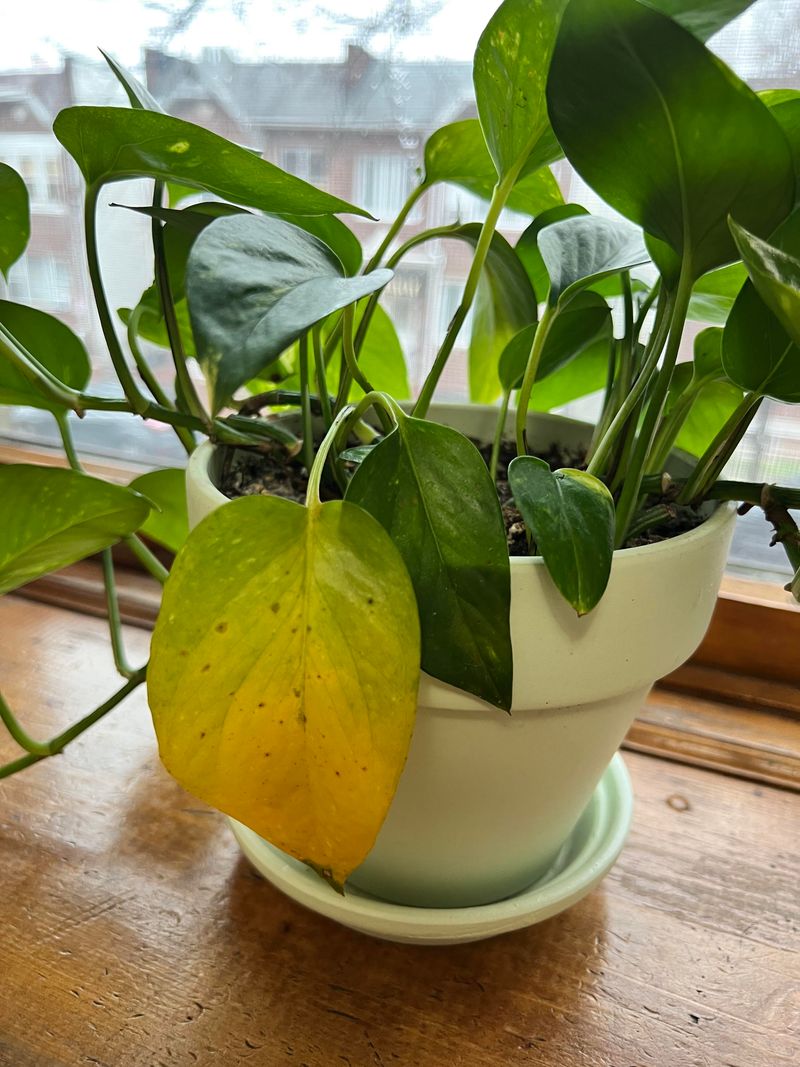
Think of potting soil like a lunchbox, because once the snacks run out, your plant starts feeling pretty grumpy. Many bagged mixes hold enough nutrients for only a couple of months, and after that the soil needs a boost.
Nitrogen is often the first nutrient to run low, and a shortage causes older leaves to turn evenly yellow. Magnesium shortages look different, with yellow patches between bright green veins that create a striped or oddly marbled pattern.
If your plant has lived in the same soil for over a year, hunger is a likely suspect here. Slow growth, smaller leaves, and a faded overall color are other clues that the fuel tank is running low.
Timing matters a lot, since early October is when indoor growth naturally slows down for the cooler months ahead. Give one light feeding now with a balanced liquid fertilizer mixed at half the strength listed on the label.
After that, pause feeding until spring returns, because slow-growing plants need very little fertilizer during the dim winter months. A spoonful of fresh worm castings on top of the soil is another gentle way to restock the pantry.
6. Extra Fertilizer Is Burning The Roots
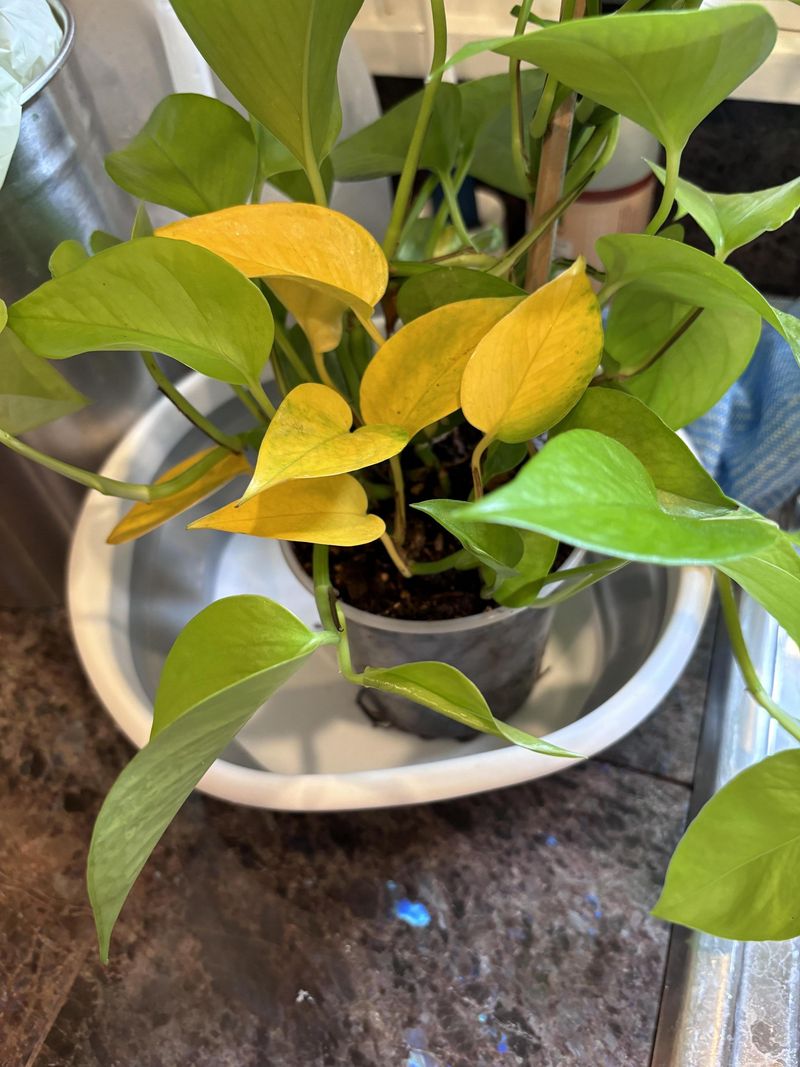
Feeding a plant too often, hoping for faster growth, can leave yellow, crispy leaves instead. The roots end up sitting in soil with too many mineral salts.
Fertilizer leaves mineral salts behind in the soil, and those salts pull water away from tender, delicate root tips. The result looks strangely like thirst, with yellowing leaves, brown edges, and a plant that seems oddly tired and droopy.
Check the top of the soil and the rim of the pot for a white or tan crusty buildup. That chalky layer is leftover salt, and it is a clear sign your plant has been overfed a bit lately.
To flush the soil, run lukewarm water slowly through the pot for several minutes in a sink or tub. The water rinses away extra salts and carries them out through the drainage holes at the bottom of the pot.
Let the plant drain well, then skip fertilizer for at least two months while the roots recover in peace. Going forward, remember that these easygoing vines prefer a light, occasional snack over a heavy meal.
7. Cramped Roots Need More Space
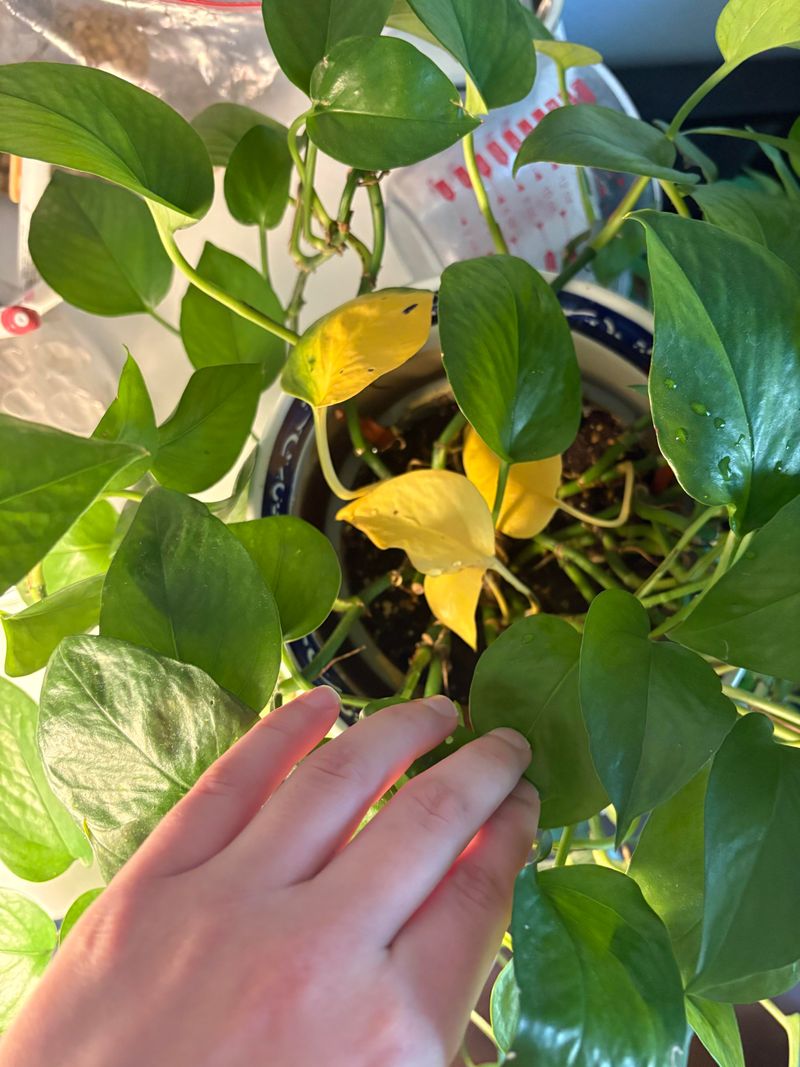
Imagine trying to grow in a space that is far too small. Roots that fill every inch of a pot face that cramped situation, and the leaves eventually show the stress.
A rootbound plant has so many roots that little soil is left to hold water or food for later. Leaves may yellow, water may rush straight through the pot, and growth can stall even with steady, loving care.
Look for roots poking out of the drainage holes or circling the top of the soil like tangled spaghetti. Gently sliding the plant out of its pot will show you a tight, pale web if space is the issue.
Spring and summer are the best times to repot, but early fall works if the plant is still growing. Choose a new pot just one or two inches wider, because a giant pot holds too much soggy soil.
Loosen the outer roots with your fingers, set the plant at the same depth, and fill in with fresh mix. Expect a little sulking for a week or so, then happy new leaves as the roots stretch out comfortably.
8. Tiny Pests Are Sipping The Sap
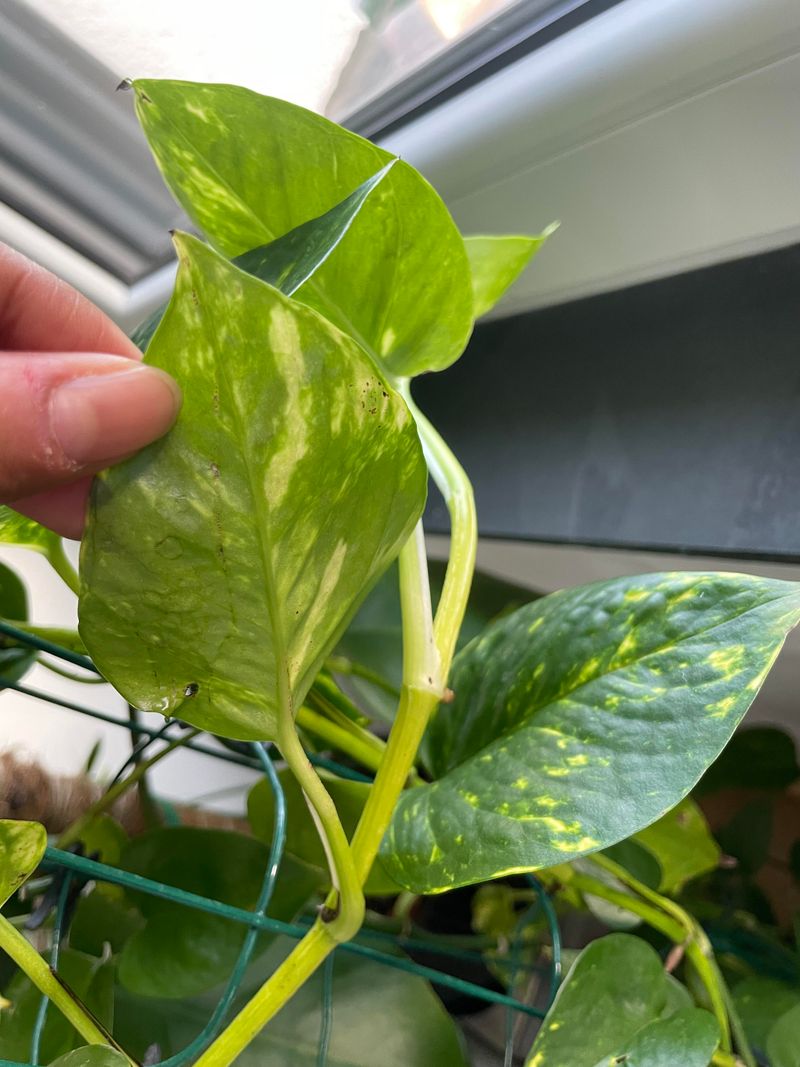
Some of the sneakiest troublemakers in your home are about the size of a grain of rice or smaller and love leafy snacks. Spider mites, mealybugs, and scale insects all pierce leaves and drink the sap, leaving tiny yellow speckles and spots behind.
Early fall is a common time for pest problems, especially if your plant spent the warm months outside on a patio. Bugs love to hitch a ride indoors when pots come back inside as the nights turn cool and crisp.
Grab a magnifying glass and check the undersides of leaves, where most of these pests like to hide and feed. Fine webbing points to spider mites, while fluffy white clumps in leaf joints usually mean mealybugs have moved in.
Start by rinsing the whole plant in the shower with lukewarm water to knock off as many bugs as possible. Next, wipe the leaves with a soft cloth dipped in mild insecticidal soap, paying extra attention to hidden spots.
Cotton swabs dipped in soapy water or diluted insecticidal soap are handy for stubborn mealybugs. Keep the plant apart from your other houseplants for a few weeks, and repeat the treatments every seven days.
9. Chilly Drafts Are Shocking The Leaves
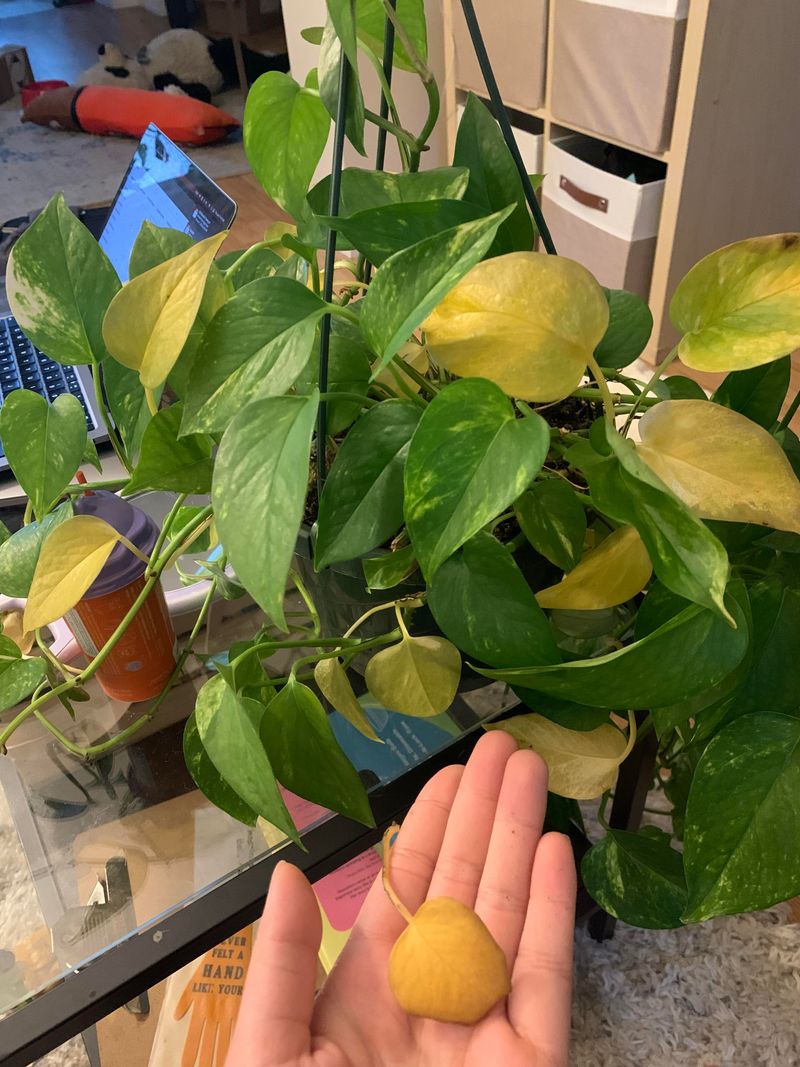
Brrr, the first cold snap of October feels refreshing to us, but tropical plants do not tolerate it well. These vines prefer temperatures between sixty-five and eighty-five degrees, much like a cozy living room with the heat turned on.
Temperatures below fifty degrees can shock the leaves, causing sudden yellowing, dark spots, or a limp, droopy, wilted look. Even a short exposure to cold air can leave marks, especially on leaves that touch chilly window glass.
Common trouble spots include drafty windows, front doors that swing open often, and the path of air conditioners. Heating vents cause problems too, since they blast hot, dry air that swings temperatures up and down all day.
On chilly nights, feel the air near your plant with the back of your hand to test for drafts. If it feels cool or breezy, move the pot a few feet toward the warmer center of the room.
Plants that spent the summer on a porch should come inside soon, before nighttime temperatures drop below fifty-five degrees. A little shelter now helps prevent spotty, yellow leaves later on.
10. Old Leaves Are Taking Early Retirement
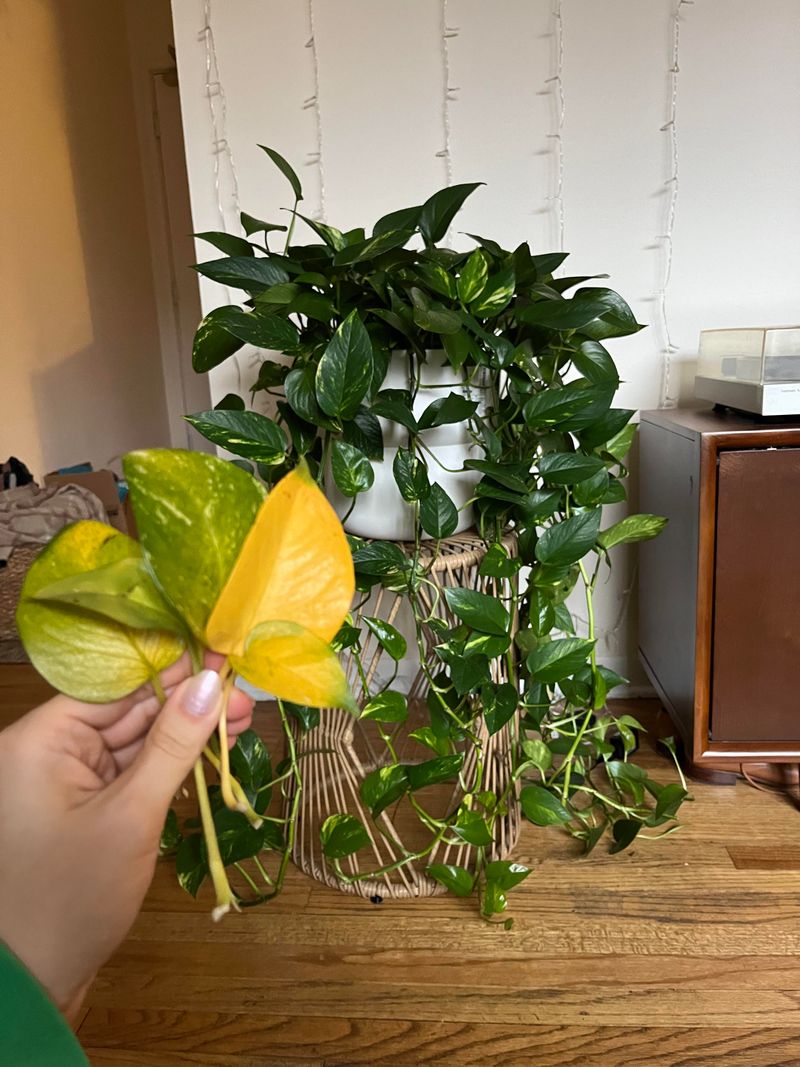
Take a deep breath, worried plant parents, because a yellow leaf now and then is perfectly normal and healthy. Like people with gray hair, older leaves eventually wear out and step aside so fresh ones can take over.
Your plant pulls useful nutrients out of its oldest leaves and sends them to new growth near the tips. That recycling trick is clever, and it explains why the lowest leaves on a vine usually yellow first.
Normal aging looks tidy, with just one or two leaves changing at a time near the base of the stems. The rest of the plant should still look glossy, firm, and green, with new leaves unfurling along the way.
A little extra shedding in early fall is common, since plants adjust to shorter days and cooler indoor air. Many yellow leaves appearing at once, however, point back to watering, light, or pests rather than simple aging.
Once a leaf turns fully yellow, snip it close to the stem with clean scissors. Fun fact: a healthy cutting with a node can root in a glass of water, so trimming leggy vines creates free plants.