12 Dark-Foliage Plants For A Halloween Garden That Stays Stylish Into Winter
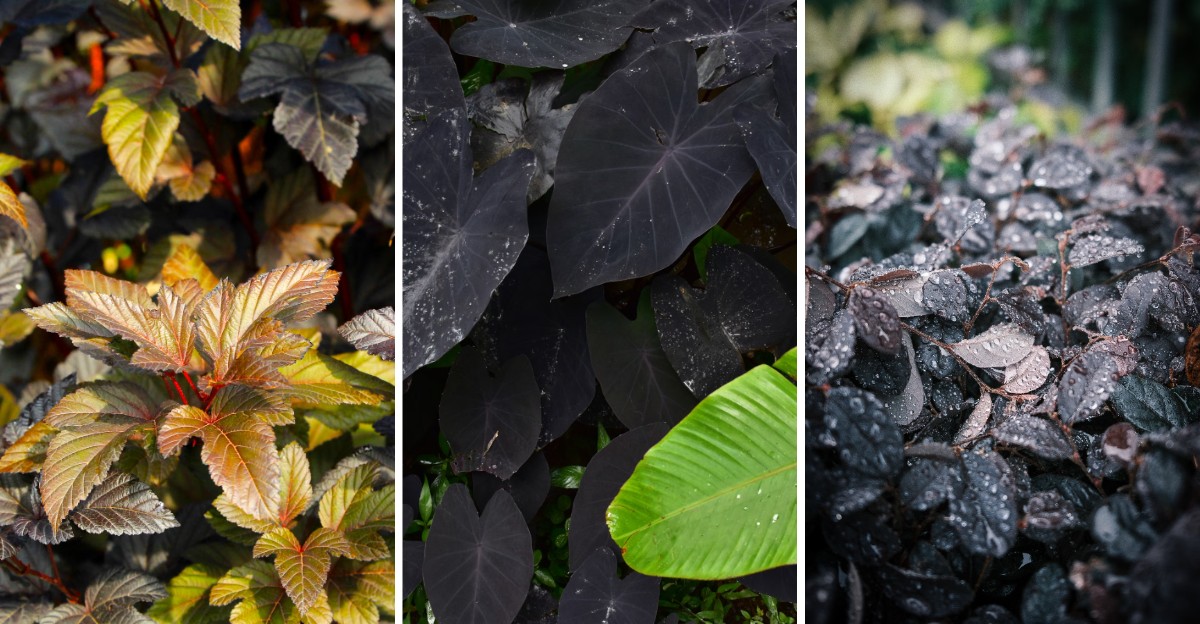
Why does your garden lose its edge when Halloween ends? You unplug the lights, carry tired pumpkins to the curb, and stare at plain soil.
Imagine skipping that seasonal goodbye. Certain plants keep your garden dressed in black past October.
Plant black mondo grass, and you get inky leaves that shrug off frost. Heuchera ‘Obsidian’ gives you glossy, near-black foliage beside fresh snow.
Picture silver frost tracing dark leaves like lace on a velvet gown. Ajuga ‘Black Scallop’ lets you fill shady corners with glossy, wine-dark rosettes.
Then Black Jack sedum hands you burgundy seed heads that catch falling snow. Come spring, Purple Diamond loropetalum lets you frame hot pink blooms against deep plum leaves.
Neighbors will peer over your fence, puzzled that your garden still looks bewitched. Your garden keeps its costume on long after the candy bowl empties.
1. Black Mondo Grass For Inky Garden Edges
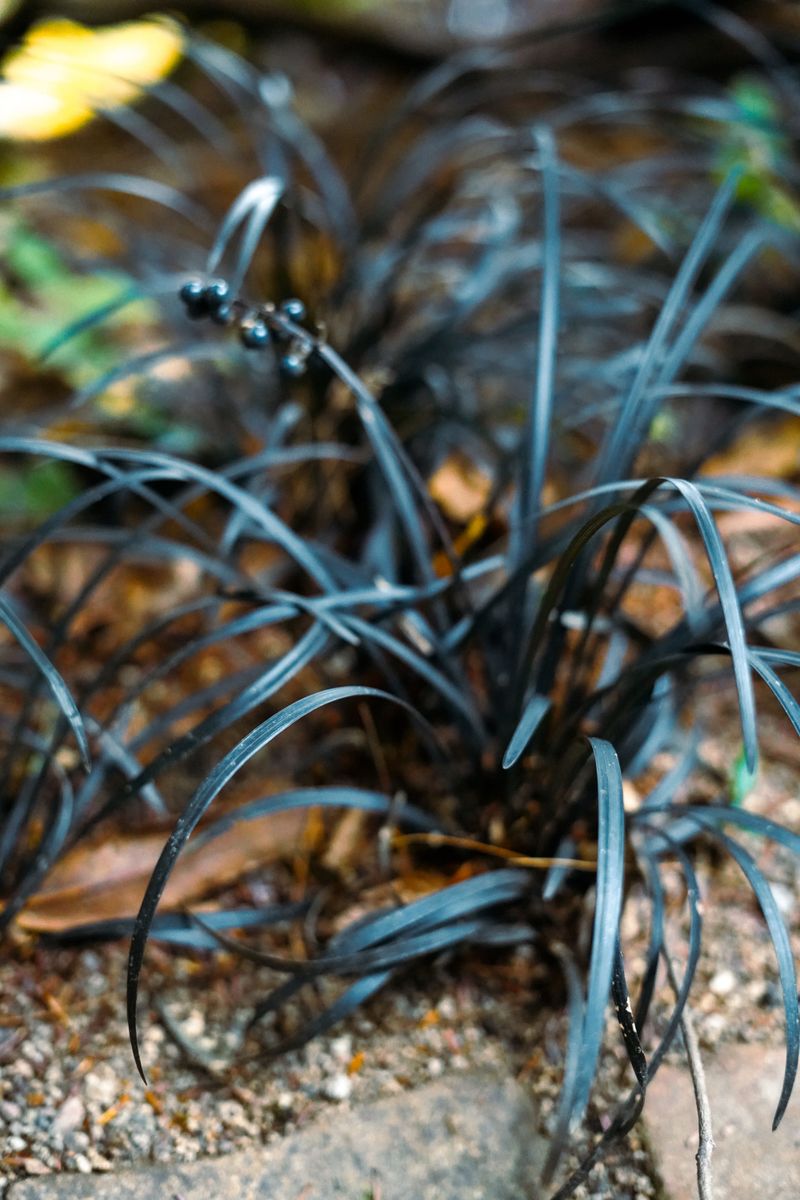
Picture a lawn edge that looks like someone spilled a jar of black ink along it. Black mondo grass creates that exact effect, with slim leaves in a striking, glossy near-black shade.
Despite the name, it is not a true grass but a member of the asparagus family. It forms tidy clumps only six to eight inches tall, which makes it great for borders.
Plant it in sun or part shade, and give it soil that drains well after rain. It grows slowly, so buying several small pots saves you years of waiting for coverage.
Summer brings tiny pink bell flowers, followed by glossy black berries that look like little beads. The leaves stay dark all through winter in zones six to ten, keeping the spooky mood going strong.
Try pairing it with lime green creeping Jenny or silver dusty miller for bold, eye-catching contrast. The black clumps pop even more when bright, cheerful colors surround them in mixed containers or beds.
2. Obsidian Coral Bells For Shady Corners
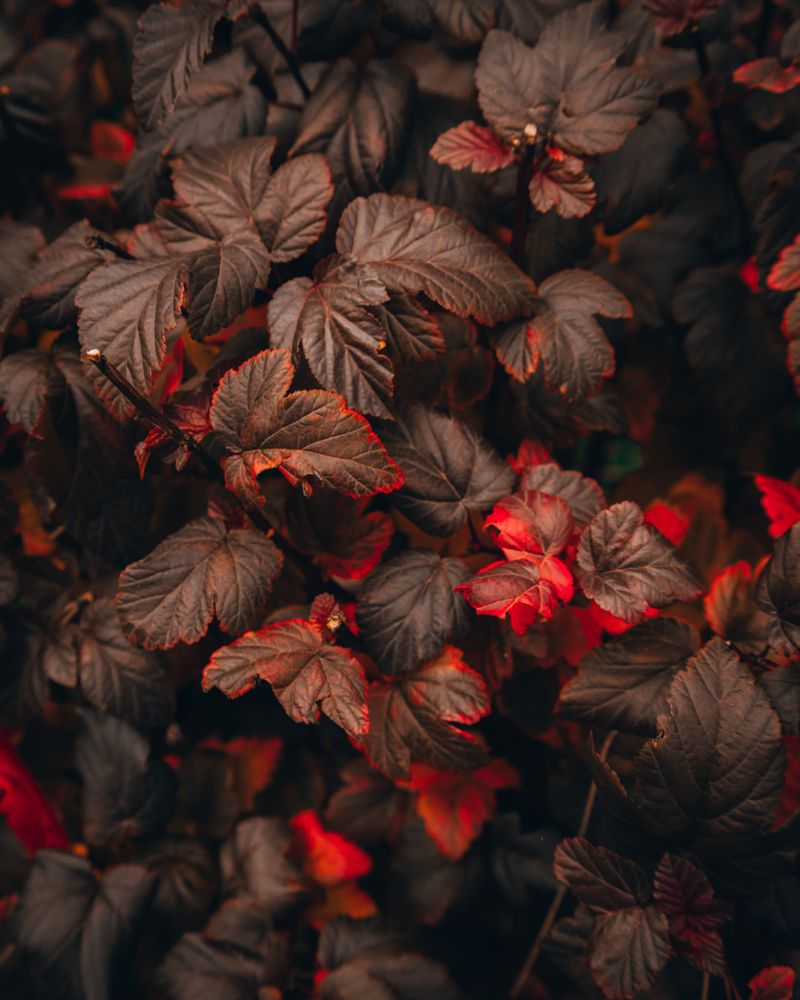
Shady spots often default to plain green foliage, but coral bells named Obsidian add deep, dramatic color fast. Its rounded leaves are a deep, shiny purple-black that looks almost like polished stone in the shade.
Gardeners love it because the color holds steady from spring through fall without fading to muddy brown. In mild winters, the leaves often hang on, giving you dark color when many beds look sparse.
Give it gentle morning sun and afternoon shade, plus soil rich in compost that drains nicely. Soggy roots are its main challenge, so skip low spots where rainwater tends to puddle after storms.
In early summer, thin stems rise above the leaves with tiny cream flowers that hummingbirds enjoy visiting. Snip those stems after blooming if you prefer the tidy look of the foliage alone.
Every three or four years, dig up the clump and replant it a bit deeper in the soil. That quick refresh keeps the crown from pushing upward and helps the plant stay full.
3. Diabolo Ninebark For Bold Backdrops
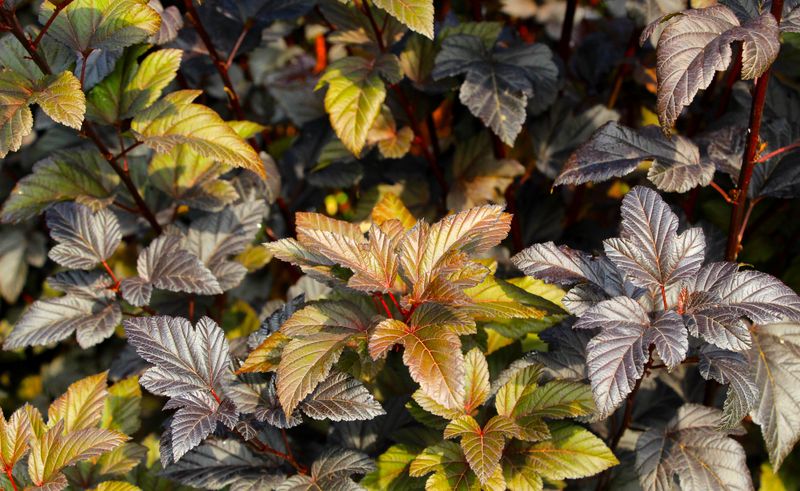
Some shrubs blend in, but Diabolo ninebark makes a strong statement from the very back row. Its deep burgundy leaves grow so dark that they look nearly black by the middle of summer.
It can reach eight feet tall and wide, making it a great living wall or privacy screen. Better yet, it handles cold, snowy winters all the way down to zone three, year after year.
Plant it in full sun for the darkest color, since too much shade turns the leaves greenish. It handles heavy clay, sandy soil, and short dry spells once its roots settle in well.
Late spring brings clusters of pinkish white flowers, then red seed pods that add welcome midsummer color. Once leaves drop, the peeling bark adds a shaggy, witchy texture all winter long.
Prune right after flowering by cutting a few of the oldest stems down to the ground. That simple step keeps the shrub fresh, full, and loaded with rich dark new growth each year.
4. Black Lace Elderberry For Lacy Drama
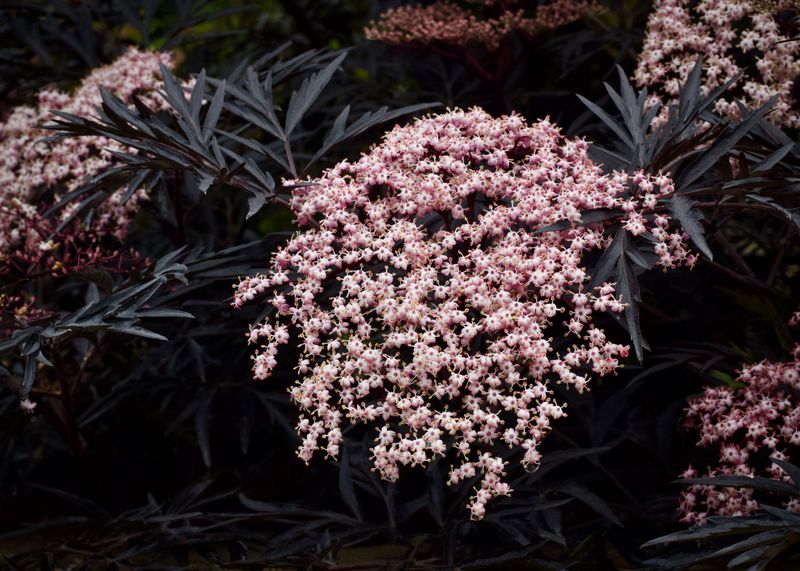
Imagine a gothic cross between a Japanese maple and a fern, and you get Black Lace elderberry. Its finely cut purple-black leaves look like delicate lace draped over a dark velvet dress.
The shrub usually grows six to eight feet tall, though pruning keeps it smaller. It thrives in zones four through seven and tolerates damp soil better than many shrubs.
In early summer, wide flat clusters of soft pink flowers appear, smelling faintly of lemon. Those blooms become dark purple berries birds love, and a nearby elderberry boosts fruiting. Leaves, stems, and raw berries upset stomachs, so eat only cooked berries.
Full sun brings out the richest color, while part shade makes the foliage a bit greener. Water deeply during its first summer so the roots grow deep and strong.
In late winter, cut the stems back by about one third to encourage bushy, colorful growth. Its leafless branches may look plain after leaf drop, so tuck evergreen partners nearby for winter interest.
5. Black Magic Elephant Ear For Tropical Mystery
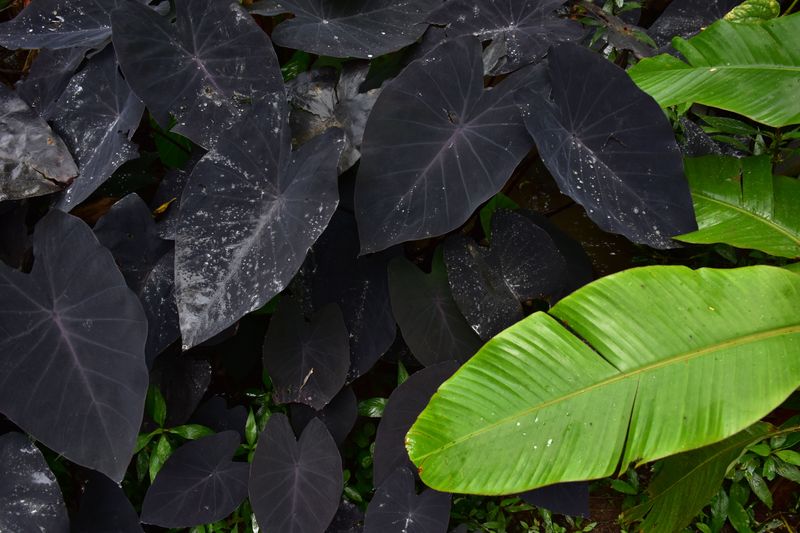
Leaves as big as a pizza box, colored like a starless night sky, turn heads across the yard. Black Magic elephant ear brings a lush, tropical, after-dark feel to any patio.
It loves heat, rich soil, and plenty of water, like a thirsty tropical guest. Grow it by a downspout or pond, or in a large pot watered daily.
Plants can reach four to six feet in one warm, moist summer. Partial shade in the afternoon helps keep those huge, glossy leaves from turning brown on hot days. The whole plant irritates mouths if chewed, so keep curious pets and kids away.
In zones eight through eleven, it can stay in the ground year round with a thick mulch layer. Colder gardeners can dig up the tubers after the first frost and store them indoors.
A container makes winter even easier, since you can roll the pot into a bright room. Your houseplant collection then gets a dark, dramatic star until warm spring weather returns.
6. Royal Purple Smoke Bush For A Hazy Glow
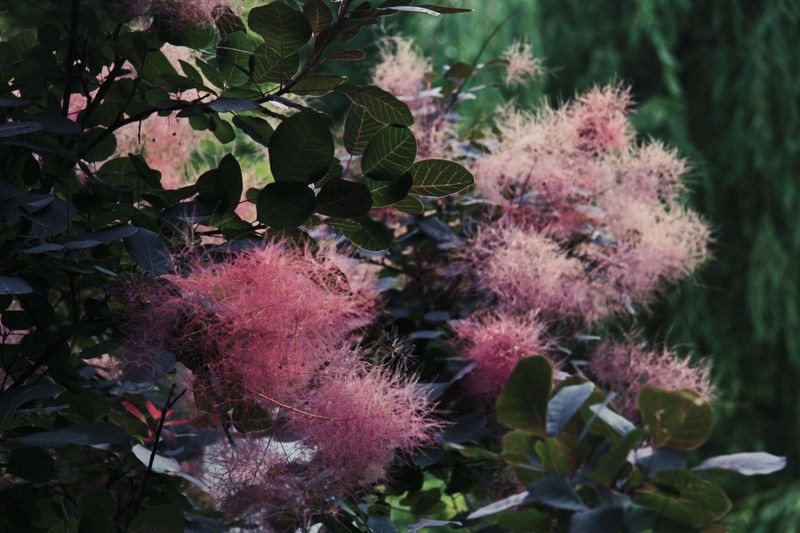
Few shrubs look like they came straight out of a fog machine, but Royal Purple smoke bush does. Fluffy plumes of pinkish purple hairs rise above the leaves in summer like drifting clouds of smoke.
The round leaves open wine red in spring and darken to a deep plum by midsummer. When autumn arrives, they flare into bright scarlet and orange, giving you a second color show.
Full sun and well-drained soil make this shrub happiest, and it handles dry spells like a champ. It performs poorly in heavy, wet soil, so plant it away from soggy low spots in your yard.
Left alone, it can slowly grow into a small tree about ten to fifteen feet tall. Many gardeners cut it hard in late winter, which creates bigger leaves and even darker color.
That hard pruning means fewer smoky plumes, so pick the look you enjoy most before grabbing your shears. Either way, the leafless, twisty branches look wonderfully eerie against a gray winter sky.
7. Black Scallop Ajuga For Shiny Ground Cover
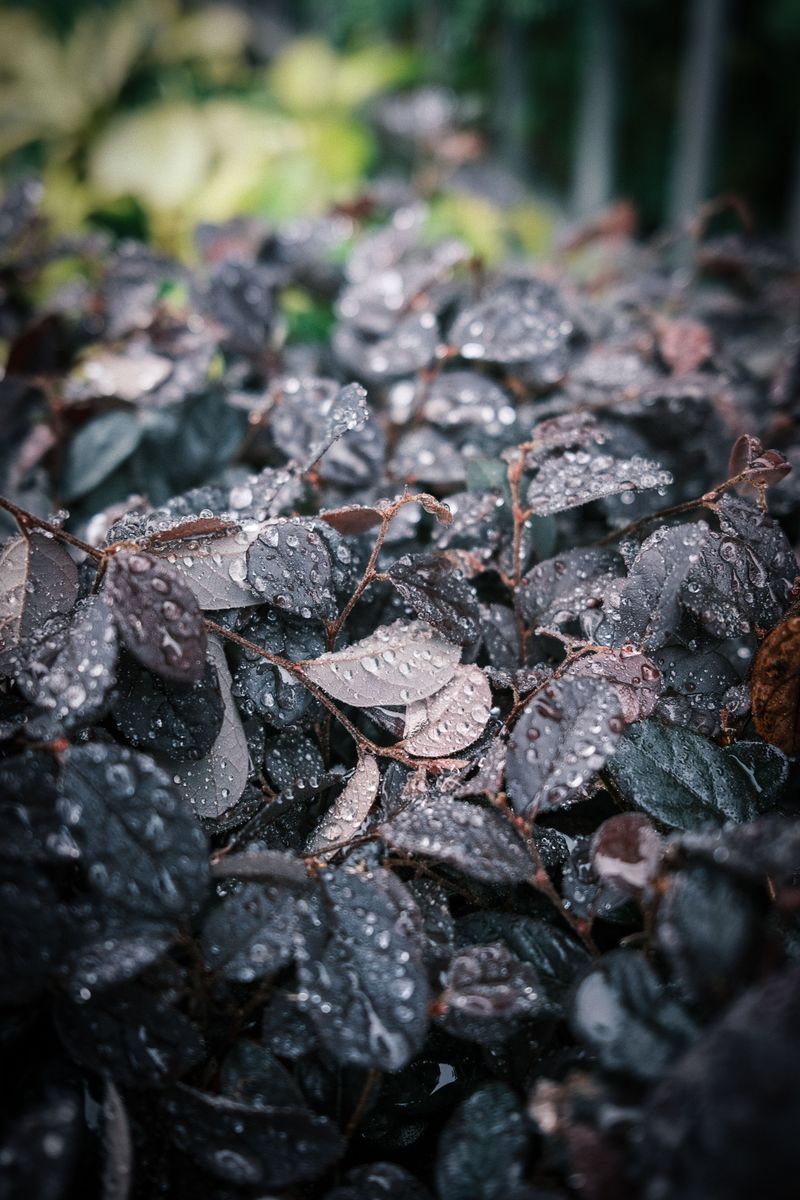
Open soil between bigger plants can look like a forgotten gap, yet Black Scallop ajuga fills it beautifully. Its glossy, crinkled leaves shine like black patent leather shoes after a fresh polish.
The low carpet stays two or three inches tall and spreads by runners. Within a couple of seasons, small plants knit into a thick, weed-blocking mat. It can creep into lawns, so edge the bed.
In spring, short spikes of bright blue flowers pop up and attract bees looking for an early snack. The blue against those near-black leaves looks like a tiny fireworks show at your feet.
Grow it in sun for the darkest shade, though it also handles part shade with slightly greener leaves. Good drainage matters a lot, since soggy soil can cause crown rot during hot, humid summers.
The foliage hangs on through most winters in zones four to nine, adding shine to frosty beds. Plant it under roses or along stepping stones for a polished, slightly spooky finish.
8. Purple Diamond Loropetalum For Evergreen Color
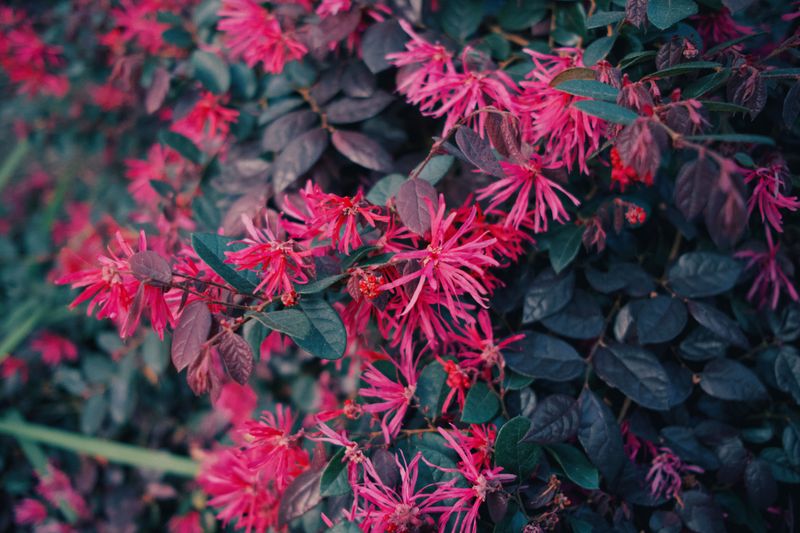
Southern gardeners have a reliable choice for year-round dark color, and it goes by Purple Diamond loropetalum. Also called Chinese fringe flower, this evergreen holds purple leaves year round, though heat can add a green tint.
It usually grows four to five feet tall and wide, a handy size for foundation beds. Hot pink, ribbon-like flowers cover the branches in early spring and look like tiny party streamers.
Hardy in zones seven through ten, it prefers slightly acidic soil that stays moist but not soggy. Partial shade in the hottest afternoons helps, although full sun gives the deepest and richest leaf color.
Once established, it tolerates short dry spells well and needs little pruning to keep a neat shape. If you do trim, wait until right after spring flowering so you keep next year’s blooms.
Picture it in chilly December, glowing plum-purple beside a front porch covered in twinkling white holiday lights. That combination shows how a Halloween garden can slide into the cozy holiday season with style.
9. Black Pearl Pepper For Fiery Dark Fruit
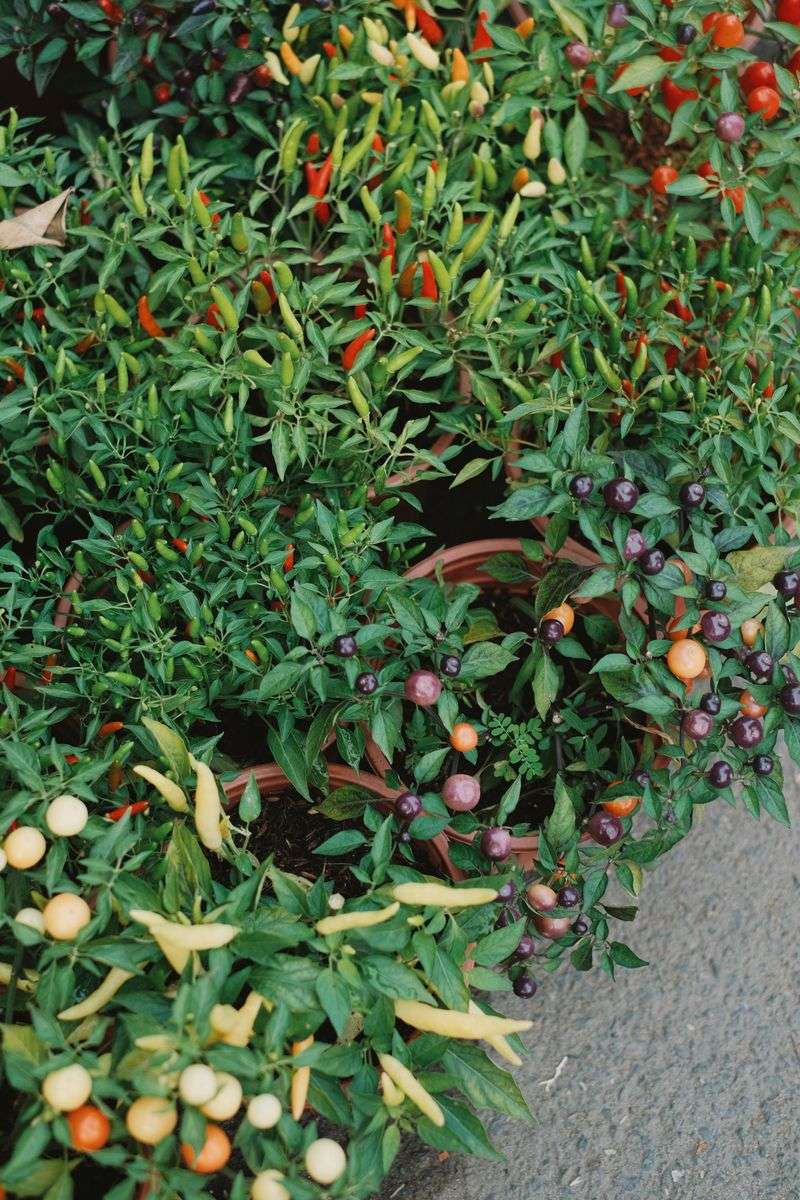
Who says a Halloween garden cannot include something a little spicy for the kitchen? Black Pearl pepper grows dark purple-black leaves and shiny round fruits that look like little black pearls.
The glossy peppers start out black, then ripen to bright red, so one plant shows both colors. The mix looks like a gothic candy bowl perched right on the leafy stems.
Plants grow about eighteen inches tall, which makes them perfect for pots, window boxes, or border fronts. They need full sun, warm weather, and loose soil that drains quickly after every watering.
The peppers are edible but quite hot, so wear gloves and keep them away from little kids. Many people grow them purely for looks and let birds enjoy the fruit.
Frost closes its outdoor season, so move potted plants to a sunny window before cold nights arrive. Kept warm and bright, it can hold peppers into winter, though leaves may turn green.
Save seeds from ripe red fruits, but cross-pollinated seeds may vary. Dry them on a paper towel, then store them in a labeled envelope.
10. Crimson Queen Japanese Maple For Weeping Elegance
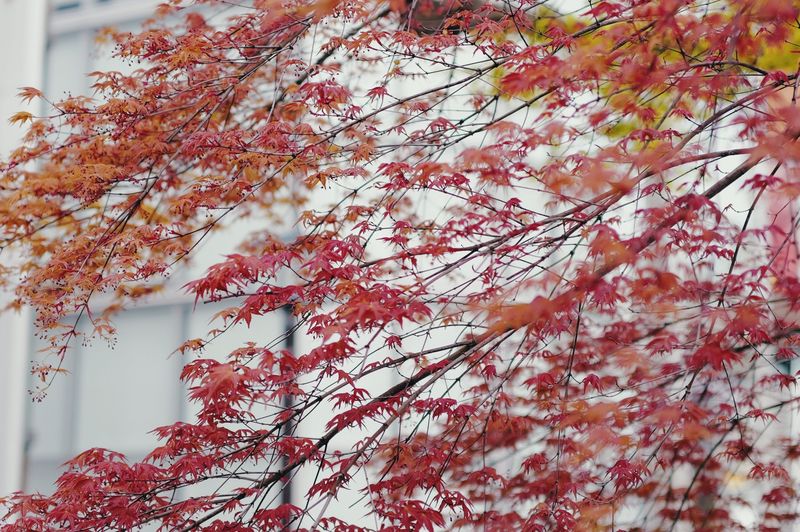
Graceful and a little mysterious, Crimson Queen Japanese maple looks like a dark waterfall frozen in place. Its branches weep toward the ground, draped in lacy leaves of deep red-purple.
A slow grower, it reaches only eight to ten feet, fitting small yards and big pots. Its color holds better in summer heat than many other red maples, which tend to fade green.
Give it morning sun and light afternoon shade, especially in hot climates where leaf edges can crisp. Moist, well-drained soil and a thick layer of mulch keep its shallow roots cool.
In fall, the leaves flare into glowing crimson that looks like embers from a campfire. After they drop, the twisting, leafless branches create a spooky silhouette straight out of a storybook.
Place it where you can see it from a window, so you enjoy its shape in every season. Soft lights aimed at the trunk make it look magical on snowy nights.
Shield young trees from strong winter winds with burlap for the first few years. Patience pays off, as the maple’s shape matures with age.
11. Brunette Bugbane For Shadowy Woodland Beds
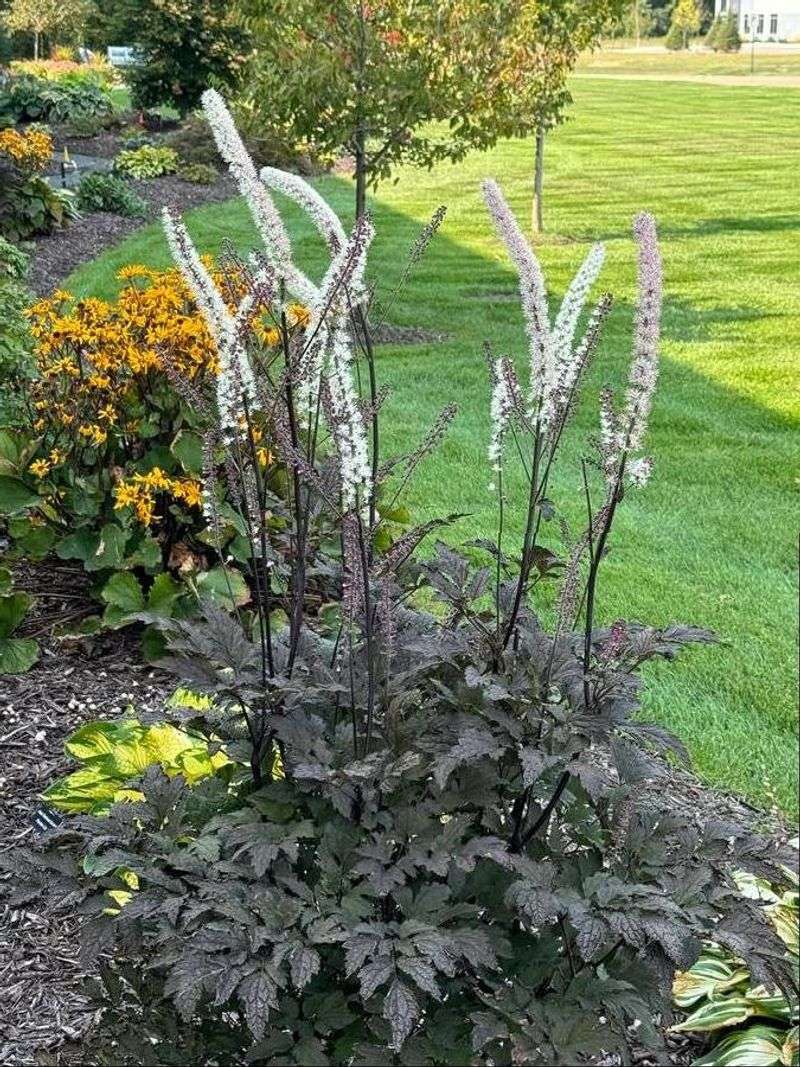
Tall, dark, and fragrant, Brunette bugbane is a true standout in the shade garden. Its lacy, bronze-purple leaves form a full, leafy mound about three feet tall by early summer.
Come late summer or early fall, white flower wands lift the plant to four to six feet. They smell sweet, like honey and vanilla, and pull in butterflies late in the season.
That timing makes it a star for Halloween, since the spooky spires often peak around October. The white blooms glow against the dark leaves like ghosts floating through a dim forest.
Plant it in part shade with rich, moist soil full of leaf mold or compost. Dry soil makes the leaves brown and crispy, so water deeply during summer droughts.
Hardy in zones four through eight, it returns reliably each spring once its roots are settled. Deer and rabbits tend to leave it alone, which saves you plenty of time and fencing.
The name bugbane comes from an old belief that its strong scent repelled insects. Modern gardeners mostly grow it for its looks and lovely perfume.
12. Black Jack Sedum For Dark Leaves And Late Blooms
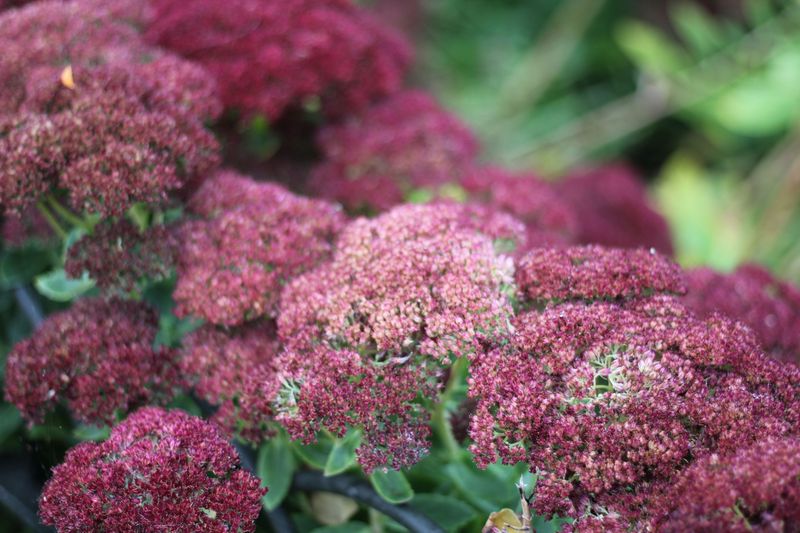
Hardy, easygoing, and wonderfully stylish, Black Jack sedum handles summer heat, drought, and minimal care with ease. Its thick, succulent leaves are a deep purple-black that looks almost like dark chocolate.
Upright stems grow about two feet tall and usually stand without staking in lean soil. Plant it in full sun with sandy or gravelly soil for the best shape and color.
In late summer, flat heads of rosy pink flowers open on top of each stem. Bees and butterflies crowd around them, turning your garden into a buzzing snack bar.
As fall deepens, the blooms fade to a rusty burgundy that fits Halloween decor perfectly. Leave the dried flower heads standing, since they catch snow and look great all winter.
Watering is simple, because these succulents store moisture in their plump leaves for dry stretches. Overwatering causes the most trouble here, so let the soil dry out fully between drinks.
Cut the old stems to the ground in early spring before new growth pushes up. Fresh rosettes appear quickly, ready to start the dark show all over again.