What Your St. Augustine Grass Is Telling You With Those October Yellow Patches In Florida
October in Florida brings cooler mornings, and your lawn should be celebrating with a green glow. Instead, strange yellow circles have appeared across the yard in the past few days, like someone spilled cups of lemonade.
You walk outside with your coffee, feel the damp grass squish under your feet, and frown hard. The rings seem a little wider each week, as if they have secret plans for expansion.
Your neighbor swears it is the sprinkler, while your cousin insists the dog has been up to mischief. Meanwhile the patches keep spreading quietly, ignoring every theory and every hopeful splash from the garden hose.
Lawns across Florida often send signals like this in fall, and learning to read them saves money and stress. Those faded spots are rarely random accidents, because they are clues pointing toward a very specific problem.
Your yard is talking, even if it sounds a bit dramatic right now. Honestly, it is throwing the kind of tantrum usually reserved for toddlers who were handed the wrong cup.
One Common Soil Fungus Is The Usual Culprit
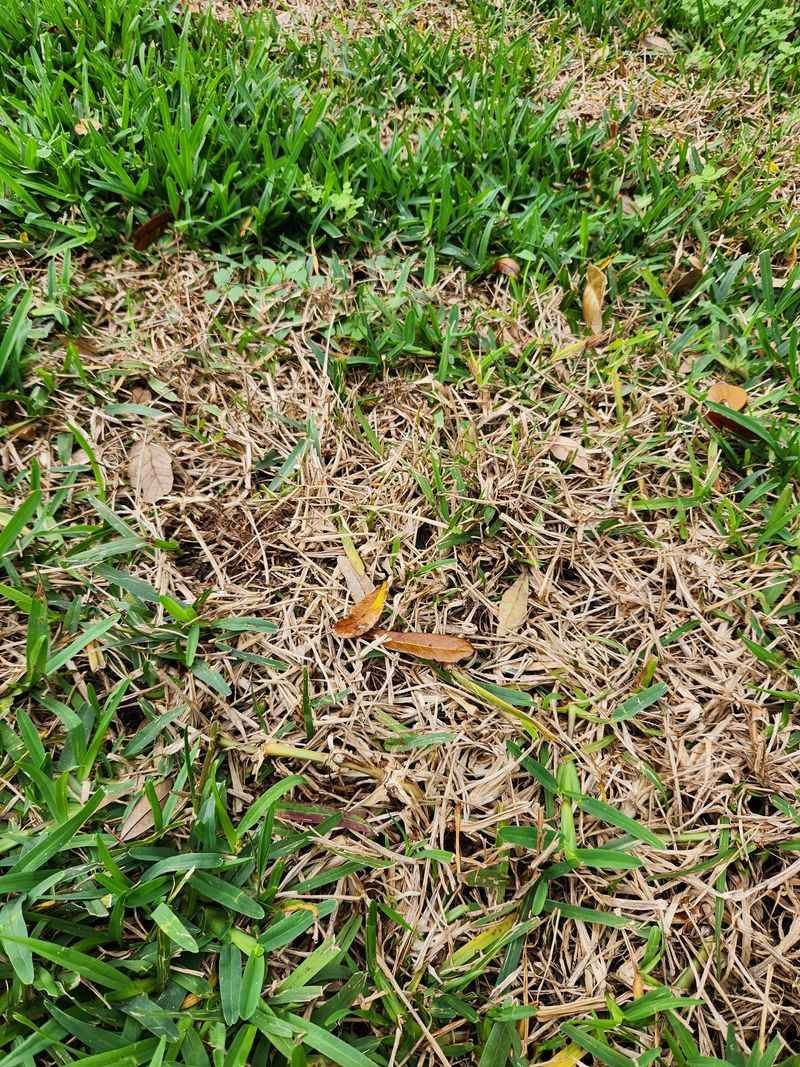
Picture a ring of orange-yellow grass about the size of a kiddie pool, with greener grass sitting in the middle. Florida lawn experts would likely point at that ring and name a fungus called large patch right away.
Large patch is caused by a soil fungus named Rhizoctonia solani, which lives in most Florida yards year round. It mostly rests quietly in summer heat, then wakes up hungry once fall temperatures begin sliding downward.
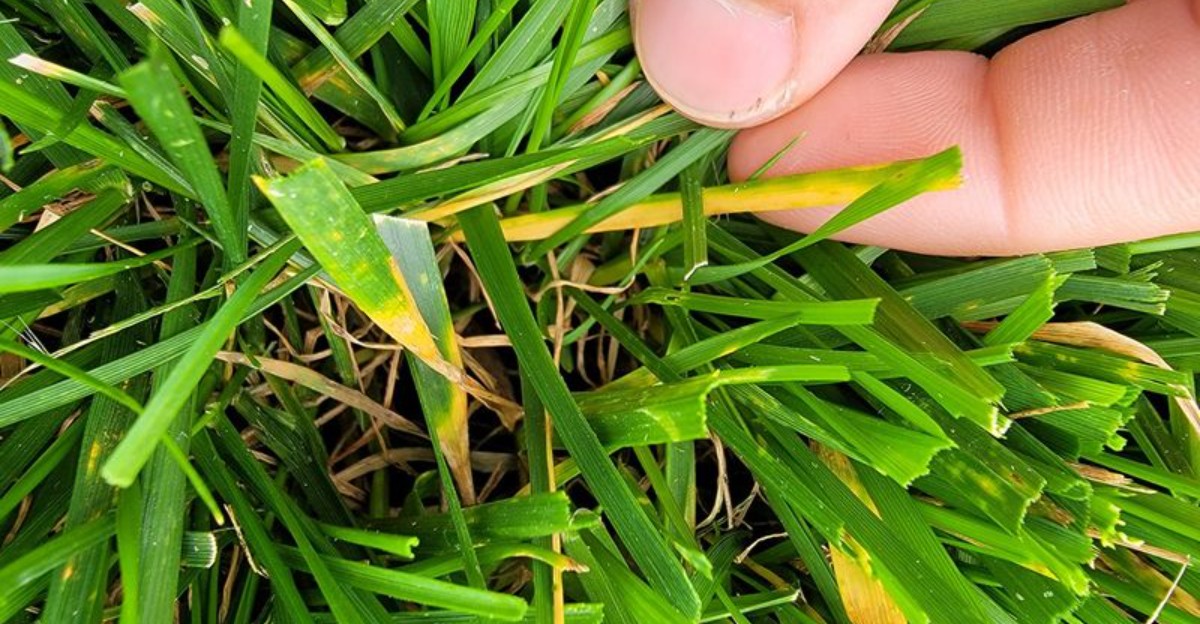
The fungus targets the leaf sheaths, which are the lower parts of each blade near the soil line. Give a yellow blade a gentle tug, and it often slides right out with a dark, soft base.
That easy pull test is one of the quickest ways to separate this disease from insect trouble in October. Chinch bugs usually leave blades firmly rooted, while large patch lets them slip loose like strands of cooked spaghetti.
Look closely at the outer edge of each patch during early morning, when the grass still holds dew. An active patch often shows a thin, smoky orange border where the fungus is busy moving outward.
Patches can grow from a couple of feet to many feet across if the weather keeps cooperating. Some yards even develop overlapping circles that look like a giant drew loopy doodles across the lawn.
Knowing the name of the problem matters, because the right fix depends on correctly naming the cause. Once you spot that soft, darkened sheath, you can stop guessing and start treating your yard with real confidence.
Cool Nights Plus Wet Soil Set Off The Rings
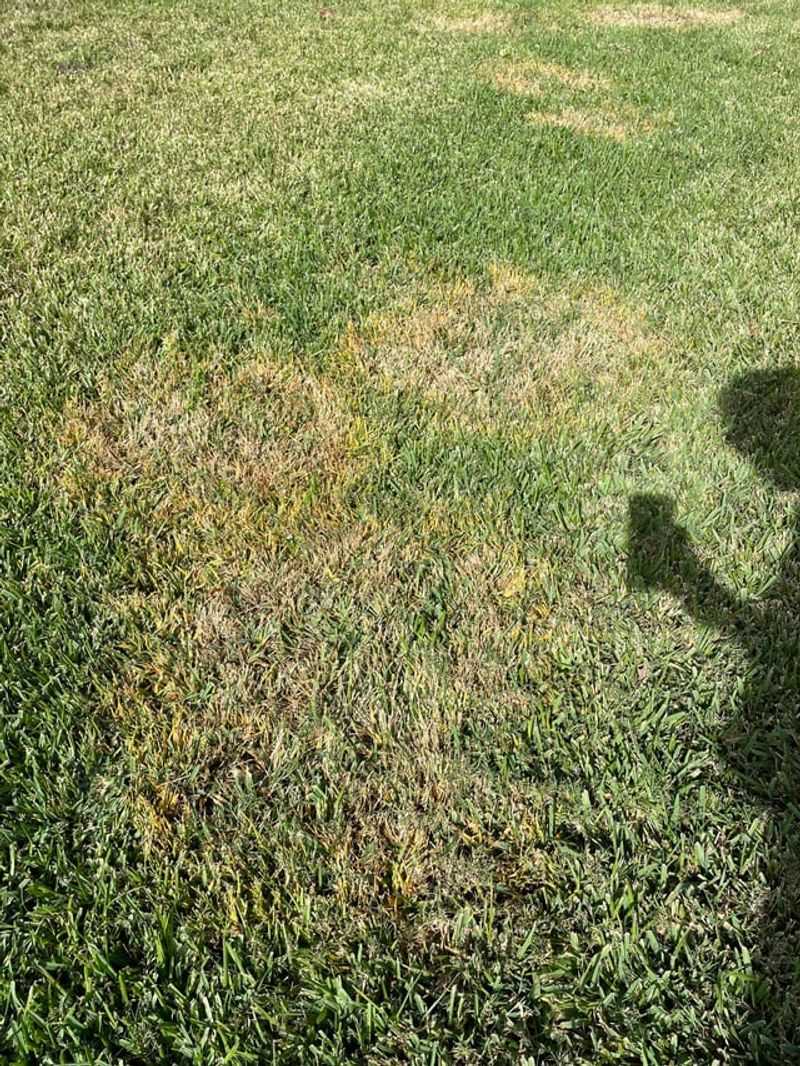
Think of large patch as a guest who only shows up when the thermostat hits a certain number. That magic range sits between roughly 60 and 75 degrees, which describes many early October nights in North and Central Florida.
Daytime highs may still feel toasty, yet the soil cools off after sunset and gives the fungus an opening. Your grass, meanwhile, is slowing its growth for the season, so it cannot outgrow the damage as quickly.
Your Florida Garden Changes Every Week. Your Plan Should Too.
Gardening in Florida changes quickly throughout the season. Every Friday you’ll receive a simple weekly plan showing exactly what to plant, prune, fertilize, harvest, and protect so you never miss the right timing.
Moisture is the other half of the recipe, and Florida autumns often serve up plenty of it. Late tropical storms, heavy dew, and foggy mornings keep blades wet for long stretches of the day.
University of Florida extension guidance notes that long periods of leaf wetness favor the fungus. Shady corners, low spots, and areas near downspouts tend to show yellow rings first because they dry slowly.
Poor drainage adds fuel, since soggy soil keeps the root zone chilly and damp well into the afternoon. Compacted ground near driveways and sidewalks can trap water too, creating a cozy home for fungal growth.
Here is a fun bit of trivia that surprises many homeowners who assume fungus only loves hot weather. Large patch often flares twice a year in Florida, once in fall and again in early spring.
Keep an eye on the weather app this month, especially after several cool nights and a soaking rain. Those back-to-back conditions are your cue to walk the lawn and check for fresh rings forming.
The Evening Sprinkler Mistake
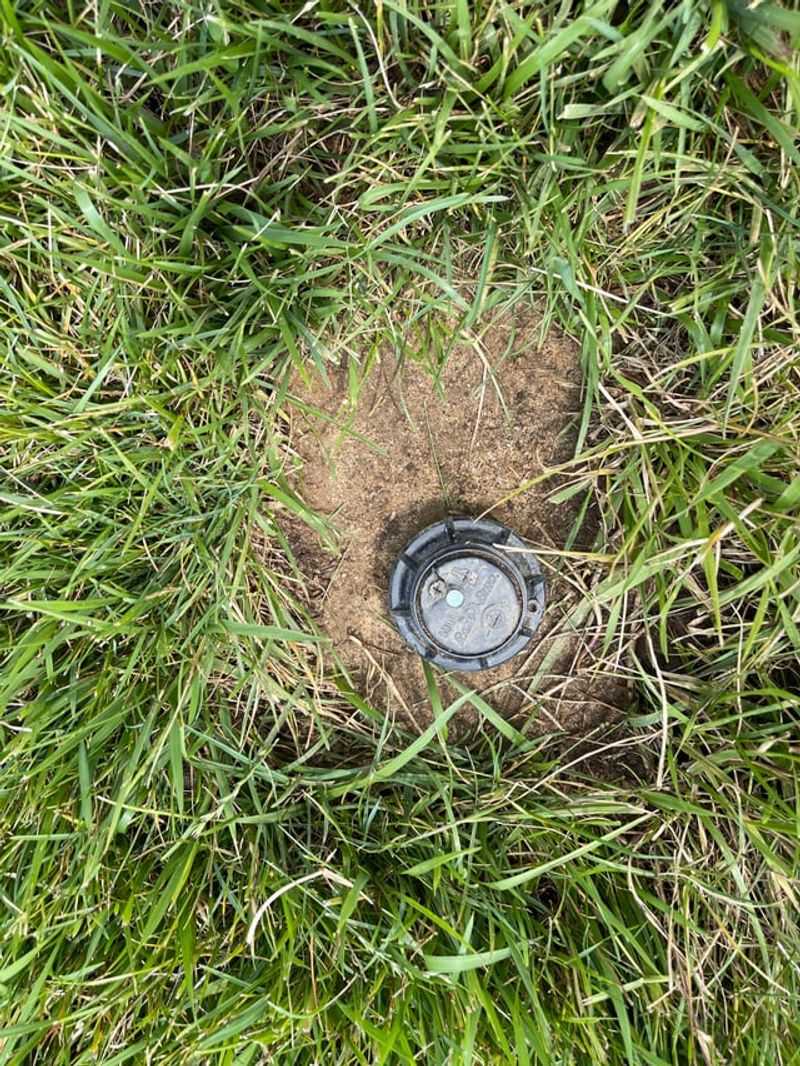
Many of us set the sprinkler timer back in July and have not touched it since, which is understandable. Unfortunately, a schedule built for scorching summer weeks can turn your October lawn into a fungus buffet.
Evening watering is one of the biggest offenders, because the grass stays wet all night while temperatures drop. Ten or twelve damp hours in the dark give large patch exactly the steamy little hideout it craves.
Overwatering causes trouble too, since cooler fall grass uses far less water than it did in August. Extra water just sits in the thatch and soil, soaking roots that would rather breathe a little.
Fertilizer mistakes run a close second, especially heavy doses of quick-release nitrogen applied in early fall. That burst of soft, tender growth is easy for the fungus to enter, like a fresh-baked cake left uncovered.
Mowing too low adds even more stress to the grass. Most standard St. Augustine grass varieties prefer a height of about three and a half to four inches for healthy growth.
Scalping the lawn exposes the lower sheaths and weakens the plant just as the fungus starts stirring. Dull mower blades make things worse by tearing leaves, leaving ragged tips that heal slowly and give the fungus an easy way in.
The simple fix starts tonight, so grab your controller and move watering to the early morning hours. Running sprinklers between four and eight in the morning lets the sun dry blades quickly after each cycle.
Fungicide Timing For Fast Fall Control
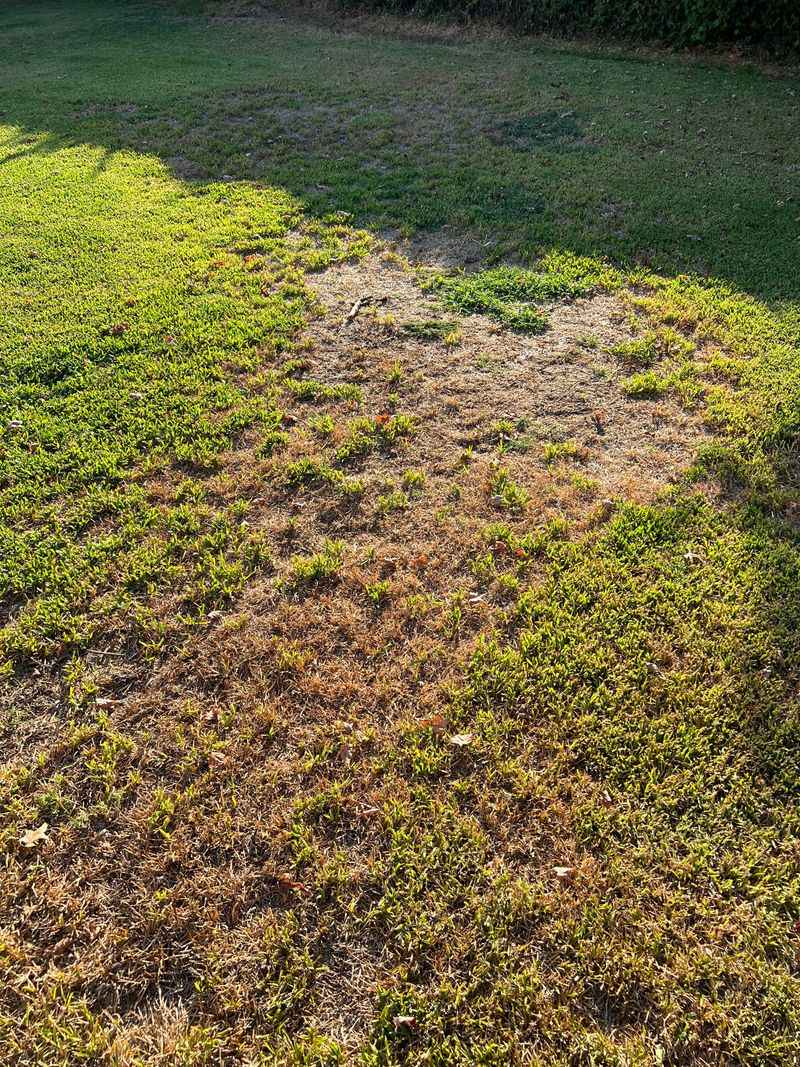
Fungicides tend to prevent better than they cure. They can slow the fungus down, but they cannot turn yellow blades green again overnight.
Products containing azoxystrobin, propiconazole, or thiophanate-methyl are commonly recommended for large patch on Florida home lawns this season. You can find many of them as granules for a spreader or as liquids that attach to a hose.
Timing makes a huge difference, so the best moment to act is when soil temperatures fall toward seventy degrees. That window opens in October across North Florida and can stretch into November farther south.
If rings have already appeared, treat the patch plus a buffer of healthy-looking grass around it, following the distance listed on the label. The fungus often hides in that outer zone before you can see any color change at all.
Some labels suggest a second application a few weeks later if cool, rainy weather sticks around. Read the label carefully, since the label is the law and rates vary from one product to another.
Rotating between products with different active ingredients helps prevent the fungus from building up resistance over time. Wear gloves, keep pets and kids off the treated area until it dries, and sweep granules off the sidewalk.
A fungicide works best as a teammate, not a solo hero, alongside smarter watering and mowing habits. Pair the treatment with those changes, and the spreading rings may slow down within a few weeks.
A Slow Winter Comeback For Your Lawn
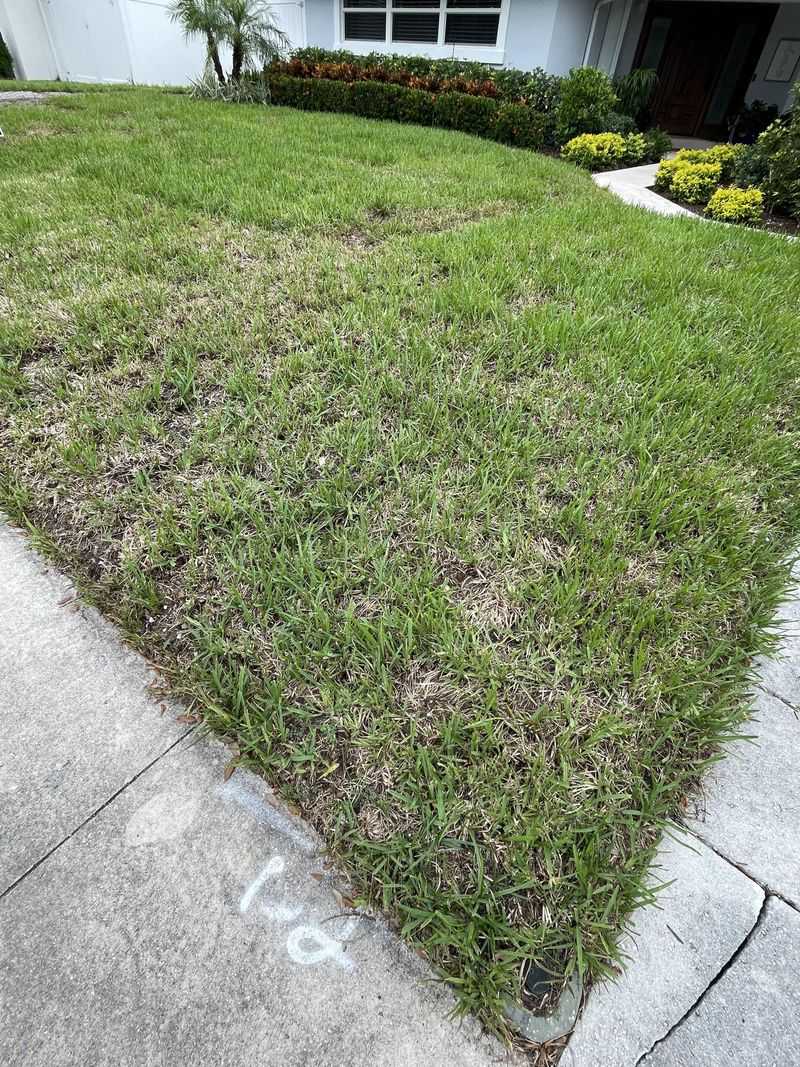
Patience might be the hardest part of this whole adventure, especially if you like quick results. Even after the fungus stops spreading, those tan circles may linger for weeks or even a few months.
St. Augustine grass recovers by sending runners called stolons across the ground to refill thin spots. Those runners creep along slowly in cooler months, a bit like a sleepy cat stretching across a sunny porch.
In South Florida, where winters stay mild, damaged areas can begin filling in before the holidays arrive. North Florida lawns usually wait longer, since frosty nights push the grass into a semi-dormant rest.
Resist the urge to dump extra fertilizer on the patches, because that tender growth can restart the infection. A light feeding with potassium, sometimes labeled as potash, may help strengthen cell walls without encouraging soft leaves.
Keep foot traffic off the weak areas when possible, and ask the kids to choose another football field. Gentle care now means the runners can push forward without getting crushed or torn along the way.
Some homeowners get impatient and lay new sod in December, but that rarely ends well in chilly soil. Fresh sod roots slowly in cool weather, and it can carry the same fungus if conditions stay damp.
By the time warm weather returns, many lightly affected lawns look thick and green again with minimal help. Snap a photo of the patches today, and you will enjoy comparing the before and after pictures later.
A Smarter Fall Routine For Next Year
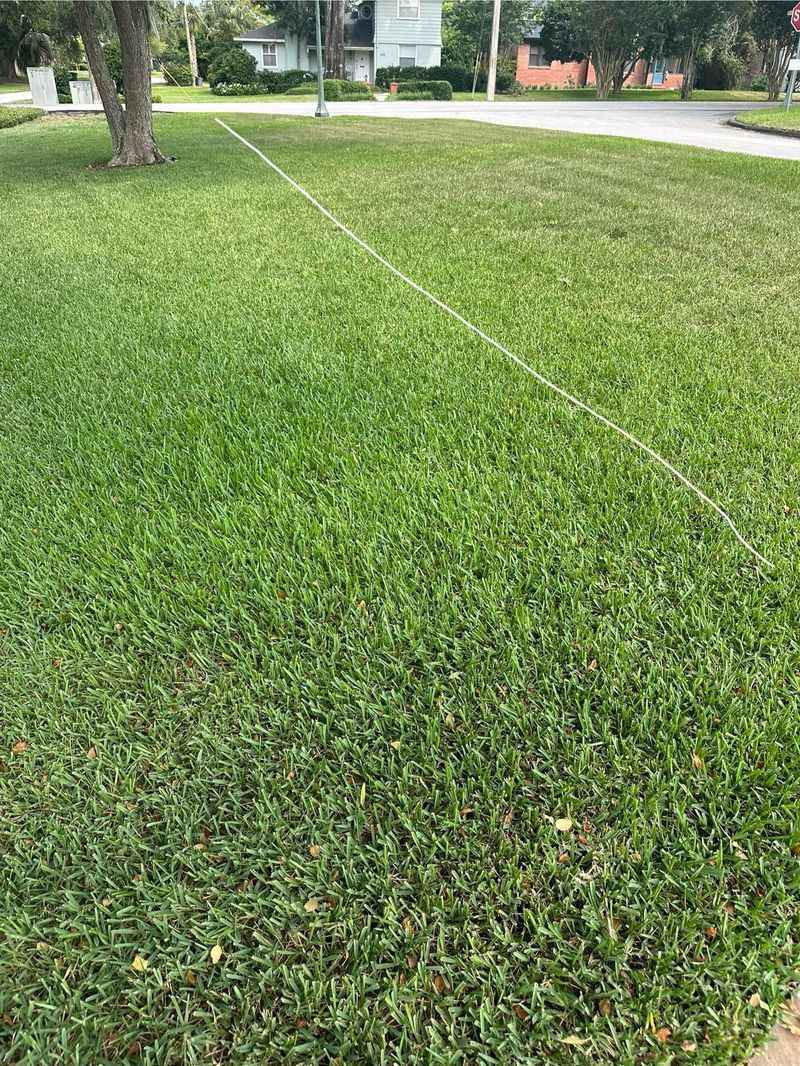
Prevention sounds boring, but in lawn care it is one of the most useful habits you can build. A few small habits each September and October can lower the chance of those yellow rings returning next fall.
Start by adjusting your irrigation as soon as nights cool off, cutting back to about once weekly. Apply roughly three-quarters of an inch each time, and skip a cycle whenever a good rain soaks the yard.
Switch to a slow-release fertilizer for any fall feeding, and finish nitrogen applications by mid September. Check local county rules too, since some Florida counties restrict fertilizer use during the rainy season.
Improving drainage pays off for years, so look at low spots that hold puddles after every storm. Core aeration in late spring or early summer can loosen packed soil and help water soak in faster.
Trimming low tree branches lets more sunlight and breeze reach shady corners where fungus loves to hang out. Removing heavy thatch helps as well, since that spongy layer holds moisture right against the vulnerable sheaths.
Lawns with a history of large patch may benefit from a preventive fungicide applied as soil temperatures begin to drop. Mark the date on your calendar now, because the fungus often returns to the same spots.
Clean mower blades between yards if you cut a neighbor’s lawn, since spores can hitch a ride easily. Follow this routine, and next October your lawn may finally send you a much friendlier message.