What Crape Myrtle Roots Actually Do To A California Yard Over Time
Crape myrtle ranks among California’s most popular small trees, loved for its long summer bloom, peeling bark, and impressive heat tolerance.
It also carries a stubborn reputation. Plenty of homeowners hesitate to plant one near the house, worried its roots will crack foundations or break pipes.
Real examples of that kind of damage, however, are surprisingly hard to find.
University guidance and long experience in California yards tell a much calmer story. The roots behave very differently from those of the big trees that earned the scary rumors.
Knowing what those roots actually do over the years can save a lovely, drought-tolerant tree from being skipped for no good reason.
Roots Rarely Damage Foundations Or Pipes
Good news first: crape myrtle roots aren’t well documented as a serious threat to house foundations or underground pipes. That fear seems to come from lumping every tree into one worrisome group.
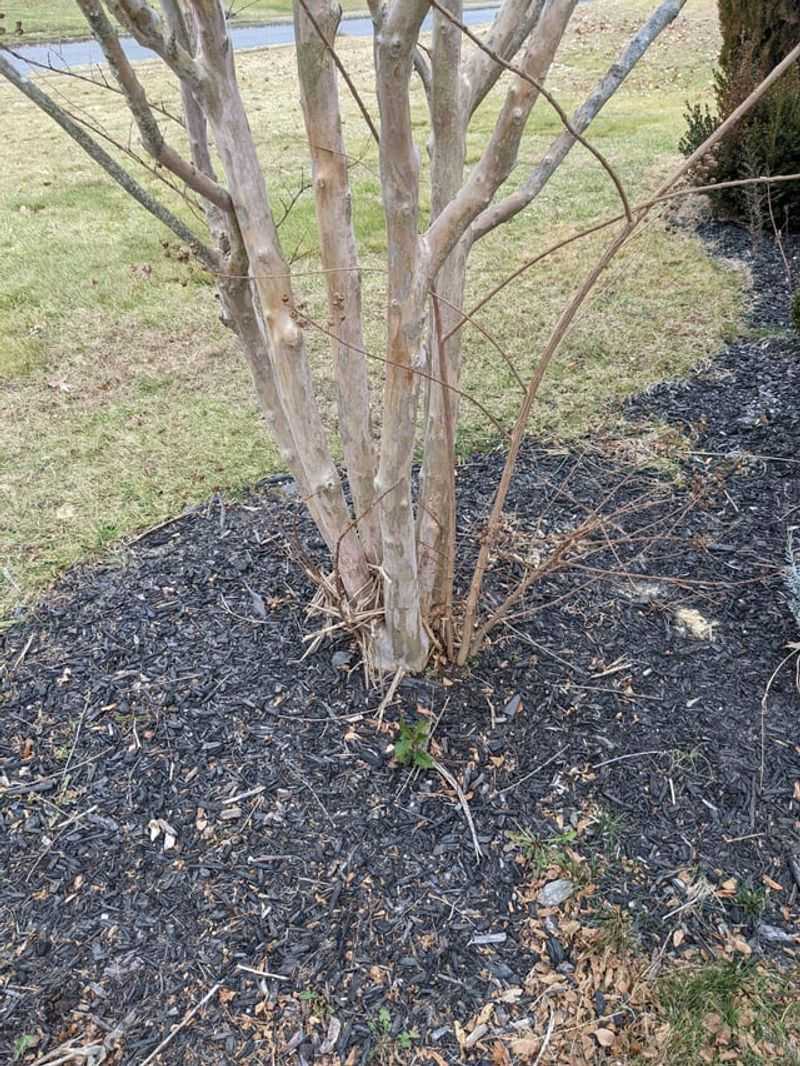
UC ANR guidance generally describes crape myrtle as a small tree with a fibrous, fairly shallow root system. Fibrous roots are many thin strands spread through the topsoil, not thick, woody cables pushing hard against concrete.
Trees with a genuine reputation for damage, like some ficus, silver maples, or willows, behave very differently. Their roots grow larger and more aggressive over time.
Sewer lines deserve a closer look. Roots of almost any plant can enter a pipe that’s already cracked and leaking, simply because they follow water.
That makes it a pipe problem first rather than a crape myrtle problem. A sound, modern pipe is very unlikely to be broken by these roots.
Foundations crack for many reasons in California. Expansive clay soil, settling, poor drainage, and earthquakes are far more common causes than a small flowering tree nearby.
A crape myrtle planted a reasonable distance from the house is rarely cause for worry. Gutters that drain away from the foundation and repaired irrigation leaks protect a home far better than avoiding the tree.
Older homes with clay sewer pipes may benefit from an occasional inspection. That simple step addresses the real risk, and the tree can stay right where it is, mostly innocent of the charges against it.
Growth Stays Mostly Shallow And Spreading
A bowl of noodles spilled across a table offers a fair comparison for how crape myrtle roots grow. A carrot pushed straight down would be a poor match.
Most of the root mass lives in the top foot or two of soil, where water and oxygen are easiest to find. From there, roots spread outward, often reaching past the edge of the branches.
UC ANR materials on landscape trees note that most feeder roots of many trees sit in shallow soil. Crape myrtle fits that pattern well.
Shallow matters for a simple reason. Thin, spreading roots are excellent at soaking up a quick drink from sprinklers or winter rain, but they aren’t built to lift slabs or crush walls.
Over time, a mature tree develops a few thicker roots near the trunk. Those anchor the tree, though they usually stay modest compared to large shade trees.
Your California Garden Changes Every Week. Your Plan Should Too.
Gardening in California changes quickly throughout the season. Every Friday you’ll receive a simple weekly plan showing exactly what to plant, prune, fertilize, harvest, and protect so you never miss the right timing.
A few roots may peek at the soil surface, especially in compacted clay or lawns watered lightly and often. Deep, less frequent watering helps prevent that.
Longer soaks encourage roots to explore a little lower. That keeps them happier during hot inland summers and dry spells.
A two to three inch layer of mulch, kept a few inches from the trunk, also helps. It cools the soil, holds moisture, and protects those shallow roots from mowers and foot traffic.
Nearby Hardscape Is Rarely At Real Risk
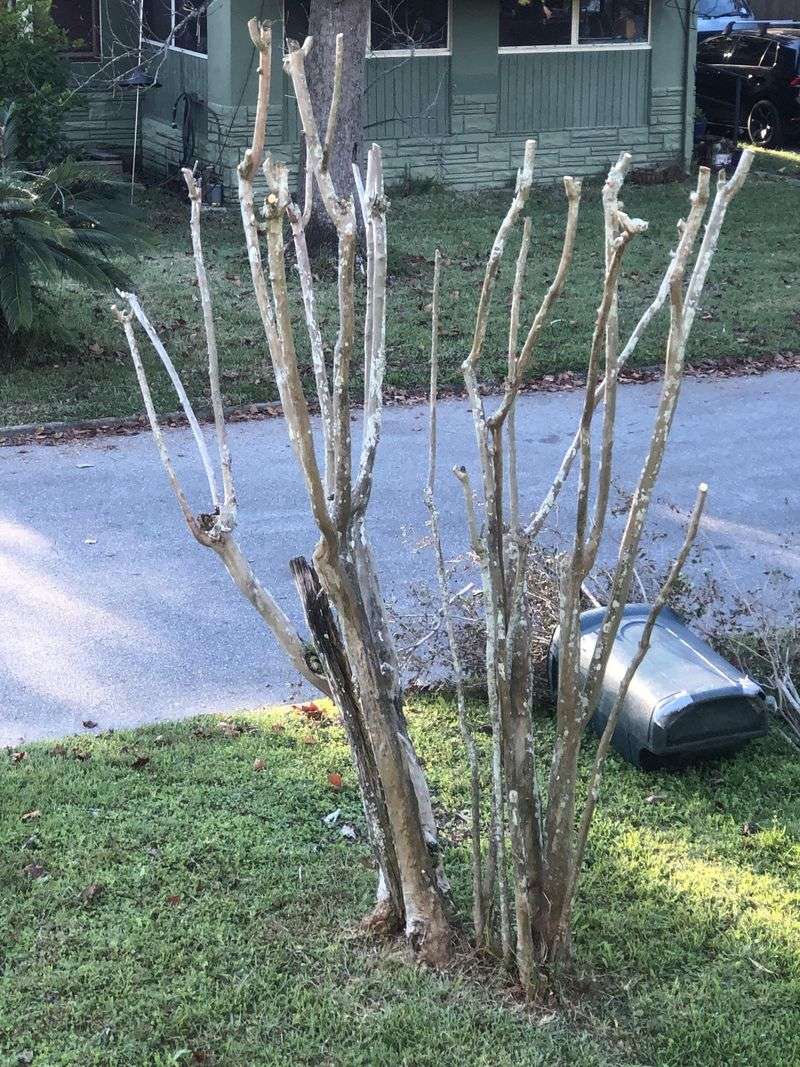
Older streets in Los Angeles or Fresno often feature crape myrtles planted in narrow parkway strips. Many cities chose them on purpose, and that choice says a lot.
California street tree programs often favor crape myrtle because it stays small and tends to be easy on sidewalks. Ficus and certain large ash and sycamore trees, by contrast, are famous for heaving concrete into little ramps.
Those species grow big trunks and thick surface roots that swell year after year. Crape myrtle roots simply stay thinner.
A patio, driveway, or garden path a few feet away faces relatively low risk. That doesn’t mean zero risk in every case, but serious lifting isn’t well documented for this tree.
A few situations can raise the odds of minor trouble. Planting right against the edge of a slab leaves roots nowhere else to go.
Shallow, frequent watering under pavers can pull roots toward that moist zone. Poorly built concrete with a thin base may crack on its own and then get blamed on the nearest plant.
A few feet of space between trunk and new hardscape offers extra peace of mind. Watering the tree away from paved areas helps as well.
New patios benefit from a solid gravel base, a detail worth discussing with any contractor. Strong construction does more to prevent cracks than any tree choice, and a crape myrtle can bloom happily right beside it.
Competition With Lawn Grass Is More Likely
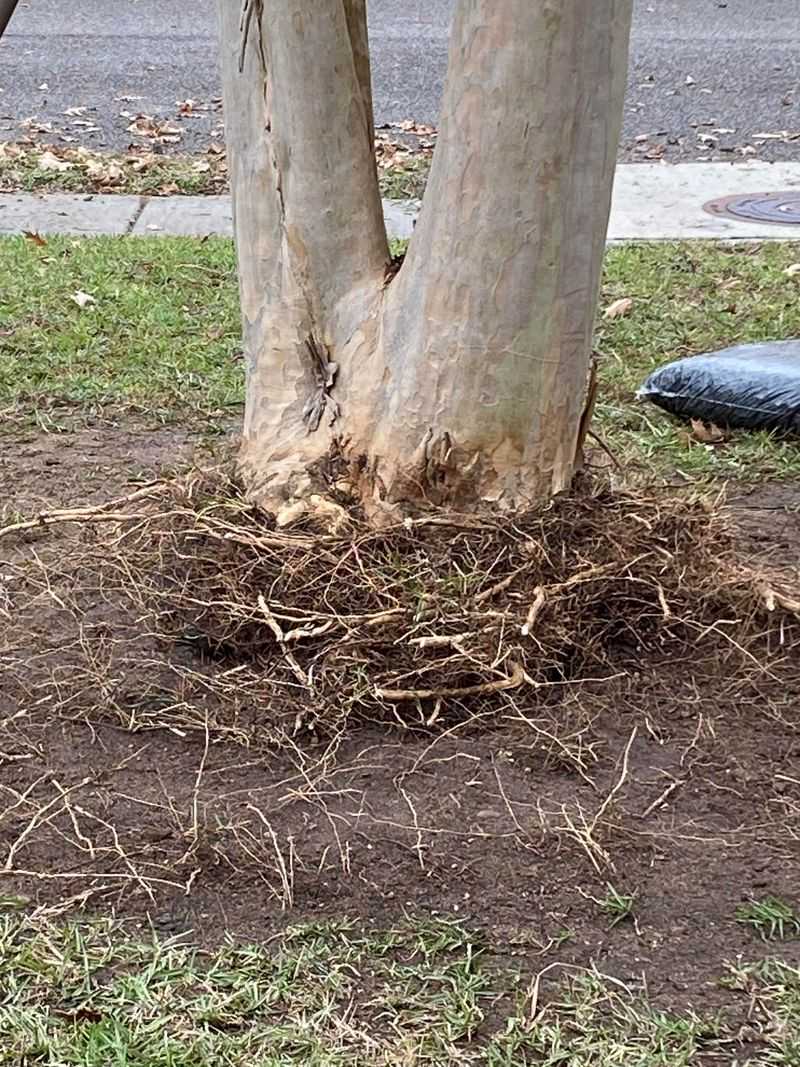
A patchy, tired ring of grass under a backyard tree is a much more realistic issue with crape myrtle than any cracked foundation. The reason comes down to shared space.
Because the roots live in the same shallow soil as turf, the tree and lawn end up sharing one small pantry. Both want water, nitrogen, and other nutrients.
Shade from the canopy adds another challenge for sun-loving grasses like Bermuda. The result can be thin grass, dry spots, or turf that browns faster in July.
The tree can feel stressed too. Lawn grass is a tough competitor for moisture near the trunk.
The fix is easy and even saves work. Many UC ANR resources recommend keeping turf away from the base of young trees.
A mulch circle several feet wide around the trunk, made from wood chips pulled back from the bark, makes a great start. Shade-tolerant groundcovers or low-water perennials can fill that zone instead of grass.
Sprinklers adjusted for deep, occasional soaks rather than daily spritzes help both tree and soil. Light fertilizing is plenty, since too much nitrogen pushes leafy growth and fewer blooms.
Less lawn under the tree also means less mowing, fewer string trimmer nicks on the trunk, and lower water bills. In a state where drought rules are common, trading a struggling grass ring for mulch is a smart, tidy upgrade.
Suckering Is The More Common Nuisance
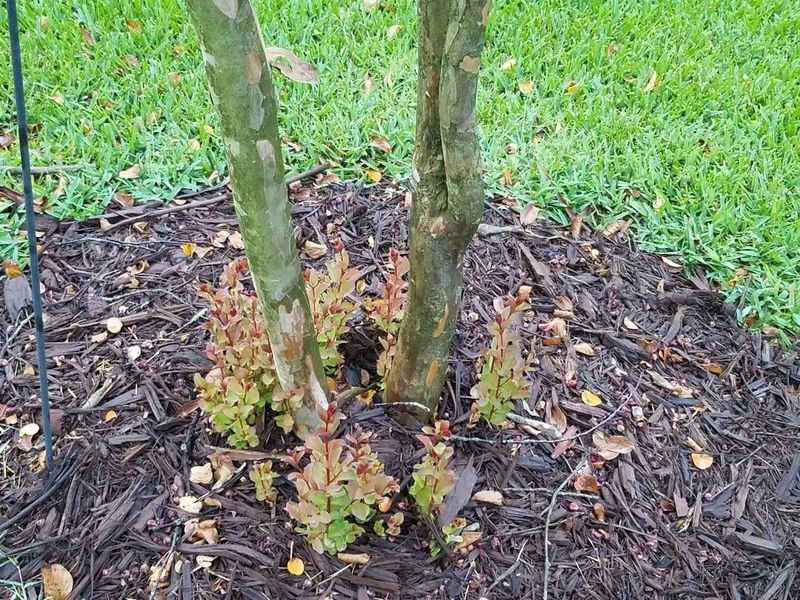
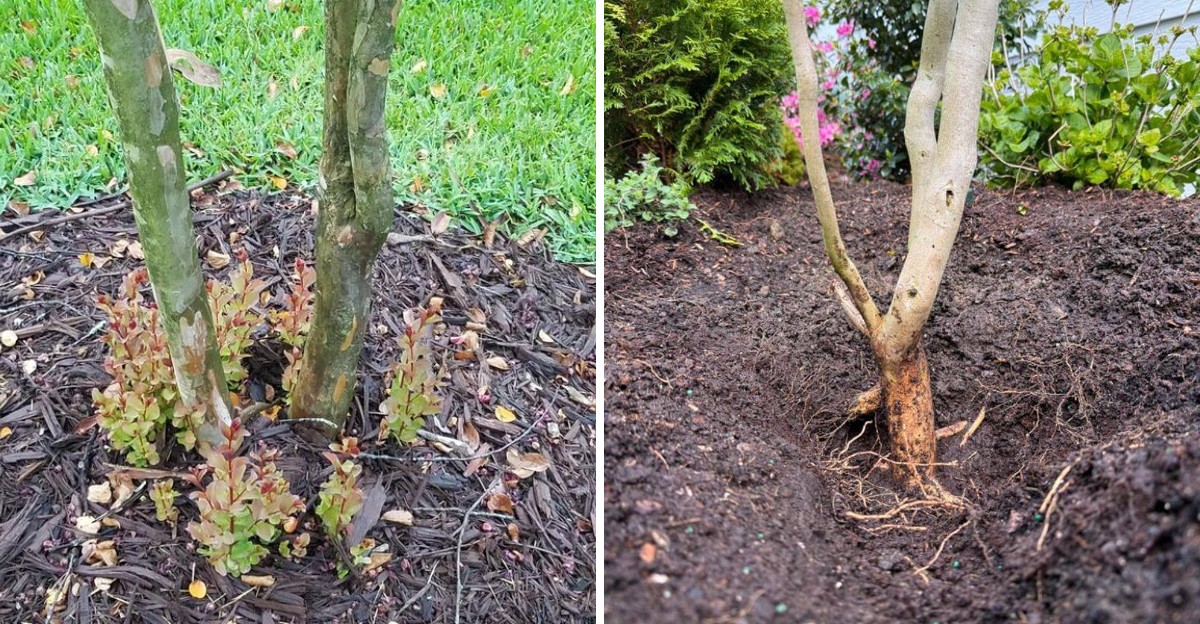
One genuine bad habit does belong to these roots, and it’s sending up suckers. These skinny, leafy shoots pop out of the ground around the trunk or from the base itself.
Suckers are the tree’s attempt to grow more stems. They show up more often after heavy pruning, root damage from digging, or drought stress.
Harsh topping, where branches are cut back to bare stubs, can also trigger a burst of new sprouts. The more severe the cuts, the bigger the response tends to be.
Suckers aren’t truly harmful. They won’t wreck a yard, but they make the tree look messy and pull energy from the main trunks.
Staying ahead of them is simple. Clean, sharp pruners cut suckers off close to their source, and a few rounds each growing season usually keep things tidy.
Pulling or tearing can injure the bark, so cutting works far better than yanking. Shovels and edgers deserve care near the trunk too, since wounded surface roots often answer back with even more shoots.
Herbicides are best kept away from suckers. Because the shoots connect to the tree, some products could travel into the parent plant and harm it.
Crape myrtle comes from Asia, not the American South, despite its nickname as the lilac of the South. Once a quick sucker trim becomes routine, this chore feels about as easy as pulling a few weeds.
Mature Trees Still Need Room To Spread
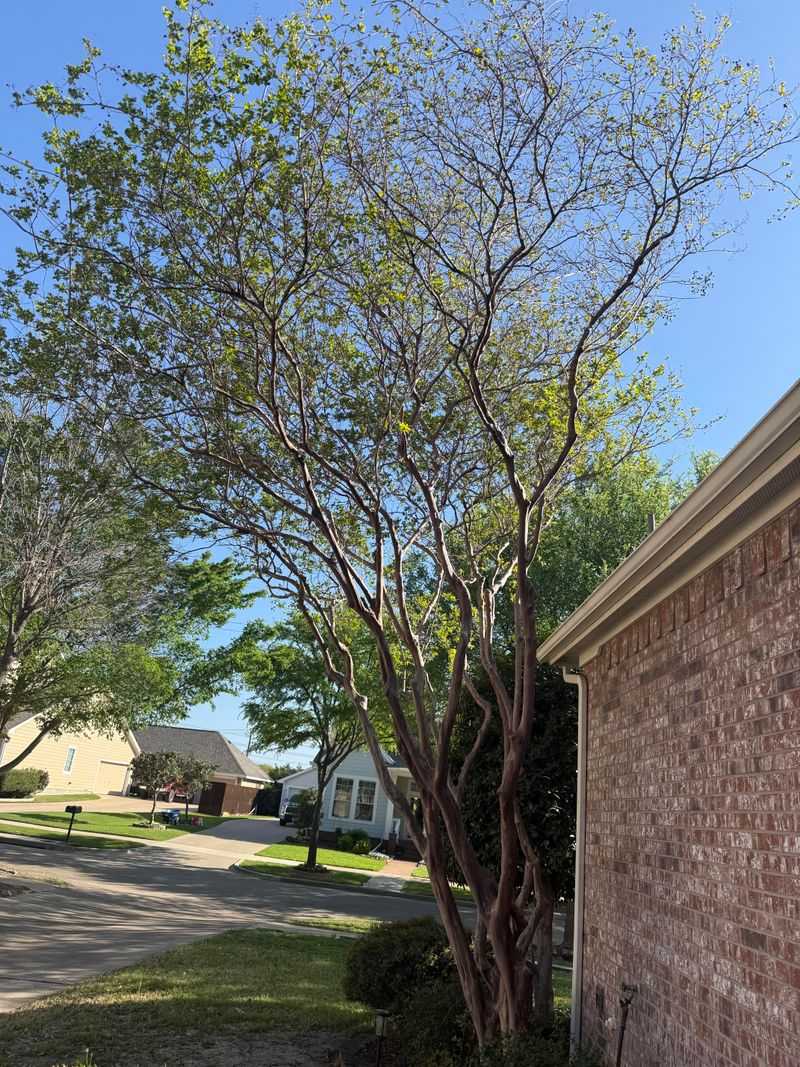
Choosing a crape myrtle works a lot like buying shoes for a growing child. The right pick fits the size it will become, not the size it is today.
Gentle roots don’t change the fact that the tree itself grows wider and taller. Varieties range from dwarf types under five feet to tree forms reaching twenty to thirty feet.
Nursery tags usually list mature height and width. A quick read before digging prevents plenty of future headaches.
A practical rule many gardeners follow is planting at least half the mature canopy width away from walls, fences, and roofs. A tree that spreads fifteen feet wide would sit roughly seven or eight feet from the house.
Smaller varieties can go closer. Exact numbers vary by variety, so these work best as general guides rather than firm rules.
Space matters even though roots aren’t the danger. Branches rubbing on siding, leaves clogging gutters, and limited airflow all cause trouble. Crowded trees also tend to develop powdery mildew more easily, especially in cooler coastal areas.
Open soil helps underground too. Roots with room to explore stay healthier and are less likely to wander into areas better kept clear.
Overhead power lines and neighboring yards deserve a look as well. The right size from the start avoids the urge to cut it back hard later.
That preserves the graceful shape and smooth, peeling bark that make this tree so lovely.
The Real Story Is Less Dramatic Than The Myth
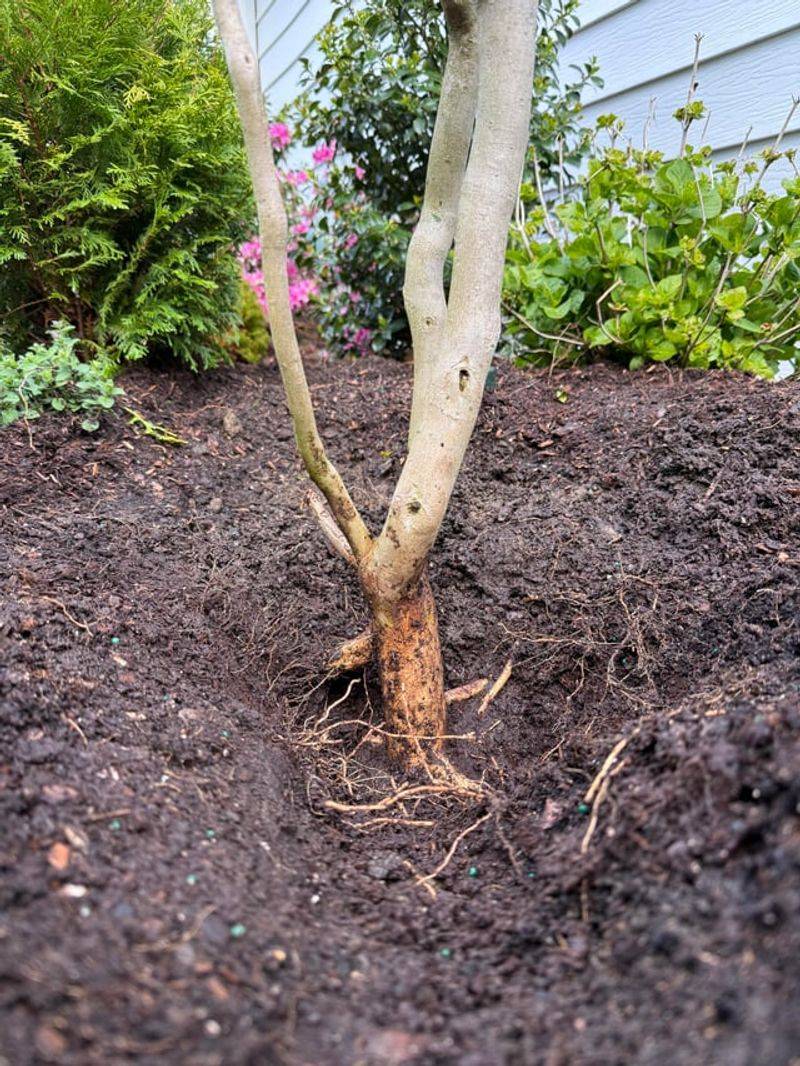
Planted a sensible distance from the house, a crape myrtle can shade a kitchen window for decades without causing trouble below ground. That outcome is far more typical than the rumors suggest.
Evidence from California yards points in a reassuring direction. Crape myrtle roots are shallow, fibrous, and mostly well behaved.
Serious damage to foundations, pipes, or patios isn’t well documented for this tree. Many California cities trust it along sidewalks, often just a few feet from concrete.
The real chores are simple ones. A mulch ring handles lawn competition, a few sucker trims each season keep the base tidy, and a variety matched to the available space avoids crowding.
The scary reputation most likely comes from confusion with large, thirsty trees that truly do lift concrete. Old cracked pipes and shifting clay soil also make easy scapegoats when something goes wrong in an older yard.
General UC ANR guidance and common horticultural knowledge support this picture. Local soil, drainage, and pipe condition can still change things in individual yards.
A certified arborist can address special concerns. Most homeowners, though, won’t need that level of help for a tree this mild-mannered and easygoing.
For the typical California yard, crape myrtle offers summer color, beautiful bark, and strong heat and drought tolerance with very little drama underground. Its roots, it turns out, have been quietly minding their own business all along.