Why Hosta Leaves Turn Brown And What To Do About It
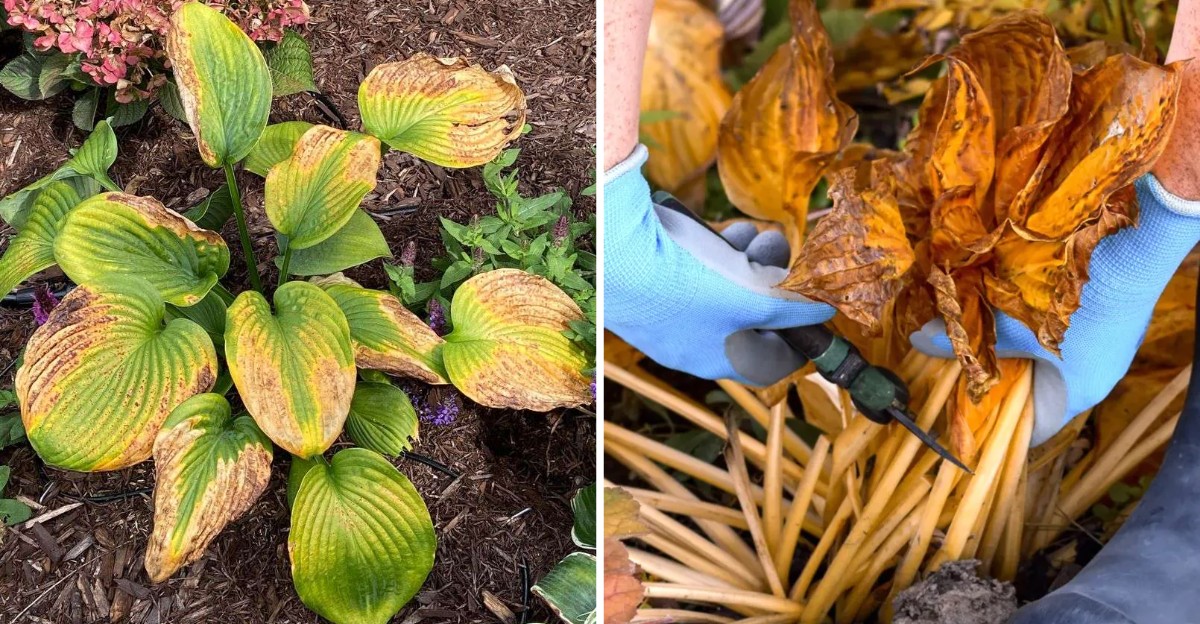
Something strange happens in the shady corner of the yard every year when the evenings turn crisp. Those big, lush leaves you bragged about all season suddenly look like toast left in too long.
You lean in closer and notice crunchy edges, papery patches, and a faint smell of damp soil. Your first thought might be panic, and your second thought might involve blaming the neighbor’s sprinkler.
Brown leaves feel like a personal insult, especially after weeks of careful watering and proud morning inspections. Still, plants rarely change color without a reason, and they often leave clues for curious gardeners.
Some clues point to the weather, some point to the hose, and some point straight at you. Reading those signs is a bit like solving a puzzle where the main clue sits quietly in the mulch.
When the cause becomes clear, the yard feels calmer, and so does your weekend coffee on the porch. Meanwhile, the garden gnome keeps staring at those crispy leaves like he ordered them extra well done.
Sun Scorch Usually Tops The List
Picture a plant built for cool forest floors suddenly baking under afternoon sun for hours each day. Hostas evolved in shady woodlands across East Asia, so harsh light often scorches their wide leaves.
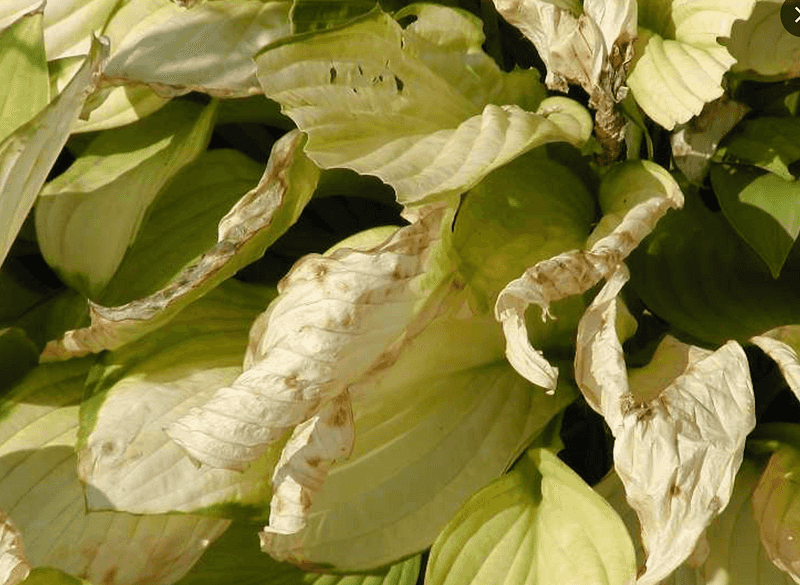
Sun scorch usually shows up as bleached, tan, or brown patches along the edges or between the veins. Affected leaves may curl and turn crispy, almost like paper that sat too close to a candle.
Thin-leaved and blue varieties tend to struggle the most when strong rays hit them directly. Gold and yellow types often handle some morning light, though they still prefer protection.
Lack of water makes scorch worse, because thirsty leaves cannot cool themselves on hot, bright afternoons. Dry wind adds another layer of stress, pulling moisture out of the leaves faster than roots replace it.
Take a slow walk around your garden in early October and notice where the shadows fall now. A tree that lost a large branch this year might have exposed your plants to much more light.
Scorched tissue will not turn green again, but the plant itself usually survives and pushes out fresh leaves next season. Make a quick note of which spots burned so you can plan smarter shade before next growing season.
Other causes like pests or disease can look similar, so check the pattern before jumping to conclusions. Scorch tends to appear on the sunniest side of the clump, which makes it fairly easy to spot.
Early Fall Browning Is Mostly Normal
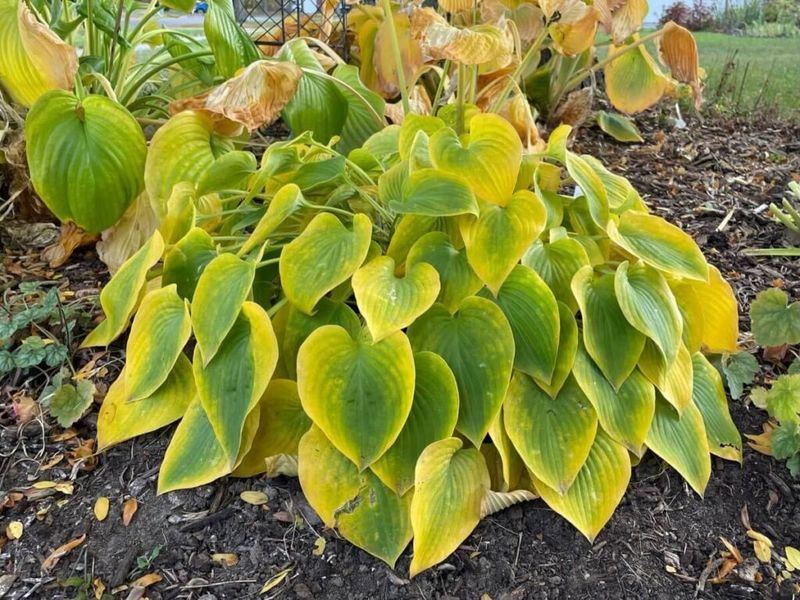
In autumn, many gardeners worry when they see yellow and brown leaves on their plants. Most of the time, the plant is simply getting ready for its long winter rest underground.
Hostas are perennials that go dormant once nights turn cold, usually around the first hard frost of fall. As days shorten, the leaves slowly pull their stored energy back into the roots.
That process drains the green color first, leaving soft yellow leaves that fade to tan or brown. After a hard frost, the foliage often collapses overnight into a limp, mushy pile on the ground.
Seeing that mess can feel alarming, but it is a natural part of the yearly growth cycle. Think of it like a bear settling into a cave, tired but healthy and ready for spring.
Browning that happens evenly across the whole plant at this time of year is mostly nothing to fear. Spotty browning with rings, holes, or slimy trails, however, might point toward pests or a fungal problem.
Fun fact: some hosta varieties turn a lovely buttery gold in autumn before they fade for the season. The timing of this color change depends on the variety and the local weather.
Enjoy the changing look instead of rushing to fix it, since this is part of the plant’s normal cycle. Patience right now usually means healthy new leaves pushing up through the soil once warm weather returns.
Overwatering Mistakes In Cool Weather
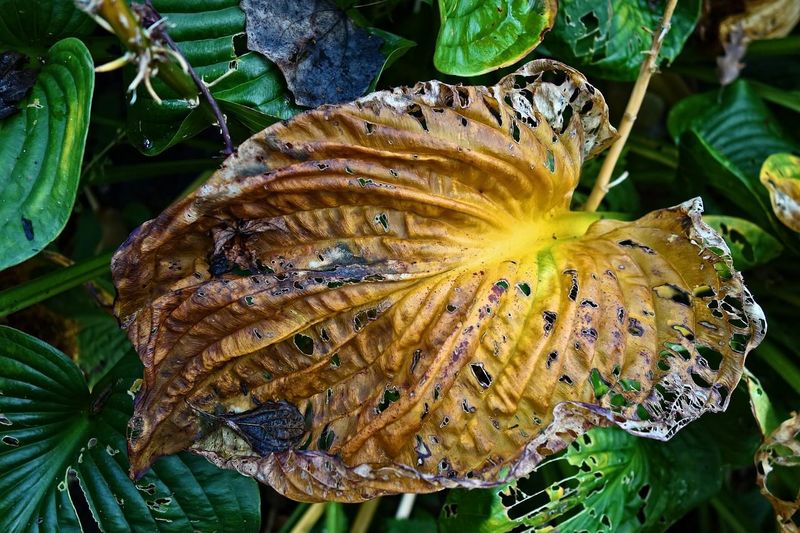
Caring gardeners sometimes water too much, and fall is the season when that mistake sneaks up quietly. Cooler air means soil dries much slower, yet many people keep the same watering schedule from August.
Soggy ground squeezes oxygen away from the roots, and struggling roots cannot send moisture up to leaves. Ironically, an overwatered hosta can look thirsty, with drooping stems and brown, mushy edges on its foliage.
Crown rot is the bigger worry, showing up as soft, smelly stems that pull away from the base. Slugs also love those damp fall nights, chewing ragged little holes that later dry into crunchy brown patches.
Before grabbing the hose, push one finger about two inches deep into the soil near the plant. If it feels cool and damp, skip watering for now and check again in a few days.
Sprinkler systems deserve a quick review too, since many still run on their old hot weather settings. Adjusting sprinkler schedules to match cooler weather is often enough to keep roots happy without flooding them.
Heavy clay soil holds extra water like a sponge, which makes overwatering problems show up even faster. Mixing compost into the planting area loosens that clay and helps excess moisture drain away more easily.
Water in the morning when you do water, so leaves dry before the chilly evening air settles. That habit helps keep stems firm and reduces soggy conditions under the leafy canopy.
Trimming Brown Leaves The Right Way
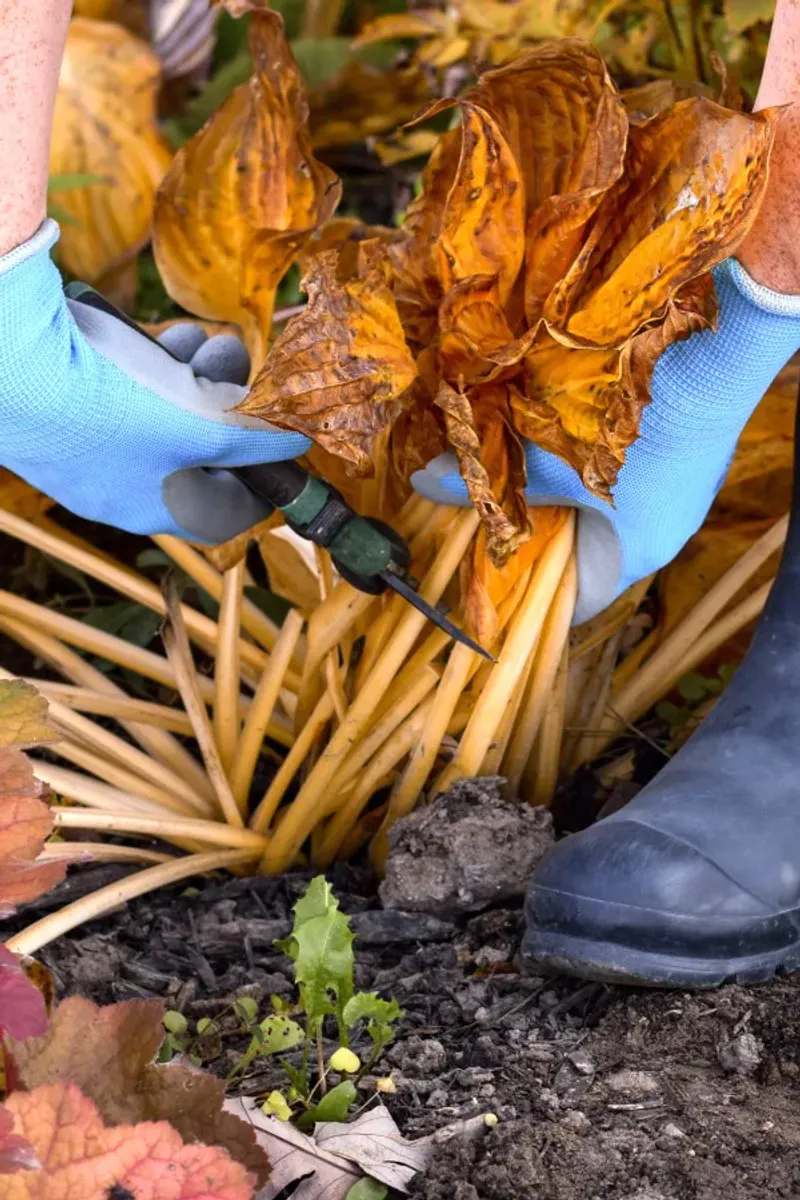
Trimming with kitchen scissors can leave cut edges that turn black. Dull blades crush plant tissue instead of slicing it, which gives germs an easy way inside the plant.
Start with clean, sharp pruners, and wipe the blades with a disinfecting solution or a diluted bleach mix. Cleaning between plants matters most if you suspect disease, since tiny spores can easily hitch a ride.
For leaves with only small brown edges, you can leave them alone until the plant goes dormant. Those partly green leaves are still feeding the roots, storing energy that powers next year’s fresh growth.
Leaves that are mostly brown or mushy can come off now, cut low near the base of the plant. Follow each stem down to the crown and snip it cleanly, about an inch above the soil.
Once frost knocks the whole plant flat, you can remove the remaining foliage in one tidy session. Clearing that soggy layer takes away hiding spots where slugs lay eggs and fungus spends the winter.
Bag up any leaves that showed spots or rot instead of tossing them into your compost pile. Healthy brown leaves are fine to compost, adding helpful material that breaks down over the cold months.
Wear gloves while you work, because hosta stems can be slippery and the soil around the crowns can be rough on bare hands. A tidy bed by mid October looks neat, and it gives you a clear view of the crowns.
Healthy Crowns Under Tired Foliage
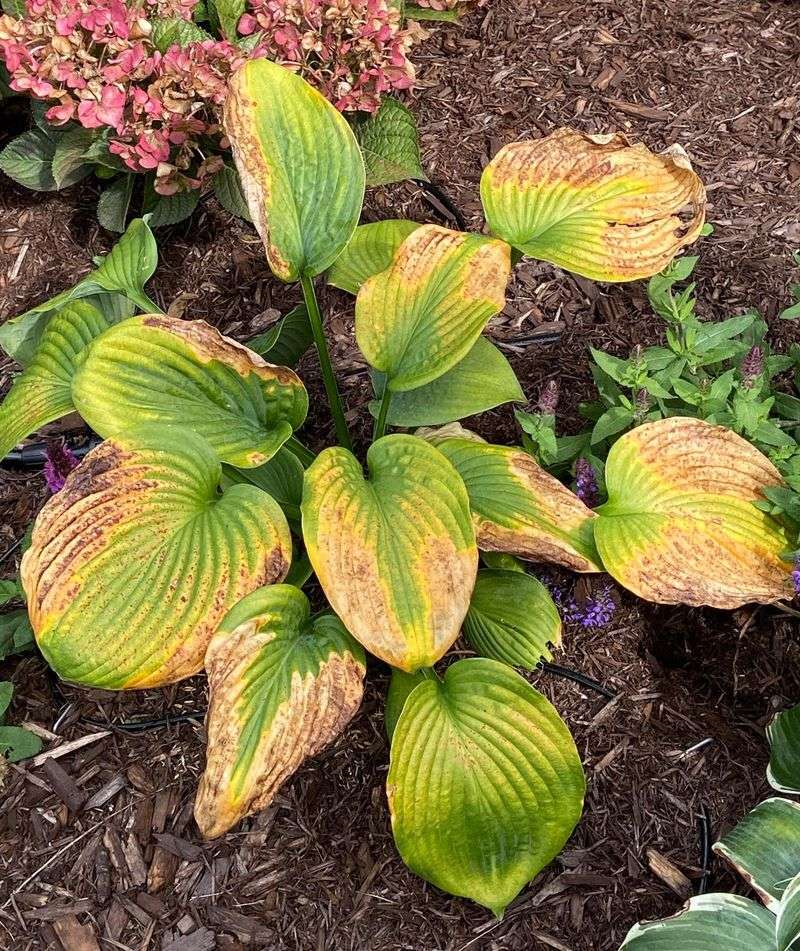
Hostas can live for decades, and some gardeners still grow clumps their grandparents planted long ago. That staying power comes from the crown, the tough knot of roots and buds hidden just underground.
Brown leaves on top rarely mean the crown below is in trouble, especially in early fall. Gently brush away some mulch and look for firm, pale buds, sometimes called eyes, poking up near the surface.
Plump pink or white buds are a happy sign that next year’s leaves are already waiting inside. Soft, brown, or foul smelling tissue, on the other hand, suggests rot that needs quick attention.
If you find a mushy section, dig up the clump and slice away the damaged part with a clean knife. Replant the healthy piece in fresh, well drained soil, and it often bounces back the following season.
Early fall is a good time to divide crowded clumps in many areas, since cool air reduces stress on roots. Aim to finish dividing about four weeks before the ground freezes so new roots can settle in.
A plant that browned badly this year often returns with lush leaves if its crown stayed healthy. Hostas are tough plants, and healthy crowns can recover well after a rough season.
Mark the crown’s location with a small stake so you do not accidentally dig into it later. Next spring, those hidden buds will unroll like tiny green flags announcing that your patience paid off.
Fall Prep For Greener Leaves Next Year
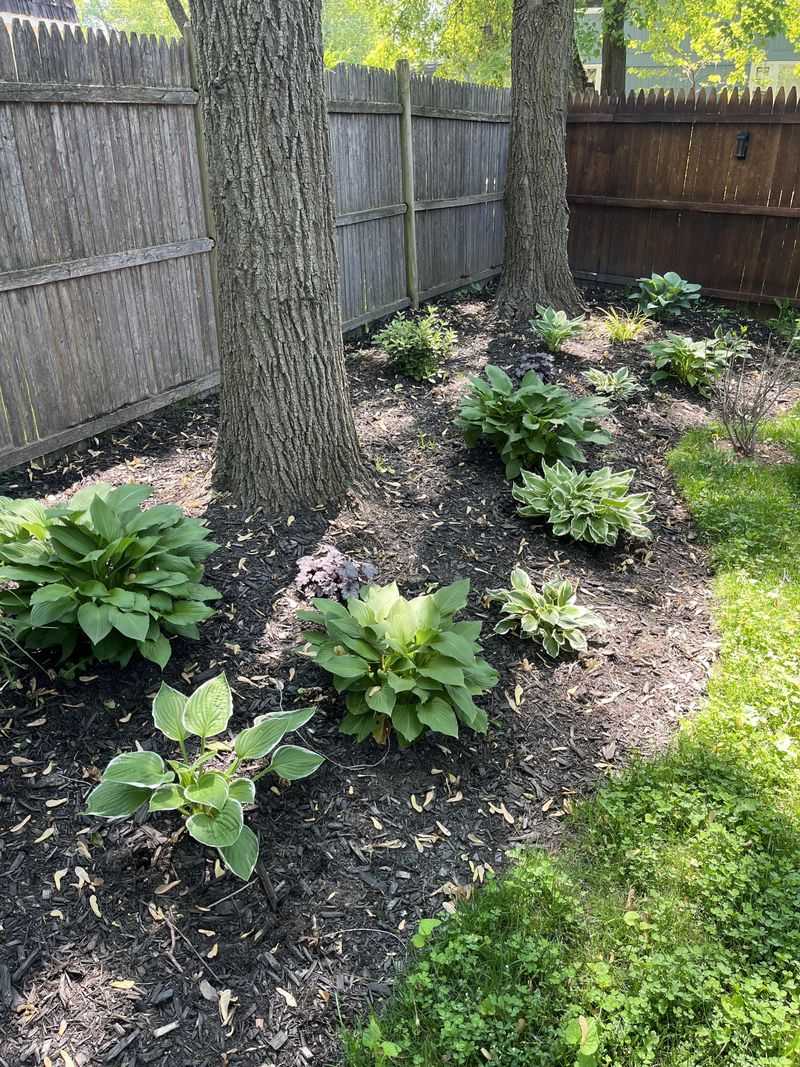
Ever notice how hostas often look their best under large shade trees? Those plants enjoy steady shade, cool soil, and a natural blanket of leaves every single autumn.
Copying that setup in your own yard is one of the easiest ways to prevent brown leaves. Fall is a smart time to plan, since you can still see where sun patches landed this year.
Move scorched hostas to a shadier spot now, while the soil stays warm enough for roots to settle. Spots with morning sun and afternoon shade suit most varieties, while blue and thin-leaved types do best in deeper shade.
After the ground cools in late fall, spread two to three inches of shredded bark or leaf mulch. Keep the mulch a few inches away from the crown so moisture does not pool around the buds.
Mulch keeps soil temperatures steady during winter and holds moisture once hot weather returns next year. A soaker hose tucked under that mulch makes deep watering easy without splashing dirt onto the leaves.
Slug control also starts in fall, since clearing debris now means fewer eggs hatching when temperatures rise. Iron phosphate bait in the bed or copper tape around containers can help reduce chewing damage next season.
Jot down notes about each plant’s spot, condition, and variety while the details are still fresh in your mind. Future you will appreciate that little garden journal when planning, planting, and shopping for new shade plants.